


B2B vs B2C
B2B vs B2C travel booking system: which one does your travel business need?
One sells to travel agents on credit at group prices, the other sells to travellers at one public price. Here is how they differ, how to choose, and how PHPTRAVELS runs both from one installation.
- Agents, credit and markups
- Public prices and online checkout
- Both on one installation
- Self-hosted, source included
Short answer
A B2B travel booking system sells to the trade: travel agents and sub-agents sign in, see net or marked-up prices for their group, and book on credit or from a prepaid wallet. A B2C travel booking system sells to travellers: anyone can search, sees one public price and pays online at checkout. Sell to agents, choose B2B; sell to the public, choose B2C; PHPTRAVELS runs both on one installation.
- B2B
- Business to business. A private portal where agencies and sub-agents book for their own clients.
- B2C
- Business to consumer. A public booking website or app where travellers book for themselves.
Side by side
How a B2B and a B2C booking system differ
The same flights, hotels and tours can sit behind both. What changes is who buys, what price they see and how they pay.
| Aspect | B2BAgent portal | B2CPublic booking site |
|---|---|---|
| Who buys | Travel agencies, sub-agents and corporate bookers who resell or book for their own clients. | Individual travellers, families and groups booking their own trips. |
| Prices shown | Net rates or a price set for the agent's group, visible only after sign-in. | One public selling price, visible to every visitor. |
| Payment | Paid from the agent's credit line or wallet balance, settled against invoices. | Paid online at checkout through a payment gateway on the business's merchant account. |
| Credit and wallet | Each agent can have a credit limit, payment days and a prepaid wallet with a ledger. | No credit. The traveller pays as the payment rules on the site allow. |
| Markups and commission | Layered markups: head office, agent group and, where allowed, the sub-agent's own markup for their clients. | One markup or discount rule between the supplier rate and the public price. |
| Accounts | Approved agency accounts with staff users, roles and their own booking history. | Optional customer accounts; guest checkout is common. |
| Inventory | The same supplier connections and own contracts, often with trade-only rates. | The same supplier connections and own contracts, with public rates. |
| Typical operators | Consolidators, wholesalers, DMCs and host agencies with a network of agents. | Online travel agencies, tour operators and agencies selling direct to the public. |
Many travel businesses run both channels: a public site for direct customers and a portal for the agents who resell their inventory.
Which one do you need
Pick the channel that matches who pays you
Four common situations and the system each one points to.
01You sell trips directly to travellers on your own website
Your customers search, compare and pay online. They need a public price, a simple checkout and a confirmation email, not credit lines.
B2C02You supply rates to other travel agents and sub-agents
Your buyers are businesses. They need their own logins, prices for their group, credit or a wallet, and invoices they can reconcile.
B2B03You sell to the public and to a network of agents
Run both channels on the same inventory so a rate change, a new supplier or a cancellation policy applies to both without double work.
B2B + B2C04You are launching a new online travel agency
Start with the public site to take direct bookings. Add the agent portal later on the same installation when agents ask to resell your products.
B2C
If you are unsure, ask who will press the book button. If it is the traveller, start with B2C. If it is another travel business, start with B2B.
One installation
How PHPTRAVELS runs B2B and B2C together
PHPTRAVELS is one self-hosted platform with two front doors. The B2C travel portal is the public storefront where travellers search and pay; the B2B travel portal is the signed-in area where agents see their own prices and book for clients.
Both read from the same suppliers and the same admin. Agents pay from the B2B agent wallet or a credit limit you set, and the white label B2B portal carries your brand on screens, vouchers and invoices.
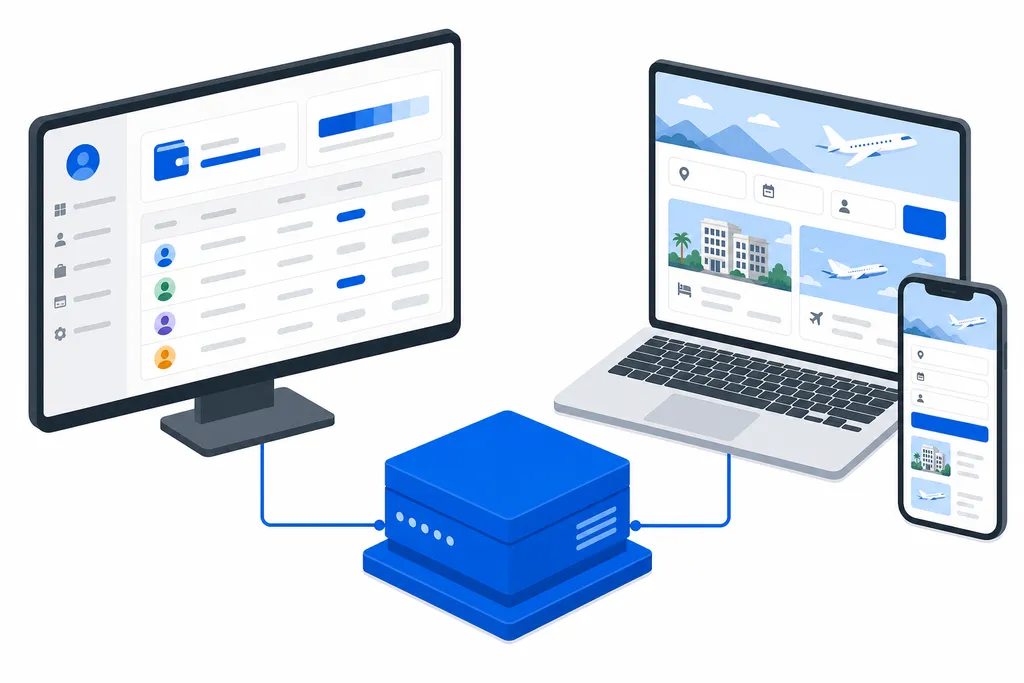
Shared by both channels
- Suppliers and inventoryOne set of GDS, API and direct-contract connections feeds the storefront and the portal.
- One adminProducts, content, users and settings are managed in one back office.
- One booking recordEvery booking, from a traveller or an agent, lands in the same list with its channel.
- Payment gatewaysThe gateways you connect are available to both channels where you allow them.
Kept separate per channel
- Prices and markupsA public markup for travellers, group and agent markups for the trade.
- Accounts and rolesCustomers sign up freely; agents are approved and get their own staff users.
- Credit and walletCredit limits, payment days and wallet balances apply only to agents.
- Your brandBoth channels carry your logo and colours; agents see them inside their signed-in portal.
The B2C site is on every licence, the agent wallet starts on Agency and the full B2B agent portal is part of Enterprise. Compare plans on the pricing page
Honest limits
What PHPTRAVELS is not
PHPTRAVELS is booking software you install and run. It does not sell travel, hold inventory or move money for you.
Not a supplier
It has no hotel rooms, tours or fares of its own. Inventory comes from the suppliers and contracts you connect.
Not an airline or a GDS
It connects to GDS and flight APIs through your own agreements. Ticketing authority stays with you or your consolidator.
Not a consolidator
It does not issue tickets on your behalf or give you trade rates. It gives you the tools to act as one if you have the agreements.
Not a lender or a bank
Agent credit and wallets are records you manage. PHPTRAVELS does not lend money, hold balances or guarantee payments.
Supplier contracts are yours to sign
Each supplier approves you and issues the credentials. Their terms, fees and approval times are set by them, not by PHPTRAVELS.
See both channels in one demo
We can walk you through the public booking site and the agent portal on the same installation.
A B2B system sells to travel agents: they sign in, see prices for their group and book on credit or from a wallet. A B2C system sells to travellers: anyone can search, sees one public price and pays online at checkout.
If travellers book and pay on your site, you need B2C. If other agencies book your rates for their clients, you need B2B. If you do both, run both channels on one installation so inventory and rules stay in one place.
Yes. PHPTRAVELS runs the public booking site and the agent portal on one installation, with the same suppliers, admin and booking records, and separate prices, accounts and payment rules for each channel.
It is a business selling to agents who then sell to travellers, often with the agent's own markup on top. In PHPTRAVELS, sub-agents can add their own markup for their clients where you allow it.
No. Credit limits, payment days and wallets are B2B tools for approved agents. Travellers on the public site pay through the payment gateways you connect.
B2C usually has one markup between the supplier rate and the public price. B2B can stack markups: one for the network, one per agent group and, where allowed, one the sub-agent adds for their own clients.
The B2C site is included on every licence. The agent wallet starts on the Agency plan and the full B2B agent portal is part of Enterprise. All plans are one-time licences; the figures are on the pricing page.
No. PHPTRAVELS is software. You connect your own GDS, API and direct-contract suppliers, sign their agreements and receive their credentials.
Keep exploring
More from the platform
- B2B travel portalAgent tiers, markup layers, credit limits and settlement
- B2C travel portalPublic booking site for flights, hotels, tours and cars
- B2B agent walletAgent deposits, credit limits and a ledger per agent
- White-label B2B travel portalAn agent portal on your domain, with your logo, emails, vouchers and invoices
- B2B booking engineNet rates, two levels of markup and agent credit
- Online travel agency softwareThe storefront, booking engine and admin an OTA runs on