


Buyer's guide
Travel agency website vs online booking engine: which one does your agency need?
A brochure website shows what you sell and collects enquiries. A booking engine sells it: live search, real-time prices, payment and instant confirmation. Here is the difference, row by row, and how to choose.
- Brochure website
- Live booking engine
- Supplier APIs
- Decision guide
Short answer
A travel agency website shows your trips and collects enquiries; staff then check availability, quote prices and take payment by hand. A website with an online booking engine lets visitors search live inventory, see real-time prices and availability, pay online and receive an instant confirmation and voucher, while bookings flow into a back office. A website suits a small, bespoke business; an engine suits an agency that wants to sell online at volume.
- Brochure website
- Content, photos and an enquiry form. Every sale still happens by email, phone or chat.
- Website + booking engine
- The same content, plus live search, pricing, payment and instant confirmation, connected to suppliers.
Side by side
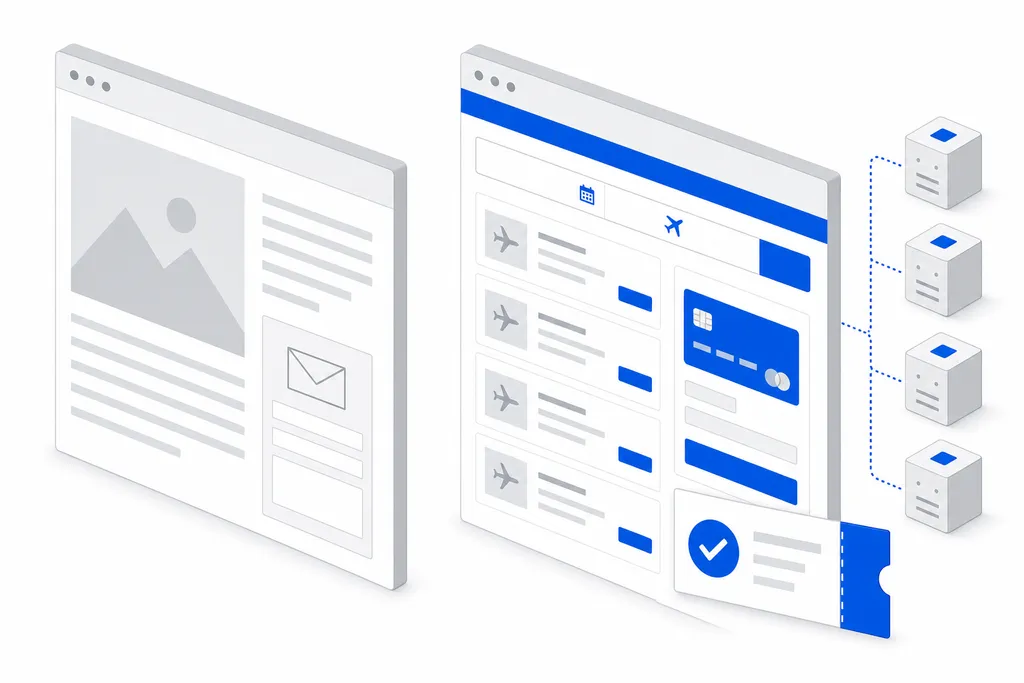
Two websites that look alike and work very differently
From the outside both are a page with your logo. The difference is what happens after a visitor decides to travel.
Comparison
Website vs booking engine, row by row
Nine things that change when a website gets a booking engine behind it.
| Aspect | Brochure website | Website + booking engine |
|---|---|---|
| What the visitor can do | Read about destinations and packages, then send an enquiry or call. | Search dates and destinations, compare options, book and pay without waiting for staff. |
| Prices | Fixed "from" prices typed into pages, or "price on request". They go out of date. | Live prices from suppliers or your own rates, with your markups, taxes and currencies applied at search time. |
| Availability | Unknown until staff check with the hotel, airline or operator. | Checked in real time for the dates and passengers searched, and rechecked before payment. |
| Payment | Bank transfer or a payment link sent by staff after the quote. | Online checkout through the payment gateways you connect, or pay later and wallet options for agents. |
| Confirmation | Written by hand once the supplier confirms; can take hours or days. | Instant booking reference, invoice and e-voucher or e-ticket by email when the supplier confirms. |
| Supplier connections | None. Staff use supplier extranets, GDS terminals or email. | Supplier and consolidator APIs plus your own contracted inventory, searched together. |
| Staff workload | Every enquiry needs research, quoting, follow-up and manual booking. | Staff handle exceptions, changes and complex trips; routine bookings run on their own. |
| SEO and content | Pages, blog and destination guides that bring in search traffic. | The same content, plus indexable hotel, tour and destination pages that link straight into booking. |
| Typical cost model | Design and hosting; the main ongoing cost is staff time per sale. | A software licence or subscription, hosting, supplier and payment fees; less manual work per booking. |
Costs depend on the vendor, suppliers and markets you choose. PHPTRAVELS figures are listed on one page only: see pricing
Booking flow
What a booking engine adds, step by step
Six steps that run on their own in a booking engine and by hand on a brochure website.
01
Search
The visitor enters destination, dates and travellers in a search box on your site.
Without an engine: a contact form or a phone number.
02
Live results
The engine asks connected suppliers and your own inventory at once and lists what is available.
Without an engine: staff search supplier sites one by one.
03
Price check
Before payment the chosen option is repriced and its availability confirmed, with your markup applied.
Without an engine: a quote by email, often outdated by the reply.
04
Pay
Card or other online payment through your gateway, or credit and wallet for B2B agents.
Without an engine: bank transfer details sent by hand.
05
Confirm and voucher
The supplier booking is made, and the traveller gets a reference, invoice and voucher or e-ticket.
Without an engine: a confirmation typed after calling the supplier.
06
Back office
The booking lands in the admin with customer, payment and supplier status for changes, refunds and reports.
Without an engine: spreadsheets and email threads.
Decision guide
When a website is enough, and when you need an engine
Neither is better in general. It depends on how you sell.
A brochure website is enough when
- Most trips are bespoke: tailor-made itineraries, groups or events that need a conversation anyway.
- You handle a small number of bookings and staff time per sale is not a bottleneck.
- Your customers expect to call or message an agent before they pay.
- You are testing a market and want an online presence before you sign supplier agreements.
You need a booking engine when
- Enquiries grow faster than staff can quote, and customers book elsewhere while they wait.
- You sell products travellers expect to book instantly: flights, hotels, transfers, tours, car rental.
- You have, or want, supplier API access or your own contracted rates to sell online.
- Sub-agents or corporate clients need to book themselves through a B2B portal.
Quick check
Tick what applies to your agency today.
A good brochure website with a fast enquiry process may serve you well for now.You are close: plan for a booking engine, starting with the product you sell most.A booking engine will likely save staff time and stop lost sales.
PHPTRAVELS
The website and the engine in one installation
PHPTRAVELS is a travel booking platform, so an agency does not have to choose. The front end is a full website: themes, pages, a blog and menus managed in the admin, as described on Travel website builder and CMS.
Behind the same site sits the engine: flights, hotels, tours and cars modules that search your own inventory and the supplier connections you enable. See Hotel booking engine, Travel APIs and, for agents, B2B booking engine.
- 01
Website
Themes, pages, blog, menus, languages and currencies, edited in the admin without code.
- 02
Booking engine
Search, results, filters, checkout and vouchers for flights, hotels, tours and cars.
- 03
Connections
Supplier and consolidator APIs, plus payment gateways, using your own accounts and keys.
- 04
Back office
Bookings, customers, agents, markups, payments, invoices and reports in one admin.
Honest limits
What PHPTRAVELS is not
A booking engine is software. The inventory, contracts and licences behind it belong to the agency.
Not a supplier
PHPTRAVELS does not own hotel rooms, tours or cars. Inventory comes from your contracts and the APIs you connect.
Not an airline or consolidator
It does not issue tickets on its own stock. Ticketing runs through the airline or consolidator accounts you hold.
Not a GDS
It can connect to GDS and aggregator APIs, but access, credentials and fees are agreed between you and that provider.
Not your contracts
Supplier agreements, licences such as IATA where needed, and payment merchant accounts are the agency's own.
What it is
The website, booking engine and back office your agency runs, with the suppliers and payment gateways you choose.
A travel agency website presents your products and collects enquiries. A booking engine is the software behind the site that searches live inventory, prices it, takes payment and confirms the booking instantly, then passes it to a back office.
No. Agencies that sell mostly bespoke trips, groups or events can do well with a brochure website and a fast enquiry process. An engine pays off when you sell products customers expect to book instantly, or when enquiries outgrow your staff.
Yes. A common approach is to run the booking engine on its own domain or subdomain and link it from your current site, or to move the whole site onto a platform that includes both. PHPTRAVELS includes a CMS, so you can also rebuild the website inside it.
From supplier, consolidator and GDS APIs you have accounts with, and from your own contracted hotels, tours or transfers loaded in the admin. The engine searches them together and applies your markups.
Not if the content stays. Keep destination pages, guides and a blog for search traffic and link them into the booking search. Live result pages are usually not meant to be indexed; your content pages are.
It depends on the licence or subscription, hosting, supplier fees and payment fees. A brochure website mainly costs staff time per sale. PHPTRAVELS plans are listed on the pricing page; no other page quotes amounts.
Yes. One installation includes the website front end with themes and a CMS, the flights, hotels, tours and cars booking modules, supplier and payment connections, and the admin back office.
No. PHPTRAVELS is software. It does not sell rooms, seats or tours itself. Your agency signs its own supplier, GDS and payment agreements and connects them to the platform.
Keep exploring
More from the platform
- Travel website builderTravel blocks, booking engine and payments on your own domain
- Travel website developmentPages, booking engine, APIs, payments and SEO
- Hotel booking engineDirect bookings on your own hotel website
- B2B booking engineNet rates, two levels of markup and agent credit
- Travel agency booking softwareQuote, book and invoice from one record per trip
- Travel APIsGDS, hotel, tour, car and payment APIs