
An IATA number is the eight-digit code that the International Air Transport Association assigns to each approved location of a travel agency: seven digits that identify the location, plus a check digit. Airlines, the Billing and Settlement Plan (BSP), GDS providers, hotels and other suppliers use it to recognise who made a booking, who issued a ticket and who earns the commission.
People usually look it up for one of three reasons: they are starting an agency and want one, a supplier has asked for theirs, or they need to check that another agency’s number is real. This guide covers all three. The full accreditation process lives in our separate IATA accreditation guide.
- Format: 7 digits plus 1 check digit, often written
12-3 4567 8and printed without the dash and spaces on automated documents. - Issued by: IATA, to accredited agencies and to TIDS participants outside the USA. US agencies get theirs through IATAN and ARC.
- What it proves: that IATA lists this location. Only an accredited code also means the location can ticket through the BSP.
- How to check one: IATA’s CheckACode service.
What is an IATA number?

Formally, it is the IATA Numeric Code, and suppliers also call it the IATA agency code. IATA’s Passenger Agency Conference Resolution 822 defines four parts:
- a two-digit geographical designator (the country or market),
- a one-digit area designator,
- a four-digit location designator (the specific office), and
- a check digit calculated from the first seven digits.
So the same number can appear as 12-3 4567 8 on a certificate and 12345678 in a reservation system. IATA’s CheckACode lookup accepts a passenger agency code in 7- or 8-digit form, with or without the check digit.
Three details matter in practice:
- It belongs to a location, not a company or a person. A head office and each branch have their own codes. IATA applies the same rule to TIDS: one code per office.
- It remains IATA’s property. Resolution 822 says a code may not be lent, subcontracted or hired to a third party. An offer to “rent” an IATA number is a red flag, not a shortcut.
- It identifies; it does not guarantee. IATA describes the accredited agent’s code as what identifies you as accredited and a member of the BSP. It says nothing about service quality or credit terms with a given supplier.
Quick typo check: the modulus-7 check digit
IATA uses an unweighted modulus-7 check digit. Its data model defines a modulus-7 check digit as the remainder when the number is divided by 7; for an agency code, that is the first seven digits read as one number.
IATA’s NDC data model uses 98417900 as its sample agency number. Divide 9841790 by 7 and the remainder is 0, which matches the last digit. A made-up 1234567 leaves a remainder of 5, so the full code would be 12345675.
Use this only to catch typing mistakes on a booking or sign-up form. A correct check digit does not prove the agency exists; only a lookup in IATA’s records does.
IATA number vs IATA codes, TIDS and IATAN
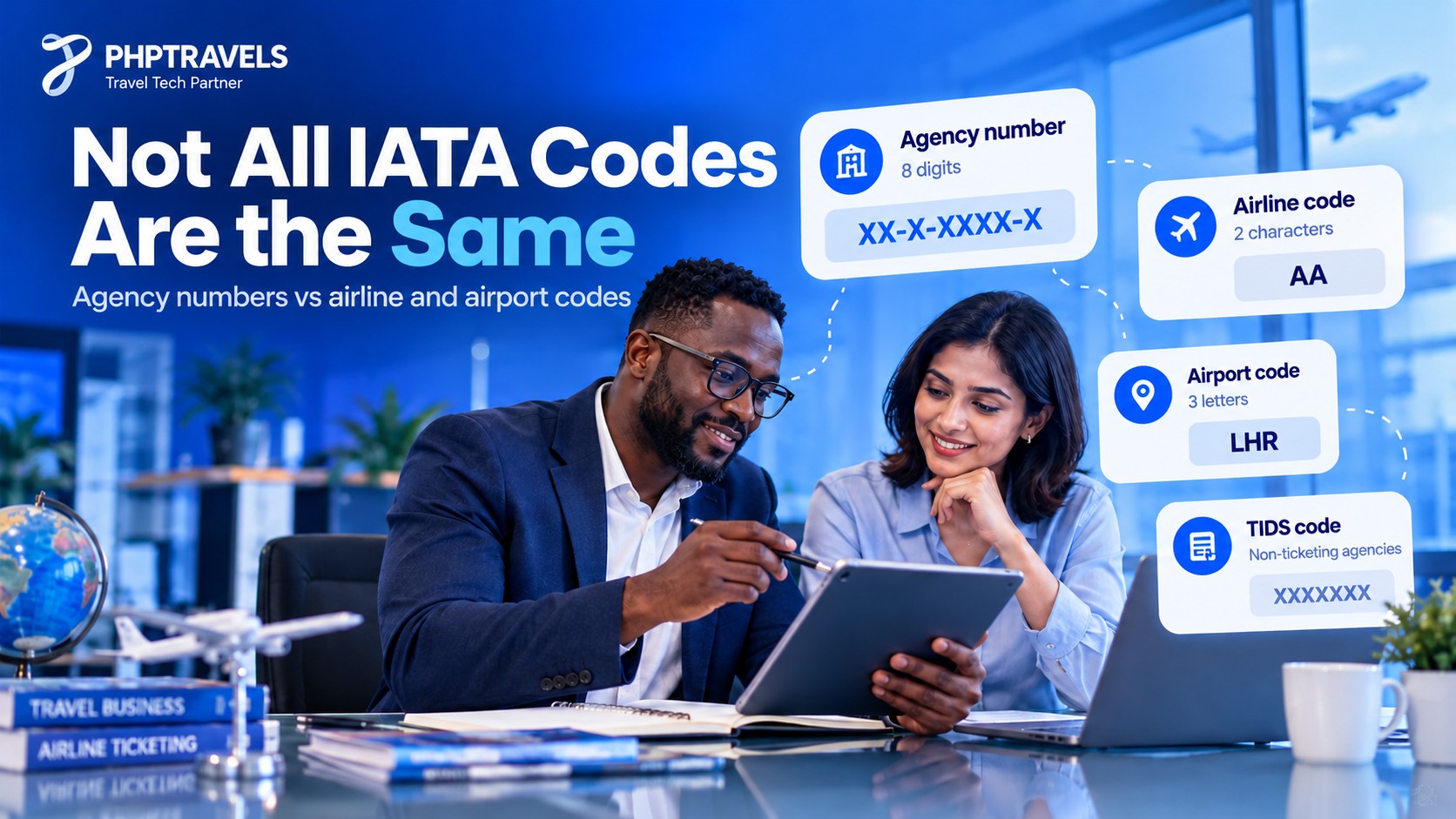
“IATA code” can mean at least six different things. Mixing them up is why many searches for an agency number end on an airport list, or the other way round.
| Code | Format | Example | What it identifies | Who gets it |
|---|---|---|---|---|
| IATA Numeric Code (agency “IATA number”) | 8 digits (7 + check digit) | 98417900 (IATA sample) | An accredited agency location | IATA-accredited agencies outside the USA |
| TIDS code | Same numeric structure | One per office | A non-accredited travel seller | Agencies, booking sites, tour operators and event planners outside the USA |
| IATAN / ARC number (USA) | 8 digits | ARC calls it an Agency Code Number | A US agency location | IATAN-accredited agencies; ARC-accredited agencies for ticketing |
| Airline designator | 2 characters (letters, or a letter and a digit) | EK, PK, G9 | An airline in reservations, schedules and tickets | Airlines, via IATA Codes |
| Airline accounting / prefix code | 3 digits | 176 (Emirates), 214 (PIA) | The airline on ticket numbers (accounting) and air waybills (cargo prefix) | Airlines, via IATA Codes |
| Location code | 3 letters | GVA, LHE, DXB, WAS (city) | An airport, a multi-airport city or an intermodal station | Assigned at an airline’s request |
The airline and location codes are described on IATA’s airline and location codes page. The airline examples come from IATA’s airline member list, and its location codes fact sheet uses Geneva (GVA) and the Washington metro code (WAS). The three-digit accounting code is the start of every 13-digit airline ticket number, so you can tell the validating carrier from the ticket alone.
If you just need to know which airline holds a designator or ticket prefix, IATA.co keeps a searchable list of airlines with their two-letter IATA code, three-letter ICAO code and, where known, the three-digit ticket prefix. None of these airline or airport codes is your agency’s number.
The agency programmes differ in one key way: an accredited IATA number lets the agency issue tickets and settle through the BSP, while IATA is explicit that TIDS agents cannot issue airline tickets through the BSP. A TIDS holder also may not present itself as an IATA Accredited Agent.
In the USA, IATA accreditation is not offered. IATAN, IATA’s US division, accredits agencies and lists them on CheckACode, while ARC accredits the locations that issue and settle airline tickets. An agency with both usually has the same number, which is why US agents use “ARC number” and “IATA number” interchangeably, as Travel Weekly’s legal columnist explains.
How to get an IATA number for your travel agency

There is no stand-alone “IATA number application”. The number comes with joining one of three programmes, and the right one depends on whether you will issue airline tickets yourself.
Route 1: IATA accreditation (you want to issue tickets)
Outside the USA, agencies apply through the IATA Customer Portal and pick an accreditation model:
- GoLite: simplified requirements and no minimum financial guarantee to issue tickets. There is no cash facility, so tickets are paid by customer card or IATA EasyPay.
- GoStandard: all standard IATA payment methods, including cash sales, which brings a financial assessment and a Remittance Holding Capacity (see IATA’s NewGen ISS overview).
- GoEurozone and GoGlobal: for groups with locations in several markets, with one set of financial criteria and a single financial guarantee.
When the process is complete, IATA’s BSP Manual for Agents says the agency receives an approval letter, the IATA crest, its IATA code, the signed Passenger Sales Agency Agreement and BSPlink access. Documents, financial criteria and fees vary by country, and we walk through them in how to get IATA travel agency accreditation.
Route 2: TIDS (you sell travel but do not ticket through the BSP)
The Travel Industry Designator Service gives non-accredited sellers an IATA/TIDS code so suppliers can recognise their bookings. It is free, available everywhere except the USA, and IATA reviews a complete application in 3 to 5 business days. Expect to provide business and ownership documents, a bank letter, any local travel licence and one recommendation letter from an IATA airline, a GDS or a major supplier.
TIDS suits hotel and tour sellers, inbound operators, event planners and agencies that ticket through a consolidator. IATA notes that some suppliers require a TIDS code before onboarding you.
Route 3: IATAN and ARC (agencies in the USA)
US agencies apply for IATAN accreditation, open to ticketing and non-ticketing agencies, home-based advisors and agents under a host. IATAN also runs a Non-Ticketing Program, which IATA points US sellers to as the closest equivalent of TIDS. To issue and settle tickets in the USA, an agency also needs ARC accreditation.
A simple rule: if you sell hotels, tours and packages and buy air through a consolidator, start with TIDS (or IATAN in the USA). If you will issue your own tickets, you need full accreditation.
How to verify an IATA number
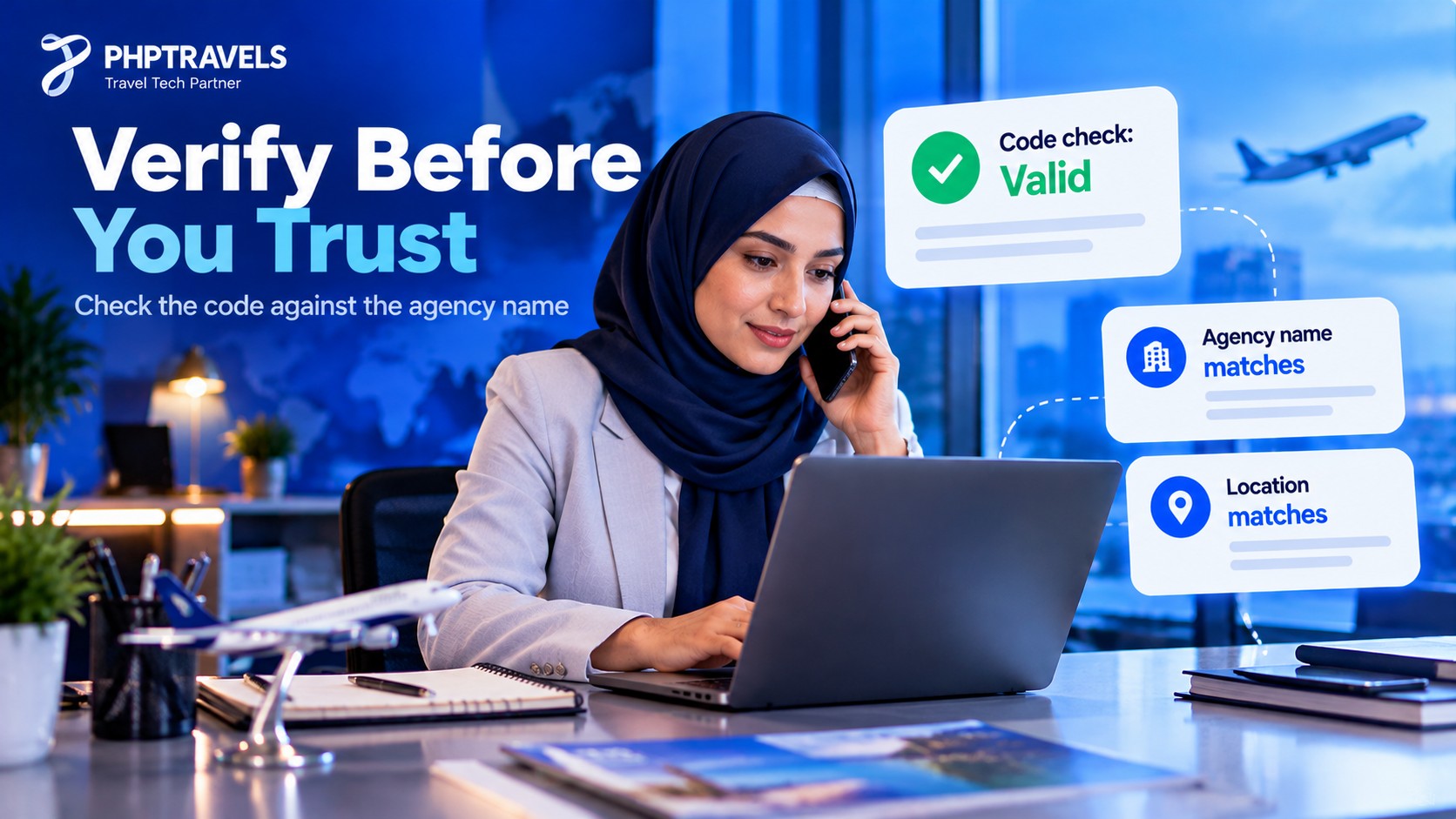
Airlines, consolidators, hotel chains and B2B platforms check agency codes before granting agent rates, credit or commission. When a supplier asks for “IATA verification” or runs an IATA number check, this is what they mean. IATA’s CheckACode comes in three forms:
- Evaluation edition (free): the CheckACode lookup takes a 7- or 8-digit passenger agency code, an 11- or 12-digit cargo code or a 10-digit ID card verification number. For an agency it returns the name and country.
- Professional edition (paid): CheckACode Professional adds agency class, site type, address, phone, approval date and NewGen ISS accreditation model.
- Web service (API): CheckACode Web Service validates codes automatically at sign-up, login or booking. IATA says it covers more than 180,000 travel and cargo agencies and updates daily.
A five-minute verification routine
- Get the code in writing with the agency’s legal name, trading name and address.
- Run the check-digit test to catch a mistyped digit.
- Look it up on CheckACode and compare the returned name and country (plus address and site type with Professional).
- For US agencies, add ARC Check, which shows ARC participation status and, via its API, accreditation type and ticketing authority.
- Record the date and result, and re-check before extending credit or raising a commission tier.
What the result means
IATA’s web service specification lists the answers: “Valid” (the code is in IATA’s database), “Code Not Listed” and “Format Invalid” (wrong length or non-digits).
A valid code with a different name is not automatically fraud. Common causes are a branch code shown under the head office name, a trading name that differs from the legal name, or a recent ownership change. Ask for the IATA approval letter or TIDS confirmation and a business registration document.
Also check which kind of code it is: a TIDS code can return “Valid” and still carry no BSP ticketing rights. And a brand-new code may not be in every supplier’s system; IATA warns some suppliers take up to 30 days to update.
Red flags: “we use our partner’s IATA number” (codes cannot be lent), the IATA Accredited Agent logo on a TIDS-only seller’s website, refusal to share the legal entity name, and pressure to ticket on credit before the check is done.
CheckACode covers agencies and ID cards only. Airline designators, accounting codes and airport codes are confirmed through IATA’s coding data instead.
Where your IATA number is used day to day

Once issued, the code follows almost every transaction the agency makes:
- BSP settlement: the BSP gives each agent one sales report and one remittance across participating airlines, managed in BSPlink, and access requires IATA accreditation (IATA BSP overview). Airlines also raise ADMs and ACMs to the agent there. See our IATA BSP guide.
- Ticket issuance: Resolution 822 exists to identify the places where traffic documents are issued. The ticket number starts with the airline’s accounting code; the agent’s numeric code identifies the issuing office. More in e-ticket meaning.
- GDS profile: your GDS office profile holds the code, so bookings and reports carry it automatically; IATA tells new TIDS holders to inform their GDS for this reason. Read about the global distribution system (GDS) and the PNR.
- NDC: IATA’s NDC and ONE Order data model has an IATA Number field for the requesting travel agency, and BSP services for NDC sales are open to accredited agents only. See NDC vs GDS.
- Commissions: hotels, car rental firms, cruise lines and tour operators use the code to match bookings to your agency, and IATA says thousands of suppliers rely on TIDS codes when granting commissions. Agencies selling non-air products often keep the code on each supplier record in a back-office CRM such as Travel CRM System, which keeps leads, bookings, suppliers, vouchers and invoices together. Our commission management guide covers tracking what is owed.
- ID cards: staff ID cards are verified on CheckACode with a 10-digit number tied to the agency; in the USA the card is for eligible staff of IATAN-accredited agencies. See our travel agent ID card guide.
- B2B onboarding: consolidators, bedbanks and B2B portals usually ask for a code at sign-up, which is the use IATA markets its web service for.
Store the code once, in the format suppliers expect (usually 8 digits, no spaces). If a supplier says your agency is not recognised, check for a missing check digit, a branch code entered for the head office, or an old code left on file after an ownership change.
Running ticketing operations once you have a number

The code gives you identity and, with accreditation, ticketing authority. It does not give you a sales channel or a booking workflow. Every air booking has three separate states: the reservation (PNR), the payment and the ticket. A paid booking that never reaches “ticketed” soon becomes a complaint or a debit memo.
Before choosing software, settle four questions:
- Content: your GDS contract, an airline NDC or direct API, or a consolidator?
- Issuance: on your own accreditation, or by a consolidator or host agency?
- Payment: customer card, BSP cash sales or a sub-agent wallet, and what happens if issuance fails after payment?
- Servicing: which changes and refunds run online, and which go to the supplier’s desk?
This is where PHPTRAVELS IATA ticket booking software fits. It is the booking layer between your supplier and your customers: it connects the GDS, airline API or consolidator you already have an agreement with, runs flight search, captures passenger details and keeps the returned booking reference or PNR.
It then takes customer payment or debits a B2B agent’s funds and records the result of issuance through the authorised supplier process. Staff see booking, payment and ticketing status in one admin, with separate markups and commissions for direct customers and partner agents.
What it is not: PHPTRAVELS does not grant an IATA number, accreditation or ticketing authority, and it does not include flight inventory; you bring your own supplier contracts and credentials. Nor is an IATA number always required to use it, because your flight supplier decides which credentials the connection needs. The platform is self-hosted with source code under a commercial licence, and current flight suppliers are listed on the integrations page.
Try the flow in the live demo, then estimate your setup on the pricing configurator.
IATA number FAQ
What is an IATA number for a travel agent?
It is the 8-digit IATA Numeric Code that identifies an accredited agency location to airlines, the BSP and suppliers. Individual agents work under their agency’s code and may hold an ID card linked to it.
Is there a free IATA number lookup?
Yes, for checking a code you already have. The free CheckACode evaluation edition confirms whether it is listed and shows the agency name and country. Searching by agency name needs IATA’s paid Global Agency Directory.
Is an IATA number the same as an IATA code?
Not usually. “IATA code” often means a 2-character airline designator or a 3-letter airport code. An agency’s number is an 8-digit code for one of its locations.
Can I use another agency’s IATA number?
No. Codes may not be lent or hired. You can sell through a consolidator or host agency that issues tickets on its own number under a written agreement, but the code stays theirs.
Key takeaways
Your agency code tells the industry who you are, whether you can ticket through the BSP and who earns the commission. Choose the programme that matches how you sell, store the code in one consistent 8-digit format, and verify partner codes on CheckACode before extending rates or credit. When you are ready to run the air desk itself, book a PHPTRAVELS demo to see booking, payment and ticketing end to end.