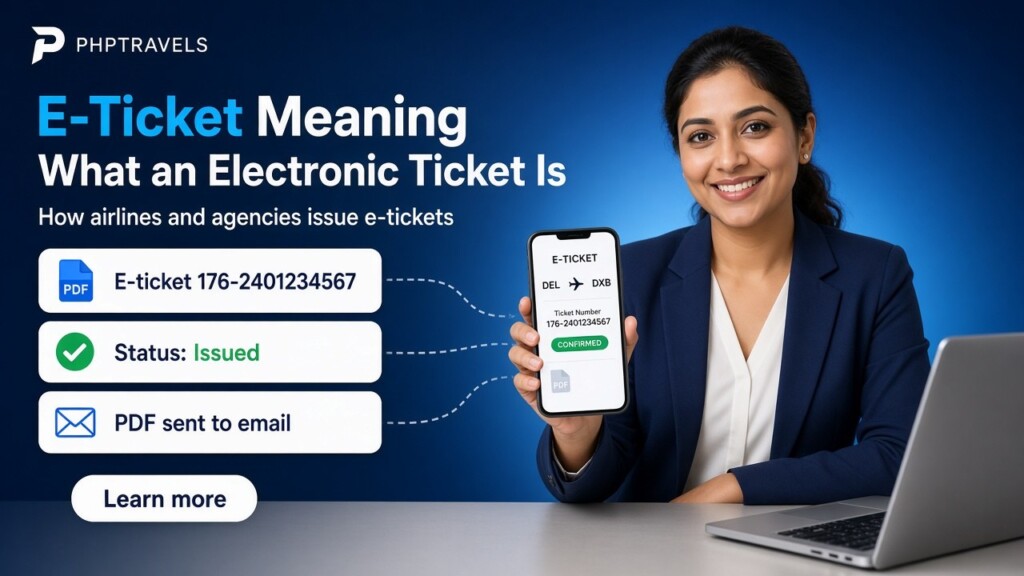
After you book a flight, the email you get is usually a PDF titled something like “e-ticket itinerary receipt”. It shows your name, flights, a booking reference and a long number such as 176-2401234567. That PDF is not the ticket itself. Understanding the e-ticket meaning clarifies what airlines store in their systems, what agencies actually issue, and what travellers need at the airport.
This guide covers what an airline electronic ticket is, how it differs from paper tickets, how the 13-digit ticket number is built, how it ties to a PNR, how agencies issue e-tickets through GDS, NDC and APIs, what travellers receive, and the voids, exchanges and name corrections that cause the most support tickets.
Note: “E-ticket” also appears in other contexts (for example Dominican Republic tourist entry forms, IRCTC railway bookings, and event tickets). The rest of this article is about airline electronic tickets only.
What an E-Ticket Is
An e-ticket (electronic ticket) is the digital record of a paid airline fare, stored in the validating carrier’s reservation and accounting systems. It replaces the multi-coupon paper ticket. IATA members completed the industry move to 100% electronic ticketing on 1 June 2008; where paper is still offered, airlines usually charge for it (electronic ticket overview).
Two things are easy to mix up:
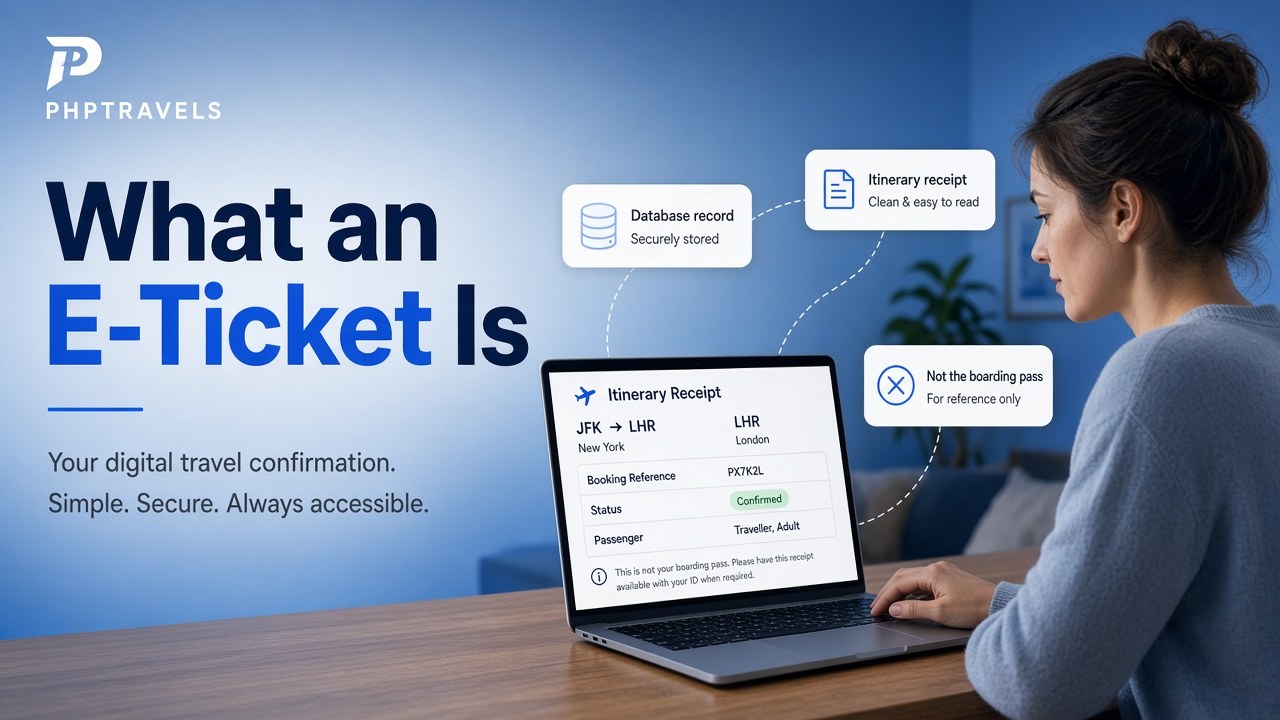
- The e-ticket record lives in airline and GDS databases. It is the accountable document: passenger name, flight coupons (open, used, void, exchanged), fare, taxes, form of payment and endorsements.
- The itinerary receipt is what the traveller sees: an email or PDF that quotes the ticket number, booking reference, flights, fare basis and baggage. Printing more than one copy does not create more tickets; the database record is authoritative.
In IATA data models, a ticket is the accountable document issued by or on behalf of a carrier, and the ticket number is the document number made of the airline code, form code and serial number (IATA AIDM Ticket). That is the e-ticket meaning in airline language: a paid, numbered electronic document, not the boarding pass and not the reservation alone.
U.S. rules also treat e-tickets as contracts of carriage. Under 14 CFR Part 253, ticketed passengers must be able to see the carrier’s terms; the itinerary receipt usually points to them rather than reprinting the full text.
E-Ticket vs Paper Ticket
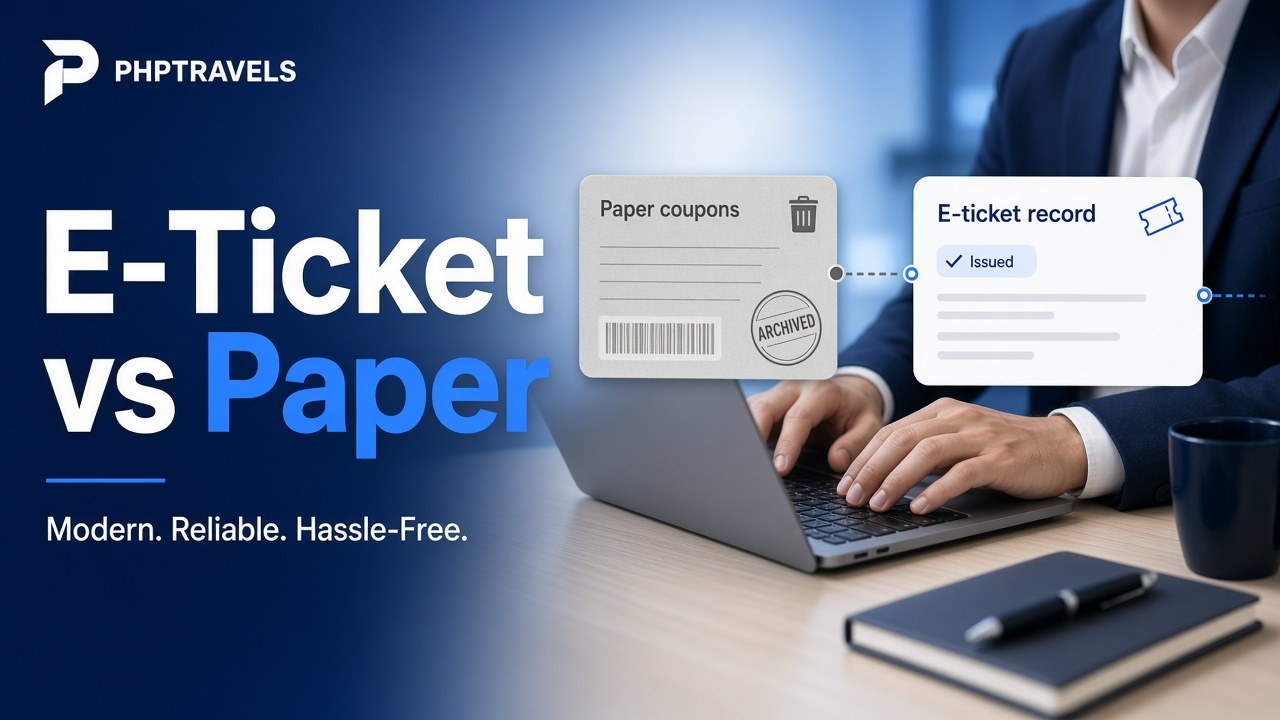
Paper tickets were physical coupon booklets. Each flight coupon had to be pulled at check-in or by an agent; lost tickets meant replacement paperwork and often a fee. Electronic tickets keep the same commercial idea (one coupon per flight for accounting) but remove the paper:
| Aspect | Paper ticket | E-ticket |
|---|---|---|
| Where it lives | Printed coupons the passenger carries | Airline / GDS database |
| Proof for the traveller | The booklet itself | Itinerary receipt (email, PDF, app) |
| Void / reissue | Physical coupon handling | Status change on the electronic coupons |
| Interline | Coupon exchange between carriers | Electronic interline messaging |
| Industry default since | Pre-2008 | 1 June 2008 (IATA members) |
For agencies the operational win is speed and auditability. Issuing, voiding and exchanging update coupon status in seconds, and the history sits on the ticket record. Paper still appears in edge cases (some charter or remote-station flows), but for scheduled IATA traffic the e-ticket is the normal product.
For travellers the practical difference is recovery. If a paper booklet was lost, replacement could take days. With an e-ticket, the airline or agency resends the itinerary receipt and the coupon status is checked in the host system in real time. That is why disruption desks can rebook and reissue the same day without waiting for physical documents to arrive.
E-Ticket Number Structure
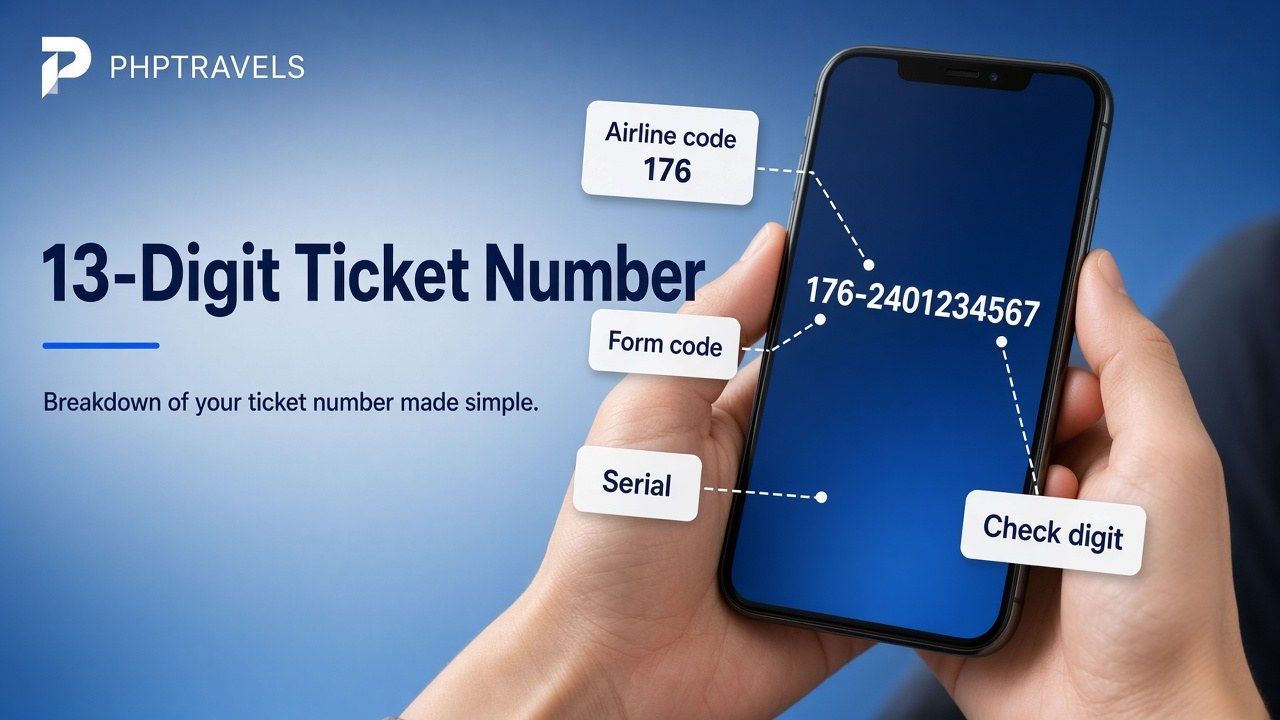
Airline e-ticket numbers are 13 digits (sometimes shown with a hyphen after the third digit). The usual breakdown is:
- 3-digit airline numeric code — identifies the validating (ticketing) carrier. Example: Emirates tickets commonly start with
176. - 4-digit form code — ticket stock / form series.
- 6-digit serial number — unique sequence for that form.
- Check digit — the final digit used for validation (included in the 13-digit string).
A sample invented number for illustration: 176-2401234567. Never reuse a real customer’s ticket number in training screenshots. The first three digits tell you which airline validated the sale; that may differ from the operating carrier on a codeshare. For decoding prefixes and two-letter codes, directories and agents often keep an airline-codes list next to the ticketing desk.
Related numbers you will see on the same booking:
- EMD (Electronic Miscellaneous Document) — also typically 13 digits; covers bags, seats, change fees and other paid extras.
- Conjunction tickets — multi-coupon itineraries that need more than one ticket document, linked as a set.
For a deeper walk-through of how ticketing sits in the sales flow, see our air ticketing guide.
How E-Tickets Tie to the PNR

The reservation and the ticket are different records with different jobs:
- The PNR (passenger name record) is the reservation: who is travelling, which flights are held, contacts and the ticketing time limit.
- The e-ticket is the payment document: it proves the fare was paid and gives the right to fly under the fare rules.
A confirmed PNR without a ticket can still auto-cancel at the time limit. A ticket whose underlying segments were cancelled or never confirmed causes check-in failures. After issue, the 13-digit ticket number is written into the PNR ticketing field so agents, airline desks and self-service tools can find both sides of the booking.
One PNR can hold several tickets (for example a family of four). A date-change reissue usually keeps the same locator and creates a new ticket number linked to the original. For the reservation side of this pair, read PNR meaning: what a passenger name record is and how it works.
How Agencies Issue E-Tickets (GDS, NDC and API)
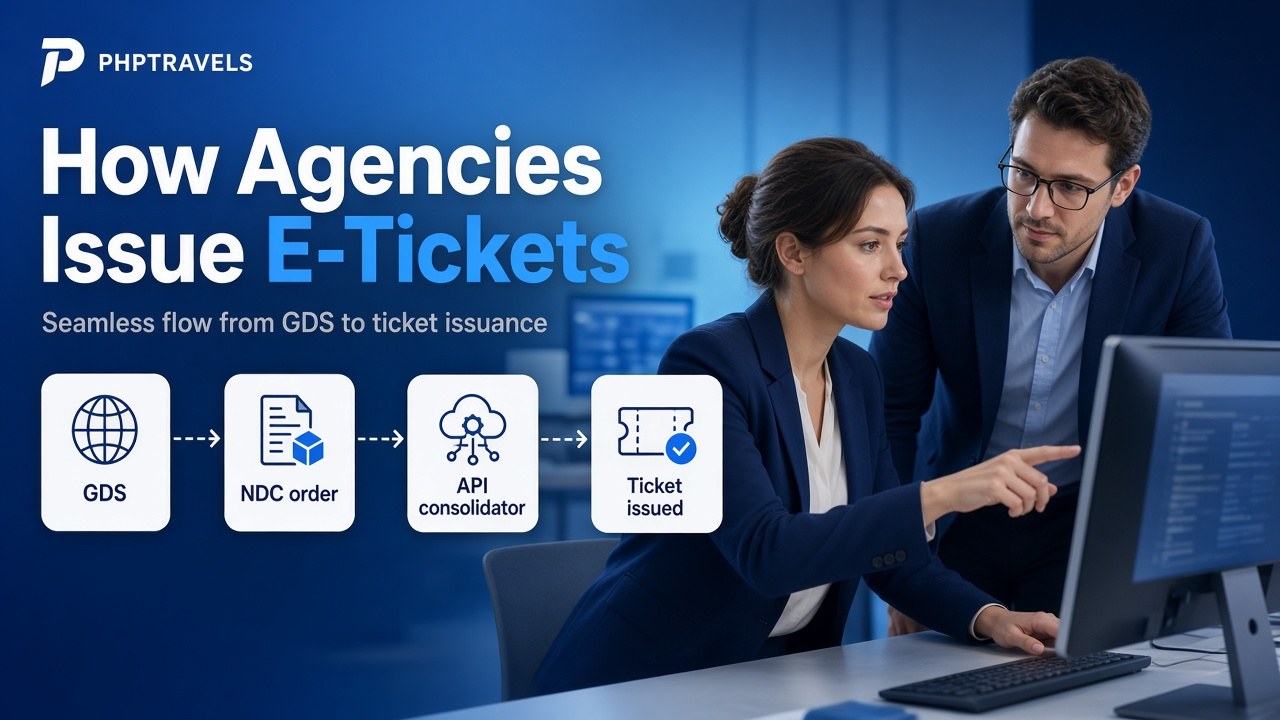
Travel agencies and OTAs do not “print” e-tickets. They send a ticketing instruction to a supplier that holds ticketing authority (IATA agency accreditation, an airline direct deal, or a consolidator that tickets on their behalf). The software you run only connects; it does not grant inventory or BSP stock by itself.
Common issue paths:
- GDS ticketing — Amadeus, Sabre or Travelport: agent or automated queue issues against the PNR before the ticketing time limit (TTL). Stock and reporting flow through the agency’s BSP/ARC arrangements.
- NDC / airline direct — Order Create / Order Change flows return an order ID and usually an e-ticket number when payment clears. Coupon states follow airline order rules rather than classic GDS ticket masks.
- Consolidator / LCC APIs — Mystifly, Duffel, PKFare, Kiwi and similar aggregators ticket (or confirm) under their contracts; your platform stores their references plus any airline locator and ticket number they return.
Before issue, good desks recheck fare and availability, confirm passport-name match, collect payment, then ticket. After issue they store: ticket number(s), validating carrier, form of payment, fare basis, tax breakdown, TTL history and any EMD numbers. Channel context for how these messages move is covered in airline distribution explained and NDC for travel agencies.
If you are evaluating white-label search-to-ticket flows, Travels Tech’s travel booking engine overview describes connecting GDS and NDC flight sources with fare rules and baggage shown before payment — the same sequence agencies need before an e-ticket can be issued cleanly.
What Travellers Receive
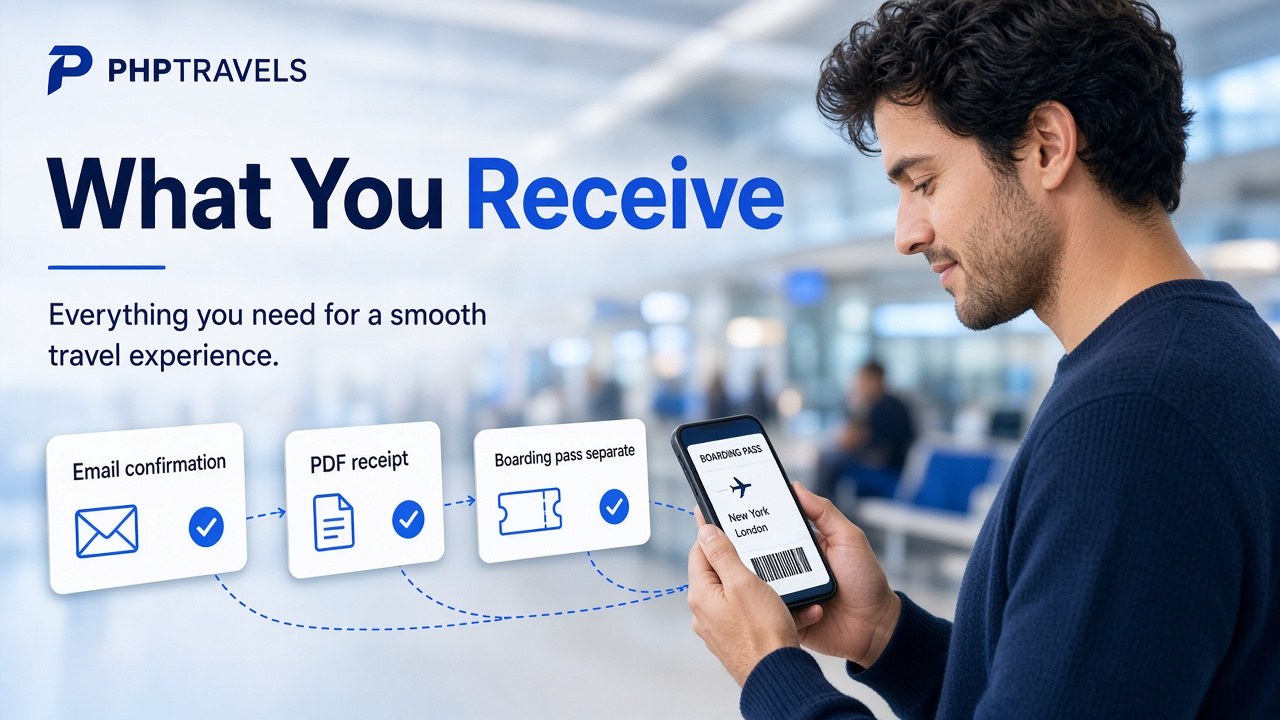
Travellers rarely see the raw e-ticket database record. They get delivery artefacts:
- Confirmation email with booking reference, ticket number and itinerary summary.
- PDF itinerary receipt suitable for visas, expense claims and airport document checks.
- Airline app / mobile view of the same booking, often with a barcode for check-in.
- Boarding pass — separate from the e-ticket. The e-ticket proves payment; the boarding pass (issued at check-in or online) authorises boarding that day.
Security and gate staff care that the name on the ticket matches the ID, the ticket coupons are open for those flights, and a boarding pass has been issued. Carrying only a PNR without a ticket number can fail when the airline system needs the ticket for baggage or irregular operations.
Agency OTAs should make the ticket number easy to find in the customer account and in support tools. When a passenger calls from the airport, the fastest path is often “read me the 13-digit number” rather than hunting through email threads. That is another reason to keep the e-ticket number on the same booking record as the PNR and any NDC order ID.
Common Problems: Void, Exchange and Name Correction

Most e-ticket support work clusters around three actions:
| Action | What it does | Watch-outs |
|---|---|---|
| Void | Cancels a ticket soon after issue (same-day / void window rules) | Miss the window and you must refund or exchange under fare rules; wrong voids trigger ADMs |
| Exchange / reissue | New ticket for changed dates, routing or cabin | Collect change fees and fare differences; keep old–new ticket links for accounting |
| Name correction | Fixes spelling or legal name changes | Airlines treat full name changes differently from minor corrections; some require cancel/rebook |
Agencies also fight coupon mismatches (ticket open but PNR cancelled), duplicate tickets on one passenger, and schedule-change TK messages that need passenger advice before travel. Keeping ticket numbers, EMDs and PNR locators on one customer record reduces those failures. For ops teams that want tickets, invoices and follow-ups in one place, Travel CRM System is built around booking-linked customer records rather than spreadsheets.
How Booking Software Helps Agencies Issue and Service E-Tickets

Booking software does not replace ticketing authority, but it should make issue and service reliable:
- Store GDS PNR, airline locators, NDC order IDs, e-ticket numbers and EMDs on one booking.
- Recheck price and availability before payment; use idempotent book/ticket calls so retries do not double-issue.
- Queue TTLs, failed issues and schedule changes for a human desk.
- Run void / refund / reissue from the booking where the supplier supports it, with a full action history for ADM disputes.
Where PHPTRAVELS fits
PHPTRAVELS is licensed travel booking software with a flights module that connects supplier APIs you already have credentials for. Live flight integrations on phptravels.com/integrations include Amadeus, Sabre, Travelport, Duffel, Mystifly, TBO Holidays, PKFare, Kiwi, Google Flights, Seeru and Kayak (always re-check that page before promising a supplier). The platform can hold PNR and e-ticket references on the booking, revalidate before payment, and support ticketing workflows the connected supplier exposes.
Honest limits: PHPTRAVELS does not issue tickets by itself, does not grant IATA accreditation or airline stock, and does not take a cut of your bookings. You bring supplier contracts, payment gateways and ticketing authority. To see a flight flow end to end, open the live demo; to size modules and APIs, use the pricing configurator. If you are still deciding how to sell flights online as a business, start with how to sell airline tickets online.
E-Ticket Meaning: Frequently Asked Questions

What is the e-ticket meaning in simple terms?
An e-ticket is the airline’s electronic record that your fare is paid. The PDF or email you receive is the itinerary receipt that quotes that record’s ticket number.
Is an e-ticket the same as a boarding pass?
No. The e-ticket proves purchase; the boarding pass is issued at check-in (online or at the airport) and lets you board that flight.
Where do I find my e-ticket number?
On the confirmation email or PDF itinerary receipt, usually labelled “e-ticket number” or “ticket number”. It is 13 digits; the first three identify the validating airline.
Is an e-ticket the same as a PNR?
No. The PNR is the reservation; the e-ticket is the paid document. You normally need both: the locator to manage the booking and the ticket number to prove payment.
Can an agency issue an e-ticket without IATA accreditation?
Often yes, by ticketing through a consolidator or an airline/LCC API that tickets under their own authority. The agency still needs a commercial agreement and credentials with that supplier. Software alone is not enough.
What if I lose the PDF?
Ask the agency or airline to resend the itinerary receipt. The e-ticket itself is still in the airline system; losing the PDF does not cancel the ticket.
If your team sells flights and wants one place to move from search to paid e-ticket under your brand, book a PHPTRAVELS demo, and when you are ready to pick suppliers and modules, check PHPTRAVELS pricing.