Introduction: The Evolution of Travel Technology
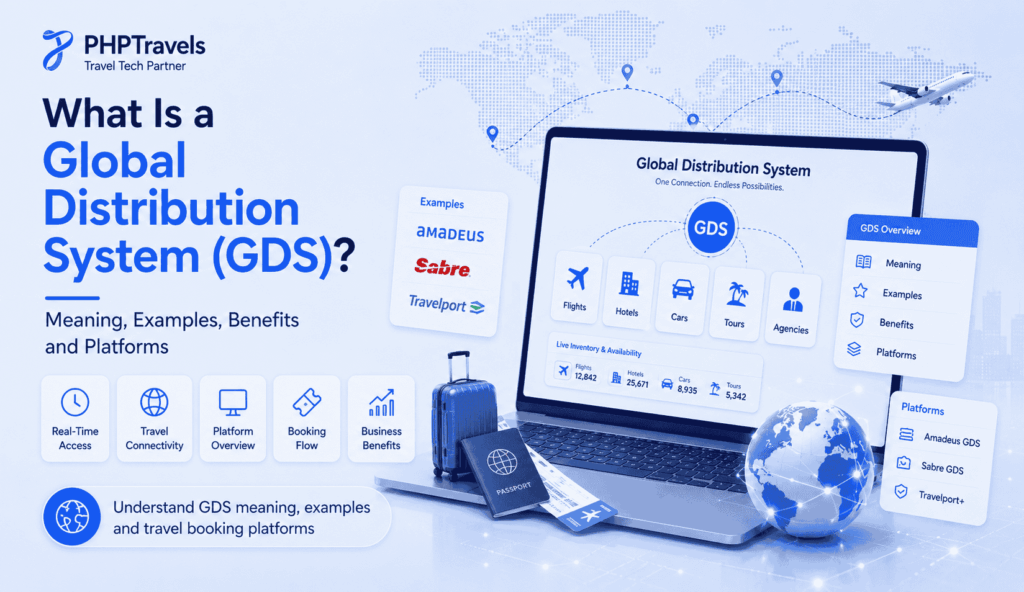
A Global Distribution System (GDS) is a travel booking network that helps travel agencies, OTAs and travel companies search, compare and book flights, hotels, cars and other travel services in real time. Common GDS examples include Amadeus, Sabre, Travelport, Galileo, Apollo and Worldspan.
What is a Global Distribution System (GDS)?
A Global Distribution System (GDS) is a travel booking network that connects airlines, hotels, and car rental providers with travel agencies, allowing real-time search, pricing, and booking from one system, unlike flight data display tools that focus only on search without booking control.
Example:
Amadeus, Sabre, and Travelport are the most widely used GDS platforms.
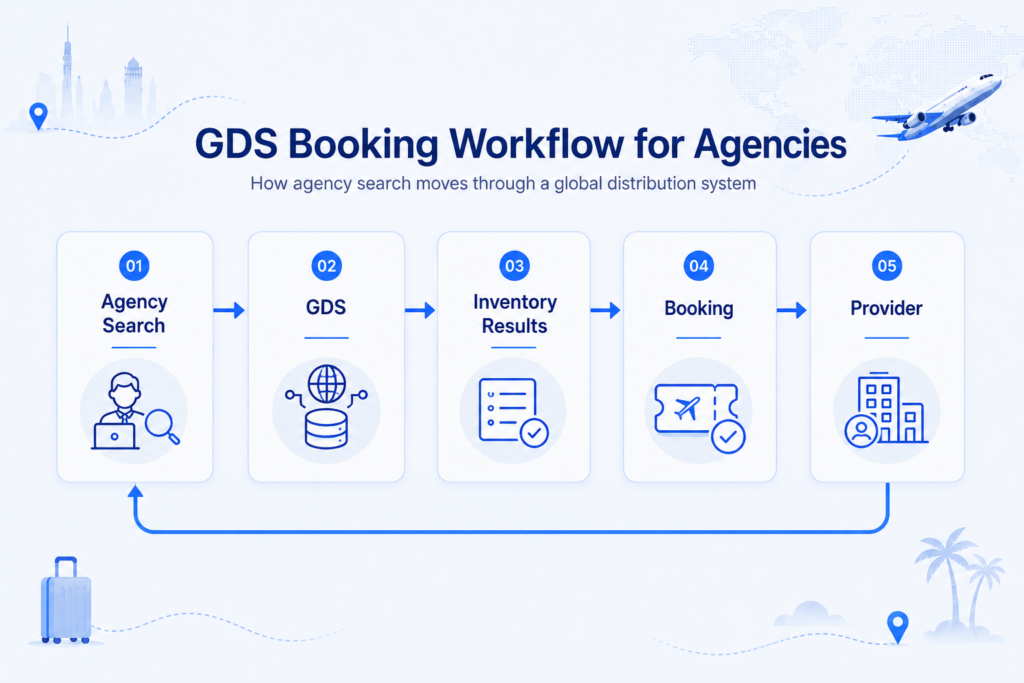
How Does GDS Work
- Travel agent searches
- GDS connects to providers
- Shows real-time prices
- Booking is confirmed instantly
What is a GDS? A Simple Definition
A Global Distribution System (GDS) is a vast computerized network that acts as a middleman between travel service providers (like airlines, hotels, and car rental companies) and travel sellers (like travel agencies and online booking websites).
In simple terms, it’s a one-stop-shop for travel agents to check real-time prices, availability, and to book travel products from all over the world, instantly.
Let’s break it down step by step, covering the origin, core functionality, and advantages plus some real-world examples that show why GDS is still relevant in the age of OTAs.
What Are Global Distribution Systems (GDS) and How Do They Work?
A Global Distribution System is a computerized network that enables transactions between travel service providers (like airlines, hotels, and car rental companies) and travel agencies or travel booking platforms.
It acts as a centralized database, offering real-time availability, pricing, and booking functionalities.
GDS = One Dashboard. Thousands of Travel Services.
Whether it’s booking flights, hotels, car rentals, or tours a GDS gives you unified access from a single dashboard, boosting productivity and reducing errors.
A Brief History of GDS
| Era | Development |
|---|---|
| 1960s | Airlines began exploring automation for seat reservations. |
| 1970s-1980s | Full-fledged GDS platforms emerged. Sabre was among the first. |
| 1990s | Integration of hotels, cars, and cruise bookings. |
| 2000s-Present | GDS platforms became internet-enabled and API-accessible. |
How Global Distribution Systems Work Behind the Scenes
When a travel agency searches for flights, hotels, or rentals, the GDS connects to multiple databases in real-time, and some agencies also layer in private airfare sourcing for more flexible flight pricing. It fetches prices, availability, and details, then instantly shows options to the agent. Once selected, the GDS records and confirms the booking while syncing with the provider’s system
| Component | Function |
|---|---|
| Travel Agencies | Use GDS for instant bookings |
| Providers | Feed inventory to the GDS |
| GDS System | Acts as the bridge between both sides |
Benefits of Global Distribution Systems for Different Users
For Travel Agencies
GDS offers real-time access to flights, hotel rooms, and cars from various providers, all in one platform. It boosts operational efficiency and gives agencies the ability to handle last-minute bookings with ease. By offering quick comparisons and bulk booking options, agencies can serve more clients in less time.
For Hotels & Airlines
Hotels and airlines can reach thousands of agents worldwide without increasing marketing spend. GDS ensures higher visibility in B2B markets and keeps occupancy rates optimized. Dynamic pricing and instant confirmation also reduce manual work.
For Corporations
Large enterprises benefit from streamlined travel expense tracking, automated bookings for employees, and centralized travel data. Many GDS platforms also integrate with corporate travel tools.
Pros and Cons of Using Global Distribution Systems
| Pros | Cons |
|---|---|
| Global reach across thousands of providers | Setup costs may be high |
| Centralized inventory for hotels, flights, cars | Complex for smaller agencies to integrate |
| Real-time bookings with less manual effort | Some providers require API support |
| Ideal for frequent corporate travelers | Rate parity issues if pricing isn’t well-managed |
Disadvantages and Challenges of Global Distribution Systems
While GDS is powerful, it’s important to understand the potential drawbacks before deciding to integrate one.
Some of the main disadvantages of global distribution systems include:
- High Setup and Integration Costs: Especially for small hotels or new travel agencies, the initial investment in software and training can be significant.
- Complexity: GDS platforms can be difficult to learn and require trained staff to use effectively, which can be a barrier for smaller agencies.
- Transaction Fees: Each booking made through the GDS usually comes with a commission or fee, which can eat into profit margins.
- Rate Parity Management: Hotels must ensure their room rates and availability are exactly the same on the GDS as on their own website and other OTAs, which can be a challenge to manage.
- Dependence on Technology: Your business relies on the GDS being online and functional. Any technical issues can halt your booking process entirely.
Understanding these challenges helps businesses plan better and choose solutions (like using a platform PHPTRAVELS) that can help mitigate these disadvantages.
Top GDS Providers in the Market
| GDS Provider | Main Focus | Popular Regions |
|---|---|---|
| Amadeus | Flights, hotels, cars | Europe, Asia, Global reach |
| Sabre | Flights, hotels, cruises | North America, Global |
| Travelport | Flights, hotels, tours | North America, Europe, Asia |
| TBO | B2B travel services | Middle East, Asia |
| Duffel | Modern airline access via APIs | Europe, Tech-savvy startups |
Examples of GDS Platforms in Action
When people search for examples of GDS, they usually want to know about the major players. The top GDS platforms are Amadeus, Sabre, and Travelport, but here’s a more specific look at how they are used:
- Amadeus: A dominant GDS example globally, used by major airlines and large travel agencies for complex international itineraries.
- Sabre: A strong example of a GDS that is very popular in North America, known for its powerful airline reservation system.
- Travelport (Galileo, Apollo, Worldspan): Another key GDS platform that offers a wide range of travel content, including flights, hotels, and ground transportation, and agencies can connect it through a dedicated Travelport GDS integration module to streamline B2B and B2C bookings.
- TBO Holidays: An example of a modern GDS that is strong in the Asia-Pacific and Middle East regions, focusing on streamlining the booking process for travel agents.
These are the primary types of GDS systems that form the backbone of the travel industry. Smaller or niche systems also exist, but these four handle the vast majority of global travel bookings.
Real-Life Use Case: Booking a Business Trip with GDS
Let’s say a corporate agency wants to book a 3-day conference package in Dubai. Using a GDS, the travel agent:
- Reserves a business-class round trip flight
- Books a 5-star hotel near the event venue
- Adds an airport pickup and drop with a local car rental provider
- Schedules a guided half-day city tour for the team
All done in one dashboard, in one go. That’s the power of an integrated Global Distribution System. to the power of GDS.
Considerations Before Using GDS
While GDS is powerful, it’s important to consider:
- Initial setup costs (especially for hotels and small OTAs)
- Commission models and transaction fees
- Proper pricing strategies to avoid loss in profit
- Need for training or third-party developers for integration
Pro Tips for Travel Agencies Using GDS
- Choose a GDS based on your target market (e.g., Amadeus for Europe, Sabre for the U.S.)
- Use advanced filters to personalize offers for your clients
- Integrate with CMS and CRM tools for better client experience
- Consider working with platforms like PHPTRAVELS to manage your GDS integrations effortlessly
GDS Integration with PHPTRAVELS
PHPTRAVELS offers seamless GDS integrations for multiple services:
- Flights: Amadeus, Travelport, Duffel, TBO
- Hotels: Agoda, Hotelbeds
- Tours: Viator, Tiqets
- Cars & Transfers: Custom modules
Even if you’re a startup or small agency, PHPTRAVELS makes enterprise-level GDS access affordable. With built-in APIs and intuitive dashboards, integration is quick and painless.
| Topic | Suggested External Link |
| GDS Overview | Wikipedia – Global Distribution System |
| Sabre GDS | https://www.sabre.com |
| Amadeus GDS | https://amadeus.com |
| Travelport | https://www.travelport.com |
Conclusion
The Global Distribution System (GDS) is the backbone of modern travel bookings. It empowers travel businesses to access, manage, and optimize travel products in real time ensuring increased bookings, improved efficiency, and better customer service.
If you’re in the travel business and not yet leveraging GDS technology, you’re missing out on global opportunities. Now is the time to integrate and grow.