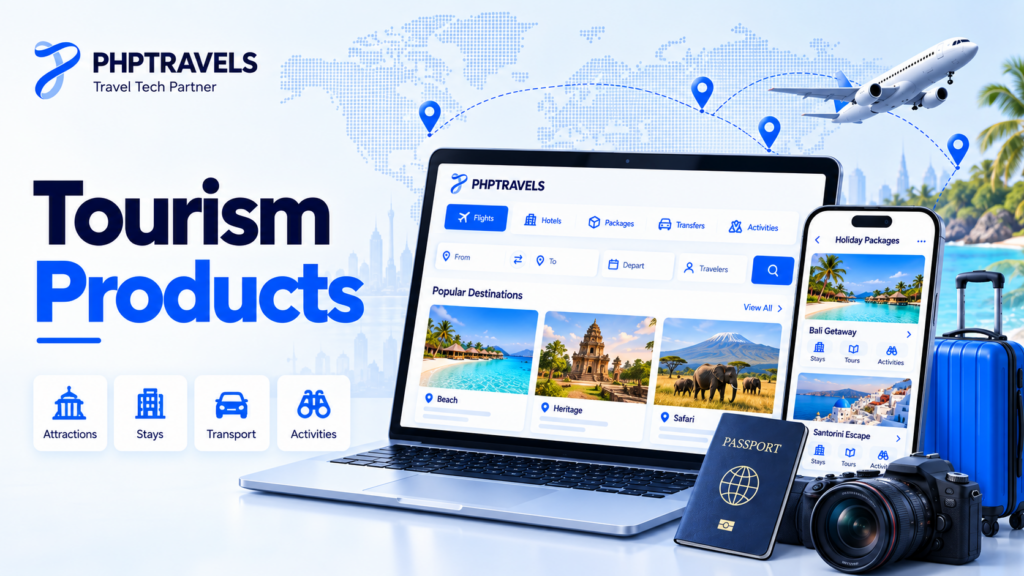
Tourism products are the complete mix of attractions, services, facilities and experiences that travellers consume during a trip. A tourism product can be as simple as a hotel stay or attraction ticket, or as complex as a multi-day holiday combining transport, accommodation, activities, transfers and supporting services.
Understanding how tourism products are created, priced and distributed is important for tourism students, travel agencies, tour operators, destination management companies (DMCs) and online travel agencies (OTAs). It also helps explain why selling travel is different from selling most physical goods.
What Is a Tourism Product?
A tourism product is the combination of tangible and intangible elements that creates the overall experience a traveller buys or consumes.
UN Tourism’s glossary of tourism terms defines it as a combination of tangible and intangible elements, including natural, cultural and man-made resources, attractions, facilities, services and activities built around a particular centre of interest. The product is priced, sold through distribution channels and goes through a life cycle.
Travellers rarely think about every supplier separately. They think about the trip.
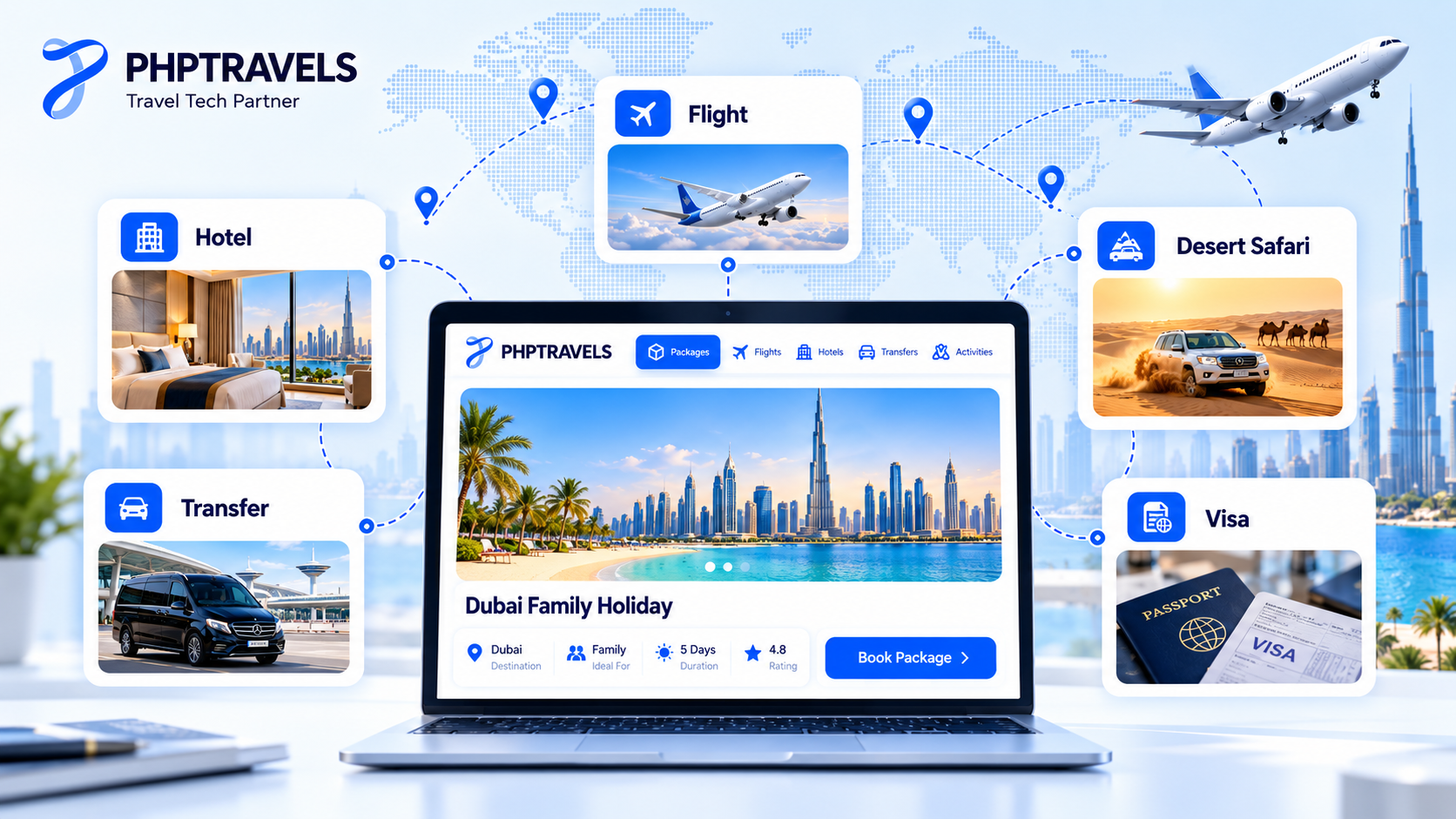
Consider a four-night Dubai family holiday containing:
- Return flights
- Four hotel nights
- Airport transfers
- A desert safari
- Visa assistance
Each component is a tourism service, but together they form a broader tourism product designed around one customer need: a family holiday in Dubai.
One hotel night is primarily an accommodation service. Once that stay is combined with transport, attractions, activities and supporting services, the traveller experiences a much broader tourism product. If you need the bigger economic picture, the WTTC Economic Impact Research tracks travel and tourism’s contribution to GDP and jobs by country.
Components of a Tourism Product (the 5 A’s)
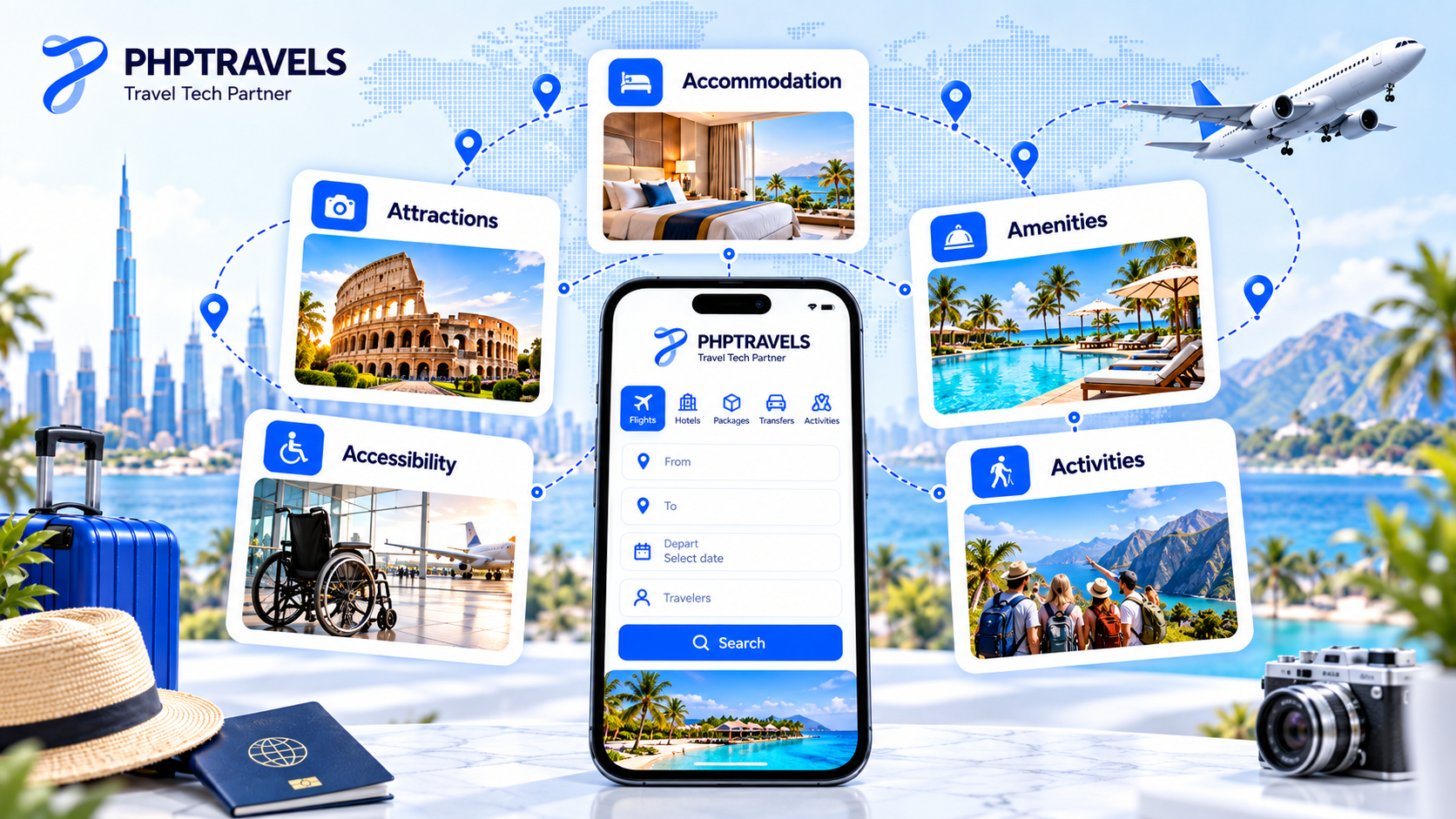
A common way to understand the components of tourism product is through the 5 A’s: Attractions, Accessibility, Accommodation, Amenities and Activities.
Some tourism textbooks and practitioners add a sixth category, Ancillary Services, covering supporting products such as insurance, visas, guides, telecommunications and other services required before or during travel.
1. Attractions
Attractions give travellers a reason to visit a destination. They may be natural, cultural, historical, recreational or purpose-built.
Examples include the Taj Mahal in India and Banff National Park in Canada.
Attractions can themselves be products when tickets or experiences are sold, but they also serve as the core around which larger packages are created. See our guide to the different types of tourist attractions for a detailed classification.
2. Accessibility
Accessibility covers how visitors reach a destination and move around once they arrive.
Examples include an Emirates flight to Dubai and a high-speed Shinkansen rail journey between Tokyo and Kyoto.
Accessibility can include international flights, domestic flights, rail, buses, ferries, rental cars, private transfers and local transportation.
3. Accommodation
Accommodation gives visitors somewhere to stay during their trip.
Examples include a Marriott hotel room in Dubai and a beachfront resort in the Maldives.
Accommodation products can range from hotels and resorts to serviced apartments, hostels, villas, camps and other licensed lodging.
4. Amenities
Amenities are facilities and supporting services that make a destination practical and comfortable for visitors.
Examples include restaurants inside a resort and visitor facilities such as parking, tourist information or Wi-Fi at an attraction.
Amenities may not always be the main reason for travelling, but poor supporting infrastructure can significantly reduce the quality of the overall product.
5. Activities
Activities are things travellers actively do at the destination.
Examples include a Dubai desert safari and a guided walking tour of Rome.
Activities can include sightseeing, diving, skiing, trekking, cooking classes, wildlife excursions, boat trips, wellness treatments and cultural experiences.
Ancillary Services
A sixth A is sometimes added for services that support the main trip.
Examples include travel insurance and an international eSIM data plan. Visa assistance, airport assistance and professional guiding services can also fall into this category.
| Component | What it includes | Examples | Who usually supplies it |
|---|---|---|---|
| Attractions | Places that motivate visits | Taj Mahal, Banff National Park | Governments, attraction operators, heritage bodies |
| Accessibility | Travel to and within destinations | Flights, trains, transfers | Airlines, rail operators, transfer companies |
| Accommodation | Overnight stays | Hotels, resorts, villas | Hotels, hotel groups, property operators |
| Amenities | Supporting destination facilities | Restaurants, Wi-Fi, visitor facilities | Hotels, restaurants, local operators |
| Activities | Things travellers do | City tours, safaris, diving | Tour and activity operators |
| Ancillary services | Supporting travel services | Insurance, visas, eSIMs | Insurers, visa services, telecom/eSIM providers |
Together, these elements determine whether the visitor experiences a collection of disconnected services or one coherent tourism product.
Types of Tourism Products
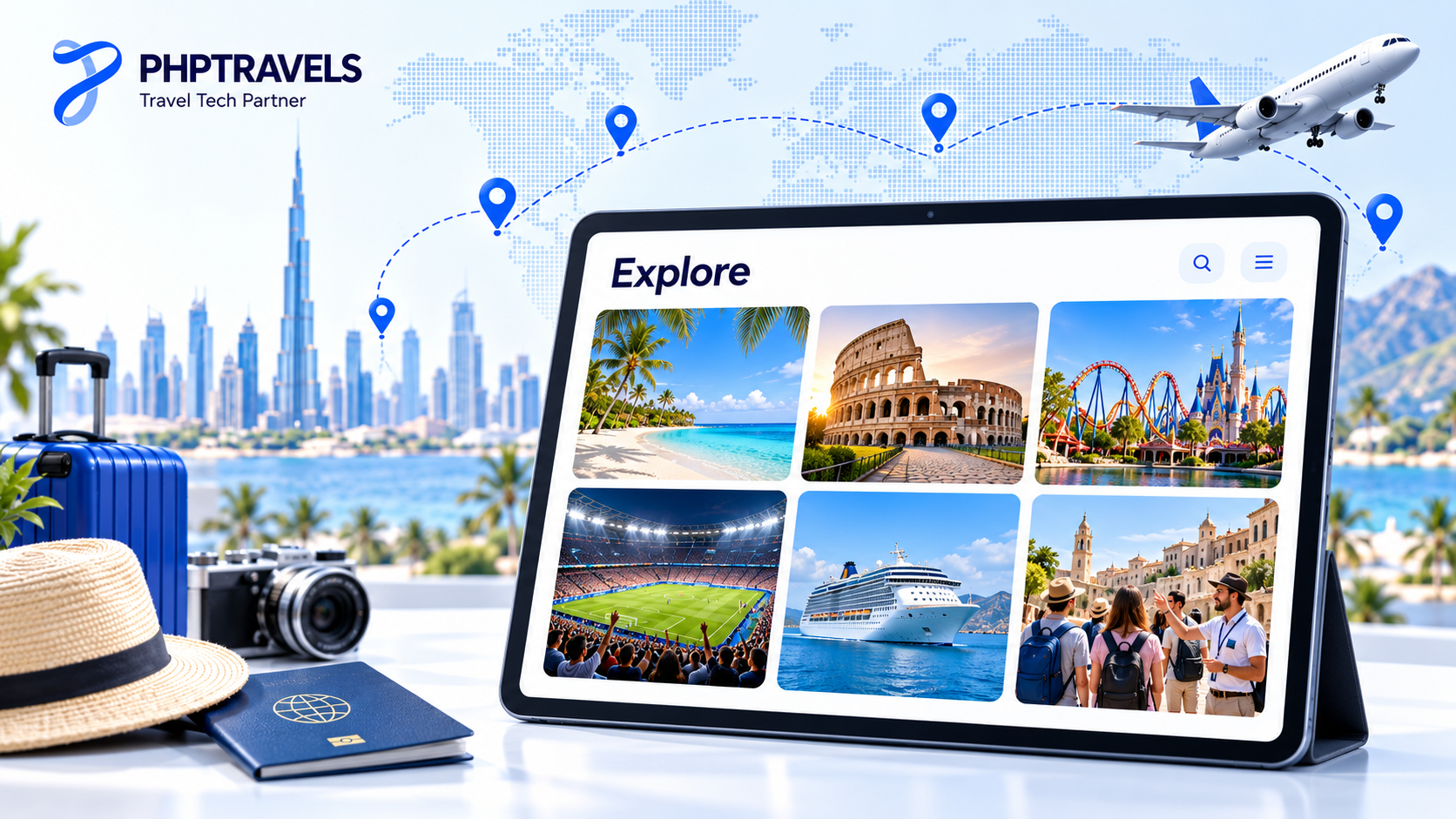
The types of tourism products can be grouped according to what creates the value for the traveller.
These categories are related to, but different from, the types of tourism. “Cultural tourism” describes the purpose or form of travel, for example, while a Taj Mahal admission ticket or heritage tour is a specific tourism product sold within that market.
Natural Tourism Products
Natural products depend primarily on landscapes, wildlife or environmental resources.
Examples include:
- Beaches
- Mountains
- National parks
- Wildlife reserves
- Waterfalls
- Coral reefs
Banff National Park in Canada is a good example of a natural attraction around which accommodation, sightseeing, transfers and outdoor activities can be packaged.
Natural and cultural destinations can also have formal heritage significance. UNESCO’s World Heritage programme covers places considered to have outstanding universal value and emphasizes protection of both cultural and natural heritage.
Cultural and Heritage Products
These products are built around history, traditions, architecture, religion, cuisine or local culture.
Examples include:
- Taj Mahal visits
- Museum tours
- Heritage walking tours
- Food tours
- Cultural festivals
- Archaeological site visits
The experience may involve both something tangible, such as a monument, and intangible elements such as storytelling, cuisine, music or local traditions.
Man-Made or Built Tourism Products
Some attractions are constructed specifically, or primarily, for entertainment, recreation, shopping or visitor activity.
Examples include:
- Disneyland theme parks
- Major shopping malls
- Observation towers
- Entertainment districts
- Stadiums
- Water parks
These products often combine admission, food, retail, entertainment and accommodation opportunities.
Event-Based Tourism Products
Events create travel demand for a particular date, location or purpose.
Examples include:
- Conferences
- Exhibitions
- Concerts
- International sporting events
- Trade shows
- Corporate incentives
Mega-events such as a World Cup or Expo-style international exhibition can generate demand for flights, rooms, transfers, tours and event-related packages at the same time.
Service Tourism Products
Many tourism products are individual services rather than attractions.
Common tourism services examples include:
- Airline tickets
- Hotel rooms
- Airport transfers
- Car rentals
- Guided tours
- Travel insurance
- Rail tickets
- Visa assistance
A travel agency can sell these individually or combine them with other products.
Packaged Tourism Products
A package combines multiple components under one itinerary, booking or commercial offer.
Examples include:
- FIT holiday packages
- Escorted group tours
- Cruises
- Day tours
- Honeymoon packages
- Hajj and Umrah packages
- Corporate travel packages
For example, an Umrah package might combine flights, hotels in Makkah and Madinah, airport transfers, ground transportation and assistance services.
Packaging also depends on the customer segment. Understanding the different types of tourists helps agencies design products around different budgets, motivations and travel behaviours, while our guide to types of tours explains how tour products themselves can be structured.
Characteristics of Tourism Products
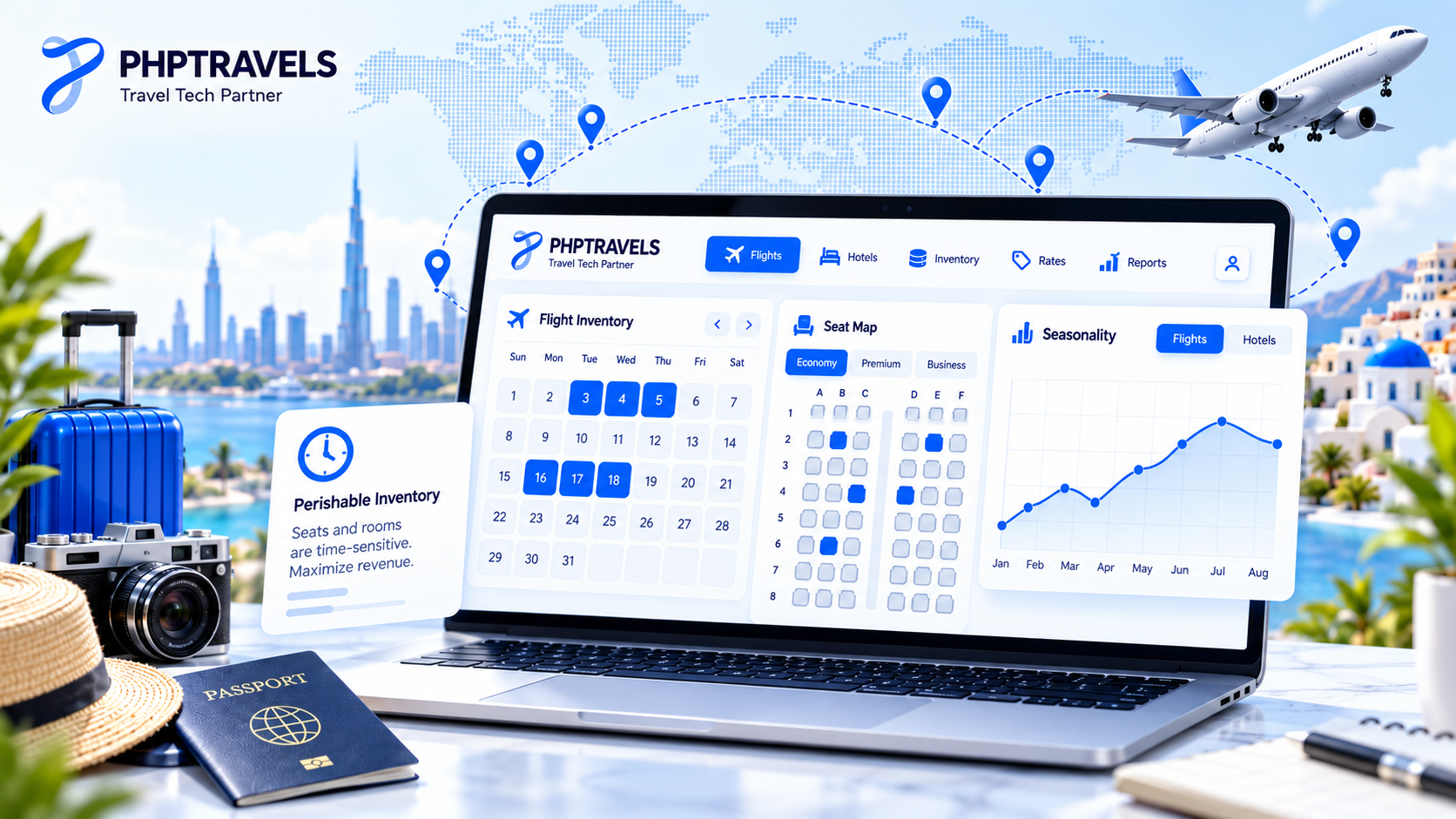
The main characteristics of tourism products explain many of the commercial challenges faced by travel agencies, hotels, airlines and tour operators.
Intangibility
A tourism experience generally cannot be physically inspected before purchase in the same way as a manufactured product.
For an agency or operator, this makes descriptions, images, reviews, itineraries, inclusions, cancellation conditions and trustworthy information especially important.
Perishability
An unused airline seat for yesterday’s flight or an empty hotel room from last night cannot be stored and sold tomorrow.
For travel businesses, perishability drives practices such as dynamic pricing, last-minute offers, room allotments, release periods and inventory management.
Inseparability
Many travel services are produced and consumed at approximately the same time.
A guided tour, for example, is delivered while the traveller is participating in it. Agencies therefore need reliable suppliers because fulfilment quality directly affects the customer’s experience.
No Transfer of Ownership
A traveller who buys a hotel stay or a safari gets the right to use it at a set time, not ownership of the room or the vehicle. The same room is sold again the next night.
For agencies, this means what you really sell is access under conditions, so check-in times, usage rules and cancellation terms need to be written as clearly as the price.
Heterogeneity or Variability
The same tourism product can produce different experiences depending on the employee, supplier, weather, timing, crowd level or customer expectations.
Travel businesses therefore need supplier standards, clear operating procedures and service-quality monitoring.
Seasonality
Demand for many tourism products changes significantly by season, holidays, school calendars, religious periods, weather and events.
Agencies and tour operators may need different pricing, marketing and inventory strategies for peak, shoulder and low seasons.
Fixed Location
Many tourism products cannot be delivered to the customer’s home. The customer must travel to the destination.
The Taj Mahal stays in Agra. The beach stays in the Maldives. This makes accessibility and transportation fundamental parts of the broader visitor experience.
Interdependence
A trip usually depends on multiple suppliers.
A perfectly operated hotel does not prevent dissatisfaction if the airport transfer fails or a badly managed tour ruins the itinerary. Agencies therefore need to manage the entire supply chain, not only individual products.
High Price Sensitivity
Many travellers compare similar flights, hotels and packages across several websites before purchasing.
Travel businesses need competitive sourcing, sensible markups and clear differentiation instead of assuming customers will buy purely because a product is available.
These characteristics are also why a travel agency business plan should consider seasonality, supplier dependency, margins, distribution and inventory risks rather than treating travel like ordinary retail.
Tourism Products Examples by Category
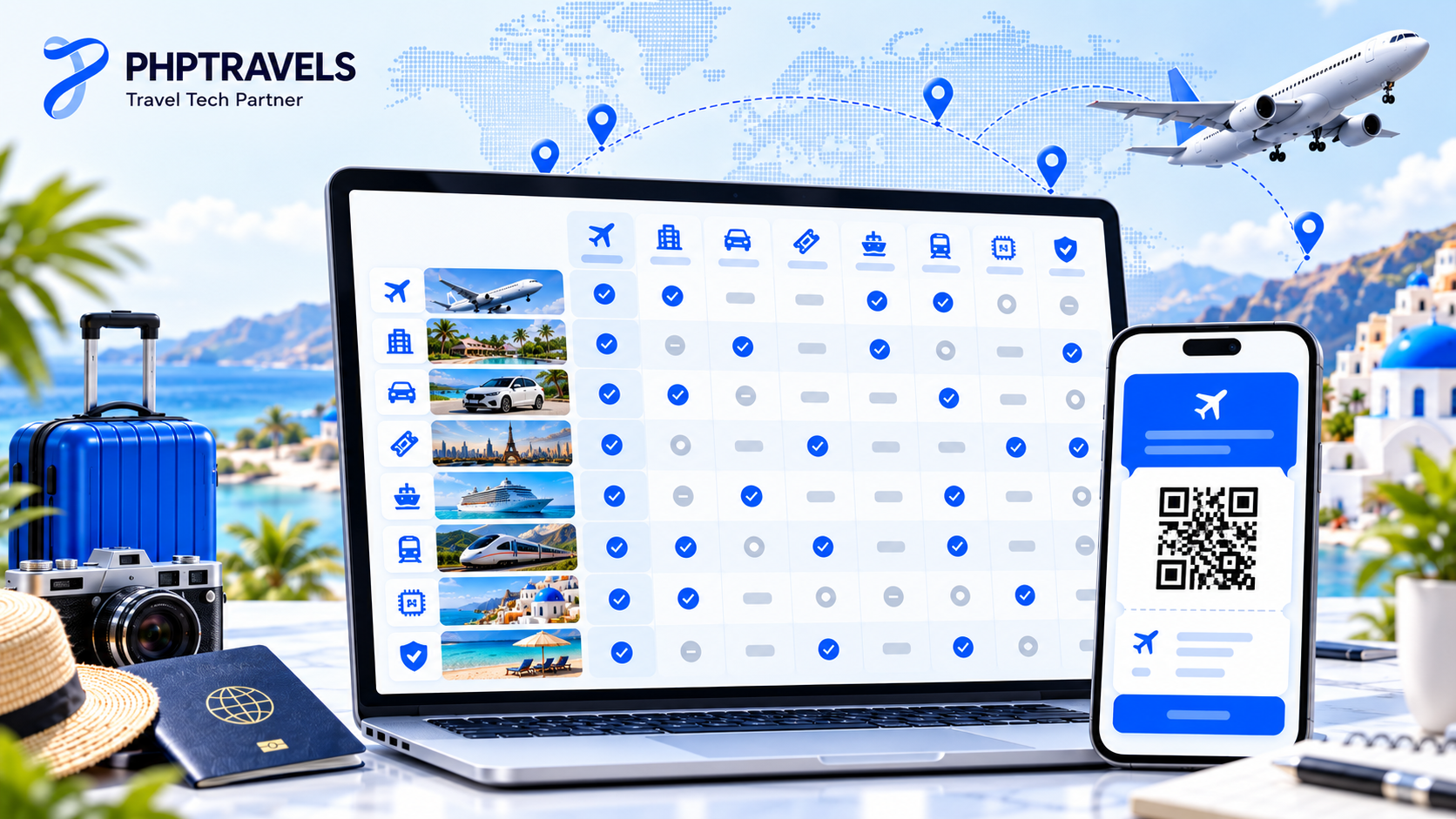
The following table gives practical tourism products examples covering transport, accommodation, activities and supporting services.
The selling model depends on the supplier contract. An agency might receive commission, obtain a net rate and add a markup, sell its own inventory, or charge a service fee where permitted.
| Product | Category | Typical supplier | How a travel business may sell it |
|---|---|---|---|
| International flight | Transport | Airline or airline distribution supplier | Commission, markup or service fee depending on agreement |
| Hotel stay | Accommodation | Hotel, bedbank or wholesaler | Commission or net rate + markup |
| Airport transfer | Transport | Transfer operator | Net rate + markup or commission |
| Car rental | Transport | Rental company | Commission or contracted rate |
| Guided city tour | Activity | Local tour operator | Commission, markup or own inventory |
| Desert safari | Activity | Local excursion operator | Net rate + markup |
| Cruise | Packaged travel | Cruise line | Commission or contracted commercial terms |
| Rail pass | Transport | Rail operator or distributor | Commission or markup where permitted |
| Theme park ticket | Attraction | Theme park/operator | Commission or contracted rate |
| Museum ticket | Attraction | Museum or ticket distributor | Commission or markup where permitted |
| eSIM data plan | Ancillary | eSIM provider | Commission or supplier-defined commercial model |
| Travel insurance | Ancillary | Licensed insurer | Commission where legally permitted |
| Visa assistance | Ancillary | Agency or specialist visa service | Service fee |
| Umrah package | Religious/package | Tour operator, airline, hotels and ground suppliers | Packaged margin or markup |
| FIT holiday | Package | Multiple suppliers | Combined markup |
| Escorted group tour | Package | Tour operator | Own inventory, net pricing or commission |
| Wedding destination package | Event/package | Hotels, venues and DMCs | Package margin and service fees |
| MICE package | Event/business | Hotels, venues, DMCs and transport providers | Negotiated package margin |
| Private sightseeing tour | Activity | DMC or local operator | Net rate + markup |
| Resort stay with activities | Accommodation/package | Resort | Commission or contracted package rate |
These examples show why the term tourism product can describe both a single bookable component and a combined experience.
How Travel Businesses Package and Sell Tourism Products
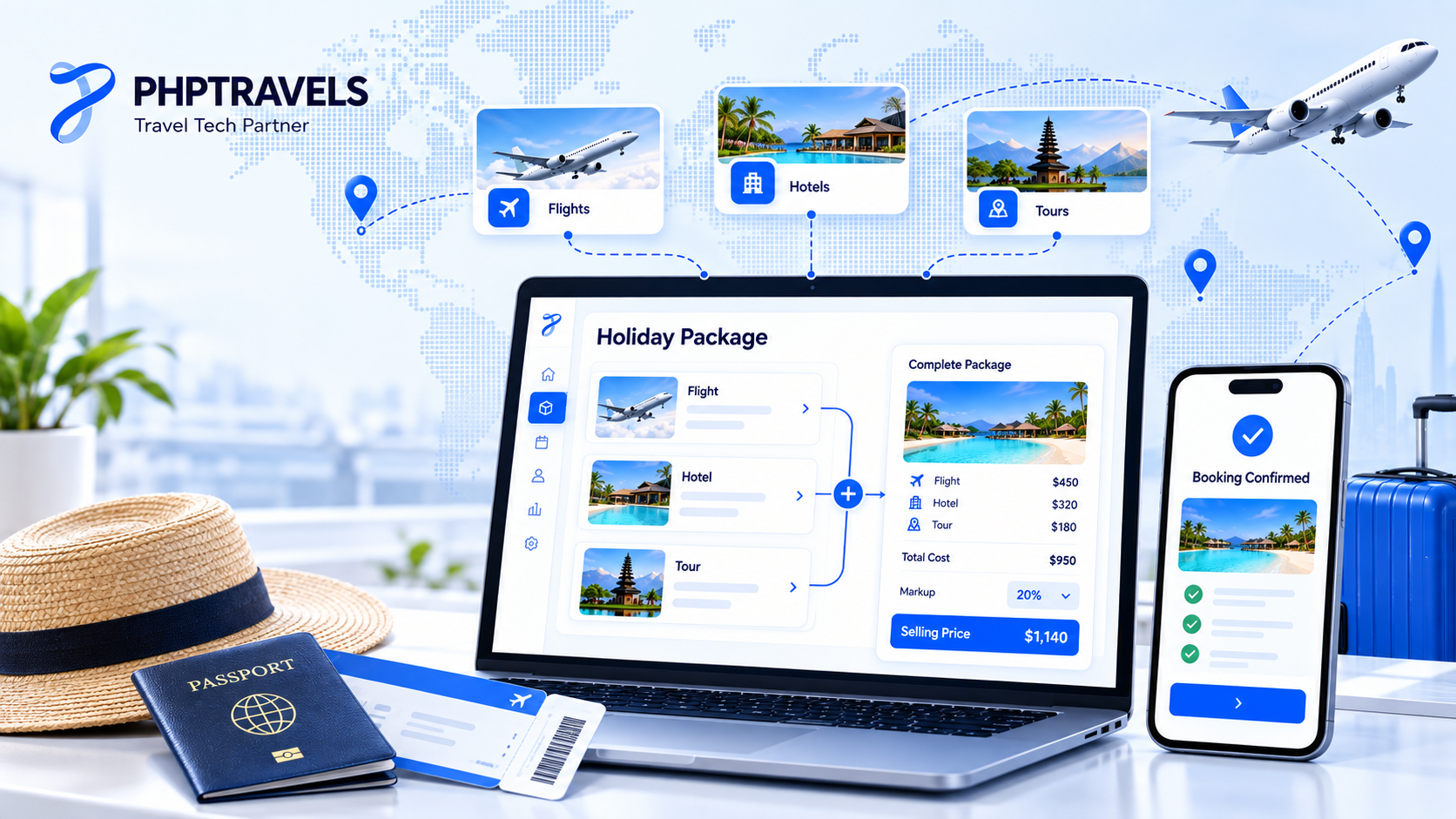
For an agency or tour operator, understanding the product is only the first step. The commercial work involves sourcing inventory, combining it, pricing it and distributing it efficiently.
Dynamic Packaging vs Fixed Packages
A fixed package has predefined services, dates, inclusions and usually a predetermined price.
For example:
5 nights in Istanbul + airport transfers + Bosphorus cruise + city tour.
Dynamic packaging creates the combination when the traveller searches or books. Flight, accommodation and other inventory can be retrieved from different suppliers and combined according to availability and pricing at that moment.
Fixed packages are common among traditional tour operators and group businesses. Dynamic packaging is particularly useful for online travel businesses offering many destination and date combinations.
Sourcing Tourism Products
Travel businesses can obtain inventory through several channels.
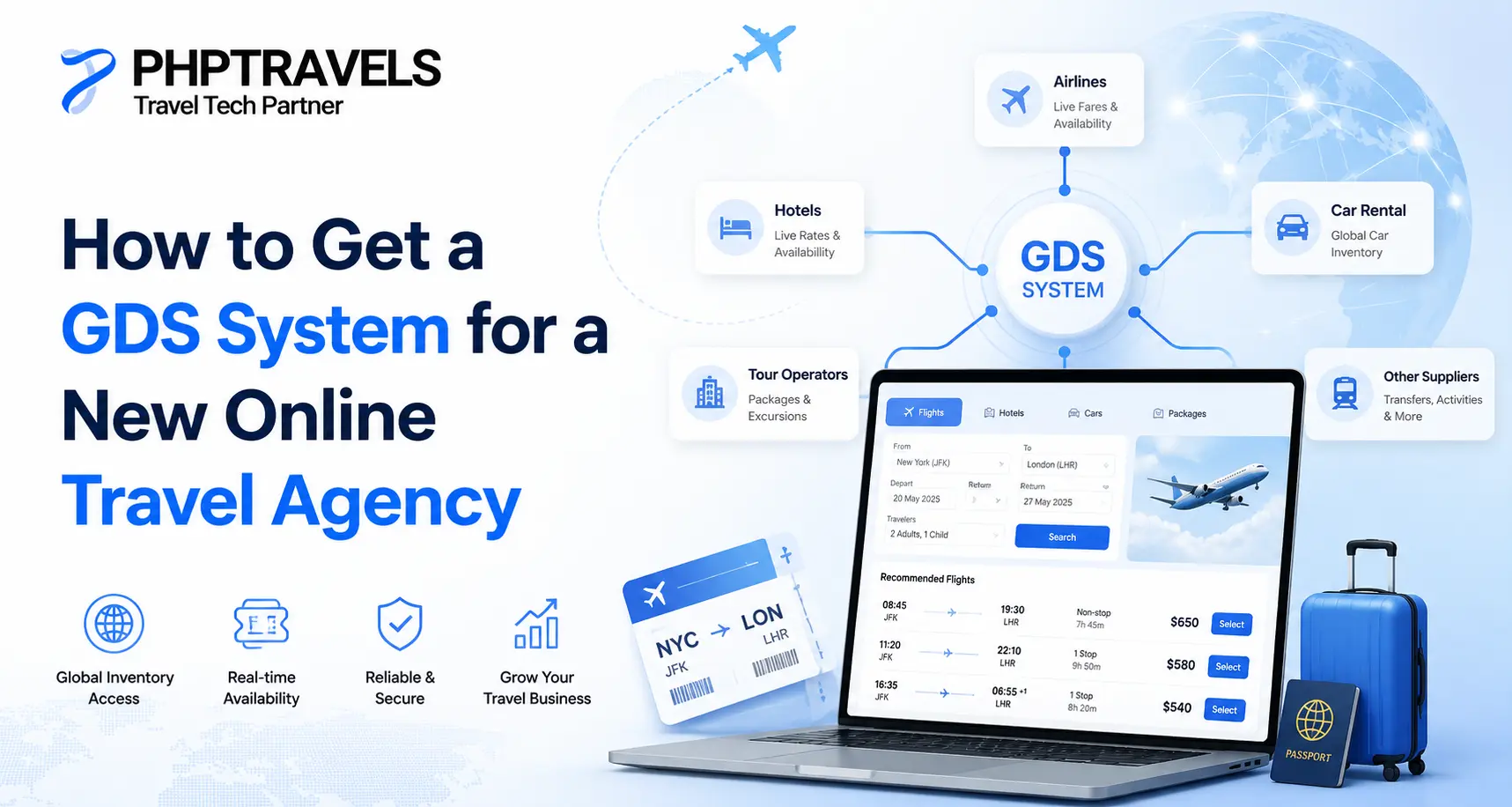
GDS: Airlines and other travel content may be distributed through systems such as Amadeus, Sabre or Travelport. Our GDS guide explains the role these systems play in travel distribution.
Bedbanks and wholesalers: Accommodation and other inventory can be provided at contracted or net rates for resale.
Direct contracts: Tour operators and DMCs may negotiate directly with hotels, transport operators, guides and attractions.
Supplier APIs: Online travel businesses can retrieve real-time inventory, pricing and availability through approved API integrations.
Manual inventory: An operator can create and manage products it controls directly, including its own tours, transfers or contracted hotel inventory.
Distribution technology becomes especially important when the same products must be sold through multiple channels. Our explanation of a distribution management system covers this concept in more detail.
Commission vs Net Rate + Markup
Two common pricing models are commission and markup.
With a commission model, the supplier determines the selling price and pays the distributor an agreed commission under the commercial contract.
With a net-rate model, the supplier gives the travel business a net cost and the seller adds a markup.
For example:
- Hotel net cost: $200
- Transfer cost: $50
- Tour cost: $70
- Total supplier cost: $320
- Agency markup: $48
- Example package selling price: $368
These numbers are only a worked example. They are not presented as typical industry margins or rates.
Depending on the business model, additional taxes, payment charges, service fees or other costs may also have to be considered.
Distribution Channels
Once tourism products have been sourced, travel businesses can distribute them through channels such as:
- Their own B2C booking website
- A B2B travel portal for sub-agents
- OTAs
- Corporate sales
- Offline sales teams
- Tour marketplaces such as Viator
- Affiliate or distribution partners
A business may use several channels simultaneously, with different prices or markup rules according to its commercial agreements.
Product Life Cycle
Tourism products also have a life cycle, as reflected in the UN Tourism definition.
A product is typically:
- Introduced to the market.
- Grown as awareness and sales increase.
- Matured when the offer becomes established or heavily competed.
- Refreshed or retired when customer demand, supplier conditions or market trends change.
A tour operator might refresh a mature package by changing hotels, adding new experiences, adjusting the itinerary or targeting a different customer segment.
This means product management is continuous. An itinerary that sold well three years ago should not automatically remain unchanged.
A Product Sheet Checklist
Because tourism products are intangible and depend on several suppliers, the product sheet does much of the selling. Before you publish any tour or package, check that it states:
- What is included and excluded, item by item (meals, entry tickets, guide language, transfers).
- Exact meeting point, start time and duration, not just “morning pickup”.
- Who delivers each part, so your team knows whom to call if something fails.
- Cancellation and change rules for every component, aligned with the strictest supplier’s terms.
- Release dates for allotments, so unsold rooms or seats go back before you are charged.
- Seasonal price bands and blackout dates.
- Documents the traveller needs, such as passport validity, visas or permits.
- Real photos and an honest description, since the customer cannot inspect the product before buying.
Where PHPTRAVELS Fits
PHPTRAVELS is licensed travel booking software, including tour operator software, that can be self-hosted with source code under a commercial licence or used in a managed setup. It provides modules for flights, stays, tours, cars, ferries, rail, eSIM, visa and insurance, together with a B2C storefront, B2B agent portal, back office, markup rules, manual inventory and supplier API connections such as Hotelbeds, Viator, Airalo and Amadeus. Buyers bring their own supplier contracts and credentials. PHPTRAVELS does not supply travel inventory, provide IATA licensing, underwrite insurance or take a percentage of bookings.
FAQ
What are the main tourism products?
The main tourism products include attractions, transportation, accommodation, activities, supporting services and packages that combine several of these components. They can be natural, cultural, built, event-based or service-based.
Is a hotel a tourism product or a tourism service?
A hotel stay is a tourism service and can also be sold as an individual tourism product. When combined with flights, transfers, tours or other services, it becomes one component of a larger tourism product.
What are the 5 A’s of a tourism product?
The 5 A’s are Attractions, Accessibility, Accommodation, Amenities and Activities. Some models add Ancillary Services as a sixth category.
Why are tourism products perishable?
Tourism products are perishable because unused capacity usually cannot be stored for future sale. If a flight departs with an empty seat or a hotel room remains empty for the night, that selling opportunity is permanently lost.
What is an example of a tourism product in India?
A Taj Mahal holiday package is one example. It might combine a hotel stay in Agra, transport from Delhi, admission, a licensed guide and additional sightseeing. The Taj Mahal itself is a cultural attraction, while the complete package represents the broader tourism product.
Conclusion
Tourism products range from individual hotel stays, flights and attraction tickets to complete holidays combining multiple suppliers and experiences. Understanding their components, characteristics, pricing and distribution helps agencies and tour operators build products that customers can actually book and suppliers can reliably fulfil. If you are planning to sell these products online or through agents, explore the PHPTRAVELS demo to see the booking workflow and review the available PHPTRAVELS pricing for the appropriate software package.