
A Distribution Management System DMS is software that helps businesses manage inventory, orders, and delivery operations in one place. It ensures products or services move efficiently from supplier to customer.
Why is it important? Because delays, inventory mismatches, or order errors directly affect customer experience and profitability. A DMS offers real-time stock visibility, order automation, route optimization, and reporting dashboards to avoid these issues.
For example, travel agencies using flight booking software and hotel booking engines benefit immensely from DMS integration, which synchronizes bookings across suppliers and prevents service conflicts.
DMS Full Form and Meaning
DMS stands for Distribution Management System. It is used by businesses to control product distribution, order processing, and inventory flow across different locations.
What Does DMS Stand For in Business
In business, DMS refers to a system that connects suppliers, warehouses, and customers to ensure smooth delivery and order management.
Advantages of Distribution Management System
- Better inventory control
- Faster order processing
- Reduced delivery errors
- Real time tracking
- Improved customer satisfaction
Features of DMS Software
- Inventory tracking
- Order automation
- Reporting dashboards
- Supplier integration
- Real time updates
How Distribution Management System Works
Simple steps:
- Inventory is tracked in real time
- Orders are processed automatically
- Delivery routes are optimized
- Reports are generated for decisions
Key Benefits of an Advanced Distribution Management System (ADMS)
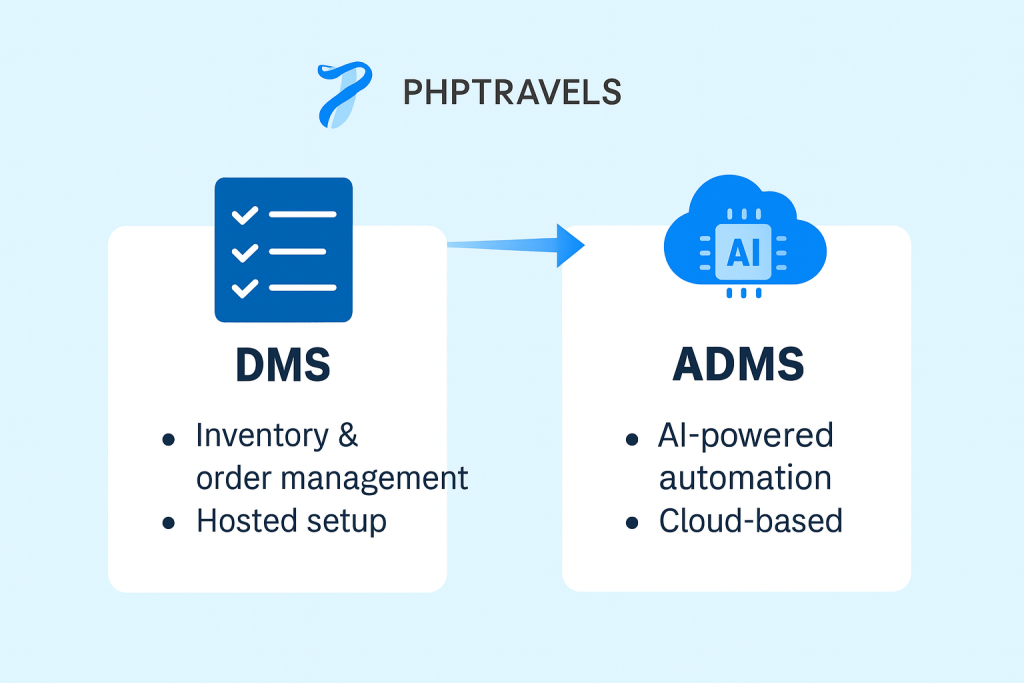
What is ADMS? An Advanced Distribution Management System is an evolution of DMS that includes AI-powered automation, smart grid monitoring, and predictive analytics. While common in energy utilities, it’s now increasingly valuable in service-based industries.
What makes ADMS powerful?
- Real-time system monitoring
- Predictive demand planning
- Automatic error prevention
- Load and outage balancing
Who uses it? Businesses with complex supply chains, like travel networks, logistics firms, and digital marketplaces.
Comparison:
| Feature | DMS | ADMS |
|---|---|---|
| Core Function | Inventory & order management | Grid + supply chain intelligence |
| Real-time Data? | Limited | Full AI-based insights |
| Ideal For | Travel agencies, retailers | Energy, large-scale operators |
When integrated into a B2C travel platform, ADMS can automate customer alerts, manage supplier errors, and reduce processing time by up to 30%.
Online Distribution Management Systems for Modern Travel Businesses

What is an online DMS? It’s a cloud-based system accessible anywhere, ideal for businesses with remote teams or global suppliers.
Why use one?
- 24/7 remote access
- Easy integration with ERP, CRM, and APIs
- Real-time reporting and alerts
These platforms, like PHPTRAVELS, connect with XML API suppliers and automate workflows from booking confirmations to supplier syncs. It’s the foundation of a modern travel management system.
How DMS Impacts Inventory and Resource Optimization
How does it help inventory? With DMS, you can:
- Predict demand using real-time trends
- Automate reordering to avoid overstocking
- Adjust inventory across branches with ease
How does it help with staff and resources? It enables better scheduling, faster task routing, and workload balancing. For instance, in a travel CRM system, DMS syncs client data, inventory, and response timelines—boosting efficiency.
Real-World Use Case in the Travel Industry
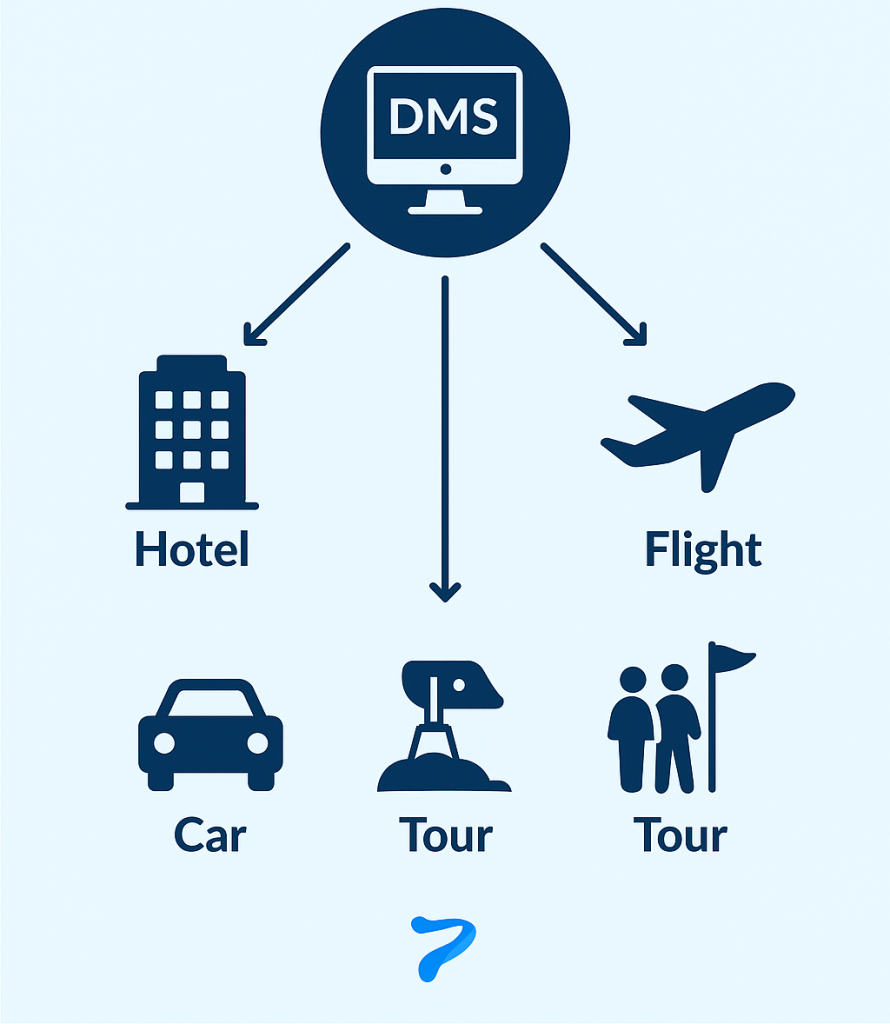
Let’s say a customer books a multi-leg trip involving hotels, flights, transfers, and tours. A robust DMS:
- Syncs availability using GDS
- Updates client itinerary across platforms
- Flags pricing errors or inventory mismatches
As travel tech continues to evolve (see 12+ travel trends), DMS adoption is no longer optional. It’s a necessity to stay competitive and profitable.
FAQs
What is a Distribution Management System?
A distribution management system (DMS) is software that automates and manages the movement of products, services, and information throughout the supply chain.
What is Advanced Distribution Management System?
An ADMS enhances traditional DMS by adding smart features like predictive analytics, outage detection, and real-time performance tracking, often used in power, retail, and logistics sectors.
What is a widely used inventory management system in distribution centers?
Warehouse Management Systems (WMS) are most widely used. They provide real-time inventory visibility and integration with DMS for smoother distribution.
What is a widely used inventory management system in many distribution centers? WIP, CBP, WMS, OSHA?
WMS is the answer. Others like WIP or CBP serve manufacturing planning. WMS manages physical inventory flow, which is what distribution centers need.
What is the RPM command to list installable packages in Linux?
Use the command yum list available to display installable packages in RPM-based systems like CentOS.
How does supply chain management create alliances in a distribution system?
It builds trust through data sharing, coordinated logistics, and joint forecasting—making all parties faster, leaner, and more reliable.
Final Thoughts
Distribution Management Systems are no longer just backend utilities. They’re central to business agility, service reliability, and customer satisfaction. Whether you’re operating a small tour agency or a large travel brand, integrating DMS or ADMS can significantly cut costs, speed up processes, and give your business a competitive edge.
Looking to upgrade your travel tech? Start with PHPTRAVELS — the all-in-one platform built for scale.