
Travel agencies make money in three main ways: commissions paid by suppliers (hotels, tour operators, cruise lines, car rental firms), markups they add on top of net or wholesale rates, and service fees charged directly to travelers. Online agencies stack extra income on top: ancillaries such as eSIMs, insurance and transfers, B2B sales to sub-agents, and affiliate or content revenue. Airline tickets, by contrast, usually earn little or no commission, so most agencies charge a ticketing fee instead.
This guide breaks down each revenue model, what it typically pays, when the money actually arrives, and a worked example of what one online booking really earns after costs. If you run, or plan to run, an online travel business, this is the margin map you need before you choose suppliers and software.
How Do Travel Agencies Make Money? The Short Answer
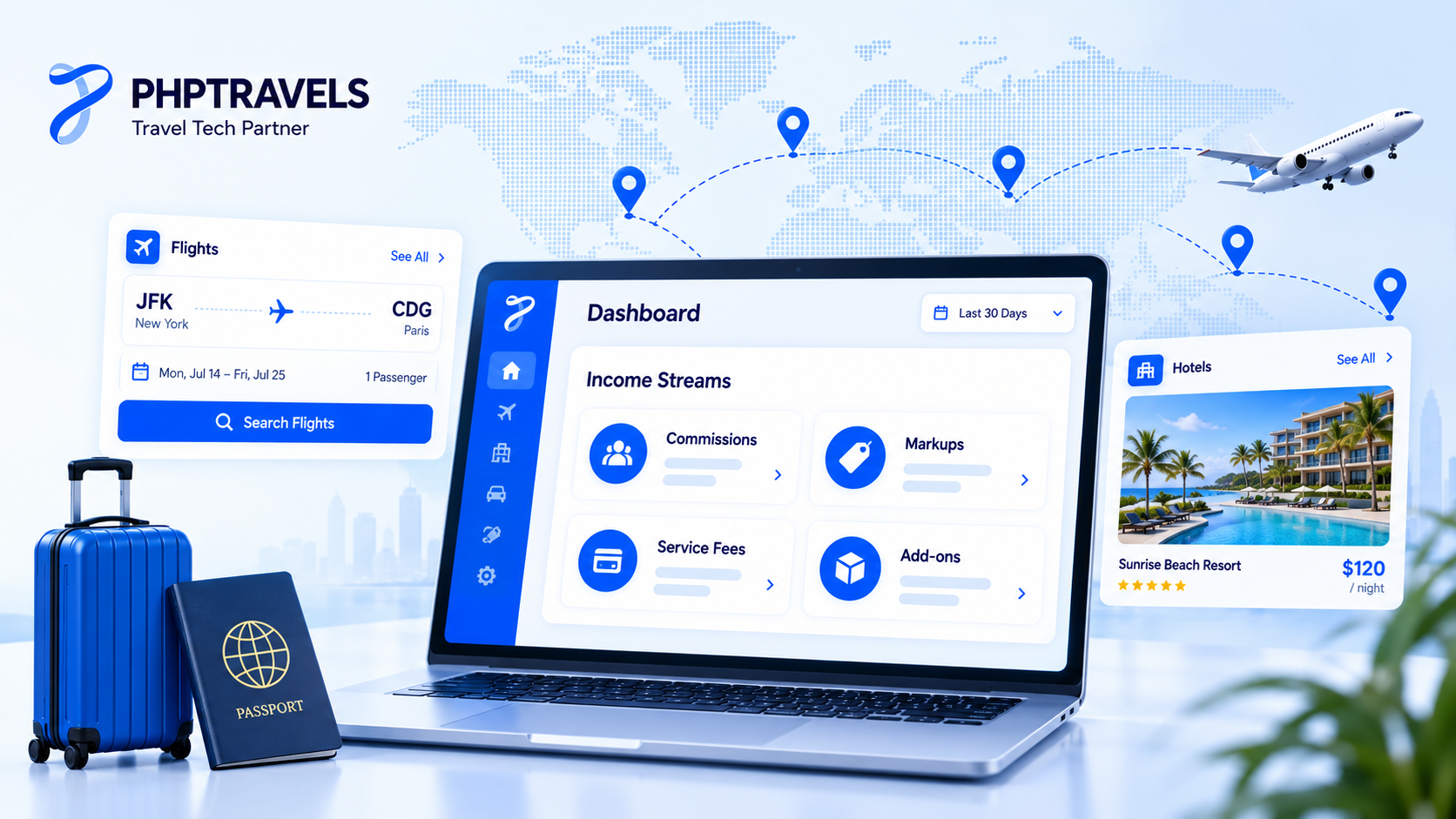
Every booking an agency handles earns money from one of two directions: the supplier pays the agency (commission) or the traveler pays the agency (markup or fee). Most profitable agencies use both.
- Supplier commissions – a percentage of the booking value, paid by hotels, tour operators, cruise lines and car rental companies.
- Markups on net rates – the agency buys at a wholesale price and sets its own selling price.
- Service and ticketing fees – charged for planning time, flight ticketing, changes and complex itineraries.
- Ancillary revenue – eSIMs, travel insurance, transfers, activities, visas and seat or baggage extras.
- B2B and white-label income – selling inventory to other agents with your margin built in.
- Affiliate and content income – commissions earned from links, widgets and travel content.
- Volume bonuses and overrides – extra commission once you hit sales targets with a supplier.
Commissions still dominate the industry: according to AltexSoft’s analysis of agency revenue, around three-quarters of agency revenue still comes from commissions and overrides. But the share coming from fees and markups is rising, and online agencies that control their own pricing tend to keep more of every booking.
Commission vs Markup vs Service Fee: The Three Core Revenue Models
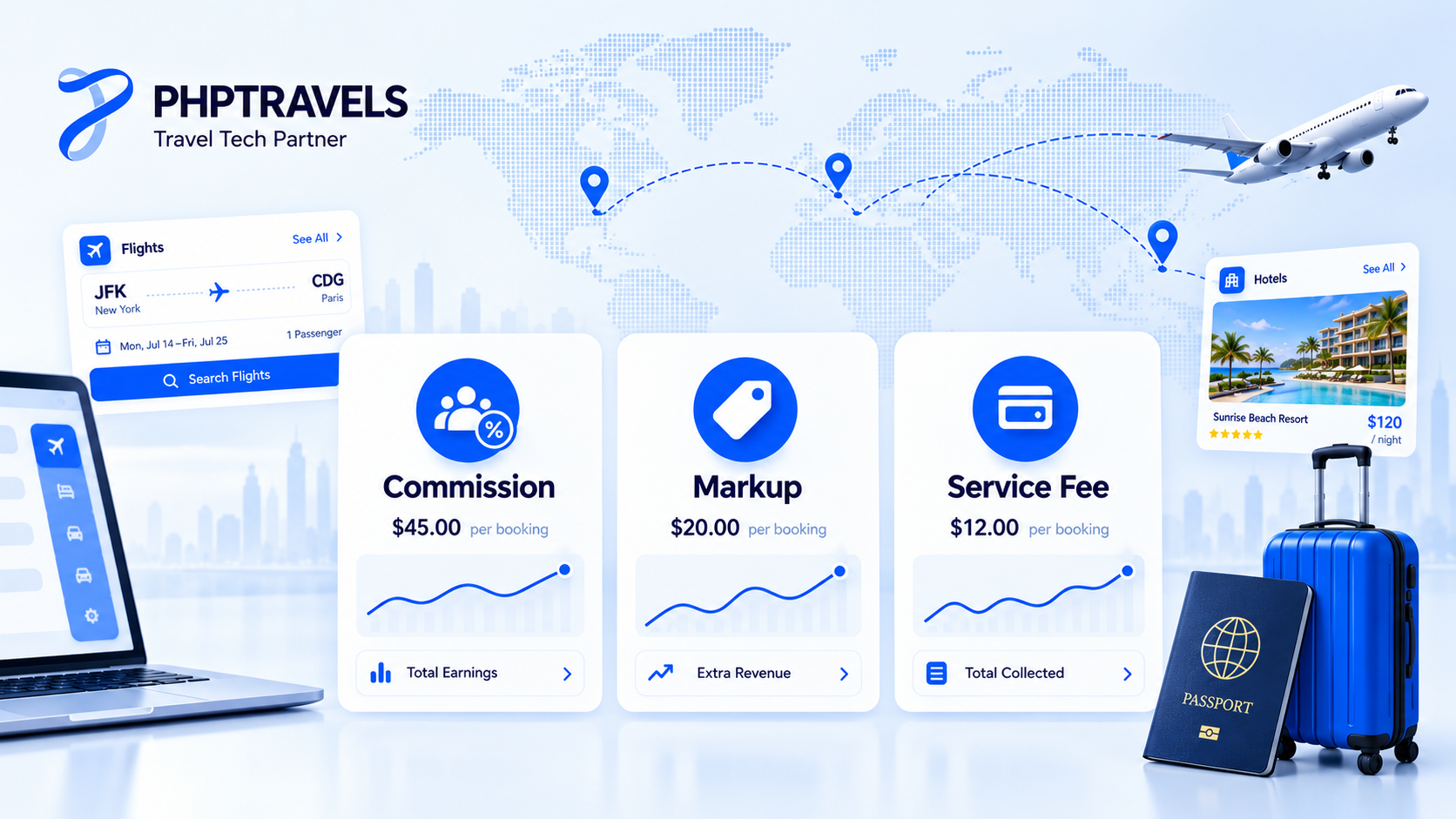
Understanding the difference between these three models is the single most important step in planning a profitable online travel agency. They differ in who pays you, when you get paid and how much control you have.
1. Supplier commission (the agency model)
The traveler pays the published price, often directly to the supplier at booking or check-out, and the supplier pays the agency a percentage afterward. Hotels commonly pay around 10%, while tours and activities often pay 8–12%. For example, Viator pays its affiliates 8% on experiences booked within a 30-day cookie window, and Expedia TAAP calculates agent commission on the total booking value including taxes and fees.
Pros: no inventory risk, simple to start. Cons: the supplier sets your margin, and commission is usually paid only after the trip is completed, which strains cash flow.
2. Markup on net rates (the merchant model)
Here the agency is the merchant of record. It receives a net rate from a bed bank, wholesaler or DMC, adds its own markup and collects the full payment from the traveler. If a hotel room costs $150 net and you sell it at $180, you keep $30 (a 20% markup, or a 16.7% margin on the selling price).
Pros: you control the margin and get paid upfront. Cons: you carry payment processing costs, refunds and chargeback risk, and you need clear pricing rules so you stay competitive.
3. Service fees (traveler-paid)
Fees cover the agency’s time and expertise: trip planning, flight ticketing, changes, visas or group coordination. Fees are becoming normal again. A 2025 report from the World Travel Agents Associations Alliance, reported by Travel Weekly, found that 55% of US agencies charge fees of some kind.
Pros: predictable, paid upfront, not dependent on supplier contracts. Cons: you must clearly show the value; price-sensitive leisure travelers may compare you with direct booking sites.
For a deeper look at tracking supplier payouts, see our guide to travel agency commission management, and for setting margins see travel markup management software.
How Travel Agents Make Money on Flights, Hotels, Tours and Packages
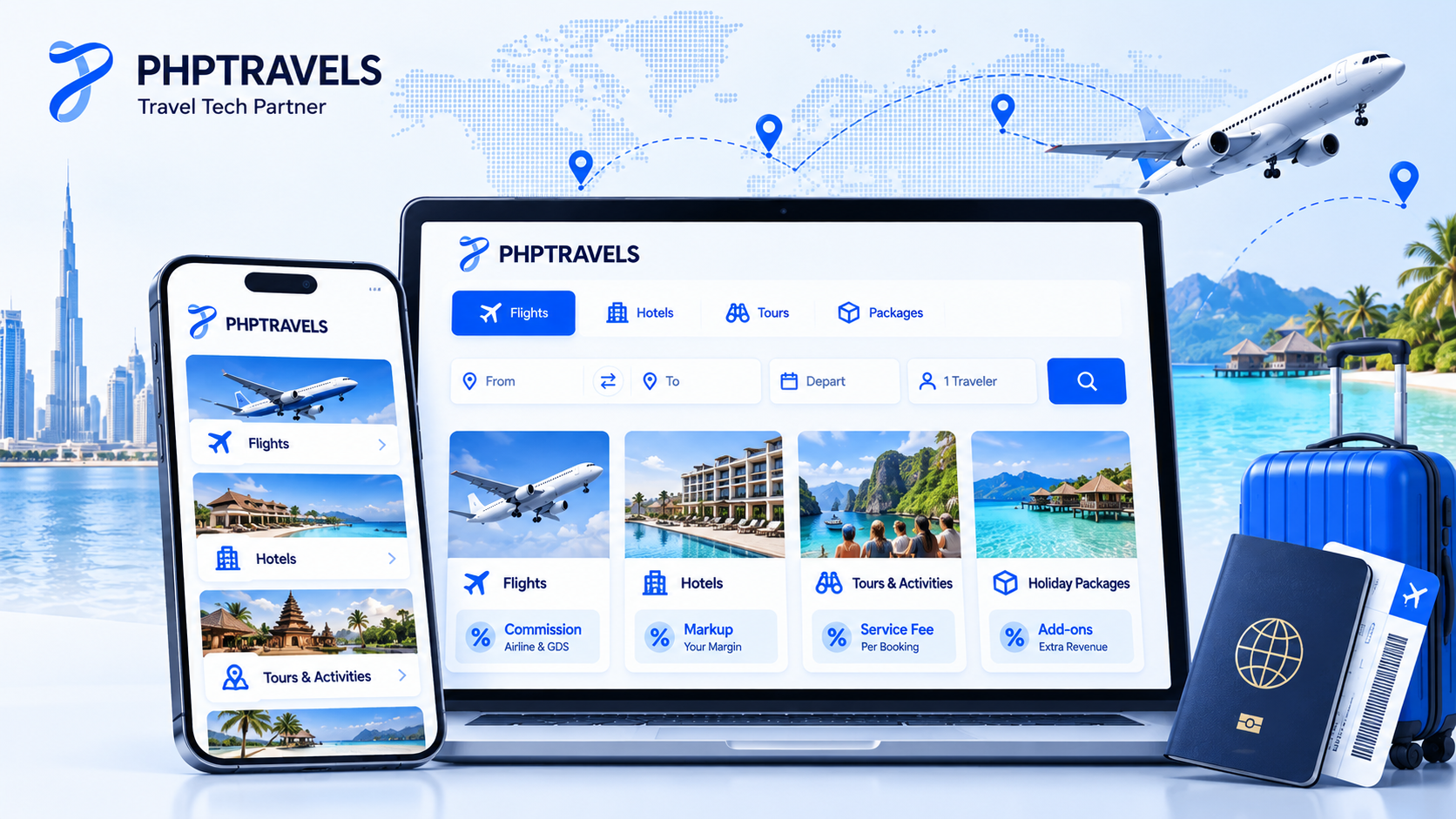
Each product category pays differently, which is why the product mix of an agency matters as much as its sales volume.
Flights: low commission, fee-driven
Most major airlines pay little or no base commission to agencies today. Agencies earn on flights through ticketing fees, negotiated or private fares from consolidators, GDS segment incentives and, where allowed, markups on net fares. IATA-accredited agencies settle airline sales through the IATA Billing and Settlement Plan (BSP); smaller agencies often issue tickets through a consolidator instead. Flights are still valuable because they bring the customer in, and the hotel, transfer and insurance that follow are where the margin is. We cover tactics in how to make money selling flights.
Hotels: the core margin product
Hotels are usually the most reliable earner for online agencies, either through commission on retail rates or markup on net rates from bed banks such as Hotelbeds or RateHawk. Repeat volume with one supplier can also unlock higher tiers or overrides.
Tours and activities
Tours, attractions and experiences pay healthy percentages and are easy to add to an existing trip. Operators that run their own tours keep the full margin, minus distribution costs.
Packages
Bundling flight, hotel and extras into one price is where online agencies often earn most. The traveler sees a single package price, not the individual component prices, so the agency can apply a margin to the whole bundle. In many markets packages also bring extra consumer-protection obligations, so check local rules before selling them.
Ancillaries, Affiliates and Other Online Income Streams

Ancillaries are small add-ons that cost the agency almost nothing extra to sell once the traveler is already in checkout. Individually they look minor; across hundreds of bookings they often decide whether a month is profitable.
- eSIM data plans – useful for every international traveler and easy to offer at checkout.
- Travel insurance – typically commission-based, sold through a licensed insurer or broker (the agency does not underwrite the policy).
- Airport transfers and taxis – high attach rate on hotel and package bookings.
- Visa assistance – a service fee for handling documents and applications.
- Seats, bags and upgrades – on flights where the supplier API supports them.
Beyond bookings, online agencies earn from affiliate links and content: destination guides and comparison pages can carry affiliate links to activity, insurance or car rental partners. Our guide on earning with the Viator affiliate program shows how this works in practice, and ancillary revenue in travel booking covers checkout tactics in detail.
Some agencies also sell memberships or subscriptions (for example, priority service or members-only rates) and corporate travel contracts with monthly management fees. These are less common for small agencies but create recurring revenue that does not depend on seasonality.
B2B, White-Label and Sub-Agent Revenue
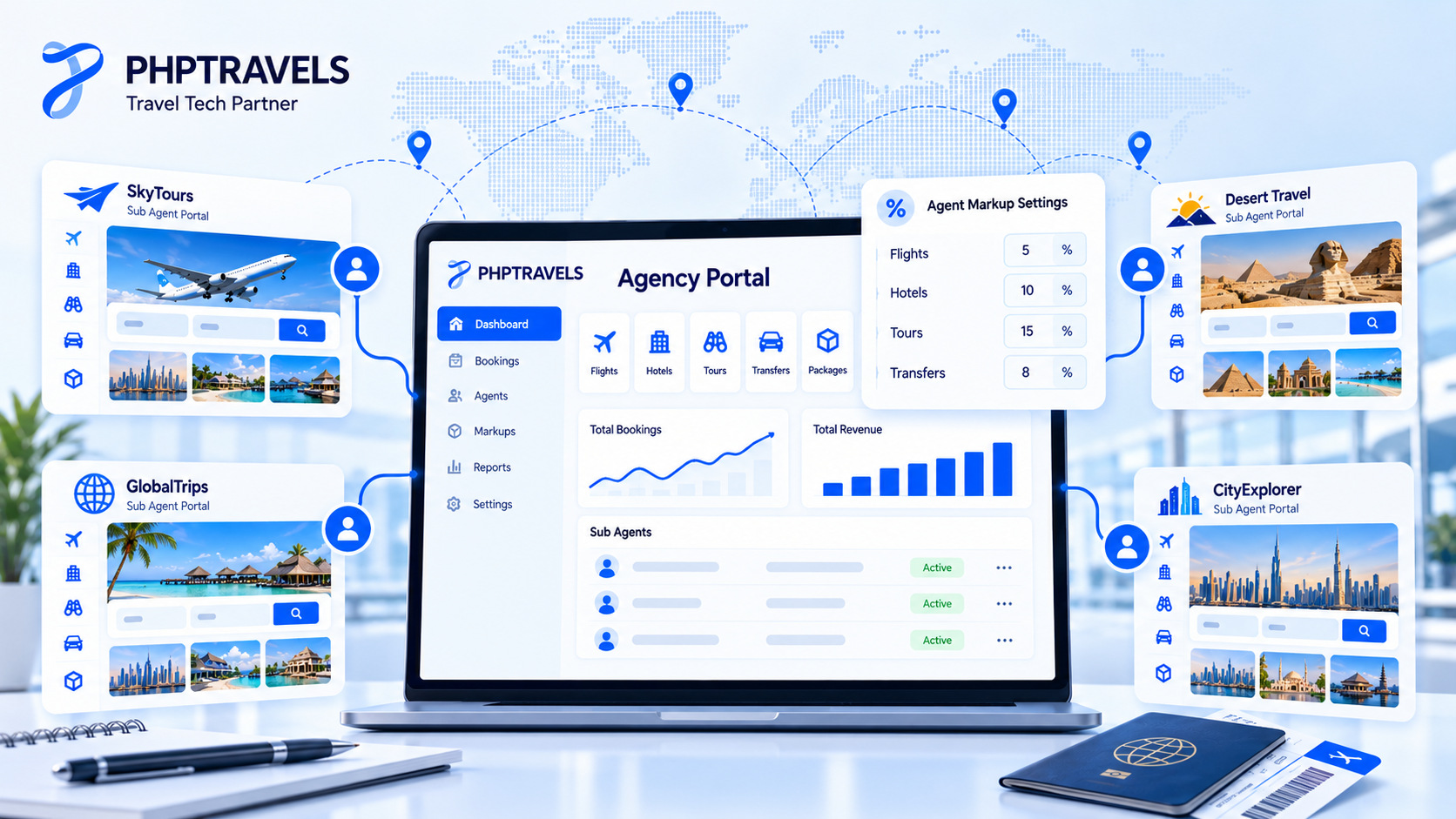
Once an agency has good supplier rates, it can earn by selling that inventory to other agents. This is how wholesalers, consolidators and DMCs scale beyond their own customers.
- The wholesaler connects supplier APIs and receives net rates.
- It adds a B2B markup and publishes rates to registered sub-agents.
- Sub-agents add their own markup and sell to travelers, often on a portal carrying their own brand.
- Each agent tops up a prepaid wallet, so the wholesaler is not chasing payments.
The wholesaler earns a small margin on many bookings it never had to market directly. A white-label portal lets each sub-agent look like an independent brand while running on the same inventory and booking engine. The risks are operational: agent support, fraud control and keeping net rates competitive enough that sub-agents can still earn.
Travel Agency Revenue Models Compared (With a Worked Example)
| Revenue model | Who pays | Typical range | When paid | Margin control | Main risk |
|---|---|---|---|---|---|
| Supplier commission | Supplier | ~8–12% hotels/tours; low on flights | After travel | Low | Slow cash flow, supplier sets rate |
| Markup on net rates | Traveler | You decide (market sets the limit) | At booking | High | Payment, refund and chargeback costs |
| Service / ticketing fee | Traveler | Fixed fee per booking or service | Upfront | High | Price-sensitive customers |
| Ancillaries | Supplier or traveler | Commission or markup per item | At booking or after travel | Medium | Low attach rate if poorly placed |
| B2B / sub-agents | Sub-agent | Small markup on high volume | At booking (prepaid wallet) | High | Agent support and fraud control |
| Affiliate / content | Partner | e.g. 8% on Viator experiences | After travel | Low | Depends on traffic |
Ranges are indicative and vary by market, supplier contract and volume; always confirm with your own suppliers.
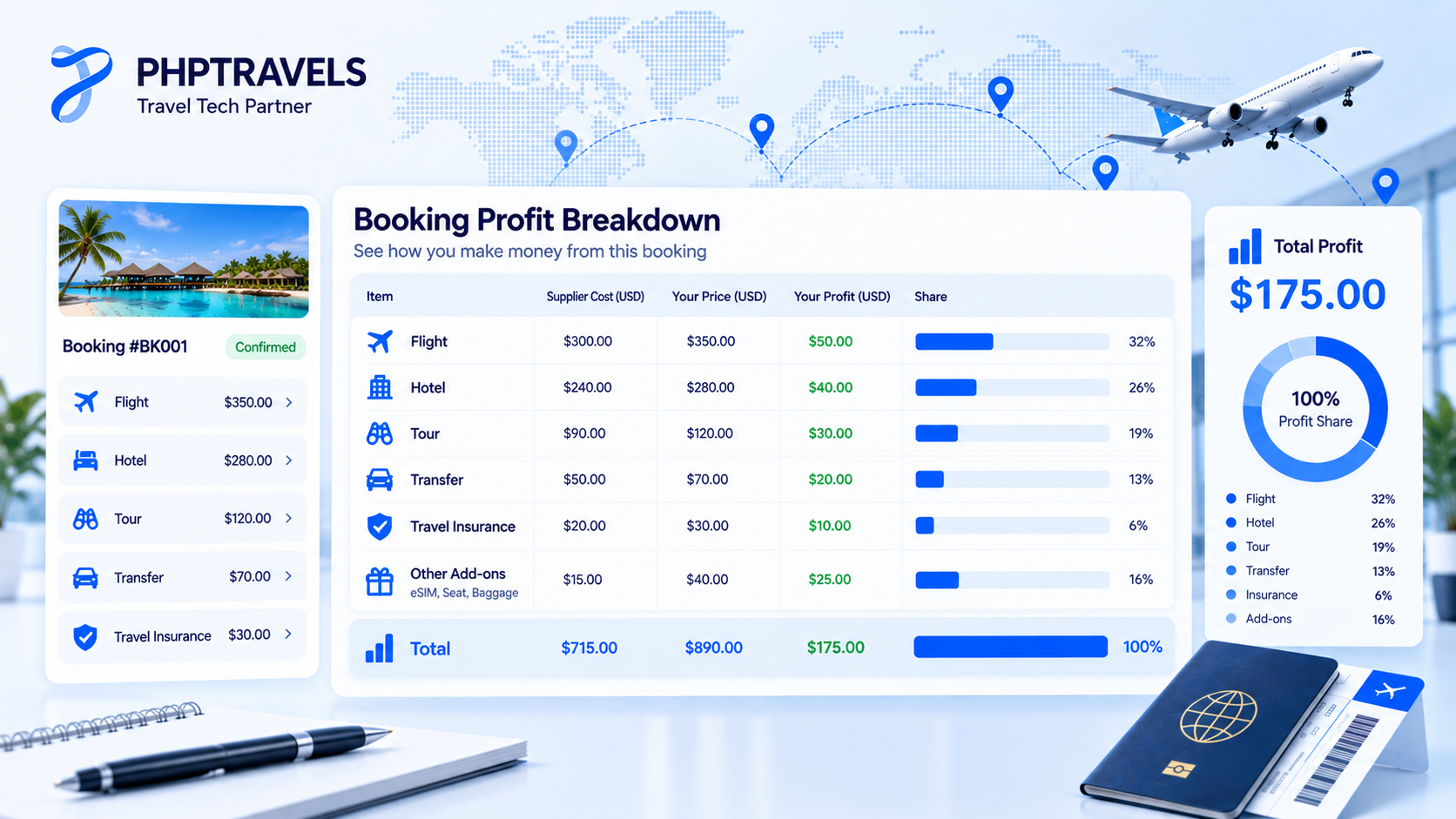
Worked example: what one online booking actually earns
Here is an illustrative example (not real customer data) of a couple booking a 5-night city break through an online agency using the merchant model:
| Item | Traveler pays | Agency earns | How |
|---|---|---|---|
| Return flights for 2 | $830 | $30 | Ticketing fee (no airline commission) |
| Hotel, 5 nights | $690 | $90 | 15% markup on $600 net |
| Guided city tour for 2 | $150 | $12 | 8% commission |
| Airport transfers | $60 | $10 | Markup on net transfer rate |
| Travel insurance | $70 | $10 | Commission from insurer (illustrative) |
| Total | $1,800 | $152 | Gross revenue (~8.4%) |
Now subtract costs. Card processing on the amount you collect (roughly $1,650 here, since the tour commission is paid by the supplier) at Stripe’s standard US rate of 2.9% + 30 cents is about $48. That leaves around $104 before marketing, staff and software. Three lessons follow:
- Flights alone barely pay. Without the hotel and extras this booking would earn $30.
- Ancillaries add up. Tour, transfer and insurance added $32, more than the flight fee.
- Pricing control matters most. The hotel markup produced 59% of the gross revenue, and it was the one number the agency set itself.
How PHPTRAVELS Helps Travel Agencies Earn More Per Booking
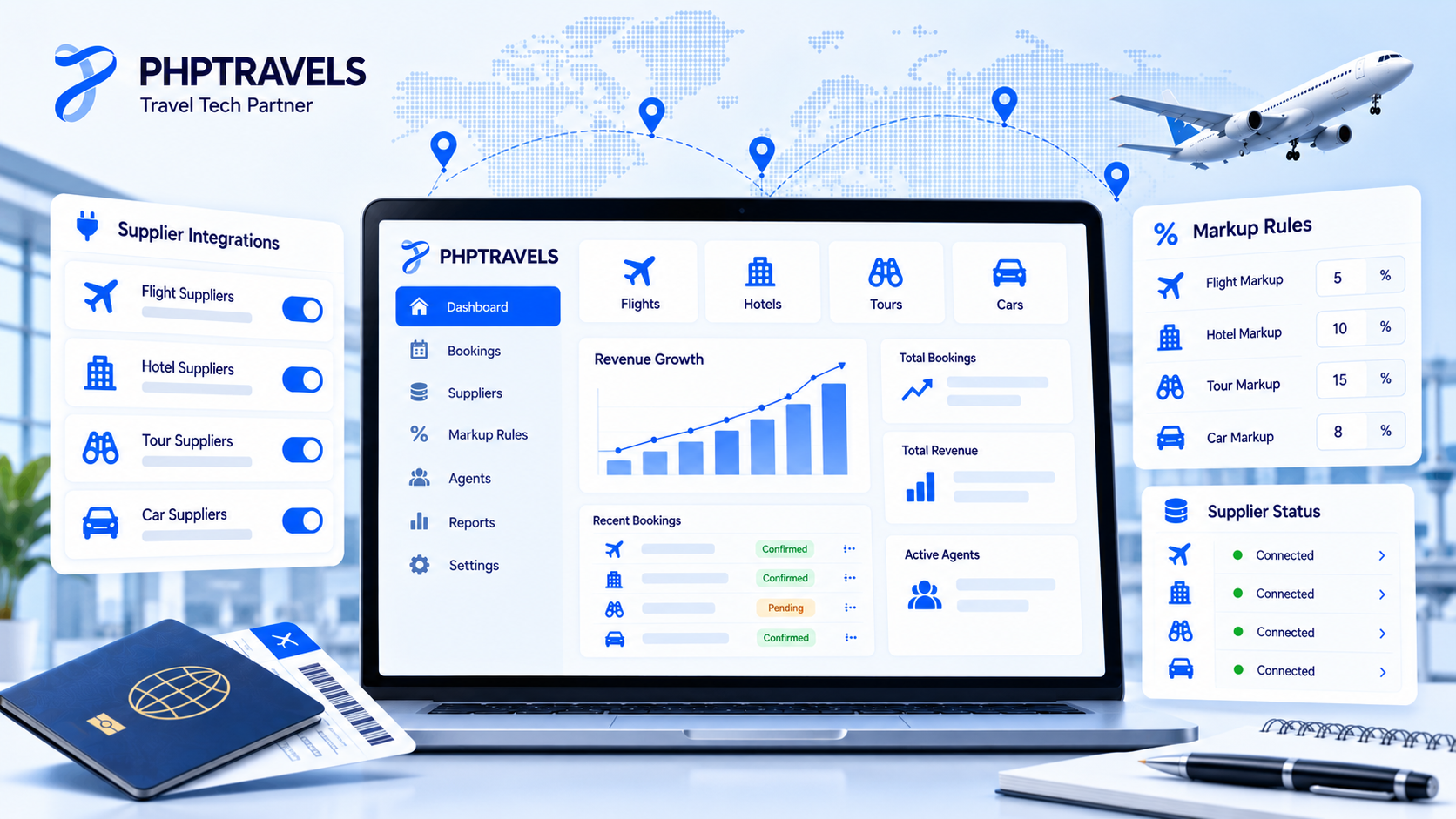
The models above only work if your booking platform lets you apply them. PHPTRAVELS is self-hosted travel booking software that agencies, tour operators and OTAs license and run under their own brand. It is built around the levers in the worked example:
- Markup rules you control – set global or per-agent markups, commissions and net rates, with overrides by product, supplier or market in the B2B booking engine.
- B2C, B2B or both – sell direct to travelers and to sub-agents from one platform, with white-label B2B portals and prepaid agent wallets.
- Add-on modules for ancillary revenue – eSIM, insurance, visas, tours and car and transfer suppliers alongside flights and hotels.
- 40+ supplier integrations – including Amadeus, Duffel, Hotelbeds, RateHawk, TBO Holidays, Viator, Tiqets, Mozio and Airalo (see the live integrations list). You use your own supplier contracts and API credentials; the software connects them, it does not supply inventory.
- Your money, your gateways – payments go to your own Stripe, PayPal or other gateway accounts, and PHPTRAVELS does not take a cut of your bookings. You keep the margin you set.
Because it is a one-time licence rather than a per-booking SaaS fee, the cost does not grow as your volume grows. Our self-hosted vs SaaS comparison explains when that matters. To price your own setup, use the pricing configurator.
Frequently Asked Questions
How much commission do travel agents make?
It depends on the product. Hotels commonly pay around 10%, tours and activities often 8–12%, and most airlines pay little or no base commission. Rates rise with volume, preferred-partner status and overrides.
Do travel agents make money on airline tickets?
Usually not much from commission. Agencies earn on flights through ticketing fees, consolidator or private fares, GDS incentives and by selling hotels, transfers and insurance alongside the ticket.
How do online travel agencies make money?
Online travel agencies earn through markups on net rates, supplier commissions, ancillary sales, advertising and, for larger players, B2B distribution to other agents. Online agencies rely more on markups and ancillaries than on planning fees.
Is a travel agency business profitable?
It can be, but margins per booking are thin, as the worked example shows. Profitable agencies focus on high-margin products (hotels, packages, tours), sell ancillaries consistently, control their own pricing and keep technology and marketing costs predictable.
Do travelers pay more when they book through an agent?
Not always. Under the commission model the supplier pays the agent, so the traveler often pays the same price as booking direct. Agencies that charge service fees or markups should be transparent about the value they add.
Can I start an online travel agency with little money?
You can start with affiliate links or a host agency at low cost, but running your own booking platform requires supplier contracts, payment gateways, a website and marketing. Our guide on how to start an online travel agency covers the steps and costs.
Conclusion: Build a Revenue Mix, Not a Single Income Stream
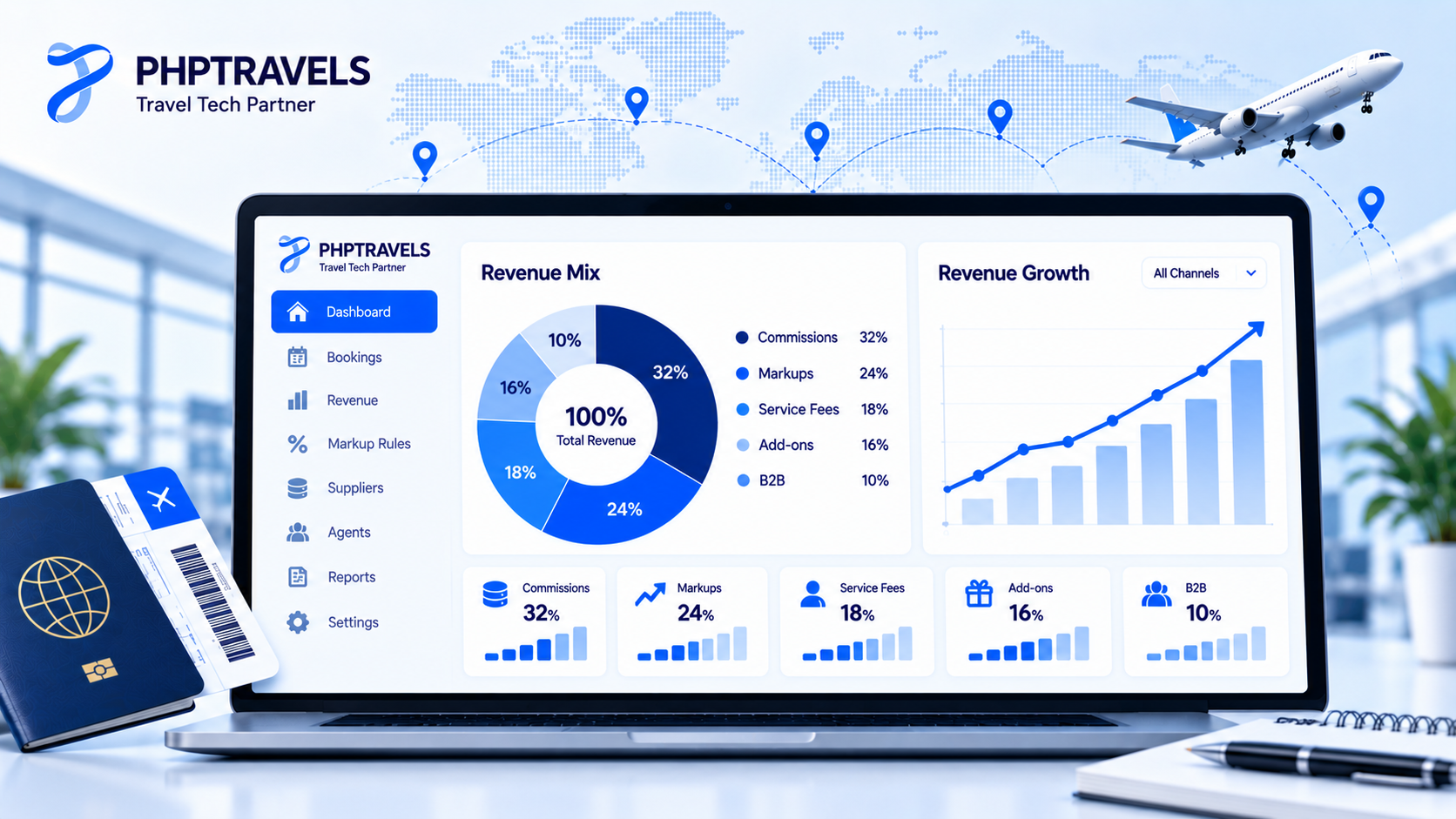
So, how do travel agencies make money? Rarely from one source. Commissions bring steady income on hotels and tours, markups give you control over your margin, service fees pay for your expertise, and ancillaries and B2B sales lift the value of every booking. The agencies that grow fastest choose suppliers and software that let them combine all of these and control their pricing.
If you are planning to move your agency online or replace a platform that limits your margins, book a free PHPTRAVELS demo to see markup rules, B2B portals and add-on modules in action, or configure your package to see what your setup would cost.