
Ancillary revenue travel booking: A traveler books a flight. The fare looks competitive. Then they pay again for a bag, a seat, insurance, an airport transfer, and a data plan when they land. That second stack of purchases is not noise — it is ancillary revenue, and for many airlines it is already a material share of industry income.
Travel agencies and OTAs sit in the middle of the same journey. If your booking flow only sells the base product and sends the traveler elsewhere for everything else, you train them to complete the trip without you. This guide explains what ancillary revenue means in a booking context, which add-ons typically belong in the flow, why base-fare economics got harder, what software must do (offer → price → fulfill → report), which pitfalls kill attach rates, and where a modular booking platform like PHPTRAVELS can fit when you bring your own supplier contracts.
What Ancillary Revenue Travel Booking Means
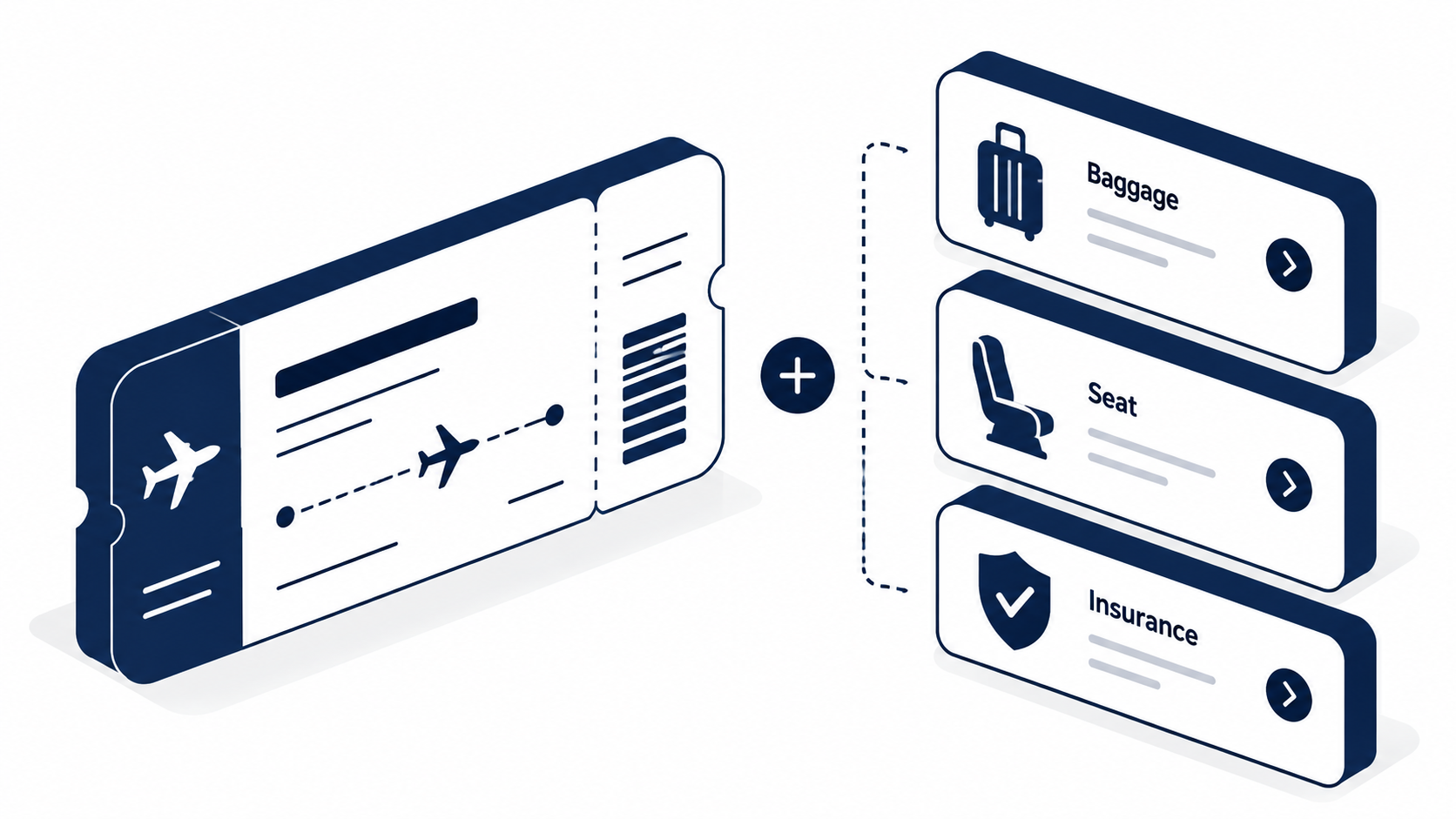
Ancillary revenue is income from products and services sold beyond the core fare or room rate — bags, seats, meals, priority services, insurance, transfers, activities, connectivity, and similar add-ons. Airlines popularized the language; agencies and OTAs face the same commercial question in a different seat: *after the traveler chooses the main product, what else do they still need that we can sell, fulfill, and support cleanly?*
Three distinctions keep the definition practical:
- à la carte add-ons — the traveler opts in (checked bag, seat map choice, trip insurance).
- Bundled / branded offers — extras are packaged into a fare family or “flex” option so the sell is a clearer trade-off, not a surprise fee wall.
- Cross-sell / commission products related services from other verticals (hotel after flight, transfer after stay, eSIM after international ticket) where you earn markup or commission under your own commercial deals.
For an agency, “ancillary” is not a synonym for airline EMDs alone. It is any attachable product your platform can merchandise in the same session (or a controlled post-booking path) without forcing the traveler into a second website and a second support queue.
What it is not: inventing fees with no deliverable; hiding mandatory costs inside “taxes”; or promising inventory you do not have contracted.
Common ancillary types inside the booking flow

Think in journey stages, not vendor catalogs.
Flight-adjacent
- Checked / cabin baggage selections
- Seat selection and paid upgrades
- Meals, priority boarding, lounge access (when your air content exposes them)
- Fare flexibility (changeable / refundable variants) when sold as a clear product choice
Richer air content increasingly depends on modern distribution standards. IATA’s New Distribution Capability (NDC) is designed so airlines can present differentiated offers — including ancillaries and bundles — to travel sellers through Offer and Order messaging, not only through the limited legacy shopping experience. Whether you see those offers depends on your aggregators/GDS/NDC connections and contracts, not on a checkbox in marketing copy.
Stay-adjacent
- Breakfast, late checkout, room upgrades (when the hotel content supports them)
- Extra beds, resort fees disclosed early
- On-property activities sold as separate bookable items
Ground and connections
- Airport transfers and car hire
- Rail / ferry / bus legs that complete the door-to-door story
Protection and connectivity
- Travel insurance / trip protection (underwriting and licensing are your regulated arrangements)
- eSIM / travel data plans for international trips
Experiences
- Tours, tickets, and activities that turn a hotel night into a trip
A useful operating rule: if the traveler will need it within 48 hours of arrival, try to offer it before payment confirmation — or with a one-click post-booking path that still lands in your booking record. Every redirect to a third-party site is a support ticket you cannot see.
Why base-fare margins shrank (and why attach rates matter)
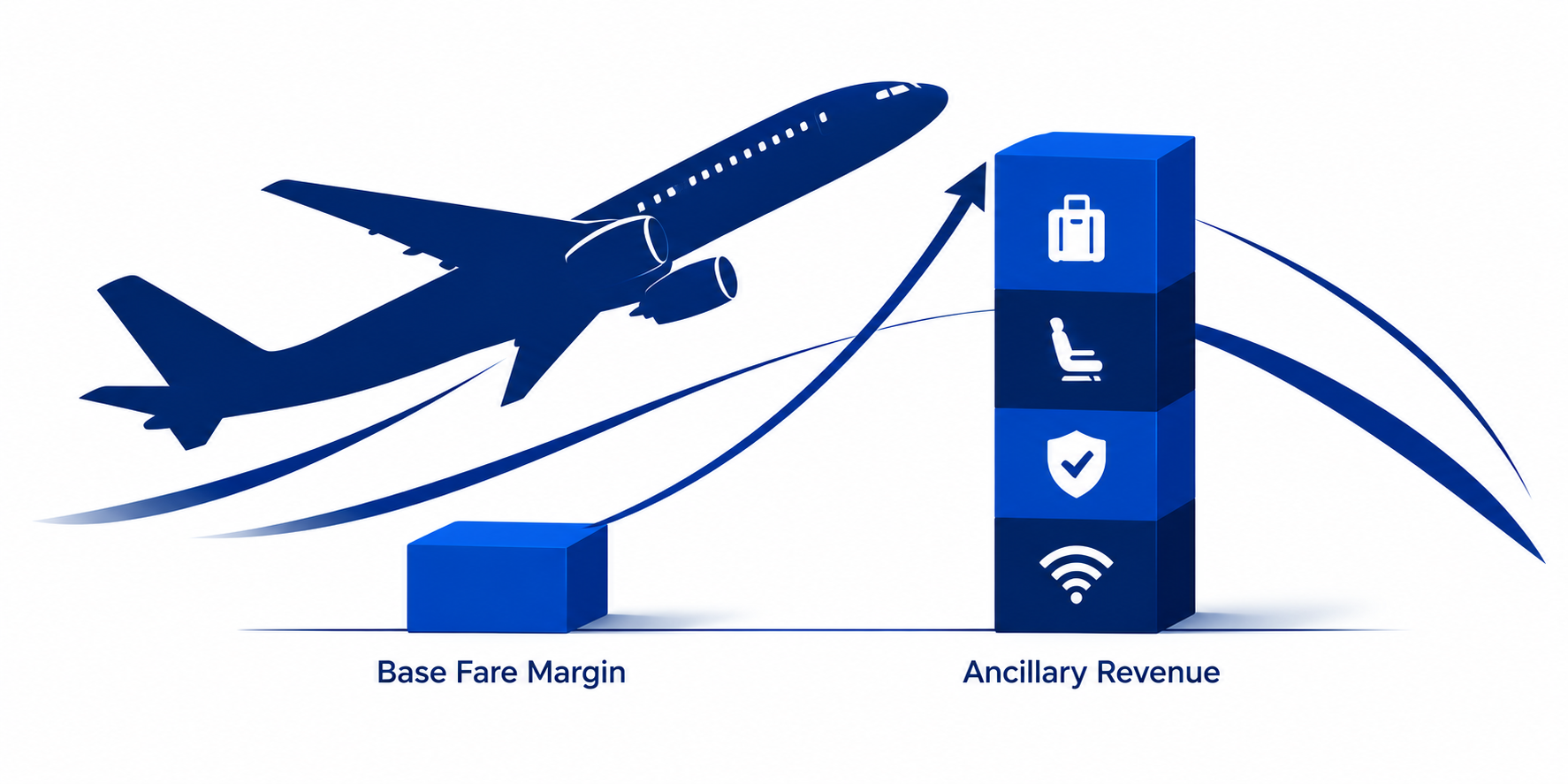
Public airline economics show why sell only the ticket” is a fragile plan.
In its December 2025 financial outlook, IATA projected that ancillary and other revenues would rise about 5.5% to $145 billion in 2026, representing nearly 14% of total airline revenue (up from roughly 12–13% pre-pandemic). The same outlook expected industry net margins around 3.9%, with net profit on the order of $7.90 per passenger. Those figures describe airline P&Ls, not agency markups — but they explain the market travelers encounter: unbundled base fares, paid extras everywhere, and intense competition on the headline price.
Agencies feel a parallel squeeze:
- Shoppers compare the naked fare across OTAs and meta, so base markup alone is easy to race to the bottom.
- Suppliers unbundle so the “cheap” result is incomplete until bags and seats are added.
- Support costs still arrive for the full journey even when you only earned on the core booking.
- Payment and fraud costs scale with booking value; a slightly larger basket with clear value can be healthier than a thin fare that generates the same ops work.
Attach rate is therefore not a vanity KPI. It is how you fund service quality when the base product is commoditized. The honest caveat: attach only works when the add-on is relevant, priced transparently, and actually fulfilled. Bad attach destroys trust faster than it builds margin.
Software requirements: offer, price, fulfill, report
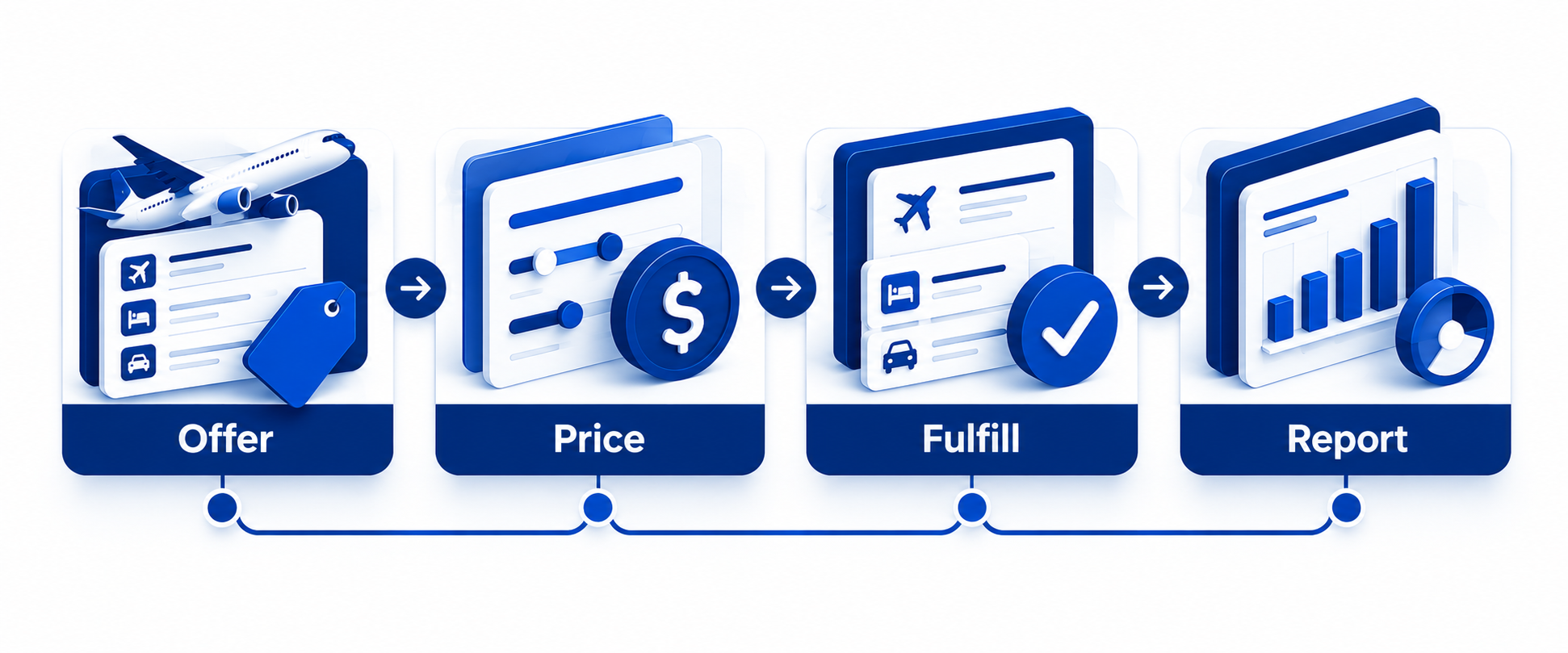
Most ancillary programs fail in the middle of this chain — they can show a checkbox, but cannot finish the job.
1) Offer
- Surface the right add-ons in context (route, party size, destination, lead time).
- Prefer structured offers from suppliers (including NDC-style rich content where available) over static “always show insurance” banners.
- Keep the merchandising story coherent across modules: flight + transfer + eSIM should feel like one trip builder, not four unrelated widgets.
2) Price
- Apply your markup / commission rules consistently at sell time.
- Show taxes and mandatory fees without dark patterns.
- Support multi-currency display when your market needs it — travelers abandon when the add-on currency surprises them at pay.
3) Fulfill
- Create supplier bookings or vouchers for each accepted ancillary, not just a note on the flight PNR.
- Store passenger/service data the supplier requires (bag weight class, seat, policyholder details).
- Make vouchers and policy documents available in the traveler’s booking area and in your back office.
4) Report
- Revenue and margin by ancillary type, channel (B2C vs B2B), and supplier.
- Attach rate and refund/cancel rates (high cancel on an add-on often means the offer was confusing).
- Ops queues: failed fulfillments, pending documents, unpaid ancillaries.
If your stack can merchandise an add-on but cannot refund it cleanly when the flight cancels, stop selling it until the exception path works. Finance will eventually force that rule anyway.
For multi-agent networks, the same four steps must work inside an agent portal: sub-agents need to attach products under your pricing rules, not invent WhatsApp extras that never hit the ledger.
Pitfalls that kill ancillary attach rates

- Fee wall after a cheap fare — five mandatory-looking upsells on one screen. Travelers bounce or rage-complete and dispute later.
- Offer without fulfillment — selling a transfer that creates an email to ops instead of a live supplier booking.
- Wrong inventory reality — advertising insurance or eSIM “included with the software” when those products require your supplier contracts and credentials.
- Split systems — flight in one tool, insurance in a spreadsheet, transfer on a WhatsApp group. Attach becomes unreportable.
- B2B leakage — agents selling extras offline so your reports show low attach” while the margin left the building.
- No post-booking path — many travelers decide on bags after they know the suitcase count; if your portal cannot add after ticket, you lose the sale to the airline app.
- Ignoring regulated boundaries — insurance underwriting, IATA ticketing authority, and similar licences stay with the buyer’s legal entity. Software does not replace them.
A practical fix order: pick two high-fit ancillaries your contracts already support → wire offer + fulfill + report for those only → then expand. Breadth without fulfillment is theater.
Where PHPTRAVELS modules fit (honestly)

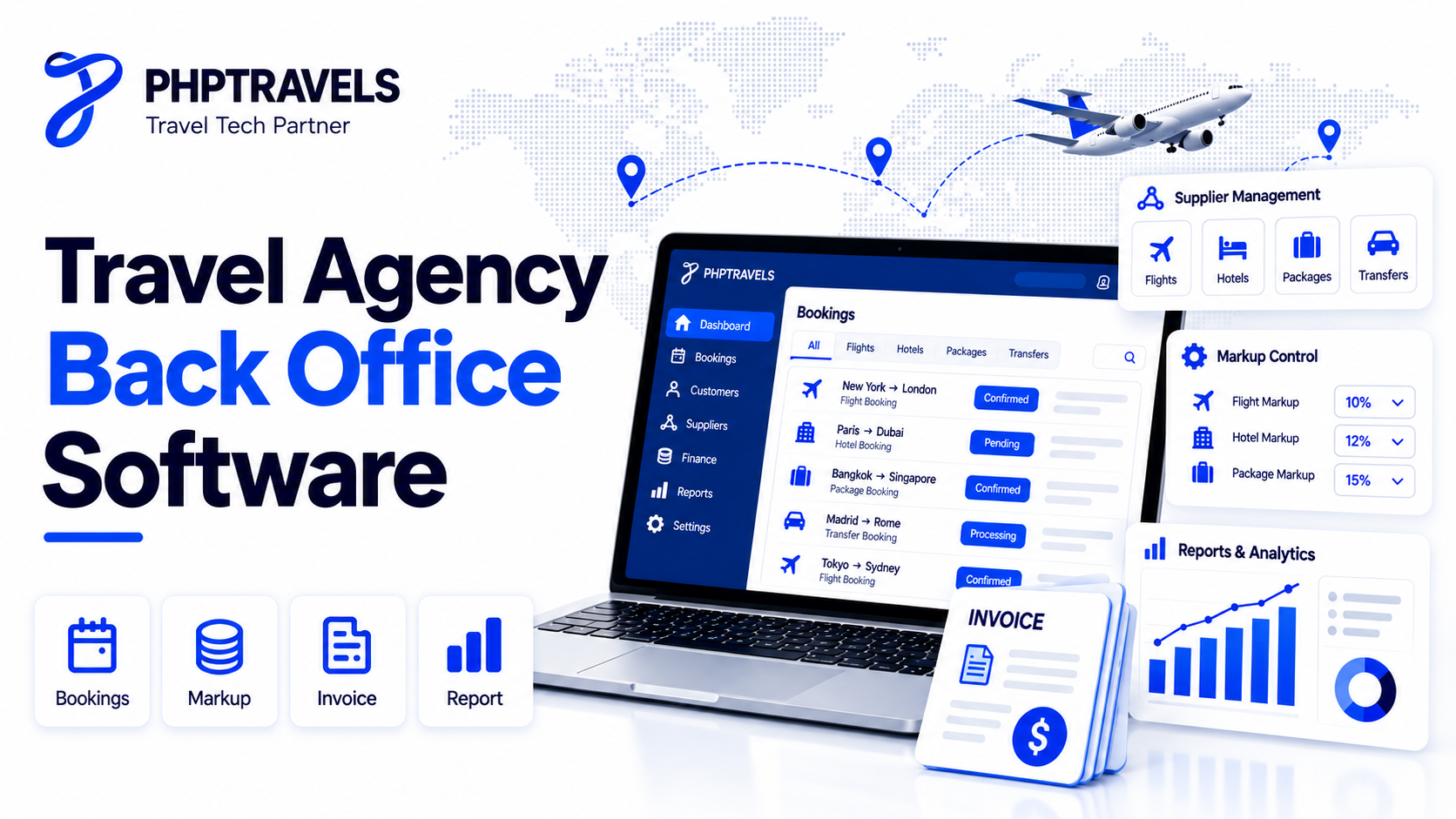
PHPTRAVELS is travel booking software you install or have managed: B2C storefront, optional B2B agent portal, back office, supplier API connections, and payment handling through your gateway accounts. It is a licensed product layer — not a marketplace that ships free inventory, and not a merchant of record that takes a cut of bookings.
For ancillary-style growth, the honest fit is modular enablement:
| Traveler need | Module direction (buyer-enabled) | Reality check |
|---|---|---|
| Air extras / richer air offers | Flights module via your GDS/NDC/aggregator contracts | What you can sell depends on connected suppliers and their content |
| Stay add-ons / second product | Stays | Bedbank/hotel contracts are yours |
| Activities / day tours | Tours | Manual inventory or connected activity suppliers |
| Cars & airport transfers | Cars | Transfer/car suppliers require your credentials |
| Connectivity | eSIM | Listed integrations (e.g. Airalo on the live integrations page) still need your commercial setup |
| Trip protection | Insurance | You arrange compliant insurance supply; software is the sales/fulfillment surface |
| Sea / rail / coach legs | Ferries, Rail, Bus | Enable only what you sell |
Critical product truths to keep in any commercial conversation:
- Buyer supplies supplier contracts and API credentials. The platform connects; it does not grant inventory.
- Modules can also run on manual inventory (useful for operator-owned tours and transfers).
- Pricing for the software itself is configured on the live pricing page (per-supplier and module building blocks confirm there before quoting).
- Live supplier lists change — check integrations before promising a named feed.
PHPTRAVELS helps when your problem is “we need one branded booking stack that can sell multiple products and keep them in one back office.” It is a poor fit if you want zero-effort SaaS with someone else’s inventory included, or if you only need a single hotel widget.
Next step if the problem matches: walk a sample journey on the demo, then price the modules and suppliers you actually need on pricing.
FAQ
Is ancillary revenue only an airline topic?
No. Airlines coined much of the vocabulary and publish industry-scale figures, but agencies and OTAs earn (or lose) the same journey value when travelers buy bags, seats, insurance, transfers, tours, and connectivity around a core booking.
Do we need NDC to sell any ancillaries?
Not for every product. Transfers, tours, eSIM, and many insurance flows are separate supplier APIs or manual inventory. For airline-rich ancillaries and branded offers across channels, IATA’s NDC / Offers & Orders direction is increasingly relevant — see IATA’s NDC overview.
What should we measure first?
Start with attach rate and margin by product type, plus refund/fail rates. Revenue without fulfillment success is a future support cost.
Can software alone raise ancillary revenue?
No. Software surfaces and fulfills. Commercial contracts, clear UX, and ops discipline decide whether travelers say yes twice.
—
Bottom line: base fares got thinner while traveler needs stayed wide. Agencies that treat ancillaries as a merchandising afterthought will keep donating basket value to airline apps and random tabs. Build offer → price → fulfill → report for a short list of products you can actually deliver — then grow the catalog.