A traveler books a AED 9,400 family package at 1:12 a.m. Your gateway shows “Approved.” At 1:14 a.m. the same BIN pattern hits six more high-value itineraries from a different device fingerprint. Your ops chat celebrates “strong night sales.” Finance wakes up to chargebacks and a merchant-account review email.
That is not a “payment gateway choice” problem. That is a travel booking payment security problem: cardholder-data scope, fraud layers that fire before ticketing, and dispute evidence that already lives on the booking record.
This guide is for OTAs, agencies, and tour operators who already accept cards (or are about to) and need a practical security model around the booking engine — not another list of gateway brands. If you are still choosing a processor, start with PHPTRAVELS’ payment gateway selection guide, then come back here for the controls that sit around that choice.
What payment security means in a travel booking stack
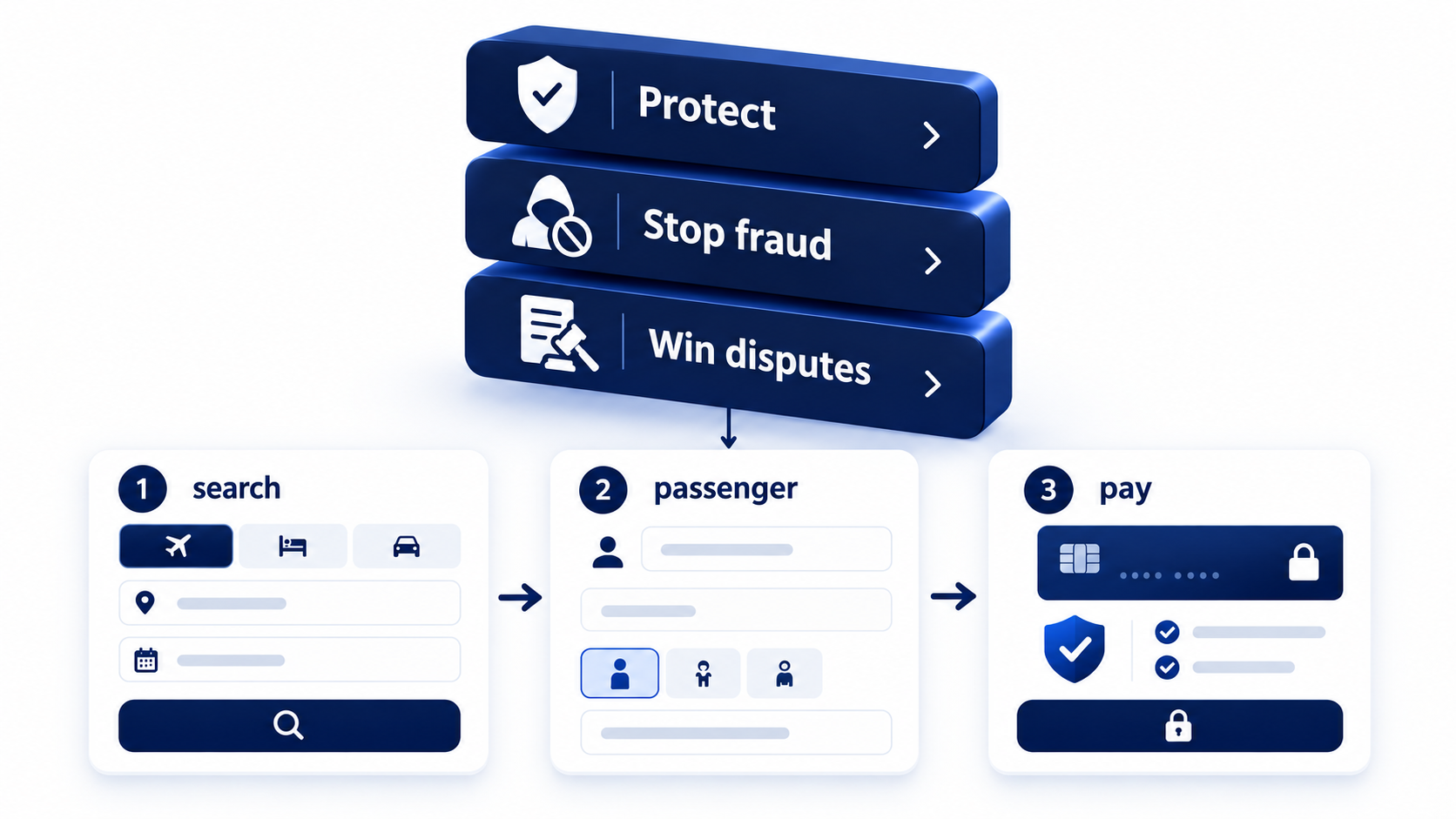
Travel checkout is card-not-present (CNP) by default, often high average order value, often international, and often followed by irreversible supplier costs (tickets, non-refundable hotel allotments, tour seats). Security therefore has three jobs that must work together:
- Win legitimate disputes so friendly fraud and “I don’t recognize this charge” do not erase real revenue.
SSL on the site is table stakes. It does not shrink PCI scope, does not catch velocity abuse, and does not assemble chargeback evidence.
If any one layer is missing, attackers and dispute teams will find the gap.
PCI DSS scope: what puts your OTA in the cardholder data environment
PCI DSS is the Payment Card Industry Data Security Standard. If your business stores, processes, or transmits cardholder data — even briefly — you have PCI obligations. Your acquirer decides the validation path (SAQ type vs Report on Compliance). The PCI Security Standards Council document library is the primary reference; treat blog summaries as orientation, not your attestation.
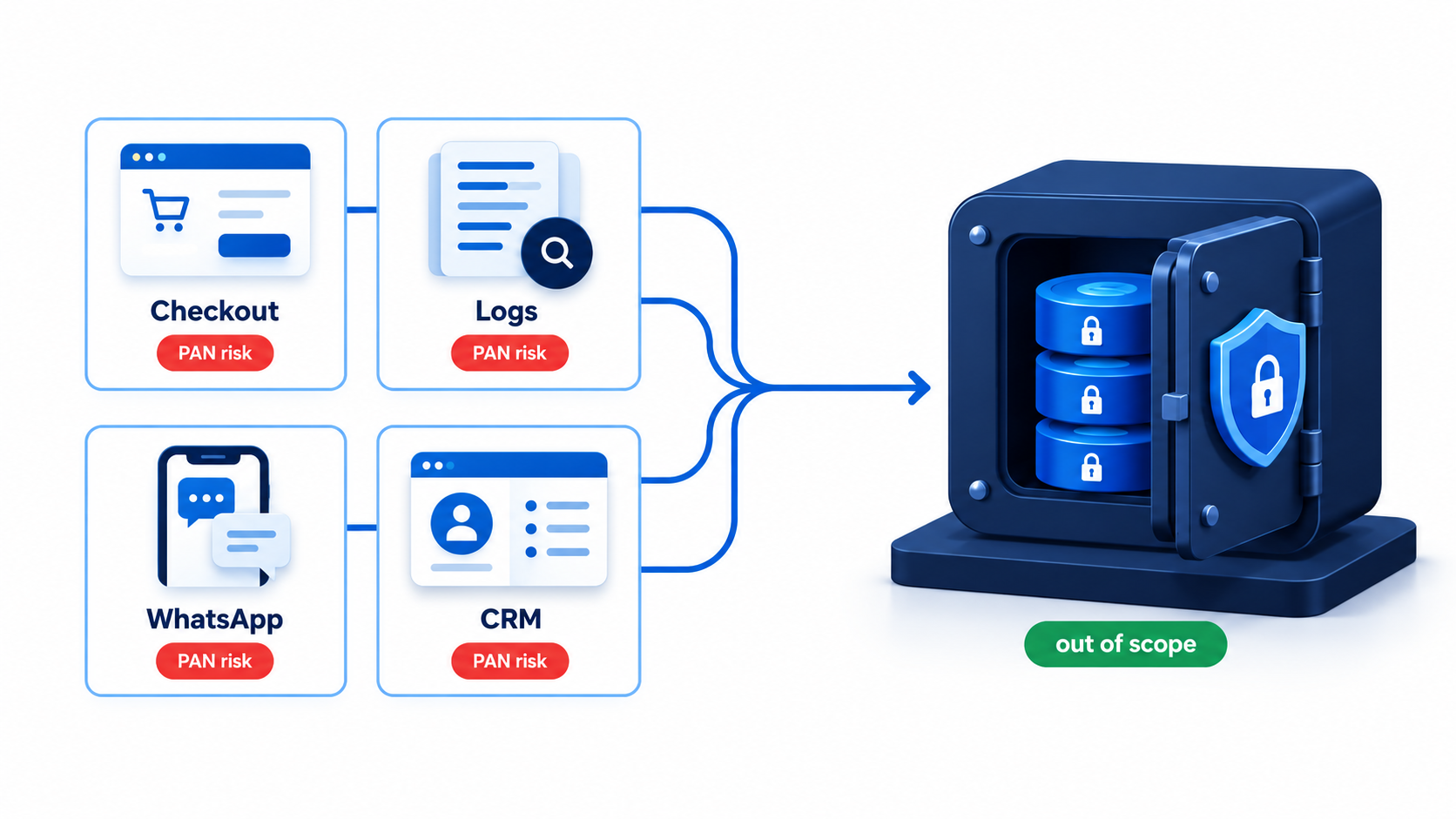
For travel teams, the painful part is scope creep: PAN does not only live on the checkout page.
Common ways agencies accidentally expand the cardholder data environment (CDE):
- Shared admin passwords into systems that can view or replay card data
PCI DSS v4.0.1 is the current generation of the standard. Industry guidance for travel merchants emphasizes stronger authentication, continuous monitoring, and treating compliance as an ongoing control set — not an annual PDF. Confirm exact SAQ/AoC requirements with your acquirer or QSA; do not assume a blog article replaces that conversation. Useful practitioner framing for agencies appears in SecureTrust’s 2026 travel agency PCI overview.
Rule of thumb: Every system that can see a primary account number (PAN) is in scope. Your goal is to make that list as short as possible.
Shrink PCI scope before you buy more security tools
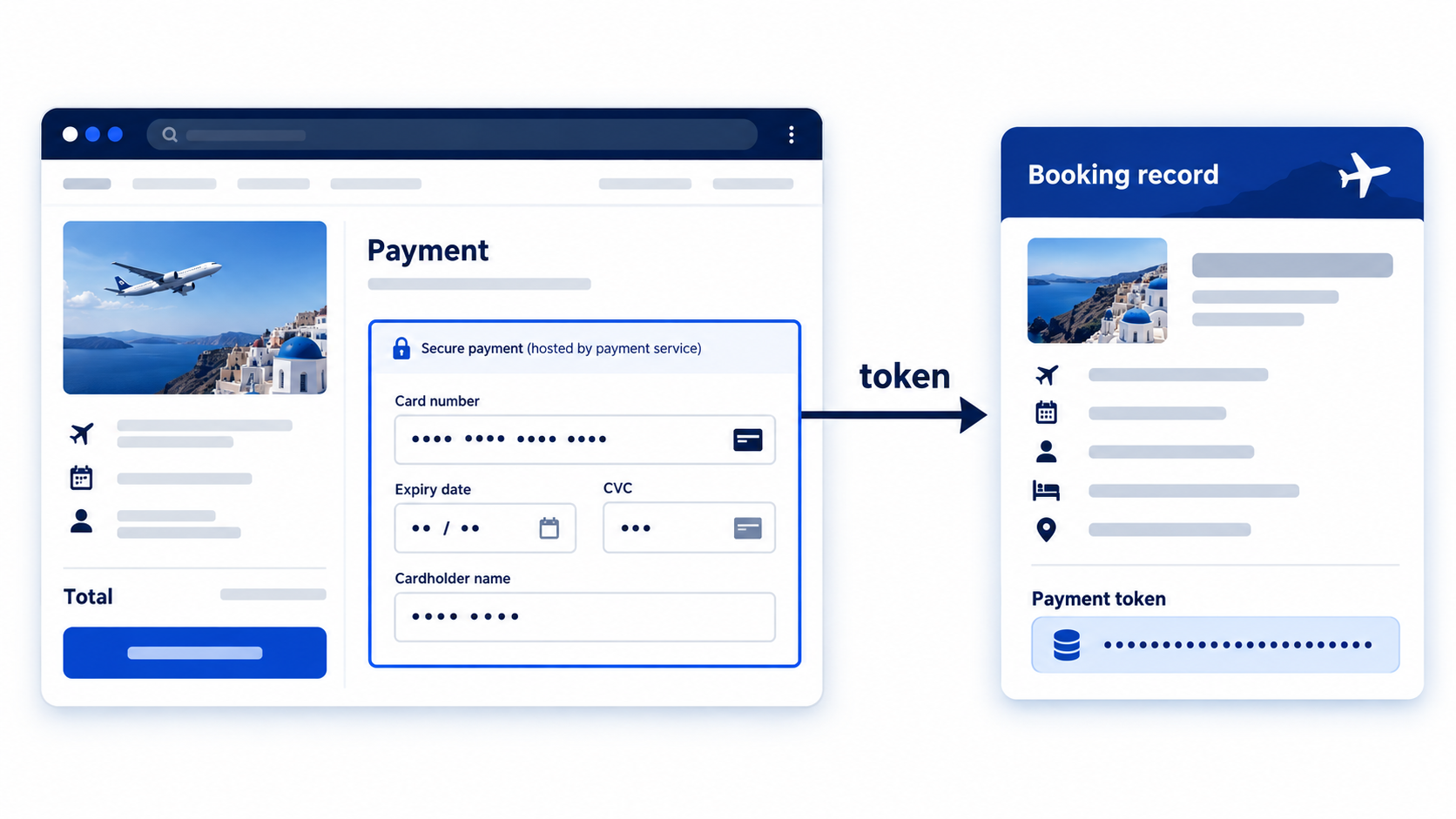
The cheapest PCI control is architectural: keep raw card data out of your booking software.
Practical patterns OTAs use (implemented with your payment service provider — not as a vague “security plugin”):
Hosted payment fields or PSP iframes
The card number is typed into fields served by the PSP. Your site receives a token or payment intent ID, not the PAN. Your booking engine stores the token / transaction reference against the reservation.
Redirect / hosted payment page
Customer leaves your domain briefly (or opens a PSP-hosted page) to pay, then returns with a success/fail result. Scope is often smaller, but UX and mobile conversion need careful design.
Tokenization for retries and deposits
Travel loves split payments: deposit now, balance later; failed authorization retry; corporate card on file for approved trips. Tokens let you charge again without re-collecting PAN — if your PSP and merchant agreement allow it and you never store the raw card yourself.
Kill plaintext card channels
Replace “send card on WhatsApp” with a unique payment link tied to the booking ID. The customer pays on a tokenized page; your team sees paid/unpaid — never the PAN. Practical travel payment operators describe the same pattern: scope reduction first, tools second (Felloh’s secure travel payments guide is a clear non-vendor-neutral explanation of the principle).
Shared-responsibility matrix
Write down what the PSP covers vs what you cover (admin MFA, staff access, patching, script inventory on pages you control, physical office handling). When an auditor asks “who owns Req X?”, you should not shrug.
What this is not: buying a booking engine and assuming the vendor “handles PCI for you” while you still paste PANs into Slack.
Layered fraud controls that run before ticketing
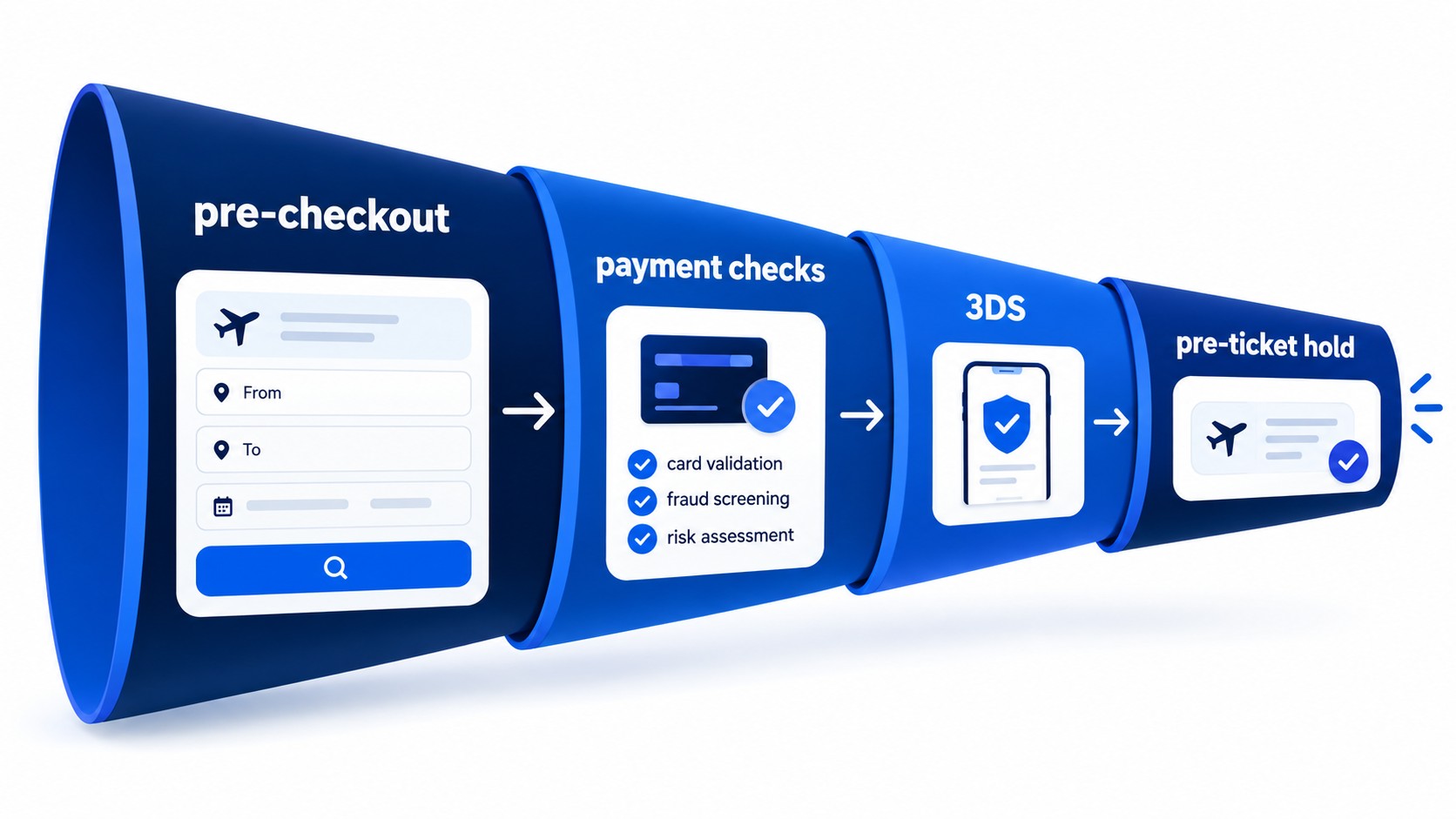
Authorization alone is not fraud prevention. Stolen cards authorize every day. Build a layered picture so no single signal has to be perfect. OTA-oriented checklists commonly sequence controls from search through fulfillment (example overview):
- Feedback loop: every confirmed fraud chargeback should update rules. A static rule set ages poorly.
Travel-specific risk signals worth wiring into review queues:
- Promo abuse stacked with high refundability fares (cash-out patterns)
Document thresholds. Tribal knowledge in a senior agent’s head is not a control.
Chargeback defense starts at booking time
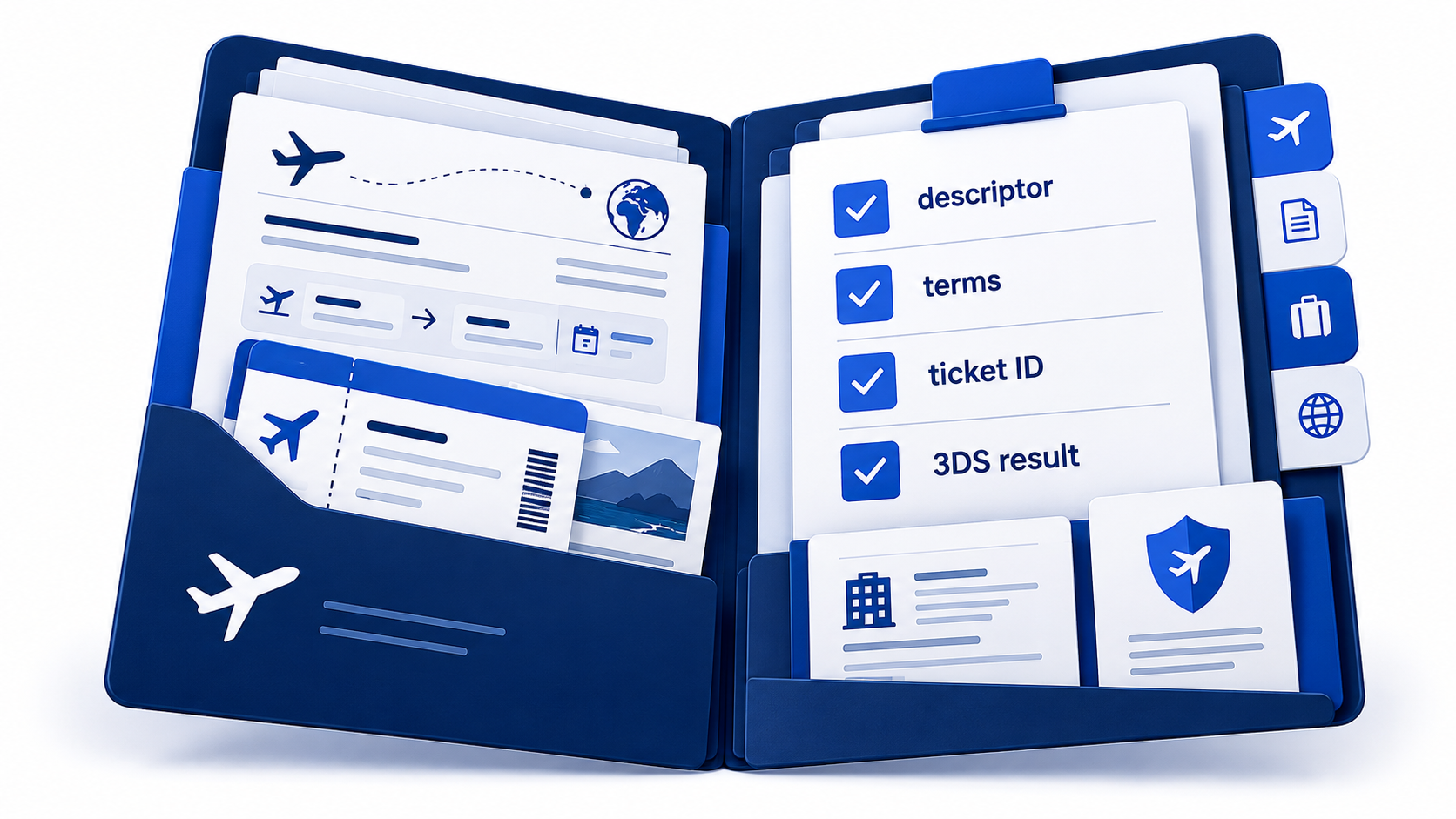
When a dispute arrives, you rarely get time to reconstruct the journey from memory. The strongest position is evidence that was already attached to the booking:
- Refund timeline and support transcript if the customer contacted you first
Operational habits that cut “friendly fraud” and unrecognized-charge disputes:
- Keep a single system of record for paid / partially paid / refunded — not a spreadsheet that disagrees with the gateway
If your “proof” is a WhatsApp screenshot and a hope, representment will lose often.
Ops checklist: shipping a safer booking payment flow
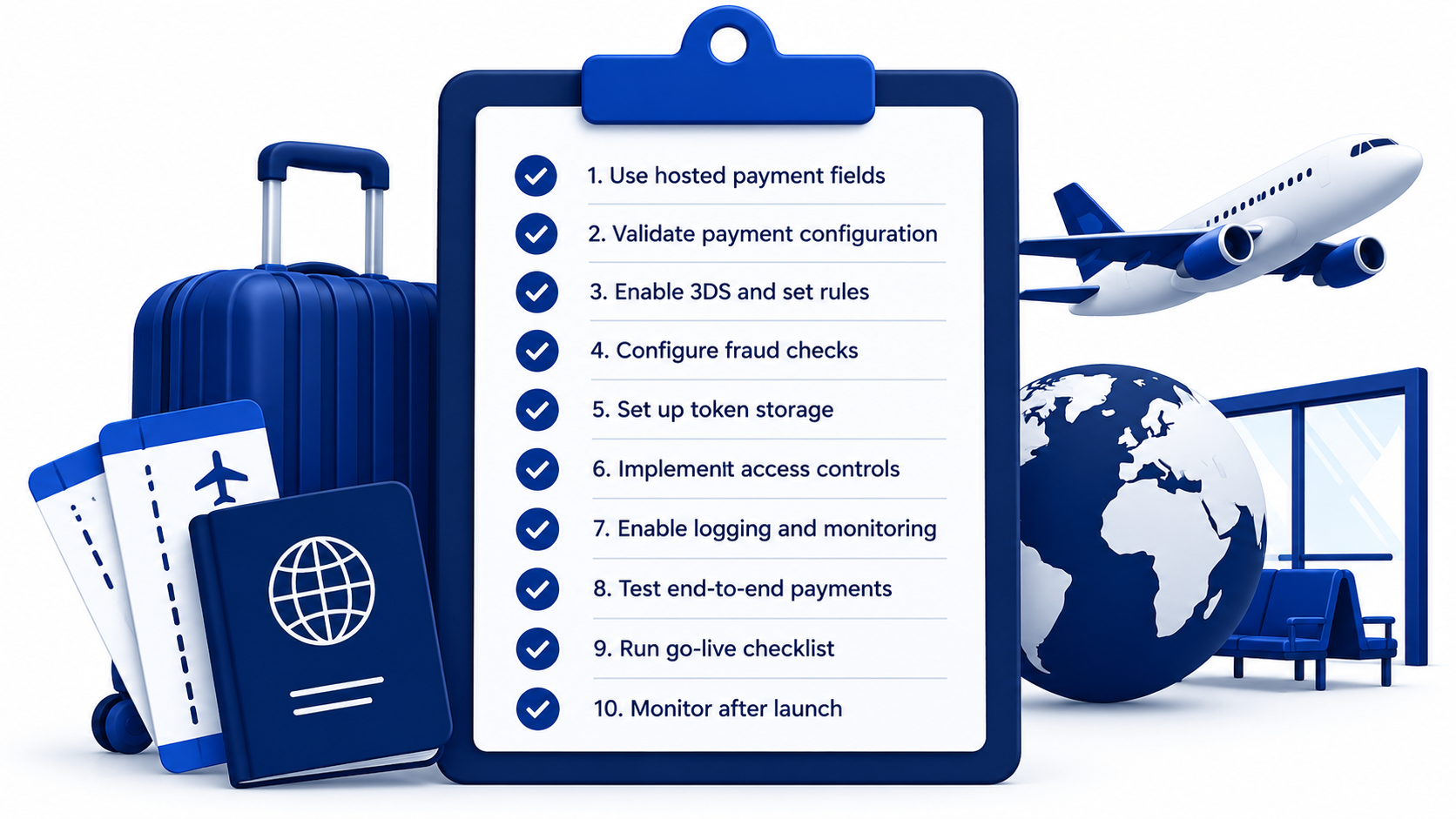
Use this as a go-live or remediation list. Assign an owner to each line.
- Run a monthly chargeback retrospective: top reason codes, lost cases, rule changes shipped.
None of these require a “security theater” banner on the homepage. They require boring, consistent ownership.
Where PHPTRAVELS fits (product truth)
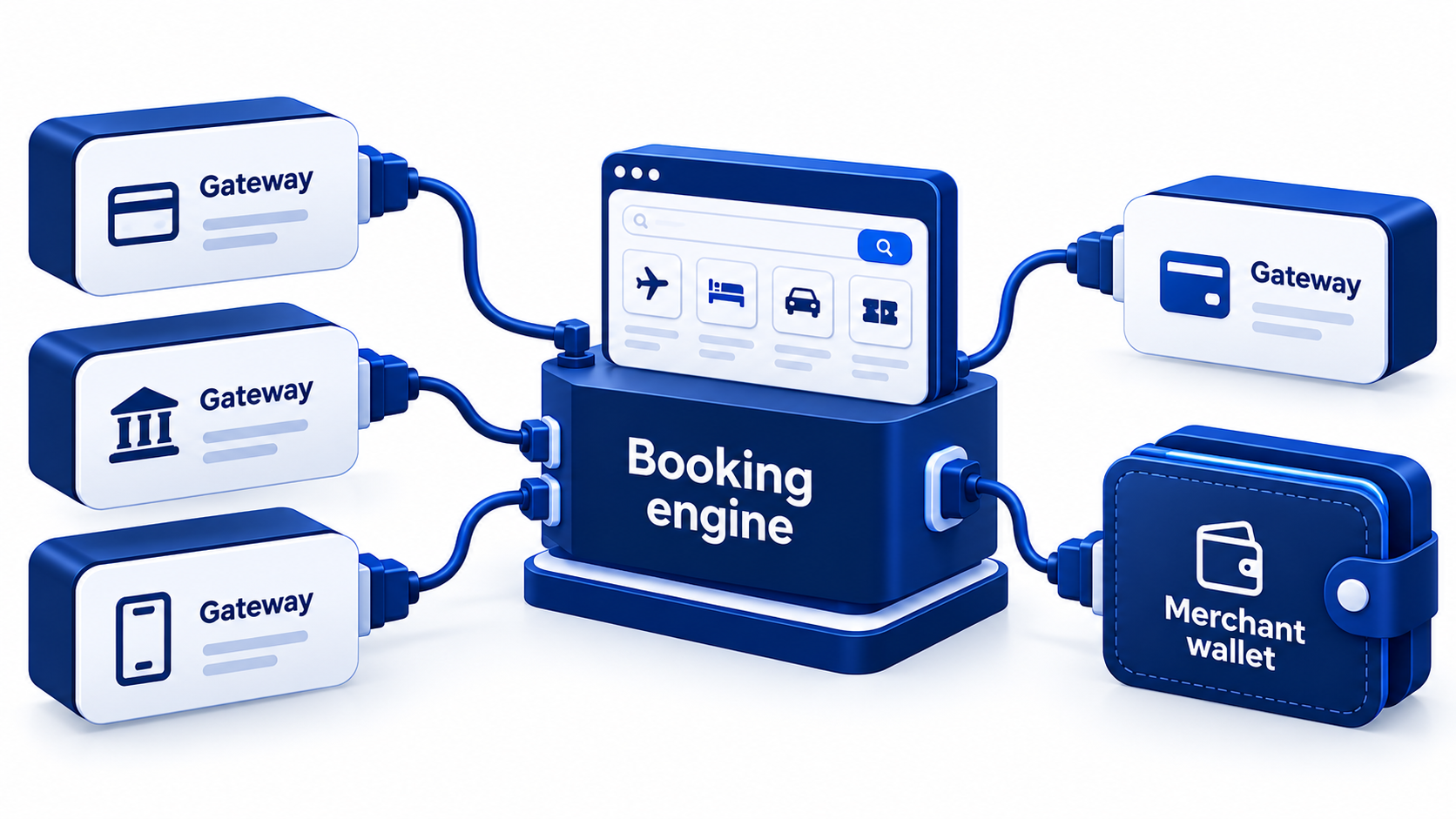
PHPTRAVELS is travel booking software for agencies, OTAs, tour operators, and similar sellers. It provides a B2C storefront and/or B2B agent portal, back-office booking operations, supplier API connections, and payment gateway connections. It is sold as a licensed product (self-hosted or managed options), not a sign-up SaaS that takes a cut of your bookings. You keep your branding, your supplier contracts, and your merchant accounts.
On payments specifically:
- Your PCI attestation, fraud tool subscriptions, and 3DS configuration live primarily with you and your PSP. The booking platform’s job is to run a clean booking + payment status workflow so ops is not inventing a second ledger in Excel.
That is the honest fit: a platform that can connect the gateways you choose and keep reservation, payment status, and customer-facing documents in one place — while you still own compliance architecture and risk policy.
When you are ready to see the booking + payment flow on a real stack, book a demo or configure options on pricing. For build-vs-buy context across platforms, compare is available too.
FAQ
Is PCI DSS required if we only use a payment gateway?
If card data is handled entirely by a PSP via hosted fields or a hosted page and never touches your systems, your validation burden is often smaller — but you still have merchant obligations. Confirm the correct SAQ with your acquirer. “We use Stripe/PayPal” is not a complete answer by itself if staff still collect PANs elsewhere.
Does 3-D Secure stop all travel fraud?
No. 3DS helps with authentication and can improve liability outcomes on eligible transactions. It does not replace velocity checks, fulfillment holds, or account-takeover controls. Overusing it can also hurt conversion.
What is the difference between authorization and fraud review?
Authorization means the issuer approved the charge. Fraud review asks whether the booking looks legitimate before you spend money with airlines or hotels. Both matter.
Can our booking software make us “PCI compliant”?
No single piece of software issues your Attestation of Compliance. Architecture (scope reduction), PSP controls, staff processes, and your SAQ/AoC path do. Treat vendor marketing claims carefully.
Should we store cards for future trips?
Only via PSP tokens under a clear customer agreement and merchant capability. Never store raw PAN/CVV in your database, CRM, or chat tools.
What should we do first if we already take cards on a messy stack?
Map PAN touchpoints this week. Kill plaintext card collection. Move checkout to hosted fields/page. Turn on MFA for admins. Then tune fraud rules and billing descriptors. Do not start with a redesign of the homepage.
Final takeaway
Travel booking payment security is a system: shrink where card data lives, layer fraud signals before fulfillment, and attach dispute evidence to every reservation. Gateway brand selection matters, but it will not save an OTA that still pastes PANs into chat or tickets irreversible inventory on the first authorization.
Build the boring controls. Keep card data with the PSP. Make the booking record the source of truth for money and proof. Then scale volume without scaling chargebacks and audit panic.
Ready to evaluate a booking platform that connects your own payment accounts and supplier stack? Start with a PHPTRAVELS demo or review pricing.