Your best retail agent sends a voice note at 11:40 p.m.: “Need double room Makkah 12–15 Oct, same net as last time, client waiting.” You quote from memory. They screenshot the rate. Someone else in your office already promised a different net to a different agency an hour earlier.
That is not distribution. That is improvisation with a phone.
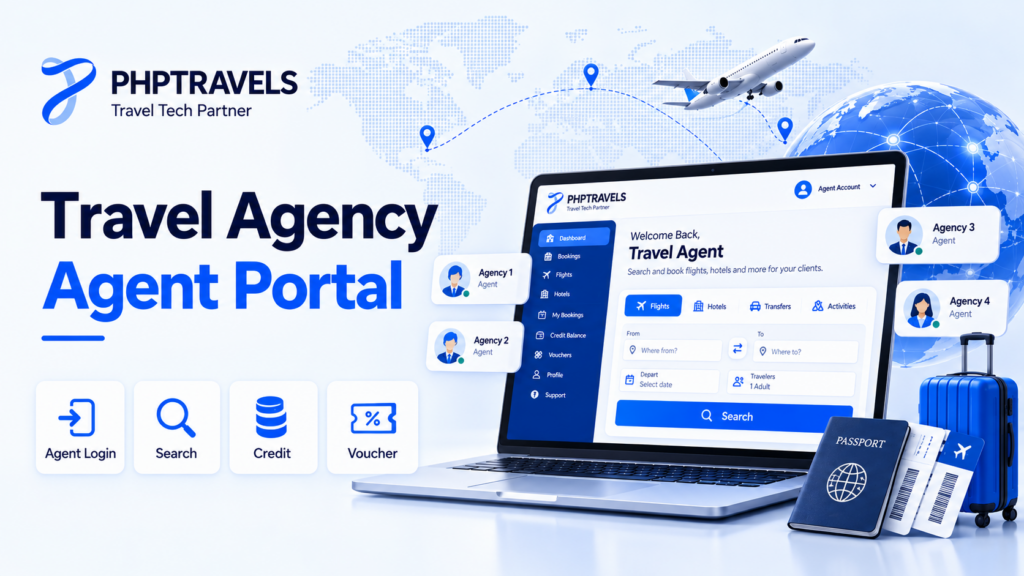
A travel agency agent portal replaces that improvisation with a login: authenticated sub-agents search live inventory, see the rates they are allowed to see, book under your rules, and pull vouchers without waking your ops team. This guide explains what that portal must do, how it differs from a public B2C site, and how to roll one out without creating a second chaos layer.
What a travel agency agent portal actually is

An agent portal is a B2B booking workspace for other travel sellers retail agencies, home-based agents, corporate desk partners who buy from you as a wholesaler, consolidator, DMC, or multi-agent OTA.
It is not:
- A public hotel/flight website for end travelers (that is your B2C storefront)
- A CRM pipeline board (useful, but different)
- A full IATA mid-office ticketing suite (some agencies need that later; many leisure networks do not on day one)
It is a controlled storefront where:
- Each agency (or agent user) has an account.
- Search and book flows reuse your supplier connections and/or manual inventory.
- Pricing follows net / marked-up rules you define not whatever was typed in chat.
- Bookings land in your admin as the system of record.
- Documents and payment status are available to the agent without email ping-pong.
If your “portal” is only a PDF rate sheet and a shared inbox, you have a brochure, not a portal.
B2C storefront vs B2B agent portal — who logs in and why

| Dimension | B2C storefront | B2B agent portal |
|---|---|---|
| User | Traveler / family booker | Licensed or retail travel agent |
| Price shown | Retail / public offer | Net or agent-specific sell rates |
| Payment | Card, wallet, local gateways | Often credit, deposit, bank transfer, wallet balance |
| Relationship | One-off or loyalty | Ongoing contract, production targets, credit terms |
| Support | “Where is my voucher? | “Why is this net different from last week?” + passenger changes |
| Risk | Chargebacks, UX drop-off | Unpaid credit, rate leakage, rogue bookings |
Many operators run both on one platform: a public site for direct customers and a login portal for the agent network. That is the B2C+B2B model not two unrelated codebases if you can avoid it. For a broader product-selection view, see PHPTRAVELS’ B2B travel portal software guide; the architecture-deep piece is separate (B2B portal architecture).
Rule of thumb: If the person logging in resells travel for a living, they need an agent portal. If they are the passenger, they need B2C.
Core workflows the portal must own

Build (or buy) around the jobs agents actually repeat every day.
1) Authenticated search
Same modules you sell stays, flights, tours, transfers, etc. but behind login. Anonymous public caching of your net rates is how you train competitors.
2) Quote hold → book
Agents need a clear path from “interesting option to “confirmed booking,” including passenger data capture that matches supplier requirements. Vague “request” buttons that dump into email recreate the problem you are trying to escape.
3) Amendments and cancellations with an audit trail
Date changes and partial refunds must update the booking record. If the truth lives in WhatsApp, finance and support will disagree forever.
4) Booking history per agency
Agents should see their own production: upcoming trips, unpaid items, voucher downloads. You should see the same list filtered by agency, user, and status in admin.
5) Multi-user agencies
A retail shop often has owners plus booking clerks. Role separation (who can book on credit vs who can only search) prevents expensive surprises.
If a demo only shows a pretty search form and skips post-booking life, keep shopping.
Net rates, markups, and what sub-agents should see
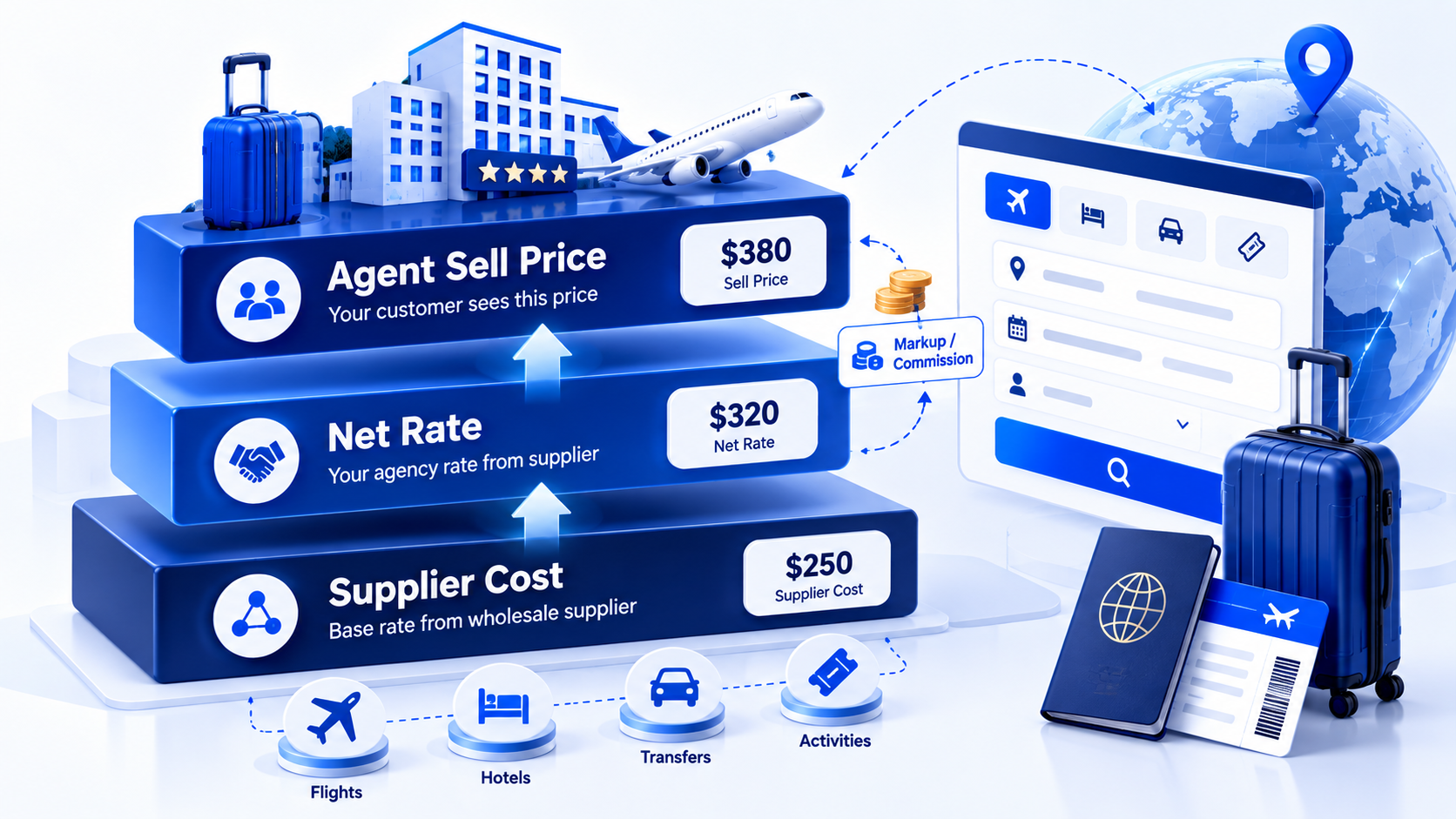
Pricing is the portal’s trust layer.
What good looks like:
- Default net (or default agent sell) attached to the agency account
- Optional overrides for VIP agencies or campaign periods — recorded, not tribal knowledge
- Markup rules that apply at booking time and remain visible afterward (see also travel markup management and commission management)
- Currency display that matches how that agency settles (multi-currency booking software matters when your network spans borders)
What bad looks like:
- One shared “agent login for the whole market (no attribution, no credit control)
- Screenshots of GDS nets pasted into chat
- Silent manual discounts that never hit the booking ledger
Rate leakage is usually a process failure, not a supplier failure. The portal should make the approved price the path of least resistance.
Credit, deposits, and payment methods that keep cashflow honest
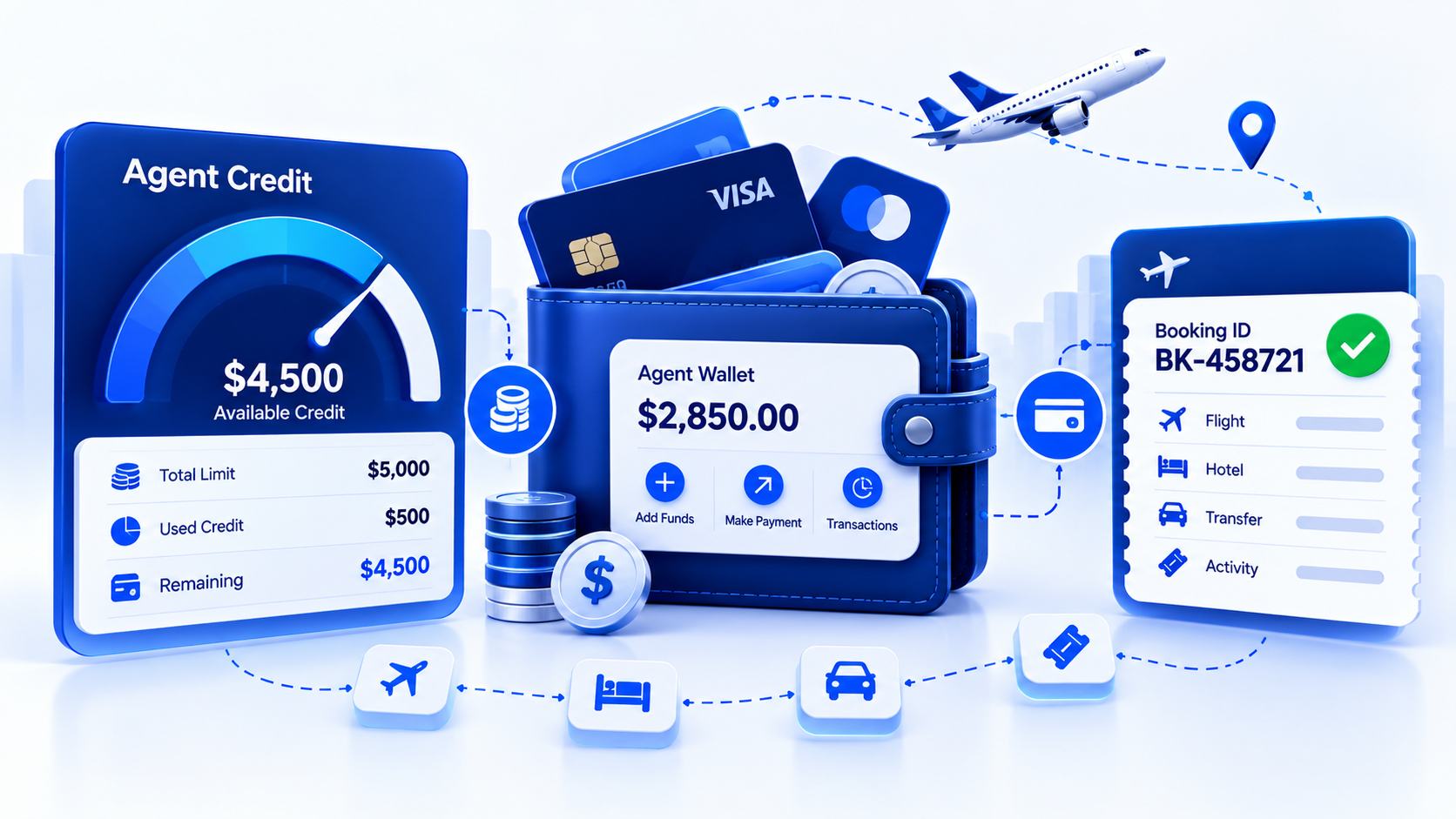
B2B travel dies in silence when credit is informal.
Decide explicitly, then encode it:
- Prepay — agent pays before ticket/voucher release
- Deposit + balance common for packages and groups
- Credit limit agency can book up to a ceiling; finance reviews weekly
- Wallet / balance — agent tops up; bookings debit the wallet
Your software should at least expose payment method and status on the booking (card/gateway, bank transfer, pay later, wallet). Whether you run a full “credit engine” with aging reports or export to accounting, the portal must not pretend every booking is a simple retail card charge.
Operational policy beats features: write the credit application, who approves limit increases, and what happens at 80% utilization. Software enforces; policy decides.
Money from travelers and agents should land in your gateway and bank accounts — not a vendor’s opaque float — when you use a licensed booking platform model.
Documents and support without inbox archaeology

Agents will judge your portal by whether they can solve 80% of tickets alone.
Minimum self-serve set:
- Voucher / confirmation PDF that matches the live booking
- Invoice / receipt aligned to the paying entity (agency vs traveler, depending on your model)
- Clear booking reference shared with your admin
- Status that distinguishes “paid,” “on credit,” “awaiting supplier,” and “cancelled”
Support macros should point agents back into the portal (open booking #… Documents”) instead of re-sending attachments from personal email. That sounds small; it is how you reclaim mornings.
10-step rollout checklist for your first agent portal
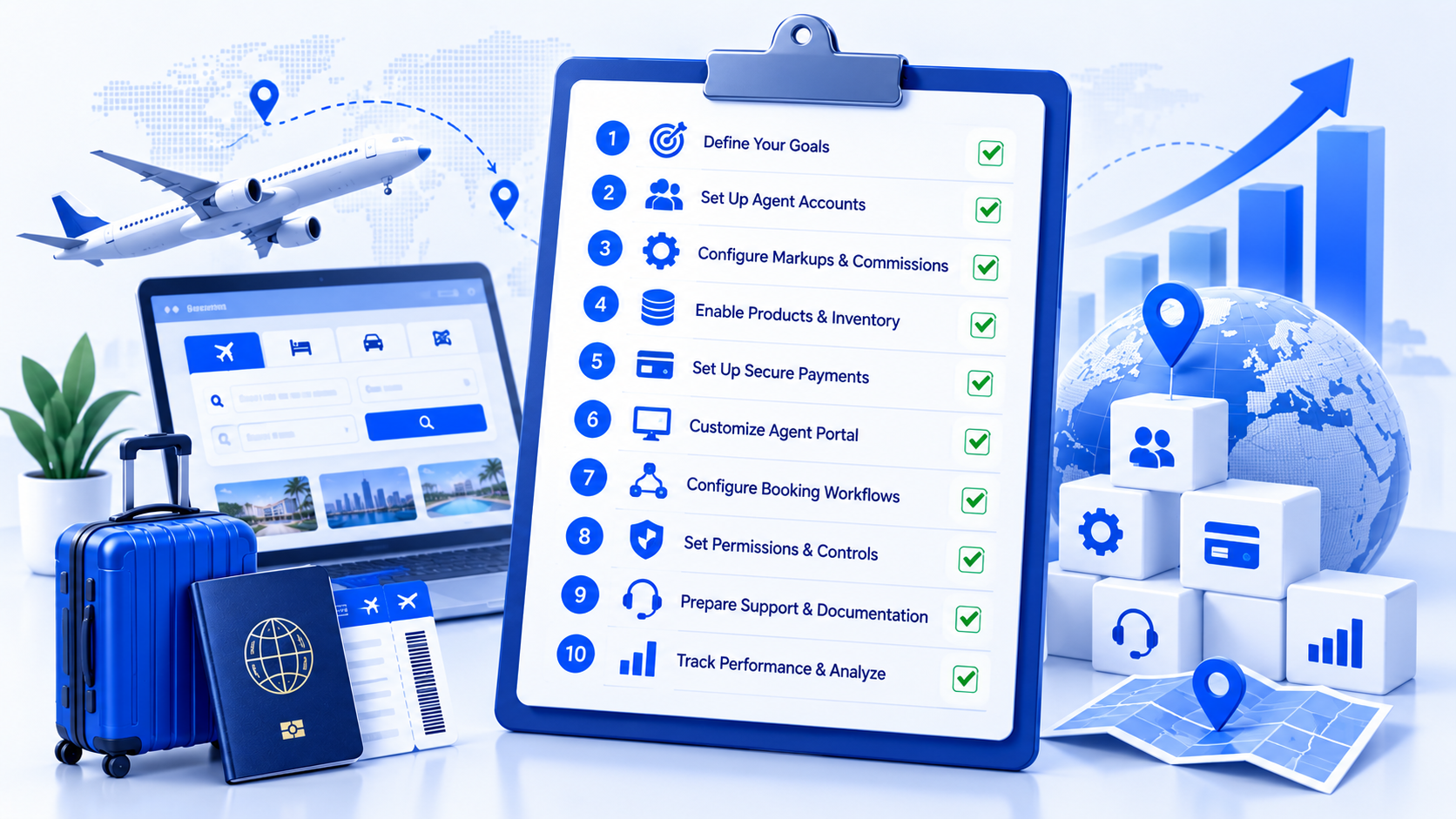
Use this as a project board. Skip steps and you will relaunch in three months.
- Pick the first module you can fulfill reliably (often hotels + tours before complex flight edge cases).
- Confirm supplier credentials are yours and tested in staging — software connects; it does not gift inventory.
- Define agency tiers (standard / preferred / strategic) and default nets.
- Choose payment modes for the pilot (start stricter than you think).
- Create 5–10 pilot agencies with real bookers, not only owner logins.
- Write a one-page agent handbook (login, search tips, how to amend, who to call).
- Train with live bookings under supervision for the first week.
- Watch exception queues daily — failed payments, supplier errors, amendment requests.
- Freeze chat-based quoting for modules the portal covers (hard rule).
- Expand modules and credit only after week-two reports look clean.
White-label sub-portals (your brand for a regional partner) are a later lever, not a day-one requirement. Get one honest portal working first.
Where a platform like PHPTRAVELS fits
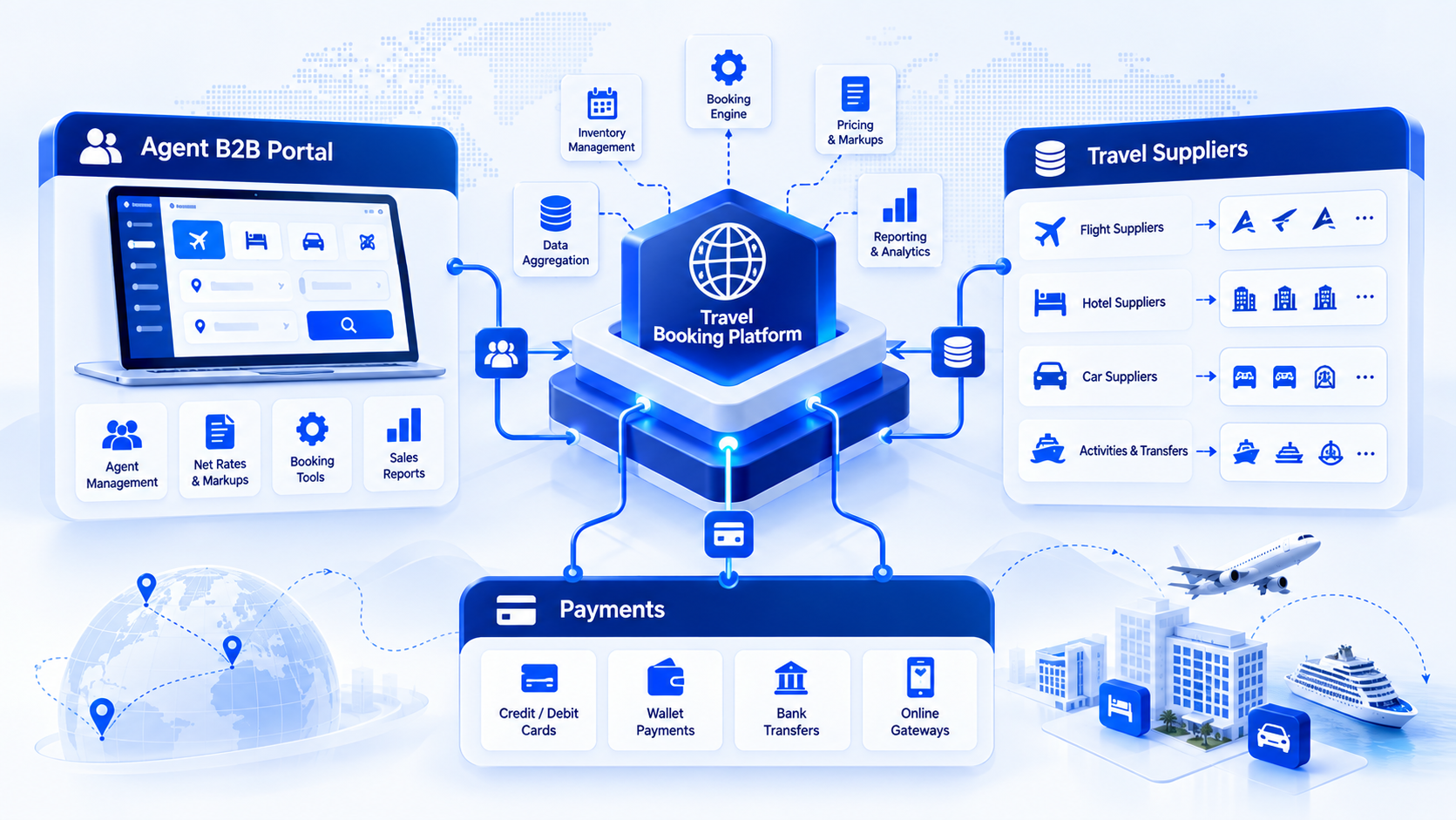
PHPTRAVELS is travel booking software for agencies, tour operators, OTAs, and DMCs: B2C storefront, B2B agent portal, back-office admin, supplier API connections, and payment handling under a commercial licence. You keep branding, supplier contracts, payment accounts, and margins it is not a booking intermediary that takes a cut of your sales.
For an agent-portal rollout, the practical fit is:
- Enable B2B (or B2C+B2B) so sub-agents get a login workspace while you keep a public site if you need one
- Connect the suppliers you contract (flights, stays, tours, cars, and other modules as listed on the live integrations page — always verify before promising a specific API)
- Use markup / multi-currency / multi-language controls so agent views stay coherent
- Collect via gateways you own (Stripe, PayPal, and others on the live list) plus methods like bank transfer or wallet balance where you enable them
- Administer bookings, agents, and documents in one back office instead of a spreadsheet twin
It is a poor fit if you want zero-configuration SaaS with someone else’s inventory, or if you need regulated functions (IATA accreditation, insurance underwriting, ticketing authority) that remain your licences and processes.
Next step when the checklist above is real: book a demo and configure pricing against the modules and business model you actually need — not a fantasy stack.
FAQ
Is an agent portal the same as a white-label?
No. White-label is about whose brand the end user sees. An agent portal is about who is allowed to book (authenticated resellers) and under what commercial rules. You can have a branded agent portal; they are related, not identical. See also white-label travel booking software.
Do sub-agents need their own supplier contracts?
Usually no for inventory you distribute. They book through your connectivity and commercial agreement. They may still need their own local licences to sell travel in their market — that is a legal/compliance question, not a portal feature.
Can we keep WhatsApp for VIP agents?
You can, but every off-portal exception should still be entered into the booking system the same day. Otherwise VIP becomes “invisible inventory and invisible debt.”
What about flights and NDC complexity?
Start with the modules you can operate. Flight distribution (GDS/NDC/aggregators) has its own stack decisions; do not block a working hotel/tour agent portal on a perfect airline strategy.
Closing
A travel agency agent portal is how you turn a network of retailers into a repeatable channel: same search, same rules, same documents, same ledger. Email will always exist for exceptions. It should not be your booking engine.
Map your tiers, lock payment policy, pilot ten agencies, and only then scale credit and modules. When you want that B2B workspace on the same stack as your storefront and admin, evaluate a licensed platform with a real agent portal — demo and pricing when you are ready to configure facts, not slides.
When evaluating a travel agency agent portal, compare the daily workflow rather than screenshots.
A travel agency agent portal rollout should start with one reliable module and measurable service levels.
The best travel agency agent portal keeps agency tiers, net rates, and booking history visible.
For finance teams, a travel agency agent portal makes credit and payment status easier to audit.
For support teams, a travel agency agent portal turns voucher requests into self-service actions.
Review official IATA travel agent resources alongside your supplier and compliance requirements when planning distribution.
That operational discipline is what makes a travel agency agent portal sustainable as the network grows.