Search for white label travel booking software and you will see the same promise repeated: launch an online travel agency fast, under your own brand, without hiring a year-long engineering team.
That promise is directionally true. It is also incomplete.
White label is not a magic inventory pipe. It is not a free version of Expedia. And it is not the same thing as putting your logo on someone else’s co-branded portal while they keep the customer relationship, the payment settlement path, and often a share of every booking.
For agencies, OTAs, and tour operators, the useful definition is commercial, not cosmetic:
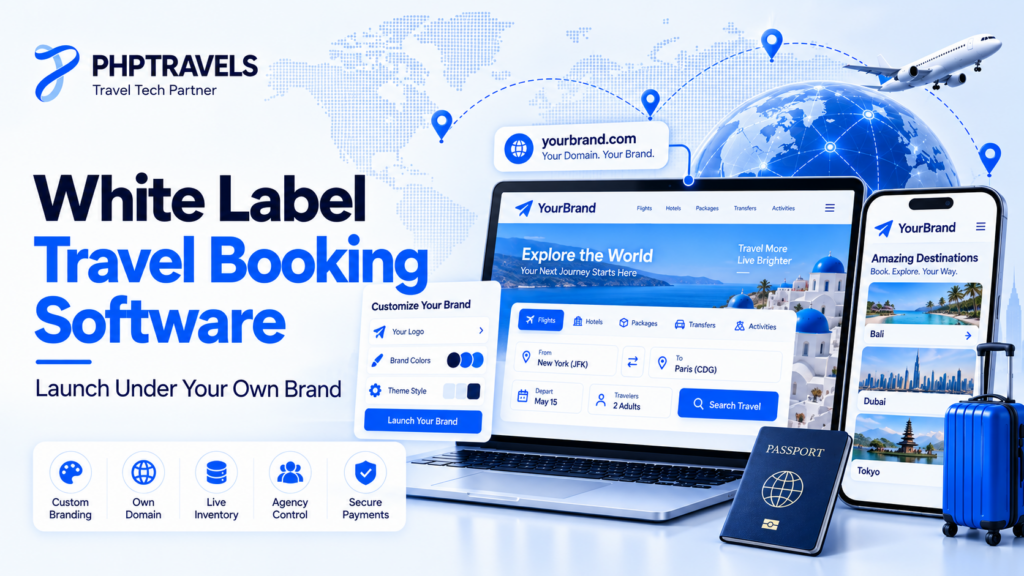
White label travel booking software lets you run search, book, pay, voucher, and back-office workflows on your domain, with your brand, while you keep pricing control, customer data, and margin structure — using a licensed platform instead of building every module from scratch.
If those ownership points are fuzzy in a vendor demo, you are not evaluating white label. You are evaluating a distribution channel that happens to allow branding.
What “White Label” Actually Means for a Travel Business
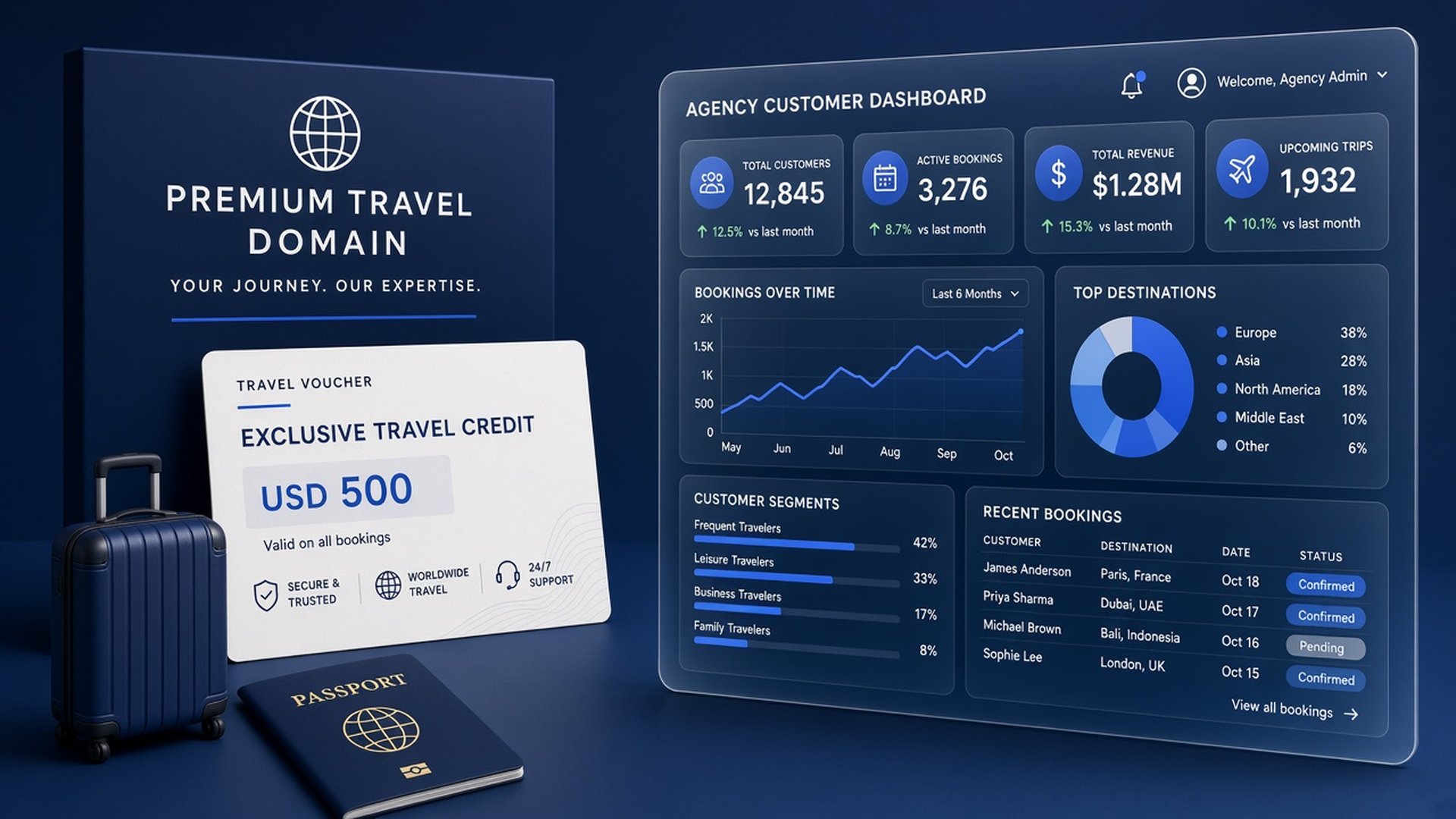
Start with what the traveler sees and what your finance team sees.
What the traveler should see
- Your domain (for example `book.youragency.com`), not a vendor subdomain that leaks someone else’s brand
- Your logo, colors, emails, invoices, and vouchers
- Your support identity when something goes wrong after payment
What your business should own
- Customer records and booking history
- Markup, service-fee, and commission rules
- Choice of which supplier contracts to attach
- Choice of which payment gateways settle into your merchant accounts
- The right to change suppliers or gateways without rebuilding the storefront
That last point matters. Many “white label” offers are really hosted storefronts tied to the vendor’s contracted inventory. Convenient on day one. Expensive later if you cannot move.
A practical test during any sales call:
If we bring our own Hotelbeds / Amadeus / Viator credentials and our own Stripe account, can the platform run on our domain with our markups — and can we swap a supplier later without migrating the whole site?
If the answer is vague, keep asking.
White label is branding plus commercial control. Logo-only is co-branding.
White Label vs Co-Branded SaaS vs Custom Build
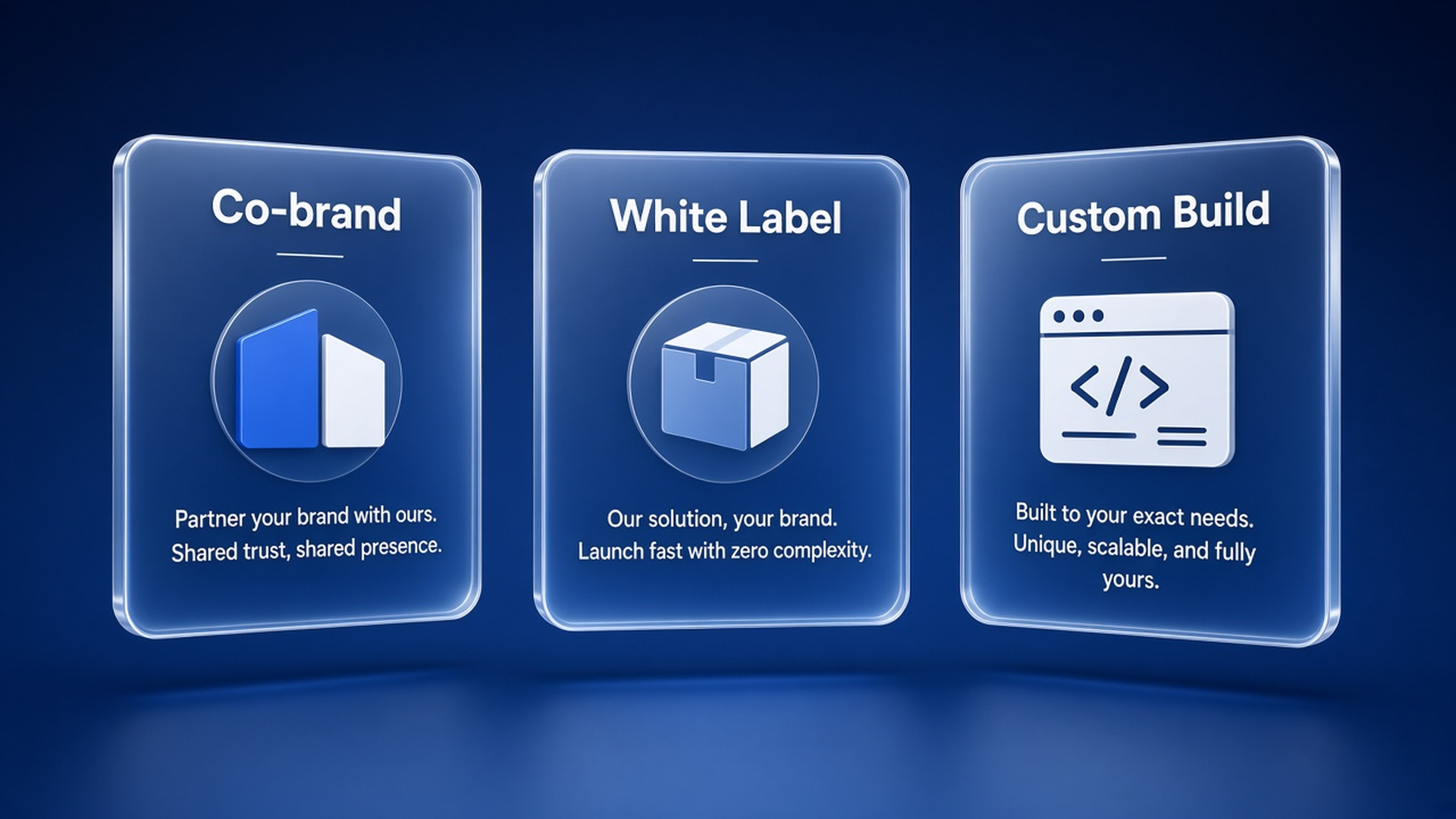
Buyers often compare three options as if they were the same category. They are not.
| Approach | Brand on the site | Who owns customer data | Who owns supplier contracts | Typical commercial model | Best when |
|---|---|---|---|---|---|
| Co-branded / affiliate-style portal | Partial or shared | Often shared with platform | Usually the platform’s | Commission or revenue share | You want zero supplier work and accept lower control |
| White label booking software | Yours (domain + UI) | Should be yours | Should be yours (platform connects) | Licence / subscription for software | You want speed **and** ownership |
| Custom build | Yours | Yours | Yours | Capex + team | You have unique workflows and a multi-year budget |
Industry distribution guides still describe the classic split: retail agents sell on demand for principals, while wholesalers and tour operators take more inventory and packaging risk (Tourism Australia distribution overview). Software does not replace that commercial choice. It only decides whether your brand sits in front of the workflow.
Margin illustration (assumptions only)
These numbers are illustrative, not a promise of any supplier’s commission or any platform’s fee.
Assume a hotel net rate of USD 850 and you sell at USD 1,050 (about 23.5% gross margin before payment fees).
- On a software licence model, that gross margin stays with your agency after gateway fees and supplier settlement rules.
- On a revenue-share / per-booking SaaS model, a platform cut of even 3–8% of booking value can erase a large share of that gross margin as volume grows.
That is why high-volume OTAs often prefer owning the stack (licence or custom) once booking count makes per-booking fees painful. Early-stage teams may still prefer hosted SaaS for cashflow — just do not call every hosted portal “white label ownership.”
Related reading on protecting markups once suppliers are connected: Travel Markup Management Software.
The Part Vendors Soft-Pedal: You Still Need Suppliers and Payment Accounts
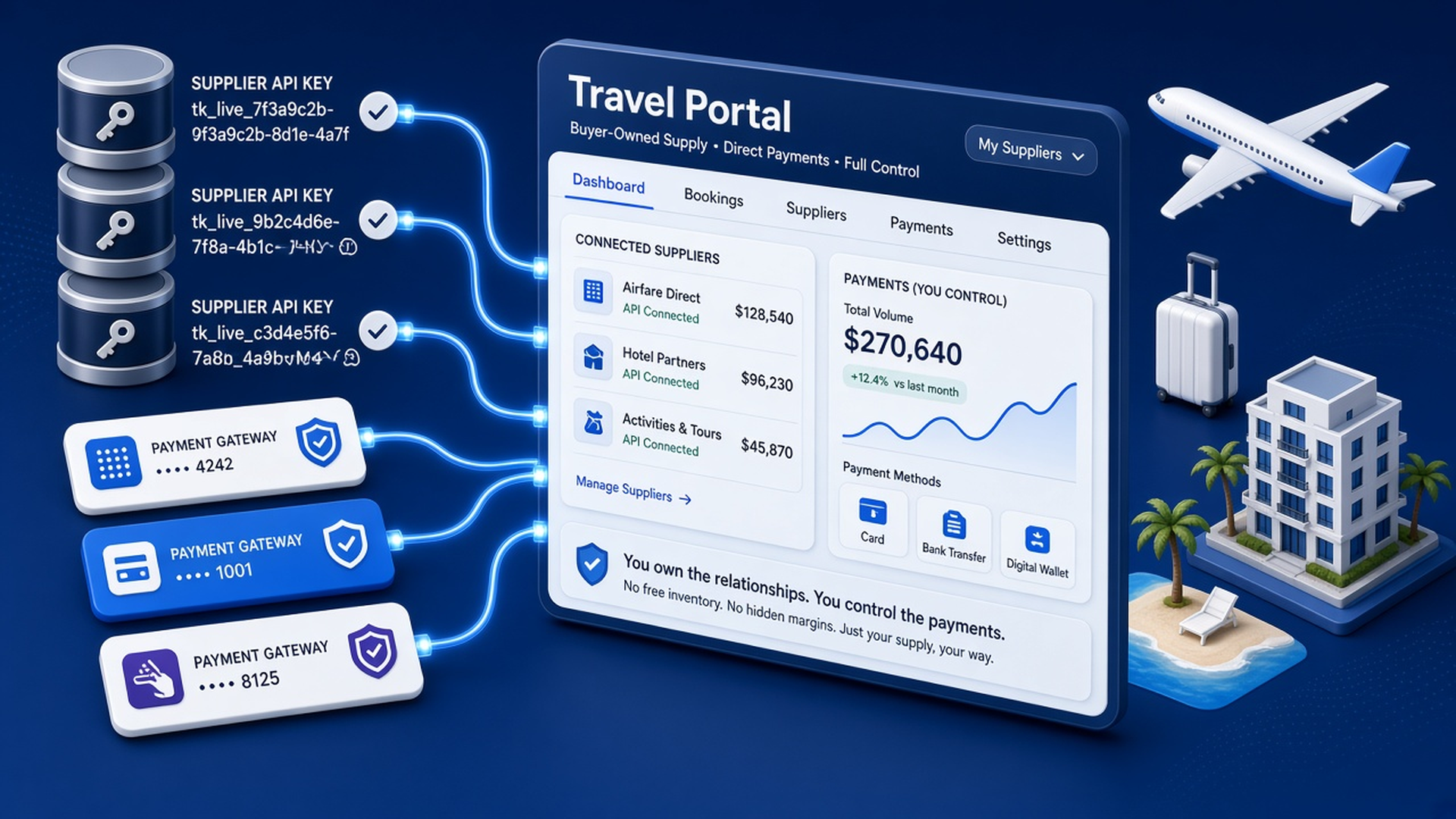
This is the most important honesty filter in the category.
Travel booking software connects. It does not grant inventory.
To sell live flights, stays, tours, cars, or ancillaries, you generally need:
- Commercial agreements with each supplier or aggregator
- API credentials issued to your company
- Compliance steps the supplier requires (documentation, deposits, market restrictions)
- A payment gateway merchant account in markets you charge customers
- An operations process for cancellations, refunds, schedule changes, and support
If a demo site shows thousands of hotels with “no supplier setup,” ask whether those results come from the vendor’s demo credentials or from credentials you will own in production. Demo inventory is not your inventory.
The same rule applies to payments. Money should settle to your Stripe, PayPal, Adyen, or regional gateway account — not permanently through a middle account you cannot reconcile. Multi-currency settlement makes this even more important; see Multi-Currency Travel Booking Software.
A white label platform earns its keep by giving you:
- Stable connectors and normalized booking flows
- Admin tools for markup, agents, vouchers, and reports
- A branded B2C and/or B2B experience on your domain
It does not replace supplier negotiation, IATA accreditation (if you need it), insurance underwriting, or local payment KYC. Those remain your business responsibilities.
B2C Storefront + B2B Sub-Portals Under One Brand
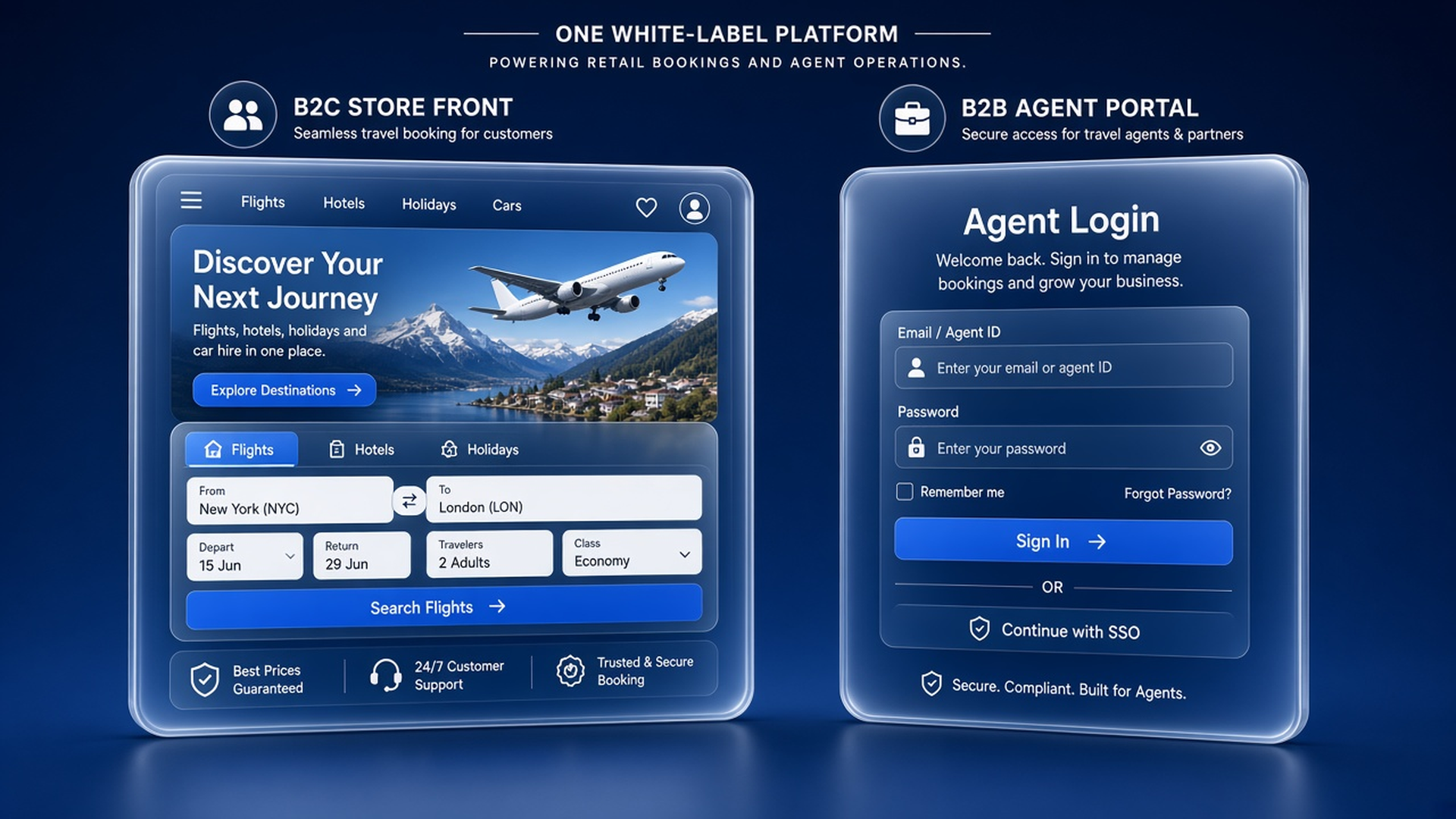
Serious travel companies rarely sell through only one channel.
B2C
Travelers search and pay on your public site. You control retail price presentation, upsells (transfers, activities, eSIM, insurance where configured), and post-booking messaging.
B2B
Sub-agents, corporate bookers, or partner agencies log into an agent portal. They need:
- Agent accounts and roles
- Credit limits, deposits, or wallet balances where your model requires them
- Agent-specific markups or net rates
- Book-on-behalf workflows
- Clear reporting per agent
True white label stacks run both channels against the same modules and supplier connections, so inventory rules stay consistent while commercial rules differ by channel.
“Sub-portals” in this sense means branded agent or partner experiences under your licence — not a second unrelated SaaS product. Your customers should still feel they are dealing with your company.
If you only need a single hotel widget for one property, white label OTA software is usually the wrong tool. If you need flights + stays + tours with agent distribution, dual-channel design becomes the requirement, not a nice-to-have.
A Practical Launch Checklist for White Label Travel Booking Software
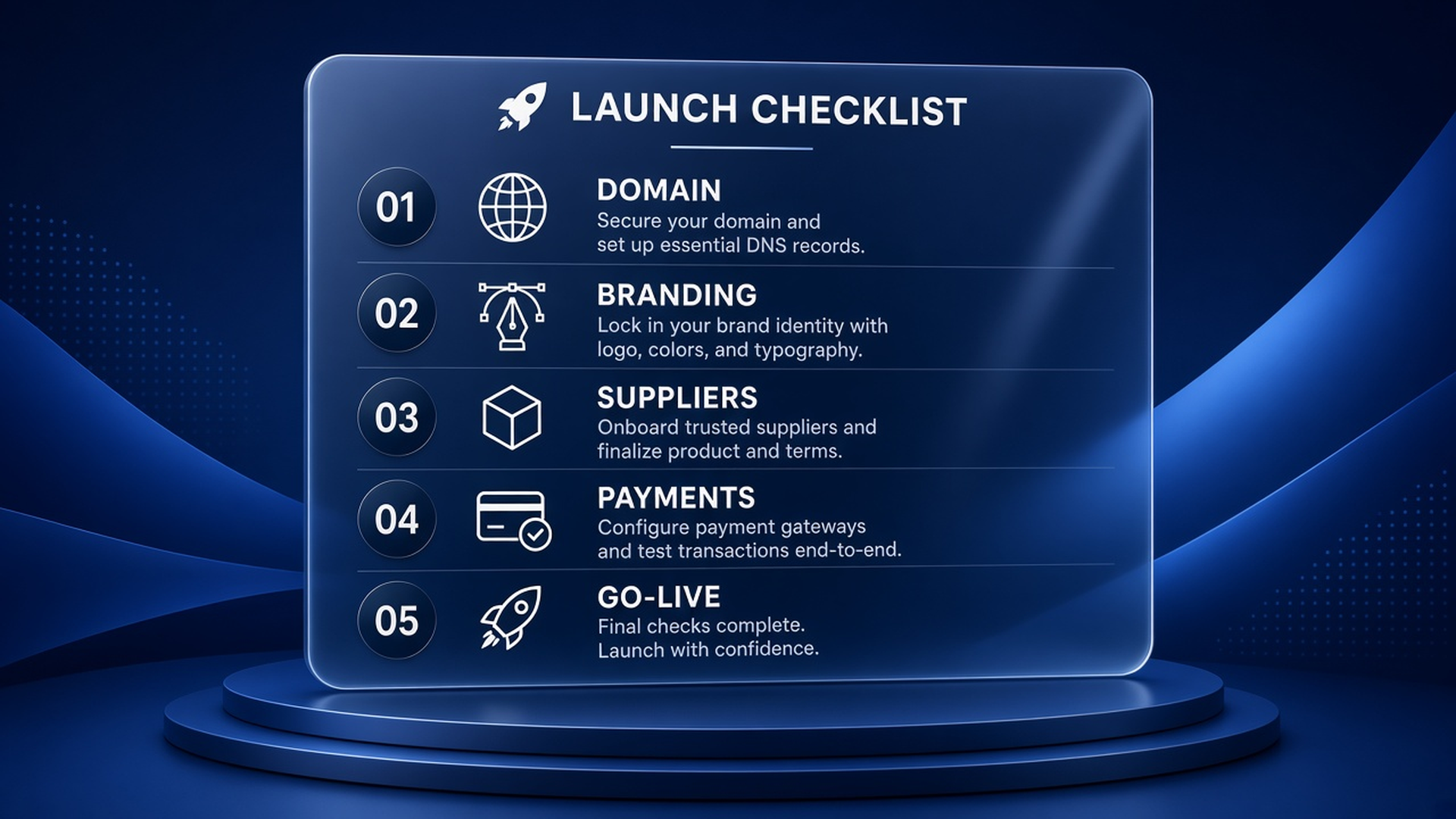
Use this as a working checklist, not marketing copy.
- Clarify the business model — B2C only, B2B only, or both. Write down who pays whom on a failed booking.
- Pick the domain and email identity — SSL, branded mail for vouchers and password resets.
- Choose modules that match revenue — Do not enable every module on day one. Start with the products you can actually fulfill.
- Secure supplier contracts first — Parallel-track credentials while the platform is installed. Software waiting on APIs is still waiting.
- Connect payment gateways to your merchant accounts — Test auth, capture, partial refund, and failed-payment paths.
- Configure markup and tax display rules — Especially if suppliers return net vs retail.
- Brand the UI — Logo, colors, invoices, vouchers, PDF templates.
- Train ops — Who handles supplier error codes, schedule changes, and chargebacks.
- Sandbox end-to-end — Search → price → book → pay → voucher → cancel/refund.
- Go live with monitoring — Booking logs, payment webhooks, and a rollback plan for a bad supplier credential.
Agencies that skip steps 4–6 often “launch” a pretty site that cannot complete a real paid booking. That is not a software failure. That is a commercial setup failure.
Where PHPTRAVELS Fits (Honest Product Fit)
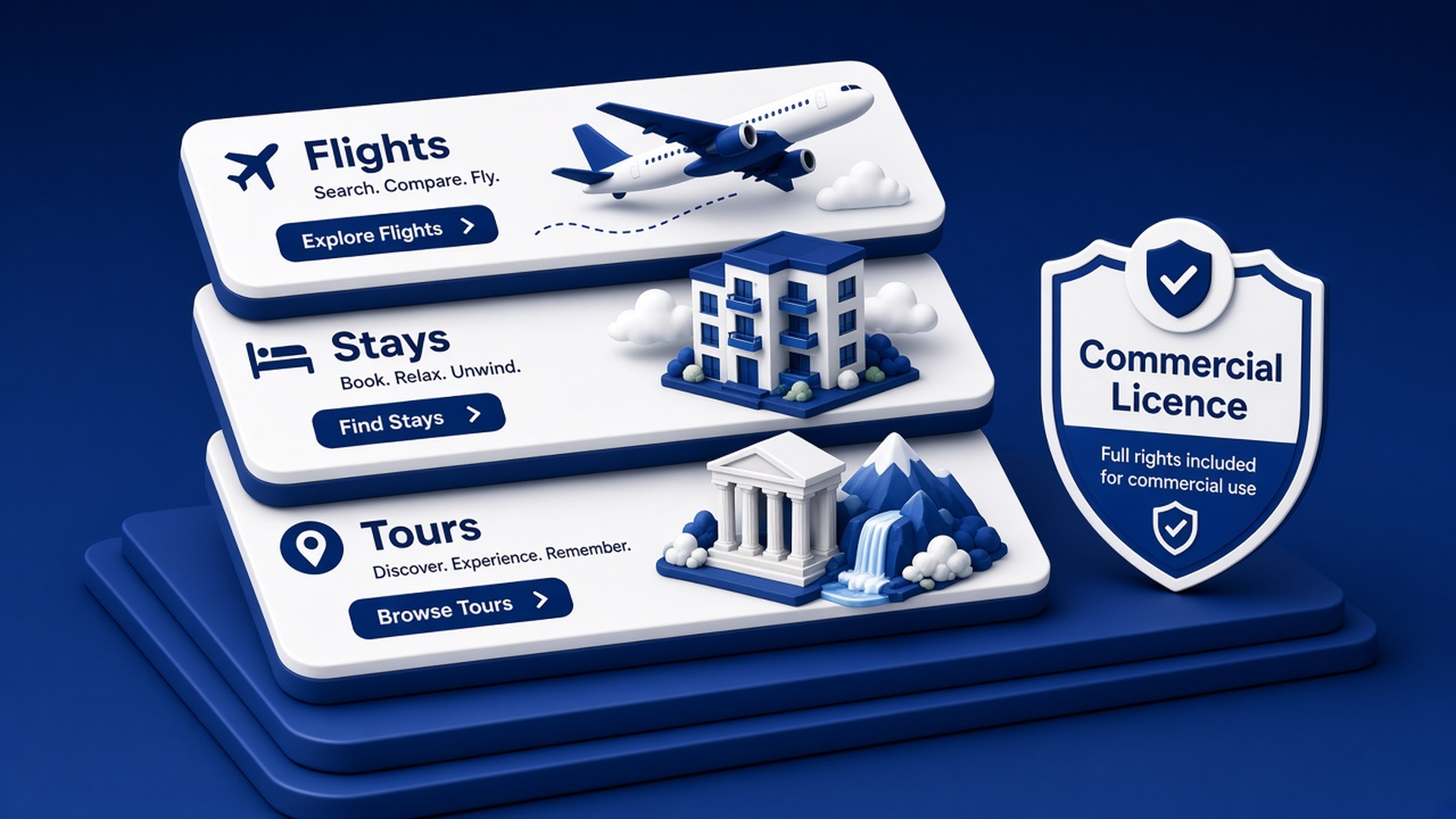
PHPTRAVELS is licensed travel booking software for agencies, tour operators, OTAs, and travel startups. It is sold as a product you configure — not a sign-up SaaS that takes a cut of your bookings.
Where it matches a genuine white-label brief:
- Own brand and domain — You run the storefront and agent experience under your identity
- B2C and B2B — Retail site and agent portal options, including combined setups
- White-label sub-portals — Branded channel experiences on the same stack
- Modular products — Flights, Stays, Tours, Cars, Ferries, Rail, eSIM, Visa, Insurance, Bus, Cruises (enable what you sell)
- Supplier connectors — Pre-built integrations listed on the live integrations page; you still bring contracts and API keys
- Payments to your accounts — Gateways such as Stripe, PayPal, Adyen, and regional options; settlement is yours
- Source / self-hosted under a commercial licence — Source code is included for self-hosting; this is not a public MIT / unrestricted open-source giveaway. Modification rights depend on plan — confirm on pricing
Where it is a poor fit:
- You want zero supplier work and zero technical involvement forever
- You only need a single-property booking widget
- You expect PHPTRAVELS to provide IATA accreditation, insurance underwriting, or ticketing authority on your behalf
PHPTRAVELS is the licensed white-label stack. You remain the travel company: brand, margins, suppliers, payments, and support.
If you are comparing vendors on source access, pricing model, and B2B tools, use the live compare page rather than brochure claims.
Next step: see a working flow on the demo, then price the modules and APIs you actually need on pricing.
For AI-era distribution questions that sit beside white-label ownership, see also MCP for Travel Booking.
FAQ: White Label Travel Booking Software
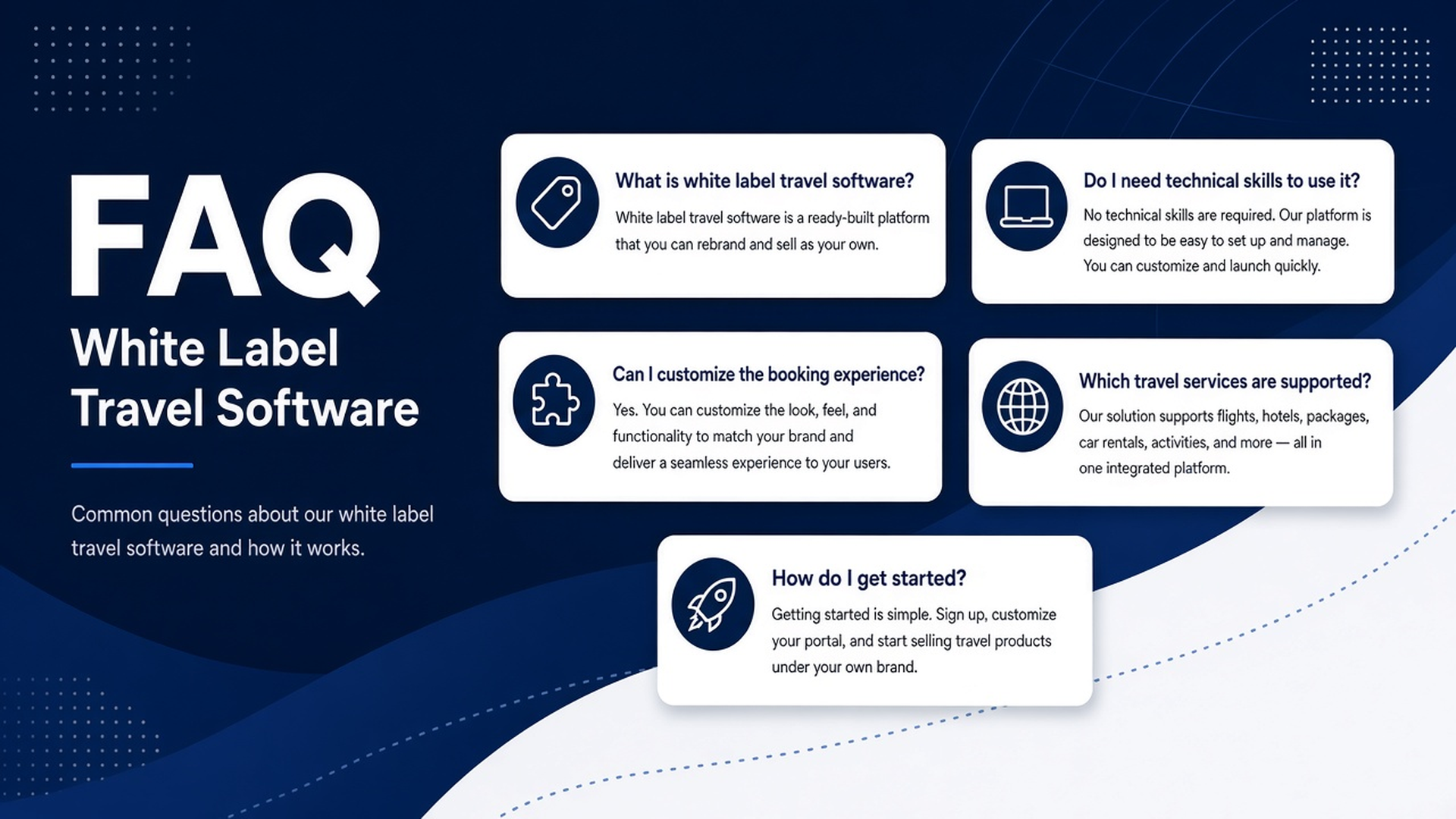
Is white label the same as open source?
No. White label describes branding and commercial ownership of the customer experience. Licensing is separate. PHPTRAVELS ships source for self-hosting under a commercial licence, not a public MIT-style licence.
Do I get free hotel and flight inventory with white label software?
No. Connectors are technical. Inventory access comes from your supplier agreements and credentials.
Can I run both a consumer site and an agent portal?
Yes — that is the normal B2C + B2B pattern for white label OTA platforms. Configure channel rules carefully so agent nets and retail markups do not collide.
How long does launch take?
Platform install can be relatively fast. The critical path is usually supplier onboarding, payment KYC, content/branding, and ops training. Treat those as the real timeline.
When should I build custom instead?
When your workflows are genuinely unique, you have a multi-year engineering budget, and no configurable platform covers the core booking logic without constant forks. Otherwise a licensed white label stack is usually the faster path to a branded launch.
Conclusion
White label travel booking software is worth buying when you want to launch under your own brand without waiting years for a custom build — and when you are ready to own suppliers, payments, and margins.
Ignore logo-only demos. Ask who owns the domain experience, the customer data, the API contracts, and the settlement accounts. Then choose a licensed stack that matches that definition.
If that is the model you want, explore the PHPTRAVELS demo and configure a quote on pricing.
White label travel booking software lets an agency present one consistent customer journey from search to payment.
A practical white label travel booking software rollout keeps the brand, domain, customer data, and support workflow aligned from day one.
The best white label travel booking software also makes it clear which inventory, payment accounts, and service levels your company controls.
Before launch, compare white label travel booking software against a custom build so you can choose speed without losing operational ownership.
Choose white label travel booking software when you need a branded storefront, a manageable launch timeline, and room to expand into agent sales.
A reliable white label travel booking software partner should document integrations, ownership boundaries, and the support path before contracts are signed.
This white label travel booking software checklist is designed to turn a promising demo into a controlled, measurable launch.
White label travel booking software should support clear branding at every customer touchpoint. White label travel booking software can also simplify B2B onboarding. White label travel booking software works best when suppliers and payments are planned early.
White label travel booking software gives growing agencies a practical bridge between affiliate selling and a full custom platform. Good white label travel booking software keeps brand control visible to customers. The right white label travel booking software plan should match your sales channels and supplier scope. Review white label travel booking software costs against expected booking volume. Treat white label travel booking software as an operating system for your travel brand.
White label travel booking software should be evaluated with a launch checklist, not only a logo mockup. White label travel booking software is strongest when ownership terms are explicit. White label travel booking software can support growth without forcing an agency into a custom rebuild. White label travel booking software should leave room for better supplier coverage later.