
Travelers rarely buy a flight in isolation.
They need a bed the night they land, often a transfer, and frequently a tour or activity on day two.
Agencies that still quote those pieces from three supplier portals and a spreadsheet feel the drag: slow replies, inconsistent margins, and bookings that fall apart when one component changes.
Dynamic packaging software is the stack that lets you assemble multi-component trips—typically flights + hotels, and often tours, transfers, or cars—in something closer to real time, under one customer journey and one commercial control layer.
This guide explains what that actually means, where manual packaging burns money, what a serious packaging stack must include, and where PHPTRAVELS fits honestly as a modular booking platform (buyer supplies the contracts).
What Dynamic Packaging Software Actually Does
For an agency, dynamic packaging software turns those live inputs into one customer-ready offer instead of a loose set of supplier quotes.
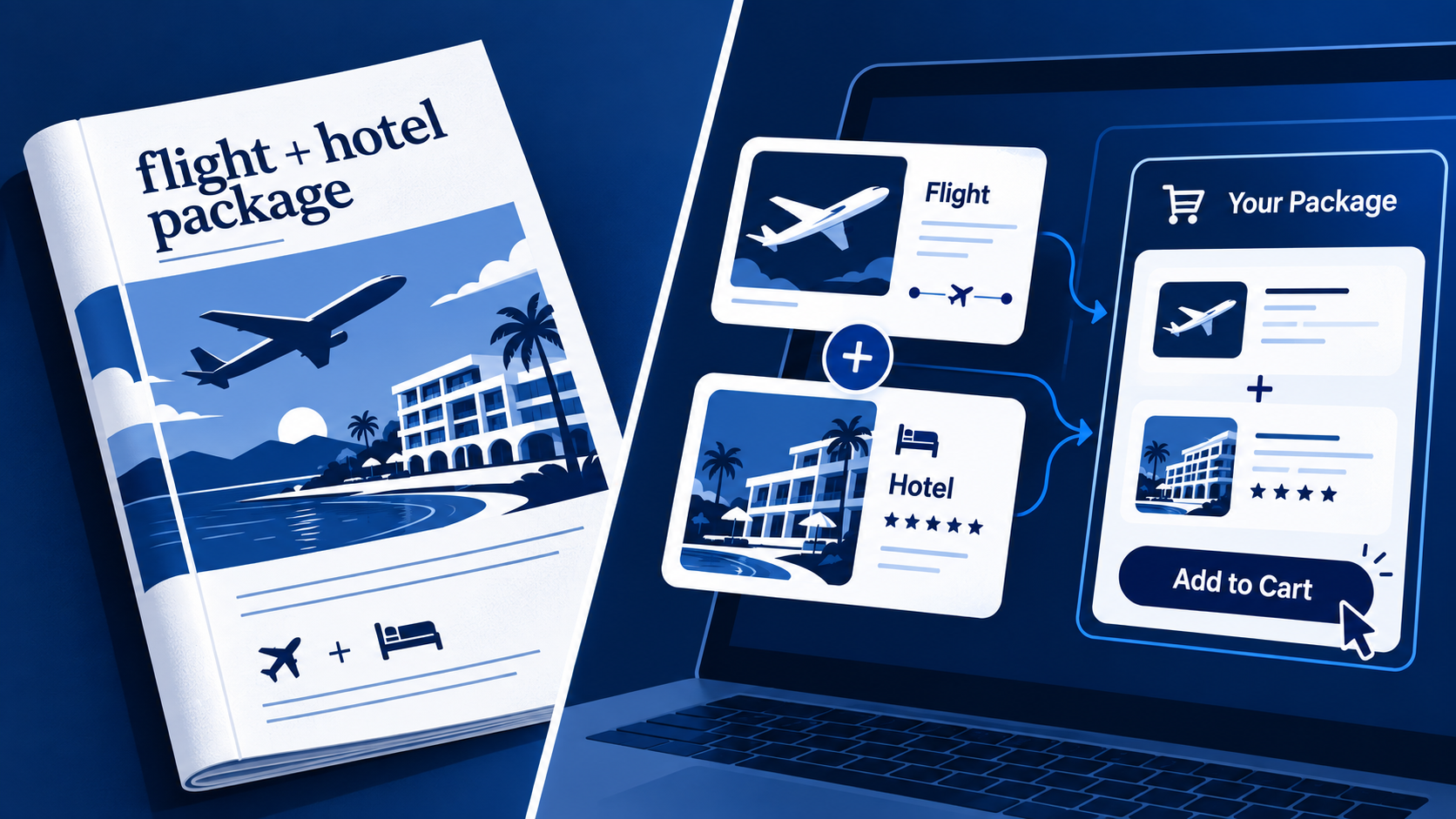
Dynamic packaging is not a new brochure PDF with “flight + hotel” printed on the cover. It is the ability to:
- Search and price multiple travel components from live (or near-live) supplier sources
- Combine them into a single offer the traveler can understand and buy
- Apply your markup, taxes display rules, and currency handling
- Confirm components in a controlled sequence (or fail gracefully when one supplier rejects)
- Issue documents/vouchers and handle partial amend/cancel when rules differ by service
In practice, the shopper experiences one trip: Dubai for five nights, outbound and return flights, hotel, and airport transfer.
Behind the scenes, your platform may still create separate supplier bookings—but the agency runs one order, one payment flow, and one customer record.
That is different from:
- Static / contracted packages: pre-built inventory with fixed inclusions and often opaque rate construction
- Component-by-component booking: traveler (or agent) books flight, then hotel, then tour as unrelated carts
- Affiliate deep-links: sending the customer to multiple OTAs and hoping they return
Industry vendors describe dynamic packaging as blending diverse components through web-based software into tailor-made holidays (see Traveltek’s overview of dynamic packaging).
The core idea is the same whether you sell B2C on your site or B2B to sub-agents: assemble at sell-time, not only at brochure-print-time.
Why Manual Packaging Breaks Margin and Ops
Used well, dynamic packaging software makes the commercial rules visible before an agent confirms the booking.
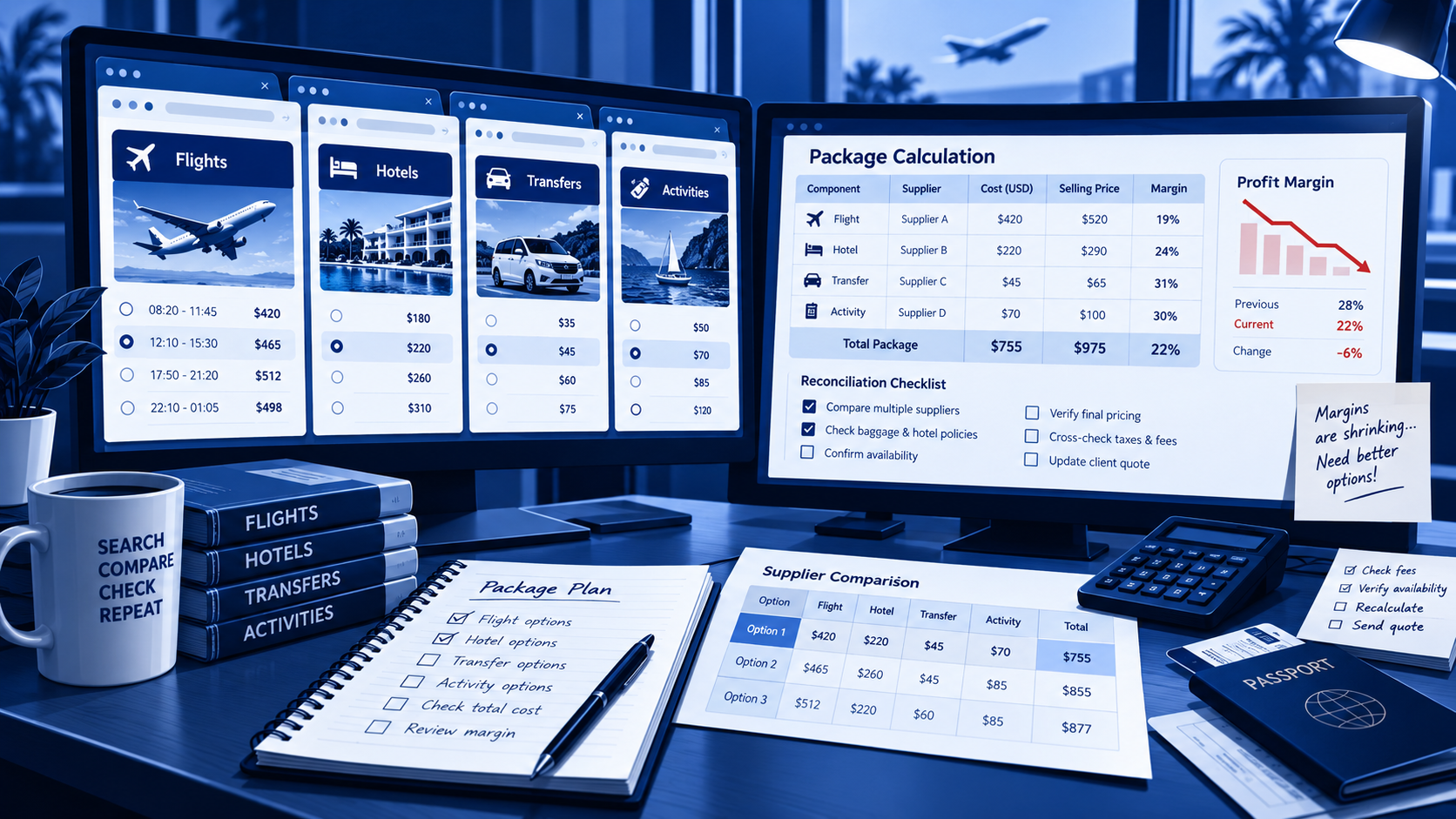
Walk through a common agency day without packaging software:
- Client asks for “Istanbul, 7 nights, mid-range hotel, flights from Lahore or Karachi, preferably with transfer.”
- Agent opens a flight consolidator, a hotel bedbank, and a transfer desk (or WhatsApp group).
- Quotes arrive in different currencies and validity windows.
- Agent pastes numbers into Excel, adds a “safe” markup, and emails a PDF.
- Client accepts two days later—one hotel rate is gone; the flight fare basis changed; the transfer supplier closed early.
The hidden costs are not only the lost booking:
- Margin leakage: FX conversion done by gut feel; markup applied once on a mixed basket that includes non-commissionable taxes
- Time cost: senior agents stuck in quote assembly instead of closing higher-value groups
- Error cost: wrong name spelling across PNRs; mismatched dates; transfer booked for the wrong terminal
- After-sales pain: hotel allows free cancel 48h out; flight is non-refundable; customer expects “the package” to cancel cleanly
Dynamic packaging software does not remove supplier rules. It makes those rules visible in one workflow so you stop inventing a fake single cancel policy in a PDF.
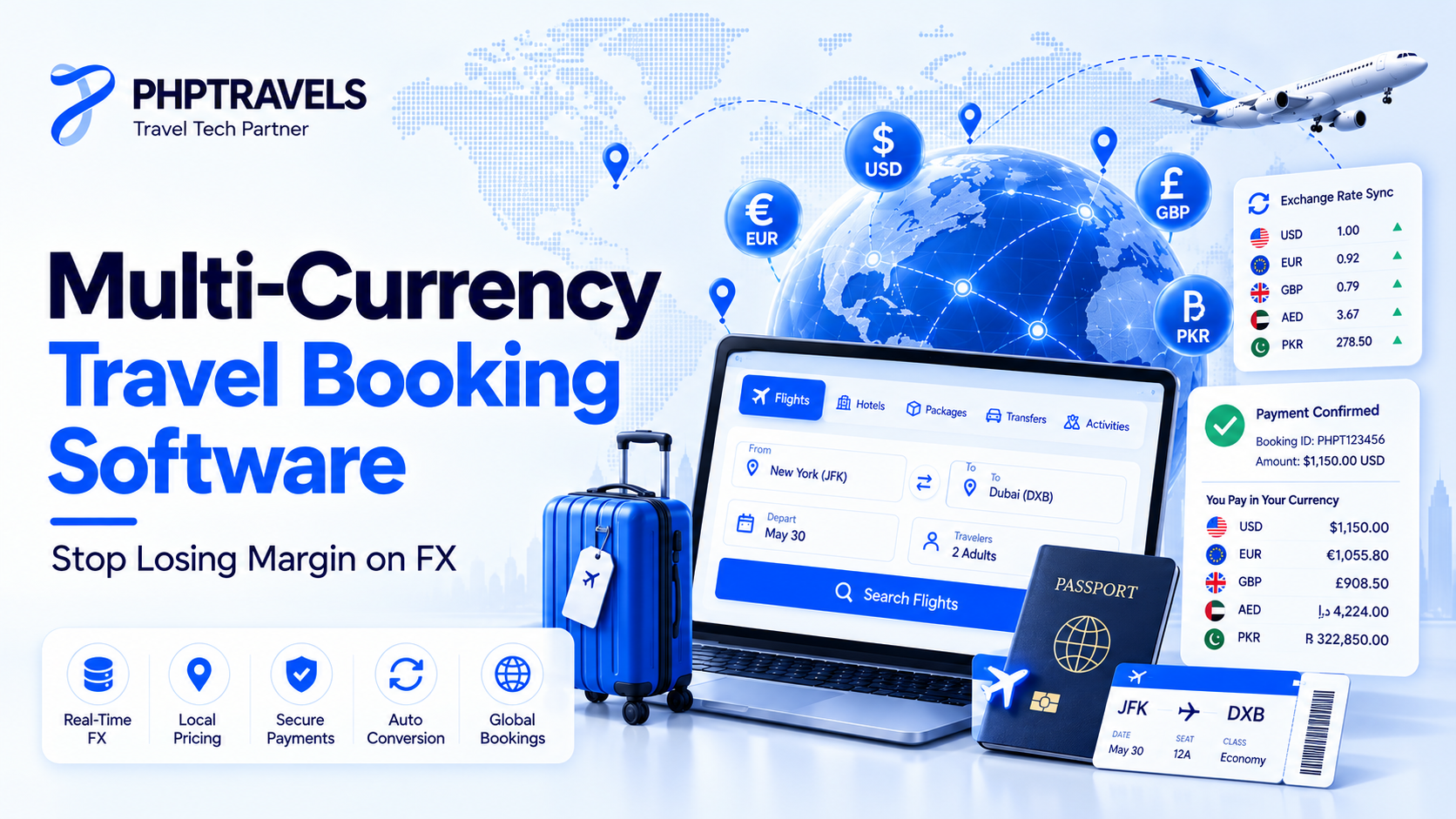
If FX is already eating your quotes, pair this topic with how multi-currency booking software should work in the stack (PHPTRAVELS multi-currency article). Markup discipline belongs in software too (travel markup management).
Static Packages vs Dynamic Packaging vs Build-Your-Own Trip
The practical advantage of dynamic packaging software is the balance between customer choice and controlled agency operations.
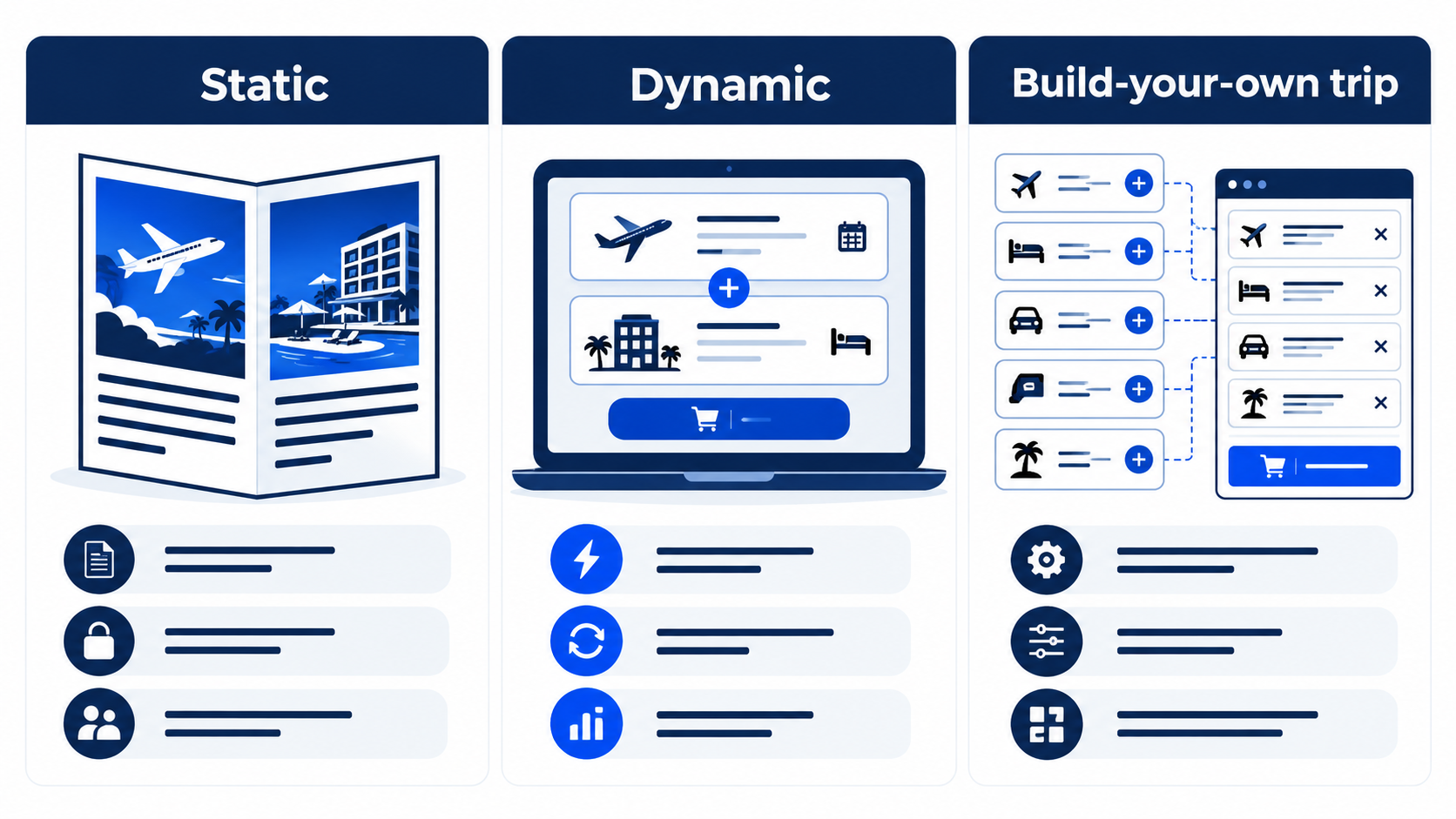
| Model | How it works | Strengths | Weaknesses | Best fit |
|---|---|---|---|---|
| Static package | Pre-defined inclusions & pricing | Simple ops, easy merchandising | Inflexible; inventory risk; slow to refresh | Series tours, peak charter programs |
| Dynamic packaging | Assemble components at search/book time | Wider choice; fresher rates; configurable margin | Needs solid APIs + order logic; more failure modes | OTAs, online agencies, hybrid tour ops |
| Build-your-own trip | Shopper adds services step-by-step | High customization, transparent choices | Longer funnel; harder to present “one price” | Premium/tailor-made, complex itineraries |
Many agencies run two models: a few hero static packages for SEO and trust, plus dynamic packaging for the long tail of city pairs and hotel classes. The mistake is pretending a static PDF process scales like software.
Also note: some platforms pre-cache flight+hotel combinations for “search anywhere” speed; others call APIs live.
Cache improves UX for popular O&Ds; live calls stay fresher but can be slower and more fragile. Your commercial team should know which mode you are buying—do not assume every “dynamic packaging” label means the same architecture.
What a Real Packaging Stack Needs
These layers are what separates credible dynamic packaging software from a simple package-builder screen.
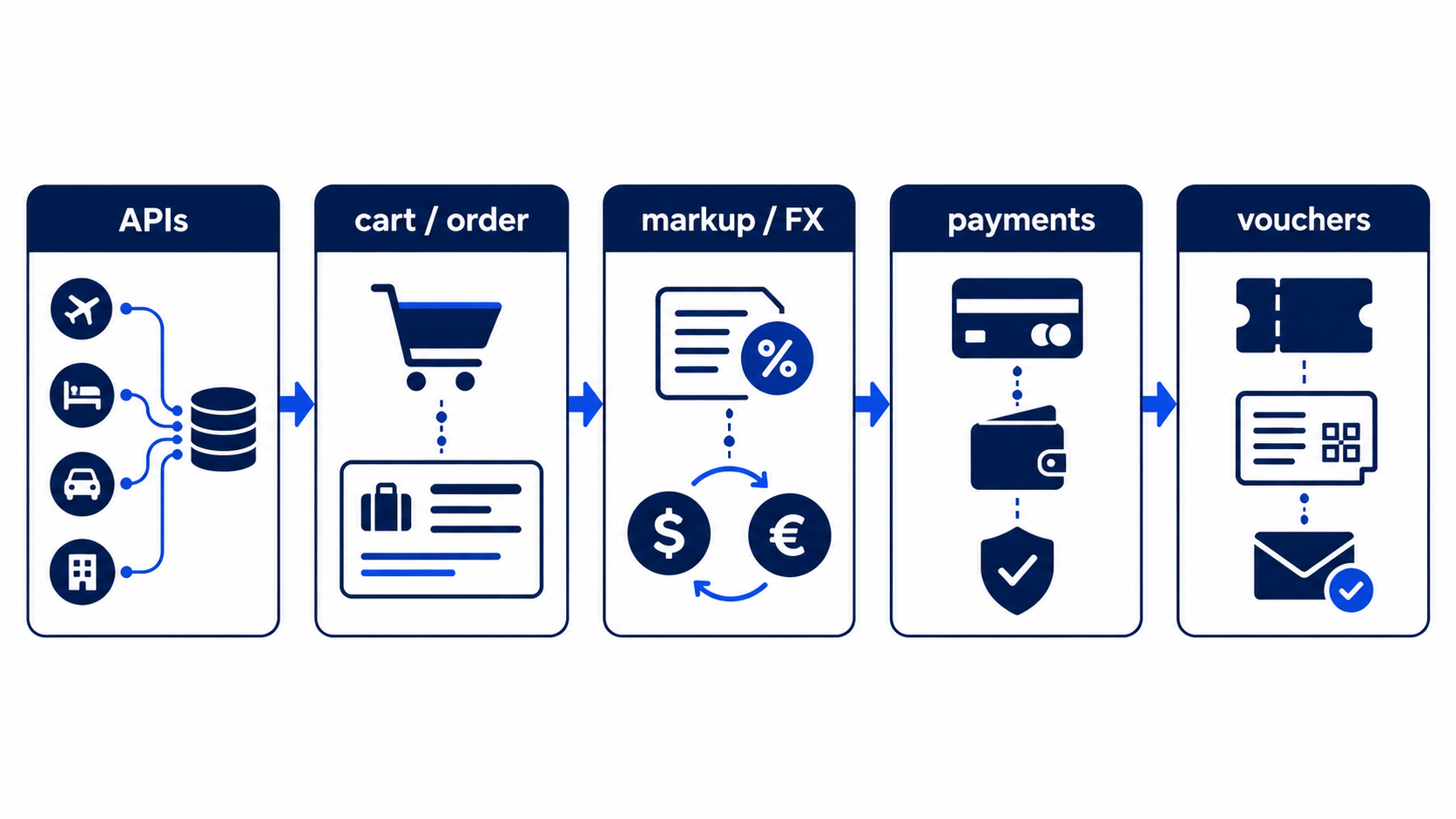
Ignore buzzwords. A usable packaging stack usually needs these layers:
1. Live (or scheduled) supplier connectivity
Flights, stays, and ground services must come from sources you are **contracted** to use. Software that “includes hotels worldwide” without your credentials is usually either demo data, a reseller middleman, or marketing language. For a licensed booking platform model, **you** bring API credentials; the software connects.
2. A multi-component cart / order model
Not three unrelated invoices taped together. You need one customer-facing total, clear per-service breakdown for ops, and a booking reference strategy that can map to multiple supplier confirmations.
3. Commercial controls
– Markup rules per module, supplier, or route
– Multi-currency display and settlement awareness
– Tax/fee presentation that does not lie to the shopper
4. Payment capture that matches risk
Collecting full prepay on a basket with mixed cancel rules is a policy decision. The stack should support your gateways and payment methods—not force a single wallet you do not control.
5. Documents and after-sales
Vouchers, tickets/e-docs where applicable, agent notes, and partial cancel/amend paths. Packaging fails in production when after-sales is still a shared inbox.
6. Channel fit: B2C and B2B
If sub-agents re-sell your packages, you need B2B pricing, agent credit/limits (as your process defines), and branding that still looks like **your** product—not a supplier’s portal.
NDC and modern airline retailing change what “flight component” can include (ancillaries, richer offers). Packaging stacks should be ready for that distribution shift without pretending NDC is finished industry-wide (NDC booking stack notes).
A Practical Build Path for Agencies Using Dynamic Packaging Software
Start small, measure the workflow, and expand dynamic packaging software only as supplier coverage and after-sales capacity mature.
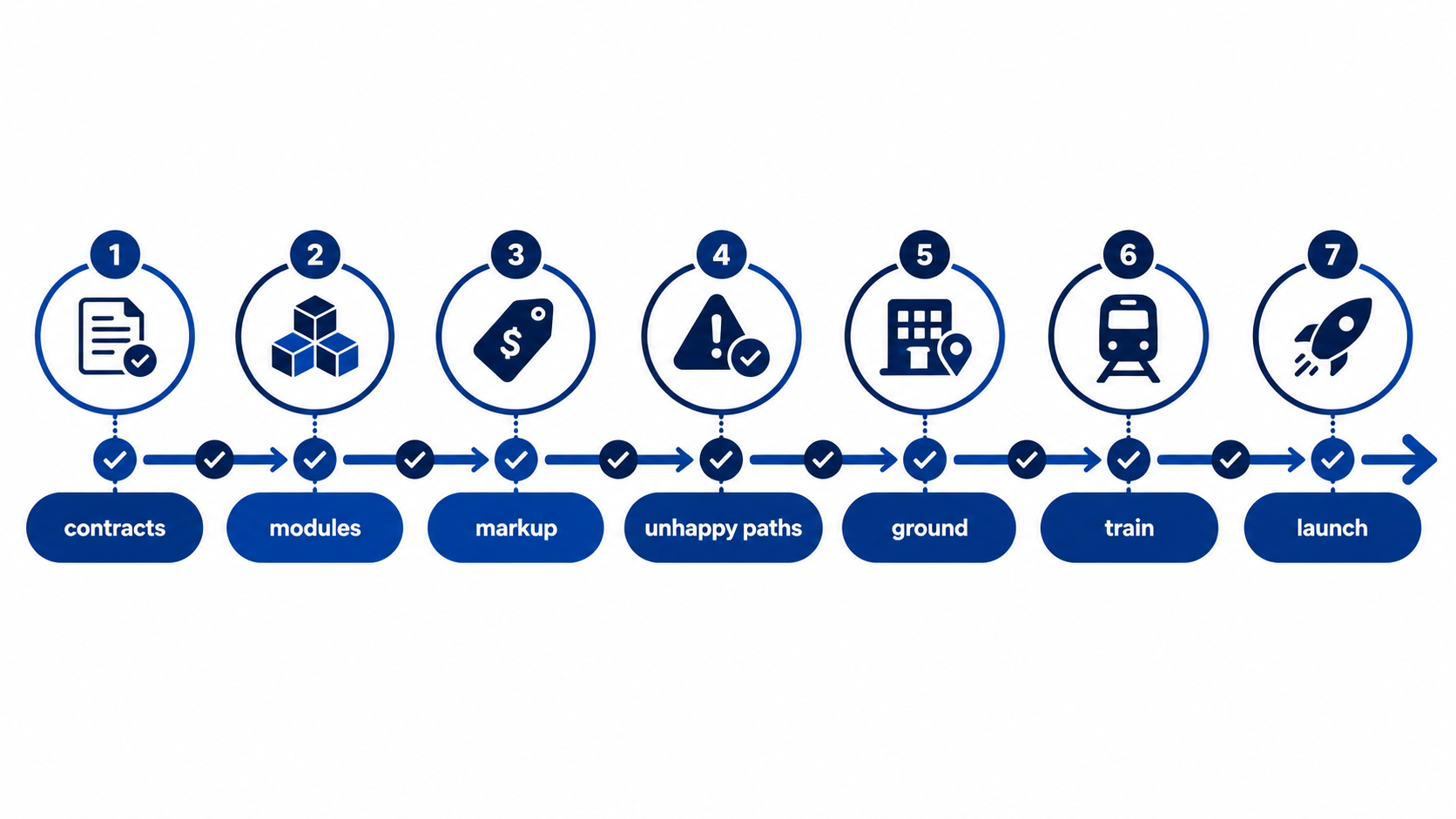
You do not need every module on day one. A sober sequence:
- Pick the first convertible basket: usually flight + hotel for your top 5 O&Ds.
- Confirm supplier contracts and test credentials in sandbox/production as each supplier requires.
- Enable only those modules in your booking platform; configure markup and currencies.
- Script the unhappy paths: hotel sold out after flight hold logic; payment success but supplier timeout; partial cancel.
- Add ground (transfers/tours/cars) once flight+hotel confirmation rates are acceptable.
- Train agents on what the software can and cannot auto-fix—especially visa, insurance, and group allotments.
- Launch B2C, then open B2B sub-portals when your fulfilment SLA is real.
White-label branding matters when partners sell under your umbrella—or you under theirs (white-label travel booking software). Packaging without brand ownership often becomes someone else’s customer.
Where PHPTRAVELS Fits (Honest Product Fit)
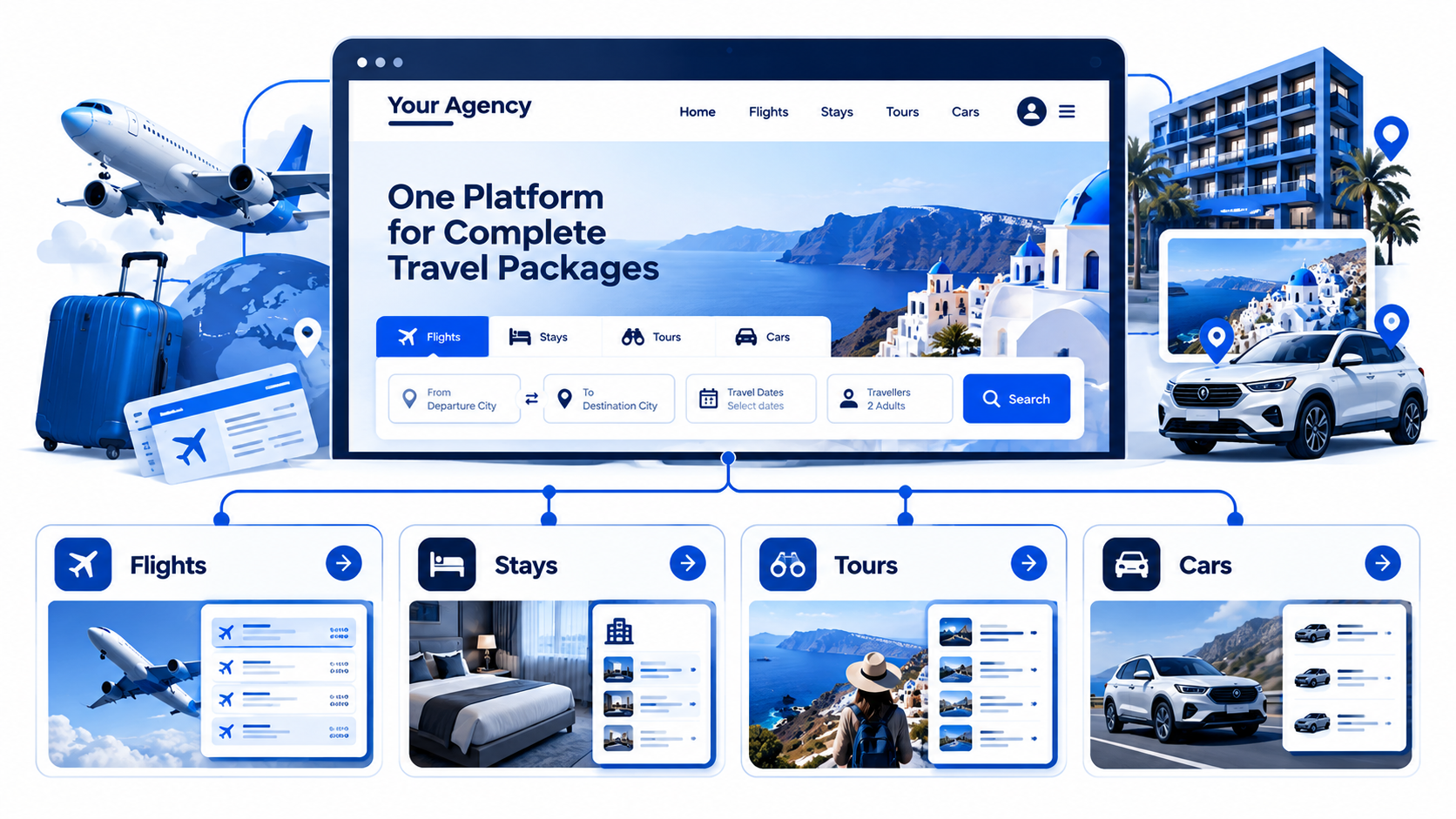
PHPTRAVELS is travel booking software: a licensed platform agencies, tour operators, OTAs, and DMCs install or have hosted to sell travel under their own brand.
It is not a booking intermediary that takes a cut of your tickets, and it does not hand you free global inventory. You connect the supplier APIs you are entitled to use.
For packaging-style selling, the relevant truth is modular:
- Enable Flights, Stays, Tours, Cars, and other modules you need (ferries, rail, eSIM, visa, insurance, bus, cruises are part of the broader module set—confirm current options on site)
- Run B2C, B2B, or both
- Apply commercial rules (including markup and multi-currency capabilities in the product)
- Keep your payment gateway accounts and customer relationship
What PHPTRAVELS is not claiming in this article: a separately branded “Dynamic Packaging Engine” SKU identical to specialist packaging-only vendors, guaranteed instant confirmation across every supplier combination, or inventory included in the licence.
If your RFP requires a dedicated packaging cache, multi-ticket package rules engine, or airline-grade merchandising, evaluate those requirements explicitly on a demo and configure scope on pricing.
Honest fit: teams that want one platform to sell multiple components with their own contracts, margins, and branding—rather than stitching five SaaS tools and losing the customer record.
Poor fit: buyers who want zero supplier work, or a single hotel widget with no interest in multi-component orders.
FAQ: Dynamic Packaging Software
Is dynamic packaging only for large OTAs? No. Smaller agencies use it for speed and consistent quotes. The constraint is usually supplier access and ops discipline, not headcount.
Do I need flights to call it packaging? Flight + hotel is the classic pattern, but hotel + tour + transfer is packaging too. Start with the basket your market actually buys.
Will software fix non-refundable flight + flexible hotel cancel conflicts? No. Software surfaces and enforces rules; policy design is still yours.
Does PHPTRAVELS include supplier inventory? No. You bring contracts and API credentials. The software connects and helps you sell.
Where do I see modules and estimate cost? Use the live pricing configurator and integrations list; figures change.
Next step
If you are mapping flight + hotel (and ground) onto one branded agency workflow, book a demo and pressure-test your real O&Ds—not a slide deck. Then size modules and gateways on pricing.