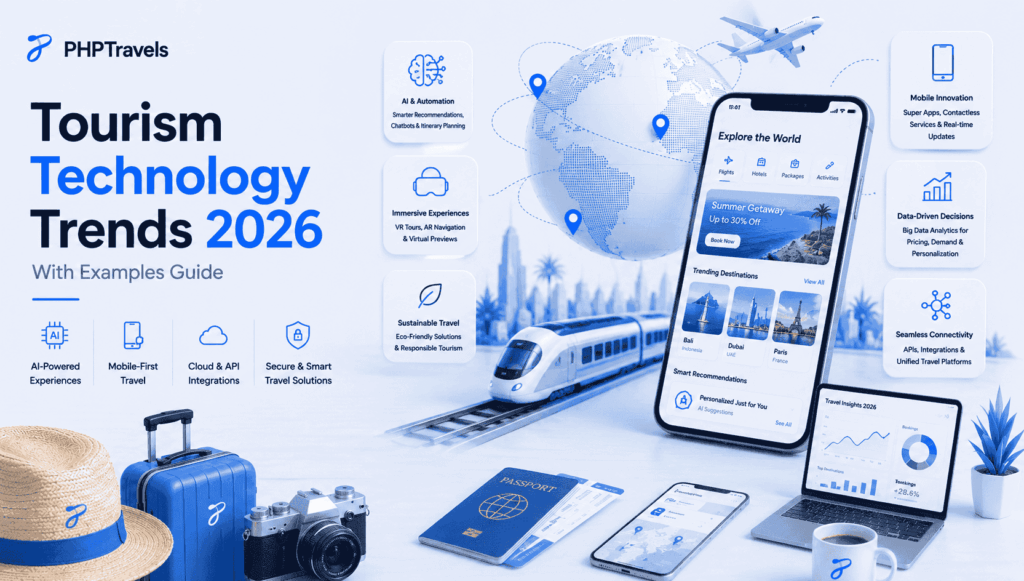
In the digital age, the travel and tourism industry is evolving faster than ever. With breakthroughs in artificial intelligence, mobile solutions, and automation, both travelers and agencies are experiencing a smarter, smoother, and safer journey. This article explores 12 transformative technology trends that are reshaping the future of global travel.
What is technology in the tourism industry?
Technology in the tourism industry refers to tools like AI chatbots, mobile apps, AR/VR tours, IoT-powered smart hotels, blockchain payments, and data-driven booking engines that improve how travelers plan, book, and experience trips.
Tourism Technology Examples
- AI chatbots for bookings & support (24/7 assistance, instant FAQs).
- AR city guides & museum overlays (previews, on-site navigation).
- VR hotel and tour previews (try-before-you-buy experiences).
- IoT smart rooms (mobile room controls, energy optimization).
- Blockchain payments & loyalty (secure, transparent transactions).
- Dynamic pricing engines (real-time fare/rate optimization).
- Metasearch & meta ads (Skyscanner/Kayak price aggregation).
Which tourism technology matters most in 2026?
The highest-impact stack for most travel brands in 2026 is: AI chatbots for sales/support, AR/VR for pre-trip research, IoT for guest experience, and data-driven pricing/CRM for revenue. Start here, then add blockchain and advanced analytics as you scale.
Launch faster with booking systems, supplier APIs, automation tools, B2B modules, and modern travel workflows built into PHPTRAVELS. Explore Demo →1. AI Chatbots for 24/7 Travel Assistance
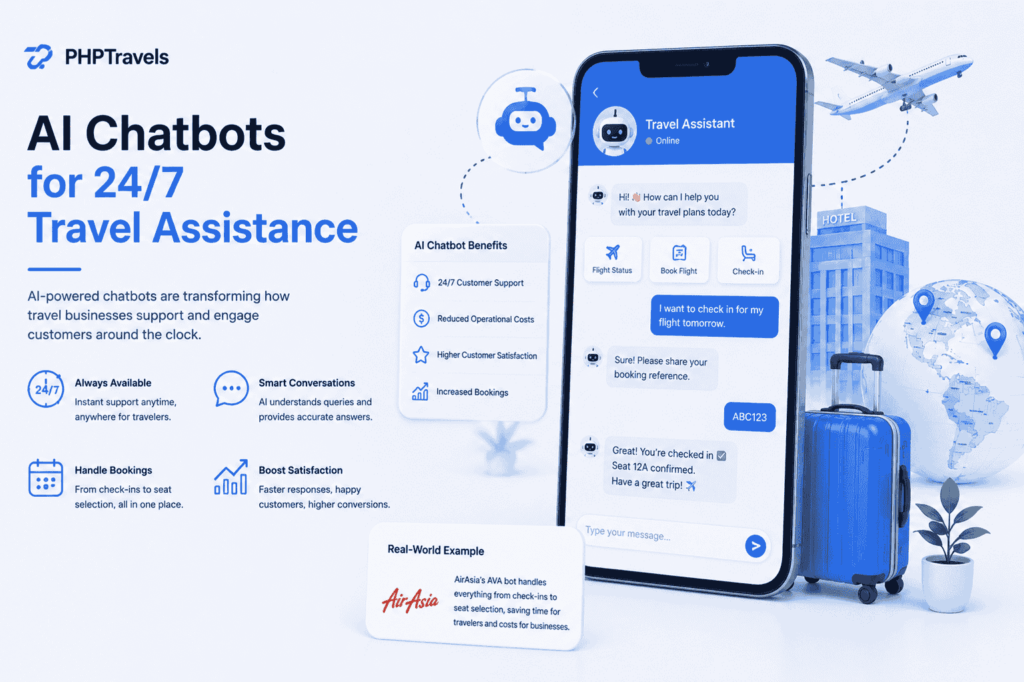
AI-powered chatbots are changing how customers interact with travel brands. From answering basic questions to processing bookings, these intelligent assistants provide 24/7 support. For instance, AirAsia’s AVA bot handles everything from check-ins to seat selection saving time for travelers and costs for businesses. Integrating chatbot technology enhances response times, improves customer satisfaction, and increases conversions. This is a core tourism technology example used by airlines, hotels, and OTAs.
2. Voice Search & Smart Assistants in Travel Planning
Voice-activated search tools like Siri, Alexa, and Google Assistant are becoming go-to resources for planning trips. Tourists are now using voice to book flights, get hotel recommendations, and explore local attractions. Travel brands are optimizing for natural language and long-tail keywords to appear in these results. Adding multilingual capabilities improves accessibility for global travelers.
3. Augmented Reality (AR) Enhancing Pre-Trip Experiences
Augmented reality is no longer just a buzzword it’s transforming how travelers plan. Using AR apps, users can preview hotel rooms, navigate airports, or explore a virtual tour of a destination before arriving. Travel agencies use AR to give a preview of tours and boost bookings by showcasing immersive content. AR is a leading technology in tourism for pre-arrival decision making
4. Virtual Reality (VR) for Destination Previews
VR offers a 360-degree immersive travel preview. Hotels, airlines, and tour providers now create VR experiences so users can ‘try before they buy.’ From room walkthroughs to adventure simulations, VR helps travelers make faster, more confident decisions.
5. Cashless & Contactless Payments
Mobile wallets, RFID bands, and NFC-enabled cards are making travel payments seamless and safe. Post-COVID, the demand for contactless transactions has skyrocketed. Whether paying at a hotel, renting a car, or buying a tour package, digital wallets reduce friction and increase convenience for travelers.
6. Internet of Things (IoT) in Smart Hotels
IoT devices allow hotels to personalize guest experiences like never before. Guests can control lighting, temperature, or entertainment using their smartphones. Hotels use sensors to monitor room usage, energy consumption, and automate cleaning schedules making operations smarter and more sustainable. IoT is widely cited as technology used in the tourism industry for smart rooms.
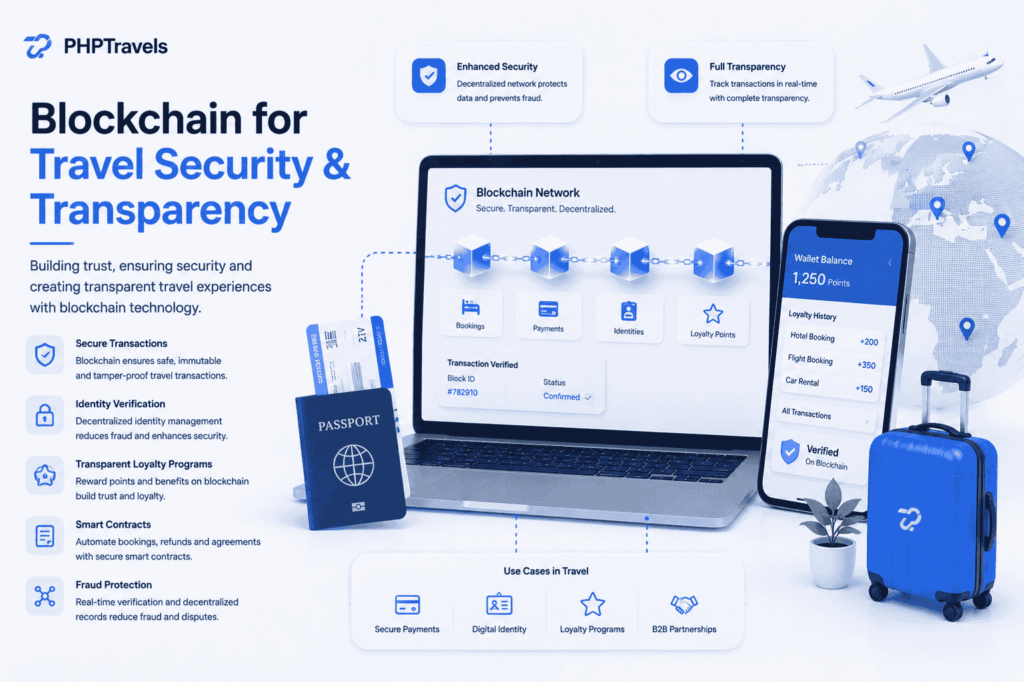
7. Blockchain for Travel Security & Transparency
Blockchain enhances transparency in transactions, loyalty programs, and identity verification. Travel companies are exploring blockchain for fraud protection, smoother payments, and secure digital identities. This decentralized tech builds trust essential in B2B travel solutions and global partnerships.
8. Cybersecurity & Data Privacy
As bookings move online, protecting customer data is more important than ever. Encryption, secure gateways, and two-factor authentication are becoming mandatory. Agencies investing in cybersecurity reduce risks of breaches and build long-term customer trust.
9. Big Data & Predictive Analytics in Tourism
Travel companies analyze search behavior, past bookings, and reviews to personalize recommendations. Big data also powers demand forecasting and dynamic pricing. Platforms like PHPTRAVELS use analytics dashboards to improve decision-making and deliver tailored experiences.
10. AI-Powered Dynamic Pricing
Dynamic pricing algorithms powered by AI consider seasonality, demand, and user behavior to adjust fares in real-time. Airlines and hotels use it to optimize inventory, while customers benefit from competitive pricing. This tech increases revenue and keeps services competitively priced. A key travel industry technology for revenue growth.
11. Travel Search Engines & Meta Platforms
Advanced metasearch engines like Skyscanner or Kayak aggregate listings and offer real-time pricing. These tools are integrated with machine learning to refine results based on user behavior, location, and preferences. They’re essential tools for today’s digital traveler.
12. Faster Connectivity & Satellite Internet
Reliable high-speed internet has become essential for remote workers and vacationers alike. Technologies like Starlink are enabling even rural resorts to offer blazing fast WiFi. Poor connectivity no longer affects customer reviews or online bookings.
The Impact of Technology on Travel Agencies
Travel agencies have undergone a major digital shift in the past decade. Traditional walk-in bookings have been replaced by mobile apps, cloud-based CRMs, and online chat tools. With cloud technology, travel businesses can now manage customer data, inventory, invoicing, and vendor connections from any device. AI tools also help travel agents automate repetitive tasks, such as itinerary generation and real-time pricing updates.
Ready to modernize your travel agency platform?
PHPTRAVELS provides ready-to-launch travel technology software with hotel, flight, tour, car, B2B, supplier API, payment, CRM, and automation modules for growing travel businesses.
View PricingTechnology helps small agencies compete globally. For instance, with PHPTRAVELS’ B2B booking tools, even a startup agency can offer inventory from global GDS suppliers with white-label branding. This empowers agencies to scale fast without heavy infrastructure costs.
How Technology Is Changing the Travel and Tourism Industry
Technology is driving massive changes in how people plan, book, and experience travel. From voice-activated searches to immersive VR tours, the traveler’s journey is now more personalized and seamless. Platforms like PHPTRAVELS give agencies tools to connect with global suppliers, automate tasks, and improve the traveler experience. The future of tourism is smart, fast, and driven by innovation.
Conclusion
Travel and tourism is a sector where good interaction with customers is important. As innovations in technology hit the market, they enable businesses to learn more about their customers and provide them with enhanced amenities and pleasures. The travelers benefit extraordinarily too.
So, stay successful in the travel and tourism industry with these emerging technological trends.
Want to experience these travel tech trends in action? Visit PHPTRAVELS – your all-in-one travel technology platform to scale and automate your travel business.
Tourism Technology – Quick FAQs
What are examples of tourism technology?
AI chatbots, AR/VR destination previews, IoT smart rooms, blockchain payments, dynamic pricing engines, and metasearch platforms are common tourism technology examples.
How is technology used in the tourism industry?
It’s used to automate bookings, personalize offers, streamline payments, enhance pre-trip research, and improve on-site experiences with mobile and IoT.
Which tourism technology is most used today?
AI chatbots and mobile-first booking flows lead adoption, followed by AR/VR content, IoT in hotels, and data-driven pricing/CRM.
What are the latest tourism technology trends?
Conversational AI, AR navigation, generative content for trip planning, smart-room automation, and blockchain-based loyalty are top 2026 trends.
How is technology changing the travel and tourism industry?
Technology is revolutionizing the travel and tourism industry by improving convenience, personalization, and efficiency. From AI chatbots that provide instant support to smart hotel rooms controlled via mobile apps, tech is enhancing every step of the travel journey. Travelers can explore destinations virtually using VR or AR, make instant payments with digital wallets, and receive custom offers through big data analytics. On the business side, travel agencies use cloud systems and automation to streamline operations and serve more clients globally. As innovation accelerates, the travel experience continues to get smarter, safer, and more connected.