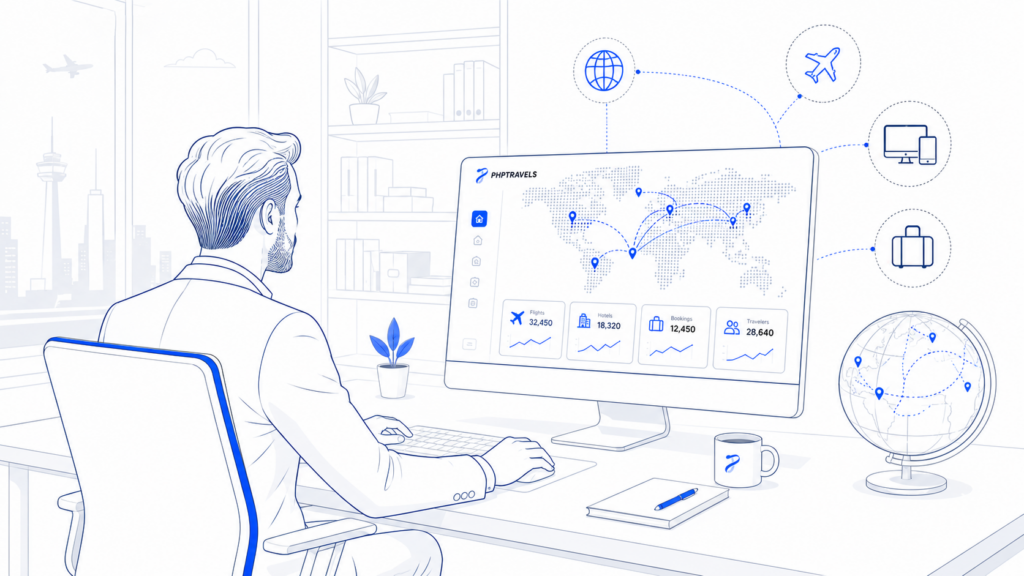
Technology has transformed travel agencies from manual booking businesses into connected digital operations. Modern agencies use Global Distribution Systems (GDS), reservation systems, CRM software, APIs, AI, automation and mobile tools to access real-time inventory, manage customers and process bookings faster. The biggest impact of technology is not simply automation it has changed how travel agents sell, communicate, compete and deliver personalized service.
Technology has also changed the role of travel agents. Instead of relying on phone calls, manual records and disconnected systems, agencies can now compare real-time inventory, build itineraries, communicate with travelers and manage bookings from integrated platforms. This allows agents to spend less time on repetitive administration and more time on advice, service and complex travel planning.
From booking platforms to CRM software and mobile check-ins, tech has made processes faster, more accurate, and traveler-focused. Agencies now compete by providing curated experiences and instant support things a basic website can’t replicate. Technology turned travel agencies into travel consultants and tech navigators.
How Technology Has Changed the Role of Travel Agents
Travel advisors now use booking systems, GDS platforms, CRM software, supplier APIs, communication tools and AI-assisted workflows to research trips and manage customers. Technology handles much of the repetitive work, while the advisor focuses on complex itineraries, problem solving and personalized recommendations.
One significant change is the shift from manual processes to automated systems. Advanced tools like Computer Reservation Systems (CRS) and Global Distribution Systems (GDS) have empowered travel agents to streamline bookings, making the entire process more efficient and error-free.
The role of travel agents has expanded beyond transaction facilitation to become a blend of technology experts and personal concierges. Travel agents now leverage sophisticated travel apps and Artificial Intelligence to curate personalized itineraries, offer real-time assistance, and provide tailored recommendations based on individual preferences. Agencies that want to upgrade their digital capabilities or modernize legacy workflows usually work with a travel technology consultant to plan integrations, automate operations, and build a future ready tech stack.
How Has Technology Affected Travel Agencies?
Faster booking and reservations:
GDS, CRS and APIs give agencies real-time access to flight, hotel, car and other supplier inventory.
Less manual work:
Automation reduces repetitive tasks such as confirmations, notifications, reporting and booking administration.
Better customer management:
CRM systems help agencies store customer history, preferences and communication in one place.
More personalized service:
AI, customer data and analytics can help agents tailor recommendations and identify relevant offers.
24/7 digital communication:
Mobile apps, messaging tools, chatbots and automated notifications make support available beyond office hours.
More competition from self-service booking:
Technology has also increased competition by allowing travelers to research and book directly online.
Looking for the best Travel Agency Software to automate bookings and grow faster? Our all in one PHP booking software is built for modern agencies.
Impact of Internet on the Travel Industry
The internet changed travel distribution by making schedules, prices, reviews and booking options available directly to consumers. Travelers can now compare suppliers and make reservations without visiting a physical agency.
For travel agencies, this created both an opportunity and a challenge. Agencies gained new digital marketing channels, online booking capabilities and direct access to global customers, but they also began competing with OTAs and supplier websites. Successful agencies use the internet not only to sell travel, but also to communicate with customers, distribute content and connect booking systems with suppliers.
Travel Agency Technology Tools Used in 2026
| Technology | Main use |
|---|---|
| GDS | Access flight, hotel and travel inventory |
| CRS / Reservation System | Manage bookings and availability |
| CRM | Manage customer data and relationships |
| Travel APIs | Connect suppliers and booking systems |
| Booking Engine | Allow customers or agents to make reservations |
| AI Tools | Support recommendations, content and customer service |
| Automation | Handle confirmations, notifications and repetitive workflows |
| Mobile Tools | Manage itineraries, tickets and traveler communication |
| Payment Gateways | Process online and multi-currency payments |
| Analytics | Track bookings, sales and customer behavior |
Latest Technology Solutions For Travel Agencies
In the ever-evolving landscape of the travel industry, staying at the forefront of technology is essential for travel agencies to provide cutting-edge services and meet the dynamic demands of modern travelers.
Here are some of the latest technology solutions shaping the future of travel agencies:
1. Global Distribution Systems (GDS):
GDS remains a foundational technology for travel agencies. These systems centralize the availability and pricing information of flights, hotels, and other travel-related services.
By integrating with GDS, travel agencies gain access to a vast inventory of options, enabling them to offer comprehensive and competitive travel packages.
Want pre-integrated Amadeus, Sabre, or Travelport GDS? PHPTRAVELS has them ready.
See GDS Integration Demo2. Travel Apps:
Travel apps have become indispensable tools for both travel agencies and consumers. These applications offer seamless booking experiences, real-time updates, and personalized recommendations.
Travel agencies leverage apps to engage with customers, streamline communication, and enhance the overall travel planning process.
3. Artificial Intelligence (AI):
AI is revolutionizing the travel industry by providing intelligent solutions at every touchpoint. From chatbots assisting customers with queries to predictive analytics optimizing pricing strategies,
AI enhances operational efficiency and personalizes the customer experience. Smart algorithms analyze data to anticipate traveler preferences, allowing agencies to tailor their offerings accordingly.
4. Metaverse and Extended Reality:
The concept of the metaverse and extended reality is gaining traction in the travel industry.
Virtual and augmented reality technologies offer immersive experiences, allowing customers to explore destinations virtually before making a decision.
Travel agencies can leverage these technologies for virtual tours, enhancing the pre-travel experience and influencing decision-making.
5. Contactless Check-In and Payments:
In response to the growing emphasis on safety and efficiency, contactless solutions have become paramount.
Travel agencies are adopting contactless check-in processes and payment methods, minimizing physical touchpoints and providing travelers with a secure and streamlined journey.
6. Virtual Assistants:
Virtual assistants powered by natural language processing and AI have become integral to customer service in the travel industry.
These assistants handle routine queries, provide instant support, and offer a personalized touch, enhancing customer engagement throughout the travel lifecycle.
Digital Transformation in Travel and Tourism
Digital transformation in travel goes beyond technology adoption it’s about rethinking the entire customer journey. From AI-driven personalization to mobile-first bookings and virtual experiences, digital tools help agencies stay competitive. Embracing transformation means offering faster service, richer engagement, and the ability to meet traveler expectations in an always-online world. If you are a travel tech writer or want to share expert insights with our audience, you can contribute content through our write for us program.
Build Your Digital-First Agency
PHPTRAVELS gives you GDS, B2B/B2C, CRM, and automated booking engine all in one.
View PricingWhy digital transformation in the travel domain?
Digital transformation is imperative in the travel domain for survival and growth. It not only enhances operational efficiency but also opens new avenues for revenue generation, catering to the evolving preferences of modern travelers.
Competition From Travel Booking Websites
Travel agencies face stiff competition from online booking websites. However, embracing technology enables them to stand out by offering personalized services, expert advice, and a human touch that automated platforms may lack.
Do not lose to OTAs. Use the same technology under your own brand.
See How PHPTRAVELS Helps You CompeteTechnology Benefits for Travel Agencies: Smarter, Faster, Stronger
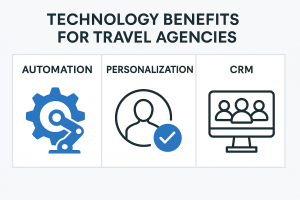
With the rise of travel technology systems, small and large agencies alike now enjoy unprecedented efficiency. Tasks that once took hours like searching for rates or confirming bookings are now automated in seconds through CRS and GDS platforms. These systems allow agents to handle multiple clients, manage inventory, and compare prices in real-time.
Travel agencies can also use publicly available online data to monitor competitor pricing, destination packages, seasonal promotions, and customer reviews. When this research is conducted at scale, websites may use anti-bot systems that interrupt automated access. Teams facing these access challenges may consult resources on how to bypass DataDome, while ensuring that their data collection practices comply with applicable laws and website terms.
Top 7 Impacts of Technology on Travel Agencies
| Impact | How It Helps Agencies |
|---|---|
| Automation | Reduces manual work, speeds up bookings |
| AI Personalization | Recommends tailored trips and services |
| Mobile Apps | 24/7 client support, instant updates |
| Global Distribution Systems (GDS) | Access to real-time flight, hotel, car inventory |
| CRM Systems | Manages relationships and increases repeat clients |
| Contactless Tech | Safer, faster check-ins and payments |
| Virtual Reality | Previews destinations before booking |
Get All 7 Benefits in One Platform
🎥 Watch Demo 📞 Contact SalesSmall Travel Agency Technology: Leveling the Playing Field
Modern tech isn’t just for big corporations. Even small travel agencies can compete using tools like cloud-based booking platforms, mobile-friendly apps, and automated back-office software. These tools reduce overhead, enable remote service, and enhance customer experience.
For example, a small agency using WhatsApp chatbots and automated email campaigns can deliver 24/7 support without hiring a huge team. With platforms like PHPTRAVELS, agencies gain access to inventory across flights, hotels, and more all under one roof, similar to what buyers review when comparing travel technology companies for long term growth.
Many regional operators such as those serving the Turkey market adopt purpose built platforms to compete with larger OTAs.
Want to launch your own digital presence? Try our Travel Agency Website Builder no coding required.
Travel Agency Technology: Key Components in 2026
| Technology | Function & Benefit |
| GDS (Global Distribution System) | Real-time inventory access and pricing across airlines, hotels, cars |
| CRS (Computer Reservation System) | Automates reservations and schedules |
| CRM Systems | Customer relationship management and repeat business → See our CRM for Travel Agencies. |
| AI Chatbots | 24/7 support and booking assistance |
| Virtual Reality | Preview experiences before booking |
| Mobile Booking Apps | Anytime access for clients on the go |
| Payment Gateways | Secure, fast, and contactless transactions |
Ready to digitize your agency? Explore PHPTRAVELS Software trusted by global B2B and B2C agencies for automation, CRM, and growth.
Top 5 Software Solutions for Travel Agencies in 2026
Travel agencies looking to stay competitive in 2026 rely on modern software tools that streamline bookings, automate tasks, and enhance customer experience. Here are the most effective solutions:
Wrapping Up
In conclusion, the impact of technology on the travel agency industry is transformative.
From the adoption of advanced systems to embracing digital solutions, travel agencies must evolve to meet the demands of a tech-driven world.
By doing so, they not only stay relevant but also position themselves as indispensable partners in the travel experiences of their clients.
Ready to Digitize Your Travel Agency?
Join thousands of agencies using PHPTRAVELS to automate bookings, integrate GDS, and grow revenue.
🚀 Start My Demo 💬 Contact SalesFAQs
1. What is the impact of technology on the tourism industry?
Technology has revolutionized the tourism industry in numerous ways. It has streamlined booking processes, enhanced customer experiences, and facilitated global connectivity. Online reservations, mobile applications, and virtual reality have made travel planning more accessible and personalized. Additionally, technology has improved communication, safety, and efficiency in the tourism sector.
2. What technology is used in a travel agency?
Travel agencies utilize various technologies, including Computer Reservation Systems (CRS) and Global Distribution Systems (GDS) for efficient booking and reservation management. Travel apps provide a user-friendly interface for clients, while Artificial Intelligence (AI) aids in personalized recommendations. Additionally, information technology plays a crucial role in communication, data management, and online presence for travel agencies.
3. What is the role of information technology in a travel agency?
Information technology is the backbone of a travel agency’s operations. It facilitates efficient booking processes through CRS and GDS, manages customer data securely, and supports communication through emails and messaging platforms. It also enables travel agencies to establish a strong online presence, providing clients with easy access to information, reservations, and real-time updates.
4. How does technology influence the tourism industry on social media?
Technology has a significant impact on tourism in the realm of social media. Platforms like Facebook, Instagram, and Twitter serve as powerful tools for promoting destinations and engaging with travelers. User-generated content, reviews, and real-time updates influence travel decisions. Social media marketing, coupled with targeted advertising, has become a key strategy for tourism businesses to reach a global audience.
5. What tools or equipment will I use as a travel agent?
As a travel agent, you’ll use a range of tools and equipment. These may include computer systems with access to CRS and GDS, travel agency software for managing bookings, customer relationship management (CRM) systems for client interactions, and communication tools like email and messaging apps. Additionally, a reliable internet connection and a computer or mobile device are essential for day-to-day operations.
6. How has travel agency automation changed the tourism distribution system?
Travel agency automation has transformed the tourism distribution system by streamlining processes and improving efficiency. Automation tools, integrated with CRS and GDS, handle booking procedures, reducing manual errors and processing times. This not only enhances the overall customer experience but also allows travel agencies to manage a larger volume of bookings effectively. Automated systems contribute to a more agile and responsive tourism distribution network.
8. How technology has transformed the travel industry?
Technology has transformed the travel industry by automating bookings, enabling real-time inventory with GDS/CRS, and personalizing trips with AI. It reduced manual work, improved accuracy, and gave travelers faster, self-service digital options.
13. What technology tools help travel agencies automate?
Travel agencies use automation tools like GDS, CRS, CRM software, chatbots, and AI assistants. These tools streamline reservations, reduce manual errors, send automated updates, and improve customer service efficiency.