
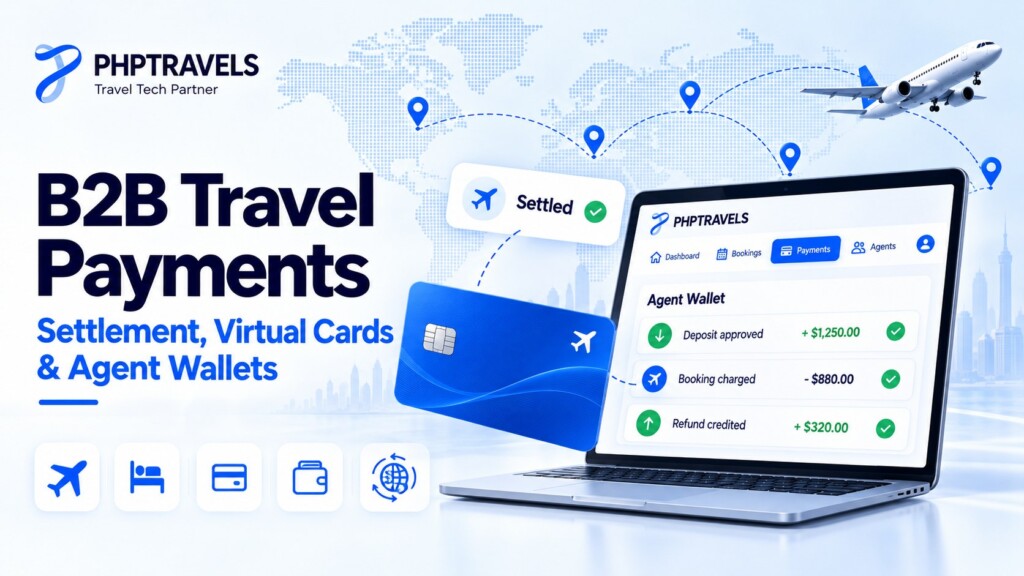
Every trip an agency sells creates payments the traveller never sees. The agency owes the airline for the ticket, the bedbank for the hotel, the local operator for the transfer. A consolidator collects from dozens of sub-agents before it pays anyone. These business-to-business flows are what the industry calls B2B travel payments, and they decide more of an agency’s margin and cash risk than the checkout page does.
This guide covers the side most payment articles skip: how agencies, consolidators and wholesalers pay suppliers and collect from agents, which rails each leg uses, and the controls that stop money leaking between them.
What Are B2B Travel Payments?
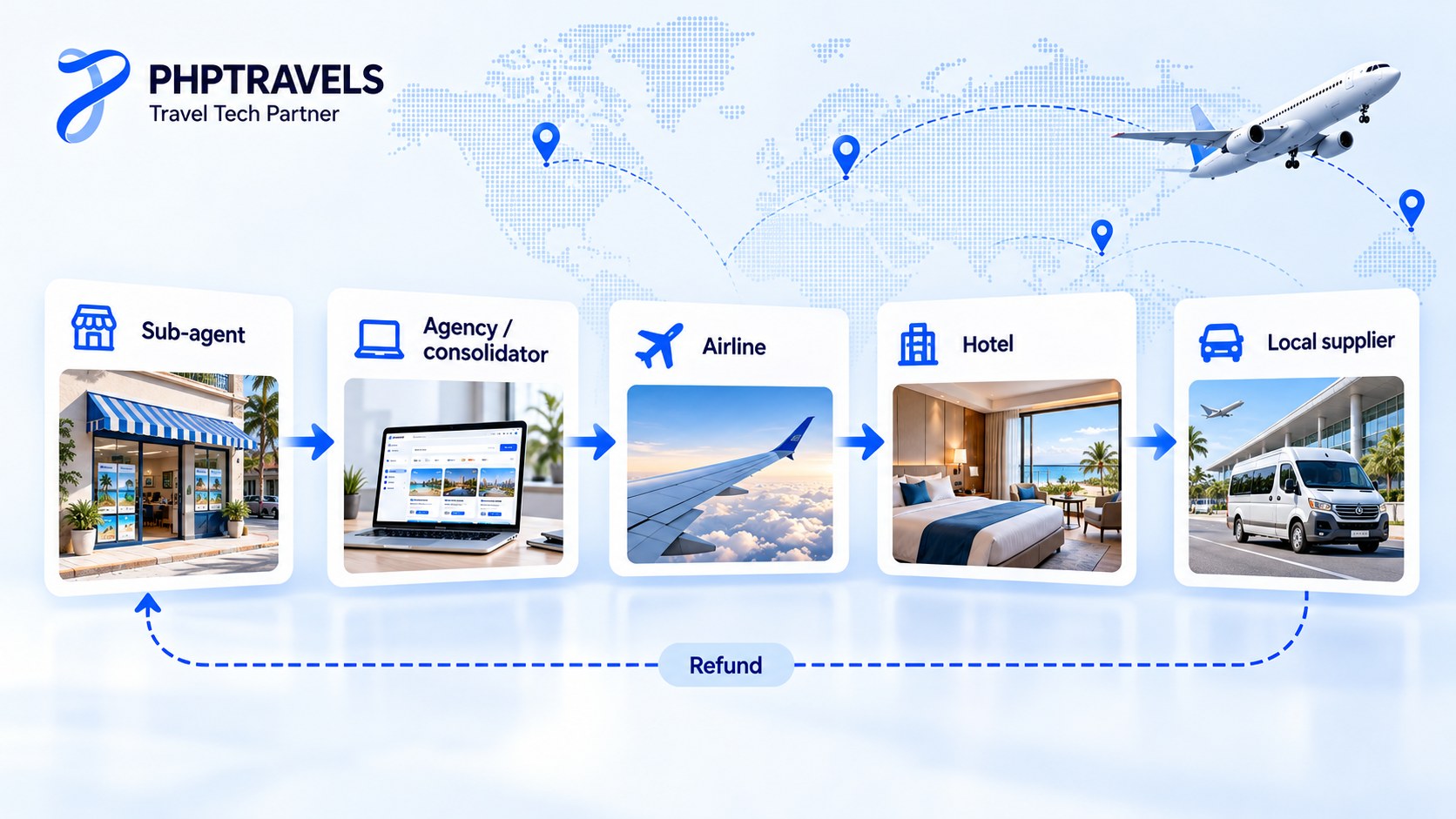
B2B travel payments are payments between travel businesses for travel that is sold on to a traveller or to another agent. The payer and the payee are both companies: an agency and an airline, a tour operator and a hotel, a sub-agent and its consolidator, an OTA and a bedbank. Refunds, commissions and debit memos that flow back the other way are part of the same system.
A single package can involve four or five of these legs. The table shows the common ones and the rails each one usually runs on.
| Payment leg | Who pays whom | Usual payment rails |
|---|---|---|
| Air tickets | Agency to airlines | BSP or ARC settlement (bank transfer or direct debit), the traveller’s card passed to the airline, IATA EasyPay; non-accredited agencies pay a consolidator instead |
| Hotels from a bedbank or wholesaler | Agency to wholesaler | Prepaid deposit, a credit line agreed with the wholesaler, card or virtual card |
| Direct hotels and local suppliers | Agency, tour operator or DMC to supplier | Virtual card, bank transfer, sometimes payment at the property |
| Sub-agent purchases | Sub-agent to consolidator or wholesaler | Wallet top-ups by bank transfer, a credit limit repaid within agreed days, card through a gateway |
| Refunds, commissions, debit memos | Back up or down the chain | Credit to a wallet or account, BSP refunds and ACMs, ADMs charged to the agency |
The reason B2B travel payments matter is margin. TBO Tek, the listed B2B distributor behind TBO Holidays, reported a take rate of 2.6% on airline tickets and 7.5% on hotels and ancillaries for FY2024-25 (TBO Tek FY25 investor presentation). WebBeds reported revenue of 6.8% of total transaction value for its FY26 (WebBeds FY26 results). When an intermediary keeps a few percent of each booking, every card fee, wire charge and currency spread on the supplier leg comes straight out of that margin. Choosing how to pay a supplier is a pricing decision, not a back-office detail.
Timing matters just as much. A traveller may pay in full at booking while the hotel is due at check-in, or an agent may book today on credit that you only collect in 30 days. The gap between money in and money out is either float you can use or exposure you carry. If you are still choosing how to take the traveller’s payment, our guide on how to choose a payment gateway for a travel agency covers the B2C side; the rest of this article is about the B2B side.
How Airline Settlement Works: BSP, ARC and IATA EasyPay
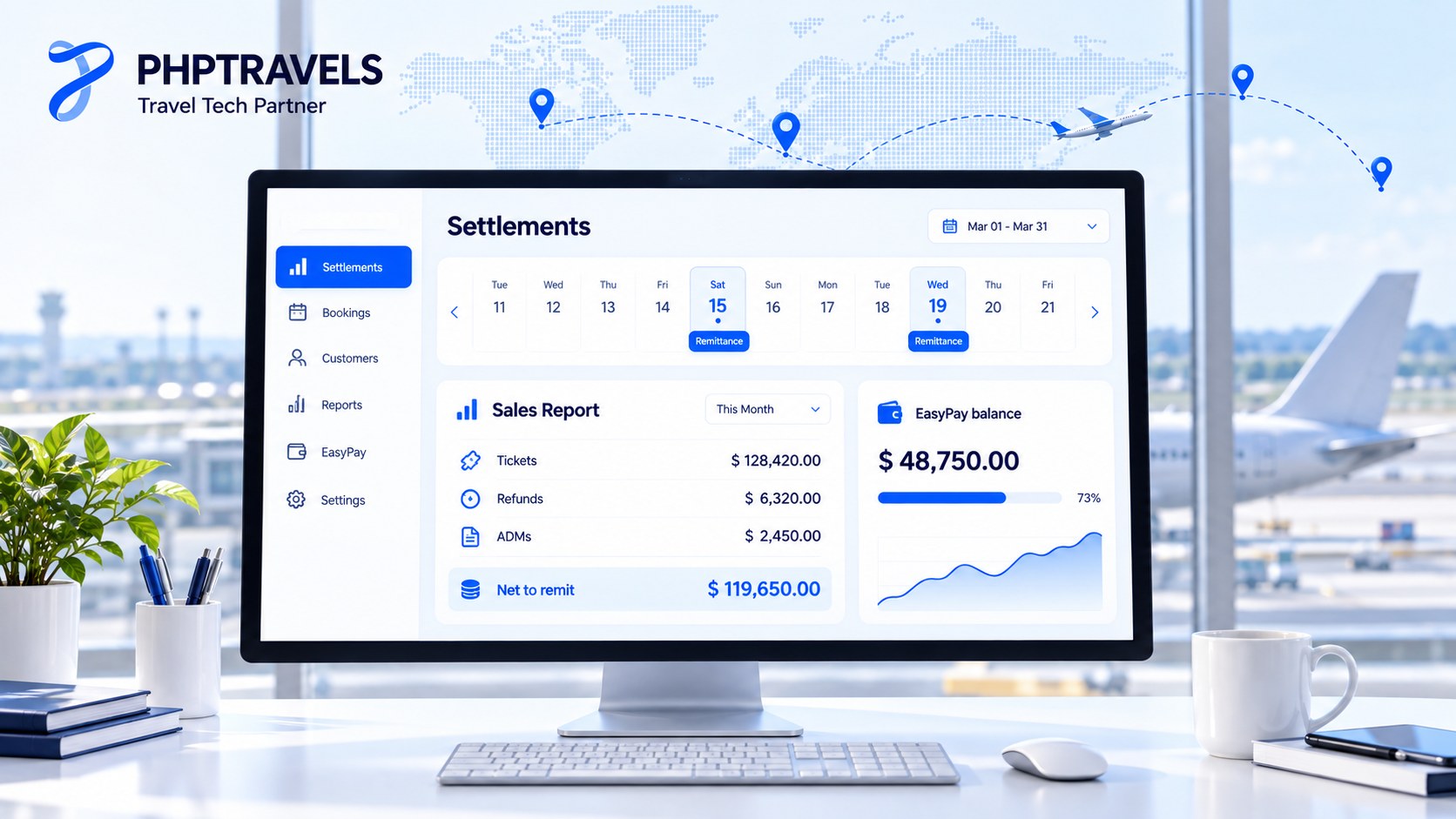
On the airline side of B2B travel payments, accredited agencies do not pay each airline separately. Outside the United States they settle through IATA’s Billing and Settlement Plan (BSP). IATA lists more than 400 participating airlines, 59,000 accredited agents and over $242 billion settled each year, with a 99.99% on-time settlement rate. The agent submits one sales report and one remittance per period, and the BSP splits the money between airlines. Through BSPlink the agency also handles refunds, agency credit memos (ACMs) and agency debit memos (ADMs), and the Travel Agent Service Fees (TASF) service lets it collect its own service fees through the same system.
In the US the equivalent is ARC. US agencies settled $100.4 billion in air ticket sales through ARC in 2025, the highest total it has recorded, across 9,978 agency locations (ARC 2025 sales data).
The three ways an accredited agency pays for a ticket
- Cash. In BSP terms “cash” means the agency collects the money from its customer and remits it to IATA by bank transfer or direct debit on the market’s remittance calendar. It is the cheapest form of payment for airlines and the one IATA controls most closely, through financial security and remittance limits.
- Card. The traveller’s card is passed to the airline, which is the merchant. The agency avoids the card fee, but it must handle the card data securely and follow each airline’s card acceptance rules.
- IATA EasyPay. A prepaid, pay-as-you-go e-wallet. The agency funds its account, generates a one-time EasyPay number or a multi-use number valid for three months, and enters it in the GDS at ticketing. If the balance covers the ticket, the amount is blocked instantly; IATA settles to the airline daily, and the money reaches the airline 48 to 96 hours after issue (IATA EasyPay). The agency should check that the validating carrier accepts EasyPay before using it.
Which of these an agency can use depends on its accreditation model. GoLite has no cash facility, so the agency tickets only with cards and EasyPay, in return for minimal financial requirements. GoStandard adds the cash facility for a single country, with local financial criteria and an annual review. GoGlobal covers several countries under one agreement.
Agencies with cash access also get a Remittance Holding Capacity (RHC), a cap on outstanding cash sales; once it is reached, cash is blocked until the next remittance. EasyPay sales sit outside that cap, which makes a funded EasyPay balance a useful buffer for peak weeks. The accreditation steps and fees are covered in our guide to IATA travel agency accreditation.
Agencies without BSP access
A new or small agency usually buys tickets through a consolidator that is accredited. The consolidator issues the ticket on its own BSP number and the agency pays the consolidator, typically from a prepaid deposit or a credit limit the consolidator grants. Commercially this turns an airline payment into a sub-agent payment, which is covered in the wallet section below. See how airline ticket consolidators work if you are deciding between the two routes.
What is changing: NDC and orders
Settlement was built around ticket numbers. NDC bookings and airline “orders” do not always map neatly onto a ticket. ARC reports that NDC accounted for 21.2% of ARC-settled transactions in December 2025, and on 27 January 2026 it launched an orders-based reporting and settlement system, starting with orders paid in cash. The practical effect for agencies is that the booking platform must store the airline order ID and the settlement reference, not just a ticket number, or reconciliation breaks. Our post on NDC for travel agencies explains the booking side.
Virtual Cards for Hotel and Supplier Payments
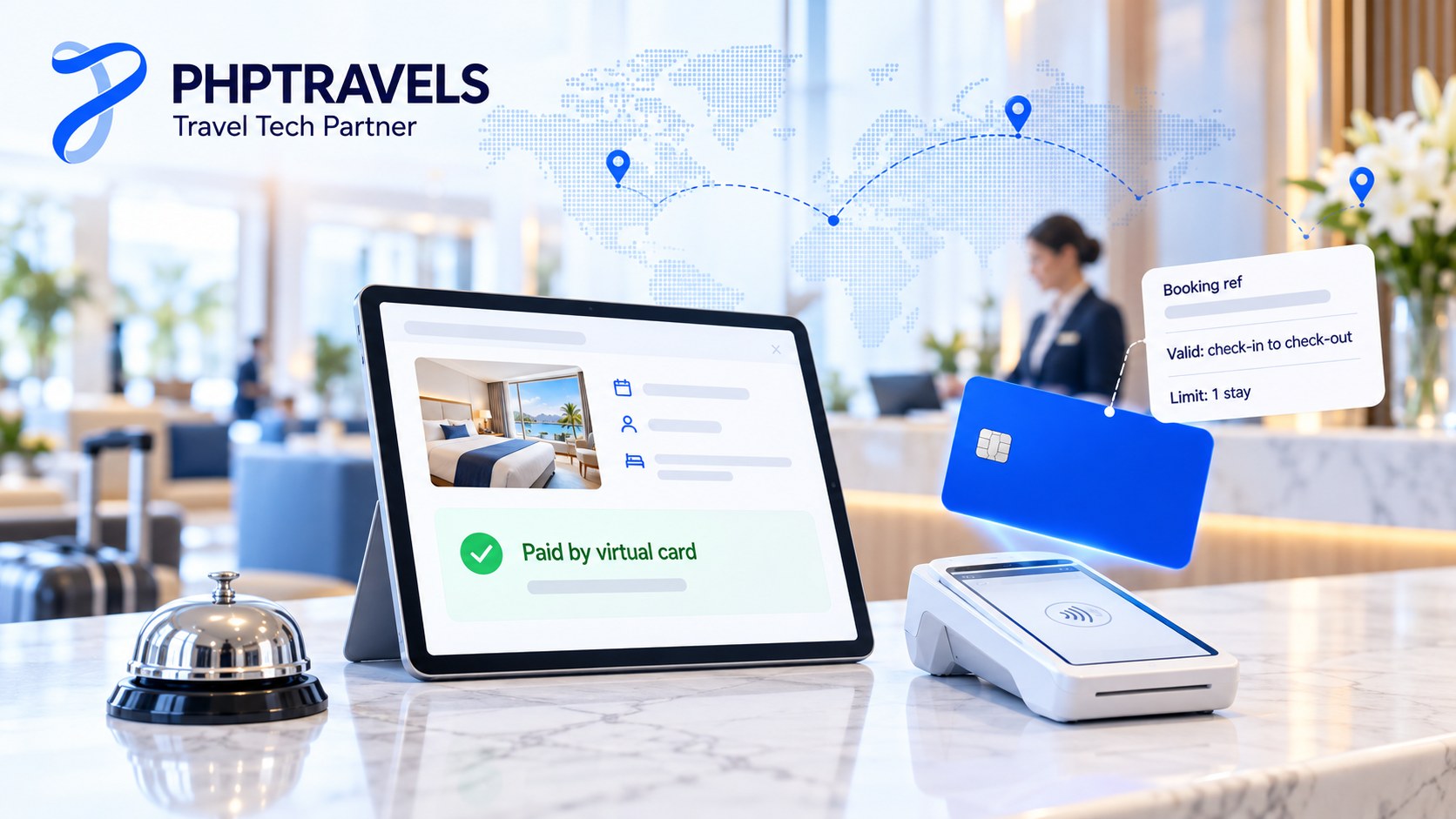
A virtual card is a card number generated for one supplier, one booking or one payment, linked to a central funding account. The issuer lets you set the spend limit, validity dates, currency and merchant category for each number, and the card carries the booking reference so the charge can be matched automatically. Because each number can only be used for one purpose, a leaked card is far less dangerous than a shared company card.
Hotels are where virtual cards took hold in B2B travel payments. Edgar, Dunn & Company estimates that virtual cards made up 40% of OTA payments to hotels by the end of 2022. Airlines are slower: some still restrict agent-issued virtual cards under IATA Resolution 890 because of the acceptance cost, and policies vary by carrier and market.
How a virtual card payment runs in a booking flow
- The booking is confirmed with the supplier at a net rate.
- The platform or the finance team requests a card for exactly that amount, in the supplier’s currency, valid from check-in to a few days after check-out.
- The card details go to the hotel or are stored against the booking with the bedbank.
- The supplier charges the card; the issuer’s transaction data, carrying the booking reference, is matched to the booking.
- Because the card is limited to the booking amount and dates, a second charge or an overcharge is declined.
Two refinements are worth knowing. Some agencies issue the card only at check-in rather than at booking, which keeps the money on their side for longer and reduces what they lose if a hotel fails. And issuing the card in the supplier’s local currency avoids a second conversion and the settlement mismatches that come with it.
Virtual card programmes differ widely. Some issuers share part of the card revenue with the intermediary as a rebate; suppliers pay the acceptance cost, which is why some push back. Ask for the full economics before signing. Card numbers inside your systems also bring you into PCI DSS scope; version 4.0.1 has been the only active version since the end of 2024, and the requirements that were future-dated became mandatory on 31 March 2025. Our article on travel booking payment security covers how to keep that scope small.
One point of honesty: virtual cards come from banks and card-issuing fintechs, not from booking software. PHPTRAVELS does not issue cards. Connecting an issuer’s API to a booking flow is custom development, scoped separately.
Collecting From Sub-Agents: Wallets, Deposits and Credit Limits
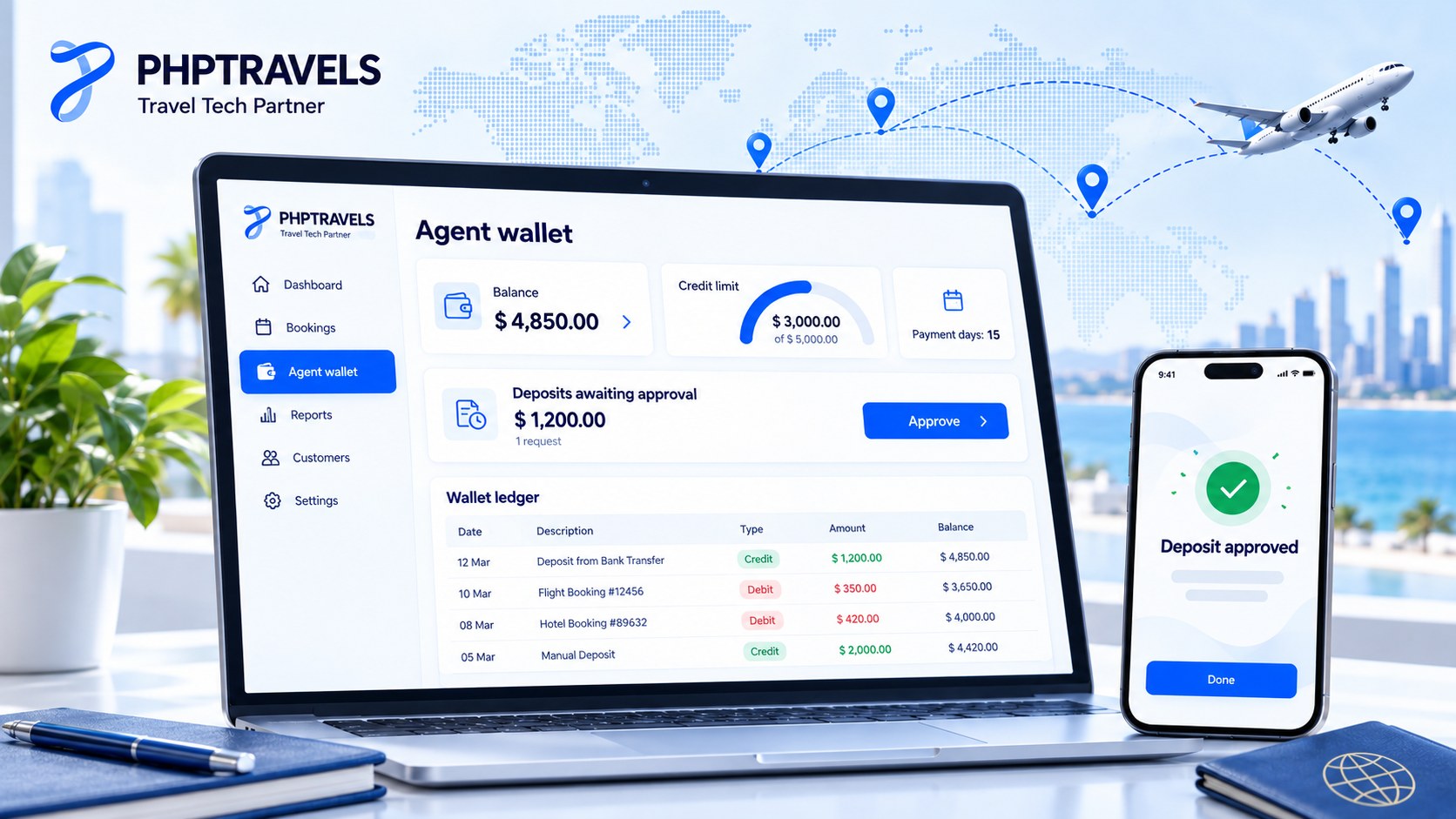
If you are a consolidator, wholesaler or B2B portal operator, you are also the supplier. Your sub-agents book on your platform and you have to collect from them before, or soon after, you pay the airline or the bedbank. There are three common models for collecting B2B travel payments from agents, and many businesses run more than one.
| Model | How it works | Your exposure | Best for |
|---|---|---|---|
| Prepaid wallet | The agent deposits money, you confirm it against your bank, bookings are paid from the balance | None beyond what you approved | New agents, high-risk markets, low-margin air |
| Credit limit | You allow an agent to owe up to a set amount and repay within a number of days | Up to the limit, until repaid | Established agents with a payment history |
| Pay per booking | The agent pays each booking by card through your gateway | Chargebacks and card fees | Occasional agents, small volumes |
The controls that make these models safe are mostly process. Never credit a deposit until someone has matched the bank reference. Grant credit to a few agents you trust, not to everyone who asks. Set a payment window per agent and chase overdue balances from a list, not from memory. Keep a booking “on hold” until it is paid, and only issue the ticket once the debit is recorded. When a refundable booking is cancelled, credit the money back to the agent’s balance with a note, so the original debit and the refund both stay visible.
This is where B2B travel payments meet software. In PHPTRAVELS, the B2B agent wallet works this way: agents submit deposits from the portal with an amount, currency, method and reference; nothing is credited until your finance team approves it; each booking paid from the balance or from a credit limit writes a ledger line with its reference; and agents past their payment window appear on an overdue list with the amount owed.
Credit limits and payment days are set per agent. The wallet is included from the Agency plan, and the full B2B agent portal comes with the Enterprise plan; check current plan details on the pricing page. For a wider look at what sub-agent portals should handle beyond payments, see Travels Tech’s overview of B2B agent portals.
The software enforces the rules; deciding them is your job. Before inviting the first sub-agent, write down which currencies you accept, your bank details and deposit methods, who approves deposits, who gets credit and for how many days, and when a cancelled booking goes back to the wallet. The architecture behind these controls is covered in B2B travel portal architecture.
Cross-Border B2B Travel Payments and FX
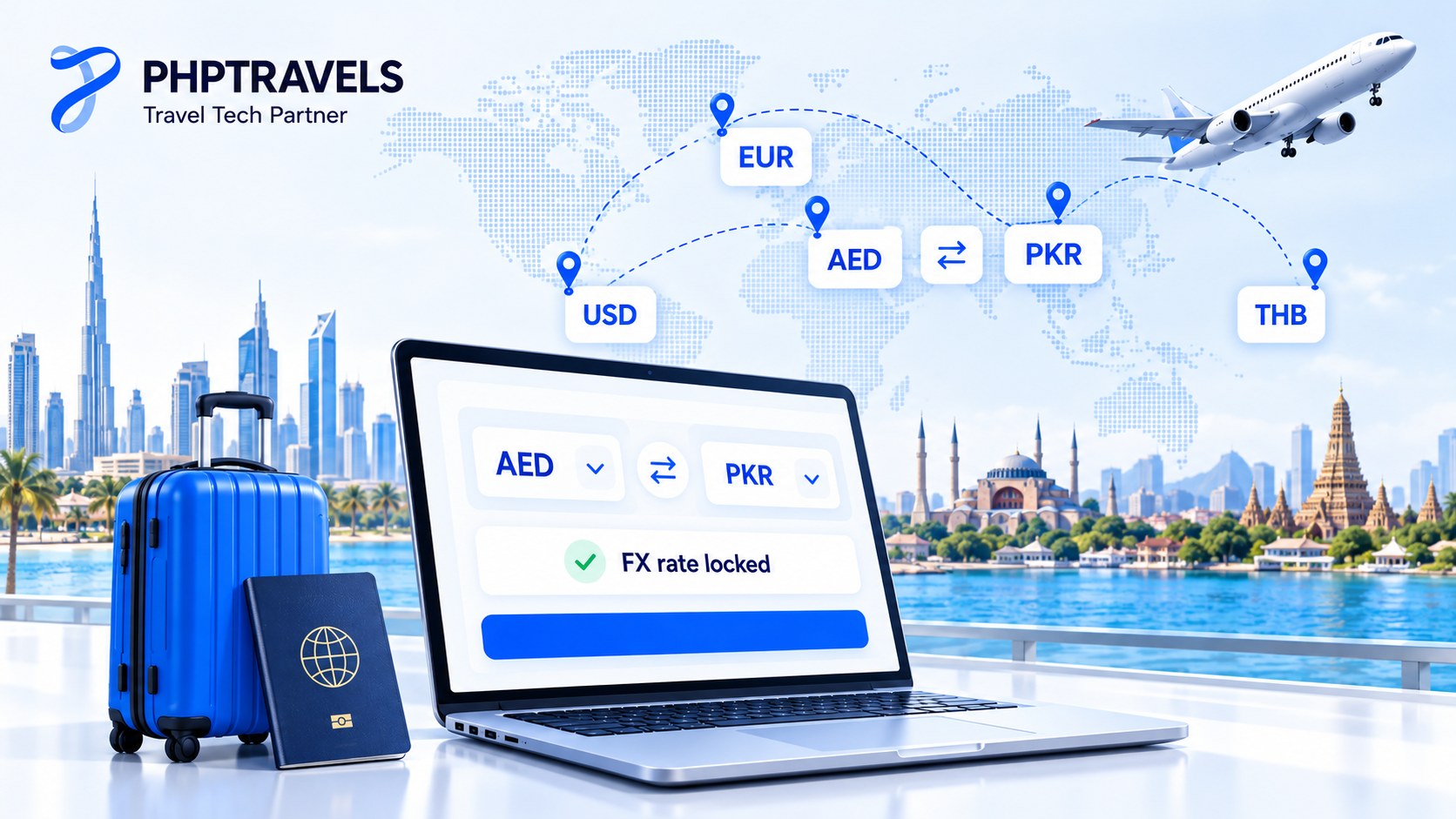
Most B2B travel businesses sell in one currency and pay suppliers in others. A Lahore consolidator may collect from sub-agents in rupees, pay a bedbank in US dollars and a Turkish transfer company in euros. In cross-border B2B travel payments, currency costs appear in several places, and few of them show up as a single line on an invoice:
- The conversion rate and markup on a card payment in a foreign currency
- Sending and receiving fees on international bank transfers
- The spread your bank applies when it converts a deposit
- Rate movement between the day you sell and the day you pay
- Refunds returned at a different rate from the original sale
The tactics that work are simple to state and take discipline to run. Price agents in the currency you pay the supplier in when the market allows it. Hold balances in the currencies you pay out most often. Pay foreign suppliers by virtual card in their local currency where the issuer supports it. Record the exchange rate used at the moment of sale against the booking, and write a refund policy that says which rate applies when the money goes back.
On the platform side, look for deposits, ledger lines and invoices that each carry their own currency, and markup rules that can be set per agent and per product. In PHPTRAVELS every wallet deposit and ledger line stores its own currency; multi-currency display for wallets is part of the Enterprise plan.
Reconciliation, Refunds and ADMs
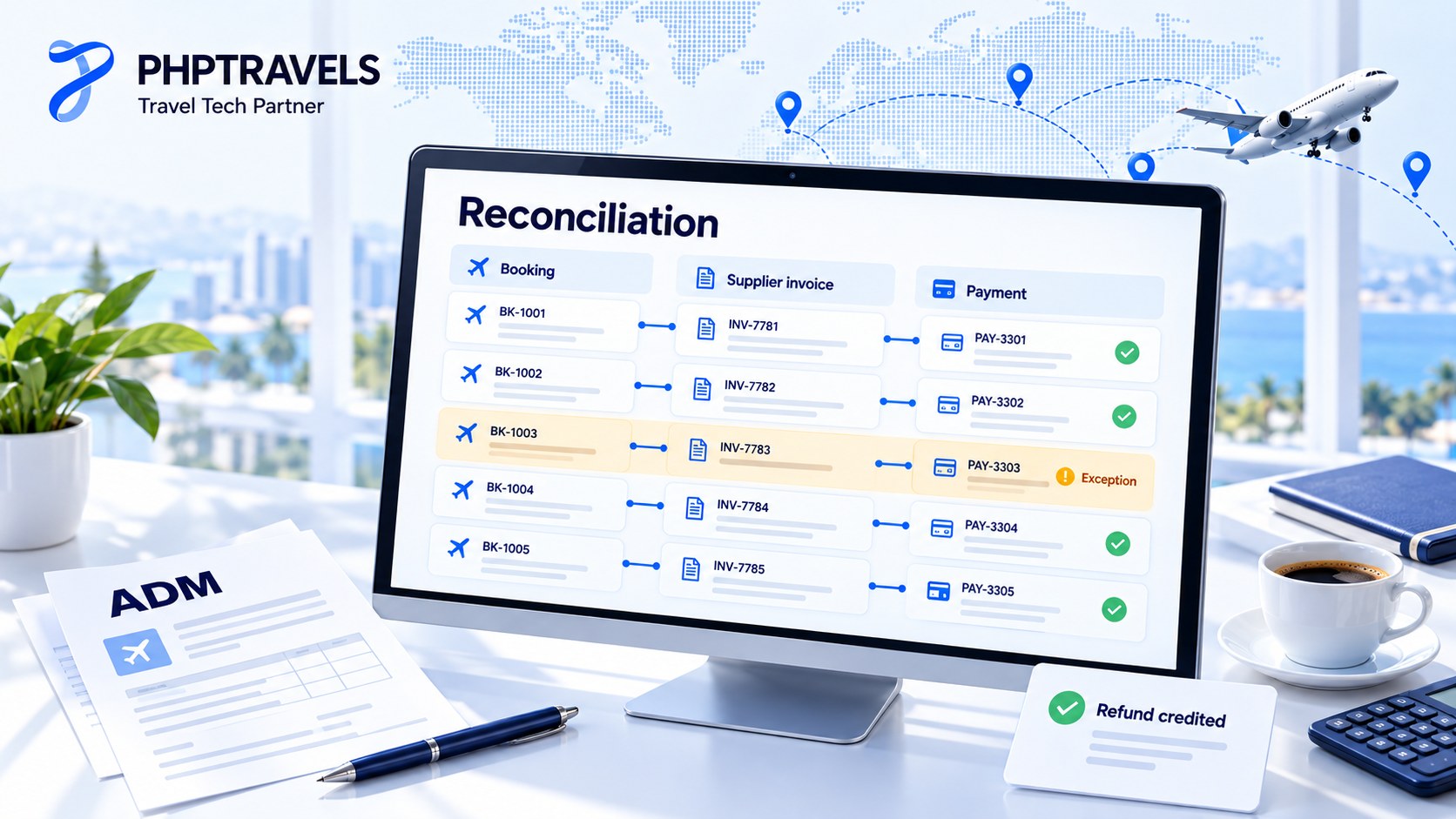
Money can leak out of a B2B travel business without anyone stealing it. It disappears in reconciliation: a supplier charge nobody matched, a refund credited twice, a debit memo nobody disputed in time. Reconciliation of B2B travel payments is a three-way match between the booking record, the supplier’s statement (BSP billing, a bedbank invoice, an issuer’s card report) and your bank or card statement.
That match is only as good as the data captured at booking. For each booking, store the supplier’s booking reference, the ticket number or airline order ID, the payment method and, for cards, the token or card ID rather than the number, plus the currency and rate. With those fields in place, a daily import of supplier statements can match most lines automatically and send the rest to an exceptions queue that a person reviews.
Agency debit memos deserve their own process. Airlines issue ADMs when they decide a ticket broke fare or ticketing rules, and the amount is charged to the agency through the BSP. ADMs are also treated as financial risk: under GoLite, an agency whose ADMs and cash transactions passed USD 5,000 in a single quarter during the previous 12 months must provide a financial security. Check new ADMs every week, dispute the wrong ones inside the airline’s deadline, and trace the right ones back to the agent or staff member who made the booking.
Refunds need the same attention. The traveller’s refund, the supplier’s refund to you and the sub-agent’s credit happen on different dates and sometimes in different currencies. Record each as its own entry instead of editing the original payment. Smaller agencies that are not ready for a full back office often start with a CRM that keeps supplier payments and invoices next to each booking and connect it to the booking engine later. For the commission side of the same ledger, see travel agency commission management, and for invoicing, travel agency billing software.
How to Choose a B2B Travel Payment Setup
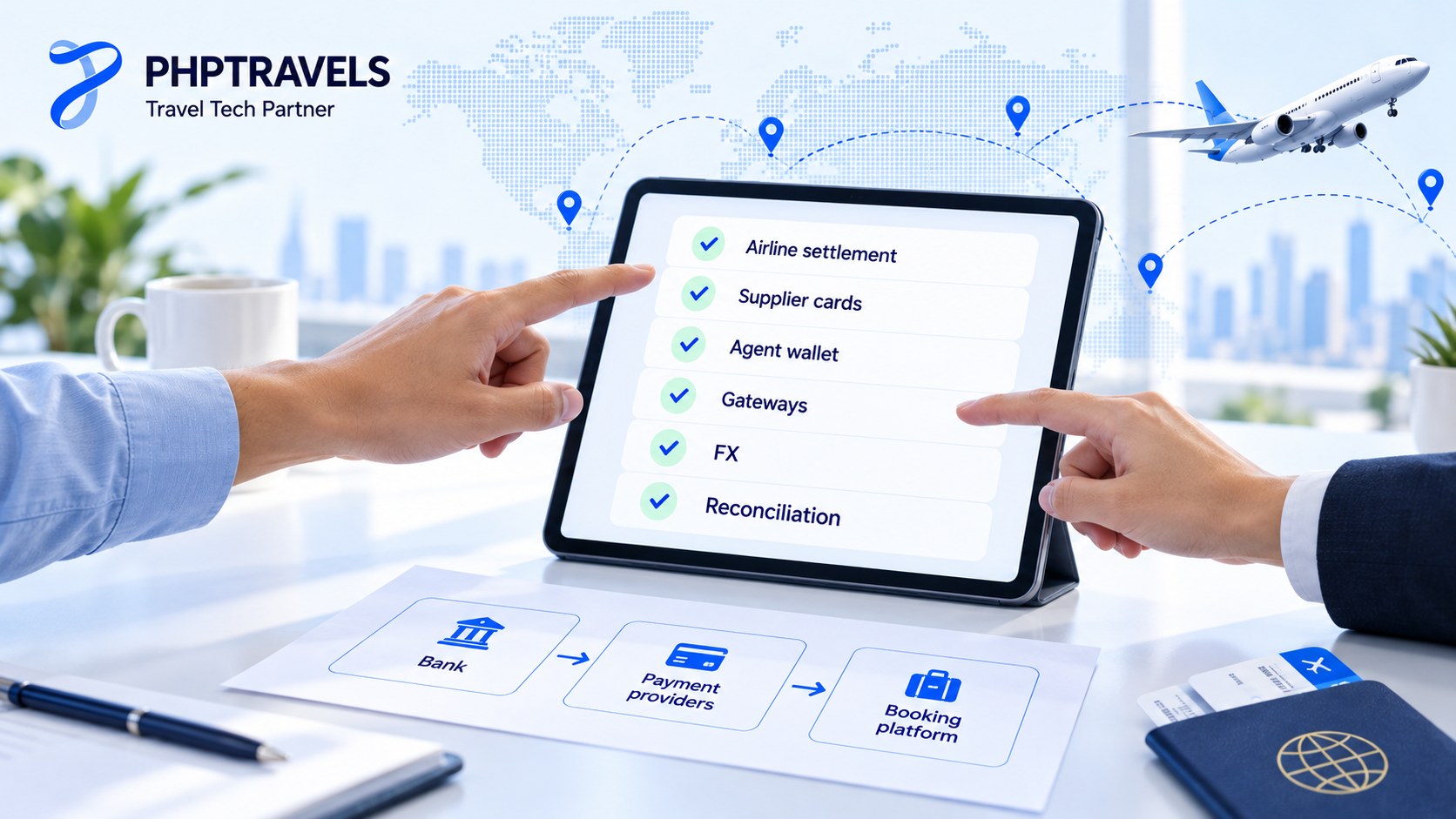
There is no single best setup for B2B travel payments; the right one follows from what you sell and to whom. These starting points cover most businesses:
- New agency without IATA accreditation: buy air through a consolidator on a prepaid deposit, pay hotels through one or two wholesalers, and take traveller payments through a gateway.
- Accredited agency: settle air through BSP or ARC, keep an EasyPay balance as a buffer against your RHC if you are on GoStandard, and use virtual cards for direct hotels.
- Consolidator or wholesaler with sub-agents: run prepaid wallets for most agents, credit limits for a trusted few, and a strict deposit approval routine.
- Hotel-heavy OTA: evaluate a virtual card programme in your main supplier currencies first, because hotels are where virtual cards are most widely accepted.
Questions to ask B2B travel payment providers
- Do my main suppliers accept this method, in which markets, and at what acceptance cost to them?
- Which currencies can I hold, pay and receive in, and what is the full FX cost?
- How long does settlement take, and what happens on a refund?
- Does every transaction carry my booking reference, and can I get it by API or daily file?
- Are there rebates or minimum volumes, and who pays which fees?
- Which PCI DSS responsibilities stay with me?
In any B2B travel payments setup, keep the roles clear. Payment providers move the money. Your bank holds it. Your booking platform holds the bookings, the agents and the ledger that ties them together. PHPTRAVELS sits in that third role: it gives you a B2B booking engine and agent portal with wallets, credit limits and per-agent markups, and it connects to gateways such as Stripe, PayPal, Adyen, Razorpay and others listed on the integrations page. Payments go to your own gateway accounts; PHPTRAVELS is not a merchant of record and takes no cut of bookings. You still need your own supplier contracts and payment accounts.
If you want to see how deposits, credit and agent bookings look in practice, try the live demo or compare plans on the pricing page.
B2B Travel Payments FAQ
What are B2B travel payments?
Payments between travel businesses: agencies paying airlines, hotels and wholesalers, sub-agents paying consolidators, and the refunds and debit memos that flow back, over rails such as BSP and ARC, IATA EasyPay, virtual cards, bank transfers and prepaid wallets.
How do travel agents pay airlines?
Accredited agencies report and remit through IATA’s BSP, or ARC in the US, using cash (bank transfer or direct debit), the traveller’s card or IATA EasyPay. Agencies without accreditation buy tickets from a consolidator and pay the consolidator directly.
What is IATA EasyPay?
IATA’s prepaid e-wallet for issuing BSP tickets. The amount is blocked at issue, the airline is paid 48 to 96 hours later, and EasyPay sales do not count against the agency’s Remittance Holding Capacity.
Why do OTAs pay hotels with virtual cards?
Each card is limited to one booking, amount and date range, which cuts fraud and overcharging, and its data carries the booking reference, so reconciliation is largely automatic.
How can I automate invoice reconciliation for high-volume bookings?
Capture the supplier reference, ticket or order ID, payment method, card token, currency and rate on every booking. Import supplier statements and bank data daily, match on those references, and route only the unmatched lines to a person.
Is a payment gateway enough for B2B travel payments?
No. A gateway takes card payments from travellers or agents. It does not settle with airlines, pay bedbanks in their currency or manage sub-agent deposits and credit, so most B2B businesses pair it with BSP or consolidator settlement, virtual cards or transfers for suppliers, and an agent wallet and credit ledger.