
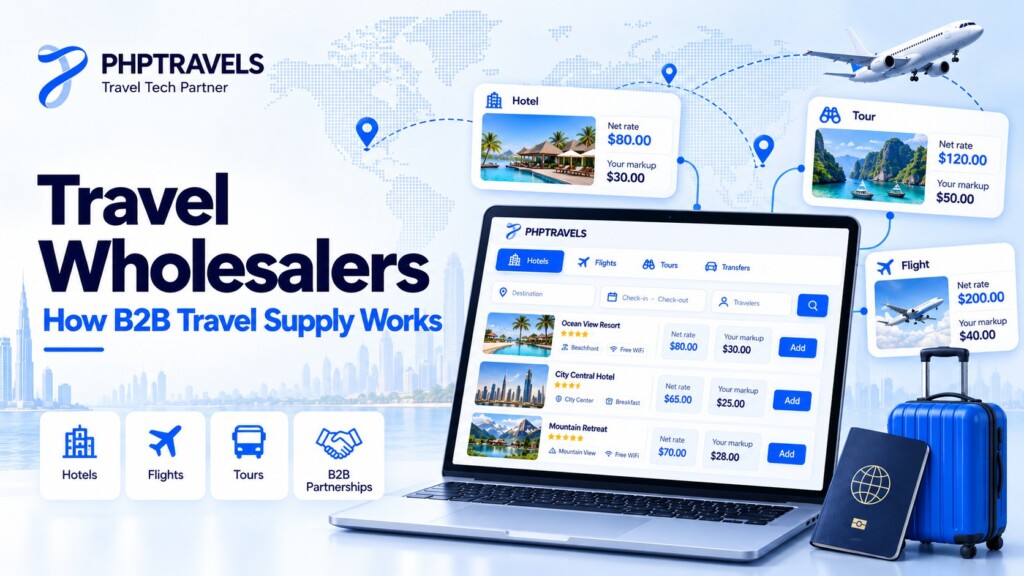
Many travel agencies rarely buy a hotel room straight from the hotel. The room usually reaches them through travel wholesalers: B2B companies that contract rates in bulk and resell them to agencies, tour operators and OTAs. If you run an agency, you’ll deal with them every day, and if you’re planning a B2B business, you might become one.
This guide covers what a travel wholesaler does, the main types, how net rates, allotments and margins work (with real published take rates), the big wholesalers agencies work with, how to choose one, and how to connect them to your booking platform.
What Is a Travel Wholesaler?

A travel wholesaler is a B2B travel business that buys or contracts travel products in bulk at negotiated net rates, packages them, and resells them to other travel businesses rather than directly to the public. Its customers are travel agencies, tour operators, online travel agencies (OTAs), and other travel distributors that sell those products to travellers.
Travel wholesalers act as intermediaries between travel suppliers and businesses that serve travellers. They negotiate commercial agreements with hotels, airlines, transfer providers, and activity operators, then distribute that inventory through booking portals, APIs, or contracted agent networks.
Who Are the Customers of Travel Wholesalers?
- Retail travel agencies: Access hotel rooms, flights, transfers, and holiday packages at trade rates for resale to their customers.
- Tour operators: Combine accommodation, transport, and activities into packaged holidays, group tours, or customised itineraries.
- Online travel agencies (OTAs): Connect to wholesale travel suppliers through APIs to display availability, prices, and booking options on their websites.
- B2B travel agencies: Purchase inventory from larger wholesalers and redistribute it to their own network of sub-agents.
- Travel startups: Use established wholesale inventory relationships to enter new destinations or product categories without negotiating every supplier contract individually.
Where Do Wholesalers Sit in the Travel Distribution Chain?
The typical distribution chain follows four stages: travel supplier → travel wholesaler → retail travel agency or OTA → traveller. A hotel supplies contracted room rates to a wholesaler. The wholesaler makes those rooms available to travel agencies, which add their own markup and sell them to travellers.
For a wider view of how this chain fits with GDSs, suppliers and agent portals, see our guide on how B2B works in the travel industry. The model gives agencies inventory they could not contract alone and gives suppliers extra sales channels. Not every travel wholesaler owns or prepurchases inventory. Many operate through contracted rates and live availability supplied by hotels and other travel providers.
Types of Travel Wholesalers

Travel wholesalers specialise in different products, including accommodation, flights, tours, transfers, cruises, and activities. Understanding these categories helps travel agencies choose the right wholesale travel suppliers based on their customers, destinations, and booking requirements.
Bedbanks and Hotel Wholesalers
Bedbanks are B2B accommodation distributors that contract hotel room rates and distribute them to travel agencies, tour operators, and OTAs. Hotel wholesalers for travel agents provide access to room availability, net rates, cancellation policies, and booking confirmation services.
Examples include Hotelbeds, WebBeds, RateHawk and TBO Holidays. Agencies typically access their inventory through B2B booking portals or API integrations, subject to supplier agreements. If you mainly buy hotels, our guide to getting better B2B hotel rates goes deeper on pricing.
Tour and Package Wholesalers
Tour wholesalers assemble accommodation, transportation, sightseeing, and other travel services into ready-made holiday packages. Travel agencies purchase these packages for resale rather than contracting every individual component themselves.
Products may include escorted group tours, city breaks, honeymoon packages, and multi-destination holidays. Some wholesalers also offer custom itineraries for private groups or corporate travellers.
Air Consolidators
Air consolidators specialise in distributing airline tickets and negotiated fares to travel agencies. Agencies use them to access available fares, booking services, ticketing arrangements, and sometimes private or contracted fare inventory.
They are particularly relevant to flight-focused agencies that need ticketing support or access to fares not available through their existing distribution agreements. Agencies without their own ticketing authority usually rely on the consolidator to issue tickets on their behalf. We cover the consolidator model itself on our airline ticket consolidators page.
DMCs and Ground Handlers
Destination Management Companies (DMCs) operate locally and arrange ground services such as airport transfers, hotels, sightseeing tours, local guides, and group transportation. Travel agencies purchase these services individually or as complete destination packages.
For example, a Pakistani outbound travel agency organising a Dubai group holiday might work with a UAE-based DMC for airport pickups, hotel arrangements, desert safaris, and local transportation.
Cruise, Rail and Activity Wholesalers
These specialist wholesalers distribute cruise cabins, rail passes, attraction tickets, excursions, and destination activities. Agencies purchase bookable inventory or packaged experiences to sell as standalone products or additions to existing holidays.
Access may involve agent booking portals, direct contracts, or APIs, depending on the supplier. Some products require advance reservations, passenger details, or specific cancellation conditions.
Travel Distribution Models Compared
Not every business in travel distribution is a wholesaler. The following table explains how common distribution models differ and how travel agencies typically work with each.
| Player | What it sells | Who it sells to | How agencies connect |
|---|---|---|---|
| Travel wholesaler / bedbank | Contracted hotels, accommodation, transfers, and activities at trade rates. | Travel agencies, tour operators, OTAs, and B2B distributors. | B2B agent portal, supplier API, or direct commercial agreement. |
| Air consolidator | Airline tickets, negotiated fares, and ticketing services. | Retail agencies, flight specialists, and sub-agents. | Agent portal, API, or ticketing arrangement. |
| DMC | Local tours, ground transfers, guides, accommodation, and destination packages. | Outbound agencies, international tour operators, and wholesalers. | Direct contract, email quotations, B2B portal, or API where available. |
| Tour operator | Packaged holidays, escorted tours, and customised itineraries. | Travellers, retail agencies, or other travel businesses, depending on its model. | Agent portal, direct booking, or contracted distribution. |
| GDS | Electronic access to airline fares, hotel availability, and other travel services. | Travel agencies, corporate booking providers, and other authorised distributors. | GDS terminal, approved API, or connected booking system. |
| OTA | Flights, hotels, activities, and other travel products through an online storefront. | Primarily end travellers, with some operating B2B programmes. | Consumer website or app; partner portal or API where offered. |
Key distinction: A travel wholesaler typically distributes contracted inventory to other travel businesses, while a retail OTA primarily sells to travellers. A GDS is a distribution technology network rather than a traditional wholesaler, and a tour operator may operate in B2C, B2B, or both markets.
How Wholesale Travel Works: Contracts, Net Rates and Margins
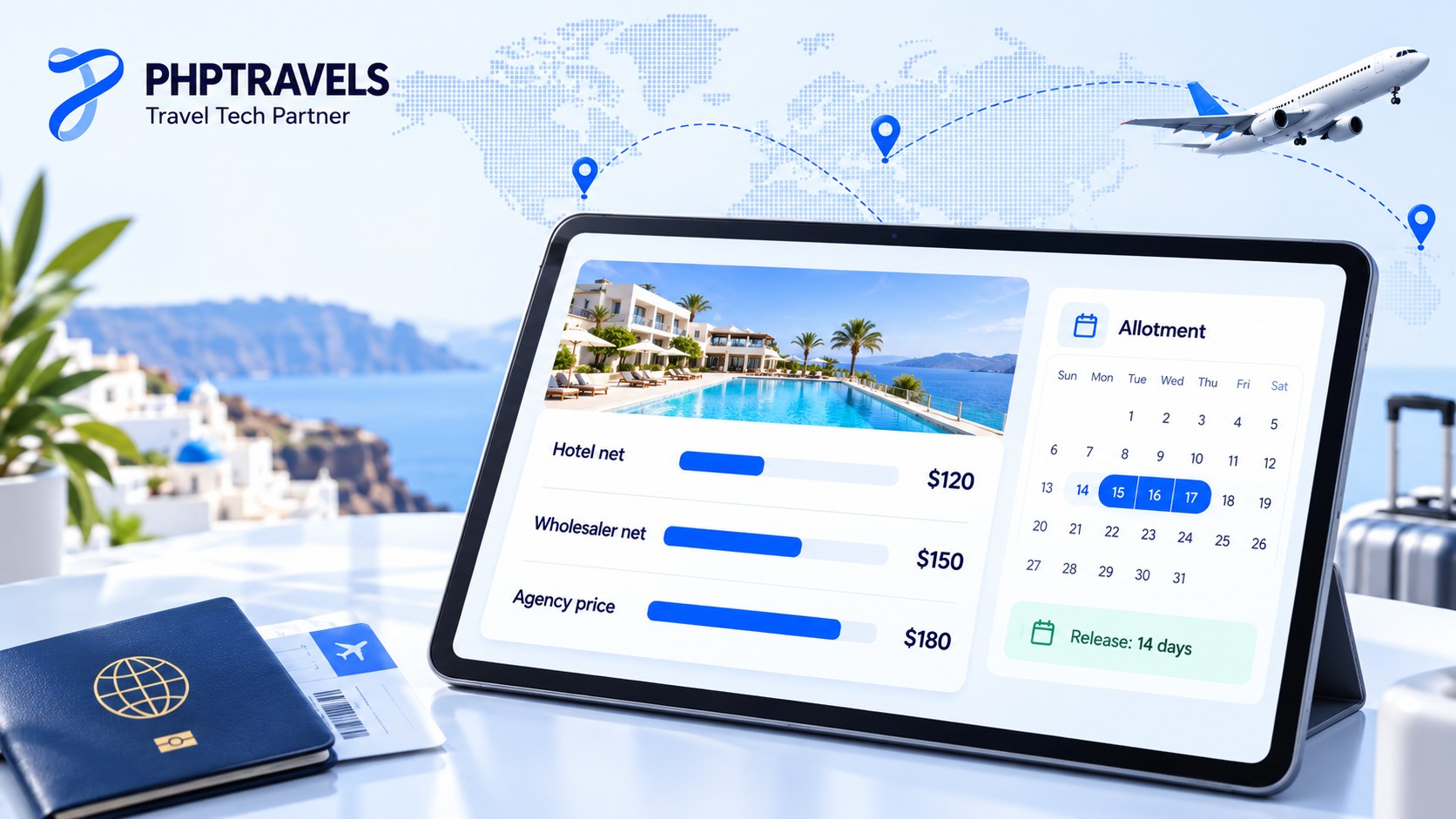
Travel wholesalers make money by negotiating supplier rates, distributing inventory, and earning a margin on bookings. Their profitability depends on supplier contracts, product categories, booking volumes, cancellation terms, and the difference between purchasing and selling prices.
Contracted vs Dynamic Rates
Contracted rates are negotiated directly with hotels, airlines, or other travel suppliers for an agreed period. A hotel might offer a travel wholesaler a fixed net room rate for a particular season, with conditions covering availability, cancellation, and payment.
Dynamic rates change according to availability, demand, and supplier pricing decisions. Many B2B travel wholesalers distribute live rates through APIs, allowing agencies to search current prices instead of relying entirely on static contracts.
Agencies should check whether quoted prices are guaranteed, whether taxes are included, and whether rates must be revalidated before confirming a booking.
Allotments and Release Periods
An allotment is an agreed allocation of hotel rooms or other inventory reserved for a wholesaler under specified contract conditions. For example, a hotel might allocate 10 rooms per night to a wholesaler during a busy travel season.
A release period determines when unsold inventory must be returned to the supplier. If the release period is 14 days, unbooked rooms go back to the hotel 14 days before arrival so it can sell them through other channels.
Some agreements involve guaranteed inventory or financial commitments, while others operate on a non-guaranteed basis. Agencies should understand these conditions because they affect availability, cancellation exposure, and booking deadlines.
Net Rates and Markups
A net rate is the price a supplier charges a wholesaler before resale markups. The wholesaler adds its margin when offering the product to an agency, and the agency may add another markup before selling it to the traveller.
Illustrative example: The following figures demonstrate a hypothetical hotel booking for one room and one night. They are not actual rates or margins from any named company.
| Pricing stage | Amount (USD) | Gross margin |
|---|---|---|
| Hotel net rate to wholesaler | $80 | Not calculated |
| Wholesaler net rate to agency | $90 | Wholesaler earns $10 |
| Agency selling price to traveller | $110 | Agency earns $20 |
| Total difference from hotel net rate | $30 | $10 wholesaler + $20 agency |
The wholesaler earns a gross margin of approximately 11.1% of its $90 selling price, while the agency earns approximately 18.2% of its $110 selling price. These are gross margins before payment processing fees, operational expenses, taxes, refunds, and other costs.
What the Published Numbers Say About Margins
Published financial figures help explain why accommodation and other land products are commercially important to travel wholesalers.
TBO Tek reported a take rate of 2.6% on airline tickets compared with 7.5% on hotels and ancillary services in FY2024-25. (source: TBO Tek FY25 investor presentation) Its overall take rate was 5.6%, with hotels and ancillaries accounting for 59% of gross transaction value. The gap has held since: in the quarter to 31 March 2026, TBO reported 2.3% on air against 7.9% on hotels and ancillaries, excluding its Classic Vacations acquisition (TBO Tek Q4 FY26 investor presentation).
WebBeds reported a revenue-to-total-transaction-value margin of 6.8% for FY26, ending 31 March 2026. This measures revenue relative to the total value of bookings processed, not the company’s net profit margin (Web Travel Group FY26 results).
What that means per booking (our calculation from those figures): on a $500 airline ticket, a 2.6% take rate leaves about $13 of revenue; on a $500 hotel stay, 7.5% is about $37.50, almost three times as much. At WebBeds’ reported average booking value of about A$589, a 6.8% margin works out to roughly A$40 of revenue per booking. That is why most travel wholesalers build their business around hotels, transfers and activities, and treat air as a volume and service product.
However, a take rate is not the same as retained profit. Wholesalers must still cover technology, customer support, supplier payments, currency exposure, and booking-related operating costs. Agencies evaluating wholesale travel suppliers should compare final net prices, cancellation rules, payment terms, and service reliability rather than percentage margins alone.
Big B2B Travel Wholesalers Agencies Work With
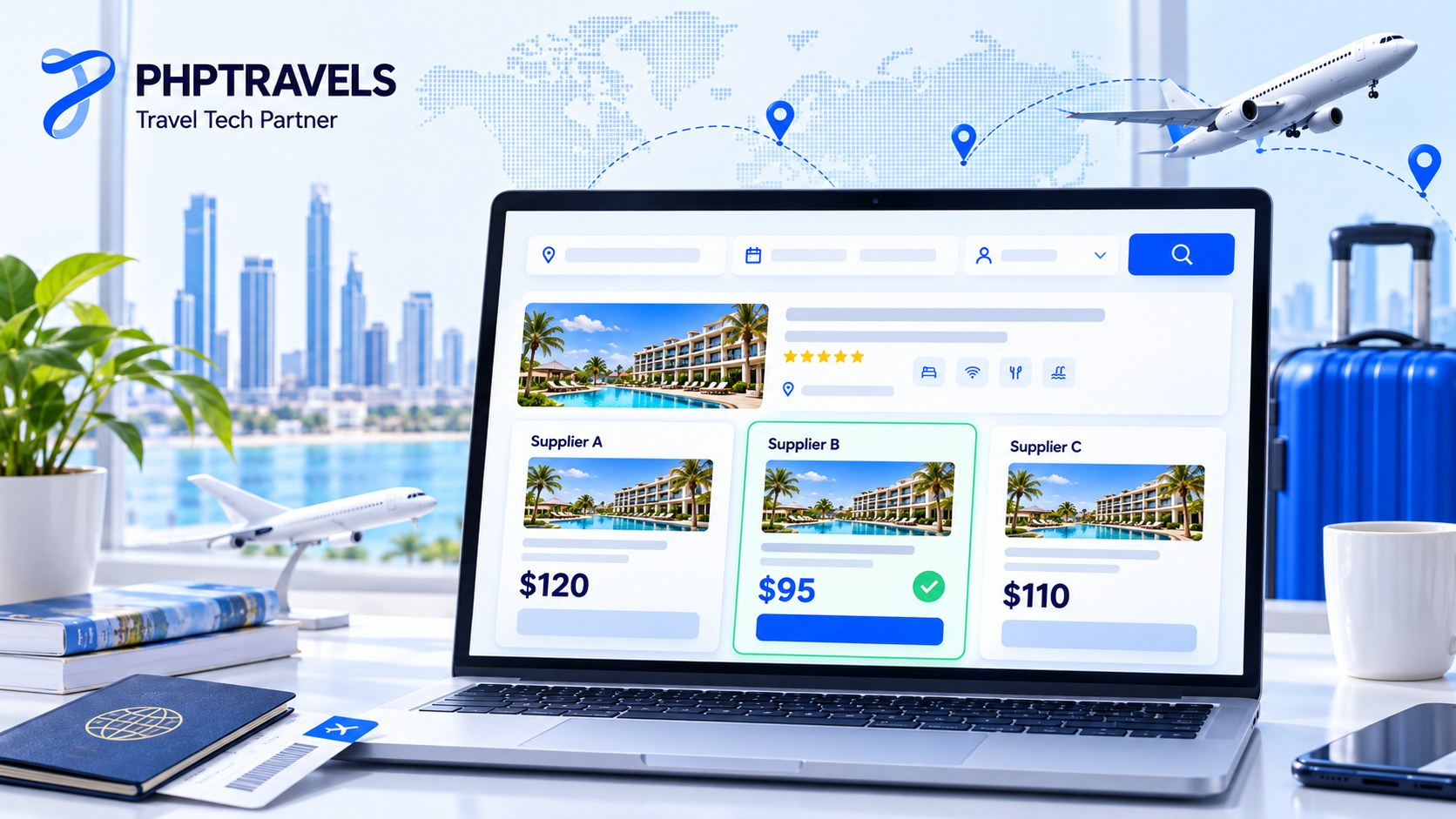
Travel agencies use established B2B travel wholesalers to access accommodation, transfers, activities, and other travel inventory through supplier contracts and booking platforms. Four names worth understanding are Hotelbeds, WebBeds, TBO Holidays, and RateHawk. Each serves travel professionals, although their distribution models, product coverage, and commercial arrangements differ.
Hotelbeds (HBX Group)
Hotelbeds is a B2B travel distributor within HBX Group. According to Visit California’s Hotelbeds partnership page, it is the world’s largest B2B lodging distributor and works with about 300,000 hotels and 64,000 B2B travel distributors.
Its portfolio covers more than 170 countries: 300,000+ accommodations, 23,000+ in-destination experiences, global transfer routes, and 150+ car hire suppliers. Its Preferred Partners collection holds 6,000+ hotels, and more than 1,000 sourcing and destination experts negotiate its rates, according to Hotelbeds.
Travel agencies and distribution partners can connect to Hotelbeds through its API, bringing availability and pricing into their booking systems through a single supplier connection. Here is how a Hotelbeds API connection works in PHPTRAVELS.
WebBeds (Web Travel Group)
WebBeds is a major B2B accommodation wholesaler operating within Web Travel Group. It distributes hotel inventory through wholesale channels, allowing travel businesses to source accommodation for resale.
For FY26, the 12 months ending 31 March 2026, WebBeds reported 9.9 million bookings, an 18% increase, and total transaction value of A$5.8 billion, up 20%.
That is roughly 27,000 bookings a day flowing through one accommodation wholesaler. Its 6.8% TTV margin and A$589 average booking value are broken down in the margins section above (source: WebBeds FY26 ASX release).
TBO Holidays (TBO Tek)
TBO Holidays operates within TBO Tek’s B2B travel distribution business, connecting travel buyers with suppliers across multiple travel product categories, including hotels, flights, transfers and sightseeing. See our TBO Holidays provider page for connection details.
For FY2024-25, TBO Tek reported gross transaction value of INR 30,832 crore, representing 16% growth. Its network included approximately 189,000 buyers across more than 150 countries and over one million suppliers.
Hotels and ancillary products made up 59% of that value, so although many agencies know TBO for flights, most of its business by value is now land product.
RateHawk (Emerging Travel Group)
RateHawk is a B2B hotel booking platform for travel professionals operated by Emerging Travel Group.
Agencies use it as a web booking tool or connect it by API; PHPTRAVELS offers a RateHawk API integration for agencies that already have a RateHawk account.
In practice, many agencies keep accounts with two or three travel wholesalers so they can compare rates and destination coverage before confirming bookings.
How to Choose and Work With Hotel Wholesalers for Travel Agents
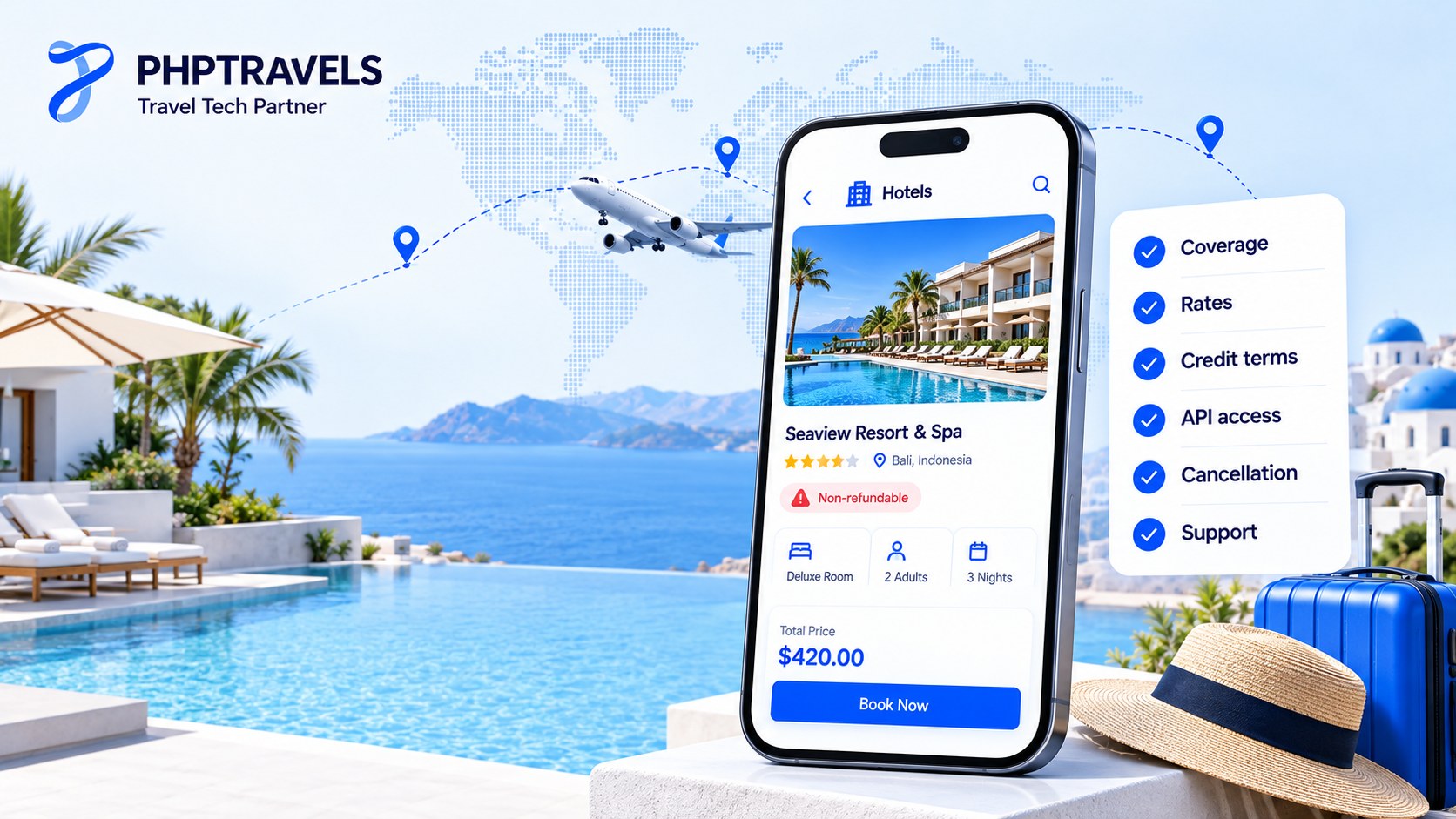
Choosing the right hotel wholesalers for travel agents requires more than comparing room prices. Agencies should evaluate destination coverage, payment conditions, booking reliability, and how each supplier handles cancellations and amendments.
Before signing agreements with wholesale travel suppliers, use these eight criteria to assess whether their services match your agency’s business model.
- Destination coverage: Check whether the wholesaler has competitive hotel inventory in the countries and cities your customers actually book. A supplier with extensive global inventory may still offer limited choices in your agency’s most important destinations.
- Rate competitiveness vs direct bookings: Compare wholesale net rates against publicly available hotel prices and direct supplier offers for identical dates, room types, occupancy, and cancellation conditions. A lower advertised net rate does not always mean a better final price after taxes, fees, and currency conversion.
- Credit terms, deposits, and prepayment: Confirm whether the wholesaler requires an advance deposit, prepaid wallet balance, immediate payment, or offers an approved credit facility. Understand credit limits, settlement deadlines, and what happens when your balance becomes insufficient to confirm new bookings.
- API vs extranet access: Determine whether bookings must be made manually through a B2B extranet or whether the supplier provides API connectivity. Agencies handling frequent online bookings may benefit from API integration, while smaller agencies can begin with a supplier portal if it meets their operational requirements.
- Cancellation and no-show terms: Review cancellation deadlines, non-refundable restrictions, amendment charges, and no-show penalties before selling a room. Policies can vary between hotels, room types, and individual rates offered by the same wholesaler.
- Rate parity and display rules: Check whether your agreement restricts public advertising of wholesale rates, requires minimum selling prices, or limits distribution through particular channels. Some contracted rates are intended for specific markets, customer groups, or packaged bookings and cannot be displayed freely on a public website.
- Payment methods and currency: Confirm supported settlement currencies, payment methods, exchange-rate calculations, and applicable transaction fees. Agencies selling in one currency and paying suppliers in another should account for currency fluctuations when setting markups.
- Support and booking-amendment handling: Evaluate how the wholesaler handles failed confirmations, hotel disputes, date changes, name corrections, and urgent cancellations. Ask about support availability, escalation procedures, and whether amendments are handled through the booking portal, API, or support team.
Common Mistakes When Working With Travel Wholesalers
Even established agencies lose money when wholesale booking rules are misunderstood. Watch for these four mistakes.
- Not rechecking prices before payment: Hotel rates and availability can change between the initial search and final confirmation. Revalidate the selected room, total price, and availability before accepting payment or committing to a booking.
- Ignoring non-refundable conditions: Selling a non-refundable room without clearly informing the customer can create disputes and financial losses. Display cancellation deadlines and penalties before the customer confirms the reservation.
- Depending on one wholesaler: A single supplier may have limited availability, uncompetitive rates, or temporary booking problems. Maintain agreements with alternative suppliers so your agency can compare offers and reduce dependency.
- Displaying confidential net rates publicly: Wholesale rates may be subject to contractual resale and display restrictions. Apply the appropriate agency markup and follow the supplier’s distribution agreement rather than exposing restricted net prices directly to travellers.
Before committing to a long-term supplier relationship, test a small number of real booking scenarios across your main destinations. Compare the complete booking process, including search accuracy, final pricing, confirmation, cancellation handling, and customer support, rather than choosing a travel wholesaler based on headline room rates alone.
Connecting Travel Wholesalers to Your Booking Platform
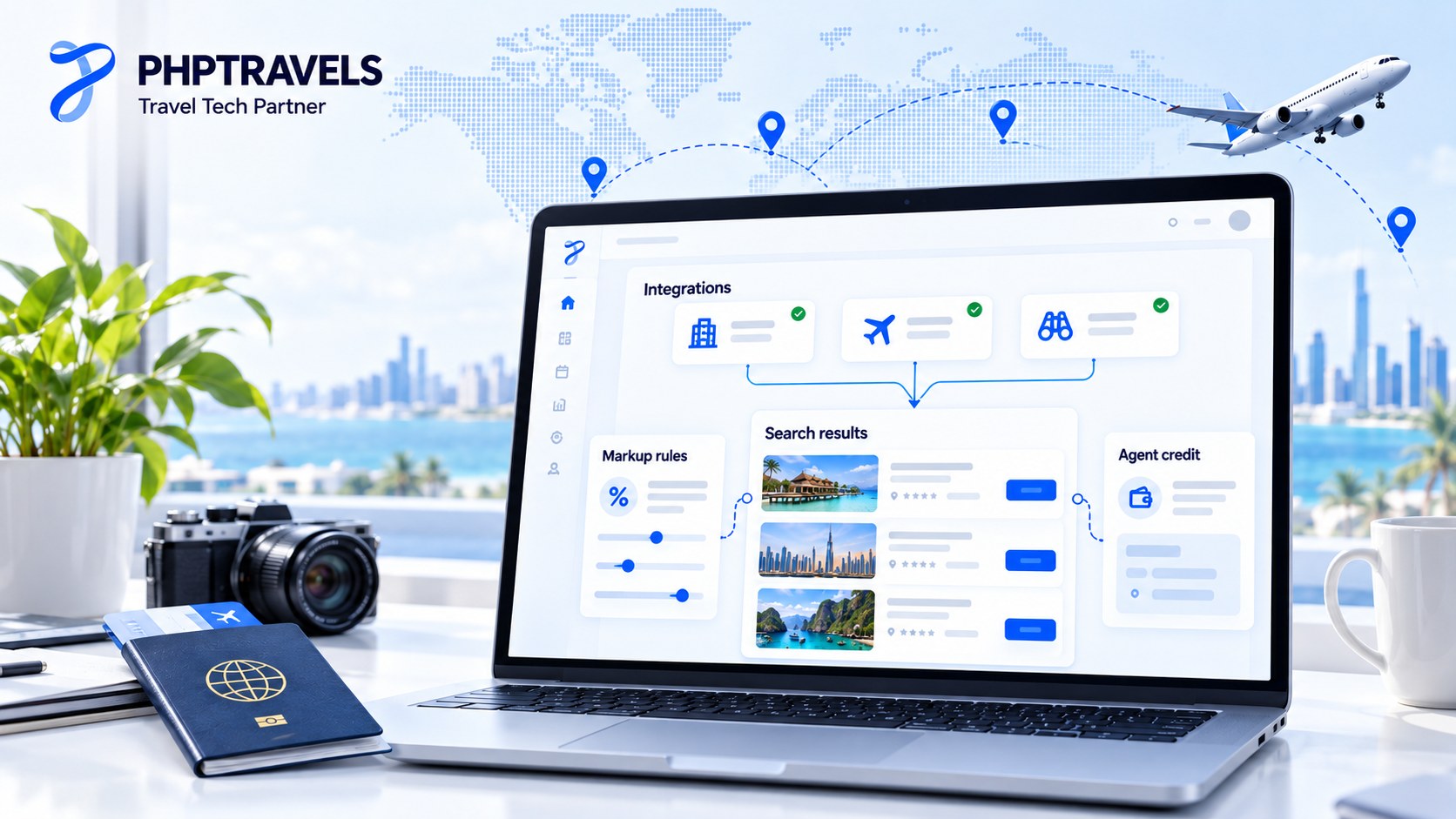
Travel agencies and B2B travel wholesalers can access supplier inventory through booking extranets or API integrations. The right approach depends on booking volume, available technical resources, supplier agreements, and whether the business sells directly to travellers or through a network of agents.
API Integration vs Supplier Extranet
A supplier extranet is a web-based booking portal where travel agents manually search availability, compare rates, and confirm reservations. It works well for agencies processing a manageable number of bookings without needing automated inventory distribution.
An API integration connects a wholesale travel supplier directly to an agency’s booking platform. It allows the website to request hotel availability, retrieve prices, display room options, and submit bookings according to the supplier’s API specifications.
For example, an agency connecting Hotelbeds, RateHawk, and TBO Holidays can search multiple contracted suppliers through its own booking interface instead of switching between separate extranets.
Hotel Mapping, Duplicate Listings and Price Revalidation
Connecting multiple hotel wholesalers introduces a common technical problem: the same hotel may appear under different supplier IDs, names, addresses, or room descriptions.
Hotel mapping and deduplication help identify matching properties and prevent the same hotel from appearing repeatedly in search results (we explain the full search, merge and rank flow in our multi-supplier hotel booking engine guide). Room-level matching also requires careful handling because similarly named rooms may have different occupancy limits, meal plans, or cancellation conditions.
Price revalidation before checkout is equally important. A room displayed at $120 during the initial search may have a different price or become unavailable before booking confirmation. The platform should request an updated rate, verify availability, and obtain customer acceptance if the final price changes. Our article on booking revalidation shows how to handle this step.
Markups and Agent Credit in a B2B Portal
A B2B travel booking portal allows wholesalers to distribute inventory to registered travel agencies under agreed commercial terms. Markup rules determine the selling price offered to agents, while agent wallets or credit facilities determine how bookings are funded (for example, an agent wallet that agencies top up before they book).
For example, a wholesaler purchasing a hotel room for $100 could apply an illustrative $12 markup and offer it to an agent for $112. The agent may then apply its own resale margin, subject to supplier contract restrictions.
Credit limits require additional controls. A wholesaler offering an agency a $5,000 credit facility must track outstanding bookings, available credit, settlement deadlines, and overdue balances to reduce financial exposure.
How to Become a Travel Wholesaler
Starting a wholesale travel agency business requires reliable inventory agreements, a distribution platform, and clear financial controls. These five steps provide a practical starting point.
- Choose a niche or destination: Focus initially on specific products or markets, such as hotels in Dubai, pilgrimage travel, or Southeast Asian holiday packages, rather than attempting worldwide coverage immediately.
- Secure supplier contracts or allotments: Negotiate agreements with hotels, DMCs, and other authorised suppliers. Confirm net rates, booking conditions, cancellation policies, payment obligations, and resale permissions.
- Set up a B2B agent portal: Provide registered agencies with inventory search, booking capabilities, markup rules, agent wallets, and configurable credit limits. Ensure booking and financial records can be managed through the back office. If you are still comparing platforms, the feature list on TravelBookingPortal makes a useful checklist: it breaks a booking platform into a customer website, admin panel, B2B agent portal and customer panel.
- Onboard travel agencies: Verify business customers, agree on commercial terms, assign account permissions, and explain booking, payment, and cancellation procedures before allowing live transactions.
- Manage settlement and financial risk: Monitor supplier payables, agent receivables, outstanding credit, refunds, and currency exposure. Establish settlement deadlines and procedures for overdue balances and disputed bookings.
Where PHPTRAVELS Fits
PHPTRAVELS is licensed travel booking software (one-time licence with source code) with a B2C storefront, a B2B agent portal and a back office. Hotel connections include Hotelbeds, RateHawk, TBO Holidays, Stuba, Hotelston, Wanderbeds and Agoda, and flight connections include Amadeus, Sabre, Travelport, Duffel, Mystifly, TBO, PKFare and Kiwi (the live list is on the integrations page). You get markup rules, multi-currency, agent wallets and credit, and white-label sub-portals, so it suits both agencies buying from wholesalers and companies that want to run their own wholesale portal.
One honest caveat: PHPTRAVELS does not supply wholesale inventory. You sign your own supplier contracts and get your own API credentials; the software connects them. To see how it works, try the PHPTRAVELS demo or check pricing for your modules and suppliers.
FAQ: Travel Wholesalers

What is the difference between a travel wholesaler and a tour operator?
A travel wholesaler contracts travel products such as hotels, flights, and transfers at negotiated rates and resells them to travel agencies, tour operators, and OTAs. A tour operator primarily creates and sells holiday packages by combining accommodation, transportation, and activities. Some tour operators also operate as wholesalers, distributing their packages through other travel agencies.
Who are the customers of travel wholesalers?
The main customers of travel wholesalers are retail travel agencies, online travel agencies (OTAs), tour operators, corporate travel providers, and other B2B travel distributors. These businesses purchase wholesale inventory and resell it to travellers, often adding their own markups or service fees.
Can a travel agency buy directly from hotels instead of wholesalers?
Yes, travel agencies can negotiate rates and booking agreements directly with hotels, particularly when they generate regular bookings for specific destinations. However, hotel wholesalers for travel agents provide access to multiple properties through a single commercial relationship or booking connection, reducing the need to negotiate separate contracts with every hotel.
How do travel wholesalers make money?
Travel wholesalers primarily earn revenue through the difference between their contracted net rates and the prices charged to travel agencies, although some arrangements involve commissions or service fees. Published take rates give a sense of scale: TBO Tek reported 7.5% on hotels and 2.6% on air for FY2024-25. Actual margins depend on product type, supplier agreements, booking volume, and payment conditions.
How do I become a travel wholesaler?
To become a travel wholesaler, start by selecting a destination or product niche, securing supplier contracts or allotments, and establishing commercial terms for your agency customers. Next, set up a B2B booking portal with markup rules, agent credit management, and booking administration, then onboard travel agencies and establish reliable payment and settlement procedures. Platforms such as PHPTRAVELS provide B2B booking software, but you must arrange your own supplier contracts and API credentials to access inventory.