
A single bedbank contract feels fine—until a destination your customers love returns thin inventory, a weekend promotion undercuts your net rates, or a supplier API times out during a peak search spike. Most agencies that sell stays at scale do not live on one pipe. They need a multi-supplier hotel booking engine: one search and book experience that can query several hotel APIs, merge what comes back, apply commercial rules, and still leave ops in control when something breaks.
This guide explains what that engine actually is, why one supplier is rarely enough, how aggregation and booking flows work in practice, and how markup, parity, failover, and vouchers stay coherent. PHPTRAVELS appears only where a licensed Stays module with multiple stay connectors is a genuine fit—and only with your supplier credentials. Software does not ship free hotel inventory.
What a Multi-Supplier Hotel Booking Engine Actually Is
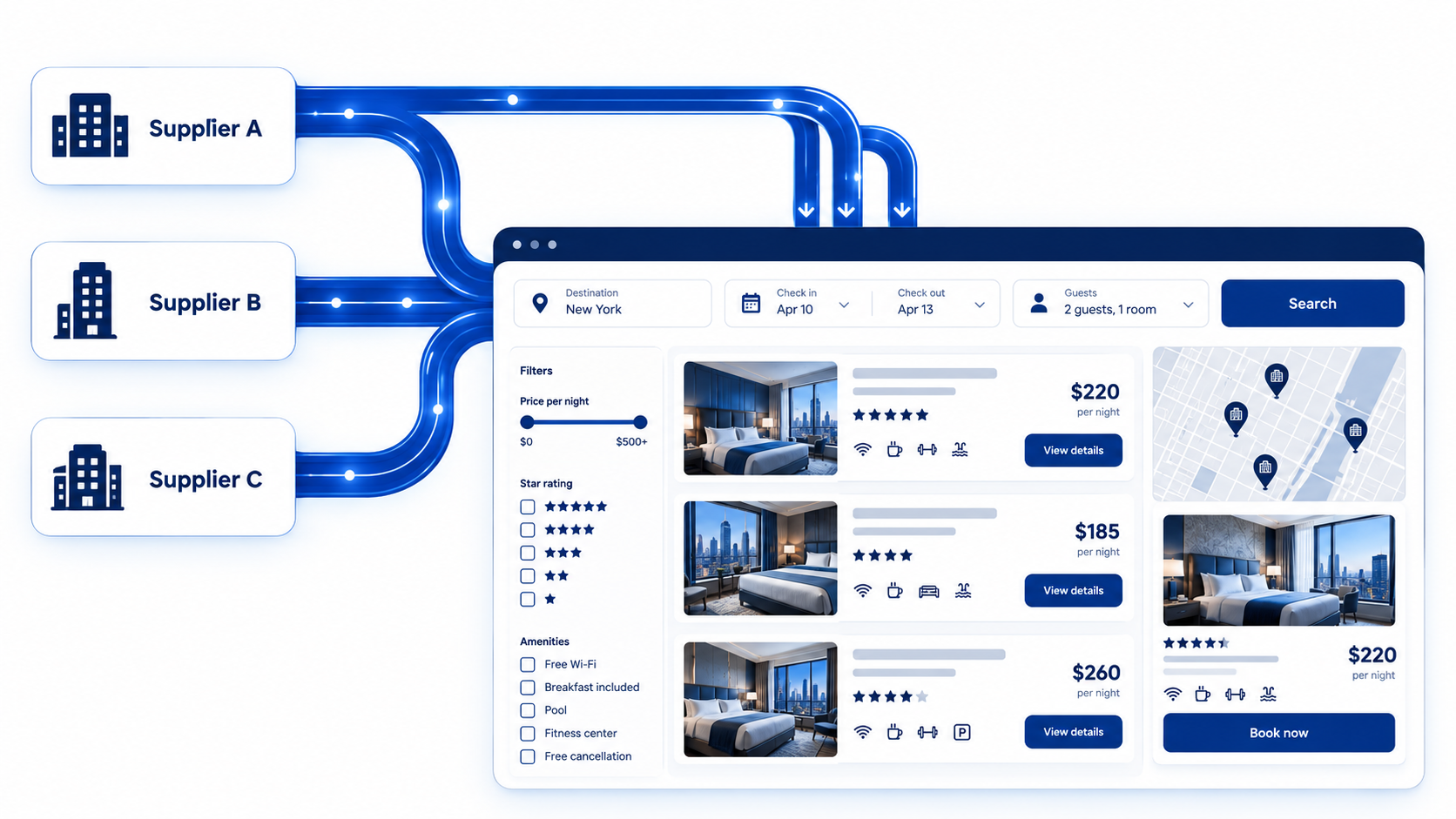
A multi-supplier hotel booking engine is the software layer that lets travellers or agents search hotels once and receive results drawn from more than one stay supplier API—then book through a controlled path back to the winning supplier.
It is not the bedbank. Hotelbeds, Stuba, RateHawk, TBO Holidays, Agoda, Hotelston, Amadeus stays, Travelport stays, and similar partners remain separate commercial relationships. You (or your consolidator) hold the contracts and API credentials. The engine connects, normalizes, and orchestrates. If you want the basics of hotel APIs first, start with what a hotel API is and why it matters; for module anatomy, see how hotel booking software works.
In a serious stack you should expect:
- One branded search UX (B2C storefront and/or B2B agent portal)
- Parallel or sequenced calls to the stay suppliers you enabled
- Merge and dedupe so the same property does not appear three times under three names
- Commercial rules (markup, currency display, channel filters) applied before the guest sees a sell rate
- A book path that revalidates availability/price with the chosen supplier before payment confirmation
- Ops tools for vouchers, booking refs, cancels/amends, and supplier error visibility
If a vendor claims “millions of hotels” without asking which credentials you bring, treat that as marketing for their intermediary model—not a multi-supplier hotel booking engine you control.
Why One Supplier Is Rarely Enough
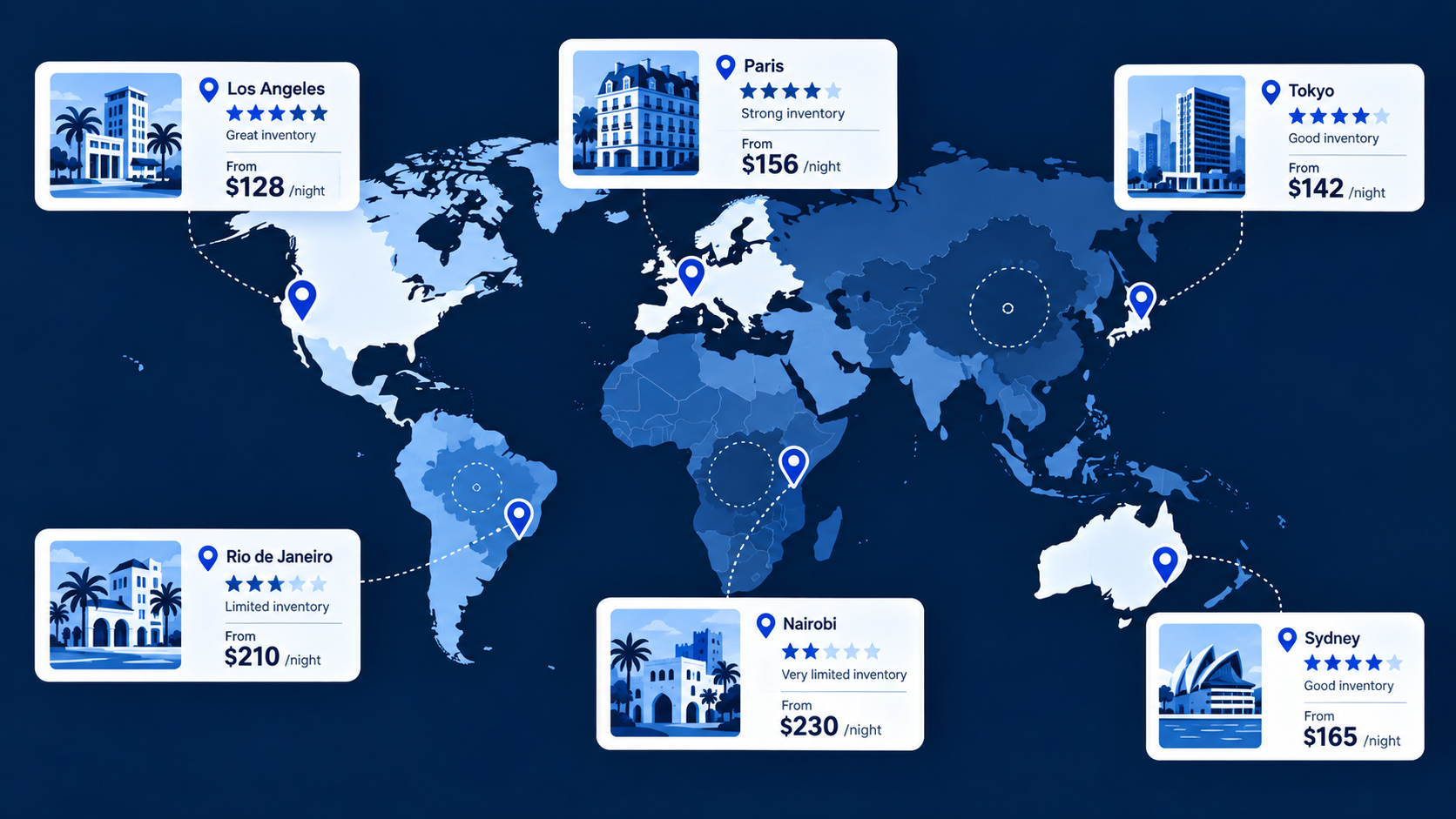
Picture a regional OTA that launched on a single strong bedbank. City breaks in Western Europe looked competitive. Six months later, leisure demand shifted toward secondary Asian cities and a cluster of Gulf family hotels. Coverage thinned. A second wholesaler had deeper allotments there—but different cancellation windows and a messier property catalogue. A third GDS-style hotel feed filled corporate-rate gaps the leisure bedbank never cared about.
Running three separate supplier extranets taught the team an expensive lesson: customers will not open three tabs. Agents will, briefly—then they burn time reconciling which confirmation ID belongs where. The commercial need is coverage and rate competitiveness; the product need is one engine.
Typical reasons agencies add suppliers:
- Destination strength: Supplier A wins beach resorts; Supplier B wins city hotels in a specific region
- Rate shape: Net vs opaque packages; breakfast inclusions; child policies that change the landed sell price
- Negotiation leverage: Volume split across two pipes can improve terms—or at least prevent a single-vendor renewal trap
- Resilience: When one API degrades, another may still return bookable rooms
None of that requires ten connectors on day one. It requires a platform that can grow from one stay supplier to several without rewriting your front end. Deep-dives on individual pipes still matter when you onboard them—see Hotelbeds with PHPTRAVELS and Stuba hotel booking systems—but the multi-supplier hotel booking engine is the layer that makes those pipes usable together.
The Aggregation Stack: Search, Merge, Rank, Book
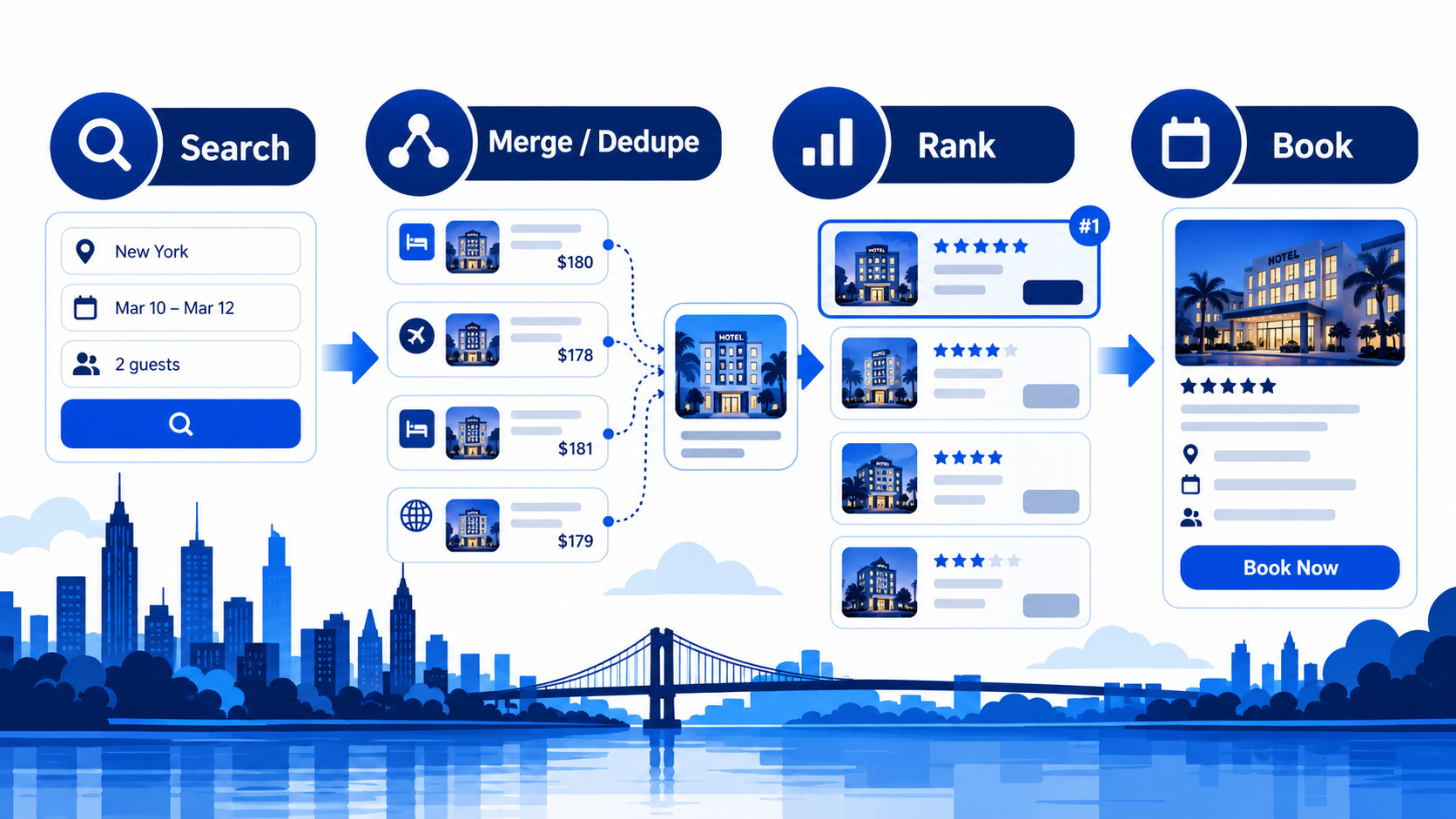
Aggregation sounds like “call everyone and sort by price.” Real systems are stricter.
1. Search fan-out
The engine sends destination, dates, occupancy, and nationality (where required) to each enabled supplier. Timeouts matter: a slow supplier must not hold the whole page forever. Partial results with a clear “still loading / limited coverage” pattern beat an empty spinner.
2. Hotel identity and dedupe
Supplier A’s “Grand Plaza Downtown” and Supplier B’s “Grand Plaza Hotel City Centre” may be the same building—or not. Without mapping (GIATA-style IDs, chain codes, geo+name heuristics, or your own catalogue), you either spam duplicates or hide the cheaper valid offer. Deduplication is product work, not a checkbox.
3. Normalize offer attributes
Cancellation deadlines, board basis, room name quality, taxes/fees, and payment-at-hotel vs prepay flags must be comparable before ranking. A “cheaper” rate that is non-refundable three weeks earlier is not the same product.
4. Rank and display
Default rank is often lowest sell price after markup—but agencies also weight refundability, preferred suppliers, or margin. Display currency and rounding belong here; see multi-currency travel booking software for localization traps.
5. Book with revalidation
Between click and pay, inventory moves. The engine should re-check the selected offer with the originating supplier, surface price changes honestly, then create the supplier booking and your local order record with matching references.
Skipping revalidation to “feel faster” is how you earn chargebacks and angry WhatsApp threads.
Markup, Parity, and Display Control

Aggregation without commercial control just publishes someone else’s chaos under your logo.
Markup is where you decide sell price from net (or apply rules on commissionable rates). Rules may vary by supplier, destination, star band, channel (B2C vs B2B), or agent group. A multi-supplier hotel booking engine should apply those rules centrally so Supplier A and Supplier B do not accidentally show inconsistent margin logic. For the broader commercial layer, see travel markup management software.
Parity and channel rules are the quiet killers. Some contracts restrict how you display or discount rates online. Opaque rates may forbid showing the hotel name until after booking. Public OTAs may be bound by parity clauses that do not apply the same way on a B2B agent portal. Your engine needs filters—not only math—so a rate that is legal to sell to sub-agents is not scraped onto the public site.
Display control also means deciding what the guest sees when two suppliers return the same hotel: cheapest only, preferred supplier first, or a “deals” expander. Ops and compliance should choose that policy deliberately; engineering should not invent it at 2 a.m. during an outage.
Failover, Timeouts, and Ops Reality
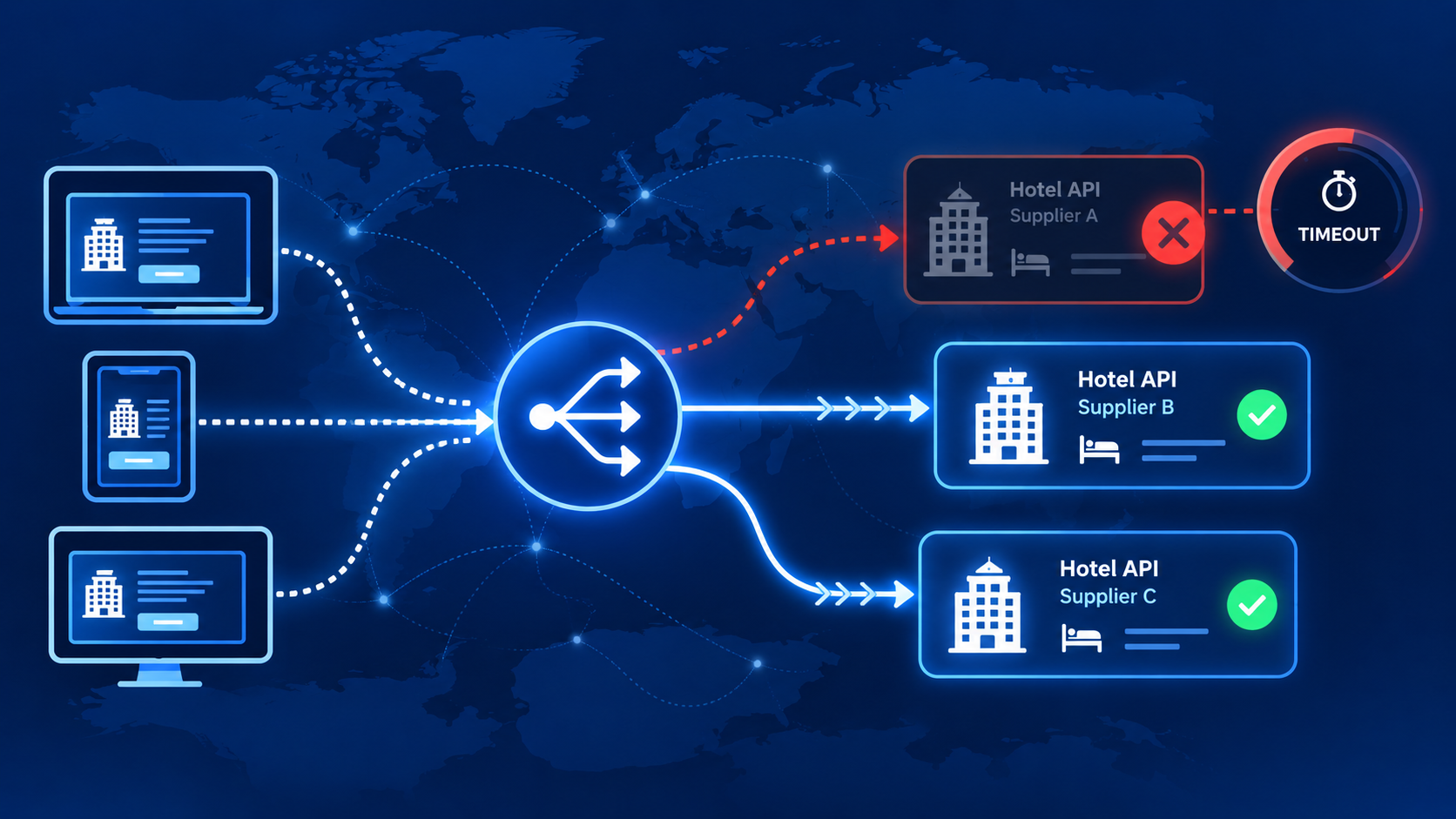
Multi-supplier does not mean “always 100% of suppliers, always.” It means graceful degradation.
Practical patterns:
- Per-supplier timeouts so one hung connection cannot blank the SERP
- Circuit breakers that temporarily stop calling a supplier that is erroring hard, then probe later
- Booking-path isolation: a search-time failure on Supplier C must not block a confirmed book path on Supplier A
- Clear error surfaces in the back office: supplier code, message, booking ref if any, and whether money was captured
- Voucher truth: the guest voucher must show the confirmation that the supplier recognizes—not only your internal order ID
Staffing matters as much as code. Someone must know which supplier desk to call, how to amend a multi-room stay, and when to refund versus rebook. A multi-supplier hotel booking engine that hides supplier identity from ops creates a pretty UI and a fragile business.
Where PHPTRAVELS Fits (Honest Product Fit)
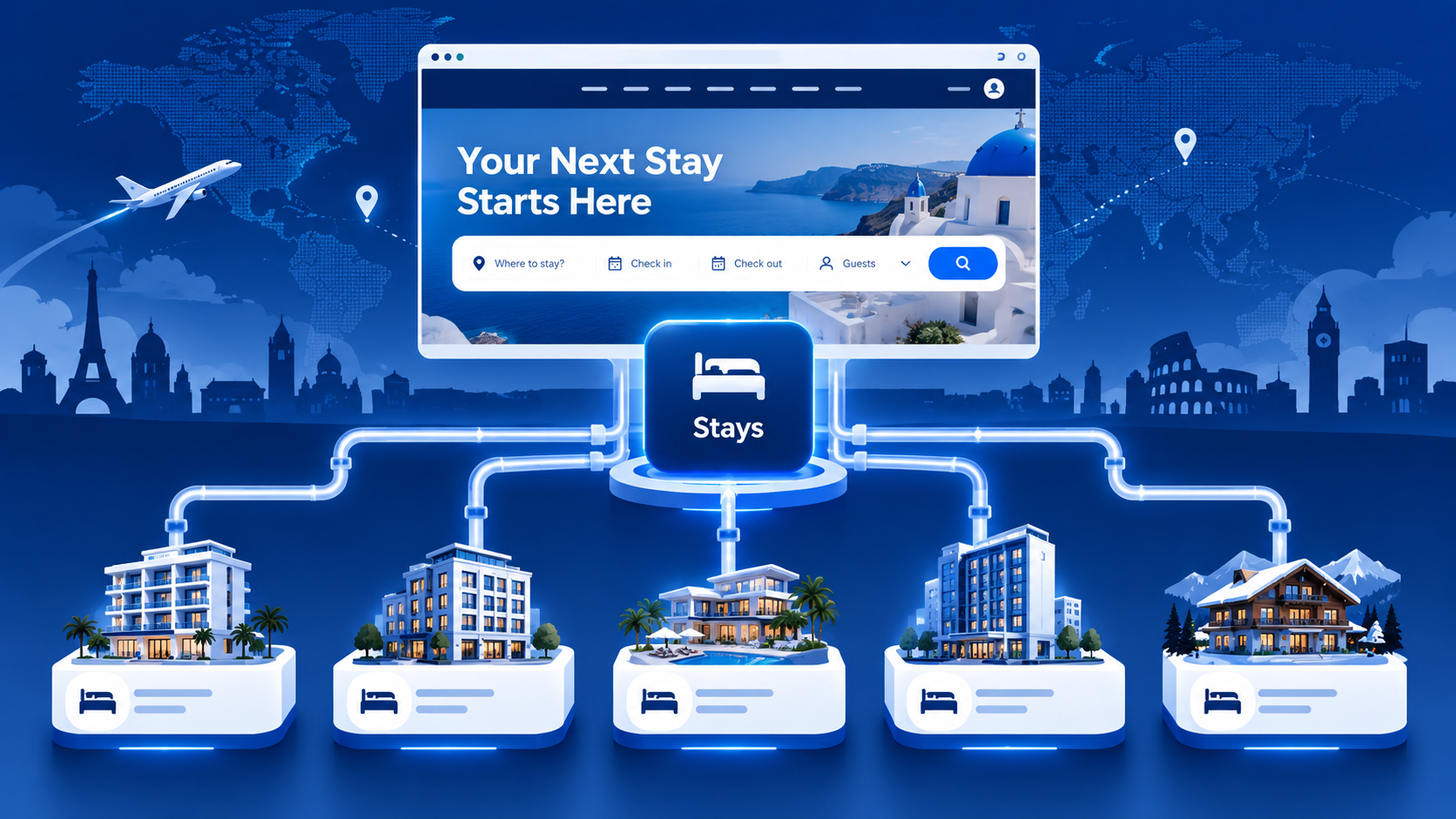
PHPTRAVELS is licensed travel booking software for agencies, tour operators, OTAs, DMCs, and travel startups. It provides a B2C storefront, B2B agent portal, back office, supplier API connections, and payment handling under your brand. It is not a booking intermediary that takes a cut of your hotel sales, and it does not include free global hotel inventory—you bring contracts and credentials.
For teams evaluating a multi-supplier hotel booking engine, the relevant product truths are:
- A Stays / hotel module you can enable as part of a modular platform (hotel module features)
- Multiple stay supplier connectors available to attach when you have credentials—examples historically listed among stays integrations include Hotelbeds, Stuba, RateHawk, TBO Holidays, Agoda, Hotelston, Amadeus, and Travelport; always confirm the live integrations list before promising a specific pipe
- Buyer-owned markup, multi-currency, B2C/B2B channels, and payment merchant accounts
- Licensed self-hosted or managed deployment against your domain—not a pretend “MIT dump of free inventory”
What this article does not claim: that every supplier on earth is pre-wired, that prices are fixed forever (use the live pricing configurator), or that multi-supplier magic removes commercial and ops work. Poor fit remains buyers who want zero-effort SaaS with someone else’s contracts, or a single-property widget.
If the architecture matches how you sell stays, pressure-test search, markup, and book flows on a demo, then configure modules and suppliers on pricing.
FAQ: Multi-Supplier Hotel Booking Engine

Do I need five hotel suppliers on day one? No. Start with the one (or two) contracts you can credential and staff. Choose a platform that can add more stay APIs without rebuilding the storefront.
Is a multi-supplier hotel booking engine the same as a channel manager? No. Channel managers typically push your property inventory out to OTAs. A multi-supplier hotel booking engine pulls third-party stay inventory in for your agency/OTA to resell.
Who owns the hotel contract? You (or your wholesaler relationship). The software connects with your API credentials; it should not pretend to grant inventory by itself.
What breaks most often in aggregation? Hotel identity mismatches, ignored cancellation differences, skipped price revalidation, and ops teams that cannot see which supplier actually holds the booking.
Where should I see PHPTRAVELS in this journey? When you want a licensed booking platform with a hotel/stays module and room to attach multiple stay suppliers under your brand—then validate on demo and confirm connectors on the live integrations page.