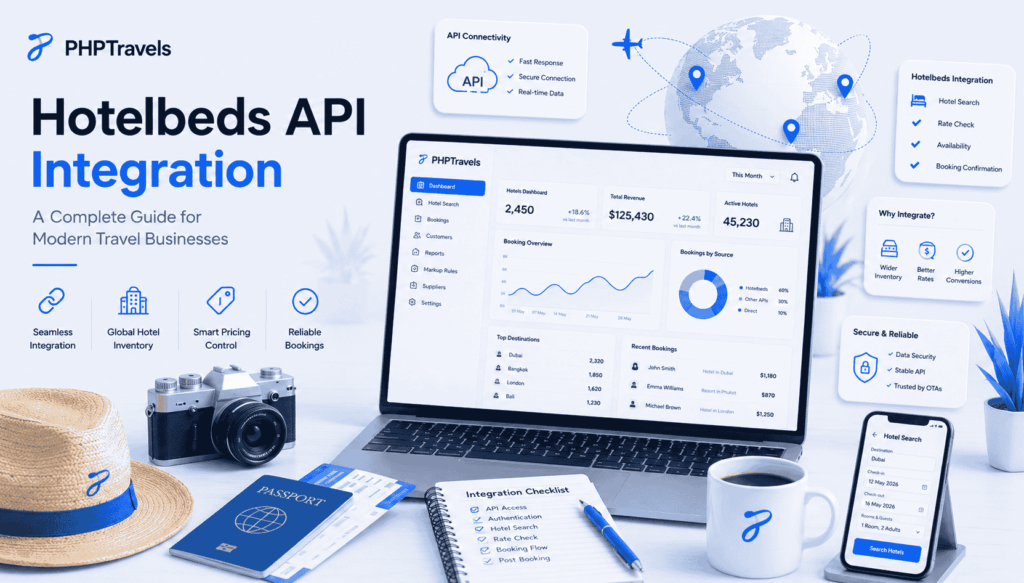
You run a travel agency, OTA, or hotel focused platform, accessing reliable global hotel inventory is not the hard part. The real challenge is connecting that inventory into your booking flow without breaking pricing logic, availability accuracy, or operational control. Many businesses hear about Hotelbeds but struggle to understand how its API actually fits into a working booking system.
Hotelbeds API is a hotel supplier API used by OTAs and travel agencies to access hotel inventory, pricing, content, availability, and booking workflows.
This guide explains the Hotelbeds API integration from a practical travel technology perspective, focusing on real workflows, integration decisions, and business outcomes rather than theory.
How the Hotelbeds API Is Used in Real Booking Systems
The Hotelbeds API provides access to global hotel inventory through a structured booking interface. It is used by OTAs and travel platforms to search hotels, confirm availability, and create bookings. Successful use depends on correct integration design, pricing control, caching strategy, and alignment with your booking engine and back office systems. Poor implementations fail due to rushed setup, weak error handling, and lack of operational planning.
Understanding the Hotelbeds API
Hotelbeds is a global bed bank that distributes hotel inventory to travel businesses through APIs. The Hotelbeds API allows platforms to search hotels, retrieve rates, apply markups, and create confirmed bookings within their own systems. It is not a booking website and it does not replace your platform. It acts as a supplier layer that feeds inventory into your booking engine.
Travel businesses typically use the Hotelbeds API to support B2C hotel sales, B2B agent bookings, or mixed distribution models. The API delivers real time availability, cancellation rules, room descriptions, and booking confirmations that can be managed centrally.
Practical guide, See the this detail.
Hotelbeds API Documentation and Developer Portal
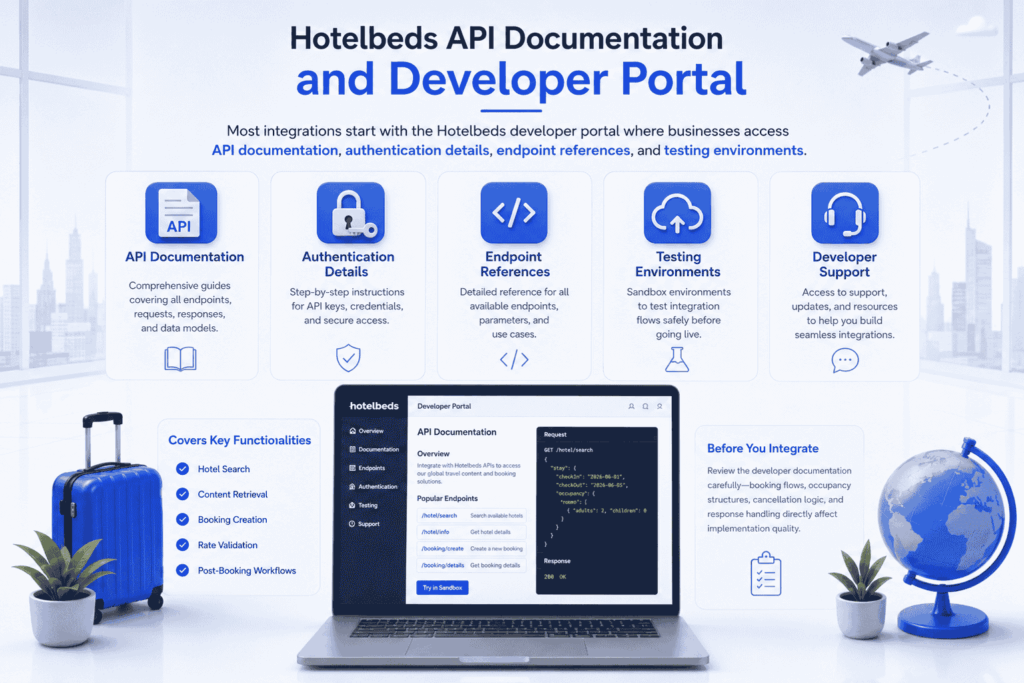
Most integrations start with the Hotelbeds developer portal where businesses access API documentation, authentication details, endpoint references, and testing environments. The Hotelbeds API documentation covers hotel search, content retrieval, booking creation, rate validation, and post-booking workflows.
Before starting Hotelbeds API integration, teams should review the developer documentation carefully because booking flows, occupancy structures, cancellation logic, and response handling directly affect implementation quality.
What the Hotelbeds API actually includes
The Hotelbeds API is structured around several functional areas. Hotel search returns available properties based on location, dates, and occupancy. Content endpoints provide hotel descriptions, images, amenities, and policies. Booking endpoints allow rate rechecks, reservation creation, and booking status retrieval. These components work together to support a full hotel booking lifecycle.
In practice, travel platforms combine these endpoints with their own pricing logic, user accounts, and payment flows. This is why Hotelbeds API integration is not a plug and play task. It must align with how your booking system works internally.
Common use cases for Hotelbeds API integration
Most OTAs use the Hotelbeds API to expand hotel coverage across destinations without contracting hotels directly. Travel agencies use it to serve agents through a B2B hotel booking portal with negotiated markups. Some platforms combine Hotelbeds with other suppliers such as Booking.com or Priceline using a hotels API booking system to increase availability and reduce dependency on a single source.
How Hotelbeds API fits into a booking workflow
A typical booking flow starts with a destination search that triggers the Hotelbeds availability request. Results are cached or filtered based on business rules. When a user selects a hotel, the system performs a rate check before payment. After confirmation, the booking request is sent to Hotelbeds and a reference is returned. This reference is stored in the platform and communicated to the customer.
This flow must integrate cleanly with your hotel booking engine and your internal order management logic. Any mismatch causes failed bookings, price discrepancies, or customer complaints.
Hotelbeds API Booking Engine Workflow
A Hotelbeds booking engine workflow usually starts with destination search and hotel availability requests. The system retrieves hotel inventory, applies pricing rules, validates rates before payment, and creates confirmed bookings after checkout.
Hotelbeds API documentation and developer access
Hotelbeds provides technical documentation through its developer portal. This includes endpoint references, authentication methods, and request limits. Businesses often underestimate the time needed to fully understand Hotelbeds API documentation, especially for booking confirmation logic and error handling.
Teams should review hotelbeds api documentation and hotelbeds api developer resources before committing to timelines. Integration is not just about connecting endpoints. It is about aligning data models, currencies, taxes, and cancellation policies.
Hotelbeds API pricing considerations
Hotelbeds does not publish public API pricing. Access is typically based on commercial agreements that define commission structures and market access. When businesses search for hotelbeds api pricing, they are usually trying to estimate margins. The real pricing impact depends on your markup strategy, customer segment, and supplier mix.
Pricing control must be implemented at your platform level. This includes dynamic markups, agent specific pricing, and promotional rules. These capabilities sit inside your hotel booking software, not inside Hotelbeds itself.
Hotelbeds API Pricing Model Explained
Hotelbeds API pricing is not publicly fixed. Access normally depends on commercial agreements, market coverage, booking volume, and supplier relationships. When businesses search for Hotelbeds API pricing or Hotelbeds API pricing model, they are usually evaluating margins, commissions, and operational costs.
How businesses usually approach Hotelbeds integration
Direct frontend connection
Many teams connect Hotelbeds API directly to a hotel search page without a middleware layer. Every search triggers live availability calls which increases latency and API load.
Minimal booking logic
Rate checks cancellation rules and edge cases are often handled loosely which creates pricing mismatches during checkout.
Single supplier dependency
Hotelbeds is treated as the only hotel source which increases risk when inventory or pricing changes.
Common mistakes in Hotelbeds API integration
No caching strategy
Live availability is called for every search request instead of caching results by destination and date range.
Weak booking reconciliation
Booking status updates refunds and cancellations are not synchronized with the back office.
Ignoring post booking operations
Teams focus on booking creation but ignore hotel management system workflows after confirmation.
What actually works for Hotelbeds API integration
This approach makes it easier to plug in additional wholesalers through BedsOnline supplier integration without disrupting pricing logic or booking workflows.
Supplier layer architecture
Hotelbeds is implemented as one supplier within a broader supplier integration system.
Controlled booking workflow
Search caching rate recheck before payment and confirmed booking validation are enforced.
Centralized operations
Bookings are managed through a single back office with reporting cancellation handling and check in workflows using hotel check in system software.
When to Use PHPTRAVELS for Hotelbeds API Integration
Once the fundamentals of Hotelbeds API integration are clear, the next challenge is execution. PHPTRAVELS provides a ready hotel module that supports supplier integrations, pricing control, and booking workflows. It allows businesses to connect Hotelbeds through a structured integration such as hotelbeds api xml integration without rebuilding a booking engine from scratch.
PHPTRAVELS is typically used by OTAs, agencies, and startups that need control over hotel inventory, booking logic, and operational workflows while remaining flexible to add new suppliers over time. The integrations hotelbeds api integration are designed to fit into existing booking architectures.