
A travel agency business plan explains how your agency will attract customers, earn money, run bookings, manage suppliers and reach profitability. Whether you are building a home-based agency, an OTA, a B2B portal or a tour operation, the job is the same: prove that customers exist, explain how you will serve them and show that the numbers can work.
This guide gives you a practical travel agency business plan structure, a worked 12-month financial example with every calculation shown, and a copy-and-fill template.
What a Travel Agency Business Plan Is (and Who Will Read It)

A travel agency business plan is a written description of how your agency will operate and make money: market, customers, services, suppliers, sales, operations and financial projections. The U.S. Small Business Administration (SBA) business-plan guide describes a business plan as a roadmap for how to structure, run and grow a business. It separates detailed traditional plans, which lenders and investors commonly request, from shorter lean startup plans.
Your plan may be read by:
- You and your partners, to decide what to sell and where to put capital.
- Banks and lenders, to judge repayment capacity and risk.
- Investors, to understand growth potential and returns.
- Host agencies, some of which ask new agents about their niche and sales plans.
- Suppliers and consolidators, when you request a credit facility.
- Accreditation bodies, where financial standing or business structure forms part of an application.
Even if nobody asks for one, writing the plan forces you to answer questions that are expensive to discover after launch.
Choose Your Agency Model Before You Write Anything
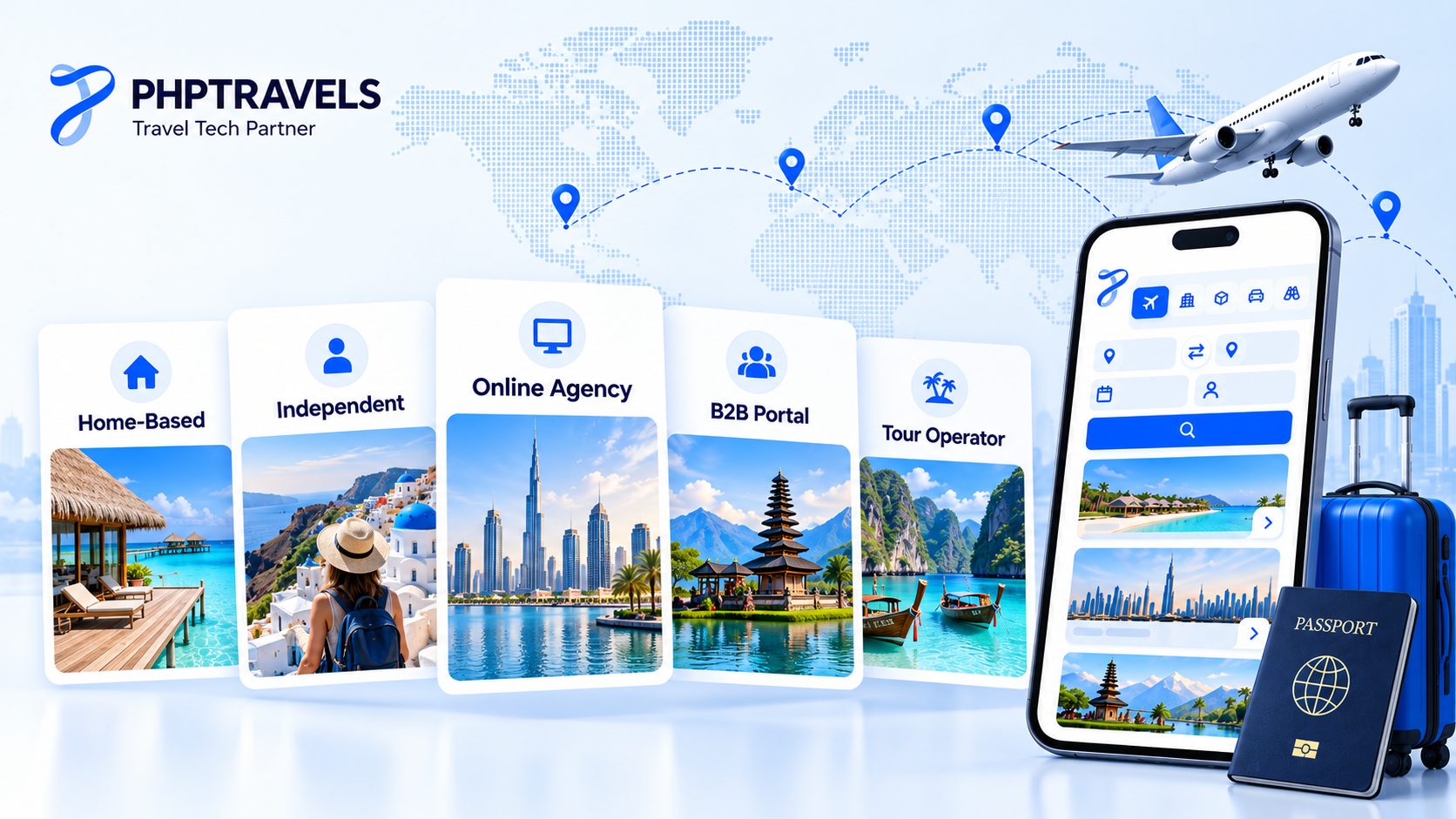
The economics depend heavily on the model. A home based travel agency business plan should look very different from an online travel agency business plan built around supplier APIs and automated bookings.
| Agency model | How it earns | Upfront capital | Main risk | What the plan must prove |
|---|---|---|---|---|
| Home-based agent under a host agency | Commissions and service fees, shared with the host | Low | Too few sales | You can find enough clients at a low acquisition cost |
| Independent agency (own accreditation or consolidator access) | Commissions, markups, service fees, packages | Medium | Supplier access, credit and overheads | You can sell enough while managing suppliers and compliance |
| Online travel agency (OTA) | Booking margins, markups, fees, ancillaries | Medium to high | Technology and customer acquisition | Booking volume can cover technology, marketing and support costs |
| B2B wholesaler / agent portal | Net-rate markups, agent margins, service fees | High | Credit exposure and supplier competitiveness | You can sign productive sub-agents and control credit |
| Tour operator / DMC | Package and contracting margin, transfers, activities | Medium to high | Inventory commitments and delivery | Your packages are competitive and deliverable |
Still choosing? Compare these travel business startup ideas, or read the guide to setting up an online travel agency for a digital-first model.
The 10 Sections of a Travel Agency Business Plan

A strong travel agency business plan needs evidence, assumptions and clear decisions, not complicated language. The SBA lists nine common sections for a traditional plan; the ten below adapt them to travel by giving customers, competition, suppliers and operations their own sections, because that is where travel plans usually fail. The examples use a fictional agency, BlueDune Travels.
1. Executive Summary
Summarize what the agency sells, who it serves, how it earns and what it aims to achieve. If you are raising money, state the amount and its use. Write it last.
Example: BlueDune Travels is a Dubai-based agency specialising in family holidays from the UAE to Southeast Asia and Europe, earning through package margins and booking service fees.
2. Company Overview
Explain the legal entity, ownership, location, business model and market, whether you work from home, an office or online, and any licences or planned accreditation.
Example: BlueDune Travels will operate as a UAE-registered travel agency, selling online with a small customer-service office.
3. Market Analysis
Define the market you will actually compete in, not the entire global travel industry: outbound, domestic, business travel or whichever segment affects you.
Example: BlueDune Travels will analyse outbound family travel from Dubai rather than using global tourism growth as its market-size figure.
4. Target Customers
Define two or three customer segments by behaviour, budget, location and travel need. “Everyone who travels” is not a target market.
Example: The primary customer is a UAE-based family taking one or two international leisure trips a year and wanting flights, hotels, transfers and visas handled in one transaction.
5. Competition and Positioning
Identify direct competitors and indirect ones such as airline sites, hotel sites and large OTAs, then explain why a traveller would book with you.
Example: BlueDune Travels will compete on family itinerary planning and responsive after-sales support rather than the lowest airfare on every route.
6. Services and Suppliers
List what you will sell (flights, hotels, tours, transfers, visas, insurance, cruises or packages), then explain where the inventory comes from: a host agency, GDS, consolidator, bedbank, DMC or direct supplier API.
Example: BlueDune Travels will initially sell flights through an approved consolidator and source hotels from contracted bedbank inventory.
7. Marketing and Sales
Document how customers will find you (SEO, paid search, social, referrals, corporate sales, WhatsApp, partnerships) and how enquiries become bookings. Tie each channel to your economics: many enquiries are not profitable if few convert.
Example: BlueDune Travels will generate leads through destination-focused search content, paid campaigns and repeat-customer referrals.
8. Operations and Technology
Explain how quotes, reservations, payments, ticketing, vouchers, changes and refunds will be handled, and which booking software, CRM, accounting and payment tools you will use.
Example: Every booking will be stored centrally with its payment status, supplier reference and customer messages.
A dedicated travel agency CRM becomes important once enquiries arrive from several channels.
9. Management Team
Name founders and key staff, their responsibilities and relevant experience. If a capability is missing, say how you will hire or outsource it.
Example: BlueDune Travels will separate sales, booking operations and finance duties from day one, even if some staff cover two roles.
10. Financial Plan
Show assumptions, not unexplained targets: booking volume, average booking value, retained margin, fees, fixed and variable costs, startup investment, cash flow and break-even. The SBA suggests monthly or quarterly projections for year one, so good travel agency financial projections start month by month.
Example: BlueDune Travels will model profit as bookings × average booking value × retained margin, with conservative, expected and stronger-demand scenarios.
Market and Customer Analysis That Holds Up

Market analysis becomes useful when it moves from “travel is a large industry” to “these customers in this market are likely to buy this product.” Start with credible public data. The UN Tourism World Tourism Barometer tracks short-term international tourism trends for destinations and source markets, and the UN Tourism Data Dashboard gives inbound and outbound indicators by country. WTTC Economic Impact Research publishes annual reports on the economic and employment impact of travel and tourism for 184 countries and economies.
Then go national: tourism ministries, airport authorities, immigration data and statistics offices. For a US plan, the Bureau of Labor Statistics travel-agent profile covers the occupation rather than consumer demand. It counts about 61,500 US travel-agent jobs in 2025 with little or no change projected to 2035, which is useful context for a staffing or competition section, not a demand forecast.
Build two or three customer personas
Each persona should answer:
- Where do they live, and what do they book, how often?
- What is their typical transaction size?
- Why would they use an agency, and what stops them booking?
- Where can you reach them?
A corporate SME traveller and a family holiday buyer may buy the same flight but need completely different sales processes.
Analyse competitors like a customer
Search the routes, hotels or packages you intend to sell and record each competitor’s price, service fee, cancellation terms, payment methods, response time, inclusions, reviews and after-sales support. Do not just write “competitors charge too much”: test identical dates and products, and keep screenshots as evidence.
Revenue Model: Commissions, Markups, Service Fees and Add-ons
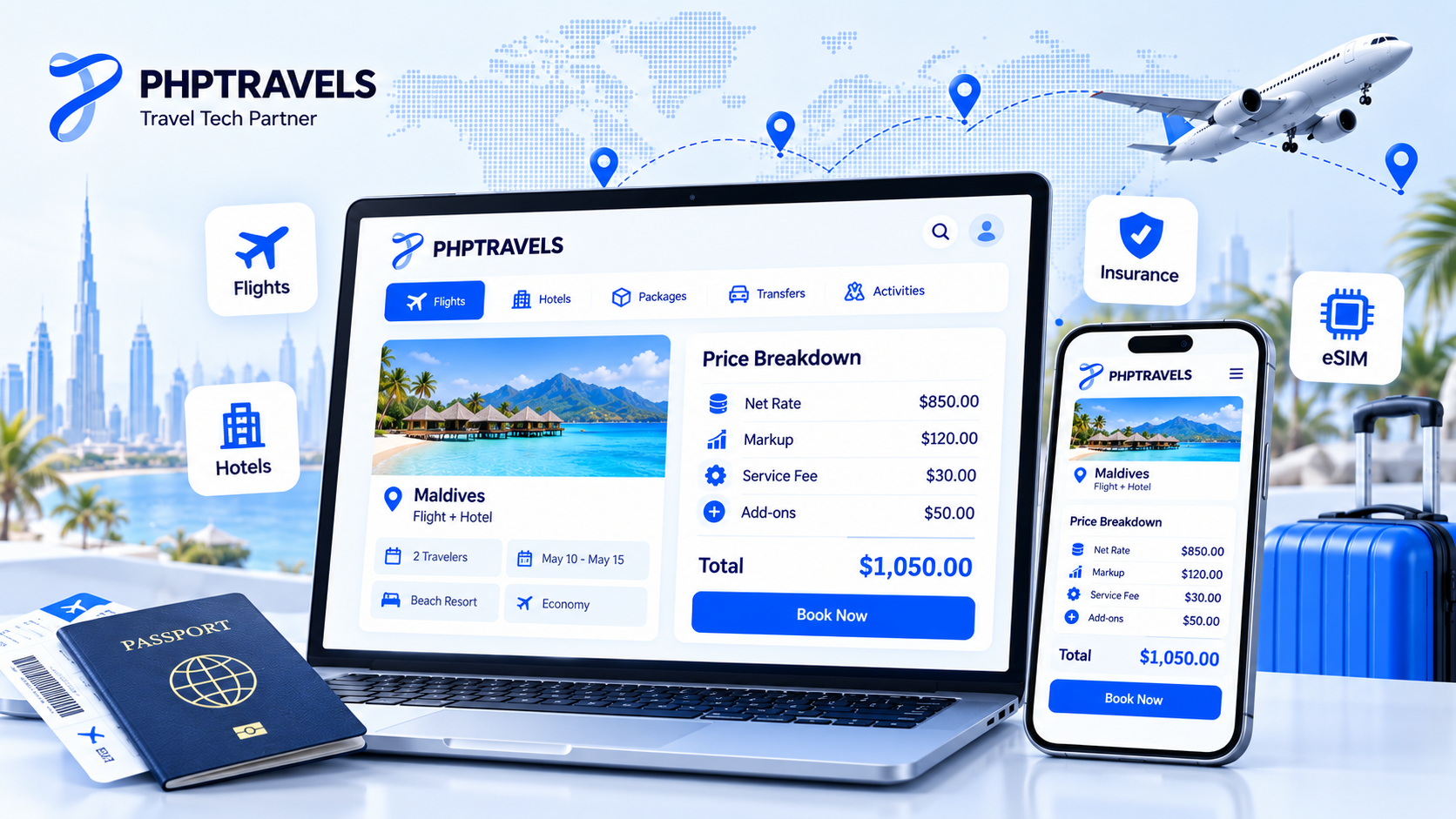
Your travel agency business plan should show exactly where gross profit comes from.
Supplier commissions
If a supplier pays 10% commission on a $1,000 booking:
$1,000 × 10% = $100 gross commission
Rates differ by supplier, product, market and contract, so use the rates in your actual agreements.
Net-rate markups
Suppose a hotel supplier gives you a room at $800 net and you sell it for $880:
$880 selling price - $800 supplier cost = $80 gross margin
Here your margin is set by your selling price rather than paid to you afterwards as commission.
Service fees
You may charge a fixed booking or professional-service fee:
$35 service fee × 100 bookings = $3,500 fee revenue
This matters most for air. Depending on the carrier, market and agreement, airlines may pay limited or no base commission, so many agencies rely on service fees, negotiated incentives or markups; the BLS notes that many travel agents’ earnings depend on commissions and service fees.
Add-ons and ancillaries
Additional products can include travel insurance, airport transfers, activities, eSIMs, visa assistance and seat or baggage services. A customer booking a flight and hotel can therefore produce several separate margins.
See how travel agencies make money for a deeper revenue breakdown.
Financial Plan: A Worked 12-Month Example
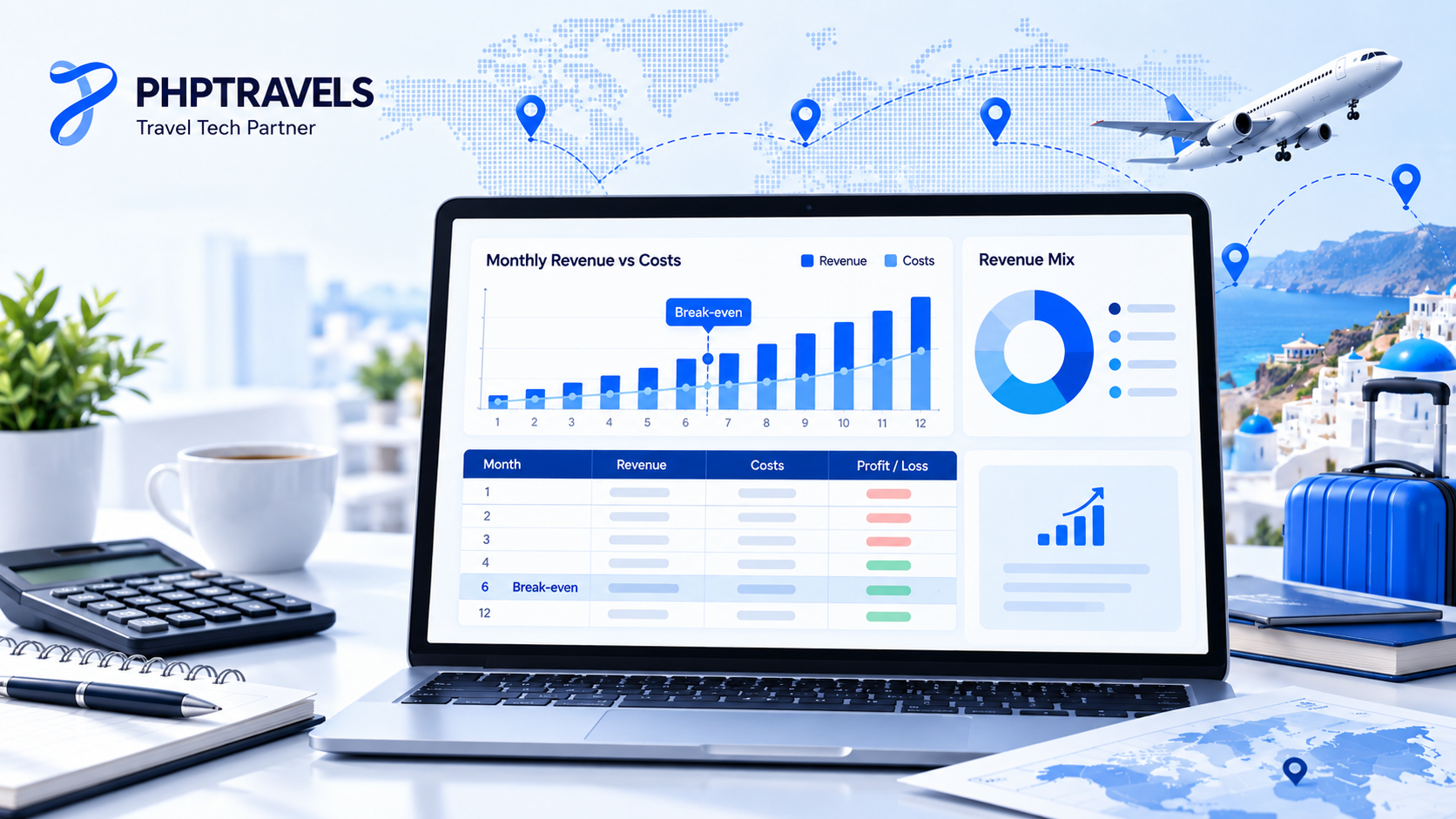
The figures below are illustrative assumptions only. They are not travel-industry averages or expected results. Replace each one with numbers from your own market, supplier contracts and model. Two definitions keep the model honest:
- Booking sales is the total amount customers pay. It is not your revenue.
- Retained margin is what you keep after paying the supplier, any host split and card-processing fees.
Monthly gross profit = Bookings × Average booking value × Retained margin
Break-even bookings = Monthly fixed costs ÷ Gross profit per booking
Variant A: Home-based host agent
Assumptions:
- Average booking value: $1,500
- Retained margin after the host’s share: 7%
- Gross profit per booking: $1,500 × 7% = $105
- Monthly fixed costs: $2,400 every month (host fee $100, software and website $200, marketing $1,500, phone and admin $250, accounting, licences and insurance $350). The owner’s own pay is not included.
Break-even: $2,400 ÷ $105 = 22.9, so the agency needs about 23 bookings a month.
| Month | Bookings | Booking sales | Gross profit at 7% | Monthly result | Cumulative |
|---|---|---|---|---|---|
| 1 | 12 | $18,000 | $1,260 | -$1,140 | -$1,140 |
| 2 | 15 | $22,500 | $1,575 | -$825 | -$1,965 |
| 3 | 18 | $27,000 | $1,890 | -$510 | -$2,475 |
| 4 | 21 | $31,500 | $2,205 | -$195 | -$2,670 |
| 5 | 24 | $36,000 | $2,520 | $120 | -$2,550 |
| 6 | 27 | $40,500 | $2,835 | $435 | -$2,115 |
| 7 | 30 | $45,000 | $3,150 | $750 | -$1,365 |
| 8 | 30 | $45,000 | $3,150 | $750 | -$615 |
| 9 | 32 | $48,000 | $3,360 | $960 | $345 |
| 10 | 34 | $51,000 | $3,570 | $1,170 | $1,515 |
| 11 | 35 | $52,500 | $3,675 | $1,275 | $2,790 |
| 12 | 36 | $54,000 | $3,780 | $1,380 | $4,170 |
Under these assumptions, the first profitable month is month 5, the cumulative loss peaks at $2,670 after month 4 and is recovered in month 9. Year one: 314 bookings and $471,000 in booking sales, but only $32,970 gross profit and $4,170 left after fixed costs, before the owner is paid. That gap is why booking value is not revenue.
Variant B: Online travel agency with its own booking engine
Assumptions:
- Average booking value: $1,800
- Retained margin: 8%
- Gross profit per booking: $1,800 × 8% = $144
- Monthly fixed costs: $7,200 every month (two reservations and support staff $3,600, marketing $2,000, hosting and software $600, supplier-connection and other service fees $400, accounting and admin $600)
- The one-time technology licence is treated as startup investment, not a monthly cost.
Break-even: $7,200 ÷ $144 = 50 bookings a month
| Month | Bookings | Booking sales | Gross profit at 8% | Monthly result | Cumulative |
|---|---|---|---|---|---|
| 1 | 20 | $36,000 | $2,880 | -$4,320 | -$4,320 |
| 2 | 25 | $45,000 | $3,600 | -$3,600 | -$7,920 |
| 3 | 30 | $54,000 | $4,320 | -$2,880 | -$10,800 |
| 4 | 35 | $63,000 | $5,040 | -$2,160 | -$12,960 |
| 5 | 40 | $72,000 | $5,760 | -$1,440 | -$14,400 |
| 6 | 45 | $81,000 | $6,480 | -$720 | -$15,120 |
| 7 | 50 | $90,000 | $7,200 | $0 | -$15,120 |
| 8 | 55 | $99,000 | $7,920 | $720 | -$14,400 |
| 9 | 60 | $108,000 | $8,640 | $1,440 | -$12,960 |
| 10 | 65 | $117,000 | $9,360 | $2,160 | -$10,800 |
| 11 | 70 | $126,000 | $10,080 | $2,880 | -$7,920 |
| 12 | 75 | $135,000 | $10,800 | $3,600 | -$4,320 |
Under these assumptions, the OTA breaks even in month 7 and is profitable from month 8, yet ends year one $4,320 behind because early losses peak at $15,120. Add a one-time software licence of, say, $4,999 and you need about $20,119 before the business funds itself, excluding launch marketing, supplier deposits and a contingency buffer.
Test a downside scenario
Keep Variant B’s bookings but cut the retained margin from 8% to 6%. Gross profit per booking falls to $108 and break-even rises to $7,200 ÷ $108 = 66.7, about 67 bookings a month. The first profitable month moves from month 8 to month 11, and year one ends $24,840 behind instead of $4,320. A two-point margin change does more damage than most founders expect, which is why lenders look for this scenario. Neither example is a forecast for your agency.
Do not confuse profit with cash flow
A booking can be profitable and still create a cash problem. Model when the customer pays, when the supplier must be paid, credit limits, deposits, refunds, chargebacks and gateway settlement times. Seasonality matters too: do not divide annual bookings by 12 if your market has strong peak and low seasons.
For a detailed cost breakdown, read the guide to travel agency startup costs.
Operations and Technology Plan
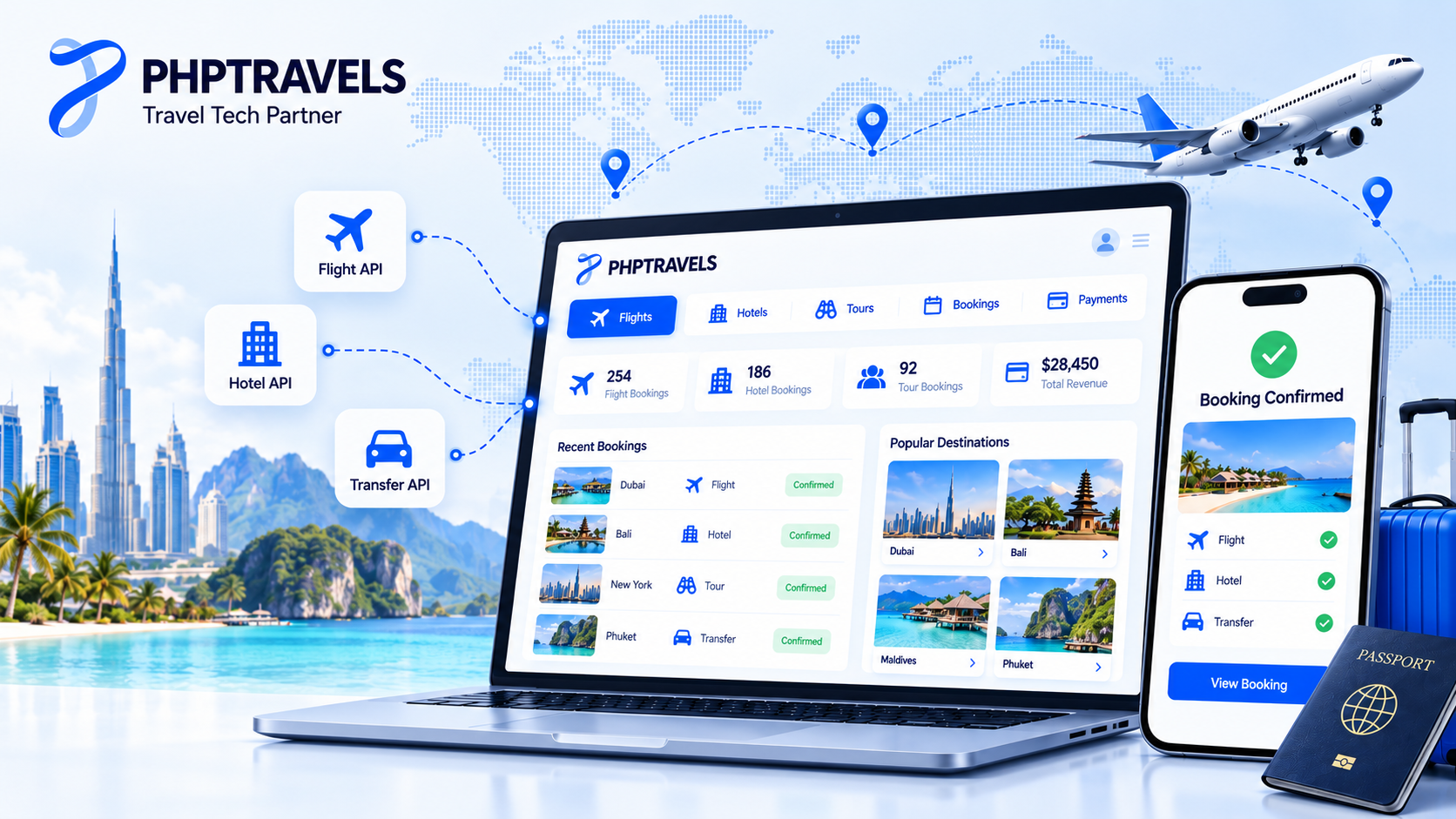
Document the complete booking workflow:
Lead → Quote → Booking → Payment → Ticket/Voucher → After-sales
Name who owns each step and which system records it. Your supplier plan may combine GDS connections, consolidators, bedbanks, DMCs and direct APIs; the operations plan also covers payments, accounting, CRM, refunds, user permissions and backups.
Check whether your jurisdiction requires a travel licence, seller registration or financial guarantee; see this guide to travel-agent licensing. If airline accreditation is relevant, review the IATA Travel Agency Program and our guide to IATA accreditation; requirements vary by market and accreditation type. Industry identifiers are explained in this guide to travel agent ID cards.
For the technology line, PHPTRAVELS is licensed travel booking software that provides a B2C storefront, a B2B travel portal, a back office, supplier API integrations and payment-gateway connections. You keep your branding, supplier contracts and margins, and the licence is not charged as a percentage of bookings. At the time of writing, the PHPTRAVELS pricing page lists one-time Startup, Agency and Enterprise plans at $2,499, $4,999 and $9,999, with tailored packages (the B2B agent portal is included in Enterprise); hosting, maintenance and supplier fees are separate, and this software cost breakdown shows the other lines to budget. Confirm prices before budgeting. PHPTRAVELS supplies the booking technology, not IATA accreditation, airline ticketing authority, supplier contracts or credit, or insurance underwriting.
Free Travel Agency Business Plan Template (Copy and Fill In)
Copy this travel agency business plan template into a document and answer every prompt. A line you cannot answer yet is a task, not a gap to hide.
| Section | Fill in |
|---|---|
| Executive summary | Agency name and location; business model (host agent, independent, OTA, B2B, tour operator); main products; target customer; sales channels; revenue model (commission, markup, fee or mix); funding required and its use; 12-month goal |
| Company overview | Legal structure and owners; home, office or online setup; geographic market; licences and registrations needed; accreditation plans and timing |
| Market analysis | Market served; national tourism indicators used (with source); outbound, domestic or business travel trends; demand evidence; regulatory or economic factors |
| Target customers (per persona) | Location and travel need; typical products and trip value; buying trigger; main concern; acquisition channel |
| Competition and positioning | Direct competitors; large OTA and supplier-direct alternatives; prices and fees found; service gaps; why customers should choose you |
| Services and suppliers | Flights, hotels, tours, transfers, packages; insurance, visas and other ancillaries; supplier, consolidator or GDS per product; backup suppliers |
| Marketing and sales | Channels (SEO, paid, social, referral, partnerships, corporate); lead-to-booking process; target cost per customer; repeat-booking plan |
| Operations and technology | Booking system and CRM; payment gateways and accounting; supplier connections; quote and ticketing/voucher process; support, changes and refunds; backup and security |
| Management team | Founder and owners of sales, reservations, finance, marketing and technology; external contractors |
| Financial plan | Startup investment; monthly fixed and variable costs; average booking value and retained margin; fee income; booking target and break-even volume; working capital (lowest cumulative cash point); base, downside and growth scenarios |
A good travel agency business plan example makes these assumptions visible enough that someone else could reproduce your calculations.
10 mistakes lenders and host agencies notice
- No specific niche. “We sell travel worldwide” gives no reason to choose you.
- No break-even calculation. Revenue targets without the required booking volume are incomplete.
- Treating booking value as revenue. A $5,000 holiday sale does not mean the agency earned $5,000.
- Ignoring cash timing. Supplier payments, refunds and chargebacks strain working capital.
- Generic global tourism statistics. Global growth does not prove demand for your product.
- Unverified supplier assumptions. An API, credit facility or commission rate is not guaranteed until it is contracted.
- Ignoring licences and regulations. Requirements differ by country, state and business activity.
- No acquisition economics. Traffic and followers are not profitable bookings.
- Overestimating early volume. Model slower growth as well as your preferred scenario.
- No contingency plan. Supplier downtime, schedule changes and cancellations are normal in travel.
FAQ
How long should a travel agency business plan be?
There is no set length. A small owner-run agency can explain its model briefly, while a lender-backed OTA or B2B wholesaler needs detailed research and financial schedules. The SBA notes traditional plans can run to dozens of pages, while lean plans are often one page.
Do I need one for a home-based agency?
Yes, even if nobody asks. A home based travel agency business plan settles your niche, host costs, expected commissions, marketing budget and the bookings needed to cover expenses.
What financial projections should it include?
At minimum: monthly booking volume, average booking value, retained margin, service-fee income, fixed and variable costs, cash flow and break-even. Strong travel agency financial projections also include conservative, expected and higher-growth scenarios.
How much does it cost to launch a travel agency?
It depends on whether you work under a host, open an office, build an OTA or run a B2B business. See the guide to travel agency startup costs rather than relying on one generic figure.
Do I need a licence or IATA before writing the plan?
No. The plan should list which licences, registrations and accreditations you need and when you expect them. IATA accreditation is separate from business or travel licensing, and not every agency needs it.
Conclusion
A useful travel agency business plan connects your customer, product, suppliers, revenue model and operating costs into one testable commercial model. Start with realistic assumptions, calculate the bookings and cash needed to break even, and update the plan as real sales replace estimates. If you are planning an OTA, B2B agent portal or supplier-connected booking platform, explore the PHPTRAVELS live demo and check current PHPTRAVELS pricing when you build your technology budget.