Tourist attractions are the places, features, activities, events, and experiences that give travelers a reason to visit a destination.
They can be natural, such as mountains and waterfalls; cultural, such as museums and historic districts; purpose-built, such as theme parks; or event-based, such as festivals and sporting events.
For travel agencies and tour operators, understanding the different types of tourist attractions is more than destination knowledge. Attractions influence itinerary design, tour duration, transportation, seasonal pricing, target audiences, and the way a destination is marketed.
It is also useful to separate attractions from related tourism concepts. Types of tourism classify travel by purpose or activity. Types of tourists describe different traveler profiles and behaviors. Types of tours describe how travel experiences are organized and sold.
According to the UN Tourism glossary, tourism terminology also distinguishes concepts such as visitors, tourism activities, destinations, trips, and tourism products. In practical agency operations, a tourist attraction usually represents something a visitor wants to see, experience, attend, or participate in during a trip.
What Are Tourist Attractions?
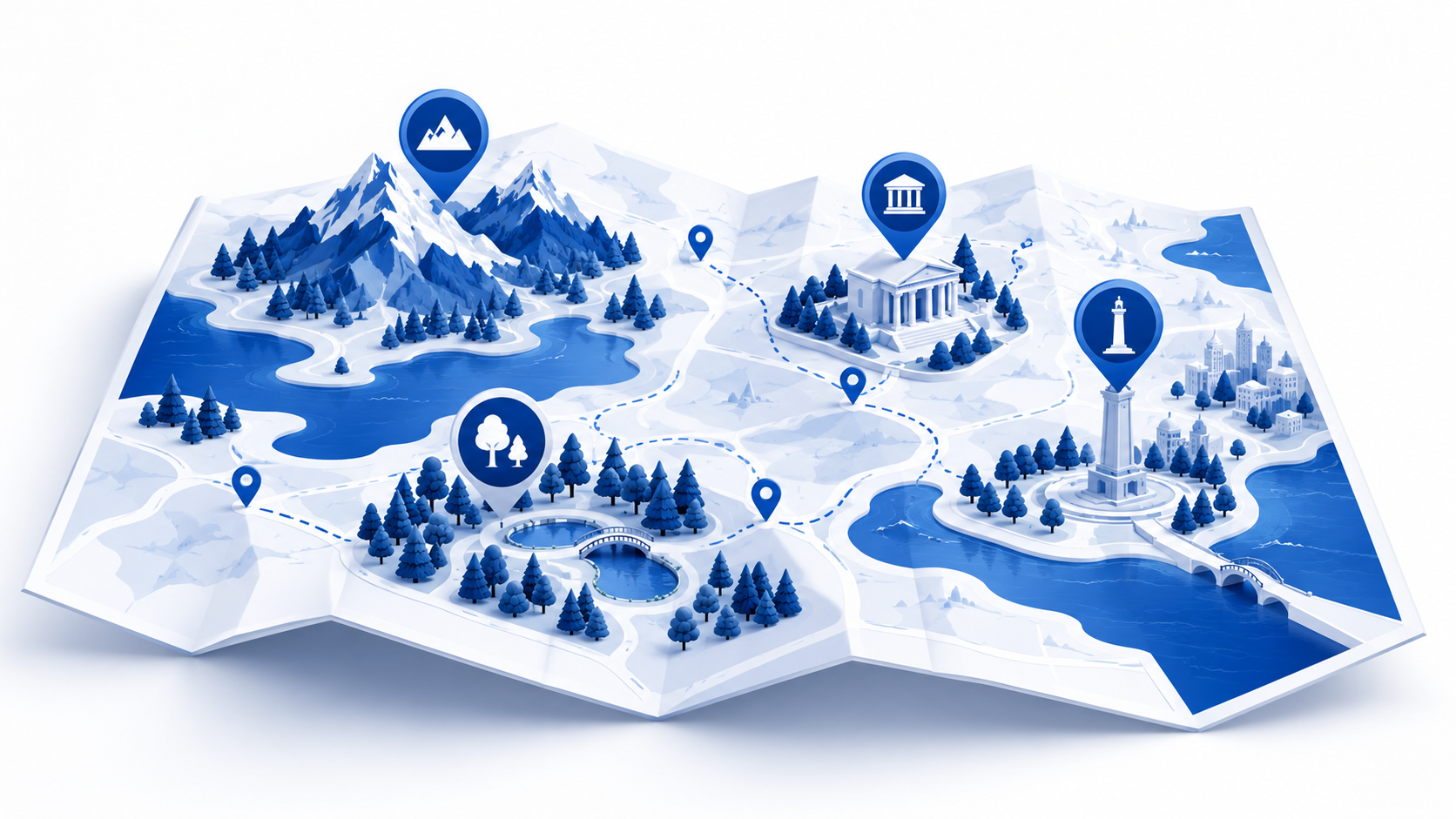
A tourist attraction is a place, feature, activity, or event that draws visitors because of its natural, cultural, historical, recreational, educational, religious, or entertainment value.
Some attractions are the primary reason for travel. A traveler may fly to Egypt specifically to see the Pyramids of Giza or visit Tanzania primarily for a safari.
Others support a broader itinerary. A traveler visiting Paris may combine the Eiffel Tower, museums, food experiences, shopping streets, river cruises, and day trips into one destination experience.
For agencies, this distinction matters.
A primary attraction can sell the destination itself.
A secondary attraction adds value, increases trip duration, improves an itinerary, or creates opportunities for additional revenue.
Attractions can also be:
- Free or ticketed
- Public or privately operated
- Seasonal or year-round
- Fixed-location or event-based
- Self-guided or guided
- Suitable for individuals, private groups, or large groups
The category affects how an agency packages and operates it.
Natural Tourist Attractions

Natural attractions are created primarily by nature rather than built specifically for tourism.
Common examples include:
- Mountains
- Beaches
- Islands
- Lakes
- Rivers
- Waterfalls
- Caves
- Deserts
- Forests
- National parks
- Wildlife habitats
- Geological formations
Examples include the Grand Canyon in the United States, the Swiss Alps, Victoria Falls in southern Africa, the Maldives' islands, and the Himalayan mountain regions of South Asia.
Natural attractions often support several tourism segments simultaneously.
A mountain region might attract trekkers, photographers, families, wildlife enthusiasts, campers, and luxury travelers staying in remote resorts.
What agencies must consider
Natural attractions usually require more operational planning than simply issuing an entrance ticket.
Agencies may need to manage:
- Weather conditions
- Seasonal accessibility
- Transport
- Guides
- Equipment
- Permits
- Physical difficulty
- Safety requirements
- Accommodation near remote areas
The attraction may be free, but the package surrounding it can still contain transportation, guides, accommodation, meals, transfers, and activities.
Cultural and Historical Attractions
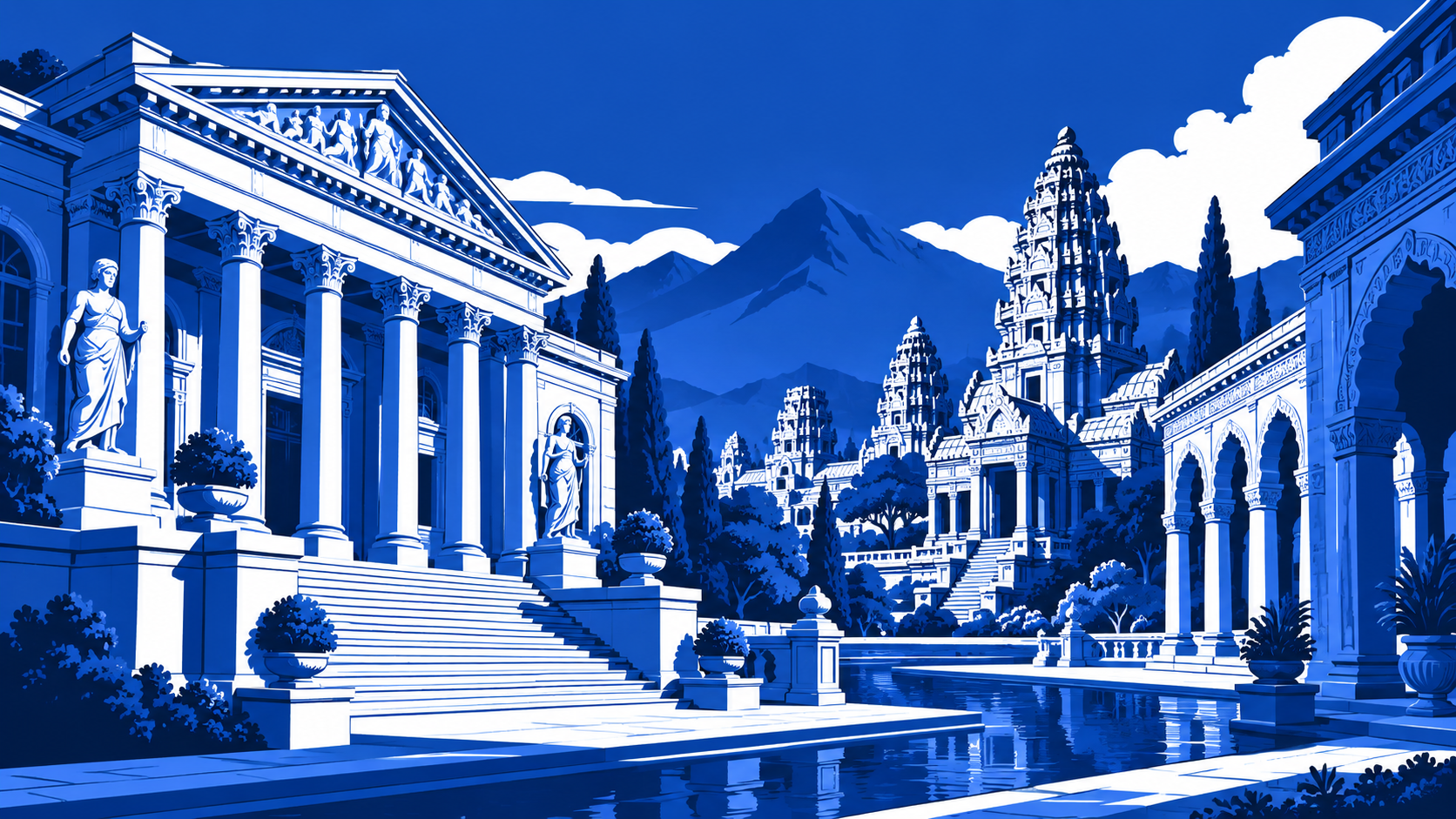
Cultural attractions allow visitors to experience the history, heritage, traditions, art, architecture, beliefs, or way of life of a destination.
Examples include:
- Museums
- Archaeological sites
- Historic cities
- Palaces
- Castles
- Forts
- Heritage districts
- Traditional villages
- Art galleries
- Cultural centers
- Religious monuments
Examples range from Angkor Wat in Cambodia and Petra in Jordan to Kyoto's historic temples and the ancient city areas of Rome.
Some attractions combine cultural and historical significance. Others remain part of living communities rather than functioning purely as tourism sites.
Why these attractions work well in tours
Cultural attractions benefit strongly from interpretation.
A traveler can walk through an old city alone, but a knowledgeable guide can explain the political history, architecture, local traditions, stories, and context behind what the traveler sees.
This allows agencies to create several versions of the same basic attraction:
- Self-guided visit
- Standard guided tour
- Private guide
- Specialist historical tour
- Photography tour
- Food and culture tour
- Premium after-hours experience
The attraction stays the same. The tourism product changes.
Religious and Spiritual Attractions
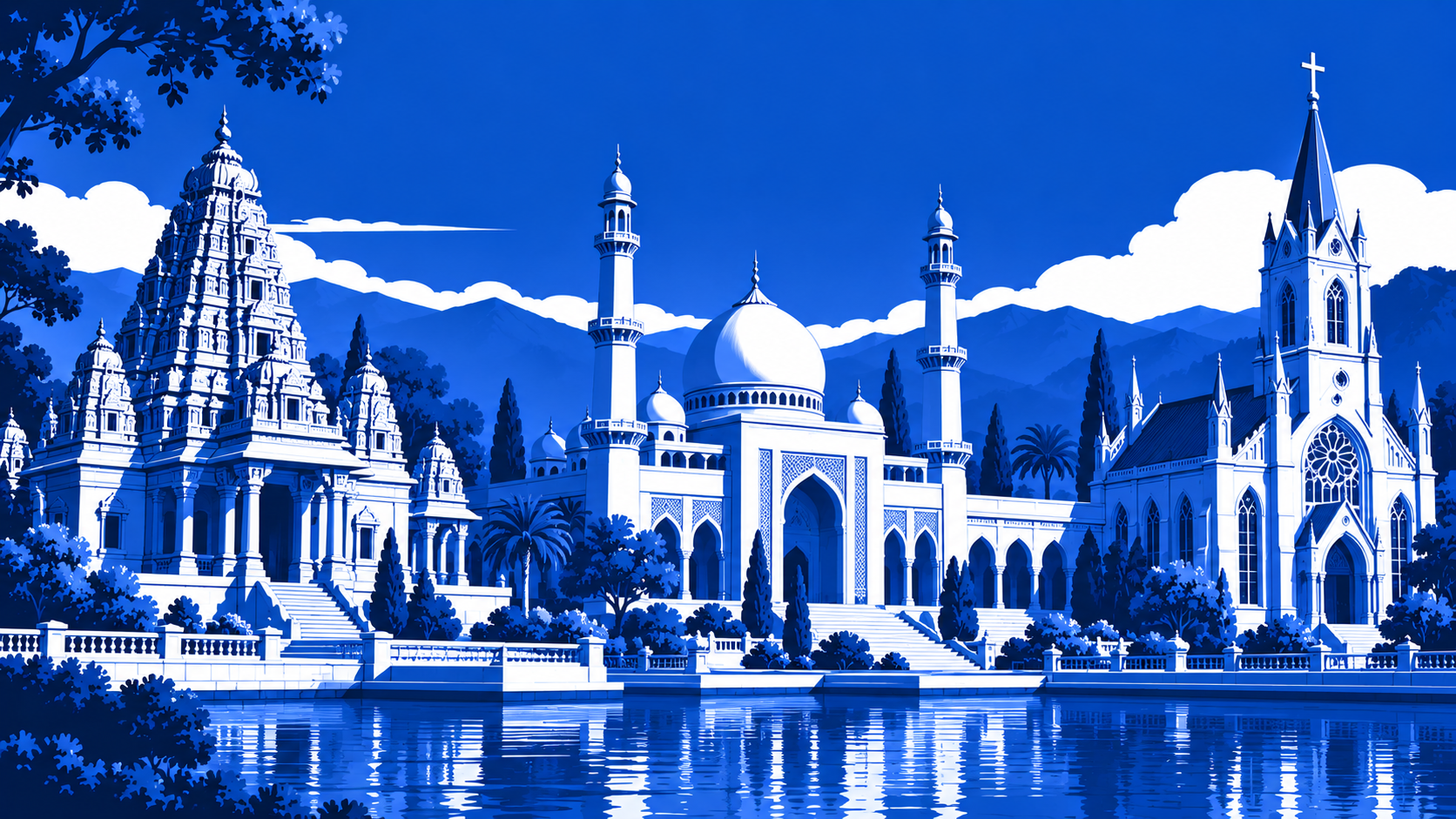
Religious attractions include sacred buildings, pilgrimage destinations, shrines, temples, mosques, churches, monasteries, and locations associated with religious history.
Examples include:
- Makkah and Madinah
- Vatican City
- Jerusalem's sacred sites
- Buddhist temples
- Hindu pilgrimage locations
- Historic churches and monasteries
Religious tourism can differ significantly from ordinary sightseeing because the traveler's primary motivation may be worship, pilgrimage, spiritual reflection, or participation in religious ceremonies.
Packaging religious attractions
Agencies operating in this segment may need to coordinate:
- Appropriate accommodation
- Group transportation
- Religious guides
- Entry permissions
- Fixed pilgrimage schedules
- Meals
- Accessibility requirements
- Group leaders
- Local regulations
The travel experience should also respect religious customs rather than treating every sacred location purely as an entertainment attraction.
Man-Made, Entertainment and Recreational Attractions
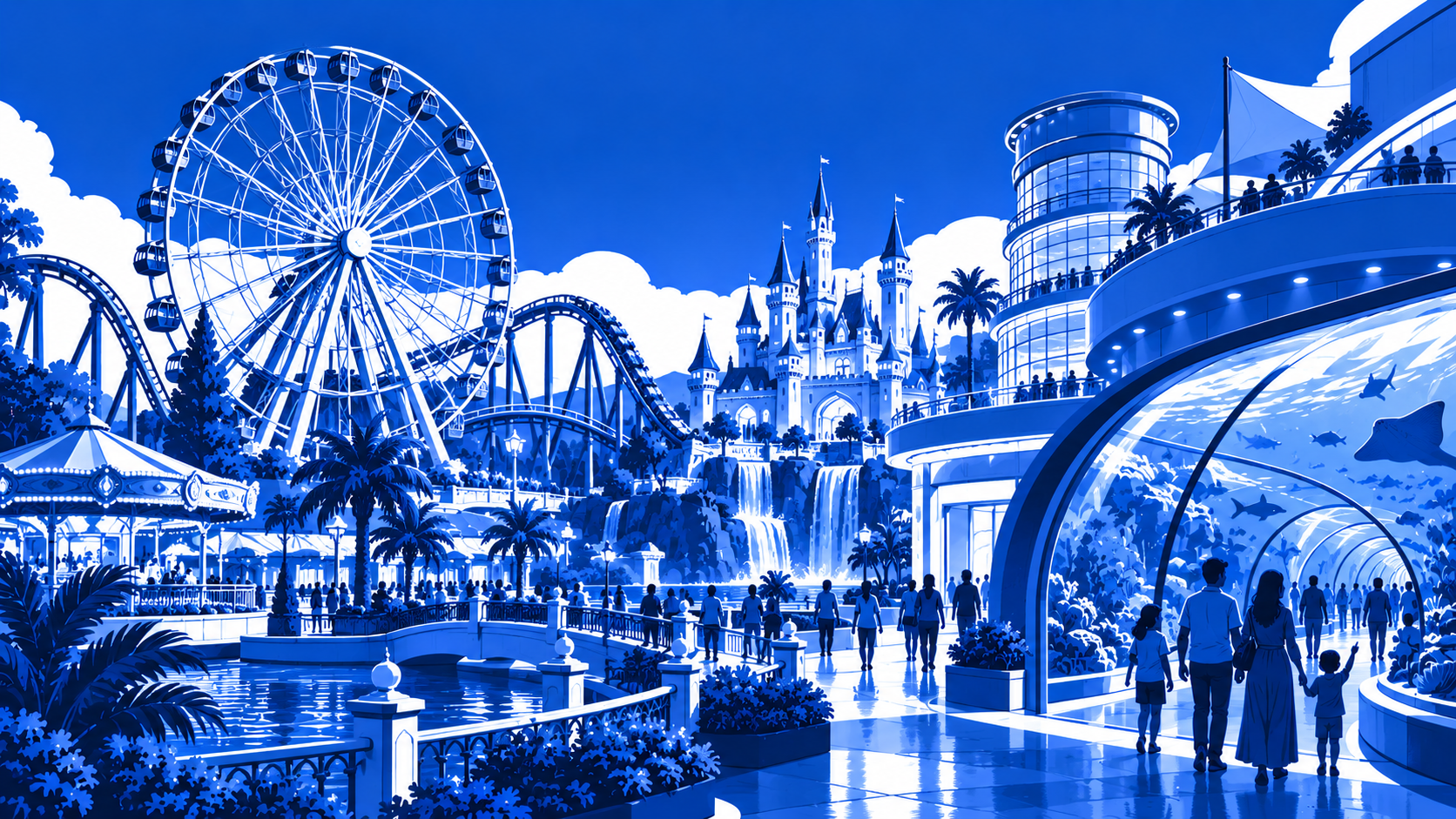
Many major tourist attractions are intentionally built, developed, or adapted for visitors.
These include:
- Theme parks
- Water parks
- Observation towers
- Aquariums
- Zoos
- Entertainment complexes
- Resorts
- Shopping destinations
- Casinos where legally permitted
- Stadiums
- Adventure parks
- Ski resorts
Examples include Disneyland resorts, Universal theme parks, Dubai's major entertainment complexes, and large observation decks in global cities.
These attractions are often easier for agencies to package because they typically operate with defined:
- Opening hours
- Ticket types
- Age rules
- Capacity
- Reservation systems
- Cancellation policies
Attractions can belong to multiple categories
Classification is not always absolute.
A national park can be both a natural attraction and a recreational attraction.
A historic palace can be cultural, architectural, and historical.
A stadium can be a permanent man-made attraction while also hosting temporary event attractions.
For agencies, the useful question is not "Which single category does this belong to?" but "How will the customer experience and book it?"
Industry teaching materials commonly group attractions into practical categories (for example heritage, amusement/entertainment, recreational, and industrial), while noting that real sites often span more than one group (Introduction to Tourism and Hospitality in BC).
| Attraction category | Typical examples | Common traveler motivation | Common agency products |
|---|---|---|---|
| Natural | Mountains, beaches, parks, waterfalls | Nature, scenery, adventure | Excursions, transfers, guides |
| Cultural and historical | Museums, monuments, old cities | Heritage, learning | Guided tours, city passes |
| Religious | Sacred cities, temples, mosques | Pilgrimage, spirituality | Pilgrimage packages, transfers |
| Entertainment | Theme parks, aquariums | Leisure, family fun | Tickets, transfers, packages |
| Recreational | Skiing, hiking, diving | Activity and participation | Equipment, guides, lessons |
| Architectural | Towers, landmarks, buildings | Sightseeing, design | City tours, entry tickets |
| Events | Festivals, concerts, sports | Attend a specific event | Event trips, accommodation |
| Special-interest | Food, film, industrial sites | Personal interests | Themed and niche tours |
Events, Festivals and Temporary Attractions
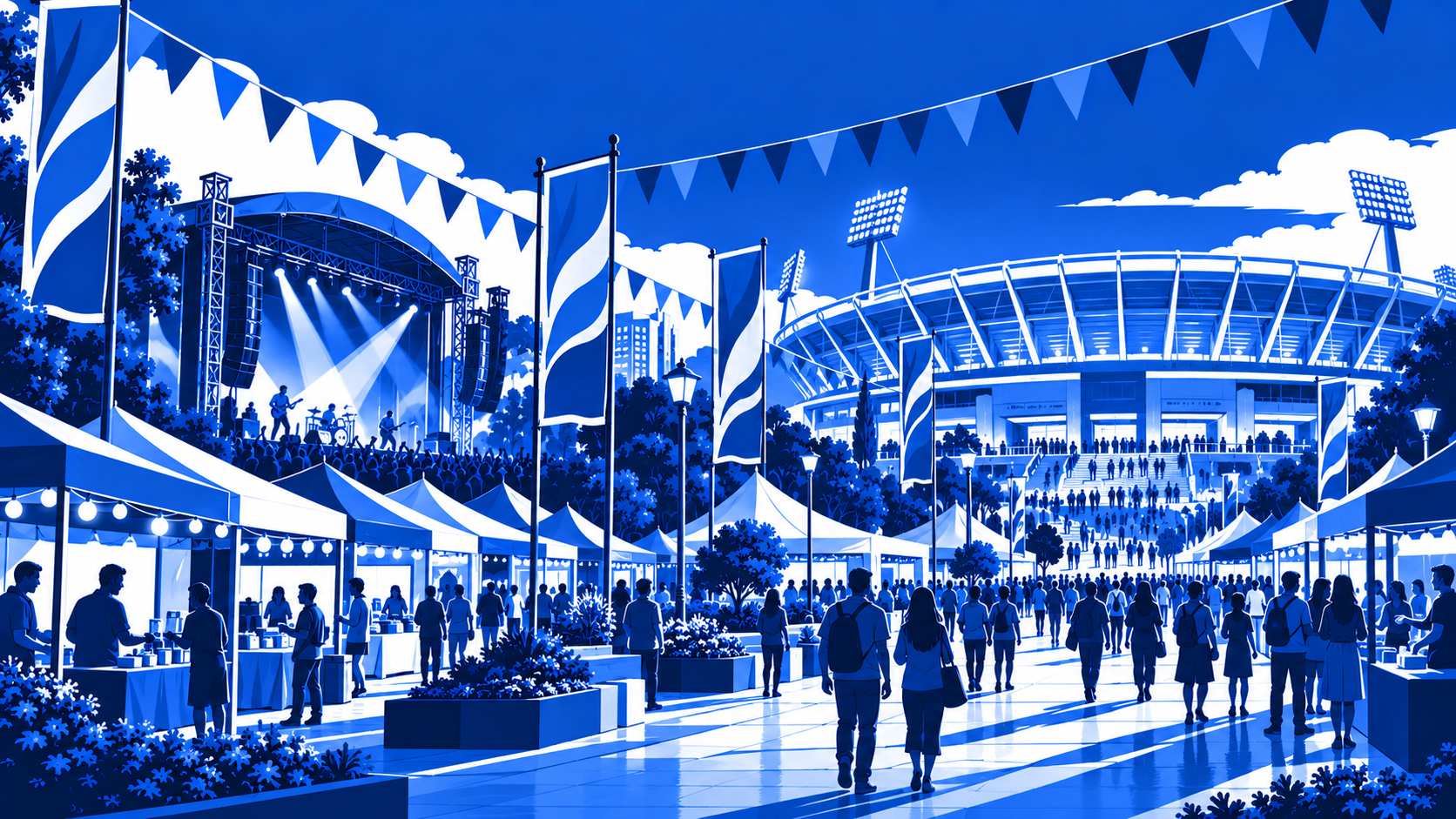
Not every attraction exists permanently.
Events can become major tourist attractions for a particular day, week, season, or year.
Examples include:
- Music festivals
- Cultural festivals
- Religious celebrations
- Sports competitions
- Exhibitions
- Trade shows
- Carnivals
- Seasonal markets
- Food festivals
- International conferences
An event can temporarily become more important than the destination's permanent attractions.
Major football matches, Formula 1 races, concerts, exhibitions, and cultural festivals can create sudden demand for flights, hotels, transfers, tickets, and local activities.
Event attractions require different operations
Agencies should pay particular attention to:
- Fixed dates
- Ticket availability
- Hotel compression
- Cancellation restrictions
- Transport congestion
- Minimum stays
- Group movements
- Supplier deadlines
Unlike a museum that can be visited next month, missing an event date may make the entire trip pointless.
How Travel Agencies Categorize Attractions
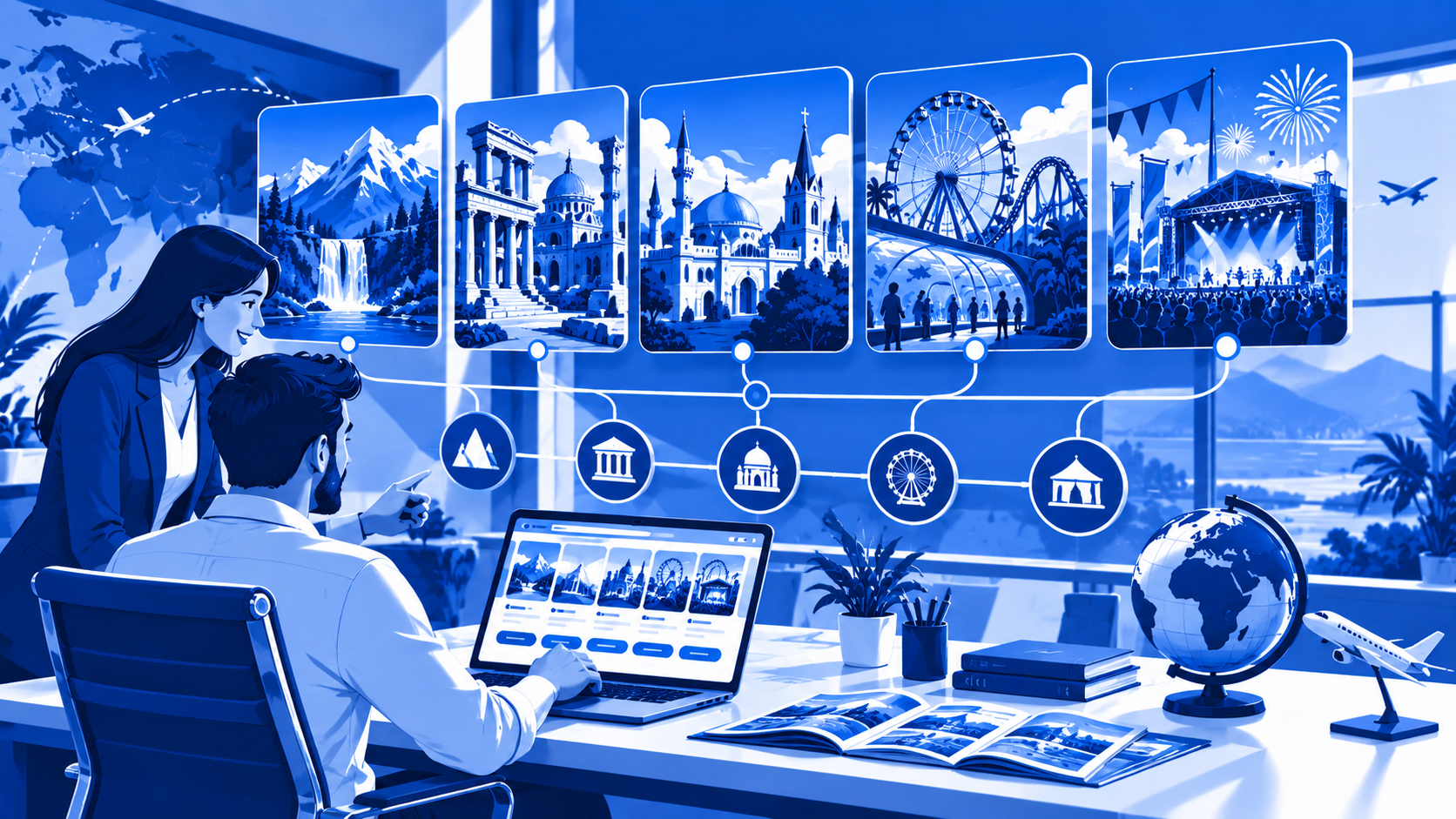
For an agency, categorization should help customers discover products and help staff operate them.
A customer-facing website might organize attractions by categories such as:
- Sightseeing
- Nature
- Adventure
- Culture
- Family
- Theme parks
- Food
- Nightlife
- Religious
- Water activities
Internally, however, the agency needs more operational information.
Each attraction or activity may require:
- Destination
- Location
- Duration
- Available dates
- Capacity
- Supplier
- Cost
- Selling price
- Pickup point
- Cancellation rules
- Child policies
- Inclusions
- Exclusions
- Booking cutoff
- Voucher instructions
This is where structured tour management software becomes more useful than maintaining disconnected attraction information across spreadsheets, messages, and supplier portals.
Good categorization therefore serves two purposes: helping travelers find experiences and helping the agency fulfill bookings correctly.
How Agencies Package Tourist Attractions
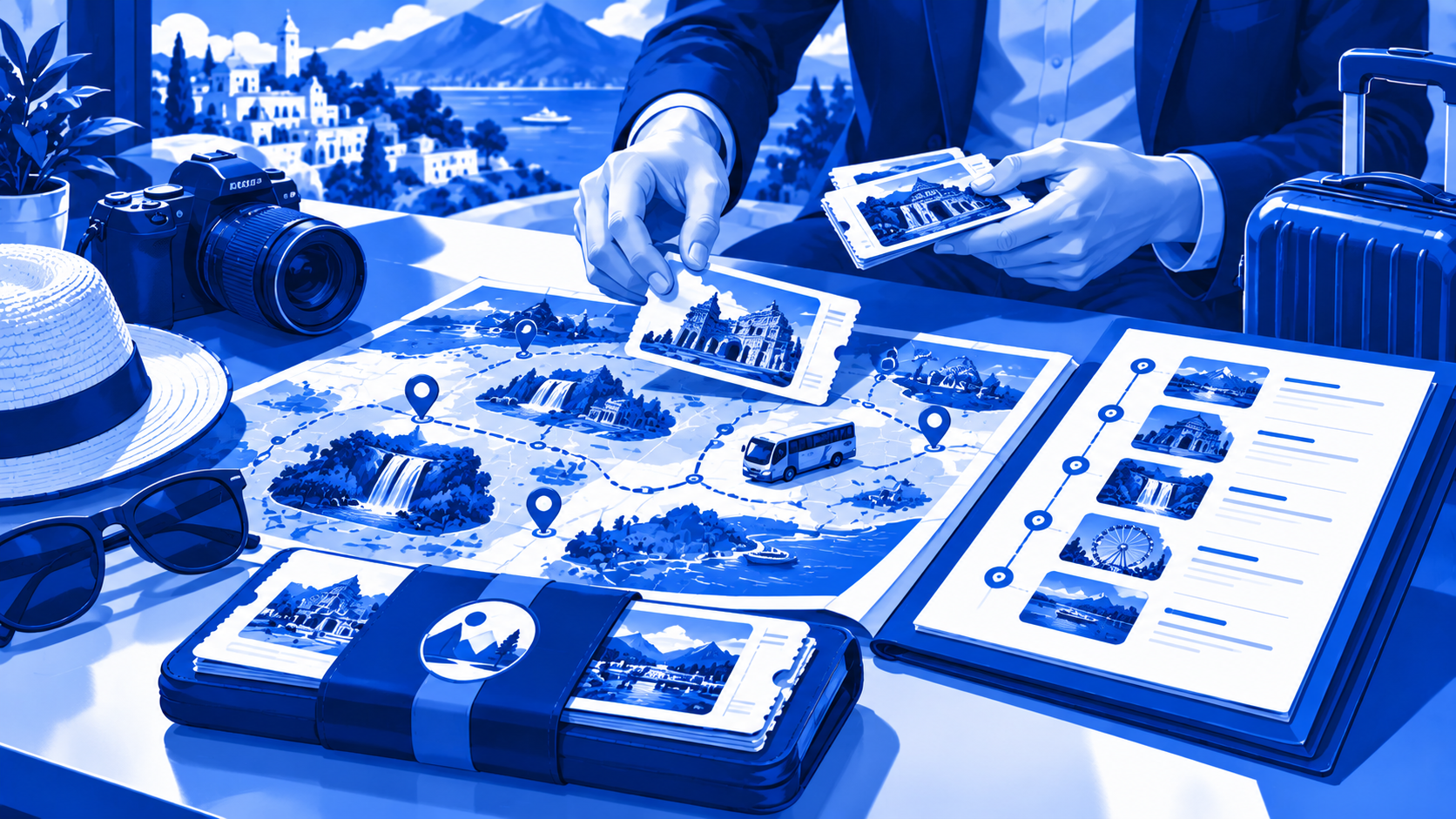
An attraction rarely needs to be sold in isolation.
Travel agencies can turn individual attractions into more valuable tourism products by combining them with services around the visitor experience.
Consider a famous historical site.
The simplest product is an admission ticket.
A more complete product could include:
- Hotel pickup
- Private vehicle
- Entrance ticket
- Licensed guide
- Lunch
- A second nearby attraction
- Return transfer
The customer is no longer buying access to one attraction. They are buying a convenient half-day or full-day experience.
Common packaging models
Single attraction ticket
Suitable for theme parks, museums, observation decks, and entertainment venues.
Attraction plus transfer
Useful when the location is difficult to reach independently.
Guided experience
Adds interpretation, local expertise, and structure.
Multi-attraction city tour
Combines several nearby landmarks into one itinerary.
Day excursion
Packages transport, activities, meals, and sightseeing outside the customer's main destination.
Multi-day itinerary
Uses several attractions as components of a larger tour.
Agencies can also build flexible products where customers choose optional attractions rather than forcing every activity into the base package.
Matching attractions to traveller types
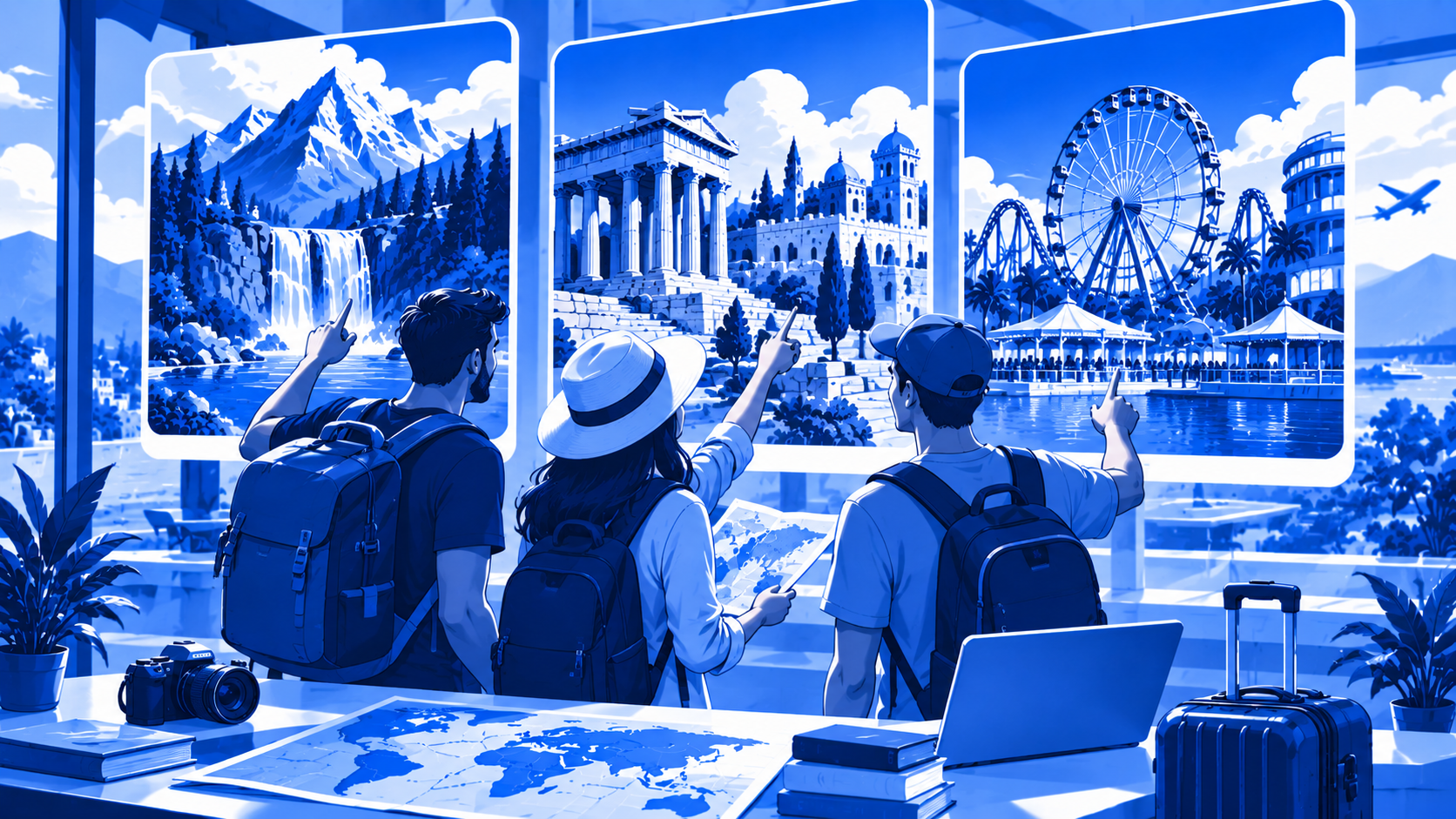
Attraction categories only become commercial when they match who is buying.
A family on a city break often prioritizes entertainment parks, aquariums, and short guided sightseeing. Adventure-oriented travelers lean toward natural and recreational attractions with clear difficulty and safety notes. Culture-focused visitors want museums, heritage districts, and guided interpretation. Faith-based groups need religious sites packaged with respectful logistics rather than entertainment framing.
That matching step is why traveler profiles matter alongside attraction taxonomies. For a deeper look at traveller typologies agencies use in packaging, see types of tourists. The goal here is simpler: pick the attraction category first, then choose the product format from your types of tours playbook.
Selling Tourist Attractions Online
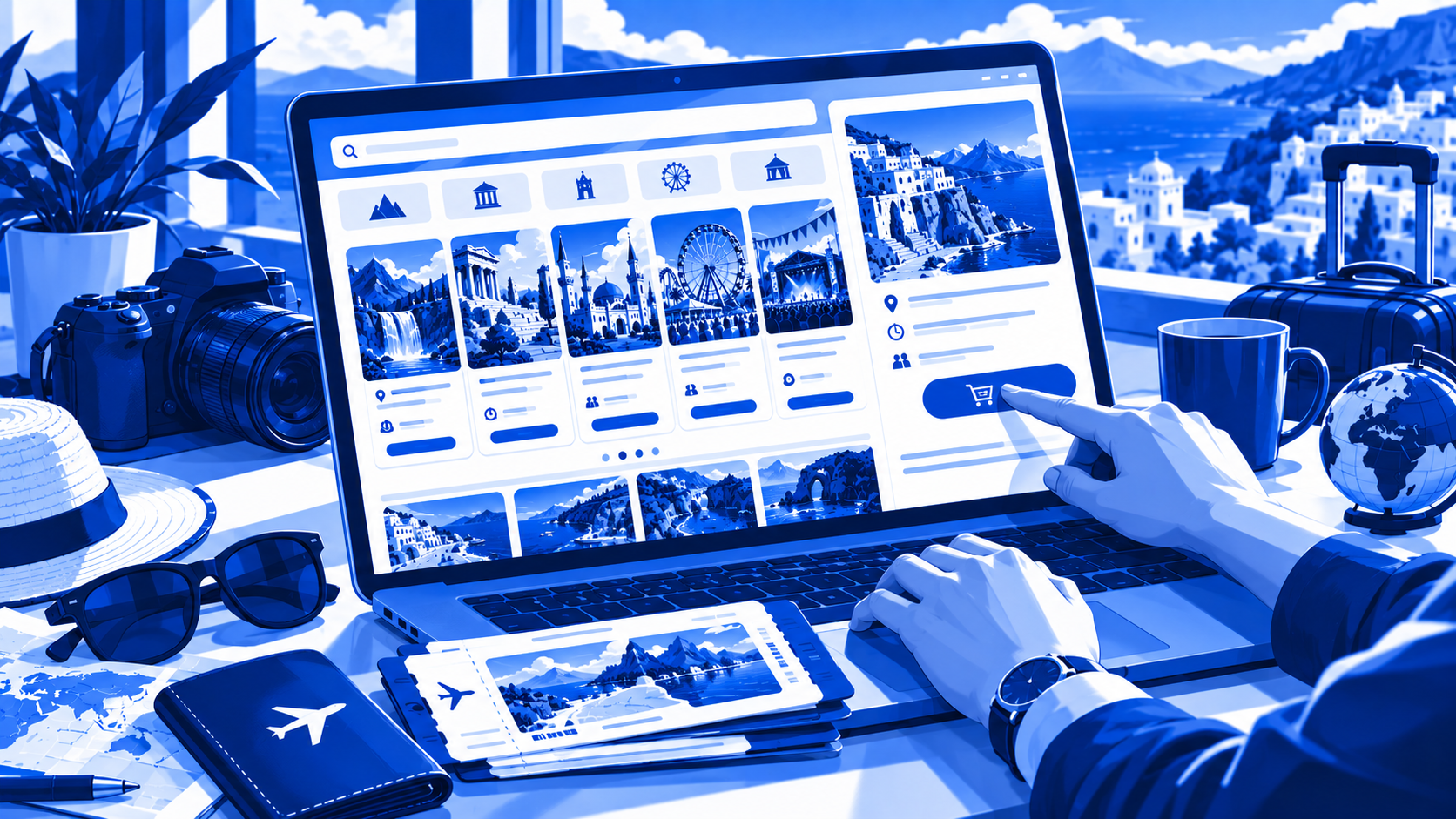
Selling attractions online requires more than placing photographs and a "Book Now" button on a website.
The booking workflow should answer the questions customers normally ask before purchasing:
- What exactly am I booking?
- Which dates are available?
- How long does it take?
- Where does it start?
- Is pickup included?
- What is included in the price?
- What should I bring?
- Can children participate?
- Can I cancel?
- Will I receive a voucher or confirmation?
For scheduled tours and activities, agencies also need to control availability.
A product may operate:
- Every day
- Only on selected weekdays
- At several departure times
- With limited seats
- During certain seasons
- Only when a minimum group size is reached
An online travel booking system can help agencies bring tours, activities, accommodation, transportation, and other travel products into a structured booking workflow instead of handling each inquiry manually.
Technology does not replace the product strategy. The agency still needs strong attractions, reliable suppliers, accurate content, realistic availability, and competitive pricing.
Its role is to make those products easier to discover, sell, confirm, and manage.
Platforms such as PHPTRAVELS are licensed travel booking software for agencies and operators (B2C and/or B2B), not a free inventory marketplace. The Tours module can connect suppliers such as Viator, Tiqets, and Tours BMS, and many operators also load their own attraction and tour products as manual inventory—your supplier contracts and rates remain yours. If you want to see the booking workflow, start with a demo or review pricing. Related reading: tour booking software and tour operator software.
FAQ: Types of Tourist Attractions
What are the main types of tourist attractions?
The major categories include natural attractions, cultural and historical attractions, religious attractions, man-made entertainment attractions, recreational attractions, architectural landmarks, events, and special-interest attractions.
Categories frequently overlap. A historic religious building, for example, can simultaneously be a religious, cultural, historical, and architectural attraction.
What is the difference between a tourist attraction and a tourist destination?
A tourist attraction is something visitors specifically see, experience, or participate in.
A tourist destination is the broader geographical place where tourism occurs.
For example, Dubai is a destination. Its observation decks, beaches, theme parks, museums, shopping districts, and desert experiences are attractions within or around that destination.
What is the difference between natural and man-made attractions?
Natural attractions originate primarily from the natural environment, such as mountains, beaches, waterfalls, deserts, and wildlife areas.
Man-made attractions are created or substantially developed by people, such as theme parks, museums, monuments, observation towers, entertainment complexes, and stadiums.
Some attractions combine both. A landscaped park built around a natural lake may contain natural and constructed elements.
Can events be tourist attractions?
Yes. Festivals, concerts, sporting competitions, exhibitions, religious celebrations, and seasonal events can attract visitors specifically to a destination.
For agencies, events often create opportunities to package accommodation, transport, transfers, sightseeing, and related activities around the main event.
Why should travel agencies understand attraction categories?
Categories help agencies match products with traveler interests, design better itineraries, organize website navigation, select suppliers, plan operations, and identify opportunities for cross-selling.
A family interested in entertainment requires a different itinerary from an adventure traveler or a visitor focused on religious heritage.
Understanding the attraction is therefore only the first step. The commercial opportunity comes from connecting the right attraction with the right traveler and packaging everything needed to experience it smoothly.
How can a travel agency start selling attractions?
Start with a focused destination rather than trying to list everything.
Identify the attractions customers already request, establish reliable local suppliers, define rates and cancellation rules, build a small number of well-designed experiences, and make availability and inclusions clear.
Then connect those attractions with hotels, transfers, tours, or packages where doing so genuinely improves the trip.
The objective is not to build the biggest attraction catalog. It is to build a collection of bookable experiences that travelers understand, agencies can operate reliably, and customers are confident purchasing.