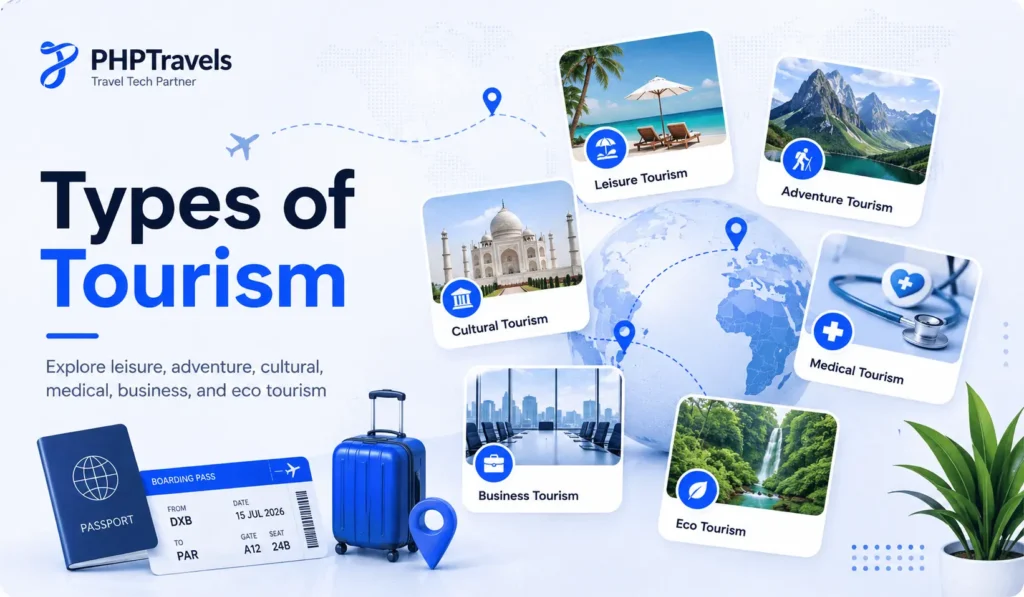
Types of tourism can be classified by direction of travel, purpose, activity, budget, destination and traveler needs. UN Tourism recognizes domestic, inbound and outbound tourism as the three basic forms, while the travel industry also uses categories such as cultural, adventure, medical, business and ecotourism.
This guide explains 24 widely discussed types of tourism with clear definitions, characteristics and real-world examples. It also shows how different tourism categories overlap and how travel agencies and tour operators can design suitable packages for each market.
TL;DR: What are the 24 types of tourism? This complete list of tourism types covers everything from adventure and cultural to medical and eco-tourism in 2026. This guide breaks down each type with examples, benefits, and future trends…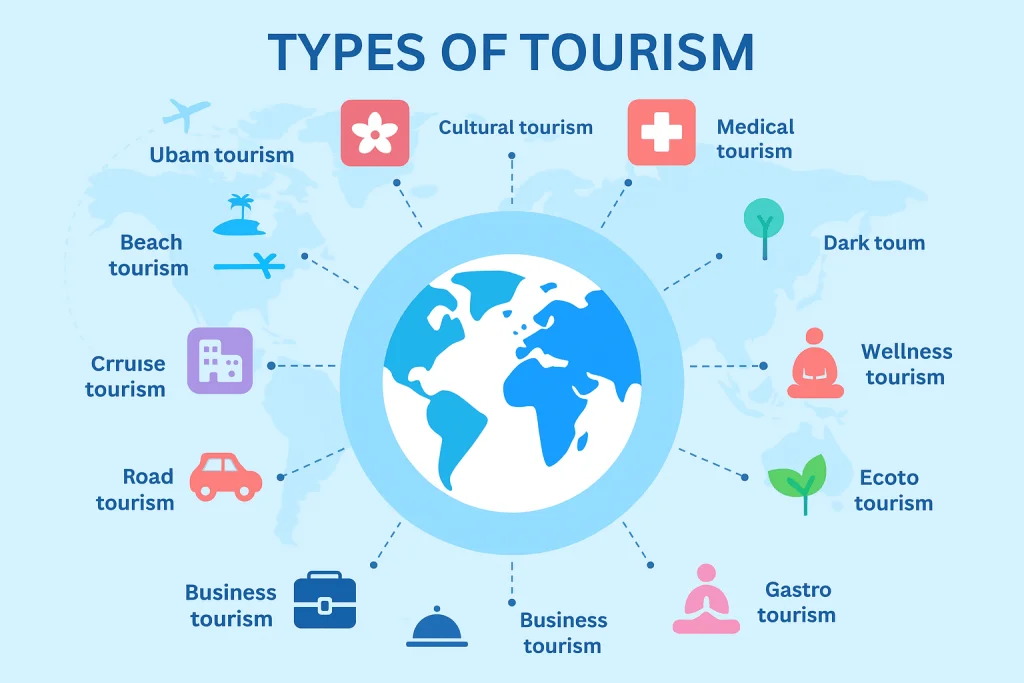
Tourism has transformed dramatically in the last decade. No longer confined to “beach or mountain,” it now spans cultural deep dives, medical journeys, eco-trips, and even spiritual pilgrimages. Understanding the different types of tourism isn’t just for travelers it’s crucial for travel agencies, tour operators, and business owners offering travel products.
What Are the Three Basic Forms of Tourism?
| Basic form | Meaning | Example |
|---|---|---|
| Domestic tourism | Traveling within your country of residence | Lahore to Hunza |
| Inbound tourism | A non-resident visiting a country | A UK traveler visiting Pakistan |
| Outbound tourism | A resident traveling to another country | A Pakistani traveler visiting Turkey |
Quick Reference Table
| Type of Tourism | Purpose | Example |
|---|---|---|
| Adventure Tourism | Thrill-seeking | Skydiving in Dubai |
| Cultural Tourism | Heritage exploration | Visiting temples in Kyoto |
| Medical Tourism | Health treatment | Dental surgery in Turkey |
| Religious Tourism | Spiritual pilgrimage | Performing Umrah in Makkah |
| Ecotourism | Nature preservation | Wildlife safari in Tanzania |
Types of Tourism and Their Characteristics
| Type of Tourism | Key Characteristics | Best For |
|---|---|---|
| Adventure Tourism | High physical activity, risk-taking, outdoor experiences | Thrill-seekers, adventure enthusiasts |
| Cultural Tourism | Heritage sites, local traditions, historical exploration | History buffs, cultural learners |
| Medical Tourism | Affordable treatments, quality healthcare, travel + medical | Cost-conscious patients, specialized care seekers |
| Ecotourism | Sustainability, nature conservation, eco-friendly practices | Nature lovers, environmentally conscious travelers |
| Business Tourism | Professional meetings, conferences, corporate events | Business professionals, corporate travelers |
| Religious Tourism | Spiritual sites, pilgrimages, religious ceremonies | Devotees, spiritual seekers |
Cultural Tourism vs Adventure Tourism: Key Differences
| Difference | Cultural Tourism | Adventure Tourism |
|---|---|---|
| Main Focus | Learning history & traditions | Thrill & physical challenges |
| Activities | Museum visits, temple tours | Trekking, rafting, jumping |
| Pace | Slow and educational | Fast and energetic |
| Best For | History lovers | Adventure seekers |
| Example | Visiting temples in Kyoto | Bungee jumping in NZ |
The Complete List of 24 Types of Tourism
1. Adventure Tourism
Thrill meets travel. From bungee jumping in New Zealand to desert safaris in Dubai, this type caters to adrenaline junkies.
🧠 Fact: Adventure tourism is growing 20% YoY globally (Statista).
2. Cultural Tourism
Dive into the traditions, history, and heritage of a destination. It’s a popular choice among travelers who want more than sightseeing like food tours in Italy or pottery classes in Japan.
Explore our guide to travel technology trends shaping cultural tourism in 2026.
3. Medical Tourism
From dental work in Turkey to cosmetic surgery in Korea, patients now travel for:
- Affordable treatments
- High-quality healthcare
- Quick service
Many agencies are integrating this niche into their offerings via CRM systems for travel.
4. Religious Tourism
Millions travel annually to Makkah, Vatican City, or the Ganges River for spiritual reasons.
It’s essential for B2B agencies working in this sector to offer custom itineraries and seamless booking tools.
5. Ecotourism
Sustainable travel that respects ecosystems and supports local communities. Think Costa Rica’s rainforests or safari lodges in Kenya.
Learn how a Distribution Management System centralizes such experiences.
6. Business Tourism (MICE)
Includes Meetings, Incentives, Conferences, and Exhibitions. Corporates now expect end-to-end digital booking with policy compliance, making B2B travel solutions essential.
7. Wildlife Tourism
Focuses on animals in their natural habitats safaris, whale-watching, or gorilla trekking. Conservation ethics are a big part of this experience.
8. Cruise Tourism
Luxury meets leisure. Cruises now include themed voyages like wellness retreats or culinary tours.
You can connect cruise inventory with your CMS using travel API integrations.
9. Rural or Village Tourism
Live with locals, enjoy organic meals, and understand traditional life. It’s a perfect fit for travelers seeking off-grid escapes.
10. Sports Tourism
Travel to participate or watch events like the Olympics, FIFA World Cup, or regional marathons.
11. Shopping Tourism
People travel to Dubai, Singapore, or Istanbul specifically for shopping. This trend is rising in regions like Southeast Asia and the Middle East.
12. Wellness Tourism
Centers around mental and physical rejuvenation yoga retreats in Bali, hot springs in Iceland, etc.
13. Dark Tourism
Visit historically tragic or mysterious sites like Auschwitz or Chernobyl. While controversial, it’s growing.
14. Budget Tourism
Traveling with limited funds hostels, public transport, and street food. Backpacking across Southeast Asia is a classic example.
15. Culinary Tourism
Travel for flavors. From Tokyo’s sushi scene to Tuscany’s truffle hunts, food drives these trips.
16. Luxury Tourism
High-end travel for ultimate comfort and exclusive experiences.
Example: Staying in a Maldives overwater villa or a private safari.
17. Voluntourism (Volunteer Tourism)
Traveling to volunteer and help communities or wildlife.
Example: Building schools in Nepal or saving turtles in Costa Rica.
18. Space Tourism
The future of travel: civilian trips to space for adventure.
Example: A flight with Virgin Galactic to see Earth from space.
19. Accessible Tourism
Travel designed for people with disabilities or mobility issues.
Example: Wheelchair-friendly hotels and tours in Dubai or Europe.
20. Agritourism / Farm Tourism
Experiencing rural life by staying and working on farms.
Example: Apple picking in Canada or cheese-making in Switzerland.
21. Photography Tourism
Travel focused on capturing the perfect photos of places.
Example: Photographing Northern Lights in Iceland or wildlife in Kenya.
22. Ancestry Tourism
Traveling to discover your family roots and heritage.
Example: Visiting your ancestral village in Ireland or Punjab.
23. Educational Tourism
Trips where the main goal is to learn a new skill or subject.
Example: A cooking course in France or a student exchange in Japan.
24. Urban Tourism
Exploring big cities for their culture, shopping, and nightlife.
Example: A weekend shopping trip to Dubai or a museum tour in Paris.
Most Popular Tourism Types in 2026
Based on current travel trends and industry forecasts, these tourism types are gaining maximum popularity:
- Sustainable Tourism (Growing at annually)
- Adventure Tourism (20% YoY growth globally)
- Medical Tourism (Cost savings up to 70% compared to Western countries)
- Cultural Tourism (Heritage experiences preferred by of millennials)
- Wellness Tourism ($800+ billion market value)
- Workation Tourism (Remote work + travel hybrid)
Source: Latest tourism industry reports and traveler preference surveys
Sustainable Tourism – The Future
Today’s travelers want more than convenience they want conscience. Sustainable tourism is no longer optional; it’s expected. Agencies are now offering green-certified stays, digital carbon trackers, and local experiences all integrated into platforms like PHPTRAVELS.
Types of Cultural Tourism
| Subtype | Example |
|---|---|
| Historical Tourism | Visiting castles in France |
| Art Tourism | Exploring museums in Florence |
| Religious Tourism | Buddhist temple visits in Thailand |
| Culinary Tourism | Street food tours in Bangkok |
| Festival Tourism | Carnival in Brazil or Diwali in India |
Tourism Products: What Are They?
Tourism products are services or experiences that satisfy traveler needs flights, hotels, guides, transport, etc. These are typically bundled and sold via a Booking Engine or integrated APIs.
🔗 Related read: Top Payment Gateway Options for Travel Agencies
Classification of Tourism: Understanding Categories and Characteristics
Tourism classification helps in understanding how different travel types are categorized based on various factors like purpose, duration, and traveler preferences. The main classification systems include:
By Travel Purpose:
- Recreational tourism
- Business tourism
- Religious tourism
- Sports tourism
By Travel Distance:
- Local tourism
- Domestic tourism
- International tourism
By Group Size:
- Individual tourism
- Group tourism
- Mass tourism
Understanding these classifications helps travel agencies create better packages and travelers choose experiences that match their preferences.
Final Thoughts
Understanding the various types of tourism helps you craft better travel experiences. Understanding these 24 different types of tourism is essential for crafting better travel experiences. Whether you’re a traveler, agency owner, or tech platform, aligning with these trends will help you stay relevant and profitable in 2026.
Explore how our Tour Management System and B2B Travel Portal simplify managing all travel types adventure, religious, wellness, and more.
Need help selling any type of tourism online?
Launch your agency with PHPTRAVELS the trusted travel booking software used by 5000+ agencies globally.