
Search "types of tourists" and you get textbook charts. Useful in a classroom. Less useful on a Tuesday when your sales desk has three leads: a family that wants every meal pre-booked, a couple asking for "something not touristy," and a corporate booker who will only fly carriers they already know.
Those three buyers are not the same product. They need different risk levels, different supplier mixes, and different booking flows. This guide translates the classic tourist typologies into packaging decisions for agencies, OTAs, and tour operators — and shows where travel booking software helps you sell the right trip without inventing inventory you do not control.
If you came for types of tourism (ecotourism, cultural tourism, MICE, and the rest), that is a different question: start with our types of tourism guide. Here we focus on who the traveller is, not which industry niche the trip sits in.
Why types of tourists matters for packaging
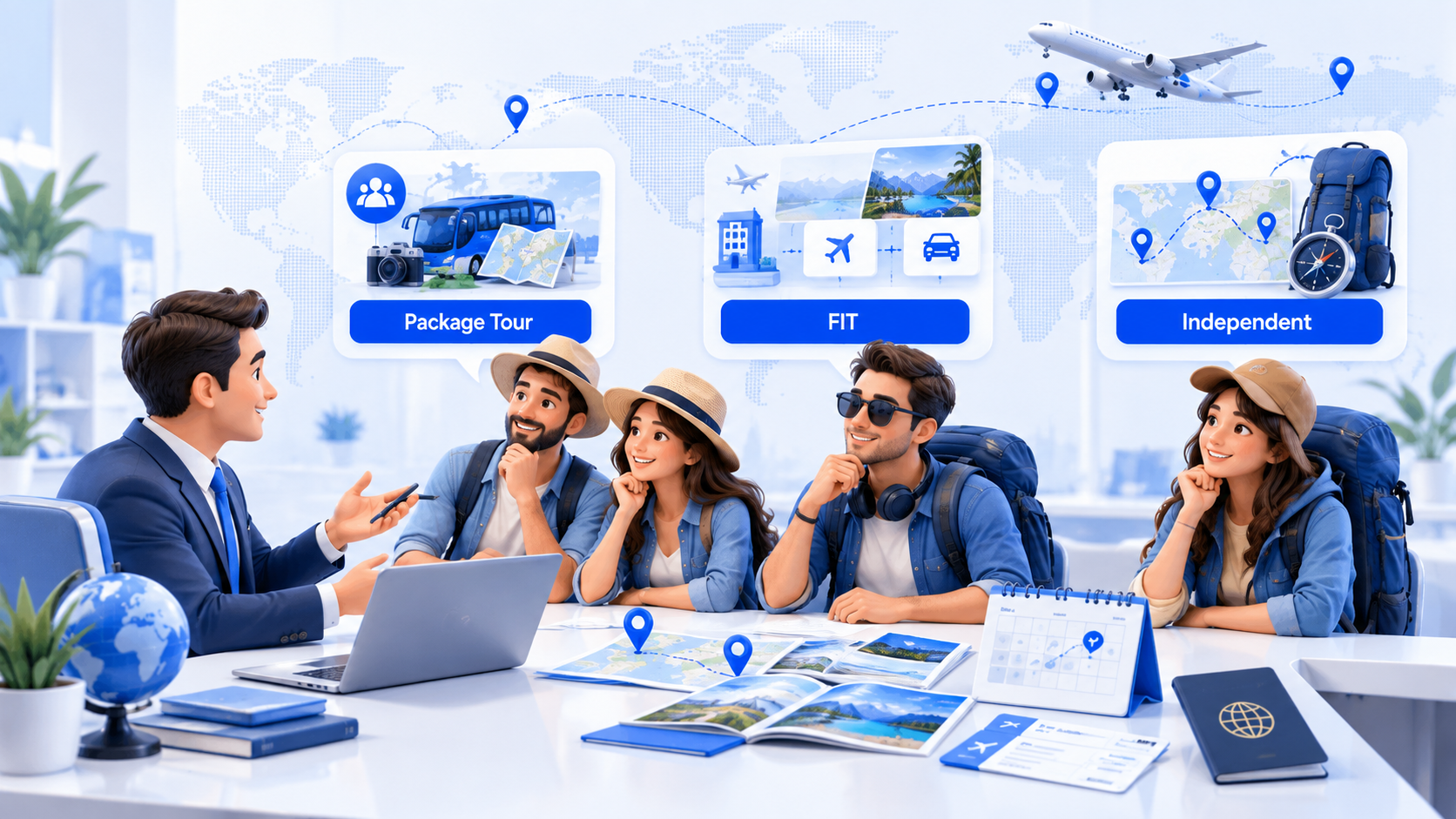
A typology only earns its keep if it changes three decisions:
- What you propose first (package vs flexible FIT vs fully independent)
- Which suppliers and destinations you open (mature resort vs emerging city vs multi-stop)
- How much hand-holding the booking path needs (escorted, assisted, or self-serve)
Get those wrong and you do not just lose a sale — you create amendments, refunds, and review damage. Get them right and the same catalogue can serve mass leisure and adventure-leaning clients without one muddy brochure.
Industry research has treated tourist roles this way for decades. Erik Cohen's 1972 framework sorted travellers by how much novelty they want versus how much familiarity they need from the tourism system. Stanley Plog's psychographic continuum (later venturers vs dependables) linked personality to destination choice and the rise-and-fall of destinations (Plog overview in the Encyclopedia of Tourism; Cohen's roles in tourism curricula).
You do not need to recite paper titles to a client. You do need a desk checklist that maps "how they talk about risk" to "what you sell them."
Cohen's four types of tourists
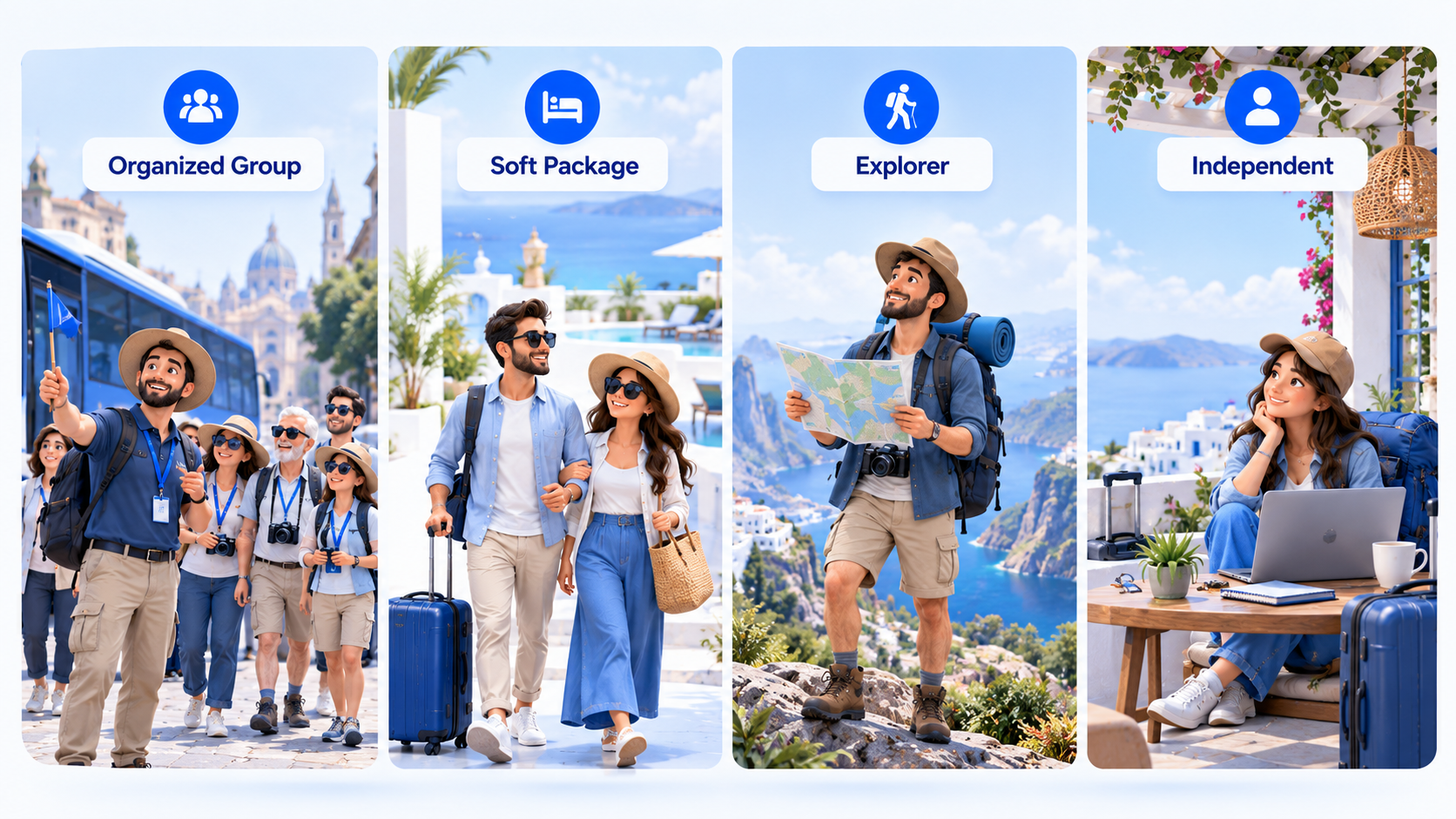
Cohen's model is still the cleanest starting point for ops and product teams. It ranks travellers by how far they stay inside the "environmental bubble" of hotels, guides, and scheduled tours.
Organized mass tourist
- Want: Maximum familiarity, minimum decisions
- Trip shape: Escorted package, fixed itinerary, group transfers, known brands
- Desk signal: "Just arrange everything," brand hotel lists, fear of language barriers
- Package: Full packages with clear inclusions; avoid open-jaw DIY; confirm meal plans and meeting points in writing
Individual mass tourist
- Want: Familiar infrastructure with some free time
- Trip shape: Package flights/hotel plus optional tours, or a dynamic package with a few booked activities
- Desk signal: "Good hotel and a couple of day trips, not a tour bus every day"
- Package: Soft package plus a la carte excursions; self-transfer options; clear free-afternoon blocks
Explorer
- Want: Novelty with a safety net
- Trip shape: Independent flights and hotels, curated local experiences, light guiding
- Desk signal: "Not the main tourist street," neighborhood questions, local transit with a plan B
- Package: Flexible FIT, boutique or strong independents, private transfer on arrival day, optional specialist guides
Drifter
- Want: Immersion and autonomy; often avoids the tourism industry
- Trip shape: Long-stay, local lodging, few pre-booked components
- Desk signal: Rare as a high-touch agency client; more often a visa, insurance, or one-way flight ask
- Package: Sell only what they ask for. Do not force a 10-day escorted quote.
Cohen also splits institutionalized tourism (organized and individual mass) from non-institutionalized (explorer and drifter). That split helps margin planning: packaged trips consume more ops hours but accept clearer markups; explorers buy fewer line items but need sharper destination knowledge.
Plog's continuum from dependable to venturer
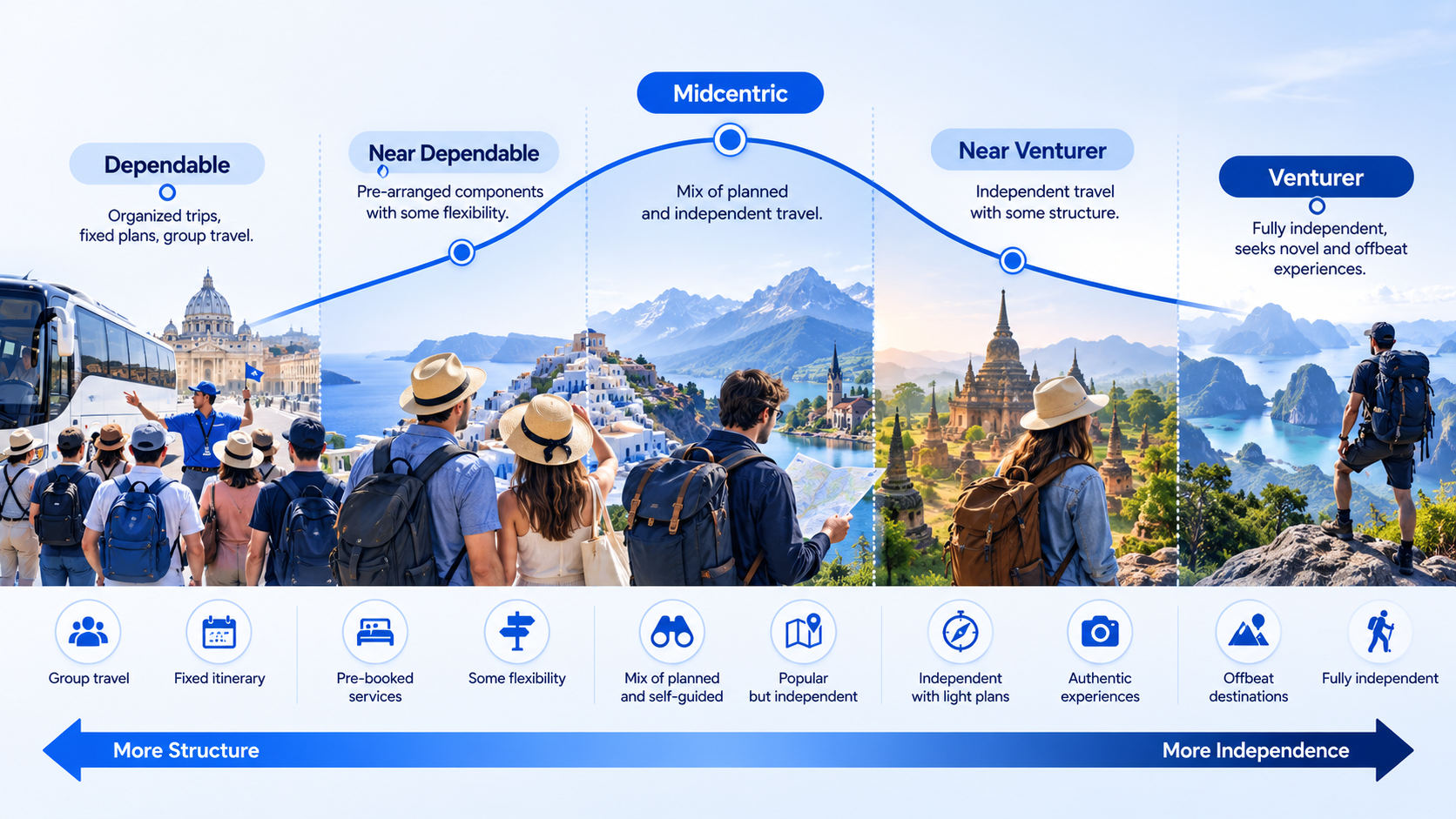
Plog placed travellers on a bell curve from psychocentric / dependable (familiar, structured, highly touristed destinations) to allocentric / venturer (novel places, flexible plans, early visitors to emerging destinations). Most people sit in the midcentric middle — some novelty without feeling unsafe (Encyclopedia of Tourism on allocentric and psychocentric travellers).
| Plog lean | Typical Cohen overlap | Destination posture | Product posture |
|---|---|---|---|
| Dependable | Organized mass | Mature resorts, repeat destinations | Escorted, all-inclusive, brand chains |
| Near-dependable | Individual mass | Popular cities with easy amenities | Dynamic packages plus optional tours |
| Midcentric | Individual mass to explorer | Famous places with a twist | Hotel base plus independent days |
| Near-venturer / venturer | Explorer | Emerging or secondary cities | FIT, multi-city, experiential add-ons |
Plog's destination lifecycle idea still matters: when too many dependable travellers arrive, venturers leave for the next place. If your catalogue only chases last year's hotspot, you will always be late for venturers and early for price wars among mass products.
Cross-check typology with purpose (leisure, VFR, corporate, MICE), party type, duration, and channel (WhatsApp, B2B agent, B2C site). A dependable family on a school holiday is a different SKU from a dependable corporate two-city trip. Tag purpose on the booking so typology does not become a stereotype. Use official demand stats for capacity planning (UN Tourism statistics), not as a substitute for talking to the human in front of you.
How to interview a lead in five minutes
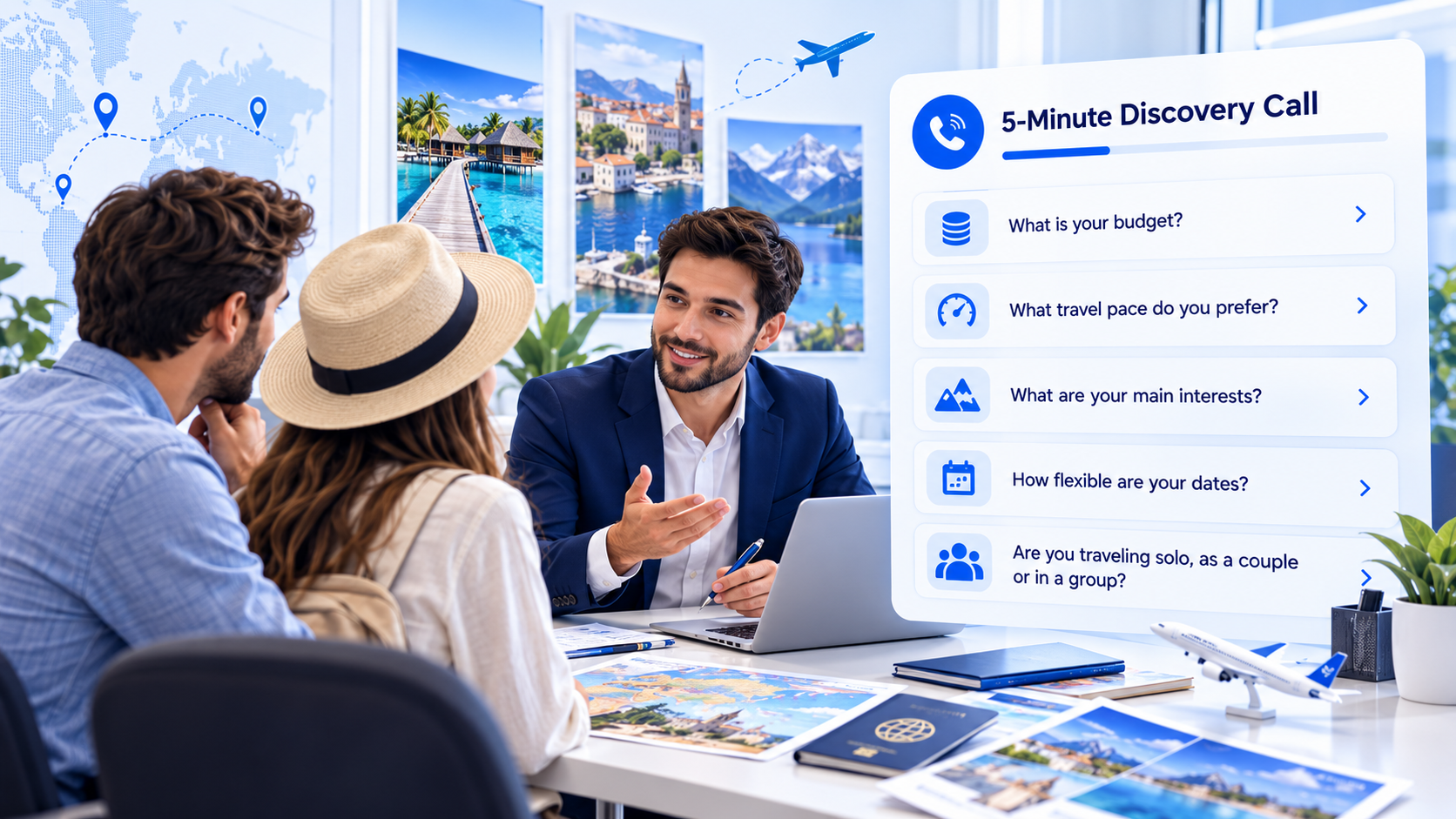
Skip academic labels on the call. Ask questions that place them on the novelty-familiarity line:
- Control: "Do you want a day-by-day plan, or flights and a hotel with free days?"
- Risk: "How do you feel about neighborhoods that are less touristy?"
- Brands: "Any hotel or airline brands you already trust?"
- Pace: "Sightseeing every day, or half days with downtime?"
- History: "What was your best trip — and what went wrong on a bad one?"
Mostly structure and brands points to mass or dependable packaging. Mostly curiosity and flexibility points to explorer or mid-venturer FIT. Store the answers on the quote so ops does not rebuild the profile from chat screenshots.
Packaging playbook by tourist type
Organized mass / dependable
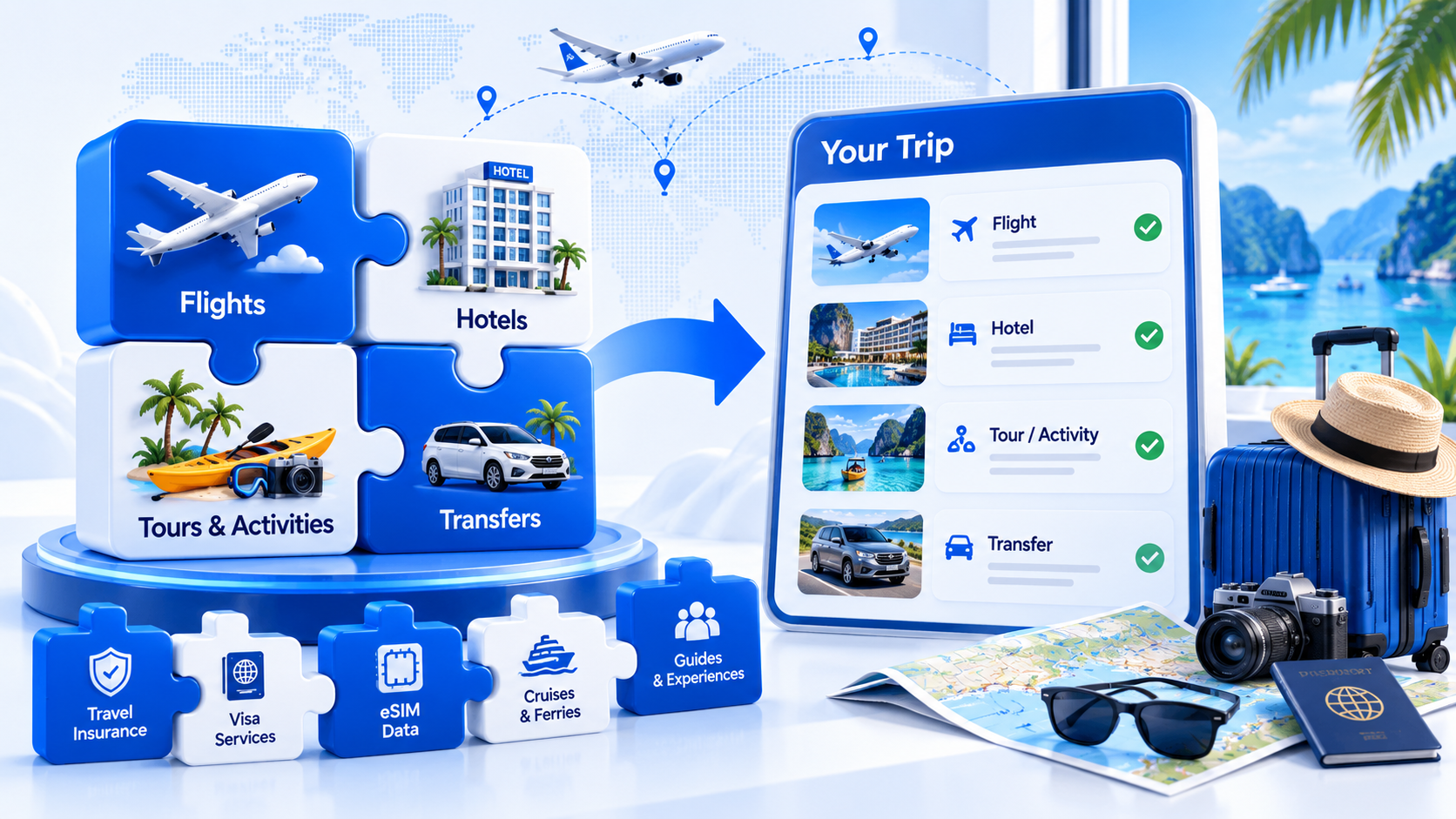
Lead with inclusions and a single price. Prefer contracted allotments and known chains. Publish meeting points, baggage rules, and emergency contacts early. Upsell seat selection, travel insurance, and airport meet-and-greet — not random "secret" tours.
Individual mass / midcentric
Offer a base package plus a short menu of paid options. Keep one free afternoon visible in the itinerary. Upsell day tours, eSIM, and attraction tickets timed to free blocks.
Explorer / near-venturer
Quote modular: flights, stay, and one or two signature experiences. Share neighborhood rationale, not only star ratings. Upsell private arrival transfers, specialist guides, and rail passes. Skip the 40-attraction bus tour.
Drifter / deep independent
Fulfil narrow requests fast. Do not invent a package they did not ask for. Useful add-ons: insurance, eSIM, one flexible hotel night on arrival.
For mixed multi-generation groups, use core plus optional: shared hotel and transfers for everyone; optional activities tagged by energy level so dependable and venturer relatives are not forced into the same afternoon.
Where PHPTRAVELS fits without forcing it
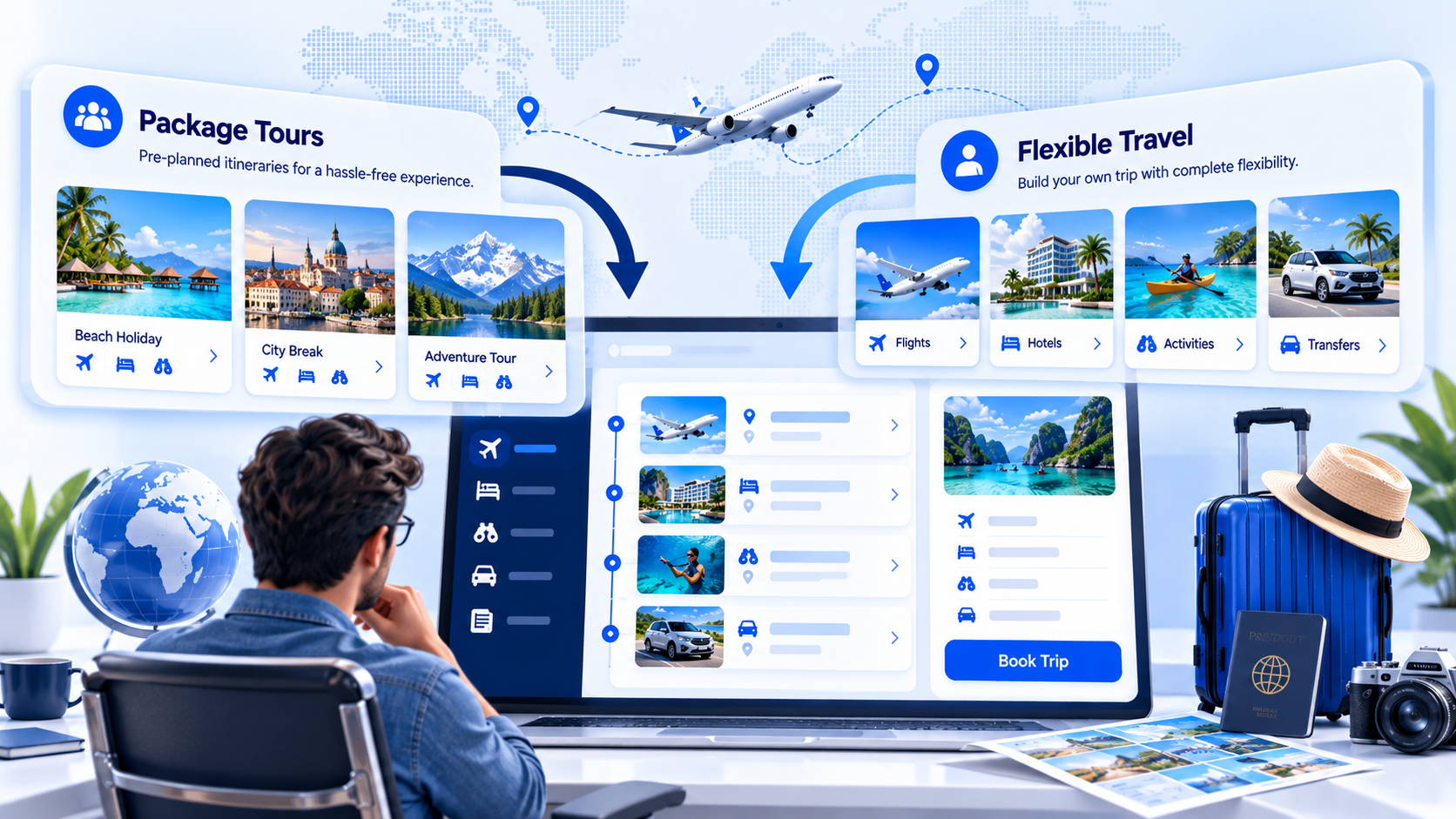
Typology fails when your storefront can only sell one journey shape. Agencies running B2C and B2B on PHPTRAVELS typically need packages and modular products for mass and midcentric buyers, manual inventory for tours explorers actually want, and multi-supplier flights and hotels so you are not locked into one familiarity tier. You connect your own supplier API credentials; the software does not grant inventory. A B2B agent portal helps when sub-agents send package demand while your web channel sells more FIT.
Use typology in merchandising: separate "guided packages" and "flexible trip builder" entry points so searchers self-select. If you are rebuilding catalogue structure around real buyer types, see a demo or check pricing — and confirm live modules and integrations on the site before you promise a stack.
Mistakes to avoid and quick FAQ
Common mistakes
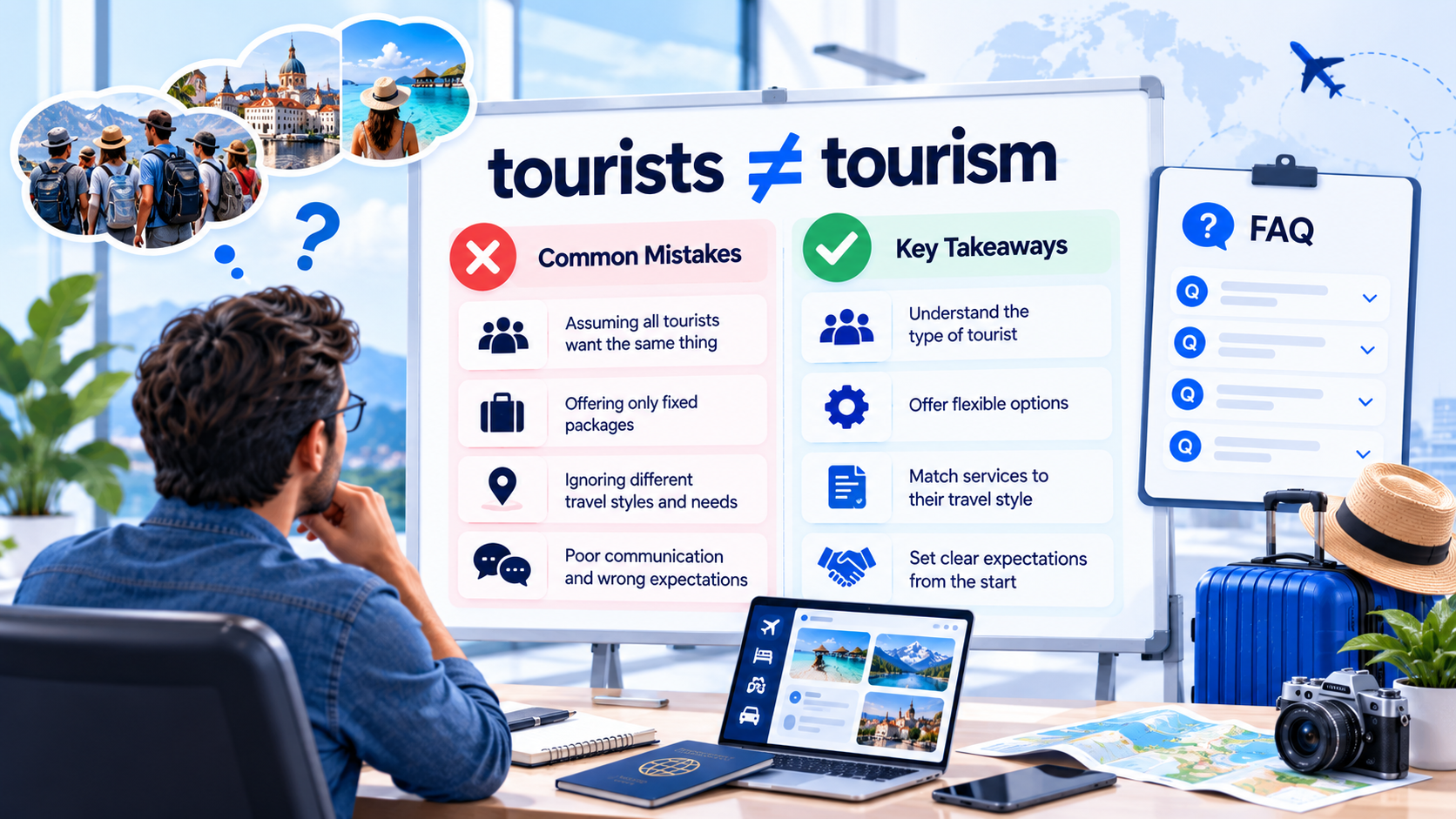
- Confusing types of tourists with types of tourism — Ecotourism is a product niche; explorer is a buyer posture. You can sell eco trips to midcentrics if logistics feel safe.
- Stereotyping by nationality or age — Use questions, not passports.
- One website message for every psyche — Adventure-only landing pages bounce dependable buyers.
- Over-packaging explorers — Extra inclusions that feel like control, not care.
- Under-supporting mass tourists — Vague meeting points destroy trust for dependable travellers.
- Ignoring the midcentric majority — Most revenue sits in the middle; design for them, then extend toward the poles.
What are the main types of tourists?
In Cohen's model: organized mass tourist, individual mass tourist, explorer, and drifter. Plog places people from dependable to venturer, with most travellers midcentric.
What is the difference between types of tourists and types of tourism?
Types of tourists describe traveller roles and novelty preferences. Types of tourism describe product categories (cultural, adventure, MICE). See types of tourism for the product side.
Which type is most common?
Midcentric travellers are the bulk on Plog's curve. Cohen's individual mass tourist is a common commercial reality for city breaks and soft packages.
Can one person change type by trip?
Yes. Type the trip, not the passport. The same traveller may take a dependable beach week with kids and an explorer city break with friends.
Closing takeaway
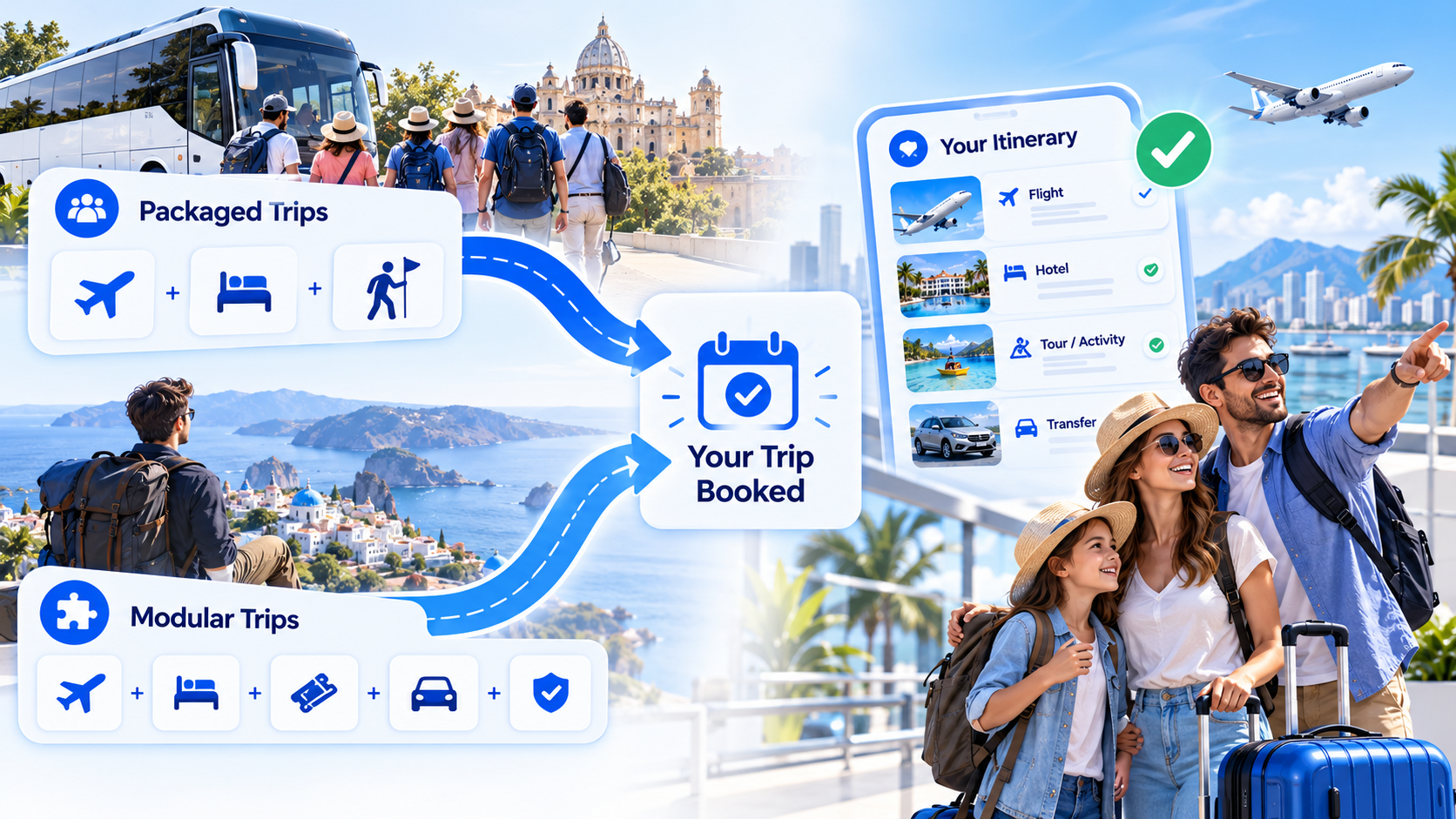
"Types of tourists" is only SEO wallpaper if it stays in a diagram. Used well, it is a sales and product filter: how much novelty, how much structure, which suppliers, which upsells. Keep types of tourism for catalogue niches; use this page for buyer posture. When your booking stack can present both packaged and modular trips without spreadsheet glue, matching the person to the product gets faster — book a demo if you are evaluating that rebuild.