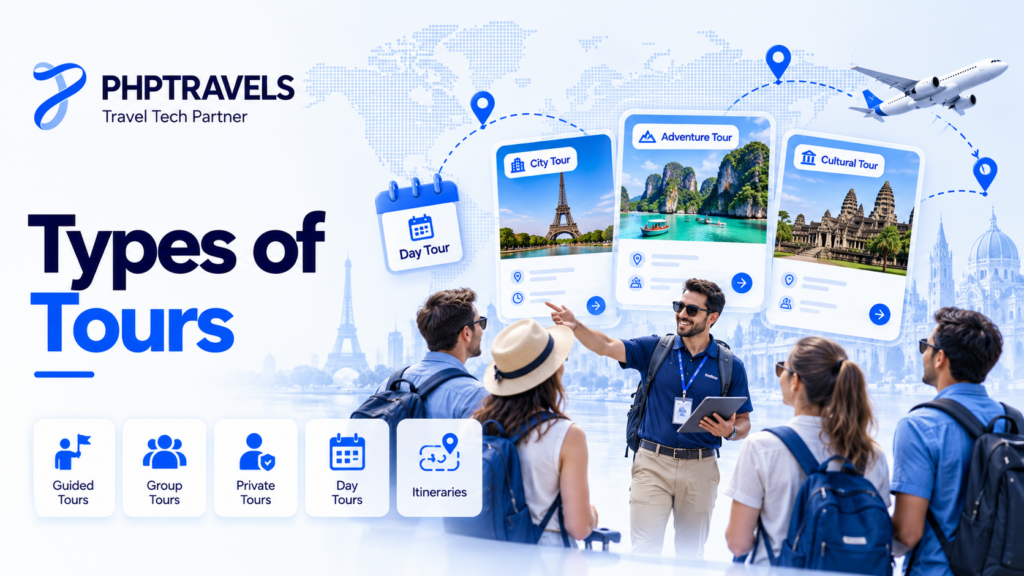
For travel agencies and tour operators, “types of tours” means the product format being packaged, priced, sold, and operated. It is not the same as types of tourism, which describes purposes or categories such as leisure or medical travel, and it is not types of tourists, which describes traveler profiles. This guide maps the practical product dimensions agencies use to build tour SKUs.
What “types of tours” means for agencies and tour operators
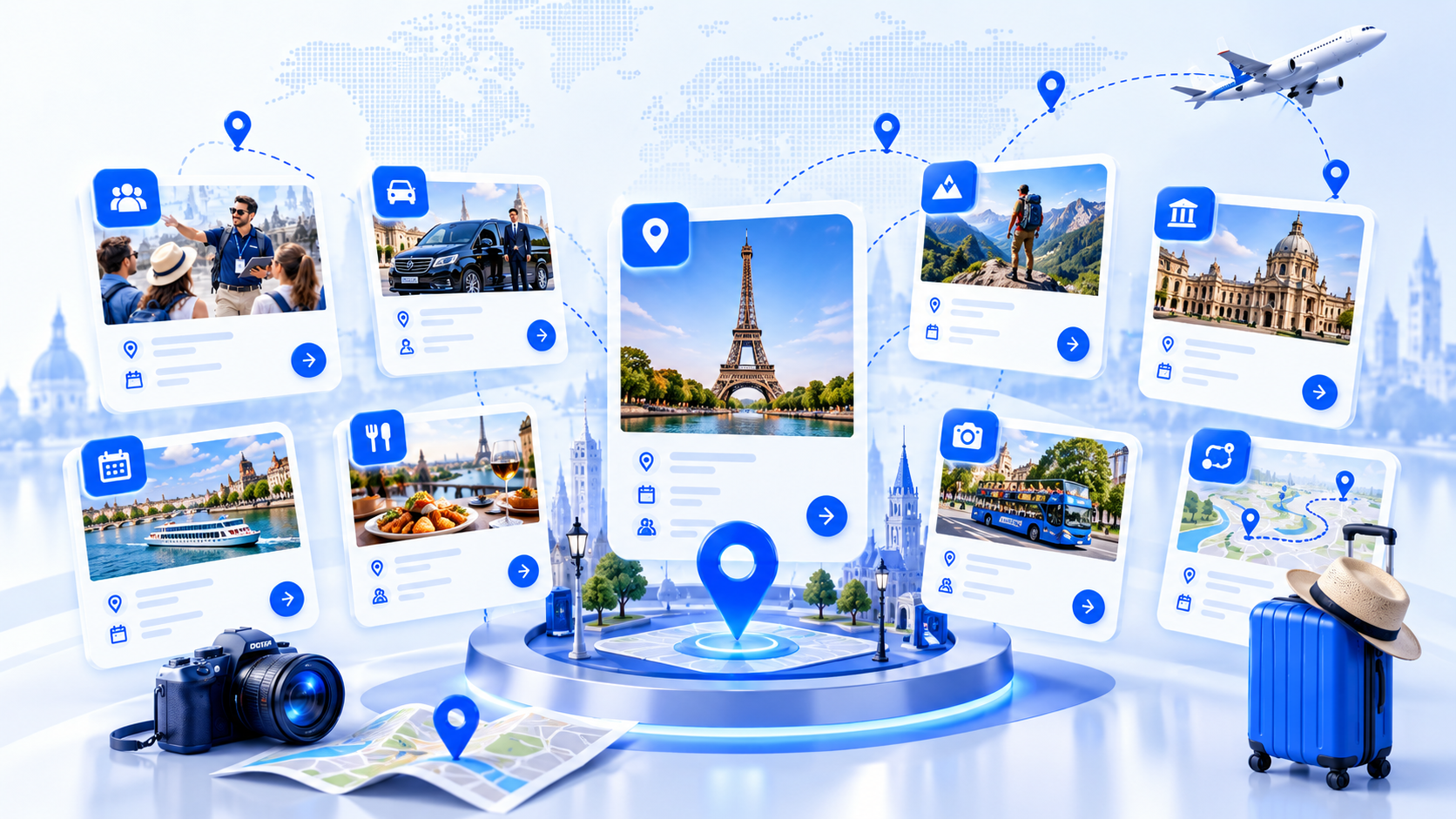
A destination rarely has just one tour product. The same city may support a shared half-day sightseeing departure, a private airport-to-hotel excursion, a self-guided walking route, a seven-day escorted itinerary, and a shore excursion for cruise passengers. Each is a different SKU even when some suppliers overlap.
The useful dimensions are duration, guiding model, party size, packaging, departure structure, and distribution niche. A tour can occupy several labels at once: a private, guided, multi-day, tailor-made cultural tour is not in conflict with any of those classifications. The labels describe different operating decisions.
Those decisions affect allotments, rooming lists, guide and vehicle capacity, cancellation rules, supplier contracts, lead times, pricing, and margin. Classify a product according to how it is actually fulfilled, not only how it sounds in marketing copy.
FIT vs GIT – independent travel vs group inclusive tours

FIT (Fully, Flexible, or Foreign Independent Travel)
FIT has several expansions in trade usage, including Fully Independent Travel/Traveller, Flexible Independent Travel, and Foreign Independent Travel. Across those expansions it describes an individual, couple, family, or small party traveling independently rather than joining a fixed shared departure. The agency may still assemble a complete itinerary and sell it as one package.
An FIT booking can combine hotels, transfers, activities, flights, and local guides. Dates, room categories, transport, and optional experiences can be adjusted to the party’s needs. FIT usually requires more consultation and component-level booking than a standardized group product.
GIT (Group Inclusive Tour)
GIT generally means Group Inclusive Tour. In this format, travelers buy places on a planned departure with a predefined itinerary, shared services, and usually a minimum or target group size. The product may include accommodation, coach transport, a guide or tour director, sightseeing, and selected meals.
The customer chooses from published dates and inclusions instead of designing every component. A GIT operator may negotiate hotel and transport rates, but must manage deposits, cut-off dates, passenger manifests, rooming lists, and group capacity.
FIT vs GIT operations table
| Factor | FIT | GIT |
|---|---|---|
| Party structure | Individual or private party | Shared organized group |
| Dates | Usually flexible | Usually fixed departures |
| Itinerary | Customized or component-based | Predefined |
| Capacity | Per booking, service, or vehicle | Seats, rooms, and group allotment |
| Operations | More consultation and variations | More standardized controls |
| Pricing | Selected components and markups | Group costing and departure-based price |
Neither model is automatically better. An agency can sell FIT for families while offering GIT for customers who want a scheduled itinerary and predictable inclusions.
Guided vs self-guided tours

Guided or escorted tours
A guided tour includes a live guide who explains a destination, attraction, culture, history, or activity. A local guide may lead a single visit; an escorted or scheduled multi-day tour may use a tour director who manages the group across the itinerary. Guided does not necessarily mean large: it can be private, shared, or small-group.
The operator must schedule qualified staff, define meeting and pickup points, account for guide languages, and protect the guide’s working time. A multi-day escorted product also needs a clear handover plan when local guides replace the tour director.
Self-guided tours
A self-guided tour supplies the itinerary and instructions without a live guide accompanying the customer. It may use an app, audio guide, maps, printed directions, pre-booked tickets, or a route pack. Walking, hiking, cycling, and self-drive products commonly use this format.
The operator still owns the guest journey. Directions, emergency contacts, opening hours, voucher delivery, accessibility notes, and supplier confirmations must be accurate. Self-guided is not the same as unmanaged.
When each wins
Guided tours can justify higher service pricing and help guests who want context or reassurance, but labor and language availability add complexity. Self-guided tours can be easier to operate across seasons, yet they require strong documentation and customer support. Choose based on guest confidence, terrain, safety, labor supply, and margin rather than assuming one model suits every destination.
Private vs group (and small-group) tours

Private tours
A private tour is reserved for one party, such as a couple, family, affinity group, or corporate group. The party may select a fixed departure time or request a custom itinerary. Pricing can be per person, per vehicle, per guide, or a combination. Vehicle size, pickup window, and customization must be explicit at booking.
Public or join-in group tours
A public or join-in tour mixes customers who booked separately on the same departure. The operator publishes a capacity, meeting point, schedule, and inclusions. Join-in pricing can be attractive, but late arrivals, language needs, and no-show procedures need consistent rules.
Small-group and affinity groups
Small-group tours cap participation below a large coach format while retaining shared operations. Affinity or pre-formed groups include student, faith, incentive, association, and MICE-adjacent travel. They may need bespoke rooming lists, dietary data, coach plans, and a group leader even when the itinerary resembles a public tour.
Day tours vs multi-day tours
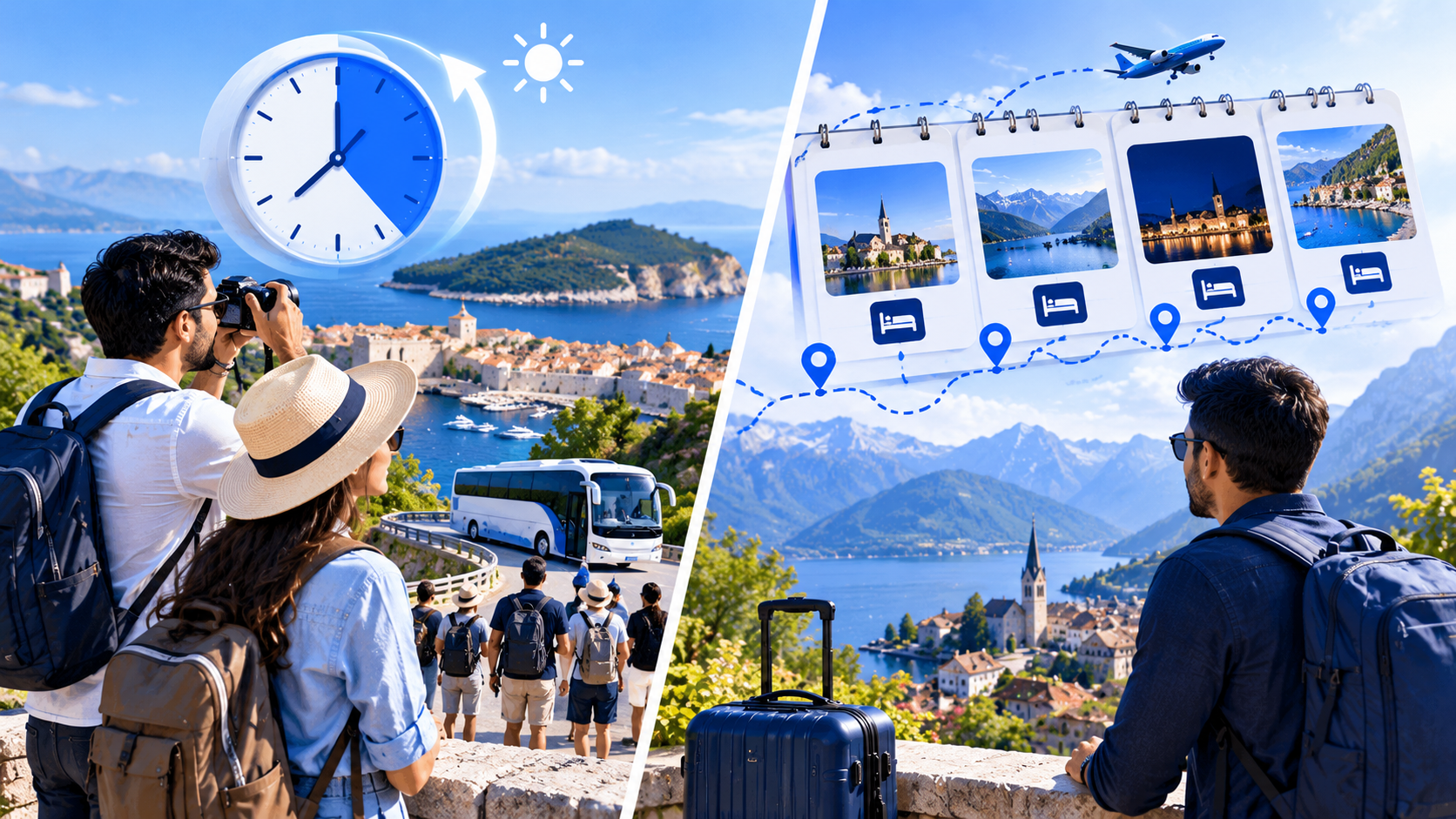
Day, half-day, and excursion products
A day tour, half-day tour, or excursion starts and ends within the same day. It may be a city tour, food walk, attraction visit, safari, boat trip, or airport layover product. Operators commonly manage fixed departure times, guide rosters, vehicle capacity, attraction allocations, and pickup zones.
Multi-day, scheduled, and escorted departures
A multi-day tour lasts two or more days and often combines lodging, ground transport, activities, and guides. Scheduled departures need published dates, minimum operating numbers, release dates, cancellation rules, and rooming-list deadlines. Land partners must know which services are included and whether the price is land-only.
The booking workflow is more than a date and seat count: it may include nightly hotel inventory, transfers between cities, passenger details, and supplier reconfirmations. That is why a multi-day SKU needs careful costing before it is published.
Package tours vs tailor-made (bespoke) tours
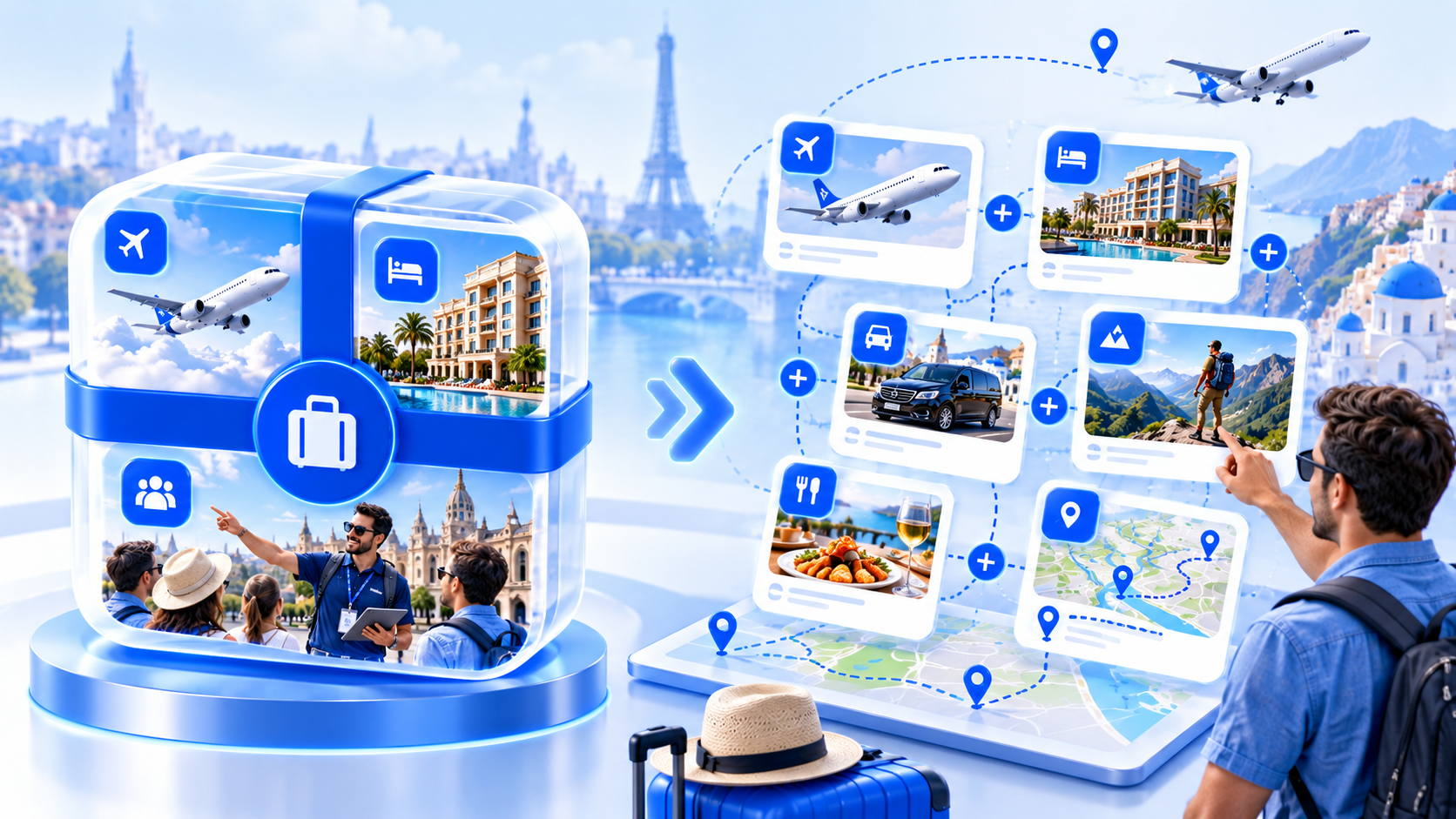
Package, inclusive, or vacation packages
A package combines two or more travel components and sells them as one commercial product or itinerary. Depending on the operator, this can include air, hotels, transfers, activities, meals, or transport. A fixed package has published inclusions and dates; a flexible package may allow selected options while retaining a core structure.
Packages create one customer-facing promise but several supplier dependencies. Track each component’s availability, currency, margin, payment deadline, and cancellation condition.
Tailor-made, custom, or bespoke tours
A tailor-made tour is built around the party’s dates, hotel choices, pace, interests, and activities. It is often an FIT product, but a bespoke group is also possible. Quote versions, supplier holds, amendments, and approval history matter because the itinerary changes before confirmation.
Land-only vs air-inclusive
Land-only pricing covers destination services such as hotels, transfers, guides, and activities without international flights. Air-inclusive pricing adds flights and may introduce ticketing, fare rules, schedule changes, and airline servicing responsibilities. Label the convention clearly so trade buyers and travelers know what the tour price includes.
Shore excursions and other niche product formats

Shore excursions or shorex
A shore excursion is a land tour or activity for cruise passengers during a port call. It may be sold by a cruise line or a local operator. The product must respect the ship’s arrival and departure windows, port transfers, meeting instructions, accessibility needs, and a realistic return buffer. A shorex is usually a day product, but it can also be private, guided, join-in, cultural, culinary, or adventure-focused.
Theme, special-interest, and adventure formats
Cultural, culinary, photography, religious, wellness, wildlife, cycling, hiking, and other adventure themes are layers applied to the core product format. A culinary experience can be a private day tour; a trekking itinerary can be a guided multi-day small-group tour. Theme does not replace the FIT/GIT, guided, party-size, duration, or packaging classification.
Inbound and outbound operator lens
An inbound operator or DMC builds and fulfills destination services for visitors arriving in its market. An outbound agency or operator packages or sells travel to another market. The same itinerary can therefore have a builder, wholesaler, reseller, and local fulfillment partner. Record who owns each customer promise and supplier contract.
How agencies choose which tour types to sell

Start with demand you can fulfill consistently, then compare margin with operational complexity. Ask whether the product needs allotments, live capacity, rooming lists, licensed guides, specialist equipment, or fixed departures. A high-margin private product may consume more sales and operations time than a standardized join-in product.
Decide whether inventory is manual or connected. Operators selling their own tours commonly enter manual inventory, dates, capacity, pricing, and inclusions. Agencies may connect supplier inventory such as Viator, Tiqets, or Tours BMS, but they still need their own supplier contracts and commercial access where required. Related reading: tour booking software and tour operator software.
Before launching a SKU, define its price basis, departure rules, inclusions, exclusions, cutoff times, cancellation policy, fulfillment owner, and escalation contact. A clear product sheet prevents sales promises from outrunning operations.
Selling and operating tour products online (soft PHPTRAVELS fit)
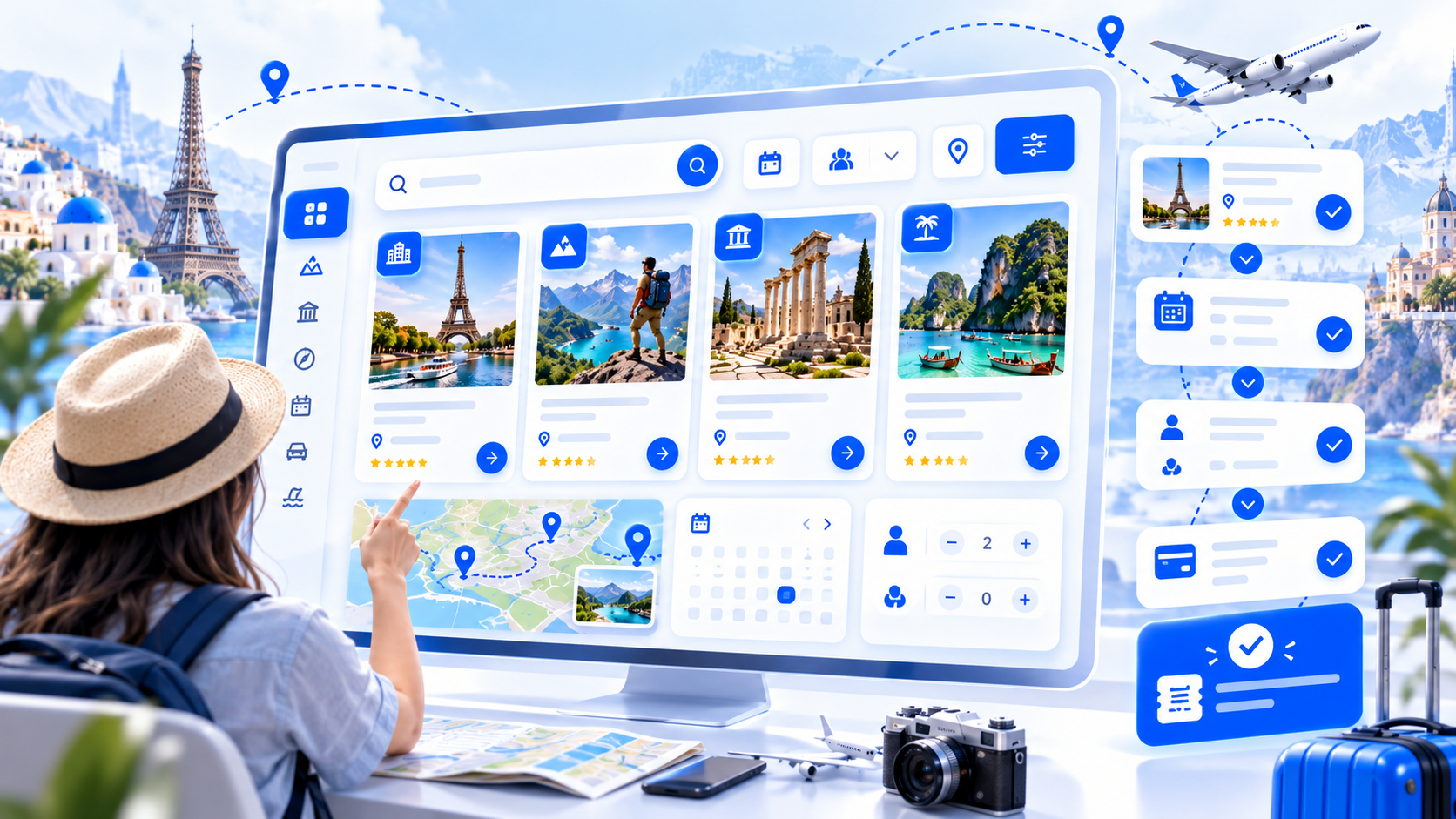
Software becomes useful when an agency must publish multiple day and multi-day products, accept B2C and B2B bookings, control departures, and keep supplier or manual inventory organized. PHPTRAVELS is licensed travel booking software with B2C/B2B use cases and a Tours module. It can connect suppliers such as Viator, Tiqets, and Tours BMS, while manual inventory remains common for operators selling their own tours. Buyers must maintain their own supplier relationships where required; PHPTRAVELS is not a free or MIT inventory marketplace.
Agencies evaluating the workflow can request a PHPTRAVELS demo or review PHPTRAVELS pricing. The choice of tool should follow the tour model, supplier responsibilities, and operational controls the business actually needs.
FAQ – types of tours

What are the main types of tours?
The main product formats include FIT and GIT, guided and self-guided, private and join-in group, day and multi-day, package and tailor-made, plus niche formats such as shore excursions, escorted, adventure, and special-interest tours. One tour can belong to several categories.
What is the difference between FIT and GIT?
FIT is independent travel arranged for an individual or private party, usually with more flexibility. GIT is a Group Inclusive Tour built around a shared itinerary, fixed departure, and group services. FIT uses component-level customization; GIT relies more on standardized departure and capacity controls.
Are types of tours the same as types of tourism?
No. Types of tours describe how a product is packaged and operated. Types of tourism describe the purpose or category of travel. Types of tourists describe traveler profiles. These subjects can overlap in marketing, but they should not be treated as the same taxonomy.
What is a shore excursion?
A shore excursion is a land tour or activity offered to cruise passengers at a port of call. It must fit the ship’s time window and include practical port pickup, return, and contingency planning.
Do tour operators need software to sell all these types?
No. A small operator can begin with manual processes, but software helps organize products, capacity, departures, bookings, supplier connections, and B2C/B2B sales as the catalog grows. The right choice depends on product complexity and operational volume, not on the label of the tour alone.