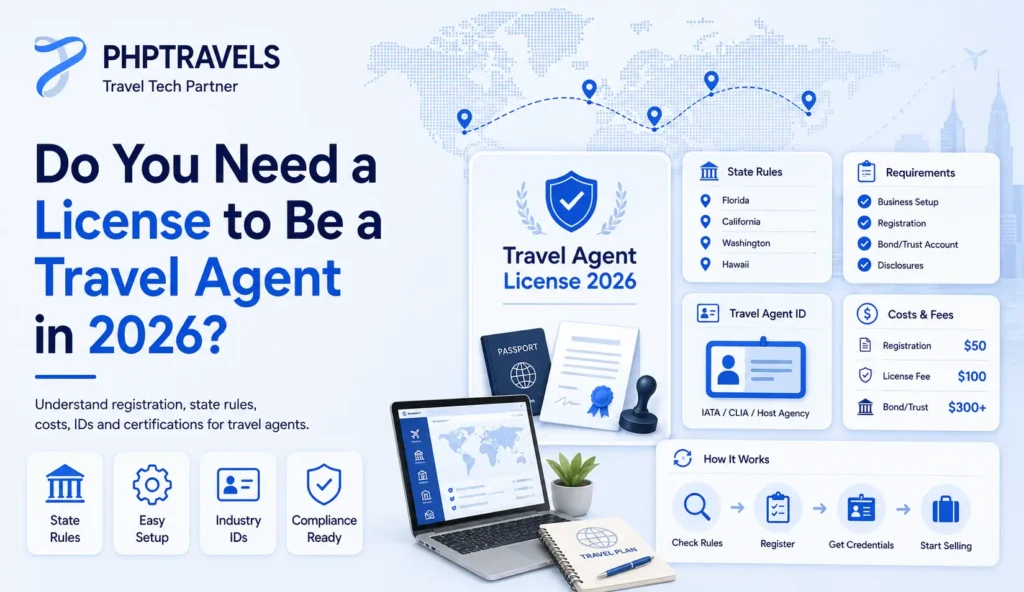
You may not need a professional license simply to work as a travel agent, but you could need a business registration, Seller of Travel registration or other authorization depending on where you operate, where your customers live and how you collect payments.
Florida, California, Washington and Hawaii have specific Seller of Travel or travel-agency programs. Each program has its own definitions, exemptions, fees and financial requirements. Working through a host agency may simplify compliance, but it does not automatically exempt every independent travel agent.
Industry credentials such as an IATA/IATAN ID card or CLIA certification are different from government registration. They can support supplier relationships, professional development and industry recognition, but they do not replace a legally required state registration.
What Is a Travel Agent License?
| Credential | What it means | Is it a government license? |
|---|---|---|
| Seller of Travel registration | State authorization for businesses that sell or advertise travel | Yes, where required |
| General business license | State, county or city permission to operate a business | Yes |
| IATA or IATAN accreditation | Industry accreditation supporting airline relationships and ticketing workflows | No |
| IATA/IATAN ID card | Professional identification for eligible travel professionals | No |
| CLIA membership or certification | Cruise-industry membership, education and professional credentials | No |
| Host-agency ID | Identification provided through a host-agency relationship | No |
What Are the Benefits of Having a Travel Agent License?
The main benefits of having a travel agent license or required registration are legal compliance, stronger customer trust and easier business verification. Professional credentials may also help with supplier relationships, industry identification and training opportunities.
However, a government registration and an industry certification are different. The exact benefits depend on the credential you obtain and the type of travel business you operate.
1. You Can Operate Legally Where Registration Is Required
The most important travel agent license benefit is legal compliance. If your state or customer market requires Seller of Travel registration, completing it allows you to advertise and sell covered travel services legally.
2. It Can Increase Customer Trust
A registered travel business appears more established and transparent. Customers may feel more comfortable booking when they can see your business details, registration information and clear terms.
3. It Can Support Supplier Applications
Some travel suppliers, host agencies and booking partners may ask for proof of business registration, professional identification or industry credentials before approving an account.
A license does not automatically guarantee supplier access, but it can help demonstrate that your business is properly organized.
4. It Helps You Build a Professional Travel Business
The registration process may require you to organize important business information, including:
- Business ownership details
- Customer-payment procedures
- Contracts and disclosures
- Renewal dates
- Financial-protection arrangements
These steps can help create a more professional and reliable operation.
5. Industry Credentials May Provide Additional Benefits
Optional credentials from recognized travel-industry organizations may provide benefits such as:
- Professional identification
- Training resources
- Networking opportunities
- Supplier education
- Industry events
- Cruise or airline-focused programs
These credentials are useful for professional development, but they do not replace government registration where it is legally required.
6. It Can Help Separate Your Business From Informal Sellers
Proper registration, accurate disclosures and recognized credentials can help show that you operate a serious travel business rather than providing travel-booking services informally.
Is There a National Travel Agent License in the United States?
There is no single registration process that every U.S. travel agent completes under one nationwide “travel agent license.”
Your obligations can depend on:
- The state where your business is established
- The states in which you advertise or sell
- Where your customers live
- Whether you collect customer funds
- Whether you charge service or planning fees
- Whether you issue travel documents
- Whether you work independently or through a host agency
- The products you sell
You may also need a normal business registration, tax account, fictitious-name filing or local business permit even when your state does not have a separate Seller of Travel program. SBA guidance recommends checking requirements at the federal, state, county and city levels.
Which States Require a Travel Agent License or Registration?
The following states have notable travel-selling registration programs. This is a general comparison; exemptions and definitions must be checked separately.
| State | Main requirement | Published government fee |
|---|---|---|
| Florida | Seller of Travel registration or qualifying independent-agent filing | $300 for a seller; $50 for a qualifying independent agent |
| California | Seller of Travel registration for covered sellers | $100 annually per business location |
| Washington | Seller of Travel license | $222 for the main company or branch |
| Hawaii | Travel Agency registration | Fees depend on the application or renewal type |
Florida requires registration from a seller that has a Florida business location or offers to sell covered travel services in Florida. California requires covered sellers to register and display their registration number in advertising. Washington licenses businesses that sell or advertise travel services. Hawaii requires travel agencies to register before selling or advertising covered travel services.
What Are the Requirements for a Travel Agent License?
There is no universal checklist that applies to every travel agent. The normal process is:
1. Define how your travel business will operate
Decide whether you will:
- Join a host agency
- Start an independent agency
- Sell flights, hotels, cruises, tours or packages
- Collect payments from customers
- Charge planning or consultation fees
- Issue airline tickets
- Sell only through referrals or affiliate links
These choices can affect whether a state considers you a Seller of Travel.
2. Register your business
Depending on your structure, you may need to establish a sole proprietorship, LLC, partnership or corporation. You may also need a tax identification number, registered agent, assumed-name filing or local business license.
3. Check every relevant jurisdiction
Do not check only the state in which you live. Some Seller of Travel rules can also apply when you advertise or sell to residents of another state.
4. Complete any required Seller of Travel application
The application may ask for:
- Legal and trade names
- Business addresses
- Owner or officer details
- Host-agency information
- Branch locations
- Customer-fund arrangements
- Financial documents
- Surety-bond or trust-account information
5. Arrange required financial protection
Some programs require a surety bond, trust account or another form of financial assurance. The required amount and available exemptions vary.
6. Review advertising and disclosure rules
A registration number or prescribed statement may need to appear on your website, advertisements, contracts or travel documents.
7. Consider optional industry credentials
Once your legal setup is complete, evaluate IATA, IATAN, ARC or CLIA programs according to your suppliers and business model.
Why a Travel Agent License Matters
Getting your travel agent license isn’t just about checking a box. It shows your commitment to professionalism and builds trust with clients and suppliers alike. A license or certification gives you access to exclusive tools, commissionable products, and training resources that non-licensed agents simply can’t reach. This advantage can mean better deals, insider rates, and stronger supplier relationships all of which translate into better service for your clients.
Moreover, suppliers often prefer to work with certified agents, and many booking platforms require an active travel industry ID. Having the proper credentials sets you apart from hobbyists and positions you as a trusted expert.
Types of Travel Agent Licenses
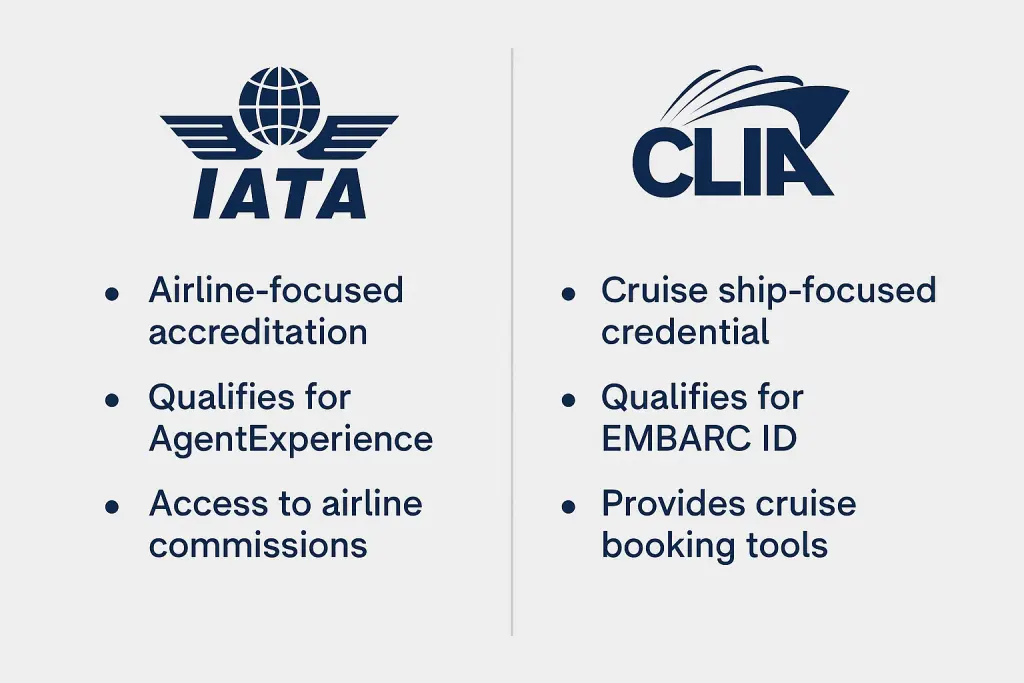
There are a few different types of licenses and certifications available, depending on your niche and goals. Two of the most common are:
- IATA/IATAN ID Card: Issued by the International Air Transport Association. Recognized globally, it allows access to airline systems and agent discounts.
- CLIA Card: Provided by the Cruise Lines International Association, this is essential for those focusing on cruise sales. It includes training access and exclusive perks.
These aren’t government-issued licenses but industry credentials that boost your authority. Some states, however, do have legal licensing requirements, especially for selling to residents.
Requirements to Get Your Travel Agent License
Travel agent license requirements depend heavily on where you live and what kind of services you plan to offer. In many U.S. states, no license is required at all. However, California, Florida, Washington, and Hawaii have Seller of Travel laws that require formal registration.
Typical requirements include:
- A high school diploma or equivalent
- Completion of a certified travel agent training program
- Registration with a state licensing board (where applicable)
- A clean background check
Voluntary certifications like those from IATA or CLIA also require proof of business activity or travel bookings.
Cost of a Travel Agent License
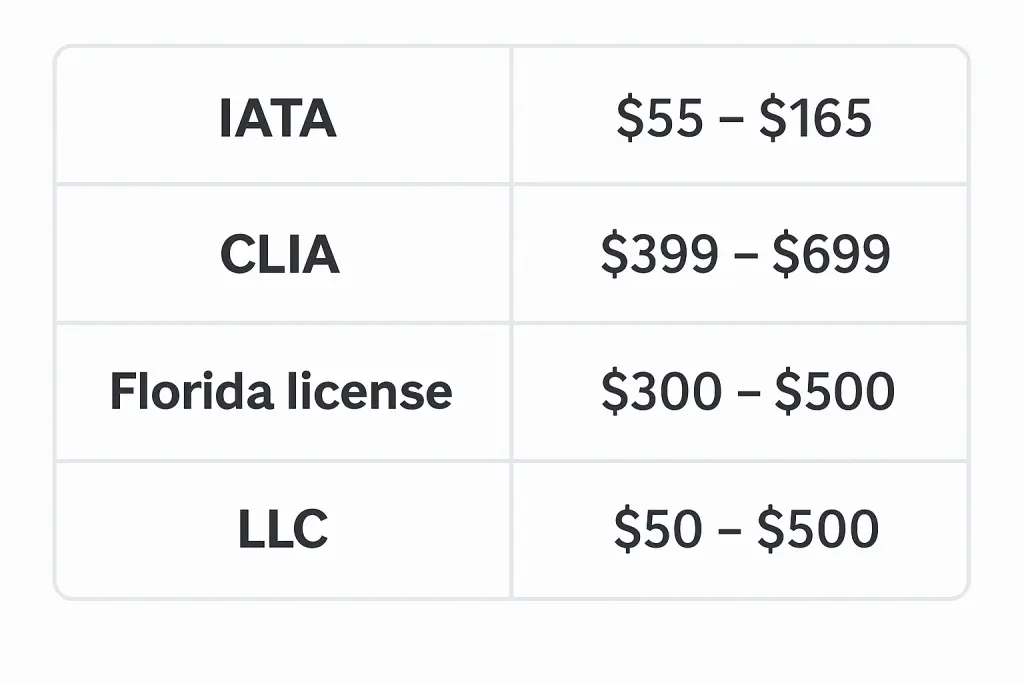
So, how much does a travel agent license cost? It varies. State-mandated licenses like the Florida Seller of Travel cost around $300 annually, while CLIA membership ranges from $119 to $399 depending on your package. Some certifications also require bonding or insurance.
If you opt for a training program, costs can start at $200 and go up to $1,000 or more. Overall, the total investment ranges from as low as $100 to over $1,000 depending on the level of training and where you operate.
How to Get a Travel Agent License
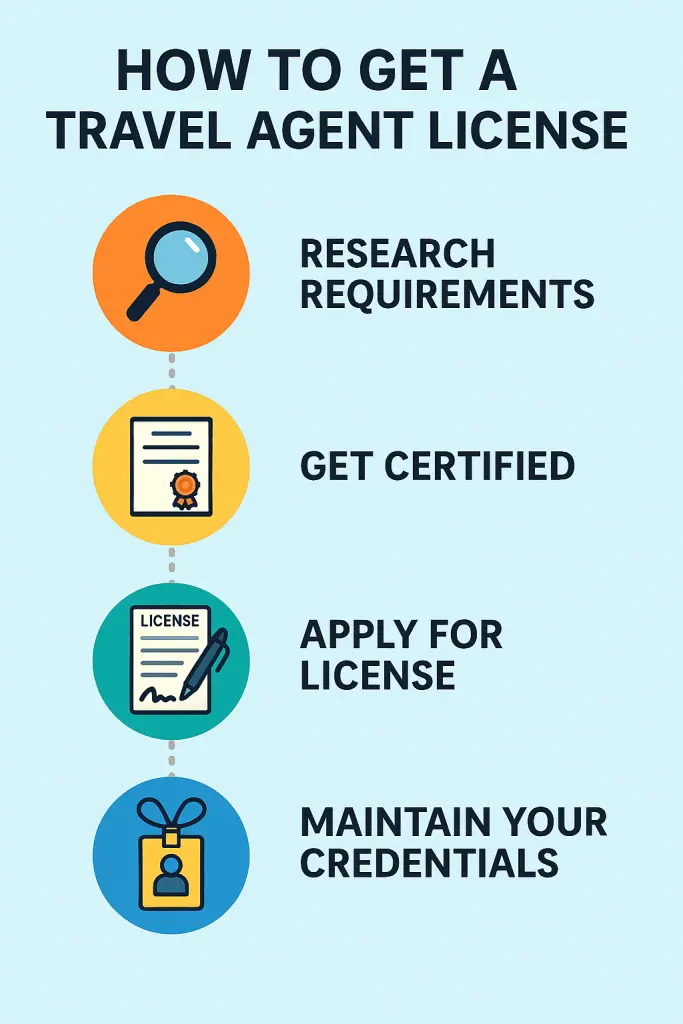
Here’s a step-by-step breakdown of how to get licensed as a travel agent:
Start booking: Once you have your ID and tools, you’re ready to sell travel legally and confidently.
Research your state laws: Florida, California, and others require specific licenses.
Choose your certification: Pick between IATA, CLIA, or other reputable organizations.
Complete training: Many programs are available online that teach everything from booking systems to customer service.
Apply for your license: Fill out the required forms, submit fees, and provide business documentation.
Can You Work Without a Travel Agent License?
Yes, in most states you can work as a travel agent without a government-issued license. But skipping certification comes with trade-offs. Without credentials, it’s harder to earn client trust or qualify for commissions from many travel suppliers.
Working without a license may be enough if you’re just booking trips for friends and family. But if you’re serious about growing a travel business, having official credentials makes a big difference. It shows you’re legitimate, well-trained, and committed to the industry.
Benefits of Getting Licensed
A travel agent license gives you more than just legal coverage. It grants you access to better deals, professional networks, preferred supplier programs, and marketing materials. You can attend industry conferences, get listed in travel agent directories, and receive support from major suppliers. Most importantly, it makes your business look trustworthy to both clients and partners.
How to Get a Travel Agent License in Florida
In Florida, licensing is mandatory. To sell travel legally, you must register with the Florida Department of Agriculture and Consumer Services as a Seller of Travel. This includes submitting an application, paying the $300 registration fee, and in some cases, posting a bond.
If you’re based in Florida or plan to sell to Florida residents, skipping this step can lead to fines and legal trouble. Make sure you check the latest regulations directly from the state’s official website.
Conclusion
Becoming a travel agent is an exciting career path. While licensing isn’t always required, getting one can significantly boost your success. It opens doors to better tools, better training, and better bookings. Whether you’re planning to go solo or work under an agency, understanding your local laws and getting certified puts you on the right track.
If you’re asking, Do I need a license to be a travel agent?, the best answer is: Maybe not legally but if you want to grow and succeed in this industry, it’s definitely worth it.