
For years, “AI in travel” mostly meant a chatbot that answered questions and then sent the traveller to a booking page. AI travel agent booking became real on 17 November 2026, when PhocusWire reported that Vayo, the AI travel agent backed by Booking Holdings, can now book flights, hotels, rental cars and activities without the traveller leaving the conversation. The traveller approves each booking, the payment runs through Stripe’s Link agent wallet, and stays booked through Booking.com come with Genius Level 3 pricing of up to 20% off select properties.
For travel agencies, OTAs and tour operators, agentic booking is no longer a slide in a conference deck. A large travel company now has an agent that books real trips. This article explains exactly what Vayo launched and how its approval and payment flow works. It covers why one major airline has already blocked agents like it, and what you should change in your own booking stack so AI agents send you bookings instead of passing you by.
What Vayo launched: AI travel agent booking in one conversation

Vayo is a Seattle-based company created by Booking Holdings, the group behind Booking.com, Priceline, Agoda, KAYAK and OpenTable. It opened a private beta and waitlist on 14 October 2026. In its launch announcement, Booking Holdings described a planned $100 million investment, “subject to continued advancement of the product and market conditions”. At launch, Vayo organised trips by pulling confirmations from the traveller’s inbox, watching prices and flagging knock-on problems, such as a dinner reservation put at risk by a flight change.
One month later, Vayo’s 17 November release added booking. According to the company, it can now book:
- Flights, hotels and vacation rentals
- Rental cars, trains, buses and ferries
- Airport transfers and parking
- Restaurants, activities and event tickets
The new features are available to private beta members, and the service is free during the invite-only beta, GeekWire reports. CEO and co-founder Mike Fridgen told PhocusWire that two releases are next: Vayo inside the messaging apps travellers already use, and shared planning with travel companions.
Vayo is not alone. Booking Holdings has made an identical $100 million planned commitment to Lola, a New York AI assistant founded by KAYAK co-founders Steve Hafner and Paul English, which added flight booking powered by Duffel in November. Since August, Google has also let US users book hotels inside AI Mode in Search. We covered that launch in our guide to Google AI Mode hotel booking.
How Vayo books a trip: direct connections, websites and approval
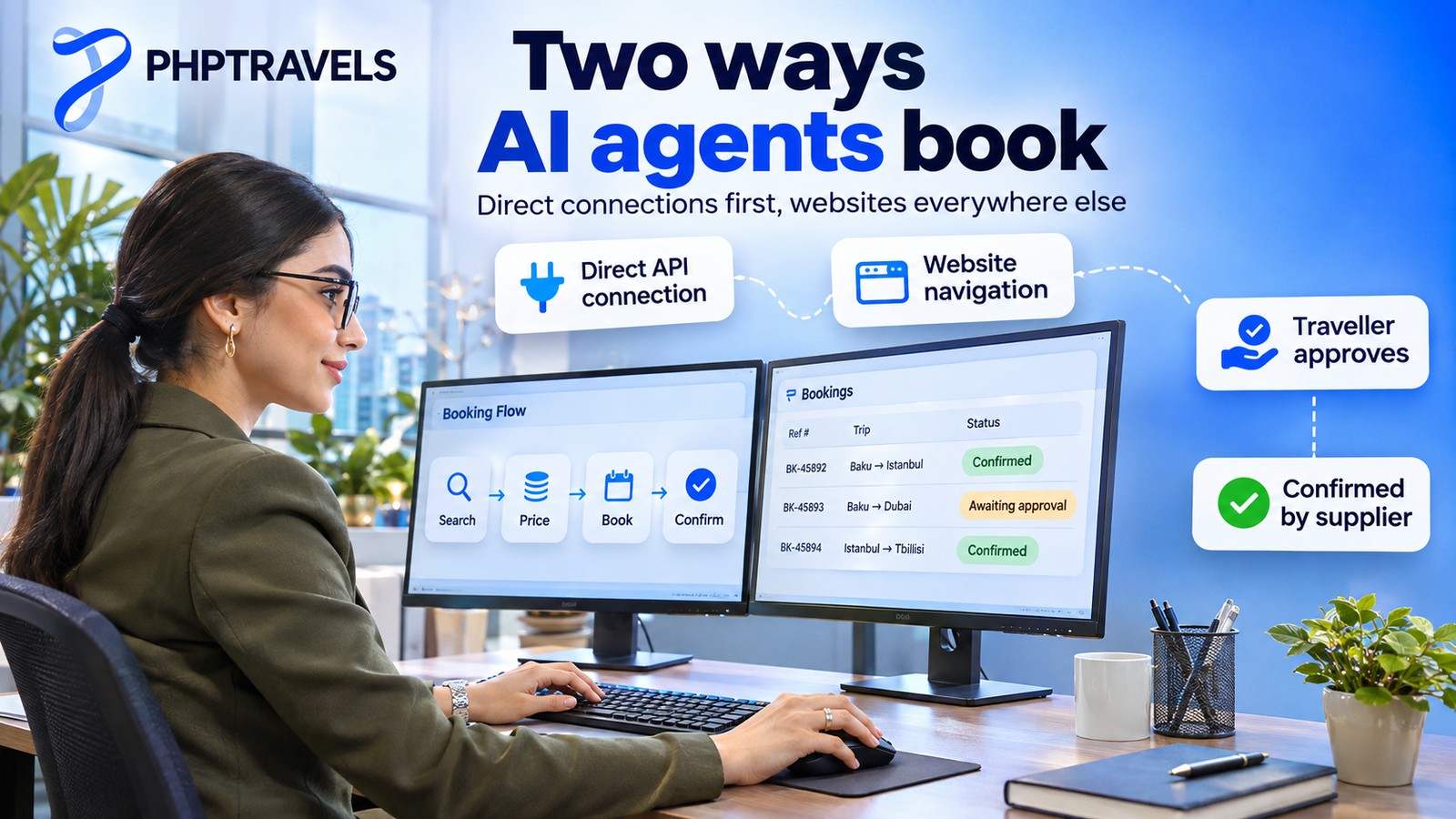
The interesting part for anyone who runs booking technology is how Vayo books. It doesn’t rely on a single method. According to the company and GeekWire’s reporting, it books in two ways:
- Direct integrations where they exist. Hotels, rental cars and activities go through a direct connection with sister company Booking.com. Restaurants go through OpenTable and event tickets through SeatGeek.
- Website navigation everywhere else. For flights and other bookings, the agent works through the supplier’s or OTA’s own website. Where needed, it signs in to the traveller’s existing account and completes the purchase. GeekWire confirmed this includes Expedia, Booking Holdings’ biggest rival, without any partnership for those bookings.
Three rules sit on top of both methods:
- Every booking needs the traveller’s approval. The agent proposes, and the human says yes.
- A reservation is only “confirmed” after the supplier confirms it. Vayo doesn’t report a booking as done just because a form was submitted.
- If a supplier doesn’t allow agents, the traveller finishes the booking. Vayo finds the best option, checks the price and hands over a checkout that’s ready to complete.
Commercially, GeekWire reports that travellers pay whichever company they book with, and that Vayo isn’t the merchant of record. The company declined to share commission details, saying its partner arrangements are still taking shape and won’t influence its recommendations.
That second booking method should get your attention. If you don’t offer an agent-friendly route into your inventory, a general-purpose agent may simply drive your public website like a human would. It may fill in your forms, fail on your captchas, or skip you for a competitor that makes the job easier.
Payments and passwords: Stripe Link agent wallet and 1Password
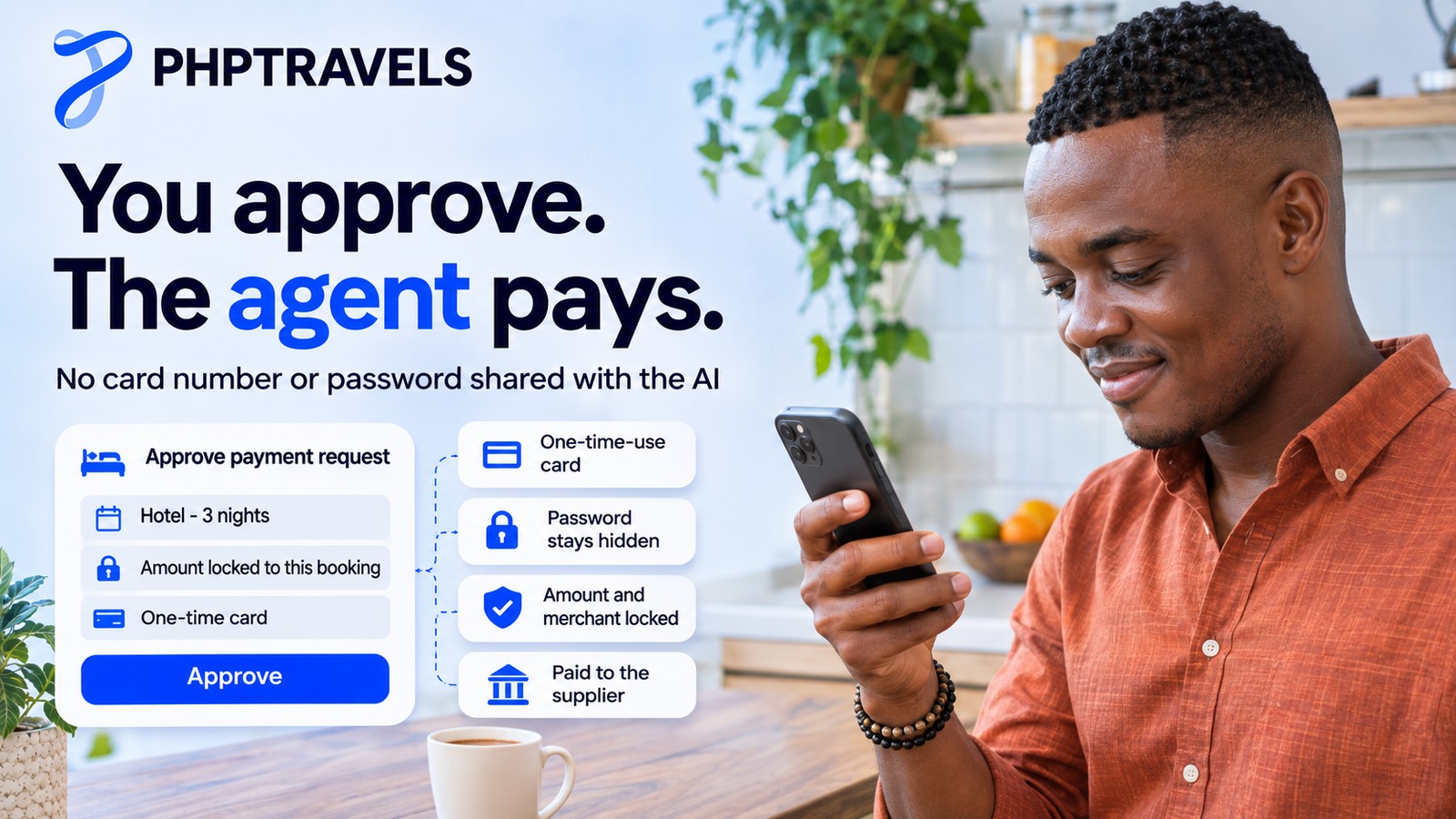
The two hardest problems in agentic booking are paying without exposing card details and signing in without exposing passwords. Vayo uses two recently launched tools for these.
Stripe’s Link agent wallet handles payment on sites other than Booking.com. Stripe launched Link’s wallet for agents on 29 April 2026. The traveller connects the agent to their Link wallet through OAuth. For each purchase the agent creates a spend request, which the person approves in Link on the web or in the mobile app. Link then gives the agent either a one-time-use card or a Shared Payment Token, scoped by amount, currency and merchant. The agent never sees the traveller’s real card number. Stripe’s developer docs note the hosted integration is currently available for US and Canadian customers.
1Password for Agents, announced on 22 October 2026, solves the sign-in problem. When an agent reaches a login page, it asks for a saved login. The user approves the request in 1Password, and 1Password fills the credentials straight into the site, so the agent never sees the password.
What this means for a merchant is easy to miss. To your checkout, an agent paying with a one-time-use card looks like an ordinary card payment. Your fraud rules, 3-D Secure flows and refund handling still apply, and the payment lands in your own merchant account. The real changes are elsewhere. The person who approved the purchase isn’t the one filling in your form, and chargeback disputes may hinge on what the traveller actually approved. We unpacked the payment side in detail in agentic payments in travel.
Genius Level 3 pricing: why loyalty rates matter for AI agents

The most commercially pointed detail in Vayo’s release is about price. When Booking.com offers the best option, every Vayo traveller immediately gets Genius Level 3 pricing, Booking.com’s highest loyalty tier, with up to 20% off select stays.
To see why that matters, look at how Genius normally works. On the Booking.com Genius page, the levels are:
| Genius level | How a traveller normally reaches it | Stay discounts | Rental car discounts |
|---|---|---|---|
| Level 1 | Create a free Booking.com account | 10% | 10% |
| Level 2 | 5 completed bookings in 2 years | 10-15% | 10-15% |
| Level 3 | 15 completed bookings in 2 years | 10-20% | 10-15% |
Discounts apply only at participating properties, before taxes and fees. Level 3 also adds free breakfasts and room upgrades at select stays, plus priority support. Vayo gives its users that top tier straight away, without the 15 bookings.
The lesson goes well beyond Booking.com. An AI agent compares options in seconds and sorts by the total it can actually book. Member-only and loyalty rates have always been a quiet way to win price comparisons. In an agent-driven channel they become a feature the agent can see and use. Two questions follow for any agency or OTA:
- Can an agent see your best price? If your strongest rates sit behind a login or a manual quote, the agent will compare your public rate with a competitor’s loyalty rate.
- Can you price a channel on purpose? Hospitality Tech News points out that a loyalty rate extended automatically through an agent raises questions about rate parity and channel strategy. Sellers need markup and rate rules they can set for each channel, not one rate for everyone.
United’s AI agent ban and the authorised path for flights
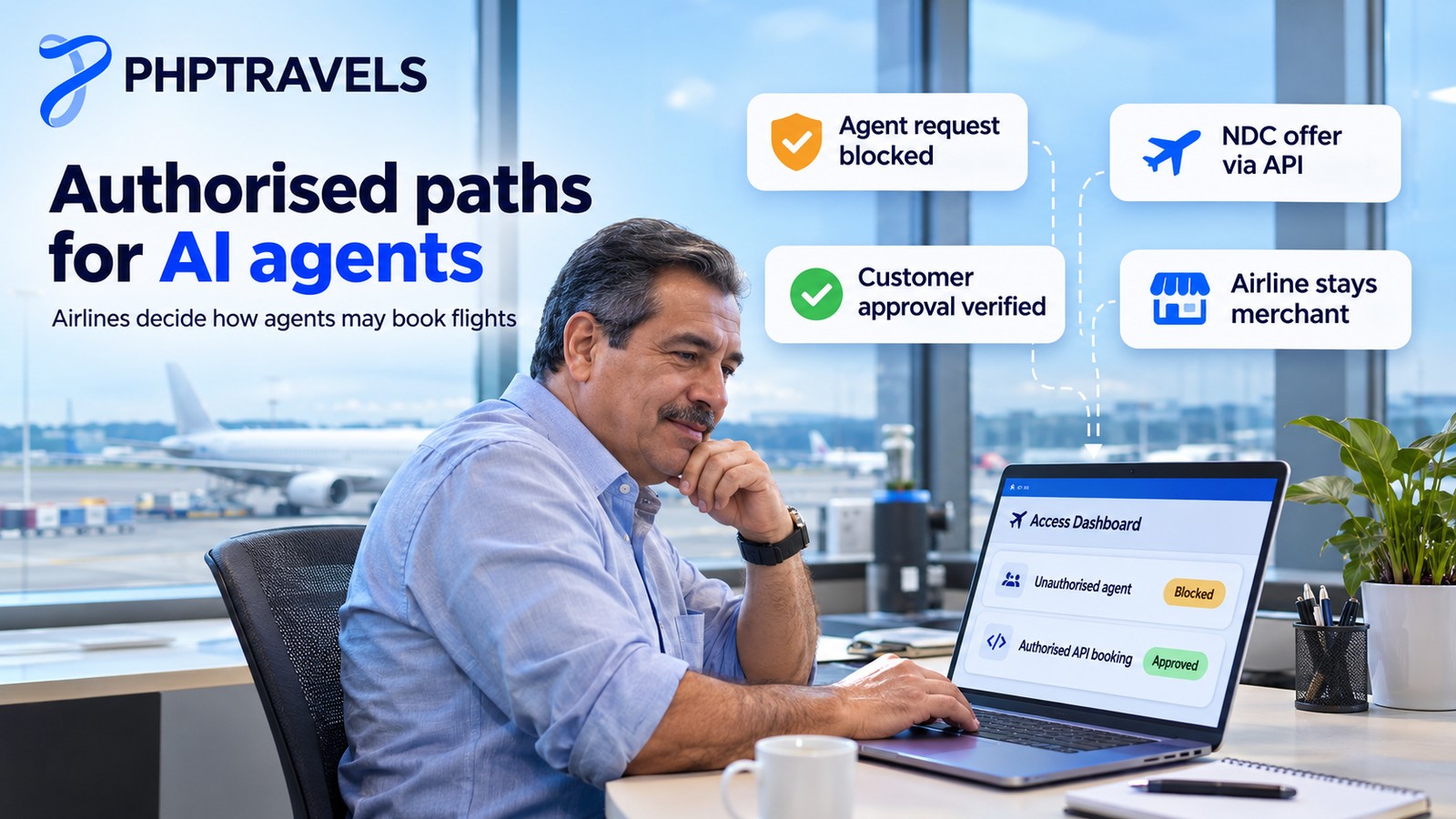
Flights are where AI travel agent booking runs into the most resistance. On 11 November 2026, six days before Vayo’s release, United Airlines restricted unauthorised third-party AI agents. The ban covers United’s own digital platforms and, indirectly, travel agencies and aggregators, through updates to its booking, ticketing and distribution policies. United cited data security, unintended purchases or MileagePlus redemptions, and rules such as the check-in step that needs a human to confirm their bags hold no banned items.
United’s help page on third-party AI agents is blunt. Giving an agent your login or your permission doesn’t make it authorised, and United doesn’t currently work with any third-party AI agents. Bookings agents made before 11 November won’t be cancelled. According to TechTarget, the rules make exceptions for certain human-reviewed AI tools used by travel agency employees and for rule-based booking automation.
Vayo follows the policy. Fridgen told PhocusWire: “Where it doesn’t, as with United today, Vayo finds the best option, verifies the price and hands you a checkout that’s ready to finish. We’d welcome the chance to work with United on an authorized path.”
What would an authorised path look like? One answer arrived a day after United’s announcement. On 12 November, Travelport, Booked AI, Basis Theory and Mastercard completed a live end-to-end agentic flight purchase. An AI travel agent sourced an NDC offer through Travelport, and the customer approved the specific flight and amount in the conversation. Mastercard Agent Pay then made a tokenised payment, with Mastercard’s Verifiable Intent linking it to that approval. The airline stayed the merchant and ticketed in its own systems. It was a live flight with a major carrier, though the partners didn’t name the airline. In other words, agents can book flights through the same NDC and GDS connections agencies already use. If NDC vs GDS is still a fuzzy topic for your team, IATA.co shows the simple version: one REST call to search live fares and another to book them.
What AI travel agent booking means for agencies and OTAs
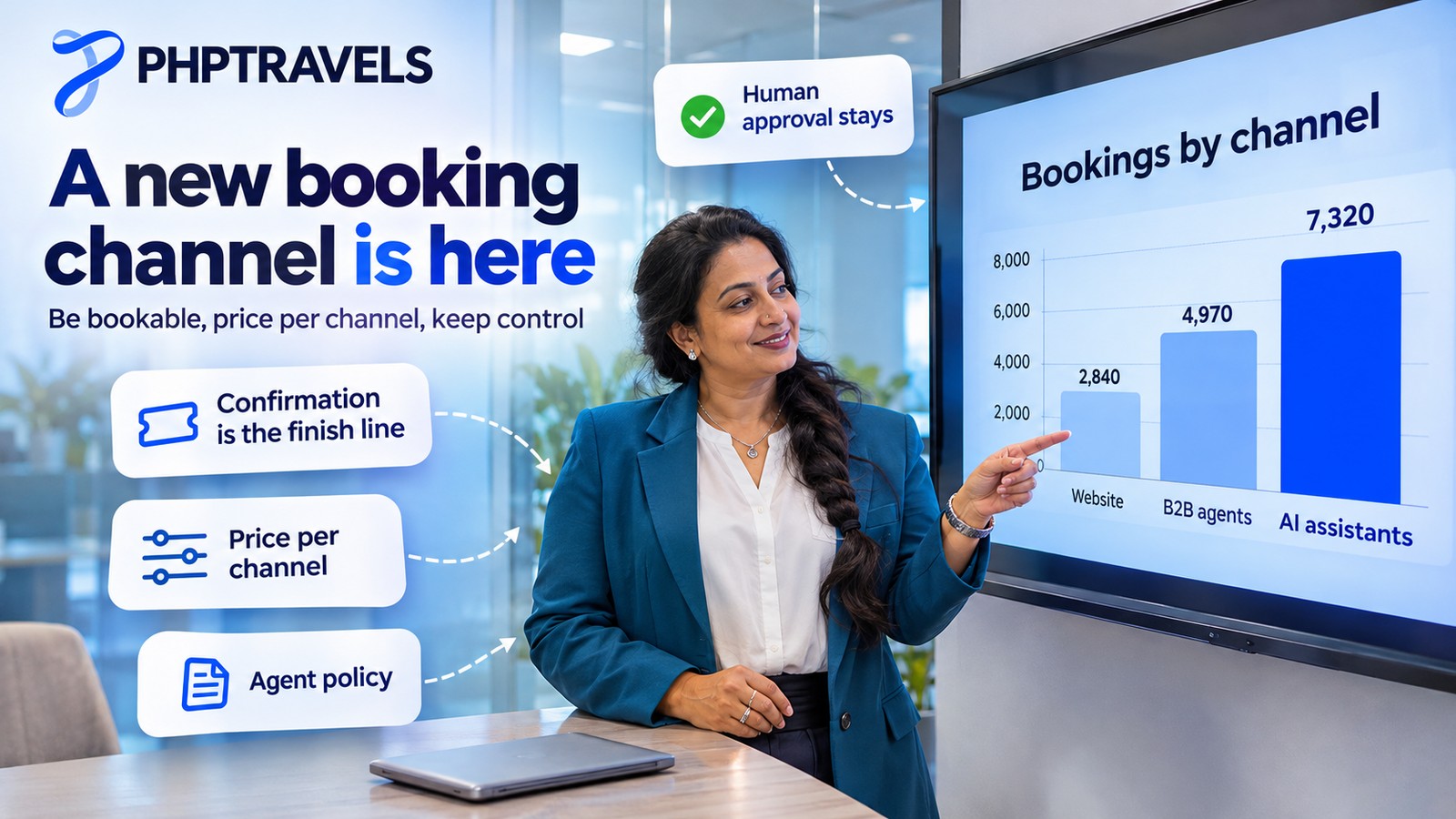
Put the week’s news side by side and a pattern appears. AI travel agents will book where booking is easy, safe and allowed. They will push the traveller to finish the job where it isn’t, and simply skip sellers whose prices they can’t see. For a travel business, that comes down to five practical shifts:
| Shift | What happened this month | What it means for your business |
|---|---|---|
| Agents book, not just search | Vayo books across 10+ categories; Google AI Mode books hotels | Some bookings will start in an agent’s chat, not on your homepage or in Google’s blue links |
| Human approval stays | Vayo, Stripe Link and Mastercard all require the traveller’s approval | Your flow needs a clear, final, all-in price that a person can approve |
| Confirmation is the finish line | Vayo only reports a booking after supplier confirmation | Fast, reliable confirmations and vouchers become a ranking signal for agents |
| Loyalty and member pricing travel with the agent | Genius Level 3 pricing for every Vayo user | Channel-specific markups and member rates decide who wins the comparison |
| Suppliers set the rules | United bans unauthorised agents; Travelport shows an authorised NDC path | You need a written policy for agent traffic: allow, block, or route through an API |
None of this makes human travel agents obsolete. United’s own rules leave room for human-reviewed AI tools used by agency staff, and complex trips still need someone who can solve problems. The bigger risk is invisibility. If your inventory only exists behind a form designed for people, an agent will book with someone else. For a broader view of where AI is useful across a travel business, Travels Tech’s overview of AI for travel covers trip planning from your own inventory, price suggestions and support replies.
How to get your booking platform ready for AI agents
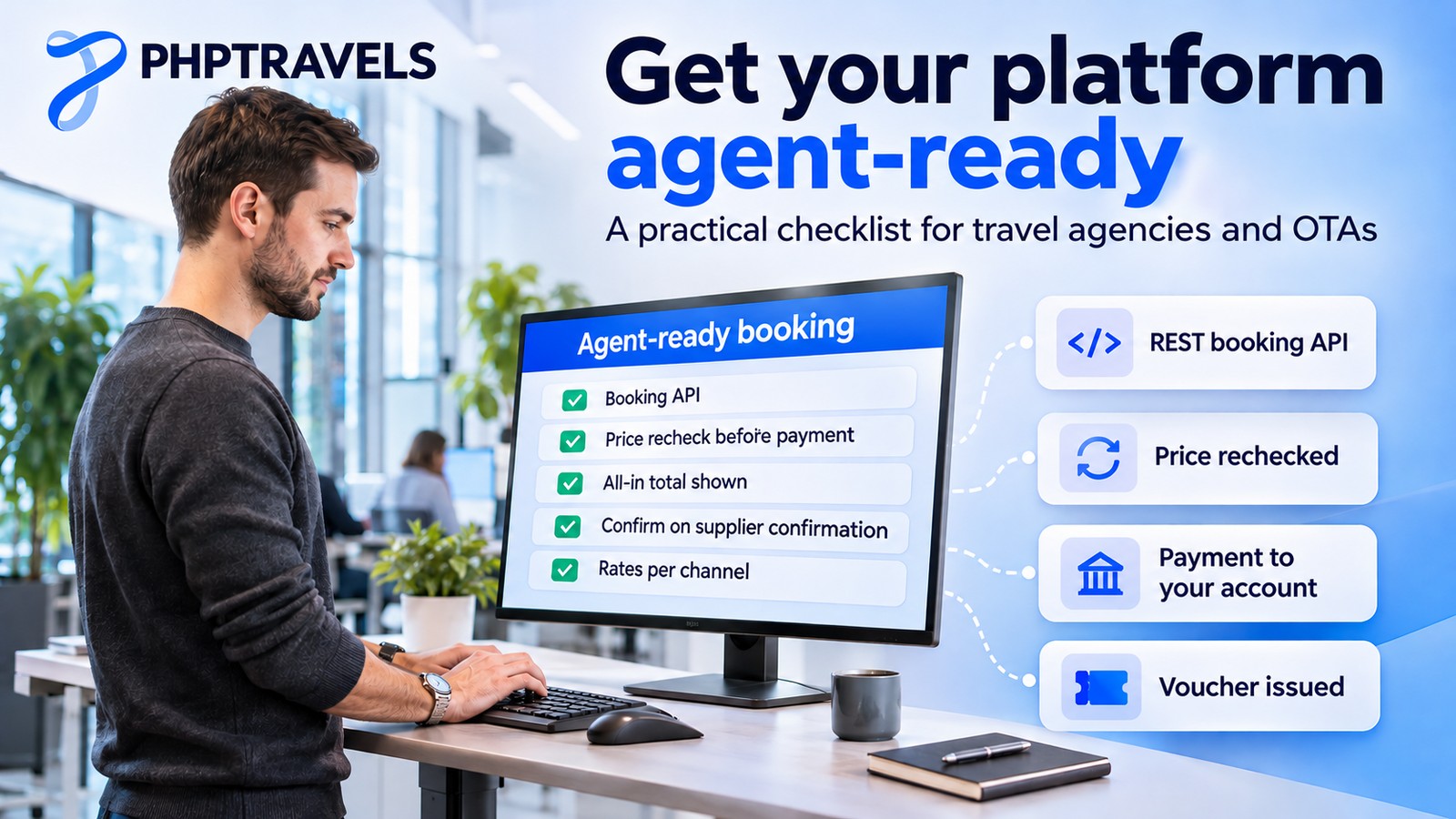
You don’t need to build your own Vayo. You do need a booking stack an agent (or your own AI assistant) can work with safely. Use this checklist:
- Expose booking through APIs, not only web forms. Search, price, book and retrieve should be callable from software. That is the “direct integration” route agents prefer. Model Context Protocol is one emerging way to connect assistants to those APIs, as we explain in MCP for travel booking.
- Recheck the price right before payment. Agents and travellers approve a specific amount. If the fare or rate changes between search and checkout, catch it before you charge the card. See our guide to booking revalidation.
- Show one all-in total and the cancellation terms before approval. Taxes, fees, baggage and refund rules belong on the screen the traveller approves, not after it.
- Confirm only on supplier confirmation. Issue the voucher or ticket number when the supplier confirms, and keep the full booking record for servicing.
- Keep payments in your own merchant account. Agent payments with one-time cards still flow through your gateway, so your fraud checks, 3-D Secure and refund process must handle them.
- Set rates for each channel. Decide what an agent channel, a B2B sub-agent and a direct customer each pay. Then give your best rate a reason to exist: a member rate, a package or a service you add.
- Write your agent policy. Decide whether automated agents may use your site, what they may do (search, book, change, cancel) and what still needs a person. Then tell your suppliers and customers. United just showed what a supplier-side policy looks like.
Where PHPTRAVELS fits, and where it doesn’t
PHPTRAVELS is licensed travel booking software for agencies, tour operators and OTAs. It isn’t a third-party AI travel agent like Vayo, and it doesn’t include Stripe Link agent-wallet payments, agent detection or Booking.com Genius rates. What it gives you is the foundation the checklist above depends on:
- Your own AI assistant on your own site. The AI Trip Planner add-on lets travellers describe a trip in plain words. It builds a day-by-day plan only from the hotels, tours and transfers you sell, and your booking engine prices it with live rates and your markup at one checkout. We walk through it in AI trip planner for travel agencies.
- REST endpoints for the booking flows, so your developers can drive search and booking from other tools and frontends. The source code is included under a commercial licence, so your team can extend it.
- Your own suppliers. Flight, hotel, tour and transfer APIs are listed on the integrations page. You bring your own contracts and credentials; the software connects them but doesn’t grant inventory.
- Your own payment accounts and pricing rules. Gateways such as Stripe, PayPal and Adyen pay into your accounts, with markup rules for each agent or channel, multi-currency and a B2B agent portal.
The honest catch: you still need supplier contracts, payment accounts and people to run operations. But a business that owns its inventory connections, prices and booking records is in a far stronger position to plug into AI channels than one renting a storefront.
The bottom line: prepare your agency for AI travel agent booking
Vayo’s launch, United’s ban and Travelport’s live NDC test all landed within one week. AI travel agent booking is now a real channel, with clear rules: human approval, secure payment, supplier confirmation and visible prices. The travel businesses that win will be easy to book through software, sharp on pricing for each channel, and in full control of their own payments and customer data.
See how a booking flow, agent portal and AI Trip Planner work end to end in the PHPTRAVELS live demo. When you’re ready, build an estimate for the modules and suppliers you need on the pricing page.
Frequently asked questions
What is AI travel agent booking?
It means an AI agent, not just a search tool, completes a travel reservation for a traveller. The agent finds options, checks availability and price, gets the traveller’s approval and pays through a secure wallet. Then it reports the booking once the supplier confirms it. Vayo, Lola and Google’s AI Mode hotel booking are current examples.
Can AI agents book flights?
Yes, where the airline or booking site allows it. Vayo books flights by navigating booking websites, and Travelport showed a live agent booking through an NDC connection. United Airlines currently prohibits unauthorised third-party AI agents, so for United flights Vayo hands the traveller a ready-to-finish checkout instead.
Is Vayo available to everyone?
Not yet. Vayo is in an invite-only private beta, free during the beta, with a waitlist at vayo.com. Booking is available to private beta members.
How does Vayo pay for bookings?
On sites other than Booking.com, Vayo uses Stripe’s Link agent wallet. The traveller approves each purchase, and the agent receives a one-time-use card or Shared Payment Token instead of the real card details. Vayo isn’t the merchant of record; travellers pay the company they book with.
What is Booking.com Genius Level 3?
It’s the top tier of Booking.com’s free loyalty programme, normally reached after 15 completed bookings in two years. It offers 10-20% off select stays and 10-15% off select rental cars, plus perks at select stays. Vayo users get Level 3 pricing when Booking.com has the best option.
Will AI travel agents replace travel agencies?
They will take over some simple, self-service bookings. Agencies that offer service, negotiated rates, packages and B2B distribution, and that make their inventory bookable through APIs, are better placed to work with AI channels than to be replaced by them.