Google ai mode hotel booking is taking another major step toward transforming how travelers search, plan and book trips online.
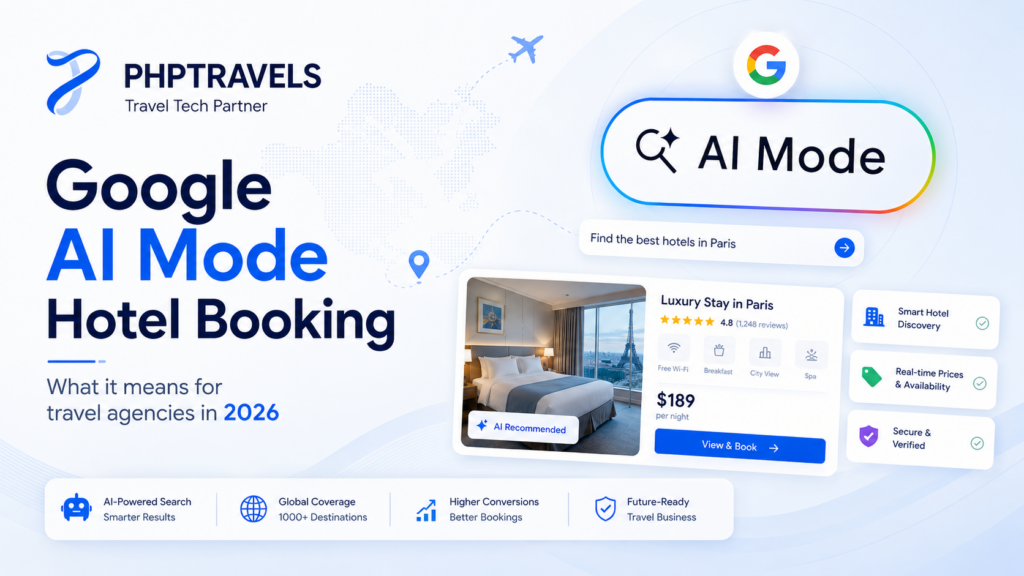
In August 2026, Google introduced hotel booking directly inside AI Mode in Google Search, allowing travelers to move from discovering hotels to completing a reservation through a conversational AI experience.
The development is significant not only for travelers but also for online travel agencies, hotels, travel technology companies and traditional travel agencies.
Google Search is gradually moving beyond providing links and becoming an intelligent travel assistant capable of understanding traveler preferences, comparing options, tracking prices and helping users complete bookings.
For the travel industry, this signals an important shift.
The future of online travel may increasingly move from traditional search results toward AI-powered travel discovery and booking experiences.
Google officially confirmed that AI Mode can now help users track flight prices, view loyalty points and miles rates and complete hotel reservations through integrated travel partners.
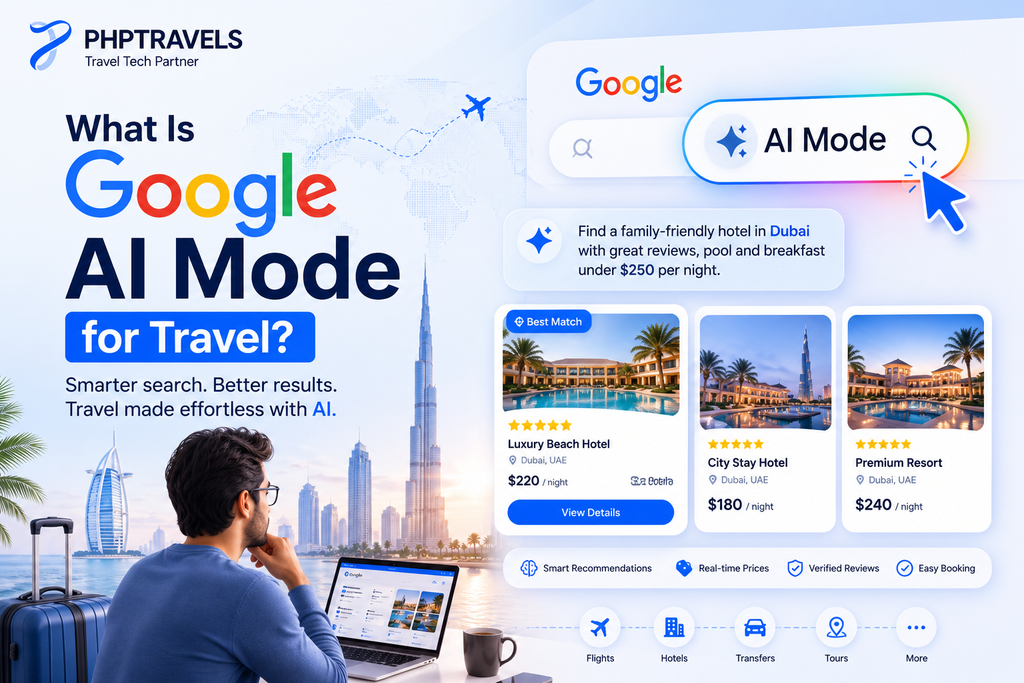
What Is Google AI Mode for Travel?
Google AI Mode is an AI-powered experience inside Google Search designed to handle complex and conversational queries.
Instead of entering several individual searches such as:
“Hotels in Dubai”
“Family hotels near Dubai Mall”
“Hotels with breakfast and swimming pool”
“Best hotel under $250”
A traveler can potentially describe the entire requirement in one conversation.
For example:
“I need a family-friendly hotel in Dubai near Downtown for five nights, with breakfast, a swimming pool, strong guest reviews and a budget below $250 per night.”
AI Mode can analyze those requirements and return hotel options that match the traveler’s preferences.
This represents a major evolution in AI travel planning because travelers no longer need to manually open dozens of hotel pages and compare every property individually.
The search engine itself increasingly becomes part of the travel planning workflow.
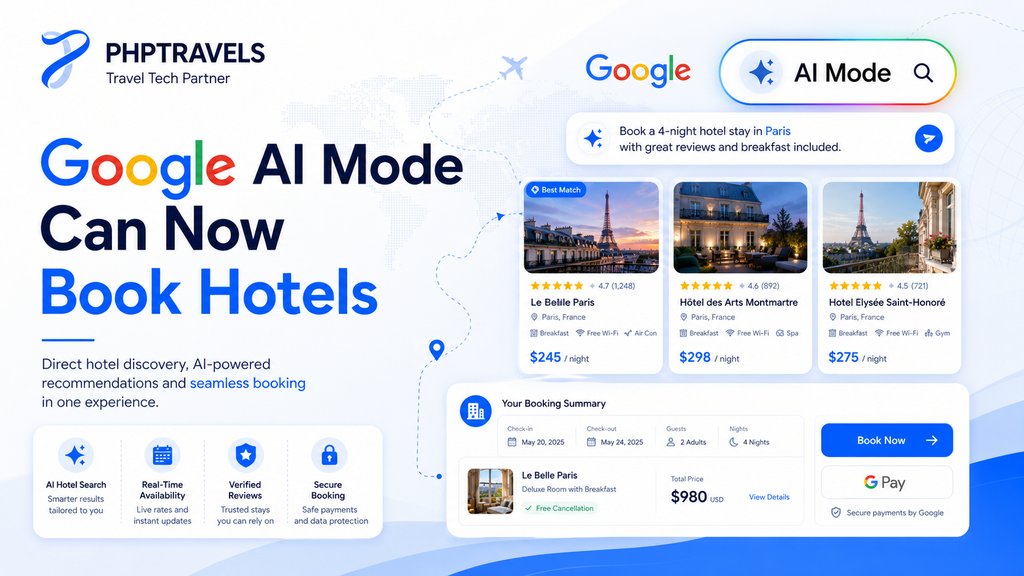
Google AI Mode Can Now Book Hotels
The biggest development is the introduction of hotel booking inside Google AI Mode.
Travelers in supported markets can search for hotels using natural-language queries and receive visual hotel recommendations containing information such as guest reviews and important comparison factors.
Once the traveler selects a suitable property, AI Mode can assist with the reservation process.
For integrated partners, users can choose Continue on Google, select a room type, review booking details and cancellation conditions and complete payment using Google Pay.
The initial rollout started in the United States in English.
Google’s announced hotel and travel partners include:
Booking.com, Expedia, Hotels.com, Hilton, Marriott International, IHG Hotels & Resorts, Choice Hotels International, Priceline, Trip.com and Wyndham Hotels & Resorts.
This partner list is particularly important for the travel technology industry.
It demonstrates that Google is not necessarily trying to replace existing travel suppliers and OTAs. Instead, Google is positioning AI Mode as another powerful travel discovery and booking distribution channel.
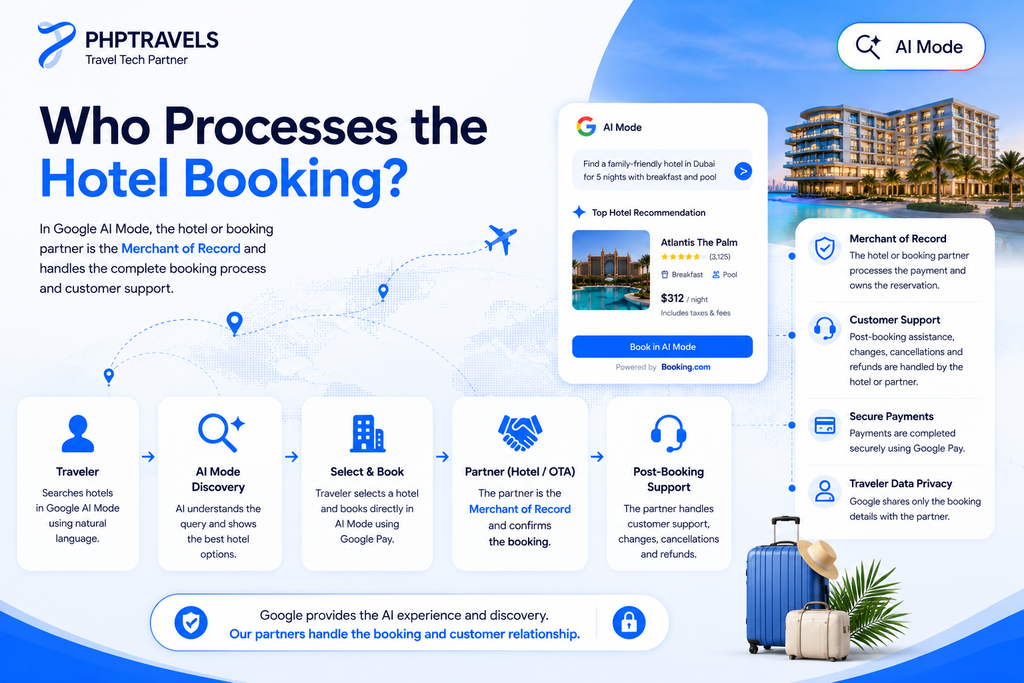
Who Processes the Hotel Booking?
One important part of Google’s model is the relationship between Google and the actual booking provider.
Although travelers can complete much of the reservation flow through AI Mode, the participating hotel or booking platform remains responsible for the commercial transaction.
The hotel or OTA acts as the merchant of record and manages post-booking customer service.
That distinction matters.
Google provides the AI discovery and booking interface, while travel companies continue handling inventory, fulfillment, reservation management and customer support.
For OTAs and hotel technology providers, this suggests that API connectivity and structured travel inventory may become even more important.
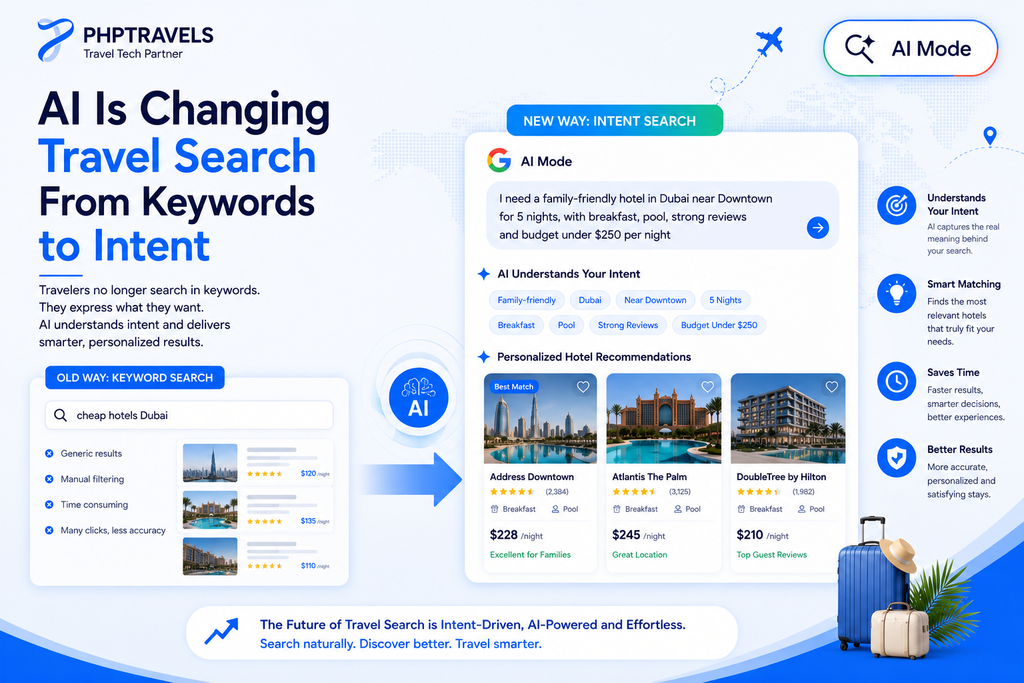
AI Is Changing Travel Search From Keywords to Intent
Traditional travel search has historically depended heavily on keywords.
A traveler might search:
“cheap hotels London”
“flights New York Paris”
“best resorts Maldives”
Travel companies optimized websites and landing pages around these phrases.
AI-driven search works differently.
The system attempts to understand intent, not only keywords.
A traveler could ask:
“Find me a quiet beachfront hotel in the Maldives for our honeymoon with a private pool, excellent reviews and easy airport transfers.”
This query includes budget considerations, location preferences, trip purpose, property characteristics and service requirements.
AI systems can interpret all these factors together.
That means travel businesses will increasingly need to provide high-quality structured information about inventory, amenities, policies, pricing, availability and customer experience.
SEO will remain important, but AI visibility and structured travel data may become equally important.
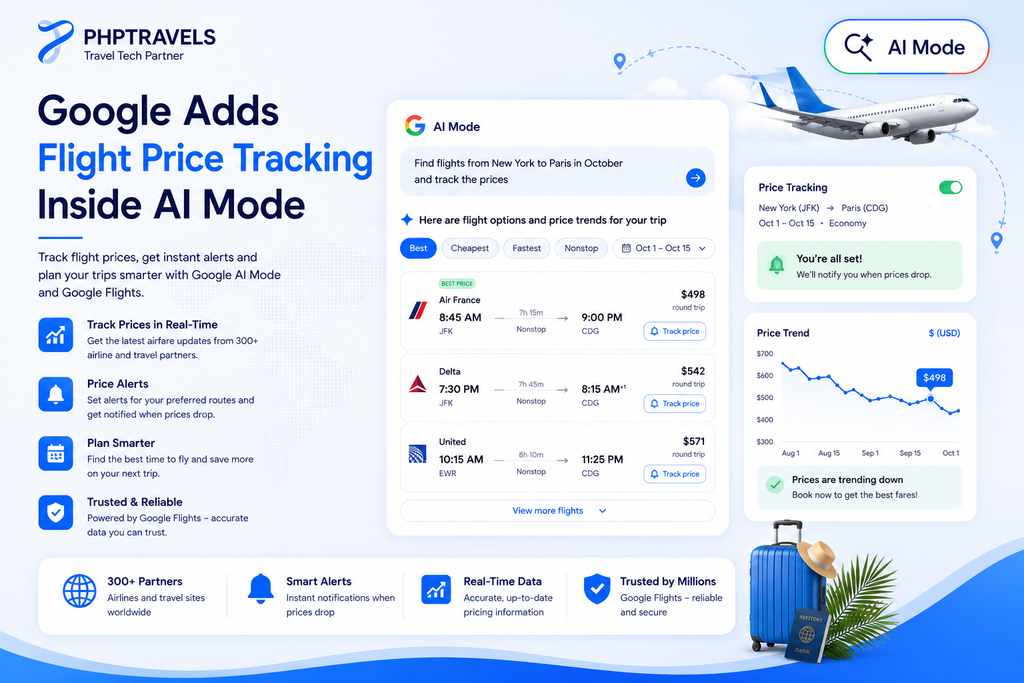
Google Adds Flight Price Tracking Inside AI Mode
Hotels are not the only major development.
Google has also integrated Google Flights price tracking into AI Mode.
Travelers can describe where and when they want to travel, receive current options and create price alerts directly during the AI conversation.
Google says its flight search ecosystem receives pricing information from more than 300 airline and travel-site partners.
This reduces another source of friction in travel planning.
Instead of separately searching flights and configuring alerts in another interface, users can continue the same AI-powered travel conversation.
However, there is an important limitation.
As of the August 2026 announcement, Google has introduced direct hotel booking in AI Mode, but direct flight booking inside AI Mode is not yet available.
Travelers can compare flights, monitor prices and build their travel plans, but they generally continue to partner websites when they are ready to purchase.
This could change as Google’s agentic travel technology develops further.
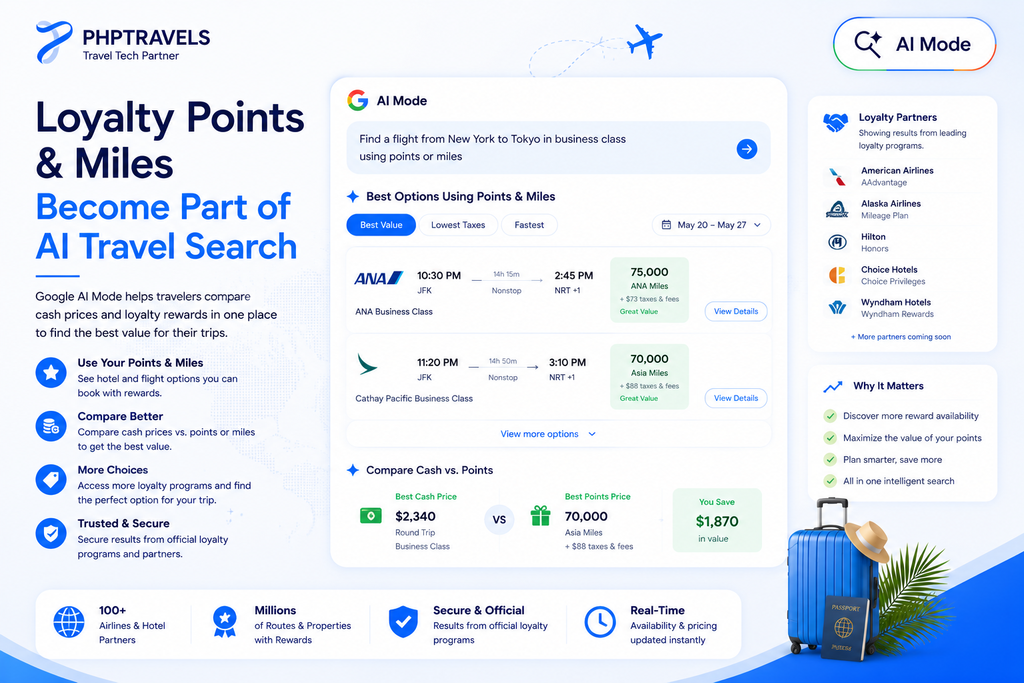
Loyalty Points and Miles Become Part of AI Travel Search
Another interesting development is the integration of loyalty programs.
AI Mode can display hotel and flight prices using points or miles, helping travelers compare cash prices against loyalty rewards.
Initial participating loyalty partners include American Airlines, Alaska Airlines/Hawaiian Airlines, Hilton, Wyndham Hotels & Resorts and Choice Hotels International.
Google has also announced additional support for programs associated with companies such as Accor, Hyatt, LATAM Airlines, Flying Blue and Lufthansa Group.
This is important because loyalty programs have traditionally required travelers to search individual airline or hotel websites.
AI could make loyalty inventory significantly easier to discover.
A traveler may eventually be able to tell an AI:
“I have 80,000 airline miles and 100,000 hotel points. Build the best five-day trip from my city that I can book mostly using rewards.”
That type of search illustrates where agentic AI travel booking could be heading.
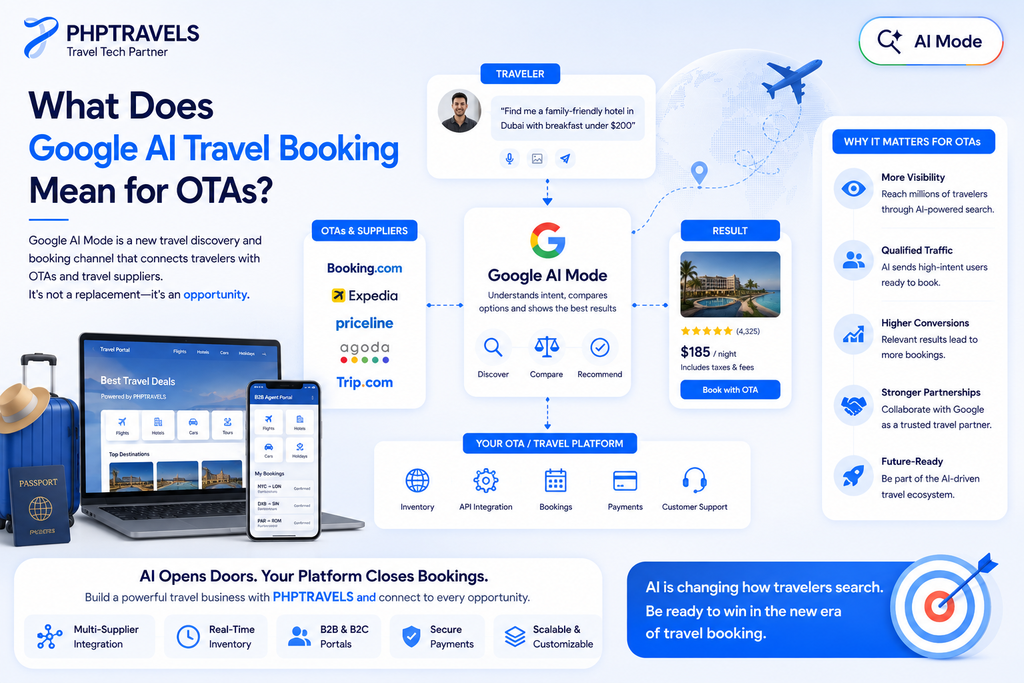
What Does Google AI Travel Booking Mean for OTAs?
Some travel agencies may initially view Google’s expansion into booking as a threat.
The reality is more complicated.
Google still requires inventory, rates, availability and booking infrastructure from travel suppliers and technology partners.
That creates opportunities for OTAs capable of providing reliable inventory and modern connectivity.
The competitive advantage may gradually shift toward companies that can provide:
Fast APIs, accurate real-time availability, structured hotel content, competitive pricing, reliable booking systems, strong post-booking support and scalable travel technology infrastructure.
Smaller OTAs should therefore focus less on competing directly with Google’s search interface and more on building technology that can participate in a broader travel distribution ecosystem.
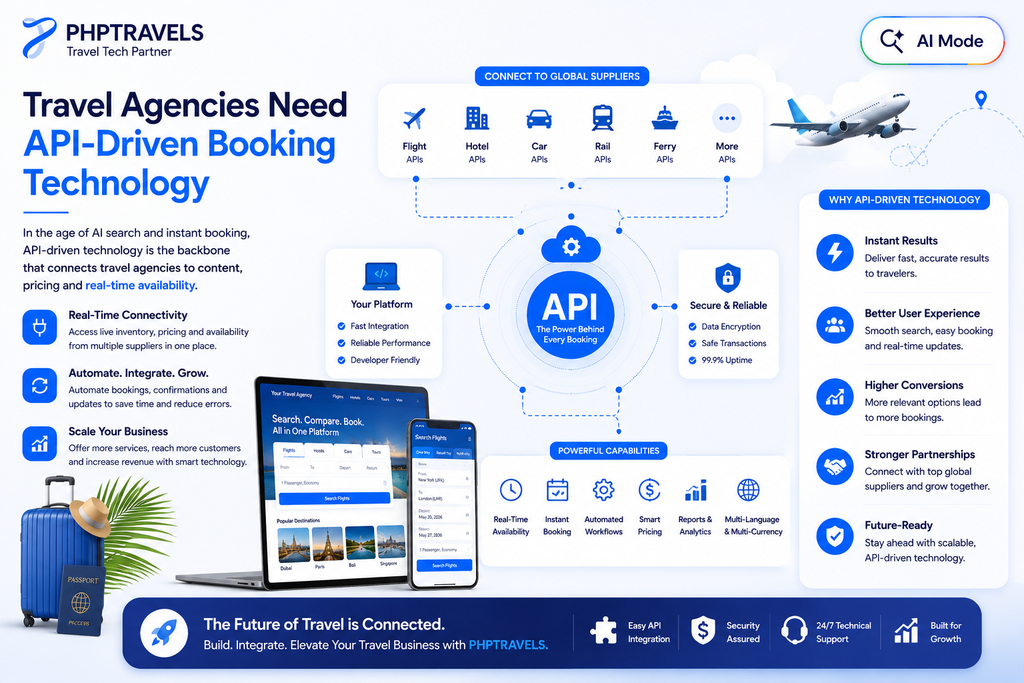
Travel Agencies Need API-Driven Booking Technology
The development also reinforces an existing trend in travel technology.
Modern travel agencies increasingly need centralized platforms capable of connecting multiple travel suppliers.
Instead of managing isolated supplier systems, agencies can use a travel booking platform that aggregates inventory from hotel suppliers, airlines, transfer providers, tour operators and other travel services.
Platforms such as PHPTRAVELS are designed around this model, enabling travel businesses to build their own B2C or B2B booking portals while connecting external travel APIs and managing bookings from a centralized system.
As AI becomes another discovery channel, the underlying infrastructure becomes even more important.
Regardless of whether a booking begins from Google, an OTA website, a mobile application, a B2B agent portal or an AI assistant, the industry still needs reliable systems for:
inventory distribution, API connectivity, pricing, reservation management, payments, customer accounts and supplier integrations.
AI may change the interface, but the travel technology infrastructure behind bookings remains essential.
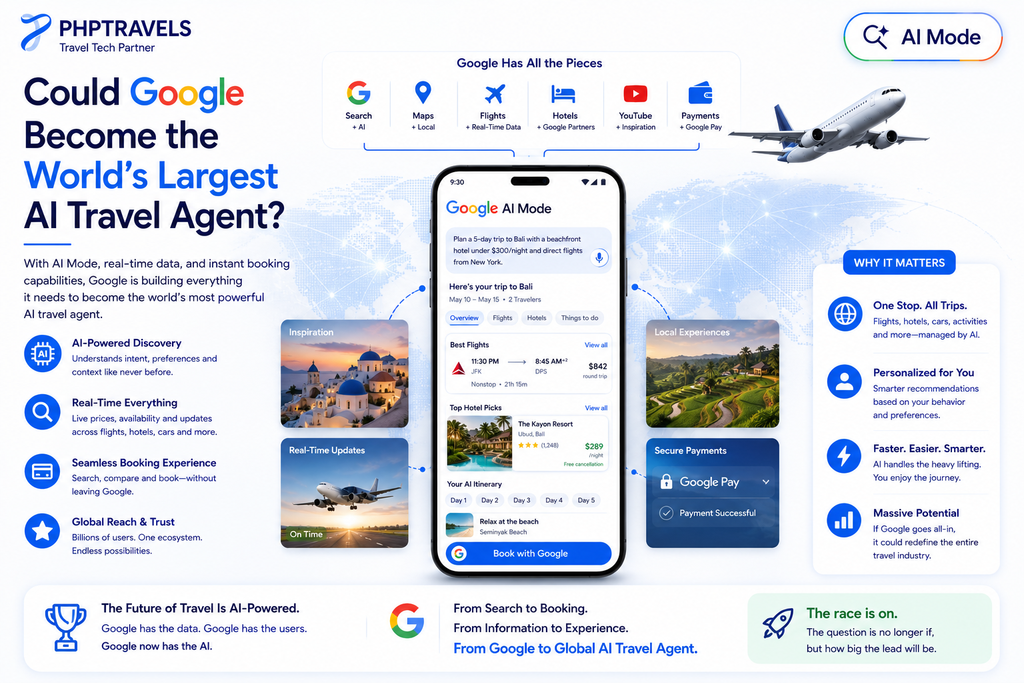
Could Google Become the World’s Largest AI Travel Agent?
Google already controls one of the most important travel discovery channels globally through Search, Google Maps, Google Hotels and Google Flights.
Adding conversational planning and transactional capabilities creates something much more powerful.
AI Mode could eventually function like a digital travel agent that understands a user’s requirements, researches destinations, compares hotels and flights, monitors prices and helps complete reservations.
Google has already demonstrated broader ambitions for agentic booking experiences across travel and other services.
However, traditional travel companies are unlikely to disappear.
Instead, their roles may evolve.
Hotels provide inventory.
Airlines operate flights.
OTAs aggregate travel products.
Travel technology companies provide booking infrastructure.
Travel agencies provide specialized services and customer relationships.
AI becomes another intelligent layer connecting these components.
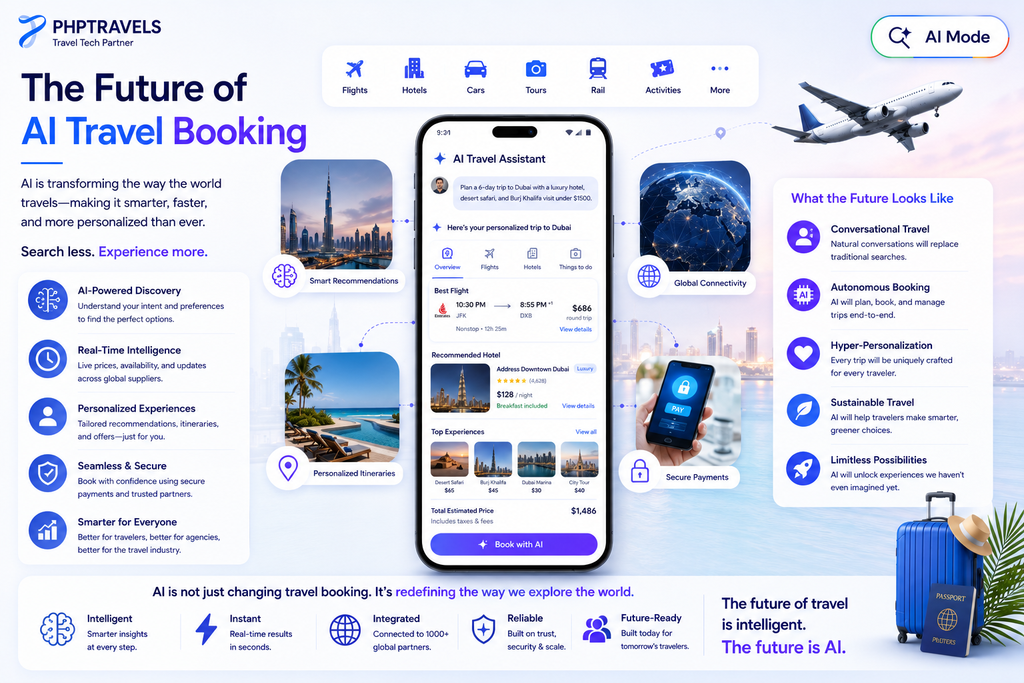
The Future of AI Travel Booking
The launch of Google AI Mode hotel booking represents more than another Search feature.
It demonstrates how quickly online travel is moving toward AI-assisted commerce.
Travelers increasingly expect to describe what they want instead of navigating complicated booking filters.
The winning travel platforms will therefore be those that combine strong inventory, real-time APIs, reliable technology and data that AI systems can easily understand.
For travel agencies and OTAs, the strategy should not be to resist AI.
The better strategy is to become AI-ready.
That means modernizing APIs, improving structured content, ensuring real-time inventory accuracy, strengthening booking infrastructure and building platforms capable of connecting with emerging distribution channels.
Final Thoughts
Google AI Mode hotel booking could become one of the most important developments in travel technology in 2026.
Travel search is evolving from:
Search → Compare → Visit Website → Book
toward:
Describe Intent → AI Compares → AI Recommends → Book
Hotels are already entering this new model.
Flights could follow.
Loyalty programs are becoming integrated.
Price monitoring is becoming conversational.
The direction is clear: AI is becoming a major interface between travelers and travel inventory.
For travel agencies, OTAs and travel technology providers, this creates both competition and opportunity.
Companies with scalable APIs, strong supplier connectivity and flexible travel booking technology will be better positioned to participate in the next generation of global travel distribution.
Frequently Asked Questions
Can Google AI Mode book hotels?
Yes. Google introduced hotel booking through AI Mode in the United States, allowing eligible users to discover hotels and complete reservations with participating travel partners.
Can Google AI Mode book flights?
Not yet directly. AI Mode can search flights and track prices, while users currently complete purchases through airline or travel partner websites.
Does Google AI Mode support hotel loyalty points and airline miles?
Yes. AI Mode can show selected hotel and flight options using supported loyalty points and miles programs.
Will AI replace online travel agencies?
AI is more likely to change how travelers discover and interact with OTAs rather than eliminate them. Travel suppliers, APIs, booking platforms and OTAs still provide the inventory and infrastructure required to complete reservations.
How can travel agencies prepare for AI travel booking?
Travel agencies should invest in API connectivity, structured travel data, real-time inventory, fast booking platforms, mobile-friendly experiences and scalable travel technology that can adapt to new AI-powered distribution channels.