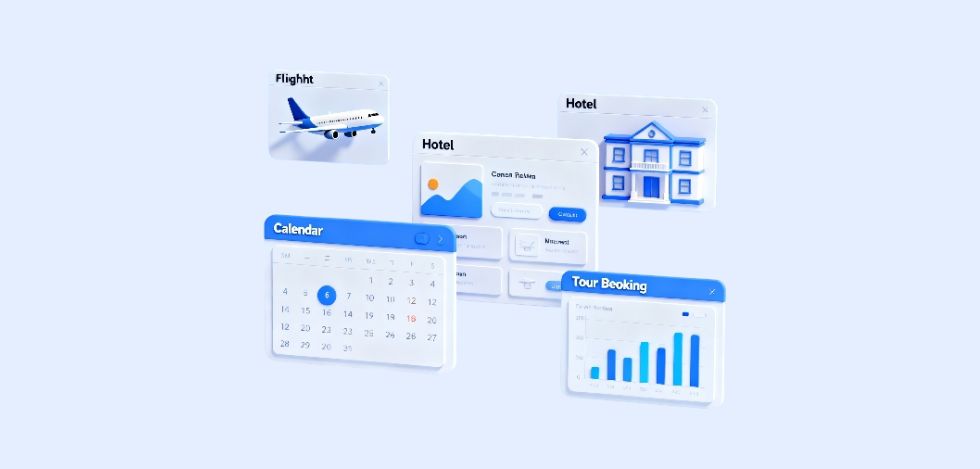
In today’s digital-first world, convenience isn’t optional its expected. Customers want to book instantly, see real-time availability, and receive confirmation without waiting. Businesses that still rely on phone calls or manual reservations risk falling behind. An online booking system solves these problems while unlocking new ways to grow revenue and build customer loyalty.
Whether you’re running a hotel, travel agency, salon, or tour operation, the right booking engine can transform your workflow. It reduces errors, eliminates unnecessary admin, and improves customer satisfaction. With travel technology advancing rapidly (see the latest trends here), implementing a robust online booking system is now a business necessity, not just an upgrade.
Advantages of Online Booking Systems
The core advantage is efficiency. Customers can book 24/7, on any device, without calling your staff. Automated confirmations, synced calendars, and real-time updates prevent double bookings, especially when the booking journey starts with accurate hotel inventory search. According to Statista, more than 60% of global travel reservations are now made online, proving the shift in consumer behavior.
For businesses, online booking systems reduce staffing costs and free up employees to focus on higher-value tasks. They also increase conversion rates with upsells and add-ons, such as offering travel insurance during checkout or recommending premium seats. With integrations into payment gateways and GDS, online booking systems become more than a scheduling tool they become revenue engines.
Advantages of an Online Hotel Booking System
Hotels benefit significantly from online booking systems. By encouraging direct bookings, hotels reduce dependency on OTAs and protect their profit margins. Features like channel manager integration, multi-currency payments, and upsell options (breakfast packages, spa services, or late checkout) help maximize revenue per booking.
Just as importantly, online booking gives hotels direct guest relationships. Collecting first-party data allows properties to run loyalty programs, send personalized offers, and retarget past guests strategies far more effective than relying solely on aggregators. For more context, read about the difference between CRS and GDS and how distribution systems shape hotel operations.
Online Booking vs Offline Appointments
Offline bookings depend on phone calls, walk-ins, or emails. That process often leads to errors, delays, and missed opportunities. Online booking works 24/7, instantly confirms availability, and automatically sends reminders. For customers, it’s more transparent and less stressful. For businesses, it ensures every slot or room can be monetized, even outside office hours. With most bookings now made from mobile devices, sticking to offline processes in 2026 is simply leaving revenue behind.
Key Benefits for Businesses and Customers
- Efficiency and Convenience: 24/7 self-service booking saves time for both sides.
- Customer Satisfaction: Clear availability, flexible rescheduling, and mobile-first design.
- Automation: Instant confirmations and reminders reduce no-shows.
- Revenue Growth: Upselling, cross-selling, and loyalty programs boost sales.
- Data Insights: Track peak booking times and customer trends for better planning.
- Accessibility: WCAG-compliant systems ensure inclusivity for all users.
- Scalability: Works for small agencies and global hotel chains alike.
Integration With Travel Technology
Modern booking engines connect seamlessly with your CRM, accounting systems, and travel APIs. This ensures consistent data flow and eliminates duplicate manual work. Agencies can sell across multiple platforms while managing everything from a single dashboard. If you’re exploring growth models, consider how booking systems power B2B networks and unlock new markets.
Revenue Optimization Through Online Booking
Beyond efficiency, booking engines increase revenue directly. Smart prompts like “add airport transfer” or “upgrade to deluxe room” raise average order values. Bundles and packages encourage larger purchases. Loyalty points encourage repeat business. Forbes highlights that personalized upsells can lift travel company revenue by 10–30% a margin no business should ignore.
Importance of Online Booking in 2026
Tourism is projected to surpass 2 billion international arrivals by 2030. In this competitive landscape, online booking systems aren’t just about convenience they’re survival tools. Businesses without them risk invisibility in search results and credibility issues with customers who expect instant digital experiences. Those that invest early, using platforms like PHPTRAVELS, are positioned to capture growth and scale efficiently.
FAQs About Online Booking Systems
Q1: What are the main advantages of online booking for customers?
Customers get 24/7 access, instant confirmations, transparent pricing, and easy rescheduling all without calling support.
Q2: How do online booking systems minimize no-shows?
By sending automated reminders, allowing prepaid deposits, and offering flexible rescheduling to reduce last-minute cancellations.
Q3: Can booking systems integrate with social media?
Yes. Businesses can link booking pages directly from Instagram, Facebook, or Google Business Profiles, making it easier for customers to book in just a few taps.
Q4: Why is an online hotel booking system important?
It reduces OTA reliance, builds direct guest relationships, supports upsells, and enhances revenue management.
Q5: What should I look for in a booking system?
Prioritize mobile-friendly design, API integrations, multi-currency payments, accessibility compliance, and analytics dashboards.
How to Set Up an Online Booking System (Step by Step)
- Choose the Right Platform – Pick a system tailored to your industry, with integrations for CRM, payment gateways, and marketing tools.
- Integrate With Your Website – Add booking widgets or direct links in your main navigation.
- Set Availability and Pricing – Sync calendars or PMS data to display real-time slots and dynamic pricing.
- Enable Payments – Connect secure gateways like Stripe, PayPal, or Razorpay.
- Test and Launch – Run test bookings, verify confirmations, and then promote your booking links via website, email, and social media.
Final Thoughts
The advantages of online booking systems are clear: higher efficiency, lower costs, better customer satisfaction, and more revenue. In 2026, these systems are not optional they’re essential. Businesses that embrace them now will scale faster, build stronger customer relationships, and gain a durable competitive edge.
If you’re ready to modernize your operations, explore PHPTRAVELS to see how our booking solutions can help you stay ahead in the travel industry.