Travel agencies are no longer competing on relationships alone. Today, speed, accuracy, and availability define who wins a booking. Customers expect instant results, live pricing, and seamless payments without delays or back and forth communication.
If your agency still depends on manual confirmations or disconnected systems, you are already behind. The real question is not whether you need a corporate travel booking engine, but how to choose the right one and implement it correctly.
Summary
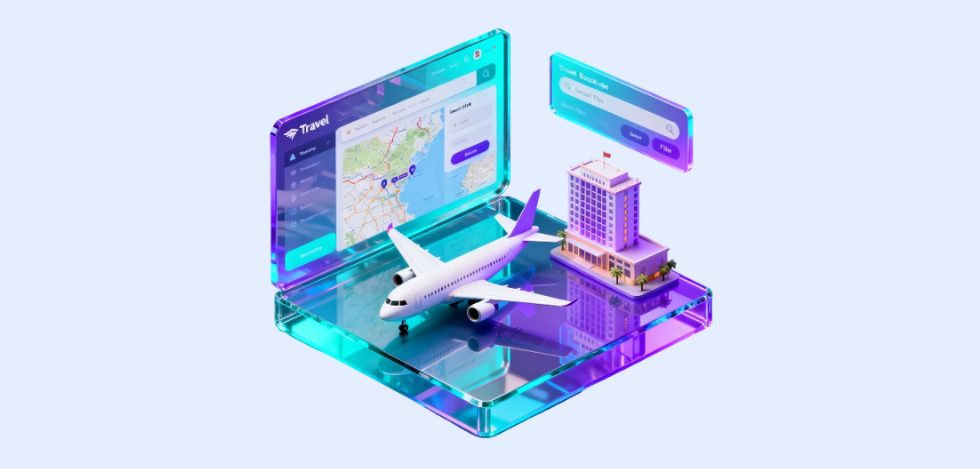
A travel booking engine is the core system that powers online reservations for flights, hotels, tours, and transfers.
Key takeaways:
- It connects your website to suppliers through APIs and GDS systems
- It automates bookings, payments, confirmations, and reporting
- It allows agencies to operate 24/7 globally
- It supports both B2C customers and B2B agents
- The right setup directly impacts revenue, efficiency, and scalability
What Is a Travel Booking Engine
A travel booking engine is an online reservation system that allows users to search, compare, and book travel services in real time.
It typically includes:
- Flight booking functionality
- Hotel inventory access
- Tour and activity listings
- Transfer and car rental options
- Payment processing
- Booking confirmations and itineraries
Behind the interface, it connects to multiple suppliers using APIs and GDS providers like Amadeus, Sabre, and Travelport.
For agencies evaluating systems, it is worth understanding how broader travel software development for booking systems works because the booking engine is just one part of a larger operational ecosystem.
Why Travel Agencies Need a Booking Engine
1. Real Time Availability and Pricing
Manual systems cannot compete with live data. Customers want to see accurate prices instantly. A booking engine pulls data directly from suppliers and updates availability in real time.
2. 24 Hour Global Sales
Your business is no longer limited by working hours. A booking engine allows customers to book anytime from anywhere.
A properly configured white label travel booking engine platform enables agencies to accept direct bookings without relying only on third party platforms.
3. B2B and B2C in One System
Modern agencies serve both direct customers and sub agents. A booking engine allows:
- Agent login portals
- Commission management
- Credit limits and wallets
If you are expanding distribution, a dedicated B2B booking system for agents becomes critical.
4. Automation and Efficiency
Manual booking workflows slow down operations. A booking engine automates:
- Confirmation emails
- Invoice generation
- Itinerary creation
- Payment tracking
5. Scalability
A small agency can operate like a global OTA with the right infrastructure. You can add suppliers, products, and markets without increasing manual workload.
Accept Bookings Directly on Your Website
One of the biggest shifts in the travel industry is moving away from dependency on third party platforms.
A booking engine allows you to accept bookings directly on your own website instead of relying only on external marketplaces.
Full Control Over Your Brand
When customers book through your website:
- Your brand is visible at every step
- Your design, messaging, and experience stay consistent
- You are not competing side by side with other agencies
This creates stronger trust and repeat business.
In contrast, third party platforms position your services next to competitors, where price becomes the only deciding factor.
Direct Revenue Without Commission Loss
Online marketplaces and OTAs charge commissions on every booking.
With your own booking engine:
- You keep full margins on direct bookings
- You reduce dependency on commission based channels
- You improve long term profitability
Even a small shift from OTA bookings to direct bookings can significantly increase revenue over time.
Customer Ownership and Data Control
When bookings happen on your platform, you own the customer relationship.
This means you can:
- Build your own customer database
- Track booking history and preferences
- Run targeted offers and promotions
- Increase repeat bookings
On third party platforms, customer data is limited or controlled by the platform itself.
Flexible Payment and Pricing Control
Direct booking systems allow you to:
- Integrate local and global payment gateways
- Offer multiple currencies
- Apply your own pricing rules and markups
This flexibility is critical for agencies operating in multiple markets.
Multi Device Booking Experience
Customers no longer book only on desktops.
A modern booking engine ensures:
- Mobile friendly booking flow
- Tablet and desktop compatibility
- Consistent experience across devices
This directly impacts conversion rates and user satisfaction.
Why This Matters for Growth
Agencies that rely only on third party platforms stay dependent.
Agencies that build direct booking channels:
- Control their growth
- Improve margins
- Build long term customer value
How a Travel Booking Engine Works
Step 1: User Search
The customer enters:
- Destination
- Travel dates
- Number of passengers
- Preferences
This request triggers the system to fetch data.
Step 2: API and GDS Connectivity
The engine connects to:
- GDS systems for flights
- Hotel APIs for accommodations
- Local suppliers for tours and transfers
If you are building advanced platforms, understanding how to build a travel search engine website helps you design scalable search architecture.
Step 3: Real Time Results
Within seconds, users see:
- Prices
- Availability
- Policies
- Options from multiple suppliers
This is where conversion happens. Speed and clarity matter.
Step 4: Booking and Payment
The user selects an option and completes payment using integrated gateways.
A strong booking engine supports:
- Multi currency transactions
- Local and global payment methods
- Secure processing
Step 5: Confirmation and Fulfillment
Once payment is completed:
- Booking is confirmed
- Voucher or ticket is generated
- Notifications are sent
Everything happens automatically.

Core Features That Actually Matter
Multi Supplier Integration
The strength of your system depends on supplier connectivity. The more inventory you have, the more competitive your offering becomes.
White Label Branding
A branded experience builds trust. Your booking engine should reflect your identity, not a third party.
Multi Currency and Multi Language
If you are targeting global customers, your system must support different currencies and languages.
Payment Gateway Integration
You need flexibility with payment providers depending on your market.
Mobile Friendly Experience
Most bookings now come from mobile devices. A responsive booking interface is not optional.
Reporting and Analytics
You should be able to track:
- Revenue
- Booking trends
- Top suppliers
- Customer behavior
CRM Integration
A booking engine connected with CRM helps you:
- Retain customers
- Personalize offers
- Track lifetime value
Use Cases Across Travel Businesses
Travel Agencies
Agencies benefit from:
- Faster booking cycles
- Reduced manual workload
- Better customer experience
Online Travel Agencies
OTAs require:
- High scalability
- Multi supplier aggregation
- Real time promotions
A complete booking engine software platform allows OTAs to manage large volumes without operational bottlenecks.
Hotels
Hotels use booking engines to:
- Accept direct bookings
- Reduce commission costs
- Control pricing
Understanding the difference between hotel booking engine vs reservation system helps avoid common implementation mistakes.
Tour Operators
Tour operators manage:
- Complex itineraries
- Seasonal pricing
- Group bookings
Automation simplifies these operations significantly.
Common Mistakes Agencies Make
Choosing Based on Price Only
Cheap solutions often lack scalability and flexibility. You end up replacing them later.
Ignoring Integration Capabilities
Without strong API connectivity, your inventory is limited.
Overlooking B2B Requirements
Many agencies forget agent management until they scale. Fixing this later is costly.
Weak Payment Setup
Limited payment options reduce conversion rates, especially in international markets.
Poor User Experience
If the booking process is slow or confusing, users drop off immediately.
Travel Booking Engine Development and Setup
When agencies search for a travel agent hotel booking engine or booking engine development for travel companies, they are not just looking for features. They want to understand how to actually build, launch, and operate the system.
This is where most guides stay surface level. The real decisions happen here.
Build vs Buy Decision
Every travel business faces this choice early.
Build from scratch
- Full control over features and workflows
- Custom integrations based on business model
- Suitable for large scale or unique requirements
But it comes with:
- High upfront development cost
- Long time to market
- Continuous maintenance and technical dependency
Buy or use a ready booking engine
- Faster launch
- Pre integrated supplier APIs
- Lower initial investment
Limitations include:
- Less flexibility in deep customization
- Dependency on vendor roadmap
For most agencies, buying or using a ready platform is the practical starting point. Custom development usually makes sense only after clear scale and revenue validation.
APIs and Supplier Connectivity
A booking engine is only as strong as its connections.
To build a functional system, you need access to:
- Flight APIs or GDS systems like Amadeus or Sabre
- Hotel APIs from global and regional suppliers
- Tour and activity providers
- Transfer and car rental integrations
Each API requires:
- Contract agreements
- Technical integration
- Data mapping and normalization
This is why travel booking engine software development is not just frontend work. Most of the complexity sits in backend integrations and data handling.
Development Complexity
Building a booking engine is not a simple web project. It involves multiple layers working together:
- Search engine logic for real time results
- Caching and performance optimization
- Pricing rules and markups
- Multi currency handling
- Payment gateway integrations
- Booking management and fulfillment
- Admin panel for operations
Even a basic booking engine requires coordination between frontend, backend, APIs, and infrastructure.
If you are planning booking engine development for travel companies, expect:
- Dedicated development team
- Ongoing testing with suppliers
- Continuous updates as APIs change
Underestimating this complexity is one of the biggest reasons projects fail.
Travel Booking Engine Pricing Factors
Pricing is not fixed. It depends on what you are building and how you are building it.
Key cost factors include:
1. Type of solution
- White label systems have lower upfront cost
- Custom builds require significant investment
2. Number of integrations
- Each API adds cost for integration and maintenance
- More suppliers increase system complexity
3. Features and modules
- B2B portals
- CRM functionality
- Reporting and analytics
- Multi language and multi currency support
4. Payment integrations
- Multiple gateways require additional setup and compliance
5. Infrastructure and hosting
- High traffic systems need scalable infrastructure
6. Ongoing maintenance
- API updates
- Security updates
- Feature enhancements
For most agencies, starting with a structured platform reduces both cost and risk while still allowing growth.
Implementation Timeline Reality
Agencies often underestimate timelines.
Typical scenarios:
- Ready booking engine setup: few days to a few weeks
- Moderate customization with integrations: several weeks
- Full custom development: several months
The timeline depends more on integrations and business rules than on design.
What Actually Matters Before You Start
Before choosing any development path, be clear on:
- Which markets you are targeting
- What suppliers you need access to
- Whether you need B2B, B2C, or both
- Your expected booking volume
- Your budget for setup and scaling
White Label vs Custom Booking Engine
White Label Solution
Best for:
- Fast launch
- Lower investment
- Pre integrated systems
You can go live quickly with minimal development effort.
Custom Development
Best for:
- Unique business models
- Advanced workflows
- Full control
However, it requires:
- Higher cost
- Longer timeline
- Ongoing maintenance
For most agencies, starting with a white label solution and scaling later is a practical approach.
Where PHPTRAVELS Fits In
After understanding how booking engines work, the next step is choosing a system that fits your business model.
PHPTRAVELS provides a modular approach where agencies can start with a core system and expand as they grow.
- Flight booking system for airline inventory
- Car rental booking capabilities for transport services.
- Full travel booking engine platform with multi supplier connectivity.
Decision Factors Before Choosing a Booking Engine
Before you commit, evaluate:
- What suppliers do you need
- Are APIs already integrated
- Do you need B2B agent management
- Which payment gateways are required
- What level of customization is necessary
- How fast can you go live
How to Choose the Right Travel Booking Engine
Choosing the right booking engine is not about features alone. It is about how well the system fits your business model, suppliers, and growth plans.
Here are the key factors to evaluate before making a decision.
Supplier Coverage
Your booking engine is only as strong as the inventory it can access.
Check:
- Which flight suppliers or GDS systems are supported
- How many hotel APIs are available
- Availability of tours, transfers, and car rentals
Limited supplier coverage means limited booking opportunities.
API Availability and Integration
APIs are the backbone of any travel booking system.
You need to confirm:
- Are required APIs already integrated
- How long new integrations take
- Whether custom APIs can be added
A system with strong API flexibility gives you long term scalability.
B2B vs B2C Capabilities
Not all booking engines support both models equally.
Evaluate:
- Does it support agent login portals
- Can you manage commissions and credit limits
- Is there a smooth customer booking experience
If you plan to scale, having both B2B and B2C in one system is a major advantage.
Payment Support
Payment flexibility directly affects conversions.
Look for:
- Multiple payment gateways
- Multi currency support
- Local payment options for your target markets
If customers cannot pay easily, they will not complete bookings.
Scalability and Performance
Your system should grow with your business.
Consider:
- Can it handle increasing traffic and bookings
- How easy it is to add new suppliers
- Whether the system supports expansion into new markets
Conclusion
Travel businesses today operate in a real time environment where delays cost bookings and inefficiencies reduce margins.
A travel booking engine is not just a feature. It is the foundation of how modern agencies, OTAs, hotels, and tour operators operate and grow.