A flight aggregator helps an online travel agency search and compare airline content through one connected booking workflow. However, not every aggregator provides the same airlines, fares, ancillaries, ticketing options or post-booking support.
This is why an OTA should not choose a flight API only because it promises many search results. The better question is whether the supplier can support the routes, customers, payment process and servicing operations the business actually needs.
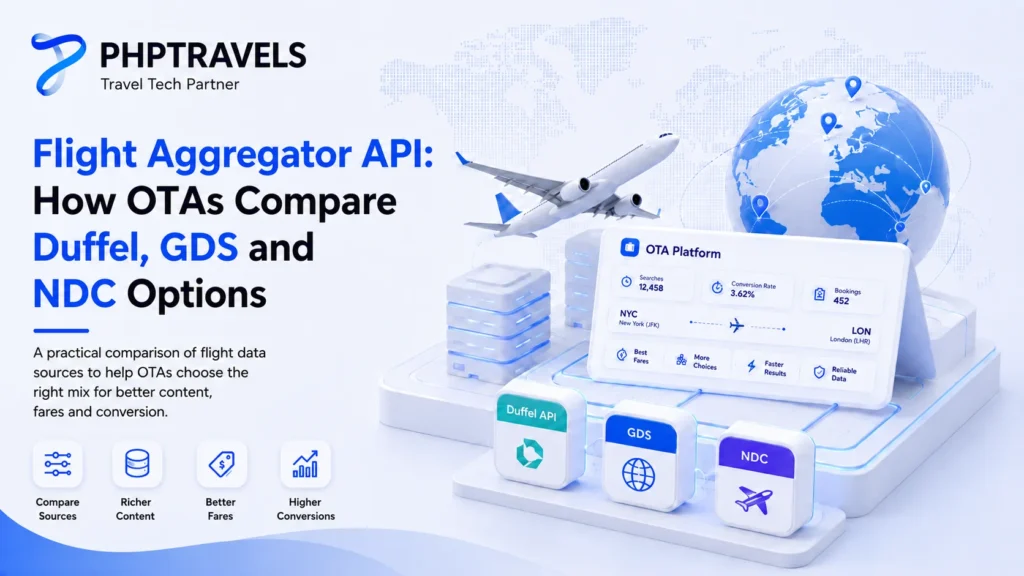
This guide explains how a flight aggregator API compares with Duffel, traditional GDS platforms and direct NDC connections. It focuses on business decisions rather than repeating API-key setup or basic integration steps.
What Is a Flight Aggregator API?
A flight aggregator API connects a booking platform to content from multiple airlines or distribution sources through one technical interface.
Instead of building a separate connection with every airline, an OTA sends a search request to the aggregator. The aggregator collects available responses and returns normalized flight offers for comparison.
Depending on the supplier, the workflow may cover search, fares, price revalidation, passenger details, booking, payment coordination, ticketing, seats, baggage, changes and refunds. Some aggregators are strong in search but limited in servicing, so capabilities must be checked carefully.
How Does a Flight Aggregator Work?
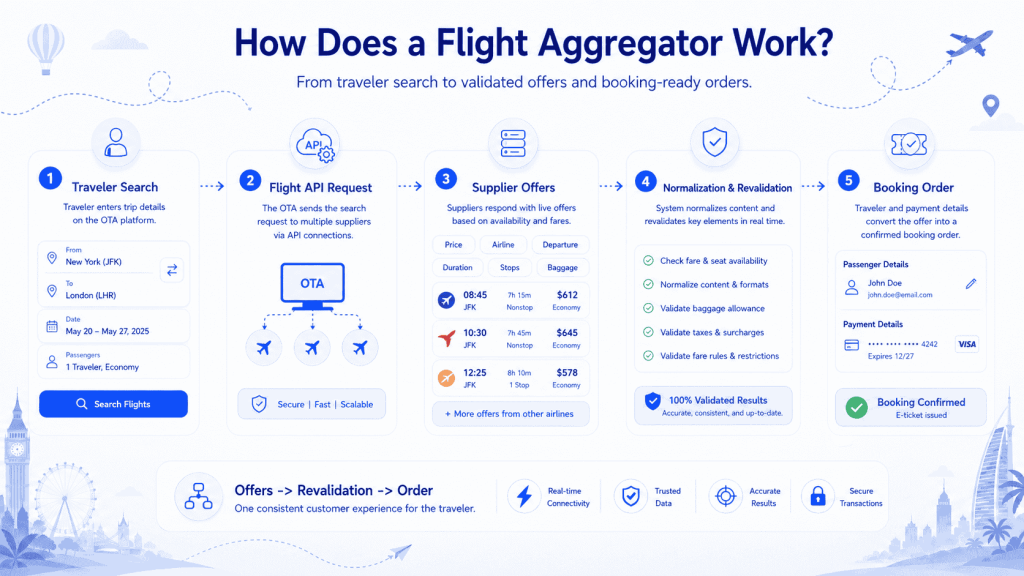
The process starts when a traveler searches for a route, date and passenger combination. The OTA sends the request through its flight API connection.
The supplier returns offers from available airline content. The OTA displays them with filters such as price, airline, departure time, duration, stops and baggage.
When the traveler selects an option, the system should confirm that the fare and seat are still available. After revalidation, it collects passenger and payment information and sends the booking request.
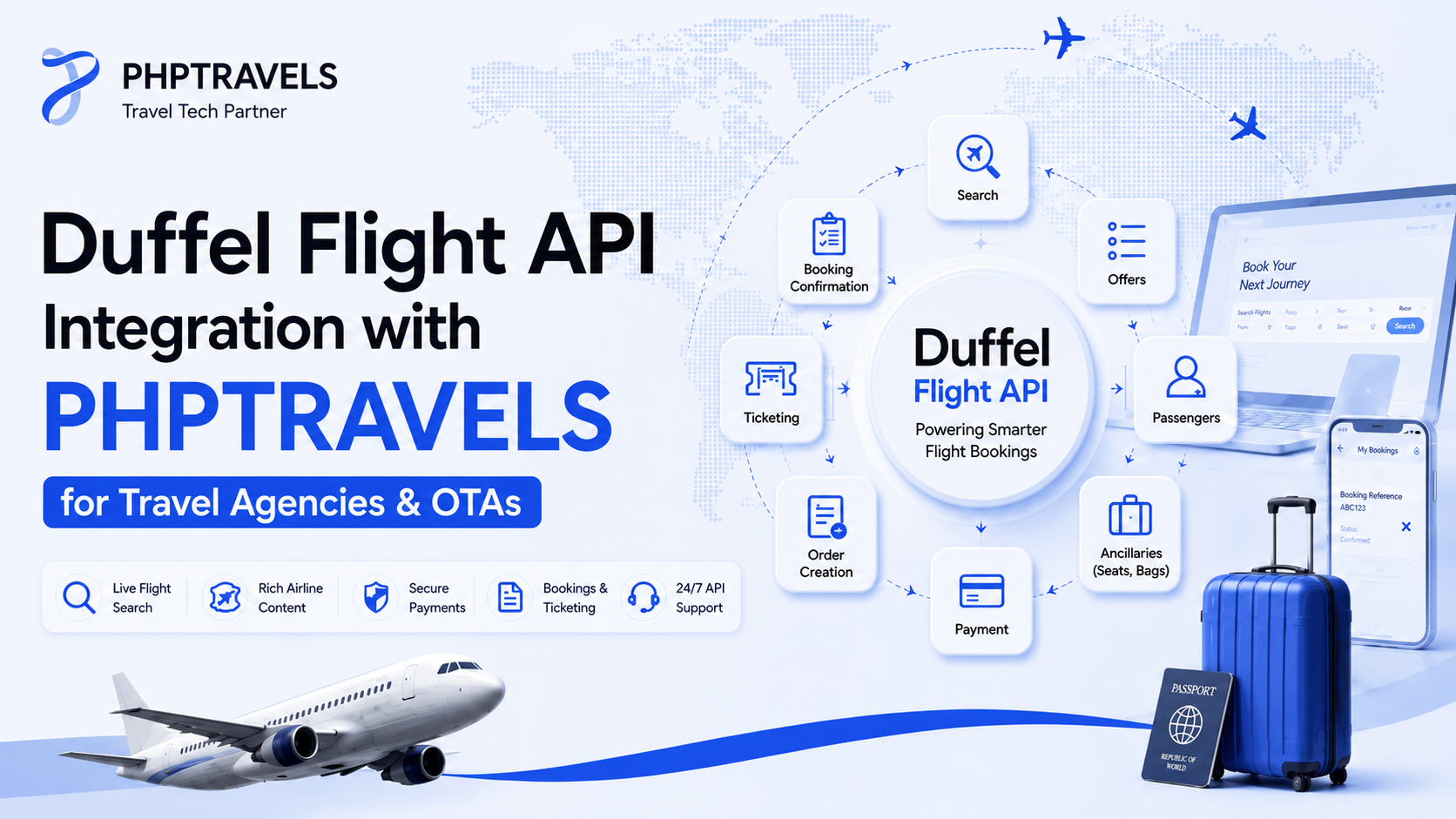
Duffel, for example, describes a workflow in which a platform creates an offer request, chooses an offer and then creates an order. This shows why aggregation is not only about displaying fares. The selected offer must move reliably into a bookable order.
For the OTA, supplier responses should become one consistent customer experience. This normalization layer is an important part of professional flight booking software for travel agencies.
Is a Flight Aggregator the Same as a GDS?
No. A flight aggregator and a Global Distribution System can overlap, but they are not automatically the same thing.
A GDS is an established distribution network connecting airlines, travel sellers and other industry participants. It commonly supports broad content, reservations, ticketing and agency servicing workflows.
A flight aggregator is a wider technical category. It may collect content from GDS platforms, direct airline connections, NDC channels, low-cost carriers, consolidators or other supplier APIs.
| Option | What It Is | Main Value |
|---|---|---|
| Flight Aggregator | A layer combining one or more content sources | Simpler access and normalized results |
| GDS | A large distribution and reservation network | Broad coverage and mature workflows |
| NDC | An airline retailing data standard | Rich offers and more direct content |
| Duffel | A modern flight API platform and aggregator | One API for multiple channels |
An OTA may use an aggregator that includes GDS content or connect directly to a GDS travel system.
Is NDC a Flight Supplier or an API?
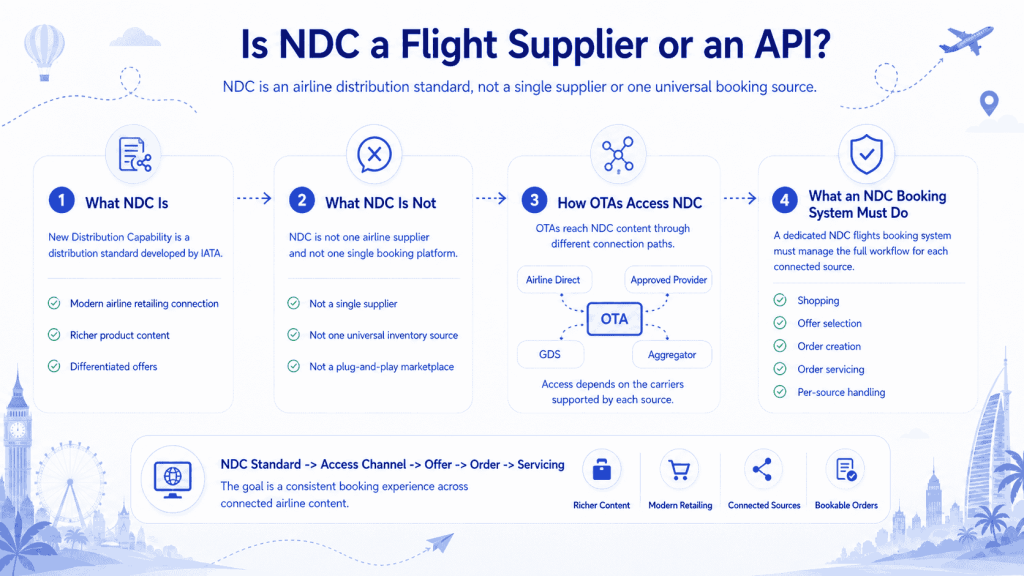
NDC is not one airline supplier or a single booking platform. New Distribution Capability is an airline distribution standard developed by IATA.
Its purpose is to improve how airline products and offers are distributed. It can help airlines provide richer content, detailed product information and differentiated offers through modern retailing connections.
An OTA cannot simply buy NDC as one universal inventory source. It must access NDC content through an airline, an approved provider, a GDS or an aggregator that supports the required carriers.
A dedicated NDC flights booking system must also handle shopping, offer selection, order creation and servicing for each connected source.
Where Does Duffel Fit in This Comparison?
Duffel is a flights API platform that gives travel businesses one integration for content across NDC, GDS and low-cost carrier channels. Its official flight search information currently states access to more than 300 airlines across these distribution types.
For a startup or growing OTA, the main attraction is reduced integration complexity. Instead of technically implementing many airline connections at the beginning, the business can access supported content through one API structure.
Duffel can also support airline extras such as paid seats and additional baggage where available. These ancillaries matter because the cheapest fare alone does not show the complete value of an offer.
Before choosing it, verify route coverage, ticketing and servicing support, refunds and changes, accreditation requirements, settlement options and the effect of supplier fees on margin.
For implementation details, use the existing Duffel API integration and the practical Duffel flight API guide. This article stays focused on supplier selection instead of repeating setup instructions.
When Should an OTA Choose a Traditional GDS?
A traditional GDS may suit an agency that requires established global distribution, mature ticketing processes and professional travel-agent workflows.
It can be useful for complex international itineraries, corporate travel, regular exchanges and reissues, negotiated fares, and agencies with trained ticketing staff.
The strengths of a GDS often become clearer after the booking. The OTA may need to manage schedule changes, voids, refunds, reissues, ticket status and accounting records.
The trade-off is that GDS access may involve contracts, credentials, training, commercial requirements and a more complex implementation. The OTA should review both the connection and its operational readiness.
Businesses comparing major providers can review the separate pages for Amadeus API integration and Travelport API integration.
When Is Direct NDC Access a Better Option?
Direct NDC can make sense when an OTA has a strategic relationship with a particular airline or needs content that is stronger through that airline’s NDC channel.
Possible benefits include richer branded fares, airline-specific bundles, paid seats and baggage, detailed product descriptions and differentiated offers.
The challenge is consistency. Airlines may have different capabilities, certification requirements, servicing rules and technical behavior. Maintaining many direct connections can require substantial development, monitoring and support.
This is one reason aggregators and modern GDS APIs increasingly combine different content types. Travelport’s developer documentation, for example, describes handling both GDS and NDC content within its flight APIs.
Direct NDC is therefore better only when the airline relationship and expected commercial value justify the extra complexity.
How Should an OTA Compare Flight API Options?
Does It Cover the Routes Customers Search?
A large airline count can look impressive, but route relevance matters more. Check actual origin markets, destinations, domestic carriers, low-cost airlines and international connections.
Can the Offer Be Booked Reliably?
Confirm how the supplier handles fare expiry, price changes and unavailable seats. The platform should revalidate the selected offer before charging the customer.
What Happens After Booking?
Ask whether the API supports cancellation, refund, exchange, void, schedule changes and order retrieval. Confirm which actions are automated and which require support.
Are Ancillaries Included?
Seats, checked baggage and other extras can improve customer choice and revenue. Availability may differ by airline and channel.
Who Issues and Services the Ticket?
The answer may involve the OTA’s accreditation, the supplier’s ticketing authority or a consolidator. Responsibilities must be clear before launch.
Can the Data Be Normalized?
GDS, NDC and low-cost carrier responses may use different structures. The OTA needs consistent fields for baggage, fare brands, cancellation rules, passenger types and total price.
What Is the Complete Cost?
Compare setup, booking, ticketing, support, search, payment and internal development costs. The lowest API fee may not produce the lowest operating cost.
Can the Platform Support Another Supplier?
Coverage can change. A scalable platform should allow another source to be added without rebuilding the customer experience. PHPTRAVELS lists multiple travel API integrations for different market requirements.
Which Option Is Best for a New OTA?
A new OTA usually benefits from starting with the smallest supply stack that can serve its market reliably.
Early-stage OTA: Start with one aggregator if it covers the required airlines and supports a complete booking flow.
Regional agency: Combine a regional supplier with an aggregator or GDS when one source does not provide enough local coverage.
Established OTA: Use multiple sources, possibly including GDS content, NDC connections and specialist APIs. Routing rules can select a source by market, airline, fare quality or servicing needs.
Corporate travel platform: Give more weight to post-booking servicing, policy controls, reporting and itinerary reliability than to the number of low fares returned.
There is no universal winner. Duffel may suit one OTA, while Amadeus, Travelport, Sabre or a regional supplier may be stronger for another.
Can an OTA Use Duffel, GDS and NDC Together?
Yes. A hybrid strategy is often more practical than treating these options as direct replacements.
An OTA may use a GDS for broad content, an aggregator such as Duffel for additional NDC or low-cost carrier access, direct NDC for strategic airline relationships, and regional APIs for local gaps.
The platform must remove duplicate results, apply consistent markups and show one clear offer to the traveler.
PHPTRAVELS describes a flight workflow that can combine GDS, NDC and supplier APIs while managing search, repricing, booking, payments and reporting. The important decision is not how many suppliers are connected, but whether the full workflow remains reliable.
What Mistakes Should OTAs Avoid?
Do not choose a supplier only by airline count. Coverage must be tested against real routes.
Do not focus on search while ignoring ticketing and post-booking support. A fare has little value if the team cannot manage a change or refund.
Do not assume every NDC connection provides identical features. Capabilities vary by airline and provider.
Avoid connecting too many APIs at launch. Every source increases normalization, testing, duplicate detection and support work.
Finally, make supplier ownership clear to operations staff. Agents need to know who owns the booking, where the ticket was issued and how servicing should be handled.
How Can PHPTRAVELS Support a Flight Aggregator Strategy?
PHPTRAVELS provides a booking platform layer for connecting flight content with customer and agency workflows.
Depending on the project, it can bring together B2C search and checkout, B2B agent accounts, supplier APIs, markups, commissions, payment gateways, booking administration, multi-currency support, reports and additional travel modules.
The strategy should begin with the OTA’s market, suppliers and servicing responsibilities. The platform can then be configured around the selected travel APIs instead of forcing the business into one fixed inventory model.