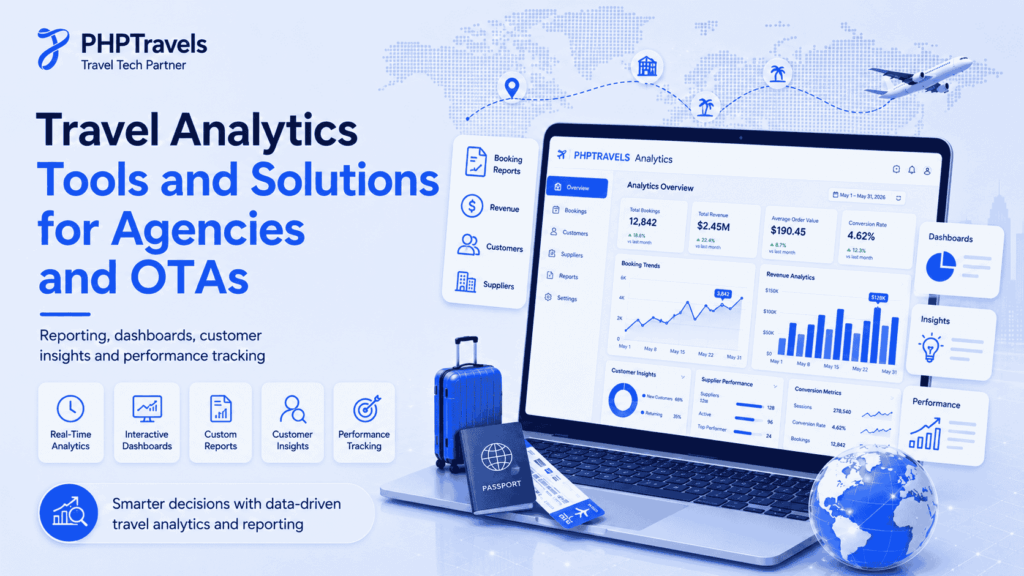
Travel analytics helps agencies, OTAs, tour operators, and travel managers understand what is happening inside their travel booking software and daily booking business. Instead of guessing which products sell, which customers convert, or which suppliers perform better, travel businesses can use analytics to track bookings, revenue, customer behavior, cancellations, marketing performance, and operational trends.
This guide explains travel analytics in a practical way. You will learn what travel analytics means, which metrics matter, what tools agencies can use, how travel industry business intelligence works, and how reporting dashboards help travel companies make better decisions.
What Is Travel Analytics and Why Does It Matter?
Travel analytics is the process of collecting, organizing, and analyzing travel business data to understand performance and make better decisions. This data can come from bookings, customers, suppliers, payments, cancellations, website traffic, marketing campaigns, and support activity.
For travel agencies and OTAs, analytics matters because it shows where revenue is coming from, which services are performing well, where customers drop off, and which areas need improvement. A good travel analytics setup turns raw booking data into clear insights that business teams can actually use.
The Role of Travel Analytics in Modern Travel Businesses
Modern travel businesses operate in a highly competitive environment where customer loyalty is hard to maintain. Travel analytics provides companies with the tools to understand not only what their customers want, but why they want it.
For example, by analyzing booking data, an agency can identify that most customers from a certain region prefer weekend flights or budget-friendly hotels. With this information, marketing campaigns can be tailored to promote the right packages at the right time. Analytics also helps monitor supplier performance, manage operational efficiency, and measure ROI from digital campaigns, especially for companies using an online travel agencies system to manage bookings from one place.
Simply put, travel analytics acts as the backbone of smarter decision-making in the travel industry.
Key Travel Analytics Metrics Agencies Should Track
A travel business does not need to track every possible number. The most useful travel analytics metrics are the ones that help teams understand bookings, revenue, customers, suppliers, and operations.
Important metrics include:
- Total bookings by day, week, month, and season
- Revenue by hotel, flight, tour, car, or package
- Conversion rate from search to completed booking
- Cancellation and refund patterns
- Top performing destinations and suppliers
- Customer repeat booking rate
- Average booking value
- Marketing source performance
- Pending payments and failed transactions
- Agent, branch, or B2B booking engine performance
- Benefits of Travel Analytics for Agencies and OTAs
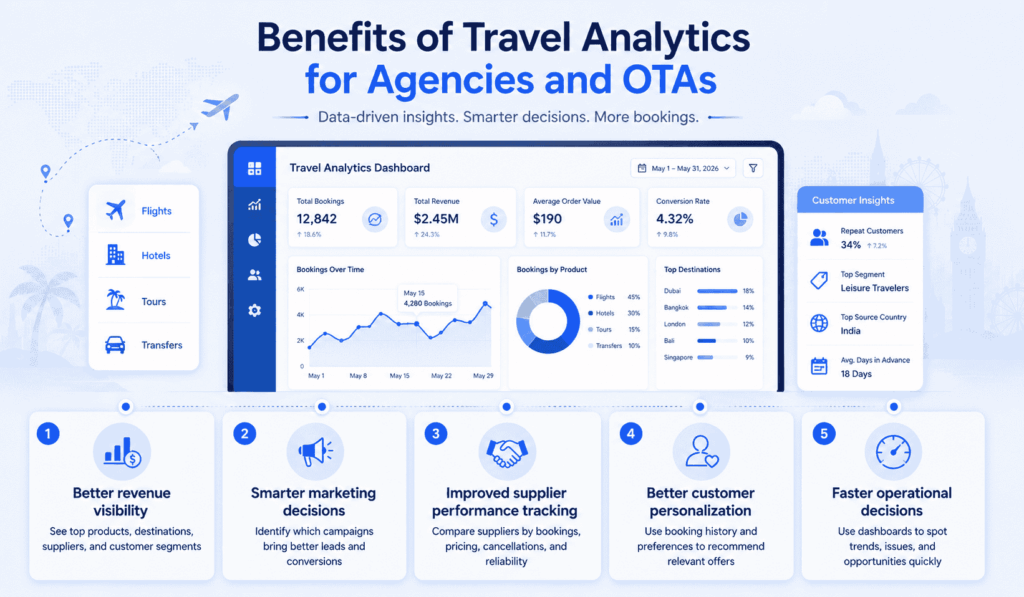
Travel analytics helps agencies and OTAs improve both sales and operations. The main benefits include:
Better revenue visibility
Agencies can see which products, destinations, suppliers, and customer segments generate the most revenue.
Smarter marketing decisions
Teams can understand which campaigns bring quality leads and which channels need improvement.
Improved supplier performance tracking
Analytics helps compare hotel, flight, tour, and transfer suppliers based on booking volume, pricing, cancellations, and reliability.
Better customer personalization
Travel companies can use booking history and preferences to recommend more relevant offers.
Faster operational decisions
Instead of checking reports manually, teams can use dashboards to identify issues, trends, and opportunities faster.
Want to see how reporting works inside a travel booking platform? Explore the PHPTRAVELS demo and review booking, customer, supplier, and payment workflows in one place.
Agencies and OTAs that implement analytics often see a direct improvement in conversion rates, repeat bookings, and customer lifetime value.
How Travel Analytics Improves Customer Experience
Customer experience is everything in the travel business. Today’s travelers expect convenience, speed, and personalization. With travel analytics, companies can deliver all three.
By studying historical booking patterns, businesses can predict what travelers are likely to book next. For instance, if a customer often books family-friendly hotels, the system can automatically recommend similar properties for future trips. Analytics can also improve real-time customer support by identifying common pain points and offering proactive solutions.
In short, better insights lead to smoother experiences, making it easier for agencies to build trust and long-term relationships with their customers.
Types of Travel Analytics: Descriptive, Predictive, and Prescriptive
Travel analytics is usually divided into three main types:
- Descriptive Analytics – Focuses on what has already happened. It includes reports on booking volumes, sales by region, or customer demographics.
- Predictive Analytics – Uses historical data and AI models to forecast future trends, such as demand surges or price fluctuations.
- Prescriptive Analytics – Goes a step further by suggesting specific actions. For example, recommending which flight routes to promote based on profitabilit
By combining all three, travel companies gain a 360-degree view of their business operations and customer needs.
Best Travel Analytics Tools for Agencies, OTAs and Travel Managers
The best travel analytics tools depend on the type of travel business and the data it needs to track. Some agencies need simple booking reports, while larger OTAs and corporate travel teams may need advanced business intelligence dashboards.
Common travel analytics tools include:
Booking platform reports
Useful for tracking reservations, customers, payments, cancellations, and supplier performance inside the travel system.
Business intelligence tools
Platforms like Power BI, Tableau, and Looker help teams create dashboards from booking, finance, marketing, and customer data.
Supplier analytics tools
GDS, hotel API, and travel supplier platforms may provide data about inventory, pricing, booking trends, and supplier performance.
Website and marketing analytics
Tools like Google Analytics and search performance reports help agencies understand traffic, leads, conversions, and content performance.
Corporate travel reporting tools
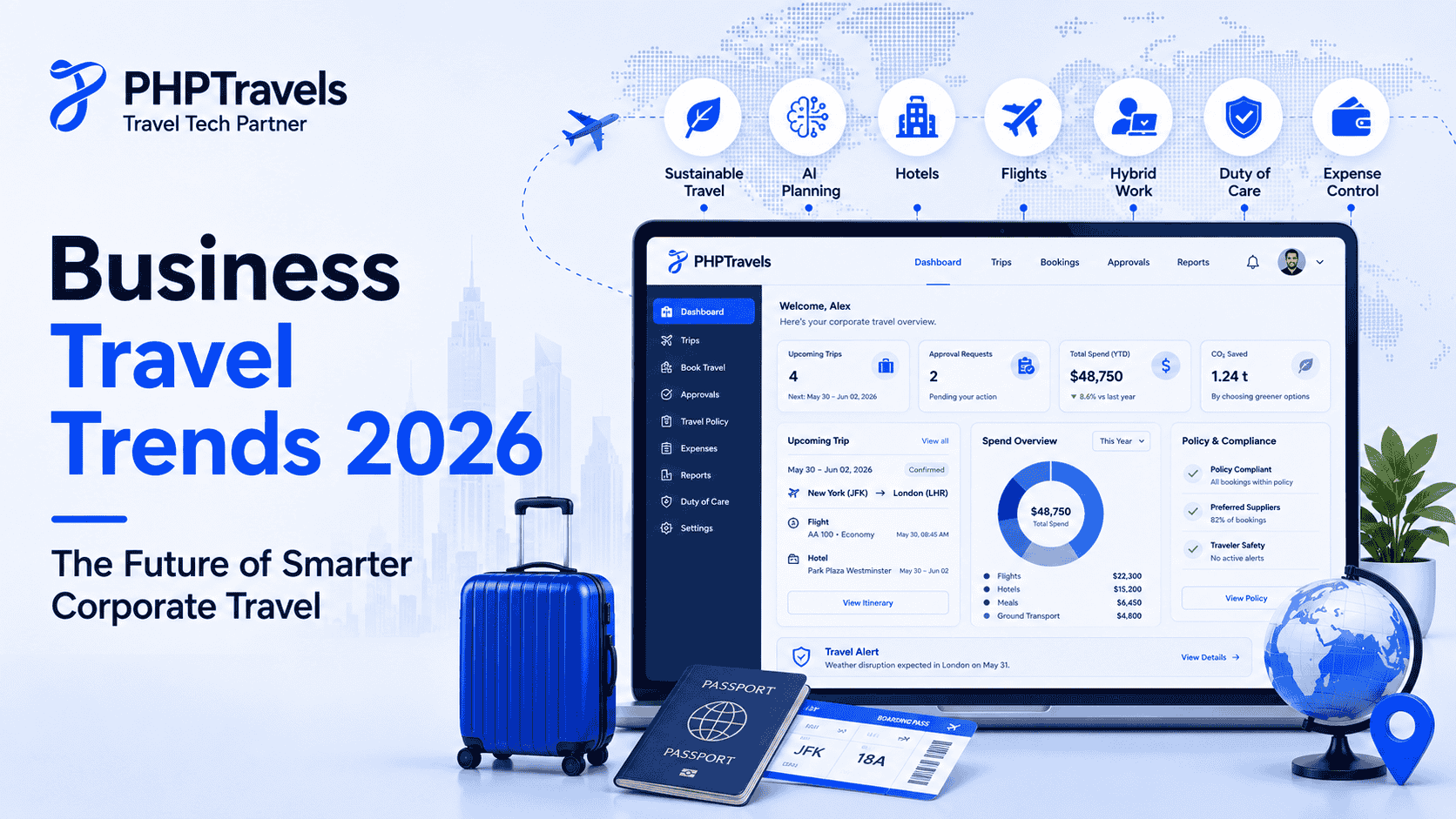
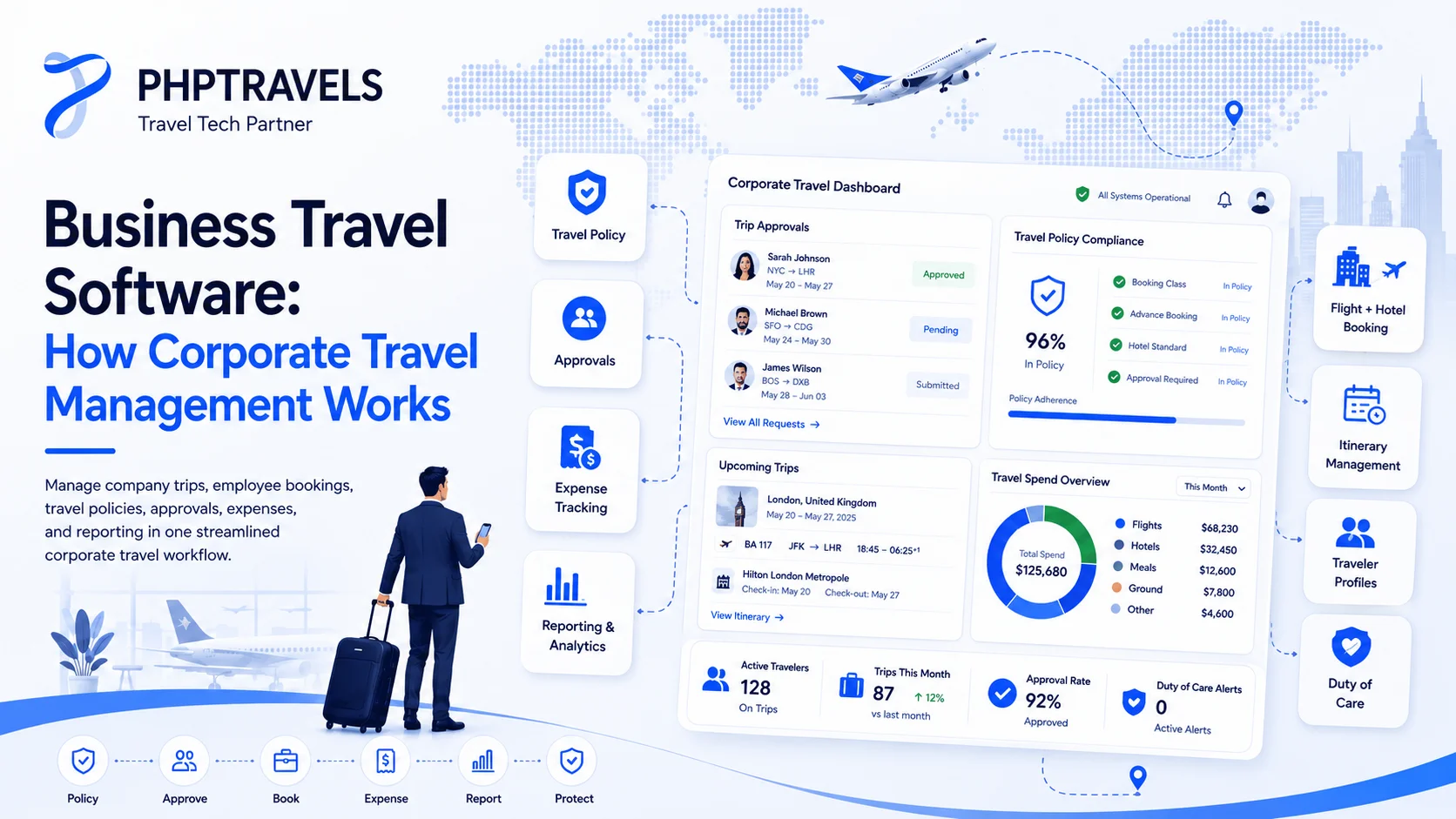
Business travel teams use corporate travel management software analytics to track employee travel patterns, policy compliance, travel spend, approvals, and expense behavior.
The right tool should make reporting easier, reduce manual work, and help teams make decisions from clear travel business data.
How to Compare Travel Analytics Companies
When comparing travel analytics companies or platforms, agencies should not only look at dashboard design. The most important question is whether the tool can connect with real booking, customer, supplier, and payment data.
A good travel analytics company or platform should offer:
- Clear booking and revenue reporting
- Easy dashboard access for business teams
- Supplier and product performance tracking
- Customer behavior insights
- Exportable reports for management
- Integration with booking systems, CRM, or payment data
- Simple reporting for both technical and non-technical users
For agencies, the best choice is usually the platform that connects analytics directly with daily booking operations.
Real-World Use Cases of Travel Analytics in the Tourism Industry
Travel analytics isn’t just theory it’s already transforming how companies operate. A few real-world applications include:
- Airlines – Optimizing seat pricing based on demand and booking windows.
- Hotels – Predicting occupancy rates and offering last-minute discounts to maximize revenue.
- Tour Operators – Using tour operator software to analyze customer feedback and improve itineraries.
- Corporate Travel Managers – Reducing costs by tracking employee travel behavior and enforcing policy compliance.
- OTAs – Personalizing search results and recommendations for higher conversions.
These examples show how data can directly impact profitability and customer satisfaction in the travel industry.
The Future of Travel Analytics with AI and Automation
The future of travel analytics will be shaped by AI, automation, and connected booking data. Travel companies will increasingly use analytics to forecast demand, personalize offers, monitor supplier performance, and automate reporting.
Instead of manually checking multiple systems, teams will expect dashboards that bring bookings, payments, customers, suppliers, and marketing data into one view. For agencies and OTAs, the biggest advantage will be faster decision-making with less manual reporting.
Conclusion: Launch Faster, Convert Better
The PHPTRAVELS gives you a ready-to-use, white-label mobile booking solution. With faster performance and full source code, you can launch under your brand and deliver a smoother travel experience to customers.
Key takeaways
- Modern native design with improved performance
- Full open-source code for customization
- Seamless booking (flights, hotels, tours, cars)
- Easy to compile & publish on Google Play
Next steps
▶ Try Live Demo ✉ Talk to Sales
Final Thoughts
Travel analytics is important for any agency, OTA, tour operator, or travel manager that wants clearer visibility into business performance. With the right reporting setup, travel companies can understand booking trends, improve customer experience, monitor suppliers, track revenue, and make better growth decisions.
For PHPTRAVELS users, analytics should connect directly with real booking operations, including customers, payments, suppliers, and product performance. That is where travel analytics becomes more than reporting. It becomes a practical decision-making system for the business.