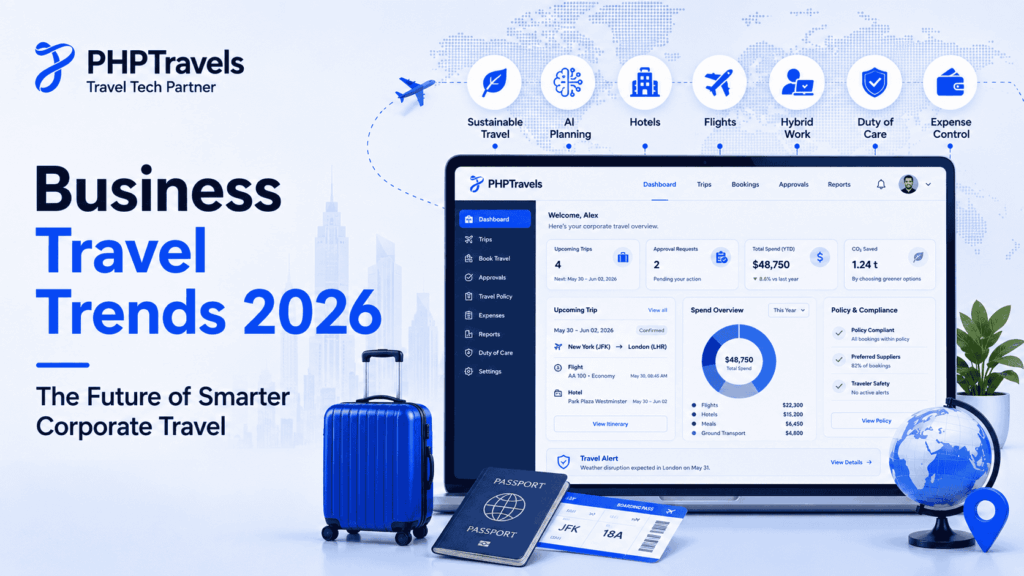
Business travel in 2026 is changing from a simple booking process into a strategic part of company operations. Organizations are now balancing cost control, employee experience, sustainability, safety, and digital innovation in every trip. As hybrid work, AI-assisted planning, and greener travel policies become more common, companies need clearer corporate travel strategies that support both business goals and traveler needs.
As business travel becomes more strategic, companies need better visibility over trip planning, approvals, traveler safety, and reporting. For teams that want to organize these workflows in one place, business travel software can support a more controlled and scalable corporate travel process.
Why Corporate Travel Will Change in 2026
Business travel is recovering, but the way companies manage it is different from previous years. In 2026, corporate travel decisions are being shaped by hybrid work, ESG reporting, employee safety, budget pressure, and real-time digital tools. Companies are no longer asking only how much a trip costs. They are also asking whether the trip is necessary, safe, productive, compliant, and aligned with sustainability goals.
How Global Business Needs Are Changing Travel Patterns
As companies expand into new markets, cross-border meetings, regional events, client visits, and partner onboarding trips are becoming more planned and data-driven. At the same time, travel managers must consider local regulations, employee well-being, visa requirements, supplier reliability, and company policy before approving trips. This is making corporate travel more flexible, structured, and outcome-focused.
Sustainable and Eco-Friendly Business Travel
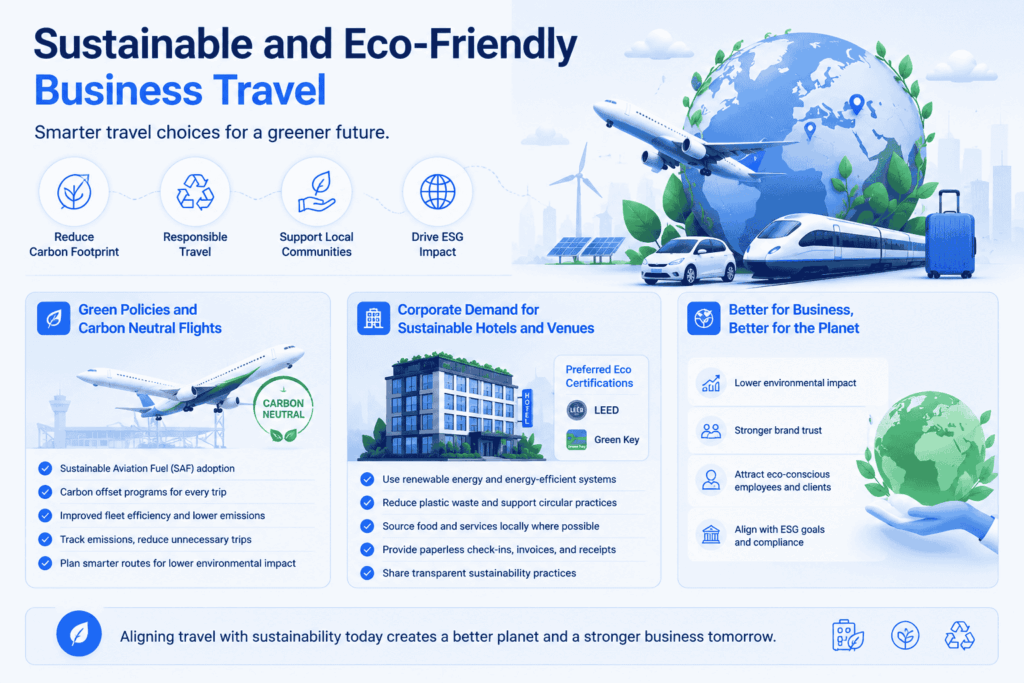
Sustainability is no longer a “nice to have” in corporate travel. In 2026, more companies are reviewing how flights, hotels, ground transport, and events affect their carbon reporting and ESG commitments. Eco-friendly travel choices can help organizations reduce waste, support responsible suppliers, and improve brand trust with employees, clients, and partners.
Green Policies and Carbon Neutral Flights
Airlines and travel suppliers are investing more in sustainable aviation fuel, carbon offset programs, improved fleet efficiency, and lower-emission travel options. For companies, the practical focus is not only choosing greener flights, but also tracking emissions, reducing unnecessary trips, and encouraging better route planning where possible.
Corporate Demand for Sustainable Hotels and Venues
Companies are also paying more attention to hotels and venues with recognized sustainability practices, such as energy efficiency, waste reduction, responsible sourcing, and paperless guest services.
Keep the bullet list, but slightly polish:
- Use renewable energy and energy-efficient systems
- Reduce plastic waste and support circular economy practices
- Source food and services locally where possible
- Provide paperless check-ins, invoices, and receipts
- Share transparent sustainability practices with corporate clients
By aligning travel choices with corporate sustainability commitments, businesses not only lower their footprint but also attract environmentally conscious employees and clients.
Digital Transformation in Business Travel
Digital transformation is one of the strongest business travel trends in 2026. Companies are using technology to simplify trip planning, improve policy compliance, reduce manual work, and give travel managers better visibility into traveler movement, cost, and risk.
This shift is also connected to the wider adoption of travel technology solutions, where companies use digital tools to connect booking, automation, reporting, supplier access, and traveler support into a more efficient travel operation.
AI-Powered Corporate Travel Assistants
Artificial Intelligence is reshaping the entire business travel journey by automating tasks that once required hours of manual effort. AI assistants can:
- Generate personalized itineraries based on company policy and traveler preferences
- Provide real-time flight updates, gate changes, and delay alerts
- Suggest cost-saving alternatives
- Predict potential travel disruptions and proactively offer solutions
- Act as 24/7 chatbots to support employees during trips
This shift allows travel managers to focus on strategy instead of administration, while employees enjoy smoother travel experiences.
Emerging Technologies Shaping Corporate Travel
- Blockchain-based payments can support faster and more transparent transaction records
- Virtual previews can help teams review hotels, venues, and meeting spaces before booking
- IoT-enabled devices can support luggage tracking and traveler safety use cases
- Predictive analytics can help companies forecast demand, risk, and travel budget needs
Hybrid Work and Changing Travel Demands
For hybrid teams, flexibility works best when employee bookings still follow company policy. A corporate self booking tool can help employees manage trip requests while giving travel managers better control over approvals, policy rules, and traveler visibility.
Blending Remote Work With Business Trips
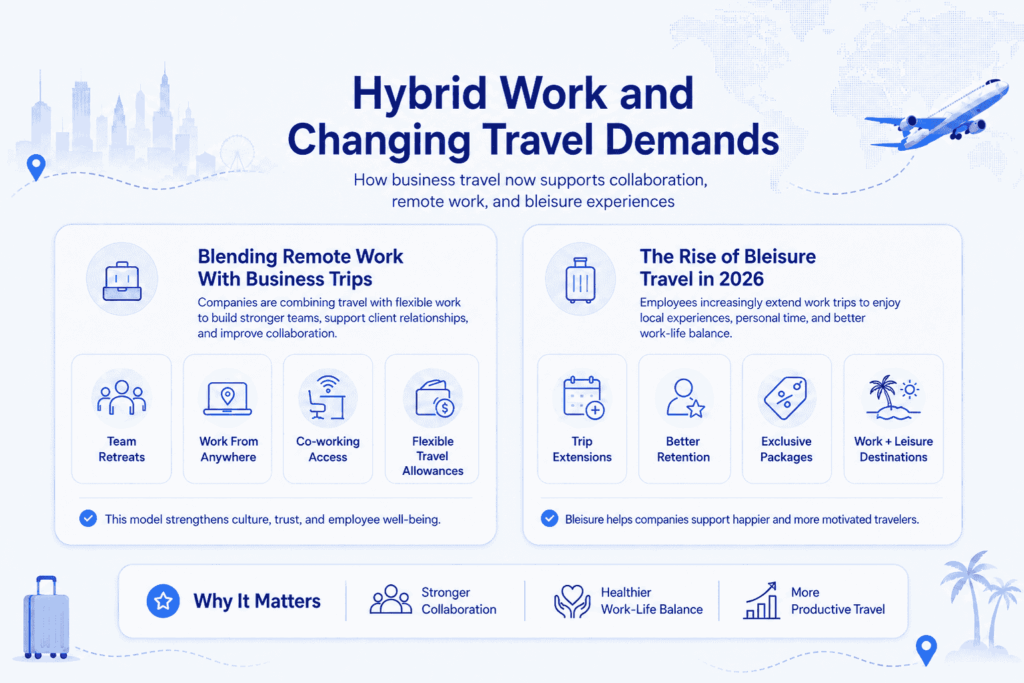
Many organizations now integrate quarterly team meetups, offsites, and client visits into their travel policies. Instead of daily commutes or constant office presence, employees work remotely while traveling, fostering a true “work-from-anywhere” culture.
Key practices include:
- Scheduling team retreats that mix business planning with collaboration sessions
- Encouraging employees to work remotely from different regions while staying productive
- Providing access to co-working spaces and business lounges for remote employees
- Offering flexible travel allowances to cover hybrid work trips
This approach strengthens company culture, builds team trust, and supports employee well-being without sacrificing productivity.
The Rise of “Bleisure” (Business + Leisure) Travel in 2026
“Bleisure” the blend of business and leisure has become a mainstream expectation in 2026. Employees increasingly extend business trips by a few days to enjoy local culture, sightseeing, or personal relaxation.
- Over 60% of business travelers now opt for bleisure add-ons
- Companies see it as a way to increase retention and job satisfaction
- Travel managers partner with hotels and airlines to offer exclusive bleisure packages
- Cities and destinations actively promote work + leisure tourism to attract corporate groups
By embracing bleisure, companies benefit from happier, more motivated employees, while travelers enjoy a better balance between professional and personal life.
Cost Management and Policy Optimization
Cost control in 2026 is not only about finding cheaper flights or hotel rates. Companies are using better travel policies, approval workflows, budget visibility, and reporting to reduce unnecessary spend while still supporting important business trips.
Predictive Analytics for Corporate Travel Budgets
Data analytics has become a game changer in business travel. Instead of relying on historical reports, organizations now use predictive models that provide foresight into travel needs and costs. These tools help companies:
Data analytics has become a game-changer in business travel. Instead of relying on historical reports, organizations now use predictive models that provide foresight into travel needs and costs. These tools help companies:
- Forecast travel demand by department, region, or season
- Compare vendor rates in real time and negotiate better deals
- Identify patterns of overspending and flag policy violations early
- Allocate budgets more efficiently, reducing last-minute booking premiums
- Measure ROI on corporate trips by linking spend with business outcomes
By shifting from reactive to proactive budget management, companies gain greater financial control while improving traveler satisfaction.
Smarter Expense Visibility
Expense reporting is becoming faster and more connected. Instead of relying on manual receipt collection and delayed approvals, companies are moving toward cleaner expense visibility, better documentation, and faster finance review.
- Digitize receipts through mobile capture
- Categorize travel costs by trip type
- Match bookings with invoices and card payments
- Apply policy rules during review
- Prepare cleaner reports for finance and audit teams
Safety, Security, and Duty of Care
Global uncertainty and evolving risks make employee safety a top priority for every organization. Duty of care is no longer limited to booking safe hotels companies are expected to provide end-to-end protection for their travelers, from the moment they leave home until they return.
Real-Time Risk Monitoring and Alerts
Organizations now rely on AI-driven risk intelligence platforms that continuously track global events and issue real-time alerts. These systems help companies:
- Monitor weather disruptions, airline strikes, or transport delays
- Detect political unrest, protests, or security incidents in specific regions
- Identify health outbreaks, vaccination requirements, or sudden border restrictions
- Send push notifications and SMS alerts directly to employees’ devices
- Offer pre-trip safety briefings and country risk assessments
This proactive approach ensures employees are always informed and can adjust plans quickly, reducing exposure to unexpected risks.
Travel Insurance and Health Security Innovations
Business travelers now expect comprehensive insurance coverage that goes far beyond flight cancellations. Corporate travel policies in 2026 typically include:
- Telemedicine access so travelers can consult doctors remotely while abroad
- Digital health passports for seamless border crossings and vaccination verification
- Coverage for pandemic related disruptions and quarantine expenses
- Enhanced medical evacuation services in case of emergencies
With employee wellness at the forefront, many companies integrate health security into their corporate travel platforms, ensuring travelers can access support instantly whenever needed.
The Business Value of Strong Duty of Care
Prioritizing safety is not just about compliance it builds trust, loyalty, and resilience. Companies that take proactive measures benefit from:
- Reduced liability and legal exposure
- Higher employee satisfaction and retention
- Stronger employer brand reputation
- Greater productivity during trips, as employees feel secure
Future Outlook for Business Travel Beyond 2026
The future of corporate travel will be shaped by adaptability, innovation, and employee centric strategies. As technology evolves and sustainability pressures intensify, organizations must rethink how they manage travel to remain competitive in the next decade.
What Companies Should Prepare for in the Next Decade
By 2030 and beyond, several breakthrough trends will redefine business travel:
- Wider adoption of electric aircraft and autonomous transport → reducing carbon emissions while offering faster, more efficient travel solutions.
- Full integration of AI-driven sustainability tracking → giving companies real-time insights into their carbon footprint and enabling smarter, eco conscious travel decisions.
- Rise of metaverse meetings combined with selective business travel → virtual reality will replace some in person trips, while essential travel will focus on high-value meetings, negotiations, and networking.
- Hyper-personalized corporate travel programs → tailoring trips based on employee preferences, well being, and productivity needs.
- Global standardization of digital IDs and health passports → enabling smoother, safer cross-border movement for business travelers.
Key Takeaways for Travel Managers and Executives
For leaders and travel managers, the future is clear corporate travel is no longer just an operational cost it’s a strategic advantage. To stay ahead, organizations must:
- Balance cost efficiency, sustainability, safety, and employee experience in every travel policy.
- Adopt AI, predictive analytics, and digital booking tools to optimize travel management.
- Prioritize eco-friendly options and carbon reporting to meet global ESG requirements.
- Build employee-centric travel programs that improve satisfaction and retention.
The companies that succeed will be those that embrace technology, sustainability, and people-first strategies, transforming business travel into a driver of long term growth and resilience.
Conclusion
Business travel in 2026 is defined by sustainability, technology, and flexibility. Companies that adopt eco friendly practices, leverage AI driven tools, and adapt to hybrid work models will stay competitive. The future of business travel is not just about cutting costs it’s about delivering smarter, safer, and more valuable travel experiences.