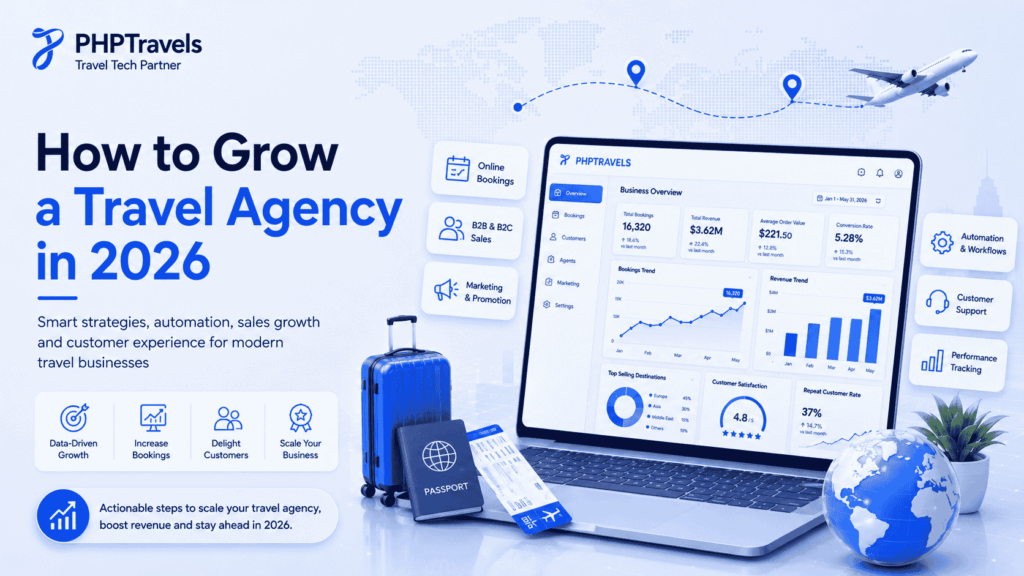
Growing a travel agency today is not only about selling more flights, hotels, tours, or holiday packages. The travel market has become more digital, competitive, and customer-driven. Travelers now compare prices, expect fast replies, look for personalized recommendations, and prefer agencies that can manage the complete booking journey from one place.
For travel agencies, OTAs, tour operators, and destination management companies, growth depends on two things: building customer trust and using the right travel technology to operate faster. A travel agency that still depends only on manual follow-ups, scattered spreadsheets, and slow supplier checks may lose opportunities to competitors that offer faster booking experiences.
Focus on a Clear Travel Agency Position
Many travel agencies try to serve every type of customer without a clear message. This makes the business look similar to every other agency in the market. To grow, your agency needs a clear position that explains why customers should choose you.
Instead of only saying that you provide flights, hotels, visas, tours, or transport, show the real benefit behind your service. For example, your agency may focus on family holidays, Umrah travel, corporate trips, adventure tours, luxury travel, student travel, or destination-specific packages.
A clear position helps customers remember your agency. It also makes your website content, social media posts, ads, and sales conversations more focused.
Build Trust Before Asking for a Booking
Travel is a high-trust purchase. Customers are often spending a large amount of money before they experience the service. This is why trust-building must be part of your growth strategy.
Your agency can build trust by showing real customer reviews, clear package details, transparent pricing, payment options, support availability, and professional communication. Testimonials, case studies, repeat customer stories, and destination photos can also help potential customers feel more confident.
You can also create trust through helpful content. Instead of only posting offers, publish travel tips, destination guides, visa updates, itinerary ideas, packing advice, and seasonal travel recommendations. This positions your agency as a helpful travel partner, not only a seller.
Improve Your Online Booking Experience
Customers now expect quick search, clear availability, simple booking steps, and fast confirmation. If your agency takes too long to check hotel inventory, flight options, tour availability, or package pricing, the customer may move to another provider.
This is where a modern travel booking software can support agency growth. It helps travel businesses manage bookings, suppliers, customers, payments, and online operations through a more organized system.
A better booking experience can help your agency reduce manual work, reply faster to leads, manage more requests, and give customers a professional platform where they can search and book services more easily.
Create Travel Packages Instead of Selling Only Individual Services
Selling individual services can limit the value of each booking. A customer may ask only for a hotel or flight, but your agency can create more value by offering complete travel packages.
For example, a holiday package may include flights, hotels, airport transfers, sightseeing tours, activities, travel insurance, and support. A corporate package may include flights, hotel stays, transfers, reporting, invoicing, and traveler management.
Packages are useful because they make the buying decision easier for customers. They also help your agency increase average booking value and present your service as a complete travel solution.
Use Personalization to Increase Customer Satisfaction
Modern travelers do not want generic recommendations. They expect suggestions based on their budget, travel style, purpose, destination, family size, and preferred experience.
For example, an adventure traveler may prefer hiking, water sports, desert safari, or mountain destinations. A family may prefer safe hotels, easy transport, nearby attractions, and flexible schedules. A business traveler may care more about location, invoice handling, quick check-in, and reliable support.
When your agency understands the customer profile, you can recommend better options. This improves customer satisfaction and can increase repeat bookings.
Find a Profitable Niche Market
A niche does not always mean a small market. It means your agency becomes known for a specific travel need, audience, destination, or service type. This can help you compete with larger agencies because your message becomes more targeted.
Some travel agency niches include:
- Corporate travel management
- Religious travel and Umrah packages
- Adventure and experience-based travel
- Luxury holidays
- B2B travel distribution
Once you choose a niche, your website pages, social media content, offers, and sales process should support that niche. This makes it easier to attract the right customers.
Strengthen B2B and B2C Sales Channels
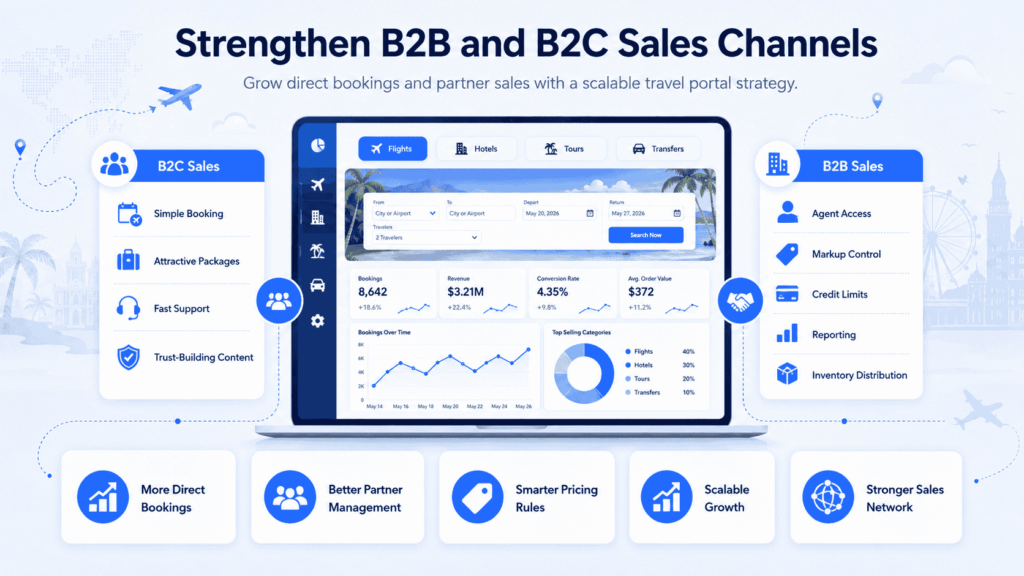
Some travel agencies only focus on direct customers, while others work with sub-agents, corporate clients, or B2B partners. A strong growth plan can include both B2C and B2B channels.
For direct customers, your focus should be simple booking, attractive packages, fast support, and trust-building content. For B2B partners, your focus should be agent access, markup control, credit limits, reporting, and supplier inventory distribution.
If your agency wants to serve agents, resellers, or corporate clients, a B2B travel portal can help manage partner bookings, pricing rules, commissions, and account access in a more scalable way.
Use CRM to Manage Leads and Repeat Customers
Many travel agencies lose potential bookings because leads are not followed up properly. A customer may ask for a package today, but without a proper follow-up system, that lead can be forgotten.
A travel agency CRM helps organize customer details, inquiries, follow-ups, booking history, preferences, and communication. This makes it easier to convert leads and build long-term relationships.
Invest in Travel API Integrations
As your agency grows, manual supplier checking becomes difficult. Travel API integrations can help you connect with hotel suppliers, flight providers, payment gateways, tour suppliers, and other travel systems.
With proper travel API integration, your agency can access live inventory, pricing, availability, booking confirmation, and supplier data more efficiently.
This is especially important for agencies that want to build an online travel platform, B2B portal, OTA, or multi-service booking system.
Improve Your Website and Content Strategy
Your travel agency website should do more than display basic information. It should help visitors understand your services, compare options, submit inquiries, explore packages, and trust your brand.
A strong website should include:
- Clear service pages
- Destination pages
- Package details
- Customer reviews
- Fast loading speed
- Mobile-friendly design
Publishing helpful blog content can also bring organic traffic. Topics such as best destinations, travel planning tips, visa guidance, seasonal packages, and travel technology advice can help your agency attract customers from search engines.
Automate Repetitive Travel Agency Tasks
Growth becomes difficult when your team spends too much time on repetitive tasks. Checking hotel availability, preparing quotations, confirming bookings, updating customers, managing invoices, and tracking payments can take a lot of time when handled manually.
Automation helps your agency reduce delays and manage more bookings with the same team. A system like travel agency management software can support daily operations by organizing bookings, customers, suppliers, payments, and reports.
How PHPTRAVELS Helps Travel Agencies Grow
PHPTRAVELS provides travel technology solutions for agencies, OTAs, tour operators, travel startups, and B2B travel businesses that want to digitize and scale their booking operations.
With PHPTRAVELS, travel businesses can build online booking platforms for hotels, flights, tours, cars, packages, payments, customers, suppliers, and agent operations. The platform supports travel businesses that want more control over their booking workflow, customer journey, and digital growth.
Agencies that want to explore the platform can review the PHPTRAVELS features or test the system through the live demo.
Final Thoughts
Travel agency growth requires more than attractive offers. You need a clear brand position, better customer relationships, strong packages, useful content, reliable follow-up, automation, and a booking system that supports your daily operations.
The agencies that grow faster are usually the ones that combine human travel expertise with smart technology. By improving your customer experience and upgrading your internal process, your travel agency can attract more customers, convert more leads, and build long-term loyalty.