
If you are wondering what is meta search engine or what is meta search, it simply means collecting results from multiple sources into one place.. Unlike traditional booking engines, a meta search tool does not hold inventory but redirects users to suppliers for booking.
Are you dreaming of creating your travel meta-search engines, like Kayak or Skyscanner? Well, you’re in luck! In this guide, we’ll walk you through the essential steps to bring your vision to life, or you can follow this complete travel meta search engine build process for a deeper step by step breakdown.
Whether you want to help travelers find the best flight deals, hotel accommodations, or car rentals, this guide will help you understand the foundation of a meta search platform and how it connects with a travel booking engine for real time search, pricing, and conversions.
What Is a Travel Meta Search Engine
A travel meta search engine is a platform that collects travel results from multiple sources like airlines, hotel providers, and online travel agencies, and shows them in one place so users can compare prices and options instantly.
Unlike a booking website, it does not process the booking itself. Instead, it redirects users to the original provider to complete the reservation.
A travel meta search engine works by querying multiple APIs from airlines, hotel wholesalers, and OTAs, then displaying the best available options in real time based on user search criteria.
What is a meta search tool
A meta search tool is software that gathers results from multiple platforms without storing inventory. It acts as a comparison layer between users and travel providers.
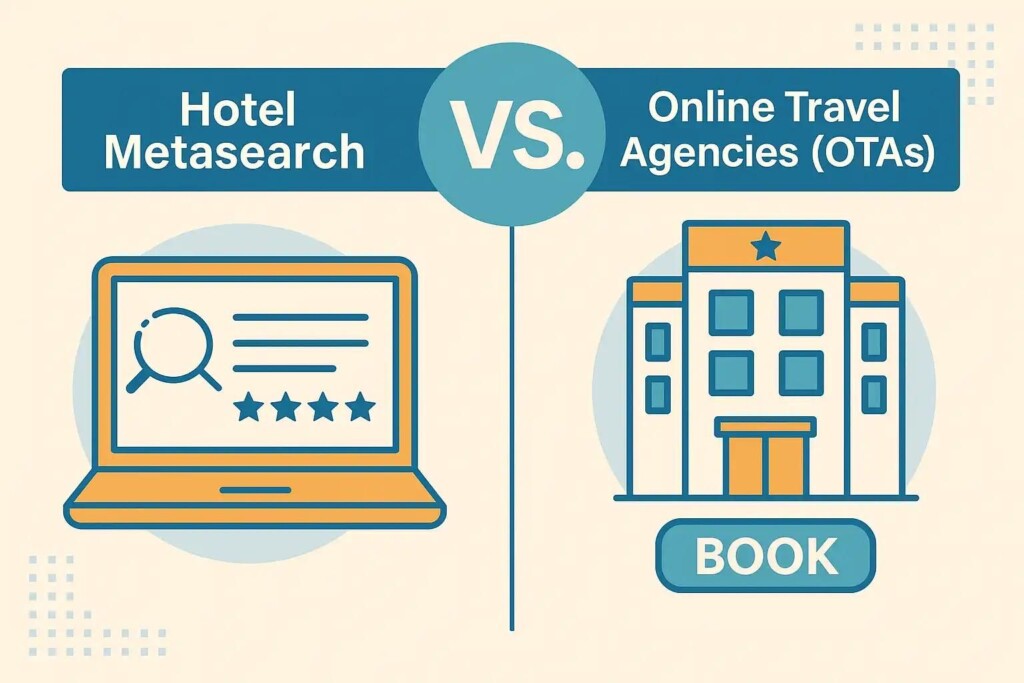
Difference Between Meta Search Engine and OTA
| Feature | Meta Search Engine | OTA |
|---|---|---|
| Booking | Redirects user | Handles booking |
| Inventory | No inventory | Own or contracted |
| Revenue | CPC or referral | Commission per booking |
| Examples | Price comparison | Full booking platforms |
Real Examples of Travel Meta Search Engines
Popular examples of travel meta search engines include:
- Skyscanner
- Kayak
- Google Flights
These platforms scan hundreds of travel providers in seconds and show users the best available prices and routes.
What is Meta Search
Meta search is the process of pulling results from multiple search engines or platforms and showing them in one place without storing the data.
Ready to dive in? Let’s get started on building your very own travel meta-search engine!
1. Research and Define Your Target Audience
Start by identifying the specific demographics and preferences of your target audience. This step is crucial in building a successful travel meta search engine. Conduct thorough market research to gather data on your potential users.
Look at factors such as age, gender, location, income level, and travel habits. Analyze their preferences and behaviors when it comes to travel planning, such as preferred destinations, booking methods, and budget constraints.
This information will help you tailor your platform to meet their specific needs. For example, if your target audience consists of budget-conscious travelers, you can prioritize displaying affordable accommodations and deals. On the other hand, if your audience consists of luxury travelers, you can focus on showcasing high-end hotels and exclusive experiences.
Understanding your target audience will guide your decision-making process and ensure your travel meta search engine resonates with users.
2. Choose the Right Technology Stack
Once you have thoroughly researched and defined your target audience, it’s important to choose the right technology stack for building your travel meta search engine, especially if you are also planning booking engine development for travel companies that need scalable search, supplier connectivity, and real time pricing.
especially if you are planning to follow a full implementation workflow for meta search platforms.
The technology stack you choose will determine the performance, scalability, and flexibility of your platform, especially for businesses evaluating booking engine software that must support heavy search volume, fast response times, and multi supplier integrations.
Start by selecting a programming language that best suits your requirements. Python and Java are popular choices for building search engines due to their robustness and extensive libraries.
Next, choose a web framework that will enable you to develop your application efficiently. Django and Spring are two widely used frameworks that provide excellent tools and support for building complex web applications.
Additionally, consider using a database management system like MySQL or PostgreSQL to store and retrieve data efficiently.
3. Collect and Aggregate Travel Data
To build a meta search engine for travel, you need to collect and aggregate data from multiple providers for your travel meta search engine, you should begin by utilizing a reliable data source.
This source can be a combination of various travel websites, airlines, hotels, and other travel service providers. By partnering with these sources, you can access their APIs or establish data feeds to retrieve up to date information on flights, accommodations, car rentals, and other travel related services, similar to how an OTA booking engine pulls and structures travel inventory for search and booking workflows.
It’s crucial to ensure that the data source you choose is trustworthy and provides accurate and comprehensive information.
Once you have obtained the data, you can then aggregate it into a centralized database, categorizing and organizing it in a way that makes it easily searchable and relevant for your users through a Mark travel technology platform, similar to how it is structured in this meta search engine data architecture guide.
Regularly updating and refreshing this data will ensure that your meta search engine remains reliable and efficient in delivering accurate results to travelers.
4. Implement Search and Filtering Functionality
This is the core of any meta search travel platform where users compare prices across multiple sources.
This is crucial to providing users with a seamless and efficient experience when searching for travel options. By integrating a reliable data source, you ensure that the information displayed on your platform is accurate and up-to-date.
Implementing search functionality allows users to input their desired destinations, dates, and other relevant criteria to find the most suitable travel options.
Additionally, filtering functionality enables users to narrow down their search results based on specific preferences such as price range, airline, departure time, and more.
5. Optimize for User Experience and Performance
Make sure you optimize your travel meta-search engine for a seamless user experience and optimal performance.
A fast and responsive meta travel search engine improves user retention and increases click through rates to booking partners.
User experience is crucial in retaining users and encouraging them to use your platform again, whether you are building a meta search product or a travel booking engine for agencies that depends on fast search, accurate results, and smooth checkout.
Implement features such as autocomplete suggestions, filters, and sorting options to help users find relevant results quickly.
Additionally, optimize your search engine’s performance by reducing load times and improving response times. Minimize server requests, compress images, and leverage caching techniques to enhance speed.
Conduct regular performance testing to identify and fix any bottlenecks. By prioritizing user experience and performance, you can create a travel meta-search engine that offers a smooth and efficient experience for your users.
Conclusion
So there you have it! With proper research, the right technology stack, and a focus on user experience and performance, you can successfully build your own travel meta-search engine.
By collecting and aggregating travel data and implementing search and filtering functionality, you’ll be able to provide a valuable tool for your target audience.
Don’t forget to continuously optimize and improve your platform to stay ahead in the competitive travel industry.
Happy building!