Hotels today receive reservations from many sources including their website, front desk, phone calls, online travel agencies, and corporate booking partners. When these bookings are managed separately, hotels face frequent errors, slow processing, and overbooking issues. This is why hotel operators rely on a central reservation system to manage all reservations from one controlled platform.
A central reservation system for hotels is a software system that stores, manages, and processes all hotel reservations from different sales channels in one central location so that room availability, pricing, and bookings remain synchronized across the hotel website, front desk, call center, and online travel agencies.
What Is a Central Reservation System in a Hotel
A central reservation system in hotel operations is the primary system responsible for receiving, validating, and confirming every reservation request before it becomes an official booking.
Whenever a guest:
- Books a room on the hotel website
- Calls the hotel reception
- Reserves through an online travel agency
- Uses a corporate booking portal
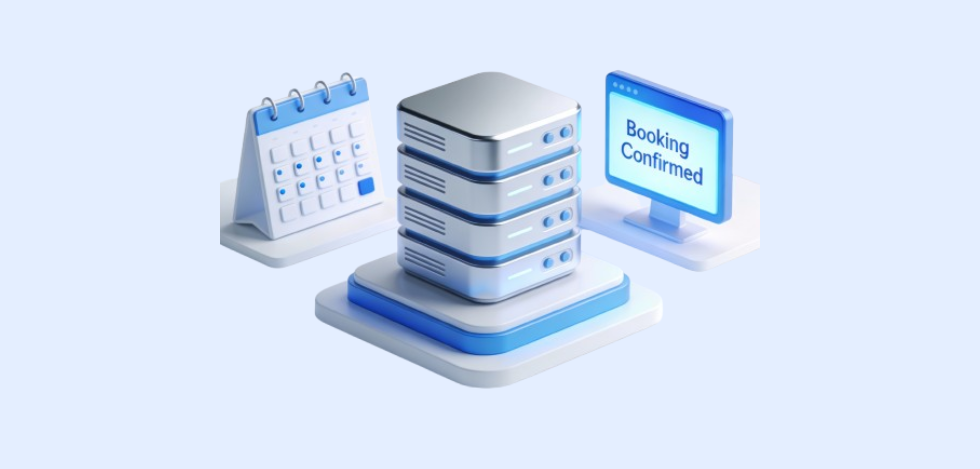
The system checks availability, applies pricing rules, and creates the reservation record. Instead of each channel managing rooms independently, the CRS acts as the single source of truth for reservations.
How Does a Central Reservation System Work
The working process of a central reservation system follows a simple real time flow.
Guest Searches for a Room
The guest enters travel dates and number of guests on a website, OTA, or through the reservations team, often powered by modern hotel search engine software like PHPTRAVELS hotel search engines.
Availability Is Checked
The CRS looks into its inventory database to verify if rooms are available.
Pricing Rules Are Applied
Seasonal rates, promotions, corporate contracts, or package pricing are automatically applied.
Booking Is Confirmed
If conditions are met, the system confirms the reservation and generates a booking reference.
Inventory Updates Across Channels
The available room count is reduced instantly on all connected channels.
This real time synchronization prevents double bookings and keeps availability accurate everywhere.
Central Reservation System Architecture
A typical CRS architecture looks like this:
Guest Channel
→ Hotel Website / OTA / Call Center
→ Booking Interface or API
→ Central Reservation System
→ Inventory and Rates Database
→ Channel Synchronization

The CRS sits at the center of this structure and controls how availability and pricing move between systems.
Real Hotel Workflow Example
Before Using a Central Reservation System
A small hotel receives bookings from:
- Front desk
- Hotel website
- Booking.com
How reservations are handled:
- Front desk writes bookings in a spreadsheet
- Website bookings are checked manually
- Booking.com sends email notifications
Problems:
- Staff forget to update availability
- Two guests book the same room
- Website shows sold out rooms as available
Result: Frequent overbookings and manual workload.
After Using a Central Reservation System
The hotel connects:
- Front desk system to CRS
- Website booking form to CRS
- Booking.com to CRS
Now:
- Every booking goes into the CRS
- CRS checks availability automatically
- CRS confirms reservations
- CRS updates inventory everywhere
Result:
- All channels show identical availability
- No spreadsheets required
- Overbooking risk becomes minimal
CRS vs PMS vs Booking Engine vs Channel Manager
| System | Primary Role |
|---|---|
| Central Reservation System | Controls reservations, rates, and availability |
| Property Management System (PMS) | Manages operations such as check-in, housekeeping, billing |
| Booking Engine | Displays rooms and collects bookings on website |
| Channel Manager | Distributes inventory to OTAs |
These systems often integrate, but each has a distinct responsibility.
Types of Central Reservation Systems
Standalone CRS
Used purely for reservation control and connects to external systems.
CRS Inside Hotel Platform
CRS built into a larger hotel management platform.
CRS with Booking Engine
CRS controls inventory while booking engine handles website searches.
Cloud Based CRS
Hosted online and accessible from anywhere.
On Premise CRS
Installed locally on hotel servers.
Key Features of Central Reservation System Software
- Real time inventory control
- Multiple rate plans and pricing rules
- Promotions and restrictions
- Multi property management
- API connectivity
- Reservation history
- Reporting and analytics
Advantages of Central Reservation System
- Centralized reservation management
- Faster booking processing
- Fewer manual errors
- Reduced overbookings
- Consistent pricing across channels
- Better reporting visibility
These advantages improve operational stability and control.
Central Reservation System for Multi Property Hotels
Hotel groups and chains use CRS to manage inventory across multiple locations from one interface. Headquarters can control:
- Rate strategies
- Room allocation
- Promotions
- Availability rules
This ensures consistent distribution and pricing across all properties.
Security and Reliability in CRS Software
Modern CRS platforms include:
- User role permissions
- Activity logs
- Secure authentication
- Encrypted connections
- Regular backups
These controls protect reservation data and prevent unauthorized changes.
Central Reservation System Software for Hotels
Central reservation system software is often delivered as part of a broader hotel platform.
PHPTRAVELS Central Reservation System
PHPTRAVELS provides a central reservation system that connects inventory, rates, and reservations into a single platform with real time synchronization.
Key capabilities include:
- Multi hotel management
- Channel connectivity
- Real time availability updates
- Integrated hotel module
- Built in booking engine software
- Integrated channel manager
This unified approach allows hotel operators to manage reservations and distribution from one environment.
Industry CRS Examples
Large hospitality organizations use enterprise CRS platforms such as the Amadeus central reservation system and SynXis central reservation system.
These systems serve global hotel groups with high booking volumes.
Common Misconceptions About Central Reservation Systems
CRS is the same as PMS
No. CRS focuses on reservations while PMS manages hotel operations.
CRS is only for large hotels
No. Small and medium hotels benefit equally.
CRS replaces staff
No. CRS automates repetitive tasks and supports staff.