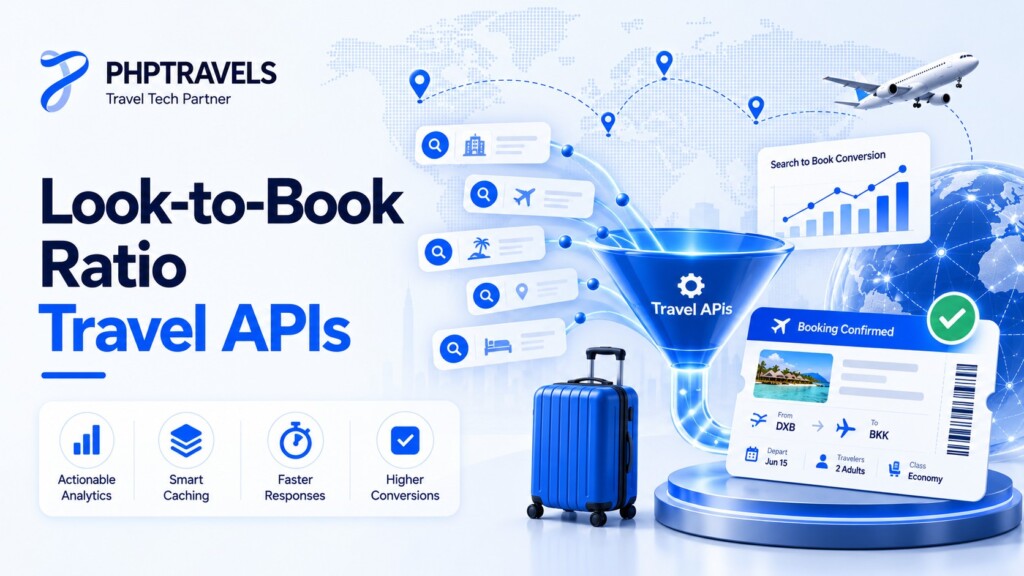
Look-to-book ratio travel API planning starts with a simple question: Monday 09:12. A traveler opens your OTA, taps a flexible calendar for “anytime in October,” and watches thirty days of prices paint themselves in. Behind that calm grid, your stack just fired hundreds of supplier shopping calls — most of them for dates the traveler will never book.
Nothing is “broken.” Latency is fine. Availability looks rich. Your supplier account manager still emails you about look-to-book thresholds you are quietly approaching.
This guide is for OTA founders, agency technical leads, and consolidators who already connect GDS, NDC, bedbank, or aggregator APIs and need a practical way to manage look-to-book ratio without turning search into a dead product. It is not a vendor bake-off of shopping engines. If your problem right now is a feed going dark, start with travel API failover and supplier redundancy. If your hotel stack is still a single bedbank, read multi-supplier hotel booking engine controls first — then come back here for shopping economics.
What Look-to-Book Ratio Travel API Metrics Actually Measure

Look-to-book (L2B / LTB) is the ratio of shopping (“look”) requests to confirmed bookings (“books”) against a supplier or distribution channel. Teams can baseline a look-to-book ratio travel API by supplier and channel.
In plain language:
For every ticket or reservation you sell, how many times did you ask the supplier’s shopping systems for offers?
A lower ratio usually means less waste. A higher ratio means more search activity per sale — which can be healthy product behavior (rich calendars, metasearch fan-out, package combinatorics) or unhealthy waste (bots, retries, unbounded date grids, duplicate supplier calls). A healthy look-to-book ratio travel API program measures both waste and booking outcomes.
What L2B does not tell you by itself:
- Whether the traveler saw a bookable fare or a stale cache hit
- Whether your checkout conversion is strong
- Whether the cost of those looks is cheap indicative pricing or expensive full-offer computation
Industry commentary in 20252026 increasingly warns that raw L2B is an incomplete cost signal once caches and indicative ranges absorb exploratory traffic (OAG on look-to-book architecture; IATA’s October 2025 look-to-book white paper is widely cited in that discussion). Treat L2B as a supplier relationship and capacity metric, then pair it with conversion and accuracy metrics (below).
Why the ratio exploded — and why it will keep rising
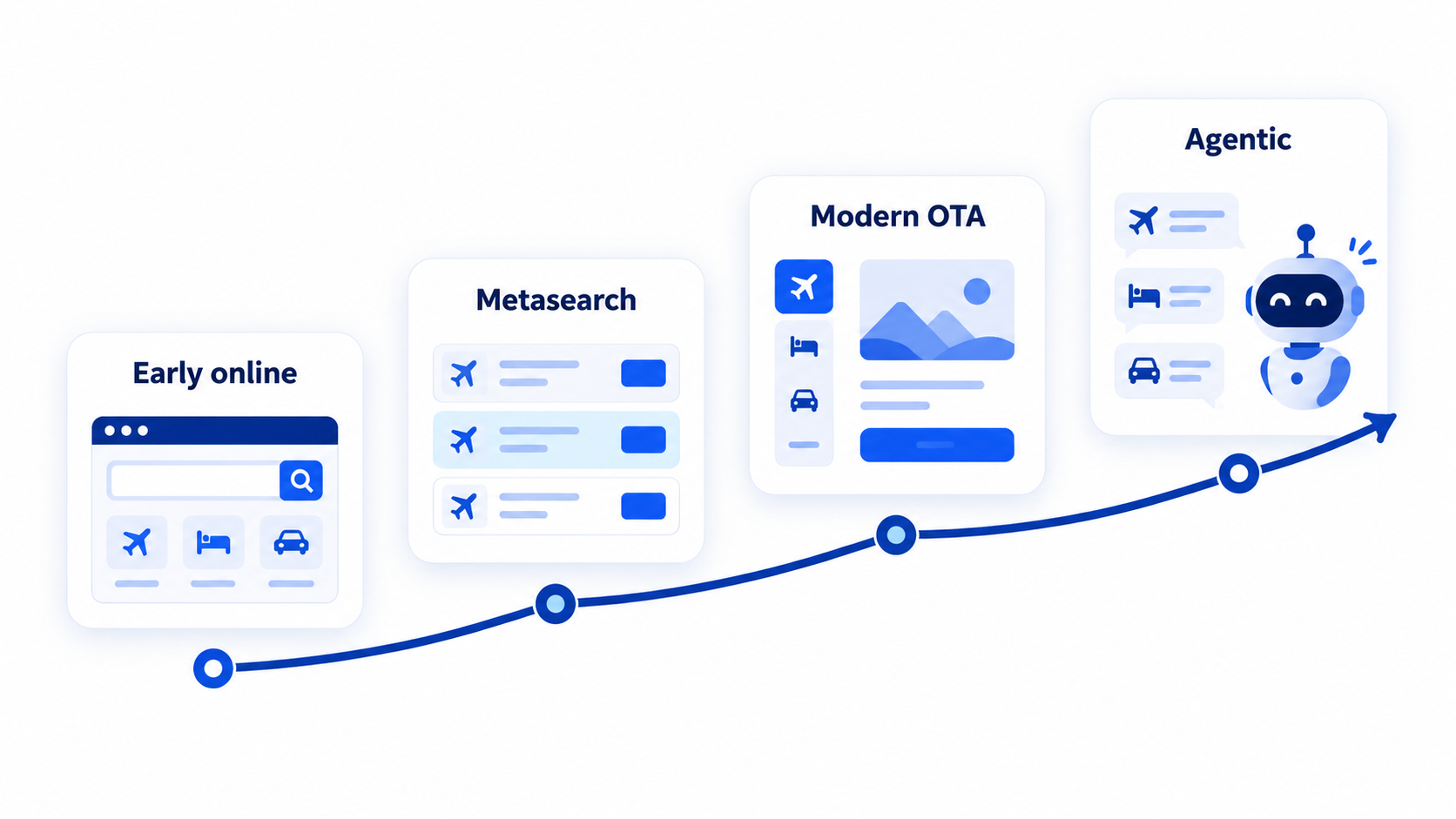
Rough industry framing (order-of-magnitude, not a universal SLA):
| Era | What multiplied searches | Rough searches per ticket (illustrative) |
|---|---|---|
| Early online | Few sites, simple OD search | Hundreds |
| Metasearch | One human intent → many OTA/airline fan-outs | ~Thousands |
| Modern OTA | Calendar grids, multi-POS sourcing, packaging, virtual interlining | ~10,000–20,000 |
| Agentic shopping (emerging) | AI assistants exploring dates/preferences continuously | Up to ~200,000 projected in some GDS-adjacent forecasts |
OAG’s mid-2026 write-up triangulates similar curves from Amadeus- and Sabre-adjacent public commentary and explains why airline pricing resists “cache like Wikipedia” thinking: fares are structured, perishable, and increasingly personalized (OAG).
For an agency or OTA operator, the takeaway is blunt: A look-to-book ratio travel API review should connect shopping volume to conversion.
- Product improvements raise looks flexible dates and richer content are not free for your suppliers.
- Agentic traffic removes human sleep cycles — overnight shopping no longer idles.
- You will not “win” by forbidding search — you win by deciding which looks deserve a live full offer.
What bad L2B costs you in the real stack
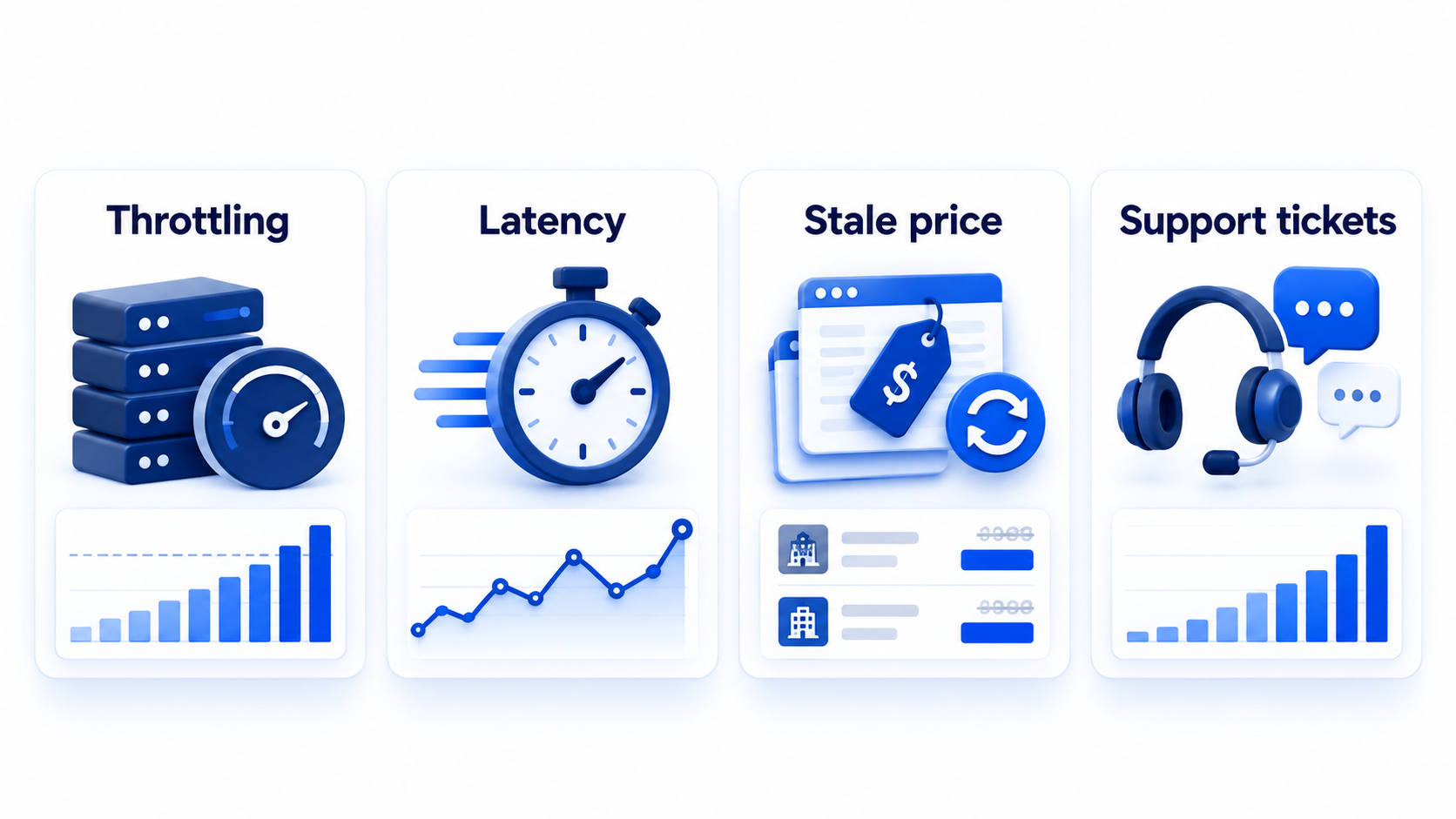
High look-to-book is not only an airline spreadsheet problem. It shows up as A look-to-book ratio travel API should pair this signal with conversion and freshness data.:
- Throttling and account risk — suppliers and GDSs may slow, filter, or review agencies that look like abusive shoppers.
- Latency and timeout cascades — calendar fan-out waits on the slowest date cell; travelers bounce.
- Stale-price checkout cliffs — cached looks convert to “price changed” or vanished inventory at book.
- Cloud and connector cost — every parallel supplier call has CPU, egress, and engineering attention cost even when the guest never pays.
- Support load — “I saw $312, now it’s $401 tickets that are really cache-governance failures.
Sabre’s February 2026 Cache-powered Intelligent Shopping announcement frames the commercial pain clearly from the GDS side: agencies need fast, bookable results without driving L2B through the roof (Sabre release). Airline-side programs such as Navitaire Edge Shopping for Vueling make the same point from the carrier view — shopping volume can threaten platform stability if every look hits live inventory systems (Amadeus / Navitaire).
You do not need those exact products to apply the lesson: separate exploration from commitment.
Controls that cut waste without killing conversion
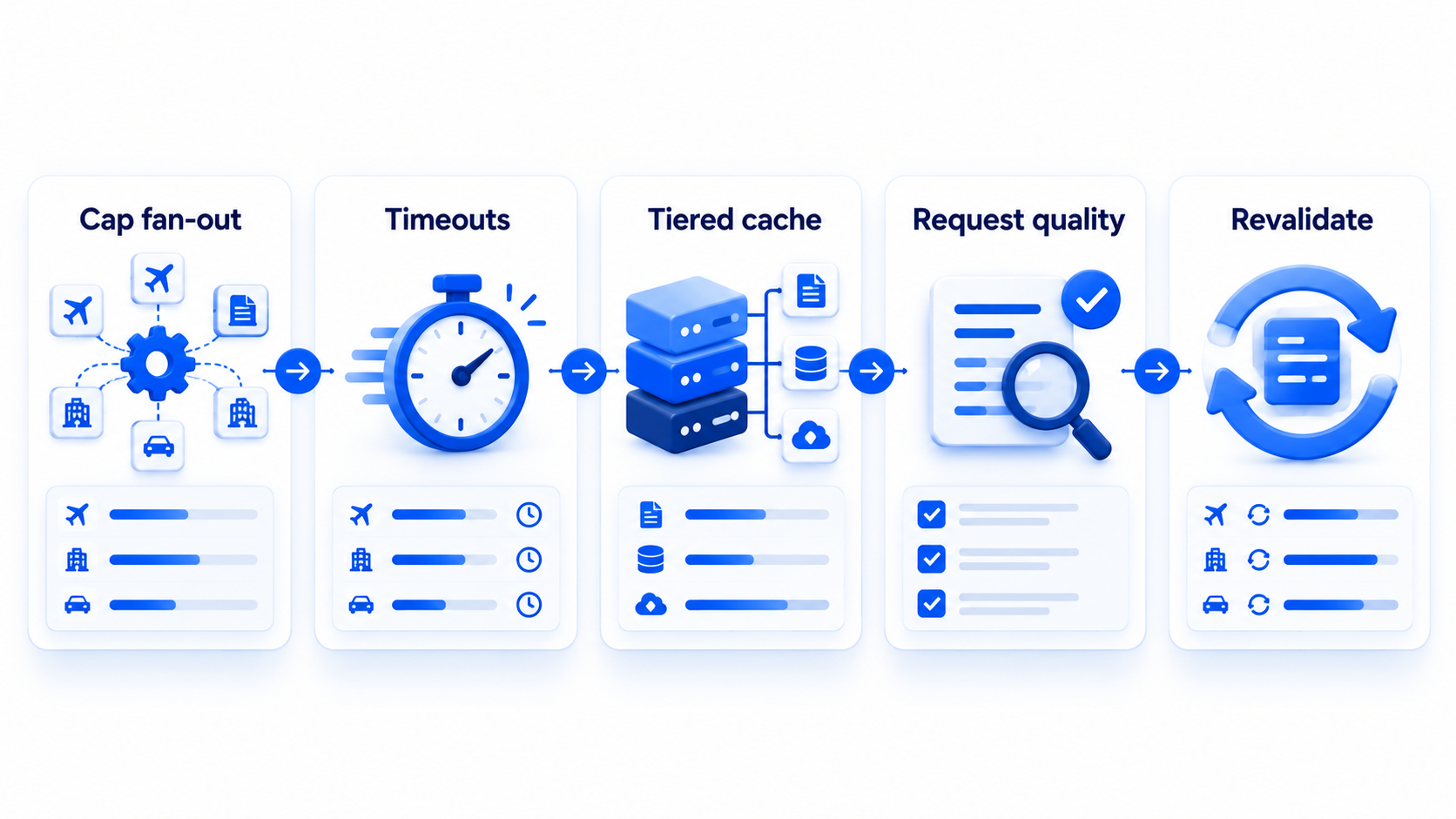
1. Cap fan-out before you celebrate UI features
Every calendar day, cabin filter, multi-city leg, and search all nearby airports” toggle is a multiplier. Product owners should budget looks the way finance budgets paid ads.
Practical rules:
- Default to a narrow date window; expand on explicit user action
- Debounce keystrokes and filter changes (do not live-query every slider tick)
- Collapse duplicate OD/date/cabin requests inside a short TTL (same user, same session)
- Block known bot patterns and empty referrer scrapers at the edge
2. Put timeouts and budgets on every supplier look
Parallel search is good. Unbounded wait is not.
- Per-supplier search timeout (often a few seconds depending on product)
- Global search budget (max supplier calls per user intent)
- Prefer returning partial results over waiting for every date cell
This overlaps with failover hygiene — unhealthy suppliers should not consume your entire look budget (API failover guide).
3. Use tiered caching — and name what you are caching
IATA’s look-to-book discussion (as summarized by industry coverage) highlights that caching works better for relatively stable filed content and struggles with highly dynamic / personalized offers, and that “cache to cache to cache” across metasearch → OTA → GDS → airline creates staleness (OAG summary of IATA framing).
A workable agency model: Track the look-to-book ratio travel API by cache tier, intent, and supplier.
| Cache tier | Good for | Danger if misused |
|---|---|---|
| Schedule / route skeletons | Does this market fly?” orientation | Showing flights that no longer operate |
| Indicative / range prices | Calendar heatmaps, early browse | Presenting ranges as guaranteed bookable fares |
| Full offer cache | Repeat identical shop intents in a short window | Selling expired NDC offers without revalidation |
| Component caches (taxes, rules fragments) | Speeding assembly | Assembling illegal/inconsistent total prices |
NDC shopping SRE talks emphasize freshness thresholds, invalidation triggers, and monitoring for pricing drift — not “cache forever” (Conf42 SRE talk abstract).
4. Score request quality before you spend a live look
Not every call deserves the full offer pipeline:
- Missing dates / impossible LOS / infant-without-adult → reject locally
- Identical retries after errors → backoff, do not hammer
- Metasearch partners with terrible book rates → partner-level cache or stricter filters (Amadeus publicly describes filtering unproductive traffic in airline-profile style controls; treat that as a pattern, not a PHPTRAVELS feature claim)
5. Revalidate on the book path — always
Search may be approximate. Book must be precise.
Before payment (or before irreversible ticketing):
- Re-shop or revalidate the selected offer on the supplier you will actually book
- Show a clear price-change UX if the offer moved
- Use idempotent booking keys so timeouts do not double-ticket
Cheap looks at the top of the funnel are fine. Lying at checkout is not.
Separate search economics from book-path integrity
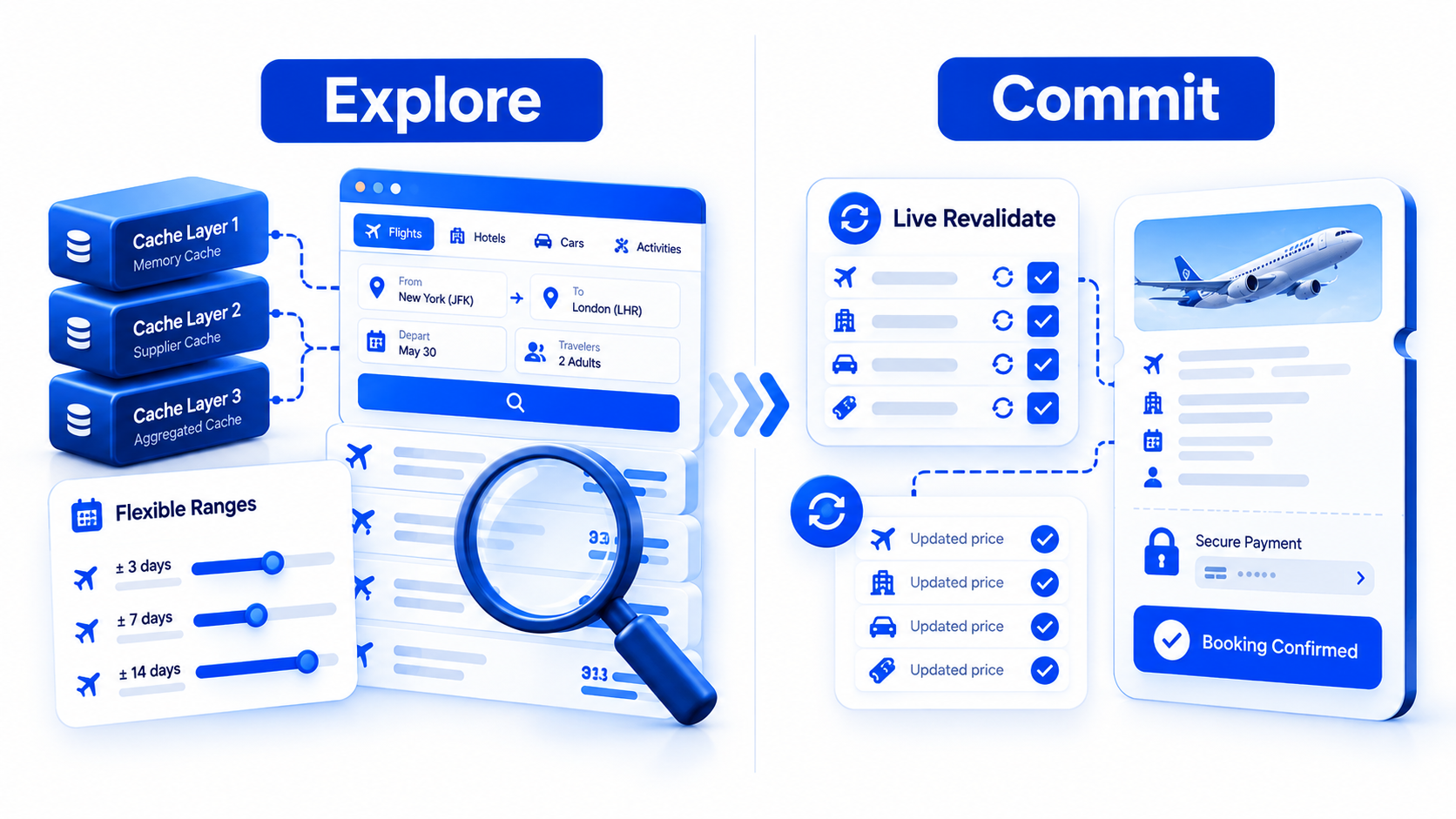
A common failure mode: teams “fix L2B” by over-caching the same objects they later try to ticket.
Healthier split:
- Explore: indicative ranges, short-TTL offer caches, aggressive timeouts, partial results
- Decide: fresher offers, fewer suppliers, richer ancillaries
- Commit: live revalidation, payment, supplier confirmation, documents
OAG’s indicative-pricing argument is useful here even if you never brand it that way: early orientation does not need cent-accurate personalized offers; commitment does (OAG).
Complementary metrics many teams add:
| Metric | Why it helps |
|---|---|
| Book success rate after offer select | Catches stale-cache conversion theater |
| Price-change rate at revalidation | Tells you cache freshness is wrong |
| Looks per unique shopper intent | Normalizes bot/retry noise |
| Cache hit rate by tier | Proves exploration is cheap |
Supplier error mix (RATE_LIMIT, TIMEOUT, AUTH) |
Separates abuse from outages |
IATA-linked commentary also discusses offer-to-order and compute-per-order style metrics so cost tracks expensive offer generation, not every exploratory glance (OAG on complementary metrics).
Where PHPTRAVELS fits (honestly)
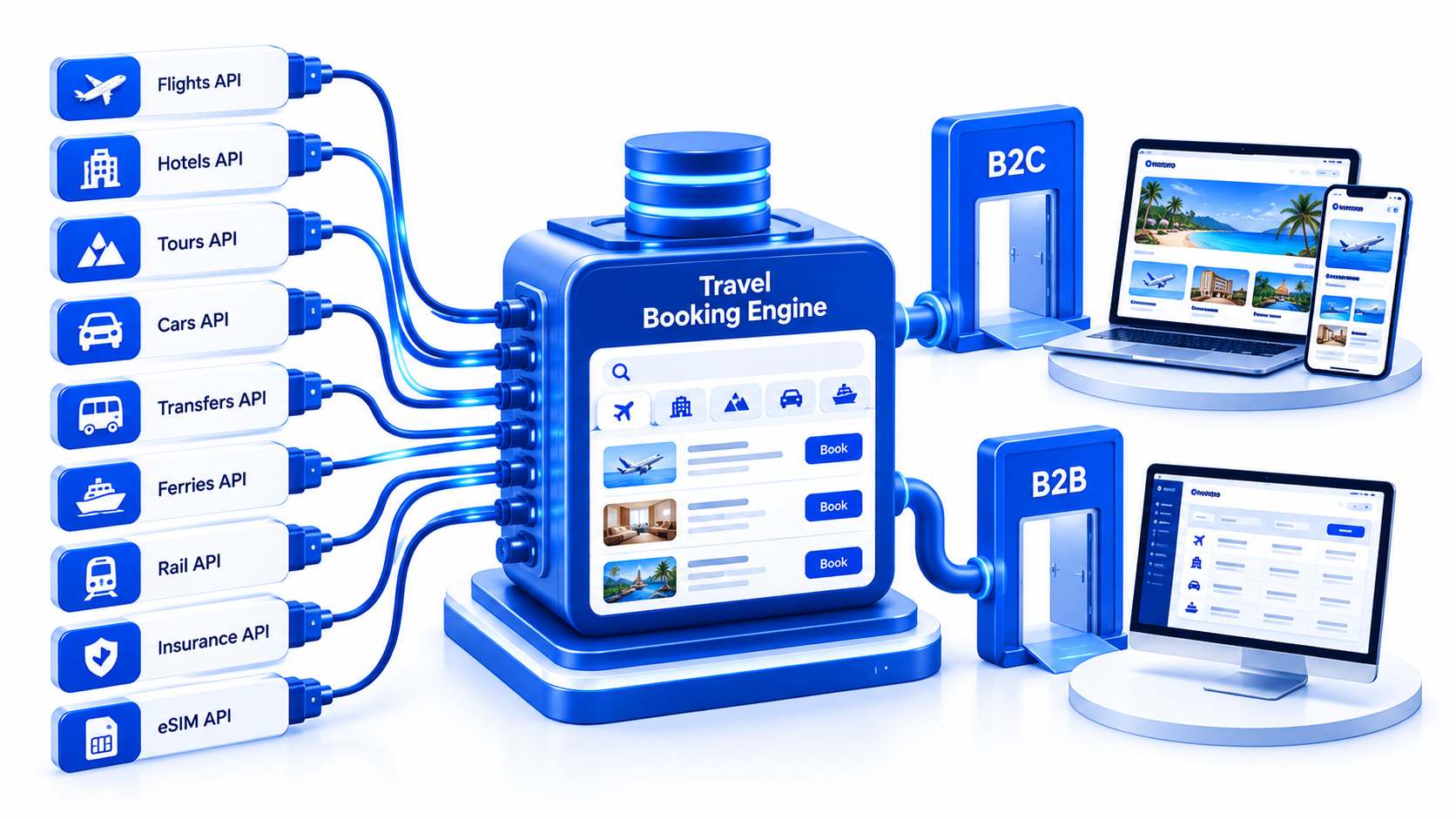
PHPTRAVELS is licensed travel booking software for agencies, tour operators, OTAs, and startups. It provides a B2C storefront and B2B agent workflows, modular products (flights, stays, tours, cars, and more), supplier API connections, payments to your merchant accounts, markup rules, and multi-currency / multi-language operation. It is not a booking intermediary and does not grant inventory — you bring supplier contracts and API credentials. Licensing is commercial / source-included self-hosted (or managed options), not public OSS and not a free SaaS tier. Verify current modules and connectors on integrations and docs; configure commercials at pricing.
For look-to-book hygiene, the useful fit is operational, not magical: A look-to-book ratio travel API workflow should keep these controls close to supplier and booking data.
- One booking core for B2C and B2B so you are not running three disconnected shoppers that each burn looks
- Multi-supplier modules so you can shape which connectors participate in a given search (and keep failover paths real)
- Markup and channel rules so commercial logic lives next to the offers you actually show
- Back-office continuity (bookings, documents, payments) so the expensive book path is not a separate spreadsheet world
PHPTRAVELS does not replace airline-side shopping caches, GDS intelligent shopping products, or your own edge bot filters. Those remain partner- and engineering-layer decisions. What a serious booking platform should do is give you a controllable place to run search → price → revalidate → pay → confirm without inventing inventory.
If that stack shape matches how you sell, start with a demo and size the licence on the live pricing configurator.
A 30-day look-to-book hygiene checklist
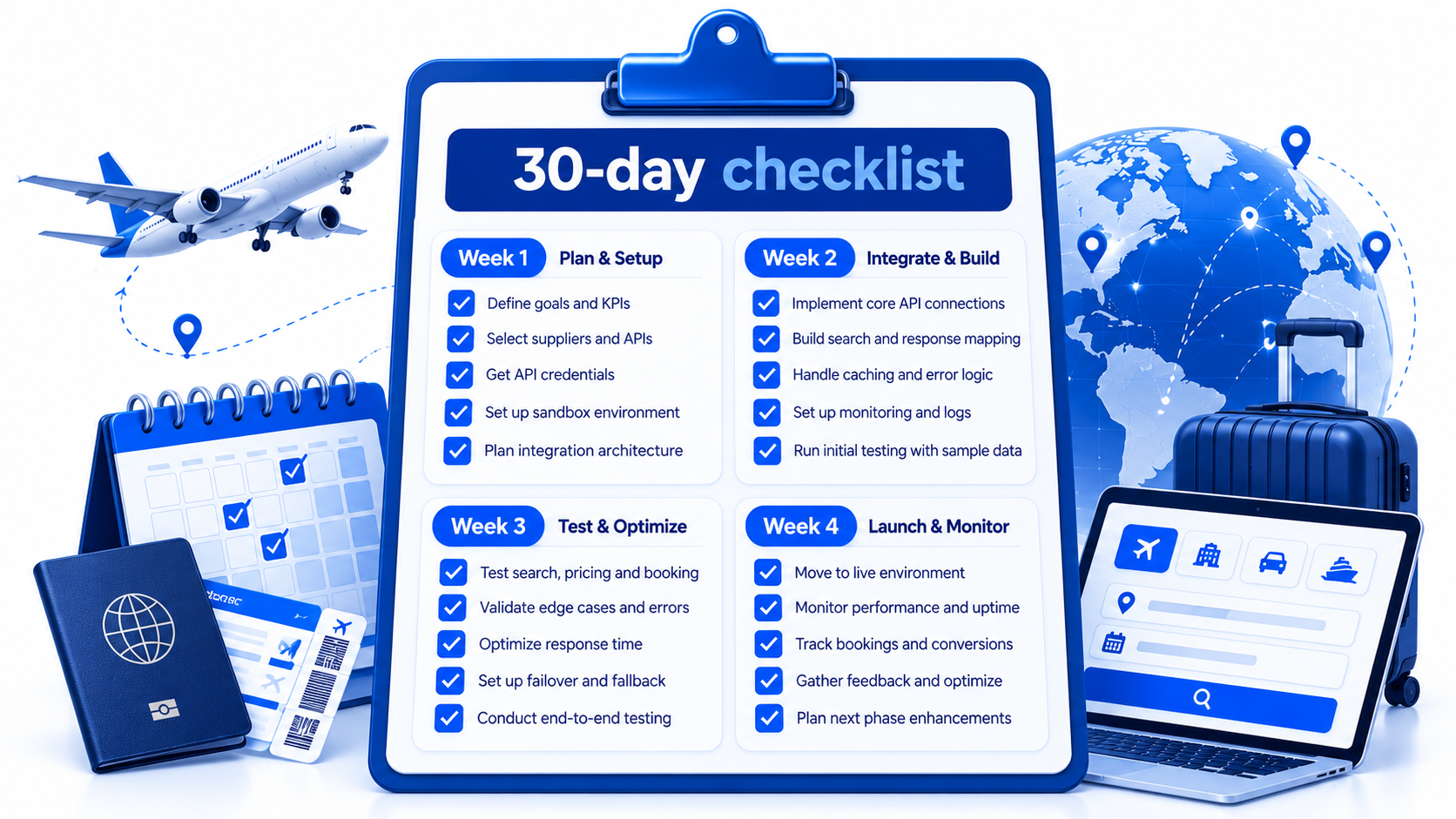
Week 1 — Measure
- [ ] Log looks vs books per supplier and per module (flights vs hotels)
- [ ] Split search vs book error codes
- [ ] Baseline price-change rate at revalidation
Week 2 — Stop obvious waste
- [ ] Debounce UI; kill duplicate session queries
- [ ] Cap calendar default span; require click-to-expand
- [ ] Add per-supplier timeouts and a global look budget
Week 3 Cache with names
- [ ] Document which responses are indicative vs bookable
- [ ] Set TTLs and invalidation rules per tier
- [ ] Never skip revalidation on paid confirmation
Week 4 — Govern partners
- [ ] Review metasearch / affiliate shop quality
- [ ] Alert on
RATE_LIMITspikes and looks-per-intent outliers - [ ] Run a tabletop: Supplier cuts our shop quota by 50% tomorrow — what do travelers still see?”
FAQ
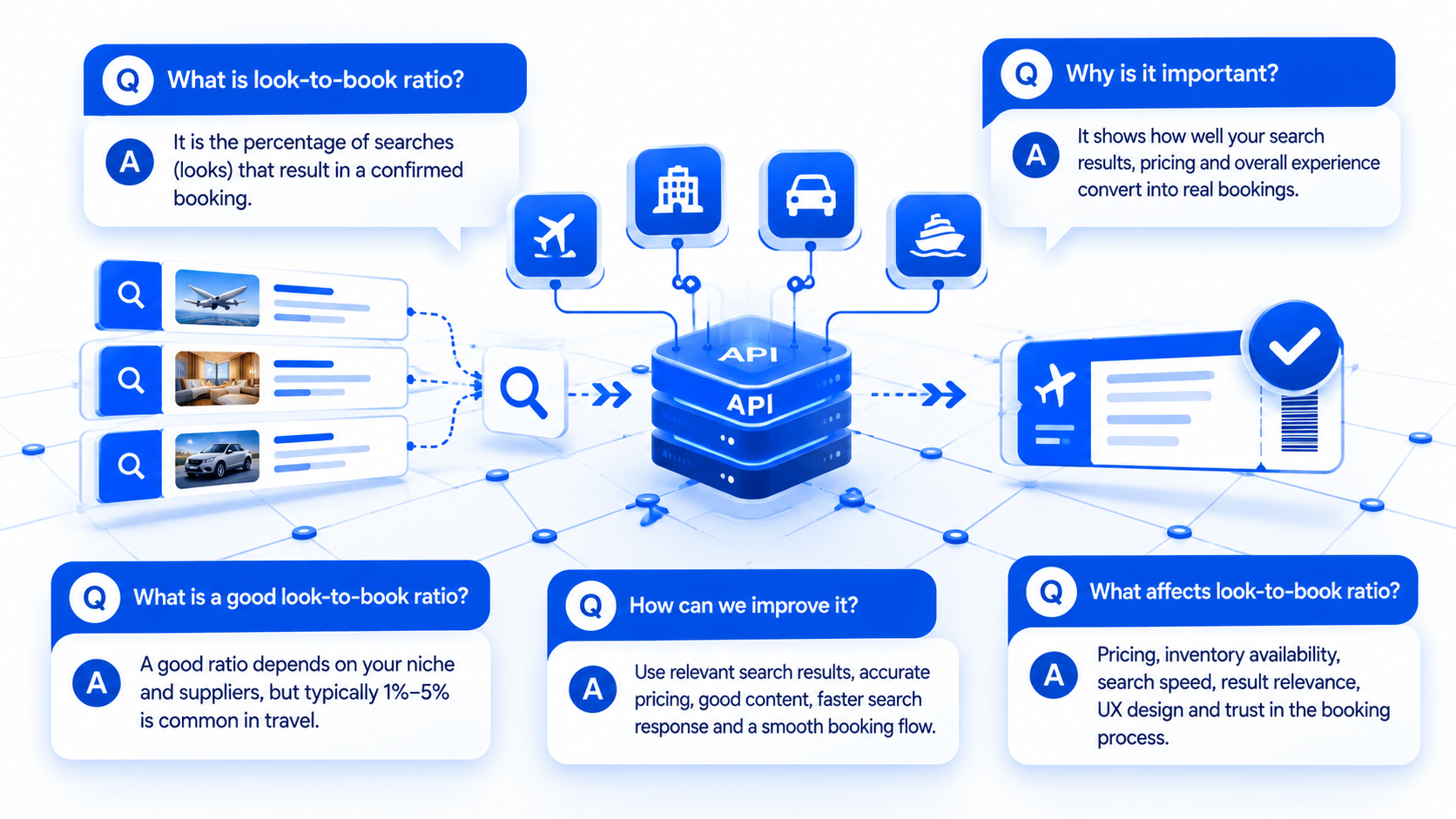
What is a “good” look-to-book ratio?
There is no universal number. Contracts, channel mix, calendar UX, and whether looks are cached or live all change the answer. Track your own baseline per supplier, then improve waste and book success together — not L2B alone.
Does caching always lower L2B cost?
It lowers live shopping pressure when hits are real. Bad caches create checkout failures that destroy conversion and trust. Tier the cache and revalidate before you charge.
Is look-to-book only a flights / GDS problem?
Flights get the most public attention because airlines and GDSs meter shopping hard. Hotels and other APIs still punish unbounded fan-out through latency, rate limits, and unstable rates. Apply the same budgets. That context matters when a look-to-book ratio travel API spans flights, hotels, and other modules.
Will AI travel agents make this worse?
Public industry projections say shopping multipliers can rise sharply as agents explore continuously (OAG). Plan for request quality scoring, indicative exploration, and strict commit-path revalidation — not for “hope traffic stays human.”
Does PHPTRAVELS include airline inventory by default?
No. Software connects; you supply supplier agreements and credentials. Confirm live connectors on integrations.
Look-to-book is not a vanity KPI. It is the tax your booking product pays for every search feature you ship. Cut waste on purpose, protect bookable truth at checkout, and keep supplier relationships intact — then scale the UI features travelers actually convert on. A look-to-book ratio travel API is a KPI to govern alongside book success and price-change rate.
Ready to evaluate a multi-supplier booking stack you control? Book a PHPTRAVELS demo or configure options on pricing.