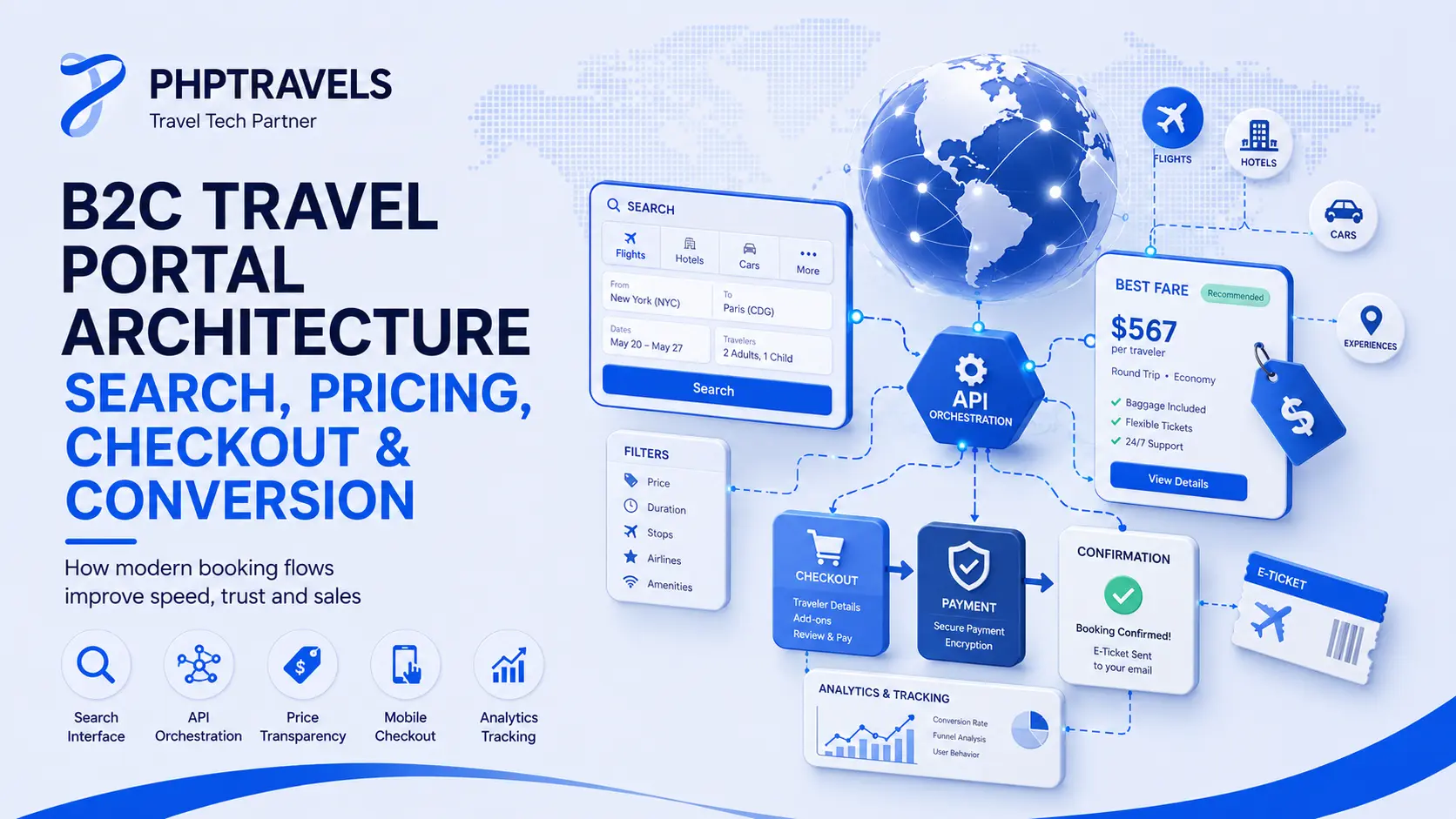
When a traveler searches for a flight, the results page looks simple: airlines, departure times, stops, and prices. Behind that page, however, a travel website may be comparing offers from several systems at once.
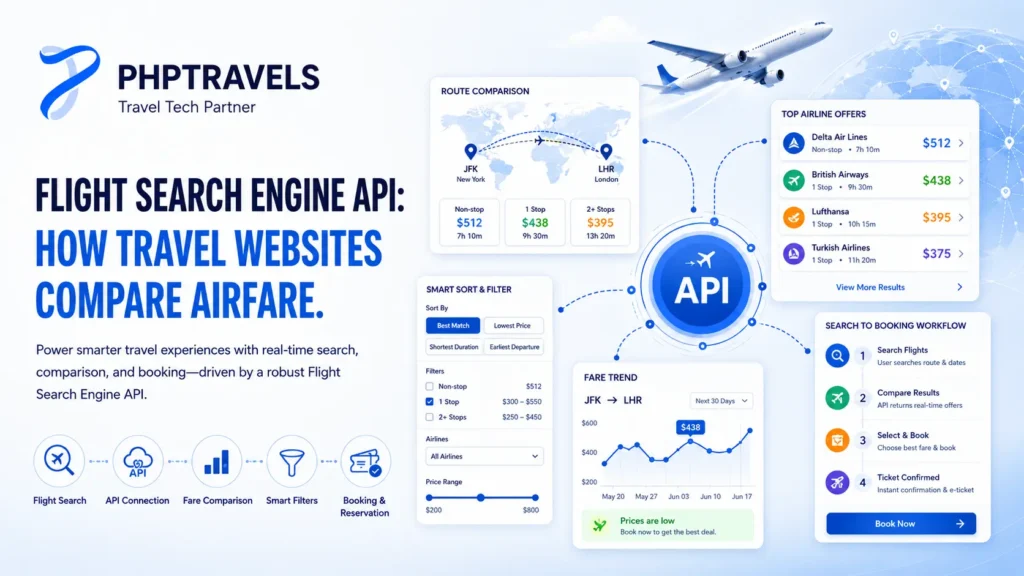
A flight search engine API is the technology layer that lets a website or app request flight offers, receive structured airfare data, and display comparable results. Depending on the business model, those offers may come from a GDS, an NDC connection, an airline-direct API, a flight aggregator, an OTA partner, or a metasearch source.
The important point is that airfare comparison is not only about finding the lowest number. A useful system must also understand whether two offers represent the same itinerary, what fare conditions are included, whether the price is still available, and what happens after the traveler clicks “Book.”
What Is a Flight Search Engine API?
A flight search engine API connects a travel website’s search interface with one or more sources of airline content.
A traveler enters an origin, destination, dates, passenger details, and sometimes cabin class. The website sends that request to connected suppliers and maps the returned data into a consistent structure for comparison.
In simple terms, the API supplies the data; the search engine organizes it. A typical response may include the airline, schedule, stops, duration, fare family, price, taxes, baggage information, and fare rules where available.
Search is only one part of commercial flight sales. A website that wants to accept payments, create bookings, issue tickets, and manage changes needs a wider operational flow. Travel businesses planning that setup can review PHPTRAVELS’ flight booking software to see how search connects with pricing, booking, ticketing, and post-booking operations.
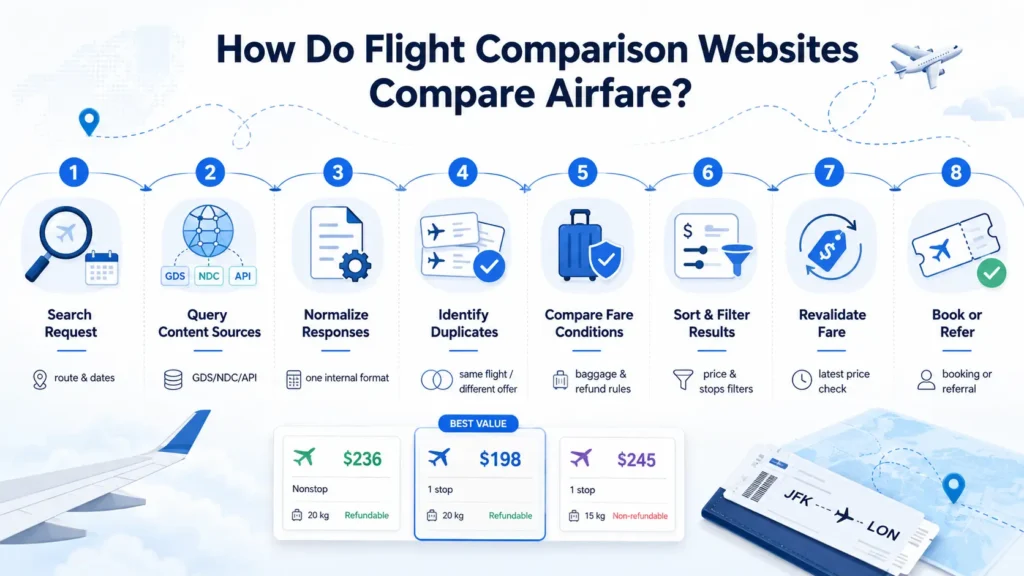
How Do Flight Comparison Websites Compare Airfare?
Flight comparison websites usually follow a multi-step process rather than displaying supplier responses exactly as they arrive.
1. The Traveler Creates a Search Request
The system collects route, dates, trip type, number of passengers, cabin class, and other filters. These inputs are validated before the platform sends requests to external systems.
2. The Platform Queries One or More Content Sources
A travel website may send the request to one flight API or several sources.
For example, an OTA could use a GDS for broad coverage while adding NDC or aggregator content for additional offers. A publisher may use a metasearch or affiliate source instead of operating its own ticketing workflow.
The right model depends on whether the website wants to compare, refer, book, or fully service a reservation.
3. Different Responses Are Normalized
Different providers often describe similar flight information using different field names, structures, fare codes, time formats, baggage rules, or tax breakdowns.
A comparison platform therefore needs a normalization layer that converts supplier responses into one internal format. Without this step, comparing prices and itineraries consistently becomes difficult.
4. Duplicate Results Are Identified
The same flight may appear from more than one source.
Two results can have the same airline, flight number, route, and schedule but different prices or conditions. A search engine should decide whether to show both, combine them under one itinerary, or highlight the better option.
This is where a flight booking comparison website becomes more than a list of API responses. Good comparison logic reduces clutter while preserving meaningful differences.
5. Fare Conditions Are Compared
The cheapest displayed fare is not always the best-value fare.
One offer may include checked baggage while another does not. Refundability, changes, seat selection, and other inclusions may also differ. Even when two itineraries look identical, their commercial conditions can be different.
A strong comparison experience therefore shows the total offer as clearly as the available data allows.
6. Results Are Sorted and Filtered
Once offers are normalized, the site can apply useful sorting and filters such as lowest price, shortest duration, fewest stops, airline, departure time, airport, cabin class, and fare flexibility.
The goal is not to show the most data. It is to help the traveler understand the available choices quickly.
7. The Selected Fare Is Revalidated
Flight prices and seat availability can change quickly.
A fare shown during the initial search may no longer be available when the traveler reaches checkout. Before payment or booking, a commercial system should normally recheck the selected offer with the relevant supplier.
Revalidation reduces price mismatches and failed booking attempts.
8. The Traveler Moves to Booking or Referral
The final step depends on the business model.
An OTA may continue into passenger details, payment, booking creation, and ticketing. A metasearch or affiliate website may send the user to another provider to complete the transaction.
That is why “flight search” and “flight booking” are related but not identical capabilities.
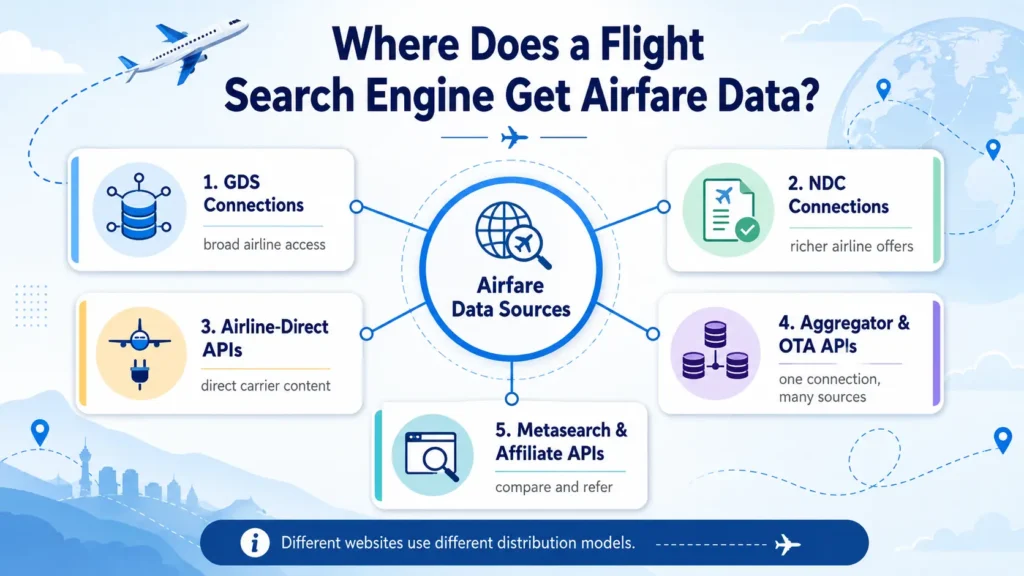
Where Does a Flight Search Engine Get Airfare Data?
There is no single source used by every travel website. Airfare can come through several distribution models.
GDS Connections
Global Distribution Systems are established travel distribution networks used by agencies, OTAs, and other sellers to access airline content.
They can provide broad coverage and mature booking workflows, but commercial access, fare availability, and servicing capabilities depend on the provider agreement and market.
NDC Connections
New Distribution Capability, or NDC, is an airline distribution standard developed by IATA. It is built around airline Offer and Order processes and is designed to improve communication between airlines and travel sellers.
For travel websites, NDC connections can provide airline offers and richer product information where supported. NDC is a standard, however, not a guarantee that every connection provides identical airline content.
Airline-Direct APIs
Some airlines or airline technology partners provide direct connectivity.
Direct connections can be useful for strategic airline relationships or important regional content. The trade-off is that multiple direct integrations can create more development, mapping, monitoring, and maintenance work.
Flight Aggregator and OTA APIs
Aggregators bring content from multiple sources through one technical connection.
This can reduce integration work, but businesses still need to check airline coverage, booking functions, post-booking features, and commercial terms.
Metasearch and Affiliate APIs
Metasearch systems focus on travel discovery and comparison. In many cases, the traveler searches on one website and completes the transaction with another provider.
KAYAK is one example. Its current API offering includes flight search alongside other travel products, making KAYAK flight search relevant to publishers, metasearch experiences, and some travel platforms.
For a deeper look at referral economics and partner workflows, see the existing PHPTRAVELS guide to the KAYAK Affiliate Program.
What Is the Difference Between a Flight Search Engine API and a Flight Booking API?
The easiest distinction is what the system must complete.
| Capability | Flight Search Engine API | Flight Booking API |
|---|---|---|
| Search routes and dates | Yes | Usually |
| Display and compare offers | Yes | Usually |
| Revalidate a fare | Sometimes | Commonly required |
| Create a booking or order | Not always | Yes |
| Support ticketing | Not necessarily | Often |
| Handle changes or cancellations | Usually limited | Depends on provider |
| Best fit | Search, comparison, metasearch | OTA and agency sales |
A search API may be enough for a content website or comparison product. A commercial OTA normally needs more: booking creation, payment handling, ticketing, cancellations, refunds, reporting, and customer-service workflows.
That is why businesses should define the desired customer journey before choosing a flight API.
Why Can the Same Flight Have Different Prices on Different Websites?
The same flight does not always have one universal displayed price.
Different websites may use different suppliers or distribution channels. Two offers may also belong to different fare families, include different baggage allowances, or apply different change and refund conditions.
Currency, point-of-sale rules, taxes, commercial agreements, and website markups can also affect the amount shown.
Timing matters too. Flight inventory is dynamic, so a result fetched or cached earlier may differ from a newly validated offer.
This is why accurate flight comparison depends on both search and revalidation. The price shown first is useful for discovery, but the selected offer should be checked again before a customer commits to payment.
What Makes a Good Flight Search Engine API Integration?
A strong integration is measured by more than the number of airlines displayed.
A good integration should revalidate the selected fare before payment, normalize supplier data into one predictable structure, and handle duplicate itineraries intelligently.
It should also remain fast when several external systems respond at different speeds. Timeouts, partial results, caching, and retry logic should prevent one slow source from damaging the whole search experience.
Clear pricing, useful filters, and operational monitoring matter too. Travelers should understand what is included, while travel teams need visibility into supplier errors, response times, fare changes, and failed revalidation.
Which Flight API Model Is Best for a Travel Website?
There is no universal best option. The right architecture depends on what the business wants to control.
| Business Goal | Typical Model to Evaluate |
|---|---|
| Monetize travel content | Metasearch or affiliate integration |
| Build a flight comparison product | Search or aggregator API |
| Sell flights directly as an OTA | GDS, NDC, aggregator, or mixed supplier stack |
| Prioritize a strategic airline | Airline-direct or NDC connection |
| Expand regional fare coverage | Multiple suppliers or specialized aggregators |
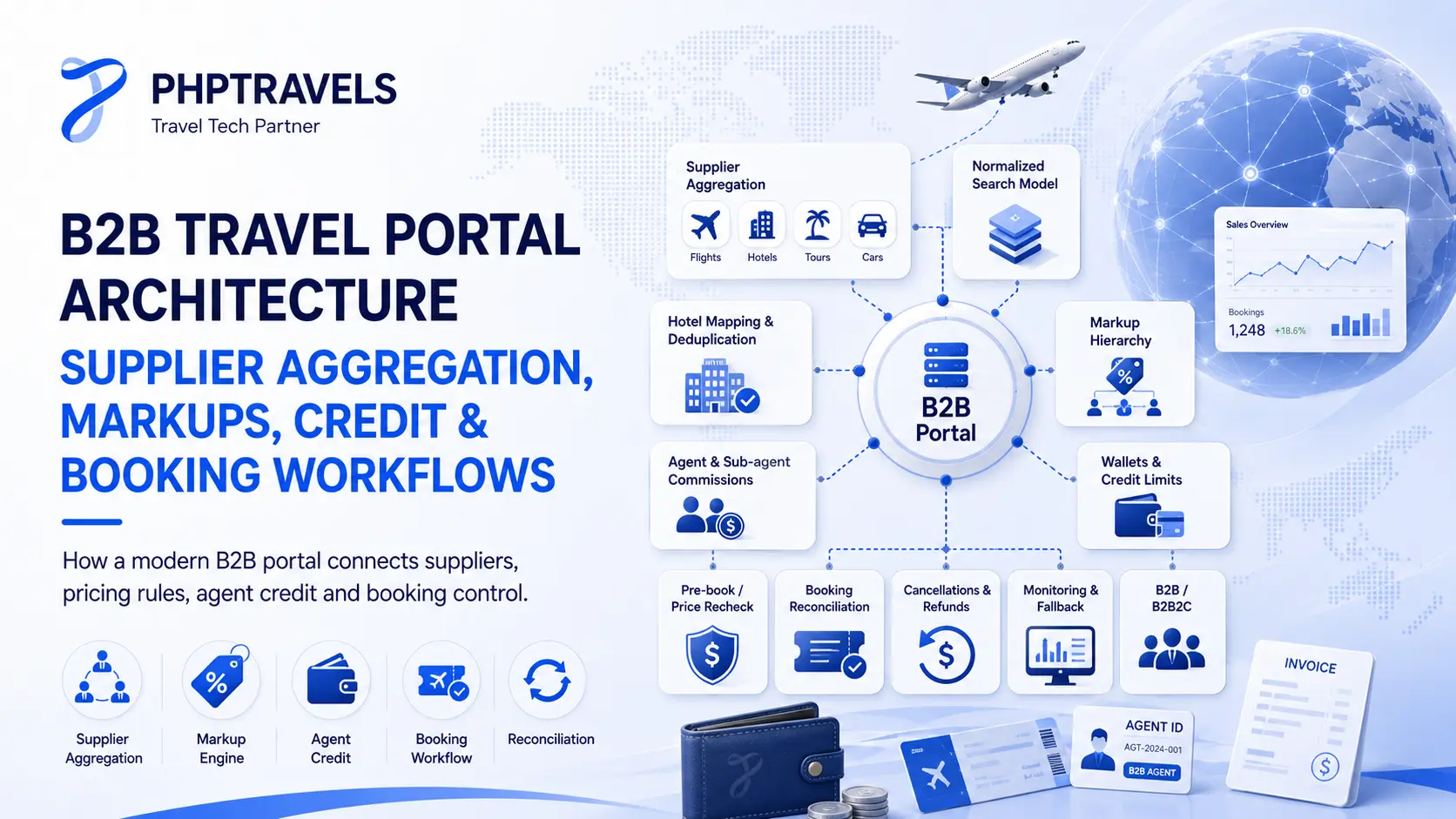
| Run B2B agent sales | Booking APIs plus agent, markup, wallet, and reporting tools |
Before choosing a provider, define target markets, airline coverage, booking flow, search volume, post-booking responsibilities, and commercial model.
If the project involves several supplier types, PHPTRAVELS’ travel API integration overview explains how search, pricing, booking, and post-booking operations fit into a wider platform.
You can also review the current PHPTRAVELS integrations directory when comparing available flight and travel connectivity options.
How Does PHPTRAVELS Fit Into Flight Comparison and Booking?
PHPTRAVELS can act as the application layer between the customer-facing travel website and connected suppliers.
A booking platform can map connected content into one search and booking flow, including fare presentation, markup rules, revalidation, booking records, payments, and reporting.
The supplier, GDS, NDC connection, or aggregator provides the content. The platform manages how that content is searched, presented, sold, and operated. In other words, the API provides access while the platform turns that access into a usable travel product.
What Common Mistakes Should Travel Websites Avoid?
Avoid choosing a provider only by its advertised airline count; coverage matters only if it serves the routes and markets your customers need.
Do not compare headline prices without considering baggage and fare conditions, and do not skip revalidation before booking. Metasearch should not be confused with full booking capability, especially when the business must handle changes, cancellations, refunds, and support.
Adding too many suppliers too early can also increase mapping, duplicate detection, monitoring, and maintenance. Start with sources that fit the target market, then expand when extra coverage has a clear commercial purpose.
Final Takeaway
A flight search engine API turns airline content into searchable data, but high-quality airfare comparison depends on what happens around that connection.
Travel websites need to normalize different supplier responses, identify duplicate itineraries, explain fare differences, provide useful filters, and revalidate prices before a booking decision. They also need the right distribution model: GDS, NDC, airline direct, aggregator, metasearch, or a combination.
For publishers, search and referral may be enough. For OTAs and travel agencies, requirements usually extend into payments, booking, ticketing, servicing, and reporting.
Start with the customer journey you want to own. Then choose the flight API sources and platform architecture that can support that journey reliably as search volume and booking complexity grow.