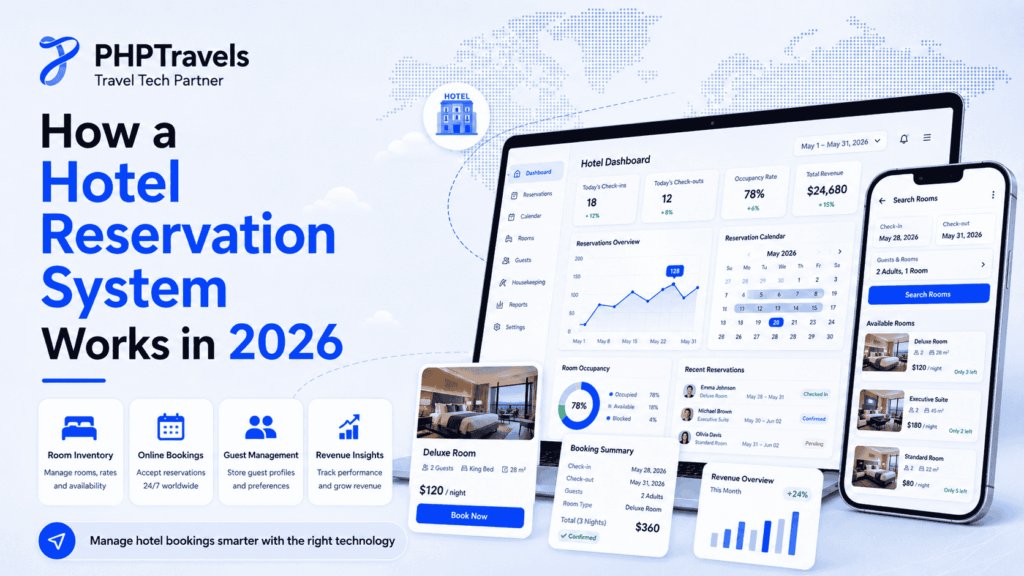
A hotel reservation system manages the complete booking process from guest search to check in. It connects room availability, pricing, payments, guest details, confirmations, and hotel operations in real time.
In 2026, hotels, travel agencies, OTAs, and B2B travel businesses need more than a simple booking form. They need a connected reservation system that reduces manual work, prevents overbookings, improves pricing control, and keeps all booking channels updated from one place.
This guide explains how a hotel reservation system works step by step, what happens behind the scenes, common operational challenges, and how platforms like PHPTRAVELS help businesses build a complete hotel booking workflow.
Quick Summary
- A hotel reservation system manages the entire booking lifecycle from guest search to check in
- It connects inventory, pricing, payments, and hotel operations in real time
- Automation reduces overbookings, manual work, and revenue leakage
- The right system supports direct bookings, B2B sales, and OTA distribution from one source
- Operational integration matters more than just a booking interface
What is a hotel reservation system
A hotel reservation system is software that allows guests and agents to search availability, book rooms, and receive confirmation while automatically updating hotel operations.
It typically includes several connected components
- A booking interface where guests or agents select rooms and dates
- A pricing and availability engine that controls rates and inventory
- A reservation database that records bookings and guest details
- Operational connections to front desk, housekeeping, and reporting systems
In practice, it acts as the control center for how rooms are sold, priced, and managed across all sales channels, similar to how a centralized reservations management layer coordinates distribution and availability.
Businesses that want to manage hotel bookings, rates, and inventory from one place can also explore the PHPTRAVELS hotel booking engine.
How a hotel reservation system works step by step
1: Guest search and availability request
The process starts when a guest or agent searches for a stay by entering dates, destination, and number of guests, typically through a hotel search experience that checks live availability.
The system checks live inventory stored in the reservation database. If the hotel also sells through multiple suppliers or wholesalers, availability may be fetched through connected hotel APIs such as those used in a hotels API booking system
2: Real time pricing calculation
Once availability is confirmed, the system calculates pricing. This is not a static price list. Rates are influenced by
- Seasonality and demand patterns
- Length of stay rules
- Contracted B2B rates or retail margins
- Promotions or negotiated corporate pricing
This is why many hotels rely on an online hotel reservation system rather than manual rate management. Pricing updates instantly without staff intervention.
3: Room selection and booking details
Guests or agents review available room types, amenities, policies, and prices. Clear presentation at this stage directly affects conversion.
For B2B focused businesses, this step often happens inside an agent portal with markup rules and credit limits, as seen in a B2B hotel booking setup.
4: Reservation creation and data capture
After selecting a room, the system creates a reservation record. It captures
- Guest information
- Stay details
- Rate and tax breakdown
- Cancellation and modification rules
This reservation becomes the single source of truth for all departments.
5: Payment handling
Depending on the business model, payment may be collected immediately, partially, or at check in. The reservation system coordinates with payment gateways and records transaction status.
Multi currency support and flexible payment rules are critical for hotels selling internationally or through agencies.
6: Confirmation and guest communication
Once the reservation is confirmed, the system automatically sends confirmation messages. These usually include
- Booking reference
- Stay details
- Hotel policies
- Contact information
Instant confirmation builds trust and reduces follow up workload for staff.
7: Inventory and operations update
This is where the system proves its real value, especially when paired with in stay service request tracking so guest needs move through departments with clear ownership and status. The moment a booking is confirmed
- Inventory is reduced to prevent double bookings
- Housekeeping schedules are updated
- Front desk systems receive guest arrival data
If the hotel sells rooms through external suppliers such as Hotelbeds or Booking.com, availability is synced automatically through integrations like hotelbeds API integration or Booking.com and Priceline connectivity.
8: Pre arrival and check in workflows
Advanced reservation systems support pre arrival communication, digital check in, and upsell opportunities. These workflows reduce front desk congestion and improve guest satisfaction, especially when combined with a hotel check in system software.
Behind the scenes integrations that matter
What separates a basic booking form from a real reservation system is integration depth.
- Reservation systems typically connect with.
- Property management tools that coordinate front desk and housekeeping operations within a hotel management system software
- Supplier APIs that provide global inventory from wholesalers and bedbanks
- Reporting and accounting modules for revenue tracking
- CRM systems that store guest preferences and booking history
Hotels selling global inventory often rely on integrations such as Hotelbeds, Hotelston, or similar providers. For example, Hotelston API integration allows access to contracted rates for international destinations.
Types of hotel reservation systems
Choosing the right type depends on hotel size, sales channels, booking volume, and whether the business sells directly, through agents, or through supplier APIs.
Not all reservation systems serve the same purpose. Common types include
- Manual reservation systems used by small properties with low volume
- Automated hotel reservation systems that manage real time availability and pricing
- Central reservation systems for multi-property groups, such as a Amadeus-based central reservation platform, help unify inventory and rates across locations.
- B2B focused systems designed for travel agencies and wholesalers
A detailed breakdown of system types is covered in types of hotel reservation system.
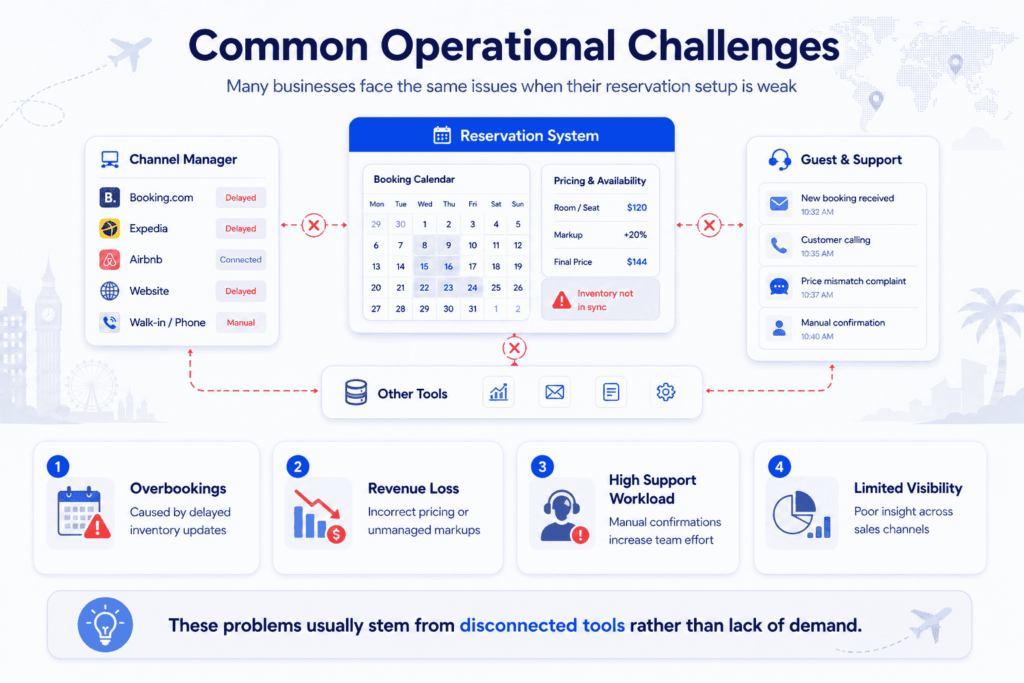
Common operational challenges
- Many businesses face the same issues when their reservation setup is weak
- Overbookings caused by delayed inventory updates
- Revenue loss from incorrect pricing or unmanaged markups
- High support workload due to manual confirmations
- Limited visibility across sales channels
These problems usually stem from disconnected tools rather than lack of demand.
How businesses usually try to solve this and where they fail
Hotels often start with a simple booking widget and later add tools as problems appear. This creates fragmented workflows where reservations, payments, and operations do not fully align.
Common mistakes include:
- Using separate systems for direct and agent bookings
- Managing supplier inventory manually
- Ignoring operational workflows beyond booking confirmation
What works in practice is a unified system where booking, inventory, and operations are managed together. This approach reduces friction and allows teams to focus on sales and service rather than troubleshooting.
Hotel reservation system examples in real use
A city hotel selling both direct bookings and agency inventory uses one reservation system to
Display live rates on its website through a hotel booking engine.
- Offer negotiated pricing to travel agents
- Sync availability with global suppliers
- Prepare housekeeping and front desk schedules automatically
A more detailed walkthrough is available in a hotel reservation system example.
Build a Hotel Reservation System with PHPTRAVELS
PHPTRAVELS helps hotels, travel agencies, OTAs, and B2B travel businesses build a complete hotel reservation workflow without starting from scratch. The platform supports hotel inventory management, pricing control, booking engine features, agent bookings, supplier API integrations, payments, and reservation management from one system.
With PHPTRAVELS hotel module features, businesses can manage direct hotel bookings, B2B sales, markups, availability, confirmations, and supplier-connected inventory in a more organized way.
Explore the PHPTRAVELS hotel booking engine to see how you can launch or upgrade your own hotel reservation system.
PHPTRAVELS product and research team, drawing on hands on experience building hotel reservation systems, booking engines, and supplier integrations for hotels, travel agencies, OTAs, and destination management companies worldwide. The insights shared here are based on real booking workflows, operational challenges, and deployment scenarios observed across different travel markets.