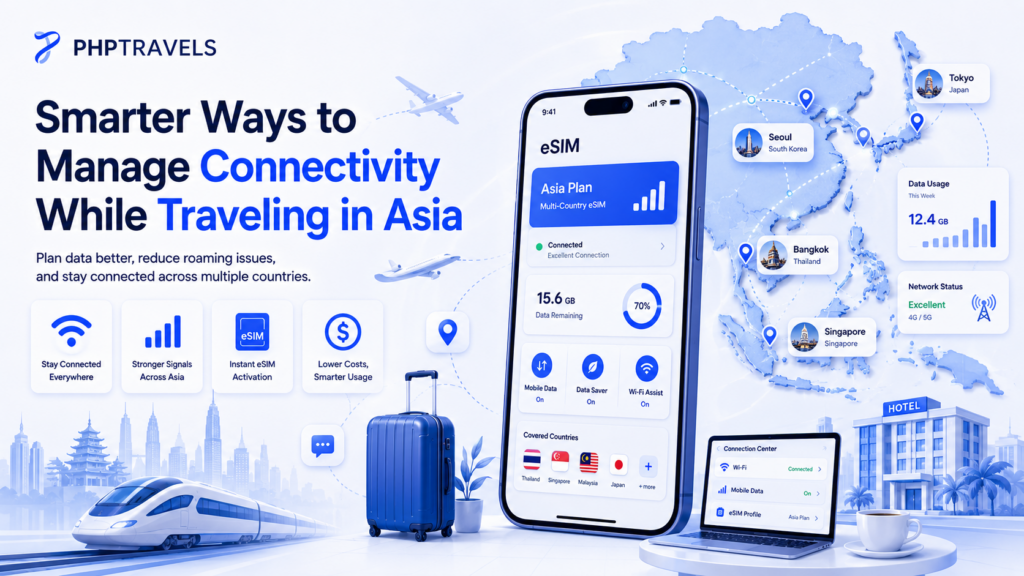
Travel across Asia can feel complicated when every country has different networks, data speeds, and connection rules. Many travelers expect constant internet, but surveys show that a large percentage of travelers experience connection issues when moving between countries due to network changes and data limits. Managing connectivity across Asia requires planning, not just buying a plan.
This article explains how travelers manage data across multiple countries, how to avoid common connectivity mistakes, and how to organize mobile usage during travel. Many travelers now use an Asia eSIM to simplify connectivity across regions and avoid switching SIM cards while traveling across the country.
Why Constant Connection Does Not Always Mean Efficient Usage
Many travelers believe that staying connected all the time is the best way to travel, but constant connection can lead to unnecessary data usage. Apps refresh in the background, maps reload frequently, and cloud services sync files automatically, which consumes data without the traveler noticing.
A smarter approach is to use data intentionally. Travelers in Asia who manage app usage, background activity, and update settings usually make their data last longer. This is especially useful for travelers visiting multiple countries in Asia within a short period.
Plan Data Around Daily Travel Priorities
Every travel day in Asia looks different. Some days include flights or train travel, while other days include sightseeing, navigation, and bookings. Data usage changes depending on daily activities, which is why daily planning helps manage connectivity better.
Essential vs Non-Essential Data Usage
Essential usage includes:
- Maps and navigation
- Booking confirmations
- Payment apps
- Messaging and communication
Non-essential usage includes:
- Video streaming
- Large file uploads
- Automatic backups
- App updates
Separating essential and non-essential usage helps travelers control data usage across Asia.
High Usage Days And Low Usage Days
Travelers do not use the same amount of data every day, so it helps to plan for high usage and low usage days. Travel days, booking days, and remote work days usually require more data than relaxation days when travelers stay in one place. For example, a traveler moving between Thailand, Singapore, and Japan may use more data on navigation, bookings, and transport apps on travel days. On slower days, data usage may be much lower and limited to messaging and basic browsing. In such cases, medium plans such as 10GB work well for mixed usage trips, while larger plans suit travelers who expect several high usage days across Asia.
Avoid Switching Between Too Many Plans
Some travelers buy separate data plans for each country in Asia, which can create confusion and connectivity gaps. Switching between plans, installing new profiles, and managing different validity periods can become complicated during travel.
Using one regional plan across multiple countries in Asia reduces setup time and helps travelers stay connected without interruptions. This also reduces the risk of losing connectivity during border crossings or transit travel between countries in Asia.
Manage Devices And Background Activity
Many travelers carry multiple devices such as phones, tablets, and laptops. Each device may use data in the background for updates, email sync, and cloud services. Managing these settings helps reduce unnecessary data usage.
Background Data Control Tips
- Turn off automatic app updates
- Disable cloud backup on mobile data
- Turn off app refresh for unused apps
- Use Wi Fi for large downloads
These steps help travelers manage mobile data more efficiently while traveling across Asia.
Use Offline Features To Save Data
Offline features can reduce mobile data usage significantly. Many travel apps allow offline maps, saved tickets, downloaded translations, and saved hotel details. Using offline features reduces the need for constant internet access.
Travelers in Asia often move through airports, trains, and highways where the signal may be weak. Offline access helps travelers continue their journey without depending completely on mobile data.
Adjust Settings When Network Quality Changes
Network quality can change between cities, rural areas, and transit routes across Asia. When the signal is weak, apps may use more data while trying to reconnect repeatedly. Adjusting phone settings in low signal areas helps save data.
Travelers can switch off background apps, reduce video quality, and avoid large uploads when network quality is low. This helps maintain stable connectivity while traveling across different regions in Asia.
Travel becomes easier when connectivity is managed with a plan instead of using data randomly. Small changes such as controlling background activity, planning high usage days, and using offline features can make a big difference, and many travelers choose an Asia eSIM to manage connectivity across multiple countries more efficiently. This helps them move across multiple countries with fewer connection problems and better control over their mobile data usage.