Learning how to plan a trip can turn an exciting travel idea into a smooth, enjoyable experience. The key is not planning everything at once. Instead, make the important decisions in the right order: decide what kind of trip you want, choose your destination and dates, set a realistic budget, check travel requirements, book transportation and accommodation, and then build your itinerary.
Whether you are planning a weekend getaway, family vacation, solo adventure, or international journey, the same basic travel-planning process applies.
The simplest way to plan a trip is to define your travel goals, choose a destination, confirm your dates and budget, check entry requirements, book transportation and accommodation, create a flexible itinerary, arrange local transport, prepare documents, pack appropriately, and perform a final check before departure.
This step-by-step guide explains the complete process.
Step 1: Decide What Kind of Trip You Want
Before searching for flights or hotels, decide what you want from the trip.
Different travelers have different goals. One person may want a quiet beach holiday, while another may want museums, food, hiking, nightlife, historical sites, or outdoor adventure.
For example, a three-day vacation usually works better when you choose one city or a compact region instead of spending much of the trip moving between destinations.
If you are traveling with other people, discuss priorities early. Everyone does not need to want exactly the same activities, but agreeing on the general style of the trip prevents problems later.
Step 2: Choose a Destination That Fits Your Trip
The next part of how to plan a trip is choosing where to go.
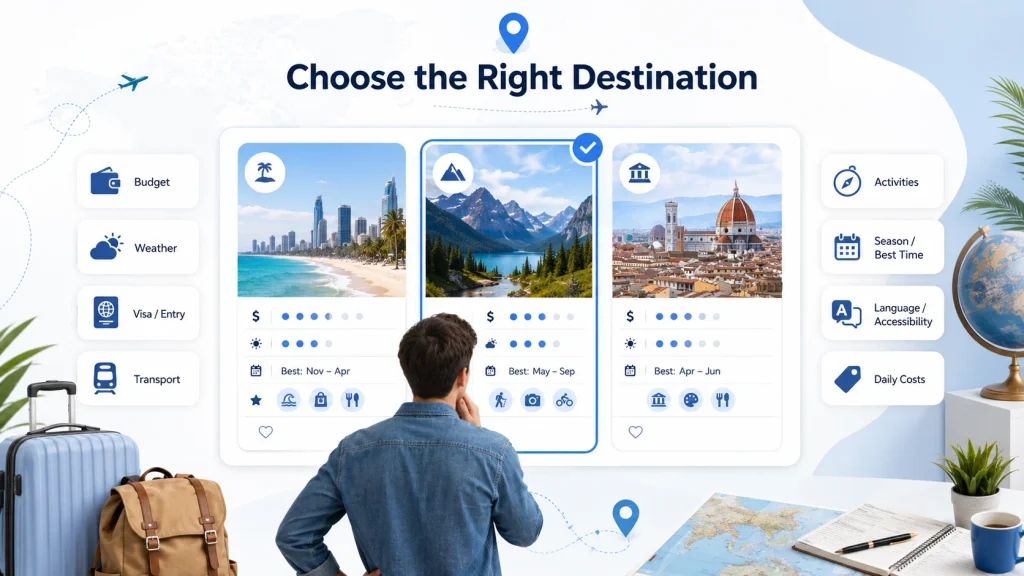
Do not choose a destination based only on photographs or social media. Consider whether the destination fits your available time, budget, interests, season, and practical travel requirements.
Compare a few destinations based on:
- Estimated transportation costs
- Accommodation prices
- Weather during your travel period
- Peak and low seasons
- Visa or entry requirements
- Local transportation
- Activities you actually enjoy
- Travel time
- Language and accessibility
- Overall daily costs
If you are undecided, shortlist two or three destinations instead of researching ten countries simultaneously.
Look at official tourism resources, maps, destination guides, recent traveler information, and local events.
The best destination is not necessarily the most famous one. It is the destination that fits your particular trip.
Step 3: Choose Your Travel Dates and Trip Length
Dates influence almost every other travel decision.
Before booking anything, determine:
- Your earliest possible departure date
- Your required return date
- Number of usable vacation days
- Travel time to and from the destination
- Weather and seasonal conditions
- Major holidays or events
- Peak travel periods
Remember that travel days are real days.
If you have seven days available but spend one day traveling in each direction, you may have only five full days at the destination.
A little date flexibility can also be useful when comparing transportation and accommodation options. Prices can change according to season, local events, school holidays, and demand.
When planning international travel, also consider whether you need enough time to obtain a passport, visa, authorization, or other required documentation before departure.
Step 4: Create a Realistic Travel Budget
A clear budget makes the rest of your travel planning easier.
Start with the maximum amount you are comfortable spending for the entire trip. Then divide the budget into major categories.
Typical expenses include:
- Flights, trains, buses, or fuel
- Accommodation
- Local transportation
- Food and drinks
- Attractions and activities
- Travel insurance
- Visa or entry fees
- Mobile connectivity
- Baggage fees
- Shopping
- Emergency or unexpected costs
Do not spend your entire budget on flights and accommodation.
Leave a financial buffer for price changes, additional transportation, unexpected meals, missed connections, or activities you discover after arriving.
You can also estimate an approximate daily budget after paying for major bookings.
For example, if accommodation and flights are already covered, determine how much you can reasonably spend each day on meals, transport, attractions, and other expenses.
The goal is not to predict every expense perfectly. It is to prevent unpleasant surprises.
Step 5: Check Passports, Visas and Entry Requirements
This step should happen before non-refundable bookings whenever possible, especially for international travel.
Check whether your destination requires:
- A valid passport
- Minimum passport validity
- A tourist visa
- An electronic travel authorization
- Proof of onward or return travel
- Travel insurance
- Specific entry forms
- Health-related documentation
- Documents for children traveling with one parent
- Special requirements for transit countries
Do not assume that visa or passport rules are the same for every nationality.
Requirements can change, so verify them using the destination country’s official government or immigration website. For international air travel, the IATA Travel Centre can also be useful for checking current passport, visa, and health requirements.
If your passport needs renewal or your trip requires a visa, begin the process well before departure.
Keep digital and physical copies of important documents, but store copies securely rather than keeping everything in the same bag.
Step 6: Compare and Book Your Main Transportation
After confirming that the trip is realistic, begin comparing transportation.
For many trips, transportation is one of the largest expenses.
Compare the total trip cost, not only the advertised fare.
A cheaper flight may become more expensive after adding:
- Checked baggage
- Seat selection
- Airport transportation
- Meals
- Overnight accommodation
- Long connection costs
Also consider arrival and departure times.
A flight arriving very late may require expensive private transportation, while an early departure could effectively remove a day from your trip.
If price is important, our guide to finding the cheapest flights online covers additional ways to compare flight options.
Before completing a booking, double-check:
- Passenger names
- Travel dates
- Airports or stations
- Baggage rules
- Connection times
- Cancellation conditions
- Change policies
A small mistake during booking can become expensive later.
Step 7: Book Accommodation That Fits Your Itinerary
Once your main transportation is confirmed, choose where to stay.
Price matters, but location can matter just as much.
A cheaper hotel far outside the area you intend to explore may increase your transportation costs and waste valuable time every day.
Compare accommodation based on:
- Location
- Recent reviews
- Transportation access
- Check-in and check-out times
- Cancellation policy
- Included meals
- Taxes and additional fees
- Wi-Fi
- Accessibility
- Luggage storage
- Safety of the surrounding area
Think about how you intend to spend your days.
If most attractions are concentrated in one area, staying nearby can simplify the entire trip.
For multi-city trips, confirm transportation between cities before reserving every hotel. Otherwise, you may discover that your planned route is difficult or requires more travel time than expected.
Step 8: Build a Flexible Travel Itinerary
One of the most common mistakes when learning how to plan a trip is trying to schedule every minute.
A useful itinerary gives your trip structure without making it exhausting.
Begin by listing everything you might want to see. Then separate the list into:
Must-do activities: experiences you would genuinely regret missing.
Nice-to-do activities: places you can visit if time and energy allow.
Next, group attractions by location. Visiting places in the same neighborhood or area reduces unnecessary transportation.
Your itinerary should also account for:
- Opening days and hours
- Advance reservations
- Meal breaks
- Travel time between attractions
- Check-in and check-out
- Rest
- Weather
- Unexpected discoveries
Avoid planning several major attractions every day simply because they fit on a map.
Travel takes energy. A slower itinerary often creates a better experience than rushing from one landmark to another.
Keep at least some flexible time available for wandering, relaxing, revisiting a favorite place, or changing plans.
Step 9: Plan Local Transportation
Knowing how you will move around after arrival can prevent confusion and unnecessary spending.
Research whether your destination primarily uses:
- Metro or subway systems
- Trains
- Public buses
- Trams
- Taxis
- Ride services
- Rental cars
- Airport transfers
- Ferries
- Walking or cycling
Check how you will travel from the airport or station to your accommodation before departure.
Late-night arrivals deserve particular attention because some public transportation services may operate less frequently or stop running.
If renting a vehicle, verify licensing requirements, insurance, parking, tolls, and local driving regulations before booking.
Download useful transportation information or maps for offline access if internet connectivity may be unreliable.
Step 10: Consider Travel Insurance
Travel insurance is another part of planning that should depend on the trip rather than being treated as identical for everyone.
Coverage may include areas such as:
- Trip cancellation
- Trip interruption
- Medical emergencies
- Emergency evacuation
- Delayed transportation
- Lost or delayed baggage
Policies differ significantly, so read what is included, excluded, and subject to limits before purchasing.
Do not assume that ordinary health insurance automatically covers treatment in another country.
Your destination can also affect your insurance needs. Travelers heading to Indonesia, for example, may find our separate guide to travel insurance for Bali useful when researching destination-specific considerations.
Choose coverage based on your circumstances rather than simply buying the cheapest available policy.
Step 11: Research Health, Safety and Local Customs
Good trip planning includes understanding the destination beyond hotels and attractions.
Research:
- Current official travel information
- Local laws
- Common tourist scams
- Emergency contact numbers
- Weather risks
- Local customs
- Appropriate clothing
- Tipping practices
- Currency and payment methods
- Useful local phrases
For health-related preparation, use current official health guidance for your destination and consult an appropriate healthcare professional when necessary, particularly if your itinerary may require specific health precautions.
Respect for local customs can also improve the travel experience.
You do not need to understand every cultural detail before arriving, but knowing basic etiquette, greetings, clothing expectations, and local rules helps prevent avoidable misunderstandings.
Step 12: Prepare Connectivity, Documents and Packing
As departure gets closer, organize everything you will need during the trip.
Keep your important booking information together:
- Passport and required visas
- Flight or train confirmations
- Accommodation reservations
- Travel insurance details
- Activity reservations
- Emergency contacts
- Transportation information
Store secure digital copies where you can access them if the originals are unavailable.
For international travel, decide how you will access mobile data. Depending on your destination and device, options can include roaming, a local SIM, or an eSIM. Travelers visiting the region can also review these connectivity tips for travelers in Asia.
When packing, start with your itinerary and expected weather rather than filling your suitcase with “just in case” items.
Think about:
- Climate
- Planned activities
- Cultural expectations
- Comfortable footwear
- Chargers and adapters
- Required medication
- Baggage limits
- Essential toiletries
Keep irreplaceable documents, necessary medication, valuables, and important electronics with you rather than in checked baggage where practical.
Traveling with an animal requires additional preparation. If relevant, read about getting airline approval to travel with your pet well before departure.
Step 13: Complete a Final Pre-Trip Check
About 24 to 48 hours before leaving, review the entire trip.
Confirm:
- Flight or transportation status
- Check-in requirements
- Passport and visa
- Accommodation address
- Airport or station transfer
- Baggage allowance
- Weather forecast
- Important reservations
- Payment methods
- Phone connectivity
- Emergency contacts
Download anything you may need offline, including tickets, hotel information, maps, and transportation details.
Charge your devices and any power banks you are legally permitted to carry, and confirm where the airline requires batteries to be packed.
Finally, avoid turning the final hours into another major planning session.
Once the essentials are confirmed, you are ready to travel.
How to Plan a Trip Without Overplanning
A good travel plan creates confidence, not pressure.
You need enough structure to know where you are staying, how you are getting there, what documents you require, and which experiences matter most.
You do not need to control every hour.
One useful approach is to schedule one or two priority activities and leave the rest of the day flexible.
Weather changes. Attractions close. Trains run late. You may discover a neighborhood you love or decide that you need an afternoon to relax.
A flexible itinerary makes those changes part of the experience rather than a problem.
Quick Trip Planning Checklist
Before leaving, confirm that you have:
- Chosen a suitable destination
- Confirmed travel dates
- Created a realistic budget
- Checked passport and visa requirements
- Booked main transportation
- Reserved accommodation
- Planned a flexible itinerary
- Researched local transportation
- Considered appropriate insurance
- Checked relevant health and safety information
- Prepared payment methods
- Organized mobile connectivity
- Saved copies of important documents
- Packed according to weather and activities
- Completed a final booking check
Final Thoughts
Understanding how to plan a trip becomes much easier when you make decisions in the correct order.
Start with your travel goals. Choose a destination that fits your available time and budget. Check documents before making expensive commitments. Book transportation and accommodation carefully, create a flexible itinerary, prepare for local transportation, and organize the practical details before departure.