Running a travel or hospitality business today means managing far more than reservations. You are coordinating inventory from multiple suppliers, handling price fluctuations, meeting guest expectations for instant service, and keeping operations efficient while staying compliant with regulations. Many organizations still rely on fragmented tools or legacy platforms that were never designed for real time distribution or integrated operations.
Travel and hospitality software development services exist to solve this problem by designing connected digital ecosystems that unify bookings, operations, finance, and customer engagement into a single environment.
This article explains what these services include, how modern travel technology ecosystems are structured, what decision makers should evaluate, and how platform based customization compares with building everything from scratch.
Summary
• For hotels, travel agencies, OTAs, tour operators, and DMCs that need integrated booking and operations.
• Covers booking engines, PMS, travel portals, CRM, ERP, GDS APIs, mobile apps, AI, and smart hotel systems.
• Custom platforms reduce manual work, prevent overbooking, and centralize control.
• Platform based customization is faster and more scalable than pure from scratch builds.
• Businesses gain higher revenue, lower operating cost, and better guest experience.
What Travel and Hospitality Software Development Services Include
Travel and hospitality software development services cover the planning, design, development, integration, and long term support of digital systems used across travel operations.
Typical scope includes:
- Booking and reservation engines
- Hotel property management systems
- B2C and B2B travel portals
- CRM and customer data platforms
- ERP and back office automation
- Payment gateway integrations
- GDS and supplier API connections
- Mobile and web applications
- Analytics and reporting
- AI driven automation
- IoT and smart hotel integrations
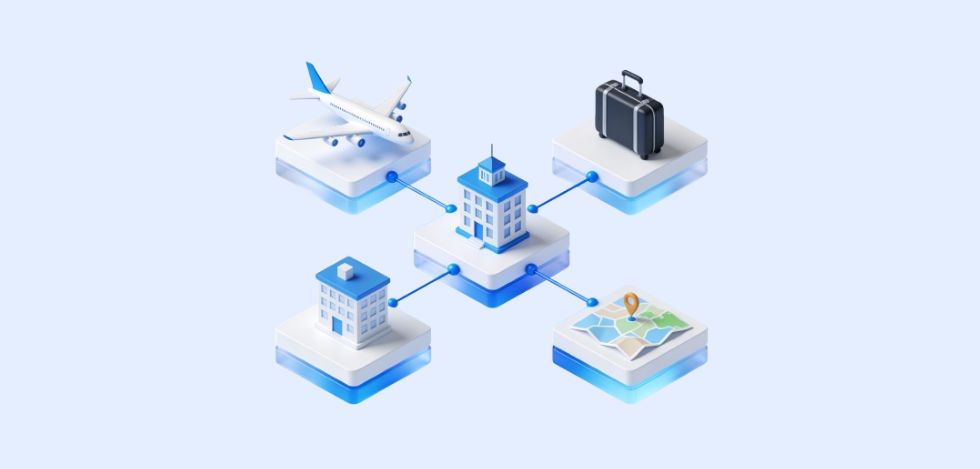
These components are not isolated tools. They are built as a connected ecosystem where data moves in real time between sales channels, operations, and finance.
Why Travel Companies Need Custom Hospitality Software Today
Generic software usually solves only one narrow problem. Travel companies operate across markets, currencies, suppliers, and sales models. Each business also has unique pricing logic, commission structures, workflows, and commercial agreements.
Custom hospitality software allows businesses to eliminate manual data entry, reduce booking mismatches, control pricing and markup logic, integrate preferred suppliers, automate guest communication, and scale without performance bottlenecks, especially for teams evaluating travel technology vendor landscape before committing to long term systems.
This is why many companies choose travel and hospitality software development services instead of relying only on off the shelf SaaS tools.
Core Systems in a Modern Travel Technology Stack
A complete stack usually includes:
- Custom booking engines
- Hotel PMS
- Travel portal platform
- CRM
- ERP and accounting integration
- Inventory and channel management
- GDS and third party APIs
- Mobile applications
- Analytics and reporting
Each system handles a specific function but exchanges data with others through APIs.
Custom Booking and Reservation Software
The booking engine is the commercial heart of any travel business.
Key capabilities:
- Real time availability
- Dynamic pricing rules
- Multi currency and multi language
- Promo codes and vouchers
- Payment gateway integration
- Automated confirmations
- Amendments and cancellations
- Add ons and upsells
Well built booking engines connect directly to PMS, inventory systems, and supplier APIs so availability and pricing remain synchronized.
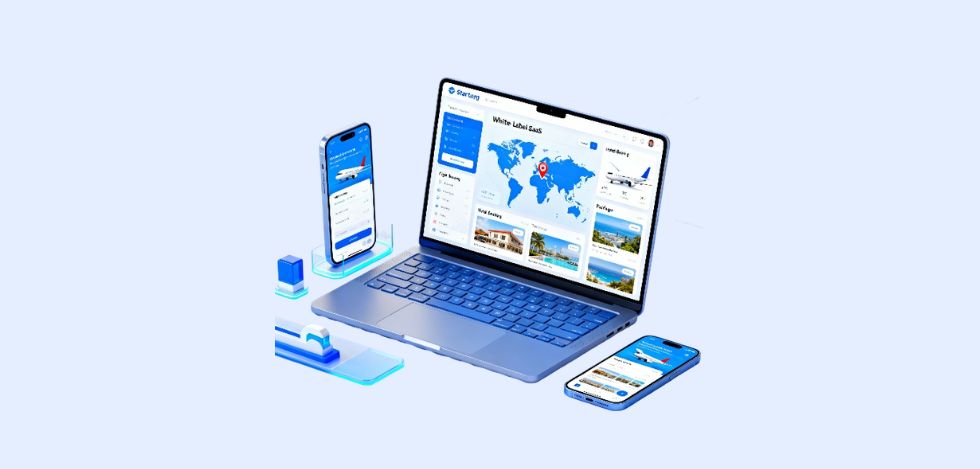
See a working product booking environment at: Demo
Hotel PMS and Property Management Systems
Property management software controls daily hotel operations.
Core PMS functions:
- Room inventory management
- Check in and check out
- Guest profiles
- Housekeeping schedules
- Billing and folios
- Operational reports
Modern PMS platforms integrate with booking engines, channel managers, POS systems, CRM, and smart room devices. This allows hotel staff to operate from one interface.
Restaurant and Food Service Management Software
Hotels and resorts with food and beverage operations need integrated systems.
Important components:
- POS systems
- Table and order management
- Kitchen display systems
- Menu and recipe costing
- Inventory and vendor purchasing
When connected to PMS, guest charges post automatically to room folios.
Travel Portal and OTA Software Development
Travel portal software aggregates multiple products into one marketplace.
B2C portals
Public booking websites for flights, hotels, tours, cars, and transfers
B2B agent portals
Agent dashboards with net rates, markups, commissions, and credit limits
Corporate booking tools
Policy based self booking with approvals
Affiliate and white label modules
Partners sell through branded portals
Module examples:
Flights module
Tours module
Cars module
Offers module
GDS API Integration for Travel Companies
Global distribution systems remain essential for airline and global hotel content.
Common integrations:
- Travelport Galileo Apollo
- Sabre
- Amadeus
These APIs provide:
- Live availability
- Fare search
- PNR creation
- Seat maps
- Ancillaries
- Ticket issuance
GDS integration ensures accurate inventory, pricing consistency, and large scale distribution, especially for companies evaluating Apollo connectivity for travel platforms alongside other airline and hotel distribution sources.
Mobile and Web App Development
Travelers increasingly manage their trips through mobile devices.
Typical mobile features:
- Booking management
- Digital itineraries
- Push notifications
- Digital check in
- In app payments
- Loyalty access
Mobile apps connect to the same backend booking and PMS systems.
AI Powered Solutions in Travel
AI enhances automation and forecasting.
Use cases:
- Demand forecasting
- Dynamic pricing
- Chatbots
- Personalized recommendations
- Fraud detection
- Automated guest messaging
AI sits on top of core systems and consumes operational data.
IoT and Smart Hotel Technology
Smart technology improves efficiency and guest comfort.
Examples:
- Mobile door locks
- Occupancy sensors
- Automated lighting
- Temperature control
- Predictive maintenance
IoT devices integrate with PMS for real time room status.
Travel ERP and Back Office Automation
ERP systems manage internal operations.
- Finance and accounting
- Procurement
- HR and payroll
- Contract management
- Business intelligence
ERP integration connects revenue and costs directly to bookings.
Real World Workflow Examples
Booking Flow
Search product → Price rules applied → Availability confirmed → Payment processed → Booking created → Voucher issued → Accounting updated
Hotel Operations Flow
Booking arrives → PMS updates room inventory → Housekeeping scheduled → Guest checks in → Charges posted → CRM updated
B2B Agent Flow
Agent logs in → Net rate displayed → Markup applied → Booking placed → Invoice generated → Commission recorded
These flows show why integration matters.
SaaS Tools vs Custom Platforms vs Travel Technology Platforms
| Approach | Setup Speed | Customization Level | Integration Capability | Cost Impact | Risk Level | Best For |
|---|---|---|---|---|---|---|
| Off the Shelf SaaS | Fast | Low | Limited | Low to Medium | Medium | Small teams with basic needs |
| From Scratch Custom Build | Slow | Very High | Fully Custom | High | High | Enterprises with unique internal systems |
| Platform Based Customization | Fast to Medium | High | API Driven & Modular | Medium | Low | Travel businesses scaling operations |
PHPTRAVELS Positioning and Architecture
PHPTRAVELS operates as a modular travel technology platform.
Core characteristics:
- Multi module architecture
- API first design
- Modular extensions
- Support for B2C, B2B, and corporate models
- Scalable infrastructure
Businesses start with a foundation and customize workflows, integrations, and interfaces.
Cost of Travel and Hospitality Software Development
Cost depends on scope and architecture.
Small modules
Five thousand and above
Mid size platforms
Twenty thousand and above
Enterprise ecosystems
Fifty thousand and above
What increases cost:
- Multiple GDS integrations
- Mobile apps
- AI features
- Complex workflows
- Legacy migrations
What reduces cost:
- Using an existing platform
- Phased rollout
- Standard modules
Industries That Benefit
- Hotels and resorts
- Travel agencies
- OTAs
- Tour operators
- DMCs
- Airlines
- Car rental companies
- Event venues
- Wellness and spa businesses
Name Confusion and Common Searches
Terms like travel and hospitality engineering services or hospitality custom software development companies generally refer to software development and system integration, not physical engineering.
Final Thoughts
Travel and hospitality software development services are not about building individual tools. They are about creating connected ecosystems that power growth, efficiency, and guest satisfaction.
Businesses that want to move faster without sacrificing flexibility often choose platform based customization using proven travel technology foundations like PHPTRAVELS. This approach delivers enterprise grade stability while allowing full control over workflows, integrations, and expansion.