Starting an online travel portal is more than just setting up a website. The modern travel industry relies on complex workflows, automation, APIs, and seamless booking engines to serve customers efficiently. Many travel entrepreneurs fail because they underestimate the operational and technological requirements of running a scalable online travel business.
Understanding the business models, technology options, and market workflows is crucial before investing time and capital. This guide breaks down the different approaches, real-world examples, and technology considerations needed to successfully launch your online travel portal.
Quick Summary
Launching an online travel portal requires careful planning: define your business model (B2B, B2C, or hybrid), select the right technology stack, integrate APIs and automation, and implement scalable workflows. B2B portals cater to travel agents, while B2C portals focus on direct consumers. White-label solutions, custom development, and proper CRM integration enhance operational efficiency and revenue potential.
Understanding Online Travel Portal Business Models
B2B (Business-to-Business)
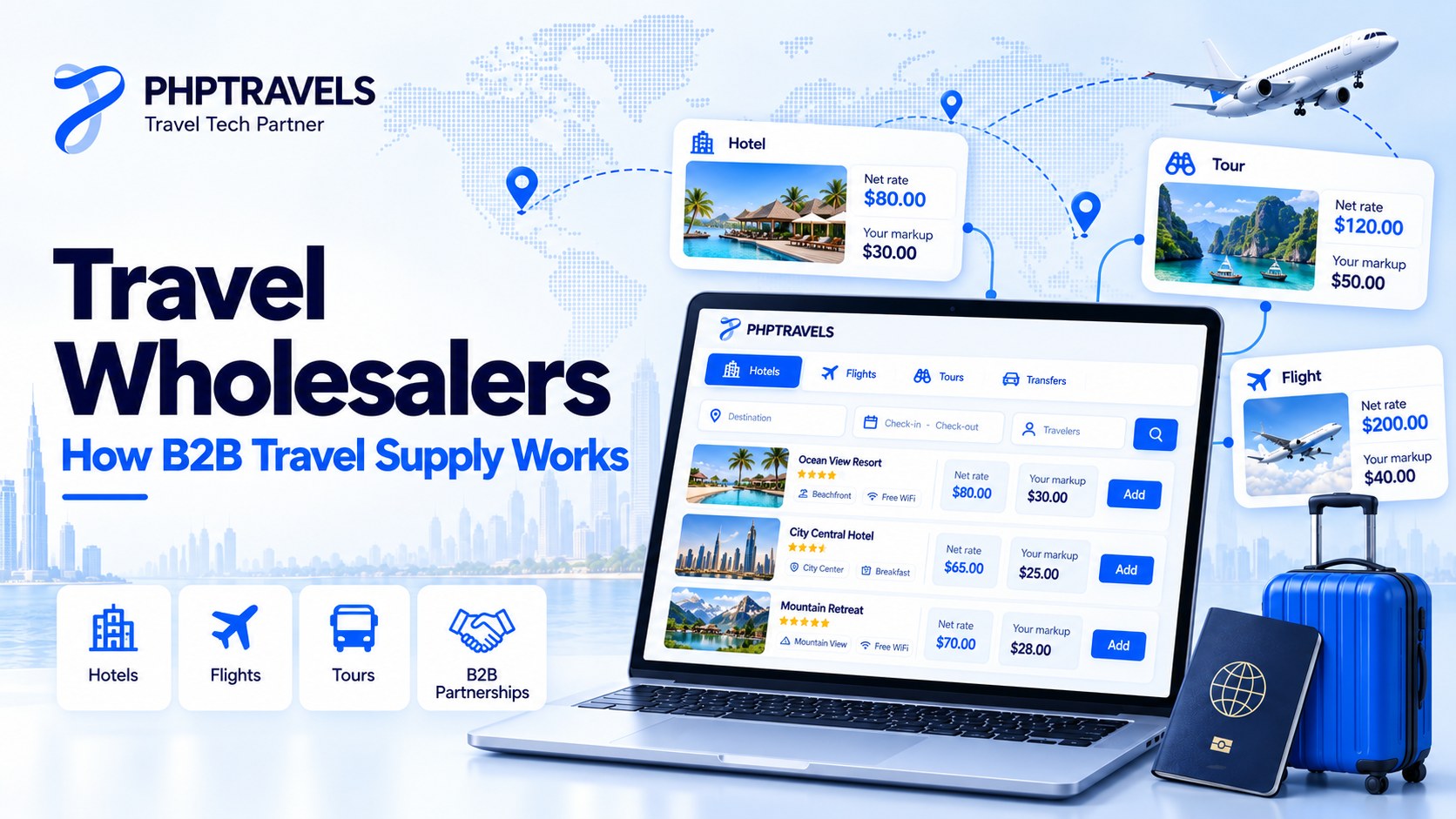
In a B2B model, your portal distributes travel services like flights, hotels, and tours to other businesses such as travel agencies, who then sell to end customers. This model is popular among travel operators seeking to expand their reach without managing individual consumers.
Key considerations:
- API integration with multiple suppliers for real-time inventory
- Commission structures and markups for agents
- White-label solutions for partner branding
- Budgeting around development costs (typically 5–10 lakhs INR for a fully-featured B2B portal)
For a detailed B2B setup, consider reviewing guides like B2B Travel Portal Guide for Travel Operations and B2B Travel Portal Development Company.
B2C (Business-to-Consumer)
B2C portals sell directly to travelers. Success depends on seamless user experience, intuitive search filters, dynamic pricing, and strong CRM workflows.
Key components:
- Real-time availability for flights, hotels, and tours
- Personalized offers through automation and email campaigns
- Integrated payment gateways
- Mobile-first design to capture bookings from travelers on the go
Hybrid Portals
Some businesses combine B2B and B2C functionalities, allowing agents and direct customers to book from the same inventory. This approach maximizes revenue but requires careful workflow design to prevent conflicts and maintain transparency.
Technology and Workflow Considerations
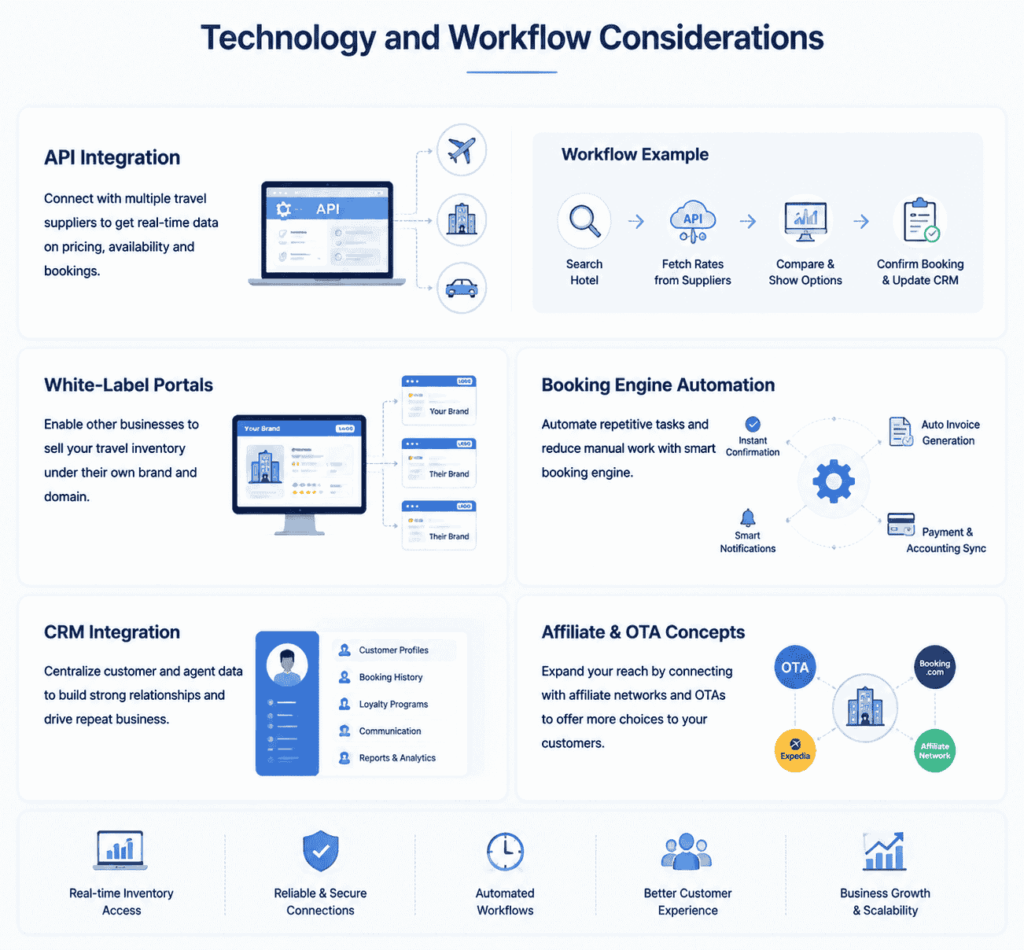
API Integration
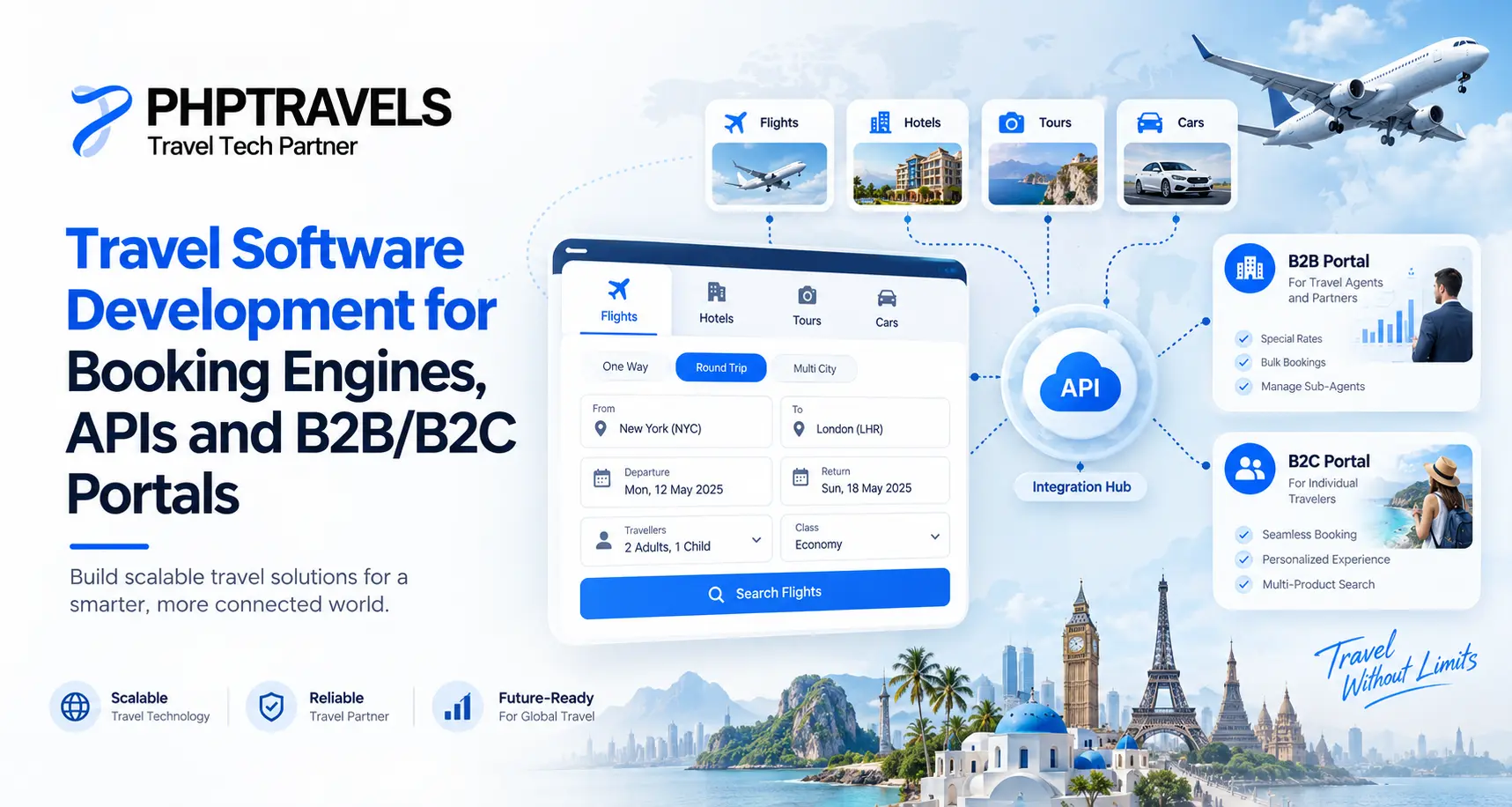
APIs connect your portal with travel suppliers, enabling real-time pricing, availability, and booking. Integrating multiple providers enhances inventory and ensures redundancy.
Example workflow:
- User searches for a hotel room
- API fetches rates from multiple suppliers
- System compares and displays options
- Booking is confirmed, and CRM records are updated automatically
White-Label Portals
White-label portals allow other agents or companies to resell your inventory under their brand. This simplifies expansion and marketing. Check out Free White Label Travel Portal for practical insights.
Booking Engine Automation
Automation streamlines daily operations:
- Instant booking confirmation
- Automated invoice generation
- Notifications and alerts to customers and agents
- Integration with payment gateways and accounting systems
CRM Integration
A robust CRM tracks customer interactions, manages loyalty programs, and ensures personalized communication. For B2B portals, CRM also handles agent commissions and performance reporting.
Affiliate and OTA Concepts
Portals can leverage affiliate networks and Online Travel Agencies (OTAs) to expand reach. Integration with OTAs ensures broader inventory access while maintaining centralized control over pricing and availability.
Evaluation and Comparison
| Feature | B2B Portal | B2C Portal | Hybrid Portal |
|---|---|---|---|
| Target Audience | Agents | End Travelers | Agents + End Travelers |
| Inventory Control | Moderate | High | High |
| CRM Complexity | Medium | High | Very High |
| Revenue Model | Commission-based | Direct Margin | Mixed |
| Automation Needs | Medium | High | Very High |
| White-Label Options | Essential | Optional | Essential |
Real Business Scenarios
- Regional Travel Agency Expansion: A small agency launches a B2B portal, allowing local agents to resell inventory. Automation reduces manual booking errors, while white-labeling increases market presence.
- Direct-to-Consumer Launch: A new hotel chain launches a B2C portal to manage bookings, loyalty programs, and promotions. CRM integration drives repeat bookings through personalized campaigns.
- Hybrid Marketplace: A travel technology company merges B2B and B2C channels, offering a single platform where agents and travelers can book dynamically. Advanced APIs and inventory mapping prevent double bookings and optimize revenue.
PHPTRAVELS Solutions
PHPTRAVELS provides versatile solutions for travel entrepreneurs:
- B2B Travel Portal: Explore our B2B travel portal with multi-agent access, real-time APIs, and commission management.
- BNB Portal: Launch your own BNB portal with customizable listings, instant bookings, and automated payment flows.
- Development Services: Learn more about travel portal software development for scalable, customizable solutions.
- API vs White-Label Insights: Understand the difference between API and white-label portals to choose the best model for your business.
PHPTRAVELS platforms simplify automation, integrate multiple suppliers, and provide real-time analytics to keep your travel portal efficient and profitable.