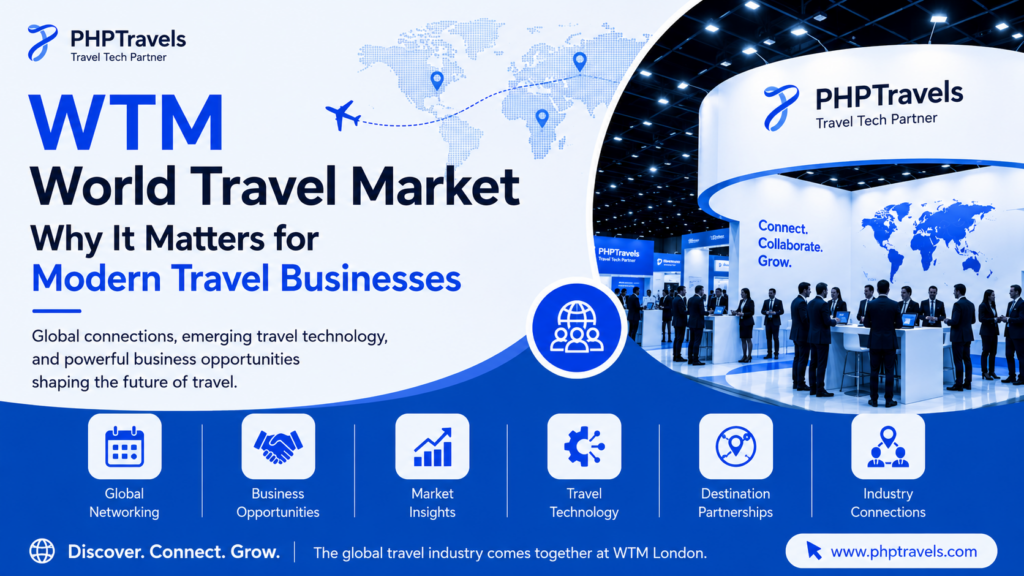
WTM World Travel Market is one of the most influential events in the global travel and tourism industry. Every year, thousands of travel professionals, suppliers, buyers, airlines, hotels, tourism boards, and travel technology companies gather in London to explore partnerships and discuss the future of travel.
For travel agencies, OTAs, DMCs, wholesalers, and tour operators, WTM London is much more than a trade show. It is a platform where new business relationships are formed, supplier contracts are negotiated, and technology innovations are introduced.
As travel distribution becomes increasingly digital, understanding the role of World Travel Market London helps businesses make better decisions and improve operational efficiency.
Quick Summary
WTM London is one of the world’s leading travel and tourism events and a major networking platform for the global travel market.
Key takeaways include:
- WTM London connects buyers, suppliers, and travel professionals.
- Travel technology is becoming increasingly important.
- Automation and API integrations are transforming travel operations.
- Networking opportunities help companies expand internationally.
- Modern travel businesses rely heavily on centralized systems and automation.
What Is WTM World Travel Market?
WTM World Travel Market is a leading international travel exhibition held annually in London. Often referred to as the world travel show London, it brings together businesses from every segment of the travel ecosystem.
Unlike consumer travel fairs, WTM London focuses primarily on B2B relationships and commercial opportunities. The event creates an environment where travel brands, tourism authorities, airlines, and technology providers can collaborate.
Participants include:
- Travel agencies
- Tour operators
- OTAs
- Destination management companies
- Airlines
- Hotels and resorts
- Tourism boards
- Hospitality brands
- Travel technology companies
- Travel suppliers
The event plays an important role in shaping the future of the travel and tourism industry.
Why WTM London Matters for the Travel Industry
The travel industry depends heavily on partnerships and distribution channels. Relationships between suppliers, intermediaries, and technology providers directly influence customer experiences and profitability.
WTM London provides an opportunity for companies to strengthen existing relationships and discover new opportunities.
Businesses attend WTM London to:
- Meet travel suppliers.
- Explore new destinations.
- Negotiate contracts.
- Understand travel trends.
- Discover technology innovations.
- Build strategic partnerships.
- Expand internationally.
- Increase brand visibility.
For many organizations, the value generated from a few days at WTM extends far beyond the event itself.
WTM London Event Overview
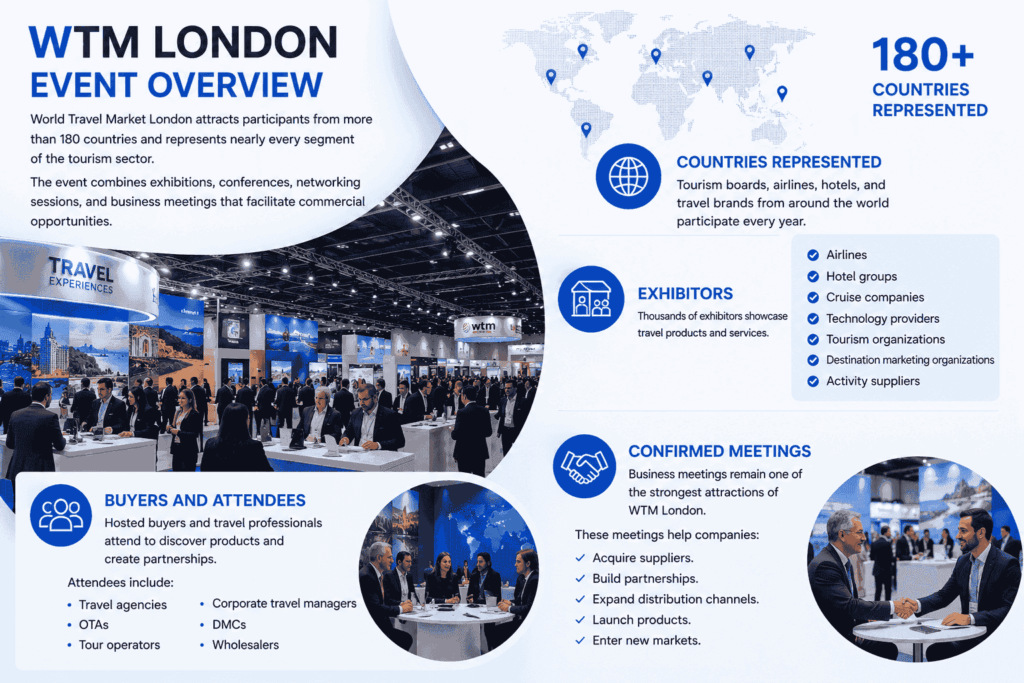
World Travel Market London attracts participants from more than 180 countries and represents nearly every segment of the tourism sector.
The event combines exhibitions, conferences, networking sessions, and business meetings that facilitate commercial opportunities.
Countries Represented
Tourism boards, airlines, hotels, and travel brands from around the world participate every year.
Exhibitors
Thousands of exhibitors showcase travel products and services.
These include:
- Airlines
- Hotel groups
- Cruise companies
- Technology providers
- Tourism organizations
- Destination marketing organizations
- Activity suppliers
Buyers and Attendees
Hosted buyers and travel professionals attend to discover products and create partnerships.
Attendees include:
- Travel agencies
- OTAs
- Tour operators
- Corporate travel managers
- DMCs
- Wholesalers
Confirmed Meetings
Business meetings remain one of the strongest attractions of WTM London.
These meetings help companies:
- Acquire suppliers.
- Build partnerships.
- Expand distribution channels.
- Launch products.
- Enter new markets.
Who Should Attend WTM World Travel Market?
WTM London serves different stakeholders across the travel ecosystem. Each participant attends with unique objectives and business priorities.
Travel Agencies
Travel agencies use the event to improve supplier relationships and expand their offerings.
Their goals usually include:
- Better commissions.
- Exclusive rates.
- Airline partnerships.
- Hotel partnerships.
- Technology solutions.
Tour Operators
Tour operators focus on strengthening package offerings and destination portfolios.
Common objectives include:
- Hotel contracting.
- Activity partnerships.
- DMC relationships.
- Supplier diversification.
OTAs
Online travel agencies rely heavily on inventory and distribution.
They attend WTM to:
- Discover API suppliers.
- Expand inventory.
- Improve margins.
- Explore automation tools.
Travel Technology Companies
Technology providers use WTM London to demonstrate innovations and connect with decision makers.
Their solutions often involve:
- Booking engines.
- CRM systems.
- Payment gateways.
- Channel managers.
- Dynamic pricing systems.
Travel Technology Trends at WTM London
Technology is becoming one of the most discussed themes at WTM World Travel Market. Digital transformation is changing how travel companies operate and scale.
Modern travel businesses increasingly rely on automation and centralized systems.
Major trends include:
- Artificial intelligence.
- Personalization.
- Dynamic pricing.
- Revenue management.
- Supplier APIs.
- Business intelligence.
- CRM platforms.
- Automation tools.
These innovations are reshaping travel distribution and customer experiences.
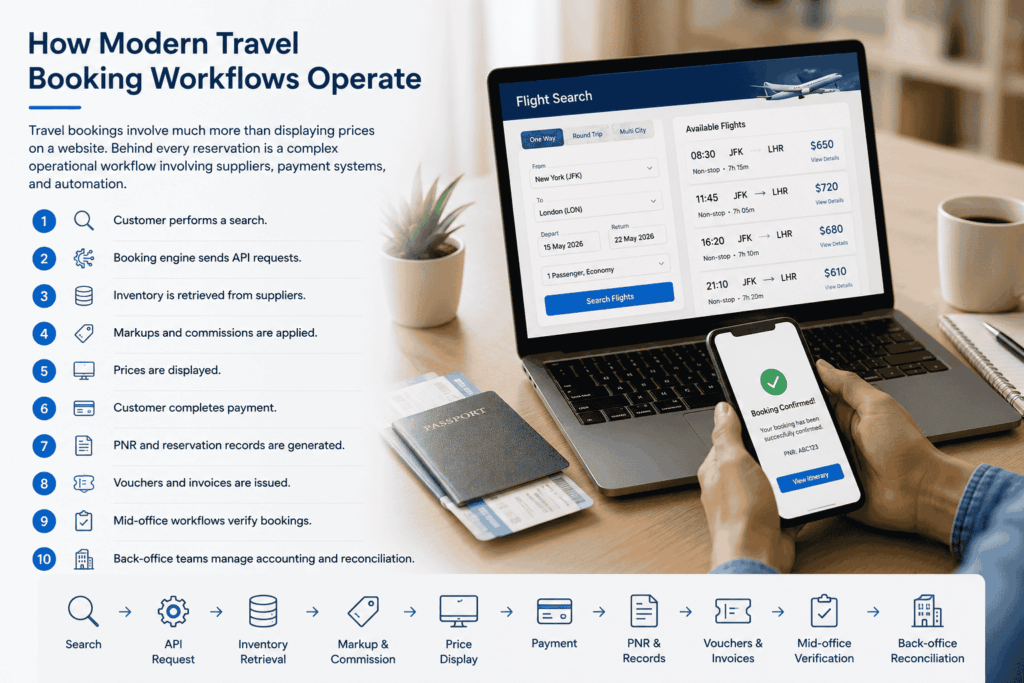
How Modern Travel Booking Workflows Operate
Travel bookings involve much more than displaying prices on a website. Behind every reservation is a complex operational workflow involving suppliers, payment systems, and automation.
A typical booking journey involves:
- Customer performs a search.
- Booking engine sends API requests.
- Inventory is retrieved from suppliers.
- Markups and commissions are applied.
- Prices are displayed.
- Customer completes payment.
- PNR and reservation records are generated.
- Vouchers and invoices are issued.
- Mid-office workflows verify bookings.
- Back-office teams manage accounting and reconciliation.
Without automation, these processes become difficult to manage at scale.
Supplier Integrations and Inventory Synchronization
Modern travel companies depend on multiple suppliers for inventory. Real-time synchronization is critical to avoid pricing discrepancies and booking failures.
Common suppliers include:
- Hotelbeds
- TBO Holidays
- RateHawk
- Expedia
- Viator
- Amadeus
- Sabre
- Travelport
Inventory synchronization helps businesses:
- Prevent overbookings.
- Maintain accurate pricing.
- Improve customer satisfaction.
- Reduce manual work.
Poor synchronization often results in operational bottlenecks and customer complaints.
Dynamic Pricing, Markups and Commission Management
Profitability in travel depends heavily on pricing strategies. Businesses must balance competitiveness with sustainable margins.
Important factors include:
- B2B markups.
- B2C markups.
- Agent commissions.
- Net rates.
- Promotional pricing.
- Dynamic pricing models.
Modern systems automate these calculations and help businesses maintain consistent profitability.
Common Operational Bottlenecks Travel Businesses Face
Many travel businesses still rely on fragmented systems and manual processes.
Common challenges include:
- Spreadsheet dependency.
- Manual invoicing.
- Supplier complexity.
- Duplicate bookings.
- Payment reconciliation issues.
- Human errors.
- Slow response times.
- Limited scalability.
As booking volumes increase, these inefficiencies become more expensive.
Manual vs Automated Travel Operations
Most growing businesses eventually transition from manual workflows to automation.
| Operation | Manual Workflow | Automated Workflow |
|---|---|---|
| Booking | Email requests | Booking engine |
| Pricing | Spreadsheets | Dynamic pricing |
| Inventory | Manual updates | Real-time APIs |
| Vouchers | Staff generated | Automatic generation |
| Payments | Offline collection | Payment gateways |
| Reporting | Excel sheets | Dashboards |
| Reconciliation | Manual checks | Automated processes |
| Scaling | Difficult | Easier |
Automation reduces operational costs and improves customer experiences.
What Works in Real Travel Operations
Successful travel businesses focus on efficiency and scalability. Centralized platforms and automation help reduce complexity.
Best practices include:
- Multi-supplier inventory.
- Automated workflows.
- CRM systems.
- Reporting dashboards.
- Integrated payments.
- Customer self-service portals.
- Real-time availability.
These capabilities improve both profitability and operational stability.
Why Travel Companies Exhibit at WTM London
Exhibiting at WTM provides access to global buyers and decision makers. Many businesses consider it one of the most valuable networking events in the travel industry.
Companies participate to:
- Generate leads.
- Launch products.
- Increase visibility.
- Build partnerships.
- Expand globally.
- Understand competitors.
- Strengthen brand awareness.
The event remains a major opportunity for growth.
How PHPTRAVELS Fits Into Modern Travel Operations
As travel businesses scale, managing reservations, payments, suppliers, and customer communications manually becomes increasingly difficult.
PHPTRAVELS helps agencies, OTAs, DMCs, and tour operators centralize operations and improve efficiency.
Its capabilities support:
- B2B booking engines.
- B2C booking engines.
- Supplier API integrations.
- Dynamic pricing.
- Agent management.
- Markups and commissions.
- Voucher generation.
- Invoice management.
- Payment gateways.
- Customer portals.
- Multi-supplier inventory.
- Automation workflows.
Businesses looking to streamline operations often combine solutions such as Travel CRM Software, Tour Operator Software, OTA Software, and Travel Booking Engines to create a more connected ecosystem.
Future of Global Travel and Tourism
The travel ecosystem continues to evolve rapidly. Technology and customer expectations are driving major changes across the industry.
Important trends include:
- Artificial intelligence.
- Sustainable tourism.
- Personalization.
- Digital transformation.
- Real-time connectivity.
- Automation.
- Data-driven decision making.
- Travel innovation.
Events such as WTM World Travel Market provide valuable insights into these developments and help companies prepare for the future.