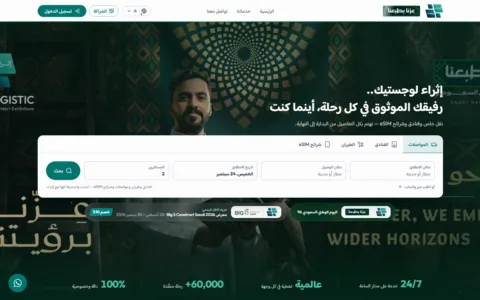
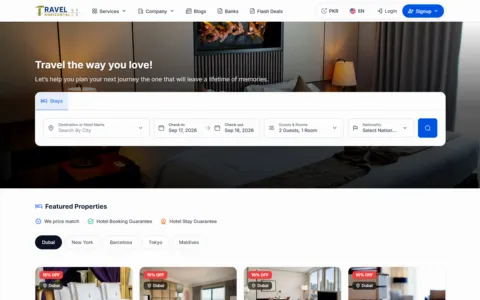
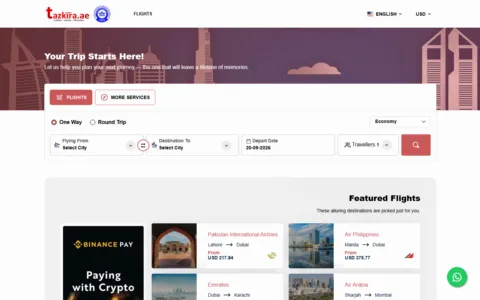
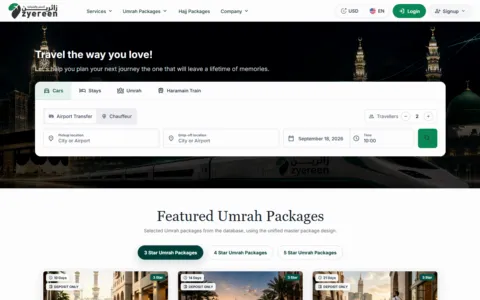
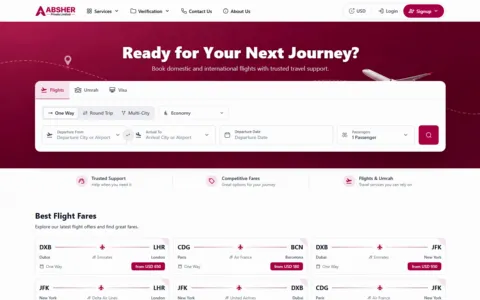
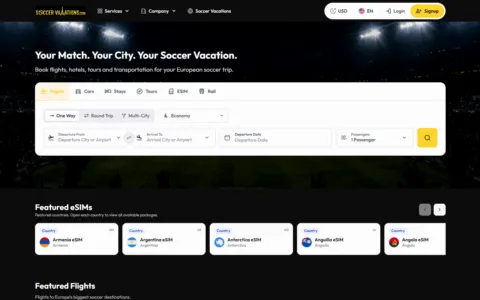
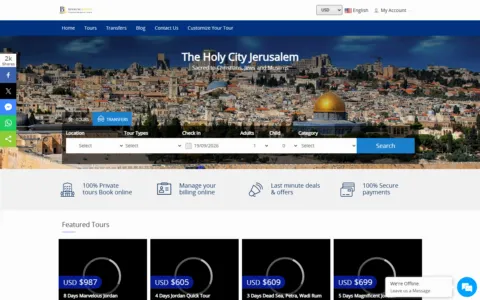
Travel portal software development is no longer optional for modern travel organizations. It is the operational backbone that consolidates flights, hotels, cars, tours, insurance, and payments into a unified digital environment. Businesses that deploy online travel portal software with real time availability, inventory sync, predictive travel pricing, and disciplined API orchestration outperform traditional models by significant margins.
PHPTRAVELS has delivered large scale travel technology solutions in more than one hundred fifty countries, giving us practical insight into engineering B2B travel portal and B2C travel portal platforms that remain stable under global traffic demands. A robust portal reduces operational waste, increases booking volume, and delivers the frictionless experience customers now expect.
What Is Travel Portal Software Development
Travel portal software development involves building an integrated environment where users can search, compare, and book travel services with automated bookings and instant confirmation workflows. This requires a structured implementation of GDS API integration, third party API integration, travel CRM software, cloud based travel portals, and multi currency booking logic. A professionally engineered portal handles IATA and non IATA agencies, supports global distribution connectivity, and ensures booking workflow automation without bottlenecks. PHPTRAVELS has refined these systems over a decade of deployment across OTAs, tour operator management systems, corporate travel management networks, and hybrid B2B operators. The objective is simple: provide a unified travel dashboard capable of accurate, real time performance at scale.
Benefits of Travel Portal Development for Agencies and OTAs
Agencies and OTAs experience measurable gains when shifting operations to a consolidated platform. Centralization ensures real time availability across all suppliers, eliminating price mismatches and booking failures. A dynamic packaging system and predictive travel pricing capabilities enhance conversion rates by offering optimized itineraries with minimal manual intervention. PHPTRAVELS deployments indicate that agencies benefit from shorter turnaround times, reduced error frequency, and stronger travel search optimization outcomes. The system also enables unified oversight for both B2B and B2C channels, eliminating the need for separate infrastructures. The result is operational resilience, improved agent productivity, and an elevated customer experience, and if you are early stage, review practical ways to start an online travel portal business before choosing the build path.
B2B and B2C Travel Portal Development Features
A travel portal must satisfy the requirements of two distinctly different operational layers.
The B2C interface prioritizes rapid search, mobile travel application readiness, instant booking, and secure payment flows.
The B2B travel portal layer introduces advanced mechanisms including reseller markups and commissions, agent credit limits, negotiated contract handling, and a dedicated B2B agent portal with markups commissions and credit controls. PHPTRAVELS engineering ensures both layers operate on the same travel booking engine, maintaining system integrity and delivering high performance under peak loads. Scalability and reliability remain constant across customer groups.
Travel Booking Engine Development
The travel booking engine represents the critical determinant of portal success. It manages fare search, availability matching, route optimization, and automated bookings based on real time datasets. Modern engines integrate GDS, CRS, PSS, and third party sources through XML and JSON orchestration, and your roadmap should be guided by the difference between API based portals and whitelabel portals. PHPTRAVELS booking engines are optimized for latency reduction, accuracy, and high throughput, supported by intelligent caching and inventory sync mechanisms. Poorly optimized engines introduce high abandonment rates. A correctly engineered engine provides personalized itineraries, stable transaction processing, and resilience during traffic spikes.
For accommodation marketplaces, some operators launch with a vacation rental marketplace booking portal and expand into full multi vertical inventory later.
GDS CRS and PSS Integration
GDS, CRS, and PSS integrations enable broad market access by linking the portal with airline networks, consolidators, and global travel distribution channels. Integrations with Sabre, Travelport, Amadeus, and direct PSS access ensure updated schedules, correct fare structures, seat availability, and ticketing compliance. PHPTRAVELS designs these integrations with structured mapping matrices to avoid data conflicts that commonly occur in fragmented ecosystems. The outcome is a reliable, globally aligned booking experience for both IATA and non IATA agencies.
Travel API XML and JSON Integration
Travel portals rely on diverse supplier APIs including hotels, flights, cars, tours, insurance, and payment gateways. XML and JSON APIs supply the portal with real time inventory, pricing, and confirmation data. Weak API orchestration results in slow response times and booking discrepancies. PHPTRAVELS ensures stable performance through optimized routing, retry frameworks, fault tolerant caching, and consistent inventory sync. Reliable integration is the foundation of any scalable online travel portal software environment.
Mobile and Cloud Based Travel Portal Solutions
Mobile and cloud based travel portals form the modern operational standard for global travel brands. Customers expect instant access through mobile interfaces while agencies require secure, remote system availability. Cloud based travel portals deliver elasticity, high uptime, and fast response times even under high API load. PHPTRAVELS implements cloud architecture designed for real time updates, secure data flow, and advanced travel data analytics. This approach ensures regional SEO performance, global accessibility, and operational continuity.
Dynamic Packaging and Pricing Engines
Dynamic packaging systems merge multiple components like flights, hotels, tours, and cars into a single booking flow with real time pricing. Predictive travel pricing, machine learning driven user behavior analysis, and supplier rule mapping enable the engine to create personalized itineraries at scale. PHPTRAVELS dynamic packaging engines unify contracted and live inventory streams, ensuring accuracy, speed, and immediate confirmation. These systems are essential for OTAs and tour operators seeking competitive differentiation against large marketplaces.

Payment Gateway and OTA Integrations
Payment gateway integrations with Stripe, PayPal, 2Checkout, and regional processors ensure secure, multi currency payment acceptance. OTA integrations with partners such as Expedia, Agoda, and Booking provide expanded inventory options without compromising booking workflow automation. PHPTRAVELS focuses on secure transaction handling, fraud mitigation, and precise audit trails to strengthen customer trust and reduce abandoned carts.
Travel CRM and Inventory Management
Travel CRM software acts as the core operational intelligence layer. It manages lead pipelines, customer interactions, booking history, and corporate travel management workflows. Inventory management ensures synchronized availability across all connected suppliers. PHPTRAVELS CRM systems operate in real time, syncing with the travel booking engine to support automated notifications, performance reporting, and customer personalization. This contributes directly to customer retention and operational stability.
Travel Portal Security Scalability and Performance
A modern portal must be engineered for security and resilience. This requires encrypted communication, structured access control, PCI aligned payment handling, and continuous monitoring. Scalability depends on distributed cloud systems capable of adapting to demand fluctuations. Performance is influenced by caching logic, API orchestration discipline, and optimized server response patterns. PHPTRAVELS implements enterprise grade engineering to safeguard user data and maintain continuous uptime during peak operational windows.
Cost of Travel Portal Development
Development costs depend on system scope, the number of modules, required integrations, and mobile application demands. Implementations that include flight booking system, hotel booking software, car rental booking engine, corporate travel management workflows, and dynamic packaging engines require greater investment. Costs also vary based on API provider fees, cloud infrastructure, payment gateway charges, and long term maintenance. PHPTRAVELS provides structured plans for startups and enterprise groups requiring global scalability.
How to Choose the Right Travel Portal Development Company
Selecting the correct partner directly affects the stability and future scalability of your operations, especially if you need a travel portal development team for B2B distribution and supplier integrations. Agencies should select vendors with proven global deployment experience, strong EEAT signals, reliable API orchestration capabilities, and demonstrated expertise in travel CRM software and travel marketplace development. PHPTRAVELS 15+ years building large scale travel portals, booking engines, and global OTA infrastructures. Led deployments across Europe, MENA, Asia, and Latin America with hands-on experience in GDS, NDC, PSS, and multi-supplier API systems. Focused on high-performance travel architectures and enterprise-grade distribution strategies.

Future of AI Based Travel Portal Software
AI will redefine portal operations in the coming decade. Predictive travel pricing, AI generated personalized itineraries, real time anomaly detection, automated bookings, and advanced travel data analytics will become standard. PHPTRAVELS is integrating AI across travel distribution channels to strengthen accuracy, improve customer experience, and reduce operational friction. Agencies that adopt AI early will gain a competitive advantage in speed, personalization, and efficiency.