Managing travel expenses is no longer a back office task. For travel agencies, OTAs, corporate travel teams, and DMCs, the real problem is not tracking expenses after a trip. The real problem is controlling spend before it happens.
Airfare prices change hourly. Hotel rates fluctuate by season and location. Teams book across multiple channels. Finance teams struggle with delayed visibility. When expenses are only recorded after travel, margin loss is already locked in.
The best travel expense management software in 2026 is built to control decisions before booking, enforce policies automatically, and connect travel operations directly with finance systems.
Quick Summary
- Modern travel expense software is about control, not just reporting
- Pre approval and policy enforcement must happen before booking
- Integrated booking and expense workflows reduce leakage
- Real value comes from supplier control, automation, and visibility
- Best systems connect travel, finance, approvals, and reporting in one flow
What Is Travel Expense Management Software
Travel expense management software helps businesses manage spending across flights, hotels, transfers, and travel related costs.
Traditional systems focused on:
- Expense reports
- Receipt uploads
- Reimbursement workflows
Modern platforms go further by controlling spending at the booking stage. They provide:
- Real time expense tracking during booking and travel
- Automated approval workflows based on policies and budgets
- Supplier level cost control
- Integrated booking and expense visibility
For companies using travel management software, travel and expense are no longer separate. Every booking decision directly impacts financial outcomes.
Why Travel Expense Management Looks Different in 2026
Pre Booking Control
Finance teams now require systems that validate:
- fare classes
- hotel rates
- supplier selection
- trip duration
before a booking is confirmed. This prevents non compliant spend instead of correcting it later.
Real Time Visibility
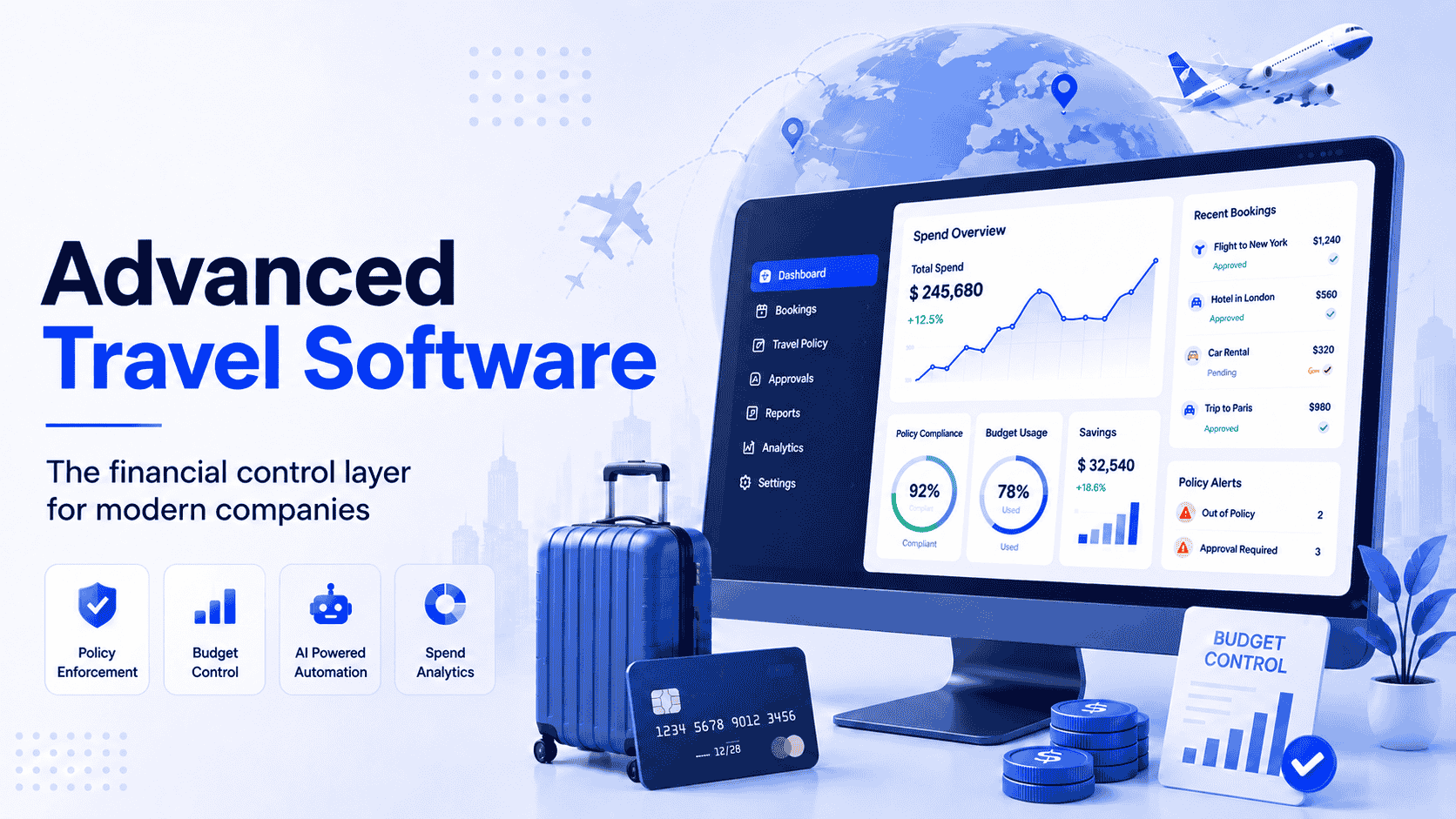
Modern systems provide live dashboards showing:
- department level spend
- trip level costs
- budget versus actual performance
This level of visibility is only possible when integrated with booking engine software.
Global Travel Complexity
International travel introduces:
- currency conversion
- tax compliance
- supplier billing differences
Platforms must support multi currency operations and automate compliance across regions. Businesses handling global operations often rely on multi currency travel software.
Integrated Workflow
Booking, approvals, invoicing, and expense tracking now operate in one system. Companies are moving toward unified business travel software instead of disconnected tools.
Who Needs Travel Expense Management Software
Travel Agencies
Agencies manage supplier pricing, client billing, and commissions. They need systems that link bookings with invoicing and expense tracking.
OTAs
Online travel agencies operate at scale with dynamic pricing and multiple suppliers. They require automated expense control tied to booking flows.
Corporate Travel Teams
Companies managing employee travel need strict policy enforcement, approval workflows, and real time cost visibility.
DMCs and Tour Operators
These businesses handle bundled services, itineraries, and supplier coordination. Expense management must connect with itinerary and voucher flows.
What to Look for in the Best Travel Expense Management Software
Pre Approval Workflows
The system must enforce approval rules before bookings are finalized. This reduces unauthorized spending.
Booking Integration
Expense management should connect directly with flight booking software and hotel systems to track costs at source.
Supplier Control
Preferred suppliers and negotiated rates must be enforced automatically during booking.
Multi Currency Support
The system should handle currency conversion and international transactions without manual input.
Invoicing and Reconciliation
Travel businesses need invoice generation, voucher management, and supplier reconciliation. This is critical for operations using travel agency billing software.
Mobile Expense Capture
Travelers must be able to upload receipts and track expenses on the go.
Analytics and Reporting
Finance teams need dashboards showing spend patterns, cost leaks, and compliance issues.
Integration with CRM and Finance
Expense systems should connect with travel CRM software and accounting platforms for complete visibility.
Travel Specific Expense Challenges
Fare and Itinerary Impact
A cheaper flight can increase total cost due to longer travel time or additional hotel stays. Systems must evaluate full trip cost, not just ticket price.
Supplier Leakage
When employees book outside approved suppliers, companies lose negotiated rates and visibility. Integrated systems prevent this.
Offline Booking
Bookings made outside approved systems create gaps in data and compliance. Centralized platforms reduce this risk.
Trip Level Expense Visibility
Expenses should be linked to complete itineraries including flights, hotels, and transfers. This gives a full picture of travel cost.
Agency and OTA Financial Flow
Travel businesses require:
- invoice generation
- voucher management
- supplier reconciliation
- client billing
Basic expense tools do not support these workflows. Companies often rely on travel agency management software to handle both operations and finance.
Comparison of Travel Expense Management Approaches
Basic Expense Tools
These focus on receipts and reimbursements. They provide limited control over booking decisions.
Accounting First Systems
These prioritize financial reporting but lack integration with travel booking.
Travel Management Platforms
These manage bookings and policies but often separate expense tracking.
Integrated Travel and Expense Platforms
These connect booking, approvals, invoicing, and expense tracking into one system. Businesses using travel and expense report management software benefit from full visibility and control.
What Actually Works in Real Operations
The most effective systems share common capabilities:
- policy enforcement before booking
- direct integration with supplier APIs
- real time financial dashboards
- automated reconciliation and reporting
- controlled spend using virtual cards
Companies using online travel software gain centralized control across booking and finance.
Best Fit by Business Type
Small Travel Agencies
Need simple tools with booking integration and basic expense tracking.
Growing OTAs
Require automation, supplier control, and scalable expense workflows.
Corporate Travel Teams
Focus on policy enforcement, approvals, and compliance.
Global Companies
Need multi currency support, tax compliance, and centralized reporting.
Enterprise Travel Operations
Require full integration across booking, CRM, finance, and expense management.
Where PHPTRAVELS Fits
For travel businesses, expense management cannot be separated from booking operations.
PHPTRAVELS operates at the point where financial decisions are made. It connects:
- booking engine workflows
- supplier APIs and inventory
- invoicing and vouchers
- approval rules and policies
- CRM and customer data
- expense tracking and reporting
Through b2b travel booking software, businesses can control:
- supplier pricing and markups
- agent commissions and credit limits
- booking level expense visibility
Instead of using multiple disconnected tools, companies can run a unified system using travel expense management software.
This approach is especially relevant for:
- B2B travel platforms
- corporate travel programs
- multi supplier operations
For a broader view of platform capabilities, explore best travel software.
Common Mistakes When Choosing Travel Expense Software
- Choosing based only on interface and not functionality
- Ignoring booking and supplier integration
- Missing policy automation and approval workflows
- Not planning for global operations
- Overlooking invoicing and reconciliation
These mistakes lead to fragmented systems and loss of financial control.
How to Choose the Right Platform
Ask practical questions:
- Can it control spend before booking
- Does it enforce supplier and policy rules
- Can it integrate with booking engines and APIs
- Does it support multi currency operations
- Can finance teams access real time dashboards
If the system cannot support these, it will not scale.
Name Confusion and Common Searches
Some searches mix travel expense management with general expense tools or unrelated financial platforms. It is important to choose systems specifically designed for travel operations, not generic expense tracking apps.
Final Thought
Travel expense management is no longer a back office function. It directly impacts profitability, supplier relationships, and operational efficiency.
Businesses that rely on post trip reporting will continue to lose margin.
Those that implement integrated control systems will gain:
- real time visibility
- better cost management
- faster operations
- long term financial stability