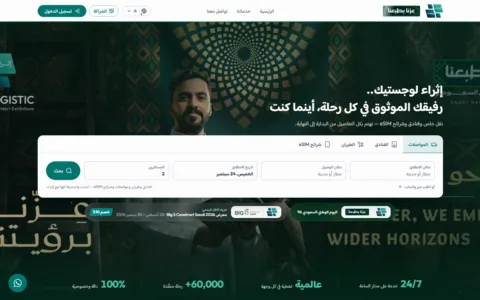
ithralogistic.com
PHP booking system with booking calendar, admin panel, reservations, hotel workflows, payments, vouchers, and travel booking engine modules.
A PHP booking system should do one thing well: take a customer from search to confirmed reservation with clear rules, clean pricing, and admin control. PHPTRAVELS ships a ready workflow for hotels, tours, transfers, and reservation based businesses.
Travel bookings fail for predictable reasons: unclear availability, mismatched pricing rules, slow confirmations, and manual admin work that grows with every booking channel. When the process breaks, refunds increase, support tickets spike, and staff spend time fixing issues instead of selling.
Booking calendar
Availability rules and reservation calendar controls.
Vouchers and invoices
Vouchers, invoices, and confirmations with status tracking.
Admin control
Users, roles, logs, and controlled overrides.
Booking workflow mapped to PHPTRAVELS modules
Quick note on open source intent
If your intent is php booking system open source or free php booking system, expect tradeoffs in support, security hardening, and operational ownership. For travel production usage, prioritize workflow clarity and admin control before chasing free downloads.
PHPTRAVELS is a PHP booking system that helps travel businesses run reservations with a booking calendar, controlled availability, pricing rules, and an admin panel that supports real operations. Use it when you want faster launch, clearer workflow ownership, and fewer manual fixes across hotels, tours, transfers, and reservations.
A reservation platform is not just a calendar. It is a structured reservation engine that controls availability, pricing logic, confirmation rules, and admin overrides. The right solution depends on how you sell travel, manage inventory, and handle changes after payment.
Ideal if you need
Not suitable if
What modern reservation teams expect
Clear availability visibility, structured pricing consistency, fast confirmation logic, and an admin panel capable of handling changes, cancellations, refunds, and operational logs.
Key takeaway
When you invest in a PHP booking system, you are investing in daily operational control. Prioritize workflow clarity, ownership, and scalability before focusing on visual design.
If you are comparing categories, see our guide on choosing online booking tools and how teams structure travel reservation workflows.
A booking system becomes valuable when it standardizes what staff do every day: pricing, availability, confirmations, changes, and refunds.
Problem
Process
Result
Cleaner conversion path
Customers see availability and complete bookings with fewer interruptions.
Less staff firefighting
Exceptions are handled inside the admin panel with clear ownership.
Faster rollout
You start with a known workflow, then extend it per travel vertical.
Manual vs system driven booking
| Area | Manual handling | PHPTRAVELS workflow |
|---|---|---|
| Availability | Spreadsheet updates and staff checks | Rules, calendar controls, and status tracking |
| Pricing | Different quotes per agent | Central rules for markup, taxes, and offers |
| Confirmation | Delayed confirmations and manual emails | Voucher and order records with clear states |
| Changes | Ad hoc decisions and weak audit trail | Admin roles, logs, and controlled overrides |
Connect booking to the tools travel businesses already run: supplier APIs, payment gateways, back office, CRM, and reporting.
1 Products
Create hotels, tours, transfers, and services with availability rules and booking calendar settings.
2 Suppliers
Map supplier APIs where needed. For flights and hotels this can include GDS and direct XML providers.
3 Payments
Configure payment methods and capture confirmation details for voucher issuance.
4 Back office
Connect invoicing, CRM, and support workflows so changes and refunds have ownership.
5 Reporting
Track bookings, revenue, cancellations, and agent activity with clean admin reporting.
API integration module
The platform is designed so developers can add integrations without turning the codebase into a patchwork. Keep supplier connections separate from booking rules and admin operations, so updates remain manageable.
Travel entities that typically connect
System components you should standardize
Related integrations
For travel supplier connectivity, browse the broader ecosystem of travel APIs and providers.
Many teams start with a narrow script and then discover they need a consistent admin workflow across products. These are common booking flows that travel and hospitality businesses run.
Hotel booking system
Manage room availability, seasonal pricing, extra services, and confirmations with a clear voucher flow. Ideal for hotels, serviced apartments, and small chains that need admin control.
Tour and activity reservations
Sell tours with schedules, capacity rules, time slots, and pickup details. This reduces miscommunication and makes it easier to manage changes after payment.
Transfer and taxi bookings
Offer transfers with pickup, dropoff, time windows, vehicle types, and extras. A clean dispatch workflow depends on accurate booking data and clear status updates.
Booking calendar and reservations
For resource based services, the booking calendar is the center of operations. Use it for time slots, rental availability, appointments, and reservation calendar workflows.
If you need a booking system outside travel
The same reservation logic applies to meeting rooms, classes, events, restaurants, and service appointments. The key is consistent admin operations: availability rules, confirmations, and change handling.
PHPTRAVELS works as a PHP reservation system with booking calendar controls, availability rules, vouchers, and admin workflows for hotels, tours, transfers, and reservations.
Reservation calendar workflow
Use booking calendars to manage availability, room allocation, time slots, transfers, and reservation status tracking from a single admin workflow.
PHP Hotel Booking System and Room Reservation Workflows
The hotel workflow supports room reservations, seasonal pricing, availability management, vouchers, booking confirmations, and operational admin control.
Room booking
Availability and room allocation
Reservation calendar
Date based inventory control
Teams often compare PHP booking software with booking engine software, online reservation systems, travel booking engines, activity booking tools, and trip planner software. In production, these are usually parts of the same commercial workflow: search, price, reserve, pay, confirm, service, and report.
PHPTRAVELS keeps those workflows inside one operational layer so agencies, OTAs, small businesses, and B2C travel brands can launch a booking platform without splitting inventory, payments, vouchers, and support data across disconnected tools.
Booking engine layer
Run product search, availability, pricing rules, checkout, vouchers, and admin booking records from one flow.
Online reservation control
Use real availability, customer details, payment status, cancellation rules, and booking calendars for service based reservations.
Online travel agency model
Support public booking flows, agent sales, markups, commissions, supplier connectivity, and customer servicing.
Small business launch path
Start with one product type, then expand into hotels, tours, transfers, activities, packages, and reporting as demand grows.
Trip planning and activities
Build itineraries, sell activities, attach suppliers, manage confirmations, and keep customer documents organized.
B2C enterprise readiness
Scale direct sales with branded storefronts, multi language support, payments, admin controls, and operational reporting.
Compare approaches based on ownership, speed, and day to day operations.
| Approach | Best for | Tradeoffs | Operational reality |
|---|---|---|---|
| Custom build from scratch | Unique workflows with large dev capacity | Long delivery, high maintenance | Great control, slow iteration without strong product ownership |
| Generic script marketplace | Simple single purpose sites | Thin admin, weak change handling | Often breaks under real travel operations and support volume |
| Hosted booking tool | Teams that want minimal server ownership | Limited customization and integration control | Fast start, harder to adapt to complex supplier flows |
| PHPTRAVELS | Travel teams that need speed plus admin ownership | Requires clear ops ownership for pricing and content | Balanced: ready workflow with room to extend integrations |
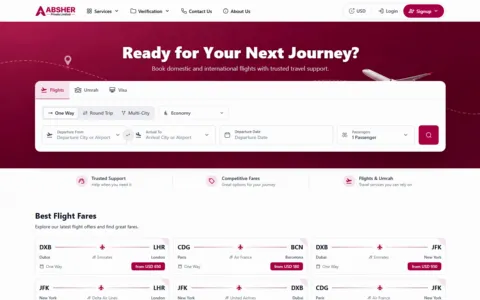
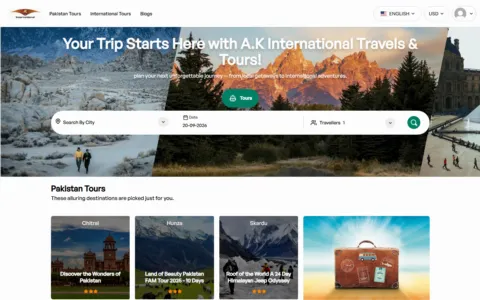
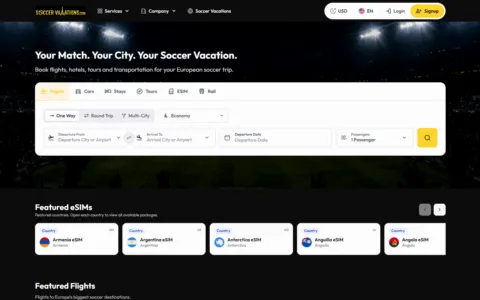
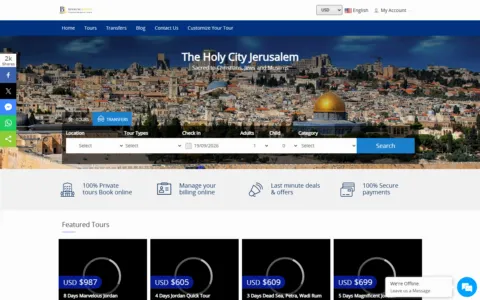
See how travel agencies, tour operators, and booking platforms use PHPTRAVELS in live environments across multiple countries and business models.
Clients portfolio
4,800+
Live deployments across travel business models
Countries
25+
Regional coverage across multiple markets
Uptime
99.9%
Reliability benchmark used across deployments
Support
24/7
Technical support and guidance coverage
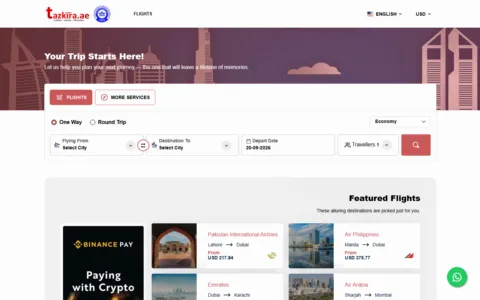
Tazkira
Dubai, UAE
Mainly operating in B2B flights. Main supplier TBO.
Travsify
Ibadan, Nigeria
Mainly operating in B2B and B2C. Flights, hotels, and tours.
Idealflying
Karachi, Pakistan
Mainly operating in B2C flights and hotels. Main supplier is GDS and NDC.
A booking platform with admin panel, booking calendar, and payment ready workflows for hotels, tours, transfers, and reservations. Launch faster with PHPTRAVELS.
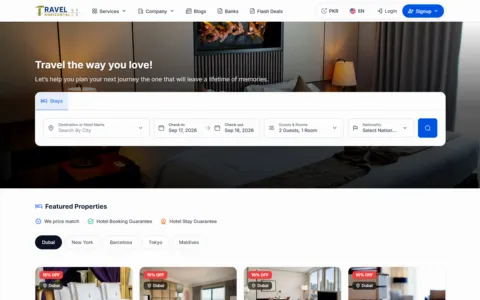
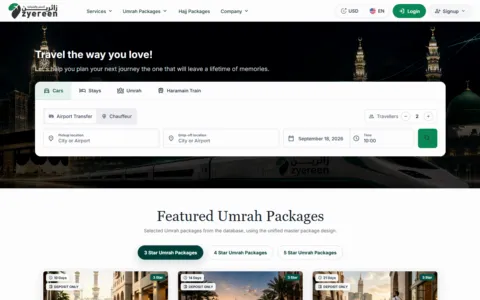
Travel businesses running live on PHPTRAVELS. Visit their websites and see the platform in production.


Fresh insights, product updates, and practical travel-tech guidance from our latest articles.


