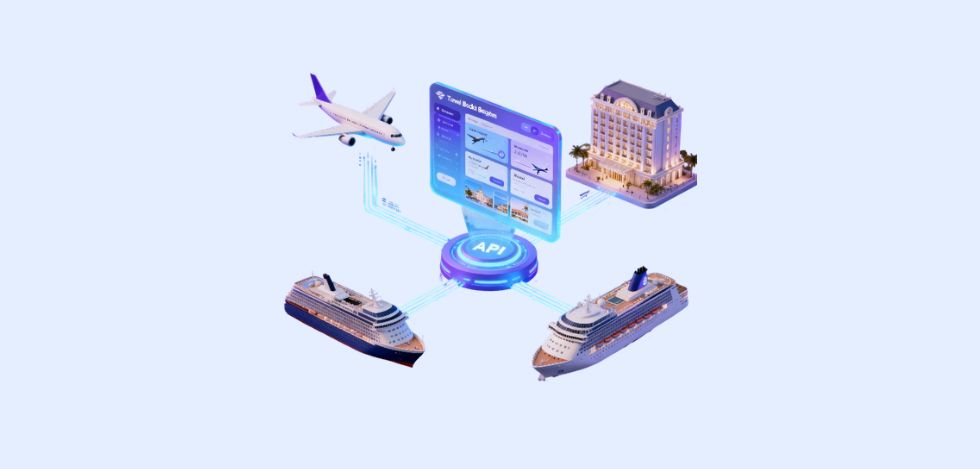
Sabre provides different APIs for different travel products. Flight APIs support shopping, pricing, PNR and ticketing; hotel APIs focus on property availability, rates and reservations; and cruise APIs support itinerary, cabin and cruise booking workflows. The right choice depends on the travel product your platform sells.
Choosing the right Sabre API is not just a technical decision. It directly affects how your booking flow behaves, how reliable your confirmations are, how much manual work your team handles, and ultimately how much revenue you convert.
Sabre provides powerful access to global travel inventory, but understanding how each API fits into real booking workflows is what separates a working platform from a scalable business.
If you are building or scaling a travel platform, you are likely dealing with questions like which API handles flights best, how hotel inventory is structured, how booking confirmation actually works, and how all of this connects into one system without breaking the user experience.
Summary
- Sabre offers separate APIs for flights, hotels, and cruises, each designed for specific booking workflows
- Flight API handles search, pricing, PNR creation, and ticketing
- Hotel API focuses on availability, rates, and room level booking logic
- Cruise API supports itinerary driven bookings and bundled services
- Most successful platforms combine multiple APIs into one unified booking flow
- The real challenge is not access to APIs but structuring the booking lifecycle correctly
What Is Sabre API and How It Works in Travel Systems
Sabre is a global distribution system that connects travel sellers with airlines, hotels, cruise lines, and other suppliers. Instead of manually managing inventory, you access real time data through APIs.
At a practical level, Sabre APIs handle:
- Flight shopping and fare pricing
- Hotel availability and room selection
- Booking creation and confirmation
- Passenger Name Record management
- Ticket issuance and modifications
These APIs do not operate in isolation. They are part of a larger travel commerce ecosystem where booking flows, payments, and customer data must align.
For example, when a user searches for flights on your platform, the request goes through the flight API, returns available itineraries, pricing is validated, and then a booking record is created. That same workflow must later connect with payments, invoicing, and customer communication systems.
This is why many businesses combine Sabre APIs with a structured travel booking software instead of handling everything manually.
Sabre Flight Booking API
What It Actually Does
The flight API is the most widely used part of Sabre. It connects your platform to airline inventory and enables full booking workflows.
For authentication, access, endpoints and production setup, see our Sabre API Integration Guide.
Key capabilities include:
- Flight search across multiple airlines
- Fare pricing and tax calculations
- Seat availability checks
- PNR creation and management
- Ticket issuance and cancellations
Real Use Case
If you are running an OTA or airline focused platform, this API becomes your core engine. A user searches for flights, selects an itinerary, enters passenger details, and completes the booking.
Behind the scenes:
- Search request returns multiple fare options
- Pricing is revalidated before booking
- PNR is created with passenger data
- Ticket is issued after payment
To manage this properly, businesses often integrate it into a flight booking system that handles both customer facing and back office workflows.
Common Challenges
- Latency during search and pricing
- Handling fare changes between search and booking
- Managing cancellations and refunds
- Complexity of PNR workflows
Sabre Hotel Booking API
What It Actually Does
The hotel API focuses on accommodation inventory and booking logic. Unlike flights, hotel data is more fragmented and depends on suppliers, contracts, and rate plans.
Key capabilities include:
- Hotel search by location and filters
- Real time availability and pricing
- Room level selection and rate plans
- Booking confirmation and cancellation
- Access to promotions and special rates
Real Use Case
A user searches for hotels in a destination, filters by price or amenities, selects a room, and completes the booking.
The workflow involves:
- Availability search across suppliers
- Rate selection based on room type
- Booking confirmation with supplier
- Handling cancellation policies
Many platforms combine this with B2B hotel booking to allow agents to manage bookings for clients.
Common Challenges
- Inconsistent inventory across suppliers
- Complex rate structures and conditions
- Cancellation and refund rules
- Synchronization of availability
How Sabre Cruise API differs from flight and hotel APIs
What It Actually Does
The cruise API is more niche but highly specialized. It focuses on itinerary based bookings rather than simple search and book flows.
Key capabilities include:
- Cruise search by destination and duration
- Cabin availability and pricing
- Itinerary details and onboard services
- Bundled packages with excursions or insurance
Real Use Case
Cruise bookings are not transactional in the same way as flights. They often involve planning, customization, and bundled services.
A typical workflow includes:
- Searching cruise itineraries
- Selecting cabin type
- Adding extras such as excursions
- Confirming booking with supplier
Booking Workflow and API Orchestration
Access to APIs alone does not solve the problem. The real complexity lies in orchestrating them into a unified booking flow.
A complete booking lifecycle includes:
- Search and availability
- Pricing validation
- Booking creation
- Payment processing
- Confirmation and ticketing
- Post booking management
To handle this, platforms rely on a booking engine software that normalizes data and manages workflows.
Comparison of Sabre APIs Based on Real Business Operations
| Sabre API | Main use | Core workflow | Best for |
|---|---|---|---|
| Flight | Air shopping + booking | Search → price → PNR → ticket | OTAs/agencies |
| Hotel | Hotel search + booking | Search → rate → room → confirm | Hotel/OTA platforms |
| Cruise | Cruise itinerary booking | Search → cabin → extras → booking | Cruise agencies |
Common Mistakes Travel Businesses Make
- Trying to integrate everything at once
- Ignoring booking lifecycle complexity
- Not planning for cancellations and modifications
- Relying only on raw API responses without normalization
- Underestimating the need for back office tools
One of the biggest mistakes is treating API integration as a one time setup. In reality, it requires ongoing management, monitoring, and optimization.
What Actually Works in Real Projects
- Start with a clear business model
- Choose one primary API based on your core offering
- Build a stable booking flow before adding more suppliers
- Use a unified system to manage data and workflows
- Ensure payment and reporting are tightly integrated.
Similarly, B2C platforms benefit from structured front end and booking flows using a B2C booking system.
Where PHPTRAVELS Fits in This Ecosystem
Once the complexity of Sabre APIs becomes clear, most businesses look for a system that simplifies integration and operations.
Instead of building everything from scratch, platforms often use an online booking system that already supports supplier connectivity, booking workflows, and back office management.
This approach helps:
- Reduce development time
- Standardize booking flows
- Manage multiple suppliers in one place
- Handle payments and reporting
- Scale without rebuilding core systems
For teams evaluating implementation options, it also helps to understand how booking systems are built in practice through resources like travel software development for booking engine.
Integration Strategy and Long Term Scalability
A strong integration strategy focuses on:
- Modular API usage
- Scalable infrastructure
- Clear booking lifecycle management
- Reliable supplier connectivity
Conclusion
Sabre APIs provide powerful access to global travel inventory, but the real value comes from how you use them within your booking workflows. Understanding the differences between flight, hotel, and cruise APIs helps you align technology with your business model.