
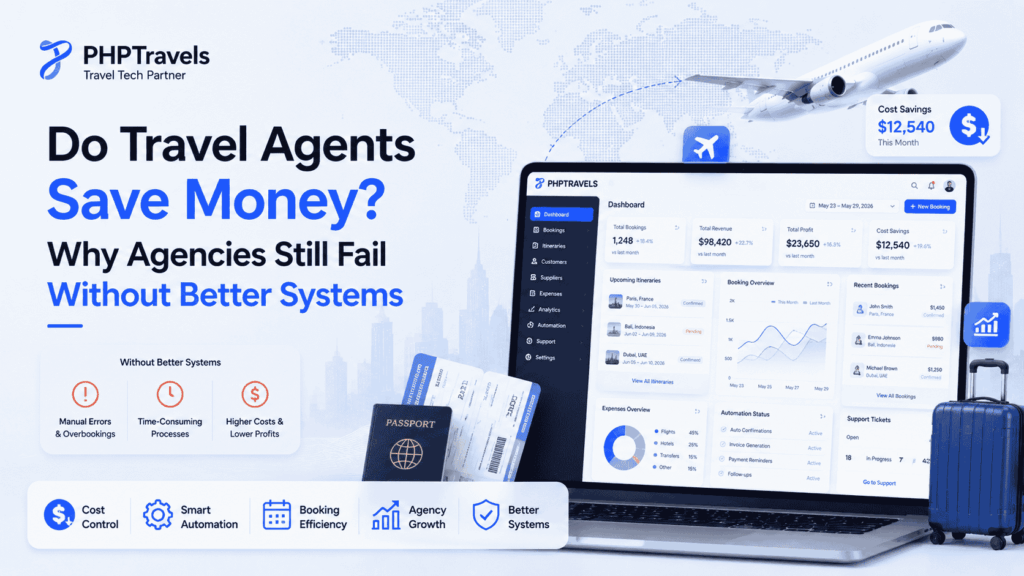
A skilled travel agent can save money through supplier relationships, fare knowledge, package pricing, payment flexibility, group rates, cruise offers, itinerary planning, and practical advice that prevents costly mistakes. The problem is that many agencies still fail to convert that expertise into a smooth, reliable booking experience.
The modern traveler expects choice, speed, transparency, and support. They want to compare flights, hotels, transfers, tours, insurance, and payment options without feeling lost. Travel agents can still offer real value, but agencies need the right systems behind them to deliver that value consistently. Travel agents save money by helping travelers compare the total trip cost, not just the cheapest visible price.
Quick Summary
Travel agents can save money when they know how to compare suppliers, combine services, hold reservations, manage changes, and guide travelers away from expensive mistakes.
Agencies fail when their pricing is unclear, their booking process is slow, their supplier data is scattered, or their customer follow-up is manual.
Travel agents save money when they combine supplier access, fare knowledge, payment flexibility, and practical trip planning.
The strongest agencies combine human travel expertise with reliable booking technology, CRM, itinerary tools, supplier integrations, and clear payment workflows.
How Travel Agents Save Money in Real Travel Workflows
Travel savings rarely come from one discount. They usually come from better decisions across the entire booking journey.
A traveler may find a cheap flight online, but that does not mean the full trip is cheaper. The flight may arrive too late for airport transfers. The hotel may charge resort fees. The baggage policy may be restrictive. The cheapest ticket may not allow changes. The airport may be far from the actual destination.
A good travel agent looks at the total cost of travel, not only the first visible price.
That includes:
- Flight fare conditions
- Hotel cancellation policy
- Transfer costs
- Meal plans
- Local taxes
- Baggage fees
- Visa requirements
- Supplier penalties
- Group discounts
- Travel insurance
- Refund timelines
- Currency charges
This is where professional travel planning becomes valuable. The agent is not simply booking flights and hotels. The agent is reducing risk, avoiding waste, and helping the traveler choose a trip that works in real life.
Travel Agents Save Money Time on Travel Planning
Time is money, especially for families, corporate travelers, destination weddings, business groups, and multi-city holidays.
Travel planning involves supplier comparison, availability checks, fare rules, room categories, cancellation terms, payment deadlines, visa advice, local logistics, and itinerary coordination. A traveler can spend hours comparing travel options and still miss important details.
Travel agents save time by narrowing down realistic choices. They know which suppliers respond quickly, which hotels work for certain traveler types, which routes are safer, and which package deals are actually worth considering.
For agencies handling high inquiry volume, this process becomes difficult without proper systems. A travel agency using organized travel agency management software can manage inquiries, bookings, payments, suppliers, and customer records in one workflow instead of relying on scattered spreadsheets and chat history.
Travel Agents Can Save Money on Flights
Do travel agents save money on flights? Sometimes, yes.
Flight savings depend on route, timing, fare class, supplier access, airline policy, and ticket conditions. In some cases, the public fare is already competitive. In other cases, an agent may find better value through consolidator fares, route combinations, flexible dates, or package pricing.
The biggest flight savings often come from avoiding the wrong ticket.
A cheap non-refundable fare can become expensive if the traveler needs a change. A tight connection can create missed flights. A low-cost carrier may add baggage and seat fees that make the final cost higher than a full-service airline.
Agencies that specialize in air ticketing need reliable tools for searching, comparing, booking, and managing flight requests. A modern flight booking system helps agencies present flight options clearly, reduce manual errors, and support customers before and after ticketing.
Do Travel Agents Save Money on Cruises?
Cruises are one of the clearest examples where travel agents can add financial value.
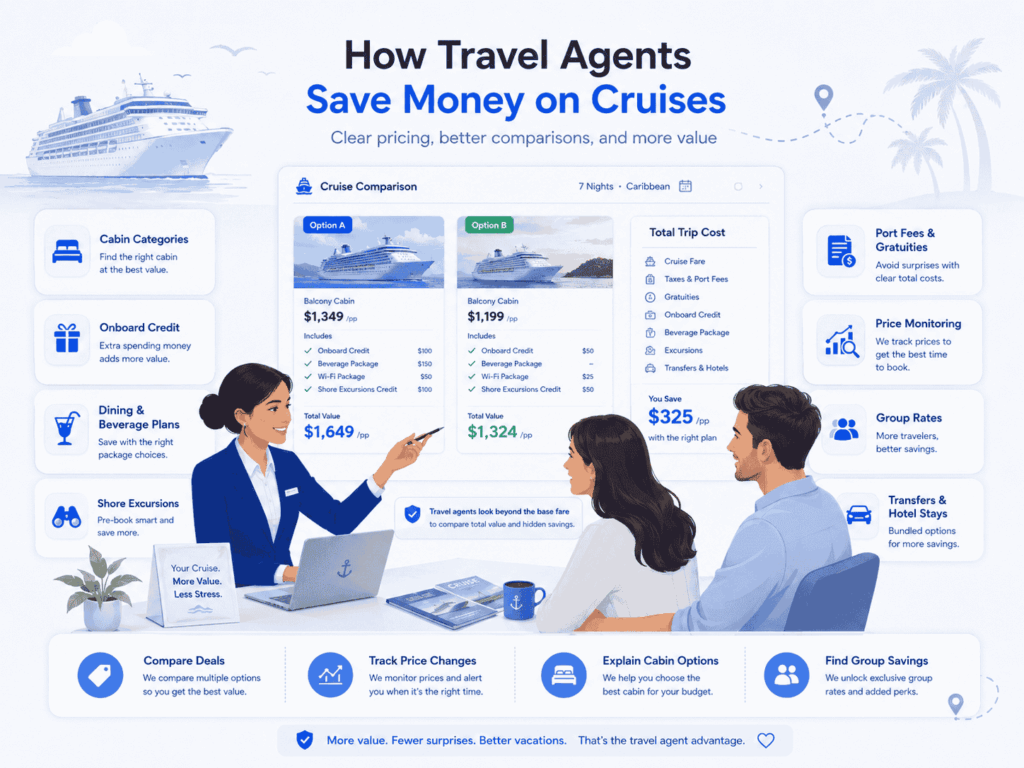
Cruise pricing can include cabin category, onboard credit, dining packages, beverage plans, shore excursions, port fees, gratuities, insurance, transfers, and pre-cruise hotel stays. A traveler looking only at the base cruise fare may not understand the full cost.
Travel agents can help compare cruise deals, monitor price changes, explain cabin differences, identify group travel rates, and advise when an upgrade is worth it. They may also know when a cruise line is offering added value instead of a direct discount.
For group cruises, the savings can be even stronger. Special group rates, shared transfers, bundled experiences, and coordinated payment schedules can reduce the total cost and make the trip easier to manage.
Payment Flexibility Can Reduce Traveler Debt
One reason travelers still prefer agents is payment flexibility.
Many online booking platforms require full payment upfront. That can push travelers toward credit cards, interest charges, and rushed decisions. A travel agent may be able to confirm certain packages with a deposit, then collect the remaining balance before the supplier deadline.
This does not mean every booking can be held without payment. Supplier rules vary. Airlines, hotels, cruises, tours, and DMCs all have different deposit and cancellation terms.
But when an agency has strong supplier relationships and organized payment tracking, it can offer better flexibility without losing control. Agencies that manage deposits, balances, invoices, and supplier due dates through accounting software for travel agency are less likely to miss payments or create disputes.
Holding Seats, Rooms, and Packages
A good agent can sometimes hold an option while the traveler confirms details.
This may include a flight seat until ticketing time, a hotel room until a release deadline, or a package price until supplier confirmation expires. This helps travelers avoid sudden price increases while they finalize leave approval, passports, family confirmation, or budget decisions.
The important word is sometimes.
Holds depend on the supplier, season, inventory, destination, and booking channel. An agent should never promise a hold unless the supplier allows it. Clear communication matters because travelers need to understand when a hold expires and what happens if they do not confirm.
Travel Agents Reduce Hidden Costs
Hidden costs are one of the biggest reasons travelers overspend.
A traveler may book what looks like an affordable trip, then pay extra for airport transfers, checked bags, seat selection, late check-in, local taxes, resort fees, city fees, meal upgrades, cancellation changes, or emergency rebooking.
Experienced agents know where these costs appear. They help travelers compare the real price.
For example, a hotel with breakfast included may be cheaper than a lower-priced hotel where a family pays for breakfast daily. A slightly higher airfare may be better if it includes baggage. A package with transfers may be more affordable than separate ride bookings during peak season.
This is where expert travel advice becomes more than a service. It becomes cost control.
Why Agencies Fail Even When Agents Add Value
If travel agents can save money, why do many agencies still lose customers?
Because expertise alone is no longer enough.
Many agencies fail because their business process does not match modern traveler expectations. They respond slowly. Their quotes are unclear. Their payment process feels risky. Their itineraries look unprofessional. Their customer data is not organized. Their suppliers are managed manually. Their follow-up depends on memory.
The traveler does not see the agent’s hard work. The traveler only sees delays, confusion, and lack of transparency.
Common agency failures include:
- No live or updated availability
- Manual quote creation
- No structured CRM follow-up
- Poor invoice tracking
- Unclear cancellation policy
- Weak supplier comparison
- Slow response to changes
- No customer self-service options
- No mobile-friendly booking flow
- No reporting on profit and loss
These problems do not only hurt travelers. They hurt agency margins.
How Businesses Usually Try to Solve the Problem
Many agencies start with basic tools. They use email, WhatsApp, spreadsheets, supplier portals, and manual invoices. This works for a small number of bookings, but it becomes fragile as the agency grows.
The next step is often adding separate tools for CRM, accounting, itinerary creation, and ticketing. That can help, but it also creates another problem: disconnected data.
A customer inquiry may sit in one system. The quote may be in another. The invoice may be in a spreadsheet. Supplier confirmation may be in email. The itinerary may be created manually.
This makes the agency slower and less accurate.
What actually works is a connected travel workflow. Agencies need a system that supports search, quote, book, invoice, manage, modify, and follow up. The exact setup depends on the business model, but the goal is always the same: reduce manual work while keeping the human expertise visible.
What Travel Agencies Need to Compete Today
Travel agencies, OTAs, hotels, tour operators, and DMCs need more than a website. They need an operating system for bookings.
A strong setup usually includes:
- A booking engine for customer search and reservations
- A CRM for leads, follow-ups, and traveler profiles
- Supplier management for rates and availability
- Itinerary tools for professional trip presentation
- Payment and invoice workflows
- Multi-currency support
- Admin controls for staff and agents
- Reporting for revenue and margin
- API connectivity for flights, hotels, tours, and transfers
For agencies building online sales channels, online travel software provides the foundation for selling travel products digitally while keeping internal teams organized.
For agencies serving other agents, a B2B travel booking software setup can support agent logins, markup rules, credit limits, and wholesale distribution.
For direct consumer bookings, B2C enterprise travel software helps agencies create a customer-facing experience that supports search, booking, and payment at scale.
The Role of CRM in Travel Savings
CRM is often misunderstood in travel. It is not just a contact list.
A travel CRM helps agencies understand customer preferences, past trips, budgets, documents, special requests, payment behavior, and communication history. That information helps the agent recommend better travel options faster.
If a customer always prefers refundable hotels, the agent should know that. If a family needs connecting rooms, the system should record it. If a corporate traveler prefers morning flights, the agency should not ask every time.
Travel CRM software helps agencies personalize service without relying on memory. For agencies focused specifically on travel sales, travel agency CRM software can support lead management, follow-ups, customer segmentation, and repeat booking opportunities.
This improves customer trust and increases lifetime value.
Itinerary Planning Makes Savings Easier to Understand
Travelers do not only buy prices. They buy clarity.
A cheaper trip is not useful if the traveler does not understand what is included. A professional itinerary shows flights, hotels, tours, transfers, timing, inclusions, exclusions, payment terms, and cancellation notes.
This reduces disputes and helps the traveler compare value properly.
A clear itinerary can also help explain why one option costs more but is better value.
Where PHPTRAVELS Fits
PHPTRAVELS is built for travel businesses that want to combine human travel expertise with online booking capability.
For agencies still handling bookings manually, PHPTRAVELS provides a practical way to manage travel products, customers, bookings, payments, agents, and supplier content through a more organized platform. It can support travel agencies, OTAs, tour operators, DMCs, hotels, and businesses building travel portals.
The value is not only in taking bookings online. The value is in reducing operational gaps that cause agencies to lose money: missed follow-ups, manual errors, unclear pricing, slow quotes, disconnected supplier data, and weak customer management.
Businesses comparing software used by travel agents often need different capabilities depending on their model. A retail agency may prioritize CRM and quote management. An OTA may need APIs and booking engine control. A B2B wholesaler may need agent credit limits and markup rules. A tour operator may need itinerary and package management.
For companies building a full travel portal, travel portal software development is also an important consideration because the booking experience must match the agency’s commercial model, supplier strategy, and customer expectations.
Final Thoughts
Travel agents still matter because travel is not always simple.
The cheapest visible price is not always the best deal. Travelers need guidance, comparison, flexibility, and support when plans change. A good agent can save money by preventing bad bookings, finding better travel deals, arranging smarter packages, and managing the details travelers often miss.
But agencies fail when they depend only on personal effort. Modern travel businesses need systems that support the agent’s expertise.
The winning model is not human agent versus online booking. It is human expertise supported by reliable travel technology.
That is how agencies save customers money, protect their own revenue, and build trust in a market where travelers expect both service and speed. Travel agents save money best when human expertise is supported by reliable booking technology.