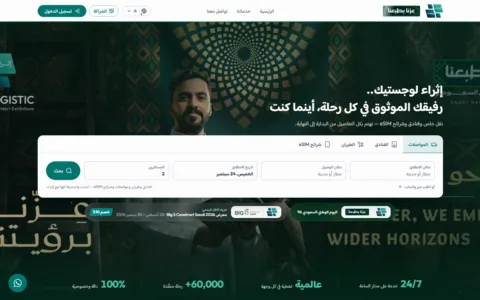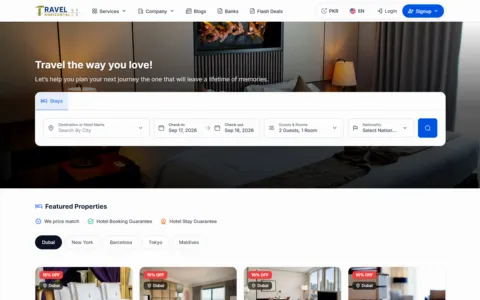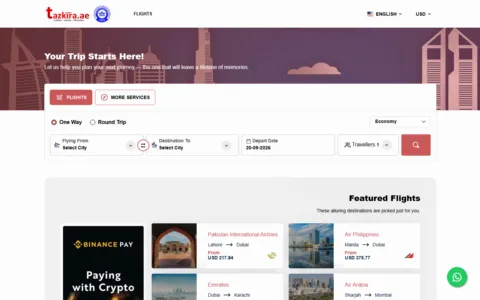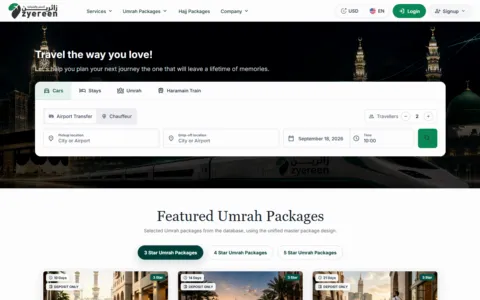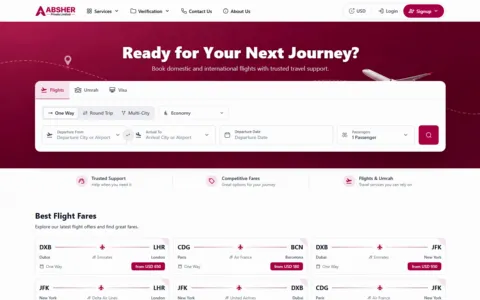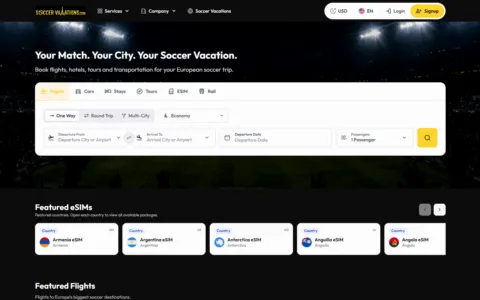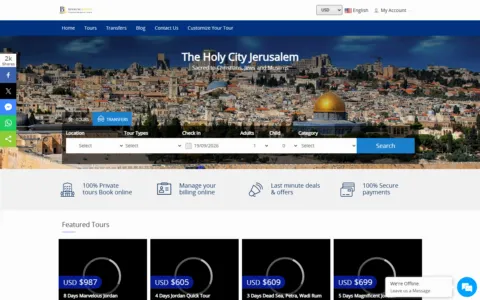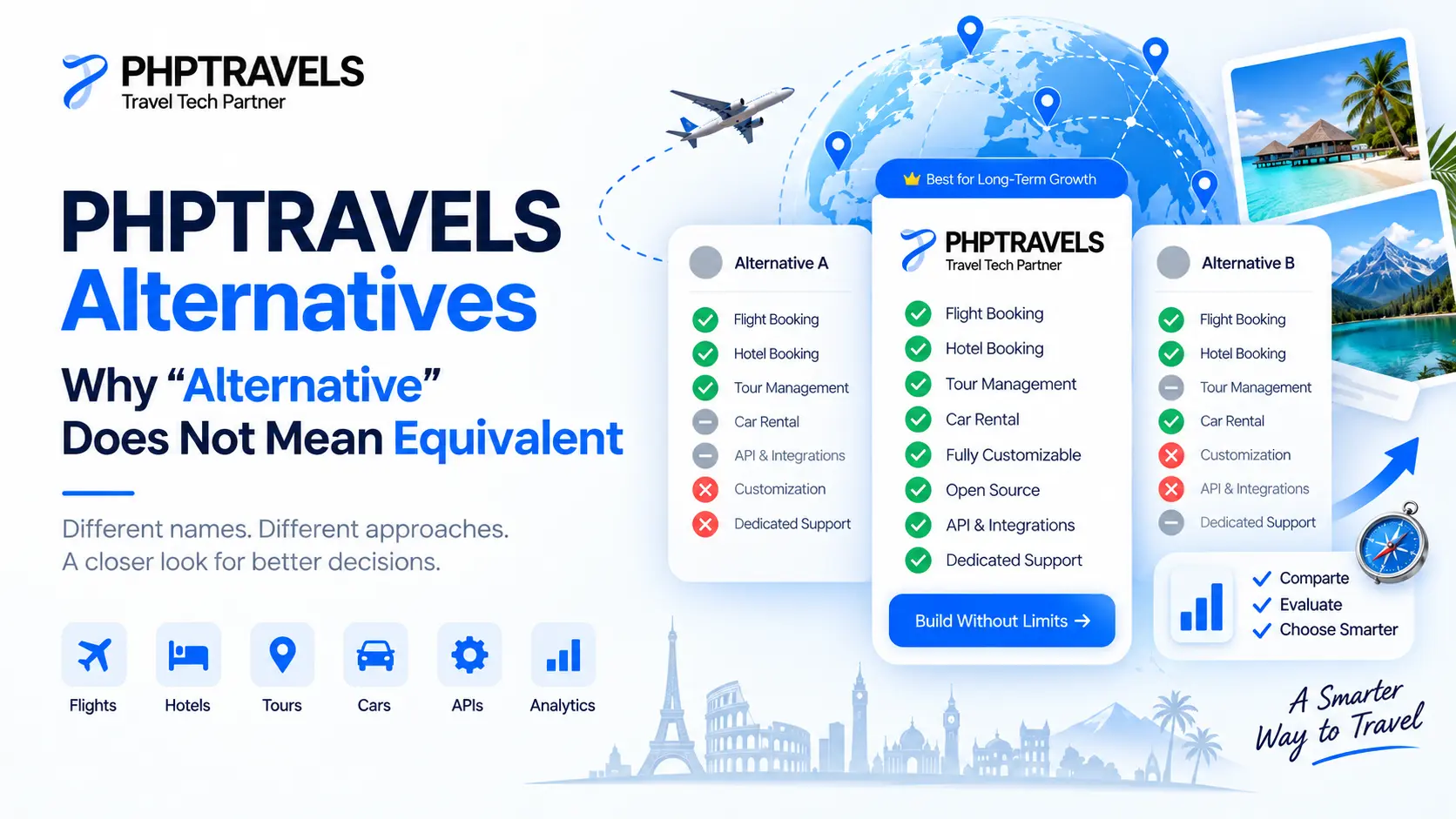
Search for “PHPTRAVELS alternatives” today and you may find software vendors, comparison pages and newer travel technology companies describing themselves as an alternative to PHPTRAVELS.
There is nothing unusual about competition. Travel technology is a growing market, and businesses should compare different platforms before investing.
But there is an important distinction travel agencies, OTAs and tour operators should understand:
Calling a product a PHPTRAVELS alternative does not automatically make it equivalent to PHPTRAVELS.
A genuine comparison should go beyond a similar homepage, a list of features or a marketing article built around another company's brand name. Buyers should compare what has actually been developed, deployed, maintained and improved over time.
PHPTRAVELS has been developing travel booking technology since 2012. During that period, the platform has evolved through multiple major versions, supplier integrations, booking modules, B2B and B2C capabilities and architectural changes designed around the requirements of travel businesses.
If you are researching an alternative to PHPTRAVELS, the most useful question is therefore not:
“Which company calls itself a PHPTRAVELS alternative?”
The better question is:
“Which platform can demonstrate the technology, integrations, ownership model and product history my travel business actually requires?”
That is what this guide will help you evaluate.
Why Are People Searching for PHPTRAVELS Alternatives?
Searching for an alternative does not necessarily mean someone dislikes an existing product.
A startup may be comparing several travel booking systems before launching. An established agency may need a particular supplier connection. Another business may want a B2B agent portal, while an OTA may care more about source-code access and infrastructure control.
Some companies simply conduct competitor research before making a purchasing decision.
All of these are legitimate reasons to compare platforms.
That is why PHPTRAVELS itself maintains a dedicated travel booking software comparison section, where buyers can examine different deployment models and competing platforms.
The problem begins when the word “alternative” is treated as proof of equivalence.
Two products can both offer hotel reservations and still have very different architectures, supplier coverage, ownership models, customization options and operational maturity.
Travel software should therefore be compared on evidence rather than labels.
PHPTRAVELS Has Been Focused on Travel Technology Since 2012
One of the first things buyers should investigate when comparing travel technology providers is product history.
PHPTRAVELS has been building travel booking technology since 2012. You can review the company's background on the PHPTRAVELS About Us page.
That history matters because travel software is not simply a website connected to a database.
A production travel platform may need to manage supplier responses, availability, currencies, markups, agent accounts, customer bookings, payment processing, vouchers, cancellations, reporting and third-party API behavior.
Those workflows take time to develop and improve.
PHPTRAVELS also maintains a public product changelog showing the evolution of the platform across multiple major releases.
PHPTRAVELS Version 10, released in 2026, represents another stage of that development history with a modernized architecture and continued improvements across platform operations.
For buyers, this creates an important evaluation question:
Does the alternative you are considering have a comparable, documented product history?
A recently created landing page can be launched quickly.
A mature travel technology platform cannot.
What Should a Real PHPTRAVELS Alternative Actually Be Able to Demonstrate?
Instead of comparing marketing headlines, compare the parts of a travel platform that directly affect your business.
Here are seven areas worth investigating before switching to or purchasing any travel booking software.
1. Is It a Travel Platform or Mainly a Development Service?
There is an important difference between purchasing an existing travel platform and hiring a company to build features whenever you request them.
An established platform should already contain substantial booking infrastructure.
That may include customer management, booking administration, pricing rules, agent workflows, supplier configuration, currencies, languages, payment processing and different travel modules.
If every major requirement needs to be separately developed after purchase, you are comparing a custom software project with an existing product platform.
Neither model is automatically wrong.
But they are not the same thing.
Before considering any product an alternative to PHPTRAVELS, ask the vendor to demonstrate what already exists in the software today rather than what their developers could potentially build later.
2. Which Supplier APIs Are Already Integrated?
Supplier connectivity is one of the most important differences between travel booking platforms.
A travel business may require flight GDS or NDC content, hotel inventory, tours, activities, cars, transfers or regional suppliers.
PHPTRAVELS maintains a catalog of travel API integrations covering numerous supplier and payment connections.
That matters because there is a major commercial difference between:
“This API is already integrated into the platform.”
and:
“We can develop this integration for you.”
An on-demand integration can require additional development, testing, supplier certification, time and cost.
Before buying any PHPTRAVELS alternative, prepare a list of the suppliers you actually need and ask each vendor to identify which connections are already production-ready.
Do not compare integration counts alone.
Compare the exact suppliers your business intends to use.
3. What Exactly Do You Own?
Ownership is another area where similar-looking travel systems can be fundamentally different.
Some platforms operate as SaaS products. You subscribe to the vendor's infrastructure and use the features they provide.
Other systems can be deployed on infrastructure controlled by the buyer.
PHPTRAVELS follows a self-hosted model and provides source code under its licensing terms, allowing businesses greater control over their deployment and customization.
For travel companies with specific workflows, this can be particularly important.
For example, you may eventually want to modify markup logic, create a specialized agent workflow, connect a regional payment gateway or build functionality for a particular market.
When comparing platforms, ask:
- Where will the application be hosted?
- Will you receive the application source code?
- Can your own developers modify it?
- Can you move the system to different infrastructure?
- What happens to your data if you stop working with the vendor?
- Can another development company maintain your customized system?
These questions reveal much more than the phrase “source code included.”
4. How Broad Is the Actual Travel Product?
A booking platform should also be evaluated according to the travel products your business plans to sell.
Some businesses only need flights and hotels. Others may want tours, cars, transfers, visa services or additional travel verticals.
A narrow platform can be perfectly suitable for a focused agency.
However, a business planning to expand should investigate whether adding another travel vertical requires an entirely new platform, a major custom development project or simply enabling another existing module.
PHPTRAVELS has developed multiple travel booking modules as part of its broader platform ecosystem.
The important point is not that every agency needs every module.
The advantage is having room to expand without automatically replacing your underlying technology.
That is particularly relevant for businesses that begin as a B2C travel website and later introduce agents, additional suppliers or new travel products.
5. Does It Support Both B2C and B2B Operations?
A public booking website and a B2B travel agent system solve different problems.
B2C typically focuses on direct customer search, checkout and booking.
B2B operations may require agent accounts, pricing rules, credit management, wallets, markups, commissions and different access levels.
A growing travel company may eventually need both.
PHPTRAVELS is designed around B2C and B2B travel operations within the broader platform.
If B2B distribution is important to your growth plans, do not accept “B2B supported” as a complete answer from any vendor.
Ask to see the workflow.
Ask how an agent account is created, how pricing is controlled, how credit works, how bookings are managed and how different supplier results flow through the system.
A functioning workflow is more meaningful than a feature-list checkbox.
6. Can You Test the Product Before Making a Decision?
Software comparisons become much easier when buyers stop relying entirely on screenshots.
A serious evaluation should include the actual product.
PHPTRAVELS provides a live travel booking software demo where prospective buyers can explore booking flows and administration functionality before committing.
The same standard should be applied to any alternative.
Ask to see the frontend.
Ask to see the admin panel.
Test search and booking workflows.
Explore how suppliers are configured.
Review pricing controls.
Check B2B functionality if you need it.
Ask the vendor to demonstrate the exact feature or supplier connection influencing your purchasing decision.
If a feature cannot be demonstrated, treat it as something that still needs verification rather than something your business already has.
7. What Is the Real Cost Beyond the Headline Price?
Travel software should rarely be compared using only an advertised starting price.
Total cost can include software licensing, hosting, supplier integration work, payment gateway integration, customizations, maintenance and technical support.
A cheaper initial package can become more expensive if multiple essential integrations must be developed separately.
Likewise, a more complete platform may require a higher initial investment but include technology you would otherwise commission later.
PHPTRAVELS uses project requirements to help determine the appropriate package and scope. Current options can be reviewed through the PHPTRAVELS pricing page.
When evaluating alternatives, ask every vendor to quote the same requirement document.
That is the only useful way to compare prices.
Newer Competition Is Healthy But Buyers Should Verify the Evidence
The travel software industry continues to attract new vendors.
Competition encourages innovation and gives agencies more choices.
PHPTRAVELS does not need to claim that every other platform is fake or that no other travel technology company can build capable software.
Those claims would not help buyers make better decisions.
What matters is the distinction between market positioning and demonstrated capability.
A business can publish a page using another company's brand in the title.
It can describe itself as an alternative.
It can create a comparison chart.
None of those actions independently establish product maturity, supplier connectivity, customer deployments or long-term development history.
The same standard should apply to PHPTRAVELS and every competitor: verify the product.
Do You Actually Need an Alternative?
There is another question worth asking before replacing any travel booking platform:
What problem are you trying to solve?
If your existing technology works and you only need one additional supplier, replacing the entire system may create unnecessary migration work.
If you need a unique booking workflow, customization may solve the problem.
PHPTRAVELS provides travel software customization services for businesses whose requirements extend beyond standard configuration.
A full platform change becomes more reasonable when the existing architecture fundamentally prevents the business from achieving what it needs.
This is why software decisions should begin with requirements rather than competitor lists.
When Another Platform May Be the Right Choice
PHPTRAVELS will not be the correct solution for every travel company.
A business wanting a fully vendor-managed SaaS environment with no responsibility for servers may prefer a different dIs the Platform Behind the Name
PHPTRAVELS is not simply a keyword, template or newly launched booking panel.
It is a travel technology brand that has been developing booking software since 2012.
Over that period, the product has evolved through major releases, expanded across travel modules, connected with supplier and payment technologies, and supported different B2B and B2C business models.
Businesses researching PHPTRAVELS alternatives should absolutely compare the market.
But comparison should be based on measurable questions:
What exists today? What has been running in production? Which suppliers are already connected? What does the buyer own? Can the software be demonstrated? Can it grow with the business?
That is the difference between an alternative in a search result and an alternative at the technology level.
Before making a decision, test the platforms you are considering, verify the supplier connections you require and compare the commercial terms against the same business requirements.
Compare the platform, not simply the marketing.
Frequently Asked Questions About PHPTRAVELS
Alternativeseployment model.
A company whose processes perfectly match a specialized vertical product may also prefer that specialized solution.
Acknowledging this does not weaken PHPTRAVELS.
It makes the comparison more useful.
The purpose of evaluating PHPTRAVELS alternatives should be finding the technology model that matches your operation not selecting whichever vendor uses the strongest marketing language.