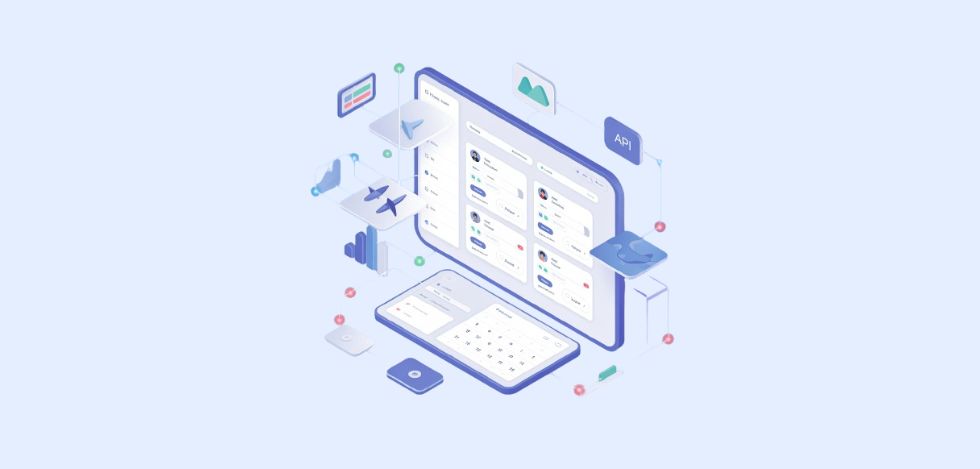
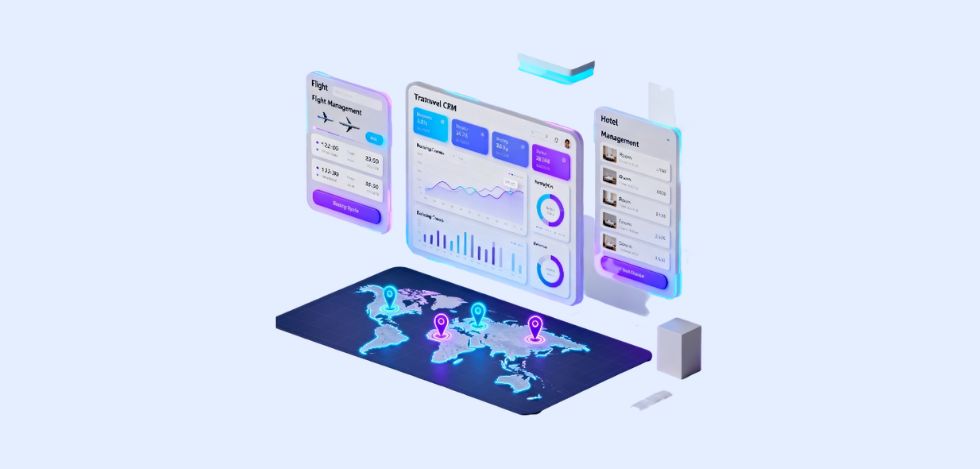
Running a travel business today is no longer just about selling trips. It is about managing leads from multiple channels, responding instantly, building accurate itineraries, handling bookings, issuing vouchers, tracking payments, and maintaining long-term relationships with customers.
Many agencies still rely on spreadsheets, WhatsApp chats, and disconnected tools. This creates delays, missed leads, pricing errors, and lost revenue. In a market where customers expect instant responses and OTA platforms dominate with real-time booking, manual operations are no longer sustainable.
A travel agency CRM system changes how your entire business operates. It connects your sales, bookings, finance, and customer management into one structured workflow.
Quick Summary
A travel agency CRM system manages your entire workflow from lead capture to booking, invoicing, and repeat sales.
It centralizes customer data, automates follow-ups, improves response time, and connects directly with booking engines and supplier APIs to reduce manual work and increase conversions.
What is a Travel Agency CRM System
A travel agency CRM system is not just a contact database. It is a complete operational system designed specifically for travel workflows.
It connects every stage of your business:
- Leads come in from your website, social media, or manual entry
- Leads are converted into quotes and itineraries
- Quotes become bookings once confirmed
- Bookings generate vouchers and invoices
- Customers are stored for repeat business and future marketing
Inside the system, you manage:
- Passenger records with travel details
- Communication history including calls, emails, and notes
- Quotes, bookings, invoices, and payments
- Supplier details and travel products
Instead of switching between tools, everything is managed in one place. Sales and operations are no longer separate departments. They work on the same data in real time.
Real Workflow Example: From Inquiry to Confirmed Booking
To understand the real value of a travel agency CRM system, look at how a typical booking flows inside a structured system.
A customer visits your website and submits an inquiry for a 5 day Dubai package. The lead is automatically captured inside the CRM with name, contact details, travel dates, and requirements.
An agent is instantly notified. Instead of replying manually from email, the agent opens the lead inside the CRM, checks available travel products, and builds an itinerary using connected supplier APIs or preloaded packages.
The system applies pricing rules, markups, and commissions automatically. A professional quote is generated and sent to the customer.
The CRM schedules follow up reminders. If the customer does not respond, automated emails are triggered.
Once the customer confirms, the quote is converted into a booking without re entering any data. The system records passenger details, creates reservations, and connects to suppliers where needed.
Vouchers are generated for hotels and services. An invoice is issued with payment tracking enabled.
The entire process from inquiry to confirmed booking happens in one system with full visibility and control.
Why Travel Agencies Need CRM in 2026
The travel industry has changed. Customers expect instant replies, accurate pricing, and seamless booking experiences.
At the same time, competition from OTAs and online platforms has increased pressure on traditional agencies.
Travel Agency CRM vs Travel Agency Software
A travel agency CRM manages leads, follow ups, customer records, quotes, communication, and repeat sales.
Travel agency software manages booking operations such as live search, reservations, invoices, vouchers, payments, supplier APIs, and reports.
For a modern travel business, the best setup is not CRM alone. The best setup combines CRM, booking engine, automation, supplier integrations, and back office reporting in one system.
A travel CRM software solves three major challenges:
Speed
Customers expect replies within minutes. A CRM allows automated responses, quick quote generation, and faster follow-ups.
Automation
Manual processes slow down your team. CRM automation handles repetitive tasks like reminders, email responses, and booking updates.
API-driven pricing
Modern travel pricing comes from live supplier APIs. A CRM integrated with booking systems ensures accurate real-time pricing.
Impact on business performance is measurable:
- Faster response times increase lead conversion
- Automated workflows reduce manual errors
- Centralized data improves team productivity
- Better follow-ups increase repeat bookings
Real Business Scenario: Manual vs System Driven Operations
Consider a mid size travel agency handling 30 to 50 inquiries per day.
Without a CRM:
- Leads are scattered across emails and WhatsApp
- Agents forget follow ups
- Quotes are created manually with pricing errors
- Bookings are tracked in spreadsheets
- Payments are followed up manually
Result:
Missed leads, delayed responses, lost revenue, and operational confusion
With a travel CRM system:
- All leads are captured in one dashboard
- Agents work on structured pipelines
- Quotes are generated faster with accurate pricing
- Bookings, vouchers, and invoices are connected
- Payments and reports are tracked in real time
Result:
Faster response times, higher conversion rates, better team coordination, and predictable growth
Everything in One Place: How Travel CRM Organizes Your Business
A travel CRM organizes your business through a centralized dashboard.
Instead of searching through emails, chats, or spreadsheets, your team can see:
- All leads and their status
- Upcoming bookings and departures
- Pending payments and invoices
- Customer communication history
Emails can be tracked inside the CRM. Booking data and customer data are linked together, so your team always knows who the customer is, what they booked, and what they need next.
Lead Capturing & Sales Pipeline Automation
This makes the CRM work like travel lead management software and travel agency automation software. It helps agencies manage the full travel sales funnel from first inquiry to confirmed booking.
Lead generation in travel comes from multiple sources:
- Website booking forms
- Live chat inquiries
- Social media messages
- Manual entries from phone calls or walk-ins

A CRM for travel agency collects all these leads in one place.
Once captured, the system organizes them into a sales pipeline with stages such as:
- New inquiry
- Contacted
- Quote sent
- Negotiation
- Confirmed booking
Automation plays a key role here.
The CRM can:
- Send automated follow-up emails
- Assign tasks to agents
- Set reminders for calls or meetings
- Notify the team when a lead becomes inactive
This ensures no lead is forgotten and every opportunity is handled properly.
Quote Management, Itineraries & Conversion
A strong travel quotation system should also work as a travel itinerary builder. Agents can prepare professional day wise itineraries, package quotes, passenger details, inclusions, exclusions, and pricing from one screen.
A travel CRM software allows agents to create detailed itineraries including:
- Flights, hotels, transfers, and tours
- Custom pricing based on supplier rates
- Dynamic markups and commissions
Agents can generate professional quotes and send them directly to customers.
When the customer confirms, the system converts the quote into a booking without re-entering data.
This reduces errors and speeds up the conversion process.
Booking Management, Vouchers & Invoicing
Once a booking is confirmed, the CRM handles operations.
It allows you to:
- Track reservations in real time
- Generate vouchers for hotels and services
- Create invoices with one click
- Monitor payment status
Every booking is connected to:
- Customer profile
- Supplier details
- Financial records
This ensures complete visibility and control over operations.
Customer Management & Repeat Business
Travel is a repeat business industry.
A strong CRM builds a long-term customer database that includes:
- Travel history
- Preferences
- Past bookings
- Communication records
This data allows agencies to personalize offers and target customers with relevant campaigns.
Email campaigns and promotions can be sent directly from the CRM.
Instead of chasing new leads only, agencies can generate revenue from existing customers.
Fixed Departures, Group Travel & Products
Travel businesses often deal with group travel and fixed departure packages.
A travel agency CRM system helps manage:
- Tour packages with predefined dates
- Group bookings with multiple passengers
- Inventory control for available seats
Agents can manage large bookings efficiently and track availability without manual tracking.
This is essential for tour operators, DMCs, and agencies handling events or group travel.
Commission Tracking & Financial Control
Financial clarity is critical in travel operations.
A CRM helps track:
- Agent commissions
- Supplier costs
- Profit margins
- Payment collections
Reports provide insights into:
- Revenue by booking
- Performance by agent
- Outstanding payments
It also helps identify risks such as unpaid bookings or potential chargebacks.
Travel CRM vs Generic CRM Tools
Not all CRM systems are built for travel.
| Feature | Travel CRM | Generic CRM |
|---|---|---|
| Booking workflow | Built-in | Not supported |
| Itinerary creation | Native feature | Not available |
| Supplier APIs | Integrated | Requires custom setup |
| Voucher generation | Automated | Not available |
| Commission tracking | Built-in | Manual |
| Travel products | Supported | Not supported |
Generic CRM tools may handle contacts and sales pipelines, but they lack the operational depth required for travel businesses.
Why Generic CRM Tools Fail in Travel Businesses
Generic CRM systems are designed for simple sales pipelines, not complex travel workflows.
In travel, every sale involves multiple variables:
Dates, destinations, passengers, suppliers, pricing rules, and service combinations
Generic CRMs cannot handle:
- Itinerary creation
- Multi service bookings
- Supplier integrations
- Voucher and document generation
- Travel specific financial tracking
As a result, agencies using generic tools end up combining multiple systems, which creates data gaps and operational inefficiencies.
Integrations: How Travel CRM Connects Everything
A modern travel CRM system connects with multiple external systems.
GDS systems like Amadeus, Sabre, and Travelport provide flight and travel content.
Hotel and supplier APIs bring real-time inventory and pricing.
Payment gateways handle transactions securely.
Accounting tools manage financial records and reporting.
This integration creates a complete ecosystem where data flows automatically between systems.
How Integration Actually Works in Real Operations
Integration is not just about connecting APIs. It changes how your entire workflow operates.
When a travel CRM is connected with supplier APIs and booking engines:
Pricing flows directly from suppliers into your system. Agents do not need to check multiple portals. They can build quotes using real time availability and rates.
When a booking is confirmed, the system can push reservation data to suppliers or sync booking details automatically. This removes manual entry and reduces errors.
Customer data, booking details, and financial records stay connected. When a customer calls, your team can instantly access their full history.
Payment gateways are linked to invoices. Once a customer pays, the system updates booking status and financial records automatically.
Pricing & ROI of Travel CRM Software
Travel CRM software pricing varies based on features and scale.
Typical pricing models include:
- Monthly subscription plans
- One-time license with support
- Custom enterprise pricing
Return on investment comes from:
- Higher conversion rates due to faster response
- Reduced manual workload
- Improved operational efficiency
- Increased repeat business
For example, improving response time alone can significantly increase bookings from the same number of leads.
Who Should Use a Travel Agency CRM System
A travel CRM is useful for different types of businesses:
- Retail travel agencies handling direct customers
- Corporate travel agencies managing business clients
- OTAs managing online bookings
- Tour operators handling packages and group travel
- DMCs managing destination services
Any business dealing with leads, bookings, and customers will benefit from a structured CRM system.
Choosing the Best Travel Agency CRM
Selecting the best travel agency CRM depends on several factors.
Business size
Small agencies may need basic automation while large operations require advanced workflows.
Automation needs
Look for systems that reduce manual work and handle repetitive tasks.
API integrations
Access to suppliers and live pricing is critical for scaling.
Customization
Every travel business operates differently. The CRM should adapt to your workflow.
The right system should align with how your business actually works, not force you to change your processes.
PHPTRAVELS Travel CRM Solution
PHPTRAVELS provides a complete travel CRM system combined with a full booking engine.
It connects CRM workflows with booking operations, allowing agencies to manage leads, quotes, bookings, and payments in one platform.
The system integrates with travel APIs and supports a complete travel booking engine available.
The platform also includes ERP capabilities through and advanced flight booking system functionality.
This unified approach allows travel businesses to scale without relying on multiple disconnected systems.
Final Decision Framework
Choose a travel CRM system if:
- You are managing leads manually
- Your team struggles with follow-ups
- You want to automate booking workflows
- You need better control over operations
Avoid investing in a CRM if:
- You have very low lead volume
- Your operations are extremely simple
- You are not ready to adopt structured workflows
A CRM is most effective when your business is ready to organize, automate, and scale.